
Forklift Certification Course: Complete Training Guide, Requirements, and Operator Tips for 2026 September
Complete forklift certification course guide: 📝 OSHA requirements, training steps, costs, and practice tests to become a certified forklift operator in 2026 September.
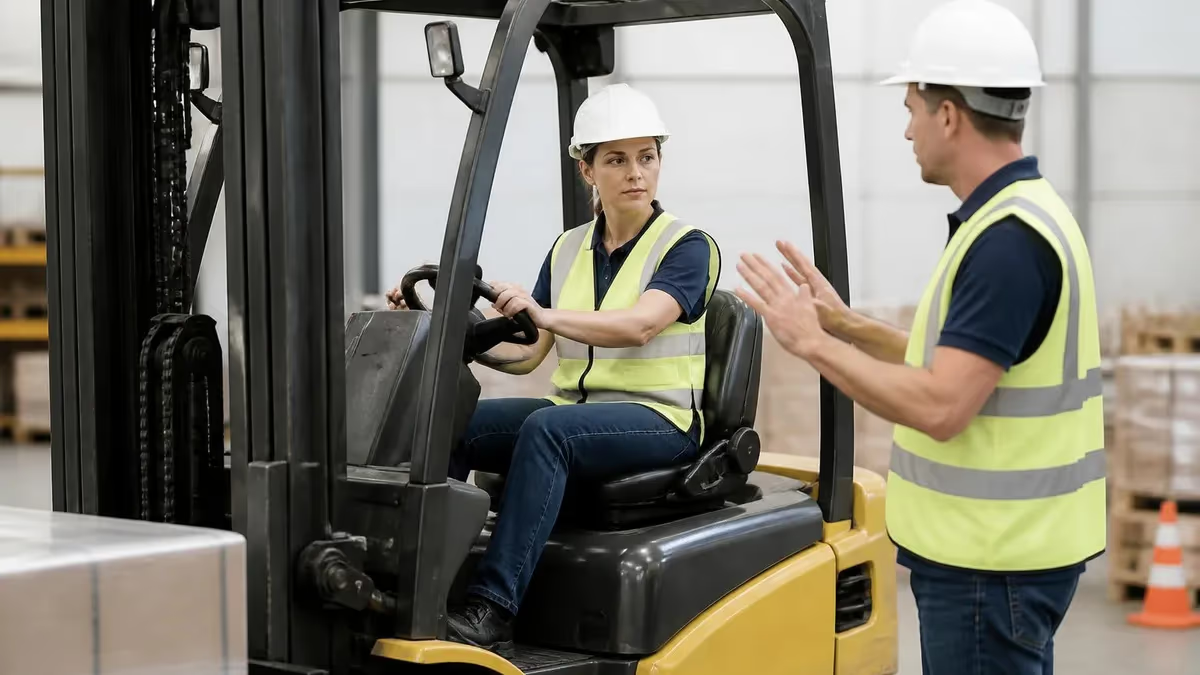
A forklift certification course is the mandatory training program every powered industrial truck operator must complete before operating forklifts, reach trucks, or order pickers in a US workplace. Under OSHA standard 29 CFR 1910.178(l), employers are legally required to ensure that every forklift operator receives formal instruction, practical training, and a performance evaluation before they operate independently.
Skipping this requirement exposes employers to fines exceeding $15,625 per violation and, far more critically, puts workers at serious risk of injury or death. Whether you are searching for forklift rental equipment, seeking your first job as a forklift operator, or managing a fleet of electric forklifts in a distribution center, understanding the certification landscape is the essential first step.
The demand for certified forklift operators continues to grow across the United States. Warehousing, manufacturing, construction, and retail distribution sectors collectively employ hundreds of thousands of operators, and the Bureau of Labor Statistics projects sustained demand through the late 2020s. Wages for certified operators average $18 to $22 per hour at entry level, rising to $28 or more for experienced drivers who handle specialized equipment such as a stand up forklift or a high-capacity electric forklift. Certification is not just a legal checkbox — it is a career credential that directly affects your earning potential and employability across multiple industries.
Many workers wonder whether they can pursue training on their own or whether an employer must sponsor the program. The answer depends on your situation. Employers bear primary responsibility for OSHA-compliant training, but numerous community colleges, vocational schools, and private training centers offer open-enrollment forklift certification courses that individuals can attend independently. These programs typically cost between $150 and $400 and can be completed in one to three days. Upon passing the hands-on evaluation, you receive a certification card that you can present to prospective employers as proof of training.
Certification programs cover far more than just steering and lifting. A well-structured forklift certification course addresses pre-operation inspections, load capacity and stability fundamentals, safe travel speeds in pedestrian zones, refueling and battery-charging procedures for both propane and electric forklift models, and emergency procedures. Understanding these topics in depth is critical because forklift accidents account for approximately 85 fatalities and nearly 35,000 serious injuries in US workplaces every year, according to OSHA data. Most accidents stem from inadequate training, operator complacency, or failure to follow established safety protocols.
Choosing the right certification pathway also depends on the type of equipment you plan to operate. Forklifts come in seven OSHA-defined classes, ranging from Class I electric counterbalanced riders to Class VII rough-terrain vehicles. Each class has distinct operating characteristics, load capacities, and safety requirements. A certification obtained on a Class I electric counterbalanced forklift does not automatically qualify you to operate a Class V internal combustion pneumatic-tire forklift. Operators who work with multiple equipment classes must be trained and evaluated on each class separately, which is a point that many employers overlook.
This guide walks you through everything you need to know about completing a forklift certification course in 2026: what the training covers, how long it takes, what it costs, how to find programs near you, and how practice tests can reinforce your classroom knowledge before you sit for your employer evaluation. We also address forklift for sale and forklift certification course maintenance topics that often arise during training, so you have a complete picture of operator responsibilities from day one.
By the end of this article, you will understand the full certification process, know the questions commonly asked during operator evaluations, and have actionable steps to accelerate your path to becoming a confident, OSHA-compliant forklift operator. Whether you are an individual job-seeker, a warehouse supervisor building a compliant team, or a business owner evaluating forklift rentals and operator requirements, the information here applies directly to your situation.
Forklift Certification by the Numbers
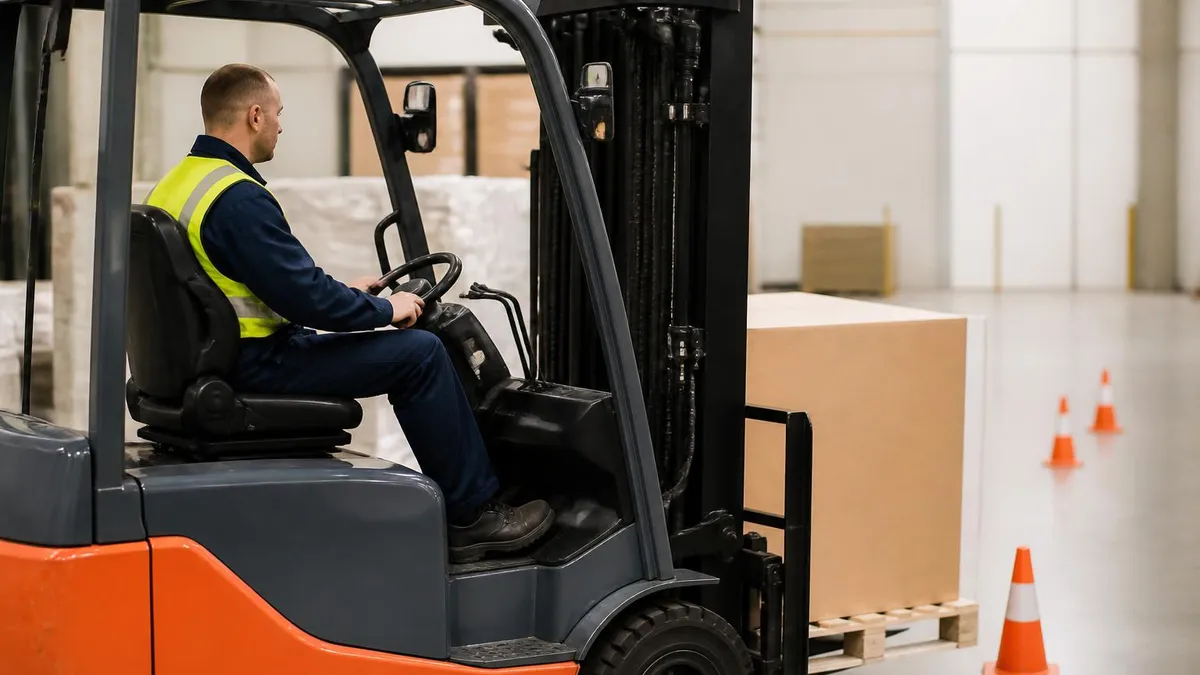
How a Forklift Certification Course Works: Step-by-Step
Enroll in a Formal Training Program
Complete Classroom and Online Instruction
Practice on the Equipment
Pass the Operator Evaluation
Receive Your Certification Card
Schedule Renewal Within 3 Years
OSHA's powered industrial truck standard, 29 CFR 1910.178(l), is the legal backbone behind every forklift certification course in the United States. The standard does not prescribe a single national curriculum or require a specific number of training hours. Instead, it mandates that training be tailored to the operator, the equipment, and the workplace conditions.
This performance-based approach gives employers and training providers flexibility, but it also places the burden of adequacy squarely on the organization conducting the training. If an operator is involved in an accident and OSHA investigates, inspectors will ask to see written training records, evaluation documentation, and evidence that the training covered topics relevant to the actual workplace hazards the operator faces.
The three-part structure of OSHA-compliant forklift training consists of formal instruction, practical training, and an evaluation. Formal instruction can be delivered through lectures, videos, computer-based modules, or written materials. It must cover the specific types of forklifts used at the site, the hazards of the operating environment, refueling or recharging procedures, load handling requirements, and surface conditions such as ramps or loading docks.
Practical training must occur on the actual equipment or on equipment representative of what the operator will use. Evaluations must be conducted by someone with the knowledge, training, and experience to train operators and determine if they are competent — a standard that typically means a certified trainer or experienced supervisor.
One of the most commonly misunderstood aspects of the OSHA forklift standard is workplace-specificity. Even if an operator arrives with a forklift certification card from a previous employer, the new employer must conduct a site-specific evaluation before allowing that operator to work independently. The previous certification demonstrates that the operator received training, but it does not mean they are familiar with your facility's traffic patterns, load types, floor conditions, or emergency exit locations. This workplace evaluation can be as brief as a supervised walkthrough and checklist review for experienced operators, but it must be documented.
Employers who operate multiple classes of forklifts face additional complexity. A worker certified on a Class IV internal combustion cushion-tire forklift must be separately trained and evaluated before operating a stand up forklift (Class II) or a Class III electric hand/rider truck. Each class handles differently, requires different pre-operation checks, and presents distinct stability challenges. Warehouse managers who reassign operators to unfamiliar equipment without providing class-specific training are not only violating OSHA rules — they are creating accident conditions that could result in serious injuries and six-figure OSHA penalties.
Refresher training requirements are equally important and frequently overlooked. OSHA requires retraining whenever an operator is observed operating the equipment unsafely, is involved in an accident or near-miss incident, receives an evaluation showing unsafe operation, or is assigned to a different type of forklift. The standard also requires that operators be evaluated at least once every three years regardless of whether any triggering event has occurred. Many companies wait until the three-year mark, but best practice is to conduct brief annual refresher reviews so that bad habits do not solidify and go unnoticed until the mandatory evaluation cycle rolls around.
Fines for OSHA forklift training violations can be substantial. As of 2026, willful violations carry fines up to $156,259 per violation, while serious violations are capped at $15,625. In fatal accident investigations, OSHA routinely cites multiple violations simultaneously, meaning a single incident can result in fines exceeding $500,000. Beyond fines, employers face workers' compensation costs, potential civil litigation, reputational damage, and the human cost of preventable injury. The economics strongly favor investing in thorough upfront training over paying the consequences of inadequate programs.
Understanding OSHA's forklift requirements also helps individual operators advocate for themselves. If your employer directs you to operate equipment you have not been trained on, you have the right to refuse the assignment and request training first. OSHA's whistleblower protection provisions protect workers who raise safety concerns from retaliation. Knowing your rights and your employer's obligations is part of being a professional, safety-conscious forklift operator — and it is knowledge that every forklift certification course worth attending will cover in depth.
Forklift certification Practice Test Questions
Prepare for the Forklift certification Certification exam with our free practice test modules. Each quiz covers key topics to help you pass on your first try.
Forklift certification Certification Forkl...
Forklift certification Exam Questions covering Certification Forklift certification Maintenance and Repairs. Master Forklift certification Test concepts for certification prep.
Forklift certification Certification Forkl...
Free Forklift certification Practice Test featuring Certification Forklift certification Maintenance and Repairs Questions and Answers. Improve your Forklift certification Exam score with mock test prep.
Forklift certification Certification Forkl...
Forklift certification Mock Exam on Certification Forklift certification Operator Training and Certification Requirements. Forklift certification Study Guide questions to pass on your first try.
Forklift certification Certification Forkl...
Forklift certification Test Prep for Certification Forklift certification Operator Training and Certification Requirements Questions and Answers. Practice Forklift certification Quiz questions and boost your score.
Forklift certification Load Handling and S...
Forklift certification Questions and Answers on Load Handling and Stability. Free Forklift certification practice for exam readiness.
Forklift certification OSHA Regulations an...
Forklift certification Mock Test covering OSHA Regulations and Compliance. Online Forklift certification Test practice with instant feedback.
Forklift certification Pre-Operation Inspe...
Free Forklift certification Quiz on Pre-Operation Inspections. Forklift certification Exam prep questions with detailed explanations.
Forklift certification Refueling and Recha...
Forklift certification Practice Questions for Refueling and Recharging Procedures. Build confidence for your Forklift certification certification exam.
Forklift certification Safe Driving and Ma...
Forklift certification Test Online for Safe Driving and Maneuvering. Free practice with instant results and feedback.
Forklift certification Workplace Hazard Id...
Forklift certification Study Material on Workplace Hazard Identification. Prepare effectively with real exam-style questions.
Forklift certification Forklift Instructions
Free Forklift certification Test covering Forklift Instructions. Practice and track your Forklift certification exam readiness.
Forklift certification Forklift MCQ
Forklift certification Exam Questions covering Forklift MCQ. Master Forklift certification Test concepts for certification prep.
Forklift certification Forklift Employer R...
Free Forklift certification Practice Test featuring Forklift Employer Responsibilities. Improve your Forklift certification Exam score with mock test prep.
Forklift certification Forklift Penalties ...
Forklift certification Mock Exam on Forklift Penalties for Non-Compliance. Forklift certification Study Guide questions to pass on your first try.
Electric Forklift, Stand Up Forklift, and Propane Forklift Training Differences
Electric forklift training emphasizes battery management procedures, charging station safety, and understanding the reduced power curve that occurs as battery charge depletes. Operators learn to recognize warning indicators, avoid deep-discharging batteries, and follow lockout/tagout procedures when servicing electrical components. Because electric forklifts produce no exhaust emissions, they are commonly used in food-grade or pharmaceutical warehouses where air quality standards are strict.
The electric forklift class also includes instruction on operating in tight indoor environments where the vehicle's near-silent operation creates pedestrian hazard challenges. Unlike propane or diesel counterparts, electric models require operators to understand weight distribution changes as the battery discharges, which can subtly affect the truck's rated capacity and stability. Training programs that cover electric forklifts typically dedicate at least 90 minutes to battery handling alone.
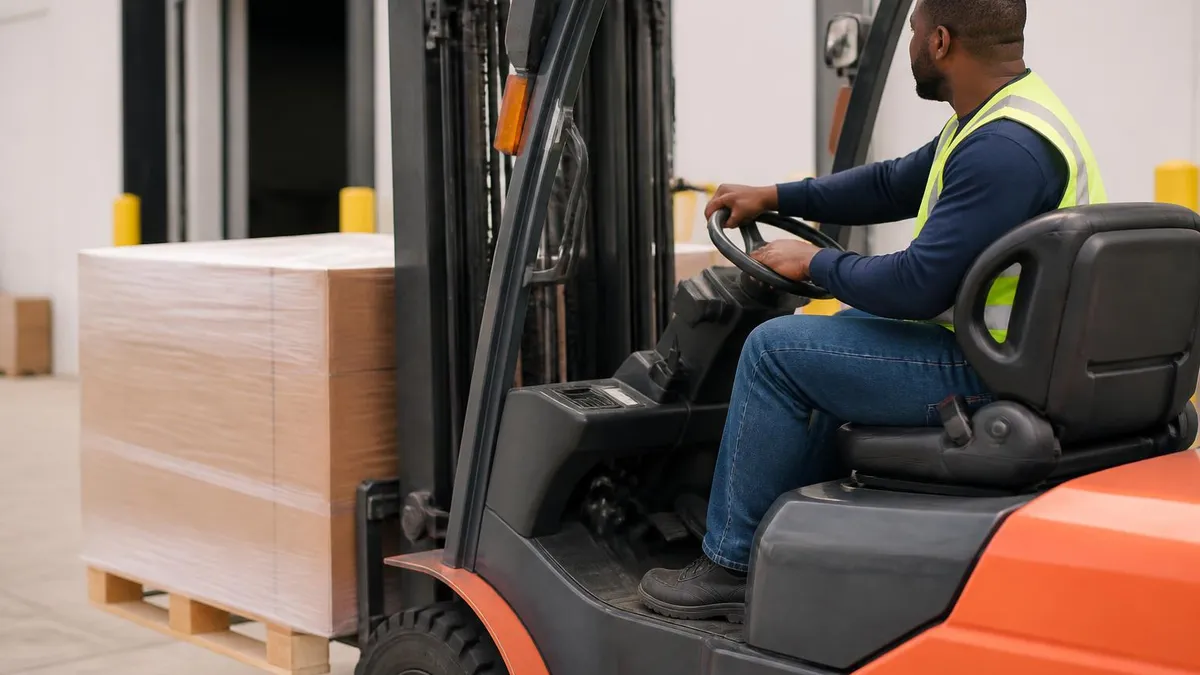
Employer-Sponsored Training vs. Independent Certification Programs
- +Employer-sponsored training is free to the operator and completed on paid work time
- +Training uses the exact equipment and site conditions the operator will encounter daily
- +Employer retains all certification documentation, reducing operator administrative burden
- +On-site trainers understand facility-specific hazards and can tailor instruction accordingly
- +Immediate hands-on access to the full equipment fleet for multi-class certifications
- +Faster path to employment since certification and hiring happen simultaneously
- −Employer-sponsored programs vary widely in quality and may not meet OSHA standards rigorously
- −Operators have less control over training pace or depth of instruction
- −Certification is tied to one employer; new employers still require site-specific evaluations
- −Independent training gives operators a portable credential recognized before job applications
- −Private training centers often provide more thorough instruction because reputation depends on it
- −Employer programs may skip important topics if production pressure limits training time
Forklift Operator Certification Checklist: What You Need to Complete
- ✓Enroll in an OSHA-compliant forklift certification course that covers your specific equipment class.
- ✓Complete all formal instruction modules including load stability, pre-operation inspection, and OSHA regulations.
- ✓Participate in supervised hands-on practice sessions on the actual forklift type you will operate.
- ✓Pass the written or oral knowledge assessment covering safety rules and equipment specifications.
- ✓Successfully complete the practical operator evaluation conducted by a qualified trainer or supervisor.
- ✓Obtain your certification card documenting equipment class, training date, and evaluator signature.
- ✓Ensure your employer files your training records in the company's safety documentation system.
- ✓Request site-specific evaluation training whenever starting at a new workplace or facility.
- ✓Schedule refresher training immediately if involved in any accident, near-miss, or unsafe-operation observation.
- ✓Mark your three-year renewal date and plan recertification training at least 60 days in advance.
There Is No Federal Forklift License — Employers Certify Operators
Many workers search for a government-issued forklift license, but OSHA does not issue one. Under 29 CFR 1910.178(l), certification is an employer responsibility. The certification card you receive is an employer document, not a government license. This means individual operators benefit greatly from completing an independent training program at a certified school, since that credential is portable and demonstrates competency before any employer relationship begins.
The cost of a forklift certification course varies considerably depending on the delivery format, geographic location, and whether training is sponsored by an employer or pursued independently. Employer-sponsored programs are typically free to the worker, with the company absorbing all costs associated with instructor time, facility use, and documentation.
For individuals who need to self-fund their certification — perhaps because they are between jobs or entering the field for the first time — private training center programs typically range from $150 to $400 for a single equipment class. Programs that cover multiple forklift classes in one enrollment period may cost $500 to $700 but represent significant savings compared to taking each class separately.
Community colleges and vocational training schools frequently offer the most affordable independent options, with programs priced between $75 and $200 because these institutions receive state funding subsidies. Many community college forklift programs also connect graduates with local employers, effectively functioning as a placement pipeline. If you are located in a metropolitan area, check your local community college's continuing education or workforce development catalog before paying full price at a private provider. Availability varies significantly by region, with the Midwest, Southeast, and California having the widest selection of low-cost public training programs.
Online forklift certification courses present a more nuanced picture. Several providers advertise fully online certification for $50 to $100, but these programs can only satisfy the formal instruction component of OSHA's three-part training requirement. OSHA is explicit that the hands-on practical training and operator evaluation cannot be completed online.
Any provider claiming to offer a fully compliant OSHA certification through online-only delivery is misrepresenting their product. These online theory courses can be genuinely useful as a supplement — for example, completing theory modules at home before your employer's in-person evaluation day — but they do not stand alone as complete certifications.
When comparing programs, ask providers five key questions: Does the program cover my specific forklift class? Does it include supervised hands-on training time? Who conducts the operator evaluation, and what qualifications does the evaluator hold? What documentation do I receive upon completion? And does the training record meet OSHA's documentation requirements? Reputable programs will answer all five questions clearly and provide sample documentation before you commit. Avoid any provider who is evasive about evaluator qualifications or who cannot produce a sample certification card.
Forklift rental companies are sometimes an underappreciated resource for individuals seeking training. Companies that specialize in forklift rental and forklift rentals often partner with or directly offer operator training programs, since their business depends on customers operating equipment safely. If you are a small business owner who has arranged a forklift rental near me search and found a local dealer, ask whether they offer operator training alongside the rental agreement. Some dealers include a half-day safety orientation as part of longer rental packages, which can satisfy the site-specific evaluation requirement for workers who already hold prior class certifications.
For employers building a training program from scratch, budgeting $200 to $500 per operator per class for initial certification is a reasonable baseline. Costs decrease significantly when you train operators in groups rather than individually, since instructor time and facility costs are shared. Employers should also factor in the cost of refresher training every three years, which typically runs 50 to 75 percent of initial certification costs since the formal instruction component can be compressed for experienced operators. Documenting all training costs as a safety investment for insurance and tax purposes is standard practice among risk-conscious warehouse operations.
Forklift for sale listings sometimes include operator training packages as a value-added incentive, particularly for businesses purchasing their first forklift. Dealers who sell new electric forklifts or large IC forklifts often have manufacturer-certified trainers on staff who can conduct OSHA-compliant certification as part of the equipment onboarding process. If you are evaluating a forklift for sale and the dealer offers operator training, request details about the program's OSHA compliance documentation before assuming it fully satisfies your legal training obligation.
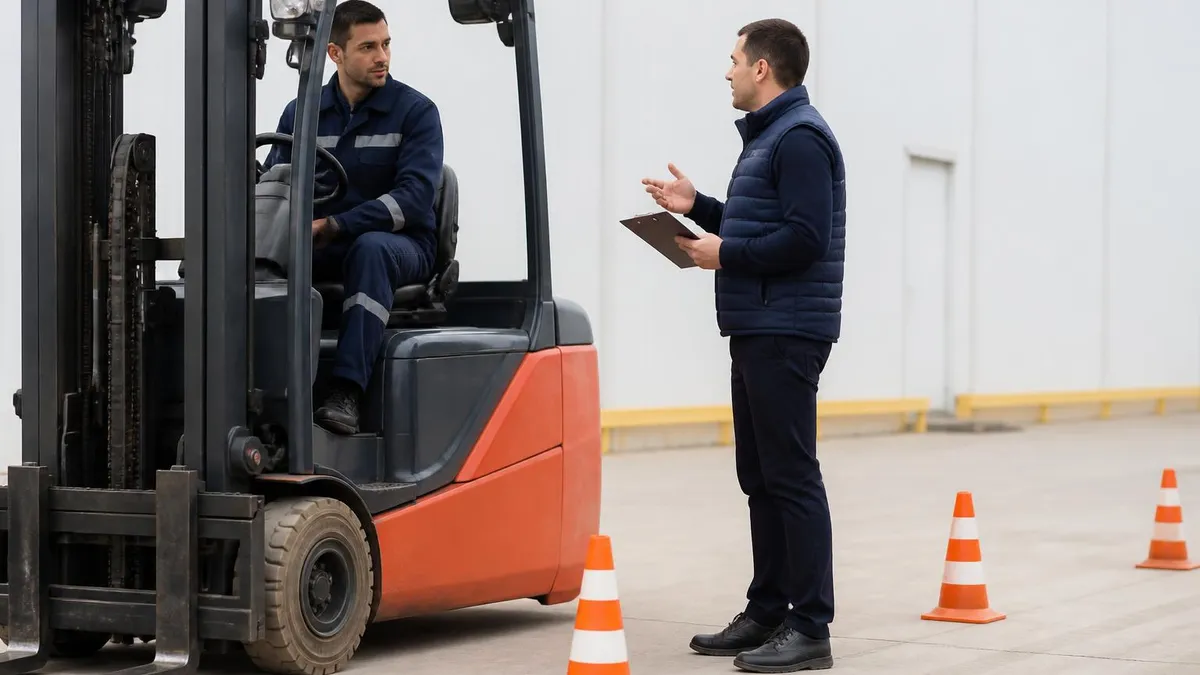
Online forklift certification programs that claim to fully certify operators without any hands-on training component violate OSHA 29 CFR 1910.178(l). Employers who accept these certificates without conducting a site-specific practical evaluation and performance assessment remain legally liable for training non-compliance. If OSHA investigates an accident and discovers your operators hold online-only certifications with no documented hands-on evaluation, you face serious fines and potential shutdown orders.
Forklift recertification and license renewal are areas where many experienced operators and employers become complacent, often to their detriment. OSHA's three-year maximum recertification cycle is a ceiling, not a target. Best practice in high-activity operations is to conduct formal refresher evaluations annually and to monitor operator performance continuously through supervisor observation checklists. The reality is that forklift operating habits drift over time: operators begin taking shortcuts on pre-shift inspections, travel faster than safe speeds in pedestrian zones, or develop improper load-handling techniques that go uncorrected for months until they contribute to an accident.
Recertification programs do not need to be as time-intensive as initial certification. For operators who have been working safely without incident, a recertification event might consist of a two-hour refresher covering recent OSHA updates, a review of any new equipment or workplace changes, and a practical evaluation that takes 30 to 45 minutes on the floor. The key is that the evaluation must be documented and must specifically address any areas where the operator's technique has drifted from established safe practices. Generic recertification programs that do not observe actual operator behavior fail to catch the site-specific habits that cause accidents.
Triggering events that require immediate recertification outside the standard three-year cycle include any observed unsafe operation, any accident or near-miss event, any situation where the operator receives a performance evaluation indicating unsafe operation, and any assignment to operate a new class or type of forklift. Employers who observe a forklift operator making an unsafe maneuver and do not document it and require immediate refresher training are creating a paper trail that will work against them in any subsequent OSHA investigation. The moment of observation is the triggering event; the clock starts ticking from that point.
Multi-employer worksites present additional recertification complexity. On construction sites or large distribution campuses where contract workers from multiple employers operate forklifts, each employer remains responsible for their own workers' certification status. However, the host employer also has obligations to ensure that contract operators working at their site have been evaluated for site-specific conditions. Documenting contractor certification records and conducting brief site orientation evaluations for all visiting operators is standard practice on well-managed multi-employer sites.
Technology is increasingly changing how recertification is delivered and documented. Several warehouse management system providers now offer digital certification tracking modules that automatically alert supervisors when an operator's certification is approaching expiration. RFID-based access control systems can be configured to prevent uncertified operators from powering on forklifts, creating a physical compliance enforcement mechanism that supplements administrative tracking. Some large employers use mounted cameras on forklifts combined with telematics systems to flag speeding, harsh braking, and improper load handling events for supervisor review, effectively creating a continuous monitoring system that can trigger targeted refresher training as soon as unsafe habits appear.
The career benefits of maintaining current certification cannot be overstated. Operators who keep their certifications current across multiple equipment classes are significantly more valuable to employers than single-class operators. An operator certified on Class I electric counterbalanced, Class II stand up reach trucks, and Class IV IC cushion-tire forklifts commands higher wages and enjoys greater job security because they can fill multiple roles in a warehouse operation.
Adding specialty certifications such as rough-terrain or pallet jack can further expand earning potential. Building a multi-class certification portfolio over a two-to-three-year career trajectory is one of the most cost-effective professional development strategies available to warehouse workers.
Employers who invest in comprehensive recertification programs also see measurable returns beyond regulatory compliance. Studies by the National Safety Council have found that rigorous forklift training programs reduce accident rates by 25 to 40 percent compared to minimal-compliance training. Lower accident rates translate directly to reduced workers' compensation premiums, less equipment damage, lower turnover from injury-related departures, and higher productivity because certified operators handle loads faster and more precisely than undertrained workers. The return on investment for thorough forklift certification training, including regular recertification, is consistently positive across all facility sizes and industry types.
Practical preparation for your forklift certification course evaluation begins well before you step onto the training floor. The most effective approach is to study the fundamentals of load stability theory, which is the topic that trips up the largest number of first-time candidates. The stability triangle concept — the three-point support formed by the two front drive wheels and the single rear pivot point of a counterbalanced forklift — is the foundation of everything you will do on the floor.
Understanding why loads must be carried as low as possible, why the rated capacity decreases as the load center moves forward, and why turning with a raised load creates catastrophic tip-over risk will make you a more instinctive and safer operator from the very first training day.
Pre-operation inspection is another area where advance preparation pays off. OSHA requires a forklift inspection before each shift or, at a minimum, daily if the forklift is used across multiple shifts. The inspection covers fluid levels, tire condition, forks and carriage integrity, lights and horn, brakes, steering, and mast operation. Memorizing the standard inspection sequence for your equipment class before training begins means you can focus on technique during hands-on sessions rather than struggling to recall checklist items under instructor observation. Most certification programs provide an inspection checklist on day one; review it the night before your practical training session.
One of the most overlooked aspects of forklift operator preparation is understanding load center and capacity rating charts. Every forklift has a nameplate that specifies its rated capacity at a standard load center — typically 24 inches for standard forklifts. If the actual load center of your cargo is greater than 24 inches (which happens with oversized pallets or awkwardly shaped loads), the effective capacity of the forklift is reduced.
Knowing how to read and apply a capacity reduction chart is a competency tested in virtually every operator evaluation, and candidates who cannot demonstrate this knowledge almost always fail the assessment. Practice with real nameplate data until the calculation becomes second nature.
Travel speed management is another common evaluation failure point. New operators tend to travel either too fast through pedestrian areas or too slowly on open straight runs, indicating that they have not internalized the contextual judgment required for safe operation.
In your practical sessions, actively work on adapting your speed to conditions: slow down before intersections even when your sightline is clear, come to a complete stop before reversing direction, and approach loading docks and rack positions at a crawl. Instructors are watching for deliberate, consistent speed management throughout your evaluation, not just in moments when they specifically prompt you to slow down.
Practice tests are an underutilized preparation tool for forklift certification candidates. The written or oral knowledge component of operator evaluations typically covers OSHA regulations, equipment classes, pre-operation inspection requirements, load handling rules, and workplace safety protocols. Completing practice questions in these areas before your evaluation sharpens recall under pressure and identifies knowledge gaps you can address with targeted review.
Candidates who use practice tests in the week before their evaluation consistently perform better on the formal assessment than those who rely solely on classroom attendance. The quiz resources available on this site are specifically designed to mirror the question formats and topic coverage used in real forklift operator evaluations.
If you are preparing for certification on a specific equipment type such as an electric forklift or a stand up forklift, tailor your study toward the unique characteristics of that class. For electric forklifts, focus on battery safety, charging procedures, and the reduced-capacity warning signs associated with low charge. For stand up reach trucks, emphasize narrow-aisle navigation, mast extension procedures, and emergency lowering protocols.
For IC forklifts, prioritize propane handling, ventilation requirements, and engine warning indicators. Reading the operator manual for your specific forklift model — available from the manufacturer's website or from your employer's safety officer — is one of the highest-value study activities available to any certification candidate.
Finally, approach your certification evaluation with the mindset of a professional, not a test-taker. OSHA's standard requires that you demonstrate competency, not just that you avoid obvious errors. Evaluators are looking for consistent safe habits: checking clearances before lifting, looking in the direction of travel, using the horn at blind corners, keeping the load tilted back during travel.
These habits should feel automatic by the time you reach your evaluation. If you find yourself thinking about them consciously during the assessment, you need more hands-on practice time before sitting for evaluation. Request additional training hours from your instructor rather than attempting the evaluation before you are truly ready — the cost of a failed evaluation in time and retesting fees far exceeds the cost of a few extra practice hours.
Forklift Questions and Answers
Forklift Tires: Complete Guide to Types, Sizing, Wear Patterns, and Replacement Costs
Forklift Operator Duties: Complete Guide to Daily Responsibilities, Safety Tasks, and Career Path for 2026
Forklift Course: Complete Training Guide, Certification Requirements, and Operator Tips for 2026
Forklift License Renewal: Complete Guide to Forklift License Expiry, OSHA Recertification, and Operator Requirements for 2026
Sit Down Forklift Jobs: Complete Guide to Careers, Pay, Training, and Hiring in 2026
About the Author

Certified Crane Operator & Skilled Trades Exam Specialist
Ferris State UniversityRobert Martinez is a Journeyman Ironworker, NCCCO-certified crane operator, and forklift trainer with a Bachelor of Science in Construction Technology from Ferris State University. He has 21 years of ironworking, rigging, and heavy equipment operation experience across high-rise and industrial construction sites. Robert prepares candidates for crane operator, rigger, forklift, and skilled trades certification examinations.