
Forklift Truck Course Prices: Complete Guide to Forklift Training Cost in 2026 September
🎓 Compare forklift truck course prices, certification costs, and training options. Real numbers for operators, employers, and job seekers in 2026 September.

If you are researching forklift truck course prices for the first time, you will quickly discover that costs vary enormously depending on your location, the type of forklift you want to operate, the training format you choose, and whether your employer is covering the bill.
In 2026, new operators across the United States typically spend between $150 and $600 on initial certification training, while employers who bring a trainer on-site to certify an entire crew can pay $1,000 to $3,000 or more per session. Understanding exactly what drives these numbers is the first step toward making a smart financial decision about your training investment.
The forklift rental and ownership market has expanded significantly over the past decade, and with that growth has come an increased demand for certified forklift operators. Whether you are eyeing a counterbalance sit-down model, a stand up forklift for tight warehouse aisles, or a modern electric forklift designed for indoor use, each equipment class requires specific training under OSHA 1910.178 regulations. Certification of forklift operators is not optional — it is a federal legal requirement, and employers who skip it face fines that can dwarf whatever they saved by cutting corners on training budgets.
Many aspiring operators wonder whether they should pursue training through a community college, a private forklift school, an online certification program, or directly through their employer's in-house program. Each pathway carries distinct price points, scheduling flexibility, and credibility with future employers. Online-only programs start as low as $50 for the classroom portion, but they must still be paired with a hands-on practical evaluation before a certificate is legally valid. Community college programs typically run $200 to $400 and bundle both classroom instruction and practical testing into a single enrollment fee.
Employer-sponsored training is the most common route for workers who already have a job lined up. Under OSHA rules, employers are responsible for ensuring their operators are trained and evaluated before driving any powered industrial truck, which means many companies absorb the cost entirely. For job seekers trying to enter the warehouse or logistics industry, however, self-pay training is often the gateway that separates them from hundreds of uncertified applicants. Learning exactly what you will receive for your money — and what OSHA actually requires — is essential before you hand over a credit card to any training provider.
Beyond initial certification, forklift operators must complete refresher training every three years or whenever a safety incident occurs, a close call is observed, or an operator is assigned to a new type of equipment. These renewal sessions are generally shorter and less expensive than initial training, typically running $75 to $200 per operator, but they add up over a career. Smart operators and safety managers build these recurring costs into long-term workforce planning budgets rather than scrambling to find funds when renewal deadlines arrive unexpectedly.
The forklift industry itself is evolving rapidly, with electric forklift models now commanding a larger share of new equipment purchases and demanding operators who understand battery management, regenerative braking, and silent operation hazards unique to electric powertrains. Some specialized training courses for electric models carry premium price tags, reflecting the extra content and the instructors' specialized knowledge. If your workplace is transitioning from propane or diesel forklifts to electric, budgeting for supplemental training alongside your standard certification of forklift coursework is a smart move that protects both workers and capital equipment.
This comprehensive guide breaks down every cost factor you need to know — from initial certification through renewal, from individual self-pay training to large-scale employer programs — so you can plan confidently and pass your evaluation on the first attempt. We also cover the best ways to prepare using free and low-cost practice resources, including the forklift training cost calculator tools and practice tests available right here on PracticeTestGeeks.com.
Forklift Certification by the Numbers

Forklift Training Cost Breakdown by Program Type
Understanding what your money actually buys when you enroll in a forklift certification program is crucial for evaluating competing offers. OSHA's powered industrial truck standard — 29 CFR 1910.178(l) — mandates that training must cover three distinct components: formal instruction (classroom or online material covering theory, regulations, and hazard recognition), practical training (hands-on demonstration and operation of the specific forklift type), and an operator evaluation (a performance test conducted by a qualified trainer in your actual workplace). A certificate issued without all three elements is not legally compliant, regardless of how official it looks or how much you paid.
The specific topics covered in a compliant forklift operator certification program include pre-operation inspection procedures, safe load handling techniques, travel rules within pedestrian zones, refueling or recharging protocols, ramp and grade navigation, load capacity calculations, and environmental hazard recognition. For specialized equipment like a stand up forklift or reach truck, additional content covers the unique stability characteristics of those designs. Operators transitioning to an electric forklift from an internal combustion model need instruction on battery charging safety, since hydrogen gas buildup in charging areas creates explosion risks that propane operators never face.
One of the most important distinctions in forklift training is the difference between a generic certificate and a workplace-specific evaluation. OSHA requires that the final operator evaluation happen in the conditions where the operator will actually work — meaning a certificate earned at a training school still requires a follow-up evaluation by your employer before you are legally authorized to operate their specific equipment in their specific facility.
Many new operators are surprised by this requirement, assuming their school certificate is a universal license. It is not. Think of the school certificate as proof of classroom competence; the employer evaluation is what legally clears you to drive.
The types of forklifts are officially classified by OSHA into seven categories: Class I (electric motor rider trucks), Class II (electric motor narrow aisle trucks), Class III (electric motor hand trucks or hand/rider trucks), Class IV (internal combustion engine trucks with cushion tires), Class V (internal combustion engine trucks with pneumatic tires), Class VI (electric and internal combustion engine tractors), and Class VII (rough terrain forklifts). If your job requires you to operate more than one class — for example, both a sit-down counterbalance forklift and an order picker — you need separate training and evaluation for each class.
This is a commonly overlooked cost multiplier for operators who work in multi-equipment environments.
Employers in the warehousing, manufacturing, construction, and logistics industries are legally obligated to provide and pay for this training when they are assigning workers to operate powered industrial trucks. This obligation extends to temporary staffing agency workers placed at a facility — the host employer (not the staffing agency) is responsible for site-specific evaluation. If you are a temporary worker and your employer is pressuring you to operate equipment without documented training, that is a reportable OSHA violation, not a gray area. Knowing your rights can protect your safety and shield you from liability in the event of an accident.
For individuals paying out of pocket to become more marketable, the key investment consideration is whether the training program provides a written certificate that clearly states the class of equipment covered, the date of training, and the name of the evaluating trainer. Many online-only programs issue digital certificates that look professional but lack the employer evaluation component, making them valuable for job applications but not sufficient on their own for legal operation.
The wisest strategy for self-paying candidates is to complete an online or community college classroom portion, then negotiate with a prospective employer to conduct the practical evaluation — effectively splitting the cost and demonstrating initiative at the same time.
Forklifts are a significant capital investment for any operation: a new electric forklift can cost $30,000 to $80,000, while even a used forklift for sale typically runs $10,000 to $25,000. Forklift rentals offer a lower-commitment alternative, with forklift rental rates averaging $200 to $700 per day or $1,200 to $3,500 per month depending on capacity and type. Given these equipment values, the few hundred dollars spent on proper operator training is genuinely one of the best returns on investment in any warehouse budget, reducing accident rates, product damage claims, and OSHA liability exposure simultaneously.
Forklift Training Formats: Online, In-Person, and Employer-Led
Online forklift training courses cover the classroom theory component of OSHA-required certification and typically cost between $50 and $150 per person. These programs are available 24/7, allowing workers to complete the material at their own pace without scheduling conflicts or travel expenses. Reputable online providers include structured modules on OSHA regulations, pre-shift inspection checklists, load stability principles, and hazard recognition, followed by a multiple-choice knowledge test. Upon passing, students receive a completion certificate documenting the classroom portion of their training.
The critical limitation of online-only programs is that they cannot replace the hands-on practical training and operator evaluation components required by OSHA. A learner who completes an online course and receives a certificate has legally completed only one-third of the required training. To become a fully compliant forklift operator, they must still complete practical driving instruction and pass a supervised performance evaluation on the specific type of equipment they will operate — which typically occurs at their employer's facility under the supervision of a qualified trainer designated by the company.

Self-Pay Training vs. Employer-Sponsored Certification: What's Right for You?
- +Earns a credential before you have a job offer, making you more competitive in applications
- +Gives you flexibility to choose the training format, schedule, and equipment class that fits your goals
- +Demonstrates initiative and investment in your professional development to hiring managers
- +Allows training on multiple equipment classes simultaneously to broaden your operator qualifications
- +Community college programs often include career services and employer networking opportunities
- +Online classroom options keep upfront costs low while you search for a company to conduct your practical eval
- −Out-of-pocket costs range from $150 to $600 or more for comprehensive programs
- −School-issued certificates still require an employer evaluation before legal operation is permitted
- −No guarantee that any specific employer will accept a given training provider's documentation
- −Self-paced online programs require self-discipline and may lack real-time instructor feedback
- −Equipment access is limited outside of school programs, making practical skill development harder
- −Renewal training every three years adds recurring costs throughout your career
Forklift Operator Certification Renewal Checklist
- ✓Confirm your original certification date and calculate your three-year renewal deadline
- ✓Identify which OSHA forklift class or classes your renewal must cover
- ✓Check whether any safety incidents or near-misses since your last certification require immediate refresher training
- ✓Verify that your employer has a qualified trainer authorized to conduct the renewal evaluation
- ✓Complete any updated classroom or online refresher material covering regulatory changes since your last cert
- ✓Schedule hands-on practical time on the specific equipment class you will be re-evaluated on
- ✓Confirm that the renewal documentation includes equipment type, evaluation date, and trainer name
- ✓Ask your employer to update your training records in their safety management system immediately after renewal
- ✓Review the pre-shift inspection checklist for your specific equipment model to refresh daily-use habits
- ✓Request a copy of your updated certificate and keep it accessible in case of an OSHA audit
Group Training Slashes Per-Person Costs by Up to 60%
Employers who schedule group certification sessions for five or more operators at once can reduce per-person training costs from $400–$600 to as little as $150–$200 per operator. If your workplace has multiple employees due for initial or renewal certification, coordinating a single on-site training day with a qualified provider is almost always the most economical and operationally efficient approach — and the site-specific training automatically satisfies OSHA's workplace-condition evaluation requirement.
One of the most financially painful mistakes new operators and small business owners make is underestimating the hidden costs associated with forklift certification — costs that go well beyond the training course fee itself. The most significant hidden cost is lost productivity during training.
When an operator spends a full day in certification training, that is a full day they are not moving product, loading trucks, or stacking pallets. For businesses operating on thin warehouse margins, this opportunity cost can exceed the training fee itself, which is why bundling certification for multiple employees into a single day is so operationally smart.
Equipment rental costs for training purposes represent another frequently overlooked expense. Private training schools include equipment access in their fees, but companies that bring a trainer on-site need to ensure their own forklifts are available and properly maintained for training use. If your primary operational forklifts are running production during the training session, you may need to arrange a forklift rental specifically for the certification day — adding $200 to $700 to your total cost. This is especially common at smaller operations where every piece of equipment is in constant use and downtime is not easily absorbed.
Training documentation and record-keeping also carry indirect costs that are easy to ignore until an OSHA inspection arrives. OSHA requires employers to maintain training records that document who was trained, when they were trained, who conducted the training, and what equipment class was covered. If your record-keeping system is a paper binder in a filing cabinet, the administrative time spent maintaining and retrieving those records during an audit represents real labor cost.
Safety management software that tracks certification dates, sends renewal reminders, and stores digital training records runs $50 to $300 per month for small to mid-size operations but typically pays for itself the first time it prevents a lapsed certification from reaching an inspector.
Another hidden cost that catches employers off guard is the expense of training employees who subsequently leave the company. In high-turnover industries like warehousing and light manufacturing, annual operator turnover rates of 30% to 50% are not unusual. If you spend $400 certifying a new hire and they leave within six months, you have effectively paid for a credential that now benefits their next employer.
Some companies address this with training repayment agreements — contracts that require employees to reimburse a prorated portion of training costs if they leave within a specified period — though enforcement varies and these agreements must be carefully drafted to comply with state wage and hour laws.
Geographic cost variations are more pronounced than most operators expect. Forklift training in high cost-of-living metropolitan areas like New York City, San Francisco, or Seattle typically runs 30% to 50% higher than the national average, with some programs charging $800 or more for a single-operator certification.
Meanwhile, rural areas in the Midwest and South tend to have more competitive pricing driven by lower operating costs for training providers, with comprehensive programs often available for $200 to $300. If you live near a state border, it is worth checking training providers in neighboring states — the drive may be worth the savings, especially if you need to certify multiple equipment classes.
The rise of virtual reality (VR) forklift simulation training represents an emerging cost factor that will increasingly affect training budgets over the next several years. VR simulation platforms allow operators to practice in photorealistic virtual warehouses without any risk to physical equipment or personnel, accelerating skill development and reducing the time needed for supervised practical training.
Some large logistics employers have invested $50,000 to $200,000 in VR simulation labs, but cloud-based VR training subscriptions are now available for as little as $500 per month for unlimited operator access. While VR simulation cannot replace OSHA-required hands-on evaluation, it significantly reduces the number of supervised hours needed before an operator is ready to test — cutting both instructor time costs and equipment wear during training.
Insurance implications are another dimension of forklift certification costs that businesses often discover too late. Most commercial general liability and property insurance policies contain language requiring that operators of powered industrial equipment be properly trained and certified.
An accident involving an uncertified operator can result in claim denial, policy cancellation, and personal liability exposure for business owners. The cost of a single denied insurance claim following a forklift accident — which can easily reach $100,000 or more in property damage, medical costs, and legal fees — makes even the most expensive training program look like a trivial line item in retrospect.

OSHA can issue citations of up to $13,653 per serious violation and up to $136,532 per willful or repeated violation for failing to train and certify forklift operators. These fines apply per operator, per citation — meaning a warehouse with five uncertified drivers could face penalties exceeding $68,000 in a single inspection. Beyond financial penalties, uncertified operators expose employers to unlimited civil liability if a workplace accident occurs.
Preparing thoroughly for your forklift certification evaluation is the most direct way to ensure your training investment pays off on the first attempt. The practical evaluation component is where many candidates stumble — not because they lack knowledge, but because nerves, unfamiliarity with the specific equipment, or gaps in pre-shift inspection knowledge undermine an otherwise solid skill set. Approaching your evaluation with a structured preparation strategy makes a meaningful difference in first-time pass rates and helps you build the habits that will keep you safe throughout your career as a forklift operator.
Start your preparation by mastering the pre-shift inspection checklist for your specific forklift class. OSHA requires operators to inspect their equipment before every shift, and evaluators almost always begin practical tests with a walkaround inspection.
Knowing exactly what to check — fluid levels, tire condition, fork wear and heel cracks, mast operation, horn function, lights, safety devices, and battery or fuel levels — and executing it methodically without prompting demonstrates the kind of operational discipline that evaluators are looking for. Practicing the inspection routine until it becomes automatic takes only a few repetitions but signals professionalism that generic certificate holders often lack.
Load handling skills are the second most common evaluation failure point. Specifically, candidates struggle with proper fork positioning before engaging a load, smooth and controlled mast operation, load stabilization during travel, and navigating turns without swinging the load. The fundamental rule — always travel with the load lowered and tilted back, forks approximately six to eight inches above the ground — sounds simple but is surprisingly easy to forget under the stress of evaluation. Practicing this habit consciously during any familiarization driving time you get before the evaluation will save you from the most common automatic failure condition.
Pedestrian awareness is evaluated both on knowledge tests and practical evaluations, and it is an area where the consequences of failure extend far beyond a failed test. Forklift accidents involving pedestrians are among the most severe workplace injuries recorded by OSHA, and evaluators take pedestrian right-of-way rules very seriously. Know where pedestrian zones are marked in your training facility, always sound your horn at intersections and blind corners, never exceed safe travel speeds in pedestrian areas, and never allow riders on the equipment unless it is specifically designed for passengers. These behaviors need to be instinctive, not recalled under pressure.
For the knowledge test portion of your certification, reviewing OSHA's forklift regulations directly is the most reliable preparation strategy. The primary standard — 29 CFR 1910.178 — is publicly available and covers everything from equipment specifications and load ratings to refueling procedures and stability triangle physics. Pay particular attention to the sections on operator training requirements, pre-shift inspection obligations, safe operating procedures, and maintenance responsibilities. Most knowledge tests are drawn directly from these regulatory requirements, so familiarity with the source material dramatically improves test performance compared to relying solely on a training course summary.
Practice tests are one of the highest-value free preparation tools available to forklift certification candidates. Working through realistic multiple-choice questions on maintenance procedures, certification requirements, and operating rules builds the kind of pattern recognition that helps you answer unfamiliar questions correctly by applying underlying principles rather than memorizing specific answers. PracticeTestGeeks.com offers multiple full-length practice sets specifically designed for forklift certification preparation, covering both maintenance and repairs content and operator training and certification requirements — the two knowledge domains that most consistently appear on evaluation knowledge tests.
Physical and mental readiness on evaluation day matters more than most candidates account for. Evaluators observe not just what you do but how you do it — whether you look both directions before proceeding through an intersection, whether you check your surroundings before backing, whether you keep your arms and legs inside the operator compartment at all times. These safety behaviors need to be habits, not performances.
Arriving well-rested, reviewing your inspection checklist one final time, and taking a few slow practice laps on the equipment before your timed evaluation begins gives you the best possible chance of demonstrating the calm, controlled, professional operation that evaluators want to see — and that will protect you every day you step into a forklift cab for the rest of your career.
Building a long-term certification and career strategy around your forklift operator credentials can significantly increase your earning potential and job security over time. Entry-level certified forklift operators in the United States earn median hourly wages of $17 to $21, but operators with multi-class certifications — covering two or more OSHA equipment classes — typically earn $22 to $28 per hour in high-demand markets.
Adding certifications for specialized equipment like rough terrain forklifts, telehandlers, or high-capacity electric forklifts used in automotive and steel manufacturing opens doors to premium-wage positions in industries where equipment mistakes have extremely high consequences and employers pay accordingly for verified competence.
Timing your certification strategically relative to the job market can also maximize your return on the training investment. The warehousing and logistics sector sees significant seasonal hiring surges in the third and fourth quarters as companies build inventory for the holiday retail season.
Completing your forklift certification in July or August positions you perfectly to enter the job market when demand for certified operators peaks and employers are most willing to offer competitive starting wages and sign-on bonuses. Conversely, candidates who earn certifications in January or February often face a more competitive labor market with less employer urgency to fill positions quickly.
The connection between forklift training and broader material handling credentials is worth understanding for operators with long-term career ambitions. The forklift certification of forklift operators is often the entry point into a broader world of powered industrial equipment credentials, including reach trucks, order pickers, turret trucks, and aerial work platforms. Safety professionals, warehouse managers, and operations supervisors in manufacturing and logistics almost universally have forklift certification in their backgrounds — it provides foundational knowledge of equipment stability, load physics, and regulatory compliance that transfers directly to higher-level safety and supervisory roles.
For operators considering whether to invest in a new versus used forklift for personal or business use alongside their training, the economics of the forklift market are important context. New forklifts range from approximately $20,000 for a small electric model to over $100,000 for large capacity internal combustion units.
The used forklift for sale market offers significant savings — quality reconditioned units sell for $8,000 to $30,000 — but buyers should verify that any equipment purchase includes updated maintenance records and that the machine passes a pre-purchase inspection by a qualified technician. Just as certification protects operators, verified equipment condition protects both operators and the investment itself.
Forklift rentals remain the dominant choice for businesses with intermittent material handling needs, seasonal workload spikes, or projects requiring specialized equipment for short periods. The forklift rental near me market has become highly competitive with the expansion of national rental networks alongside regional and local dealers, keeping rates relatively stable even during periods of high construction and warehouse activity.
Understanding whether your operation's usage pattern favors rental versus purchase versus lease is a financial analysis that should factor in not just equipment costs but operator training costs — since renting equipment from multiple different manufacturers means your operators may need familiarization training each time a different model arrives on site.
The electric forklift segment deserves special attention from operators and employers making training and equipment decisions in 2026. Electric models now represent over 65% of new forklift sales in the United States, driven by indoor air quality regulations, lower fuel costs, reduced maintenance requirements compared to internal combustion engines, and sustainability commitments by major retail and logistics companies.
Training programs increasingly include electric-specific content covering lithium-ion versus lead-acid battery systems, opportunity charging practices, thermal management, and the unique hazards of regenerative braking systems that can feel counterintuitive to operators accustomed to traditional diesel or propane equipment. Operators who earn specialized electric forklift certification early will find themselves increasingly competitive as the industry's equipment mix continues to shift.
The most important long-term investment any forklift operator can make is developing a reputation for safety, reliability, and continuous skill development. Employers track accident records, near-miss reports, and equipment damage incidents meticulously, and operators with clean records consistently earn faster wage increases, more desirable shift assignments, and first consideration for supervisory roles when they open.
Your initial forklift truck course price — whether $150 for an online program or $600 at a private school — is ultimately just the entry fee to a career that rewards ongoing professionalism. Every renewal certification, every practice test completed, and every safe operating habit maintained builds the kind of verifiable track record that makes certified forklift operators genuinely valuable in a labor market that will always need people who can move things safely.
Forklift Questions and Answers
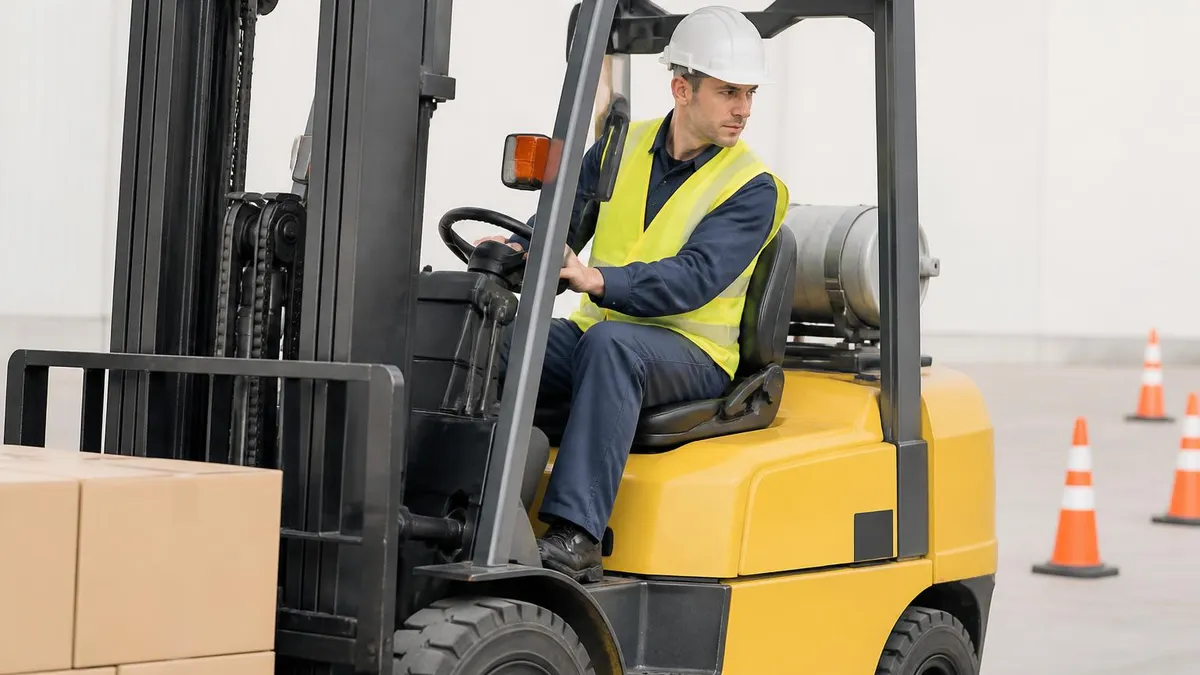
Forklift Rentals: Complete Guide to Pricing, Types, and Operator Requirements
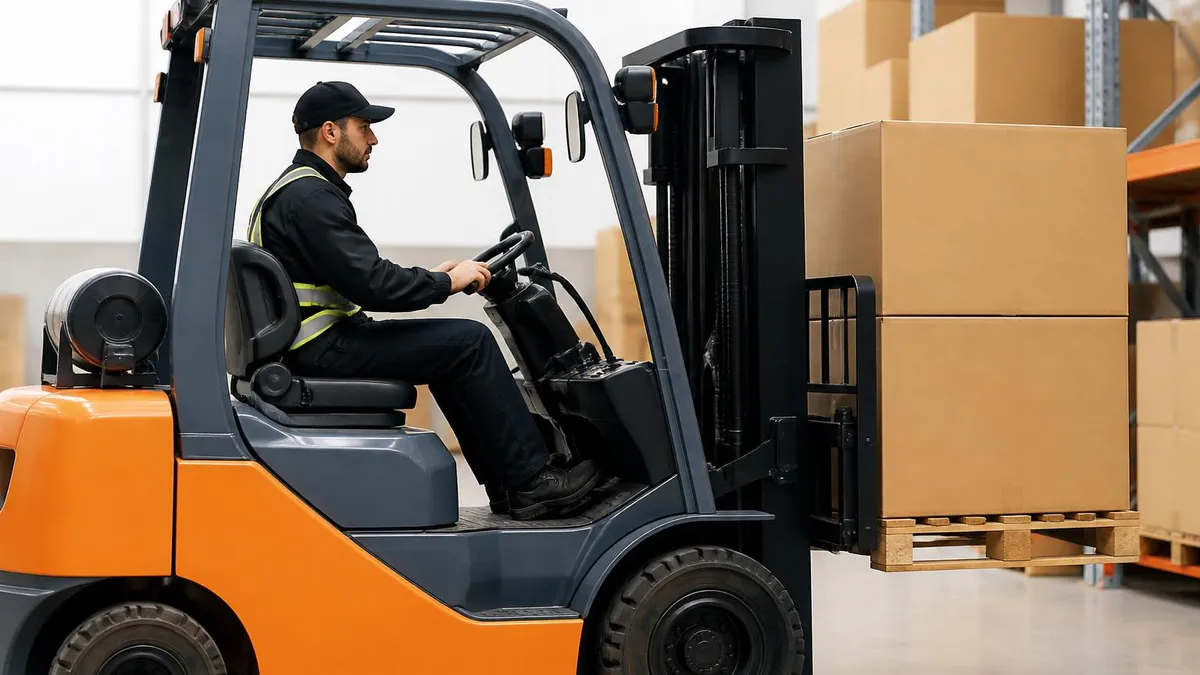
Forklift Hand Signals: The Complete OSHA Guide to Spotter Communication, Standard Gestures, and Safe Warehouse Operations
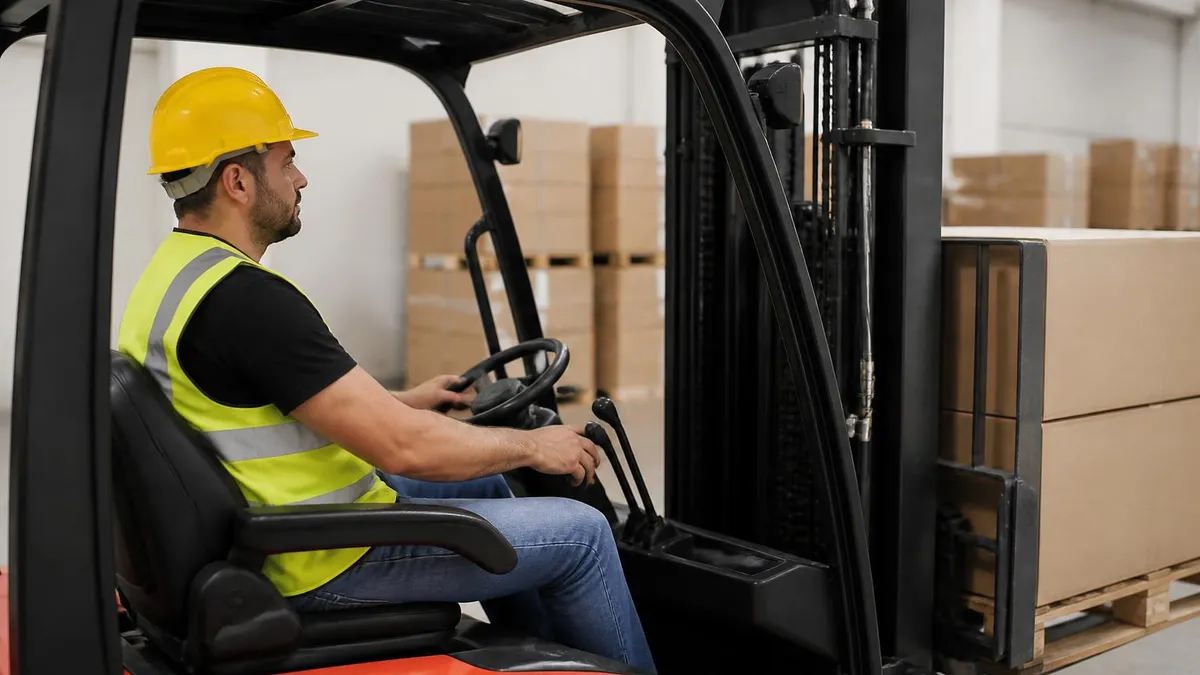
Forklift Hydraulic Fluid: Complete Guide to Types, Specifications, Change Intervals, and Troubleshooting for 2026
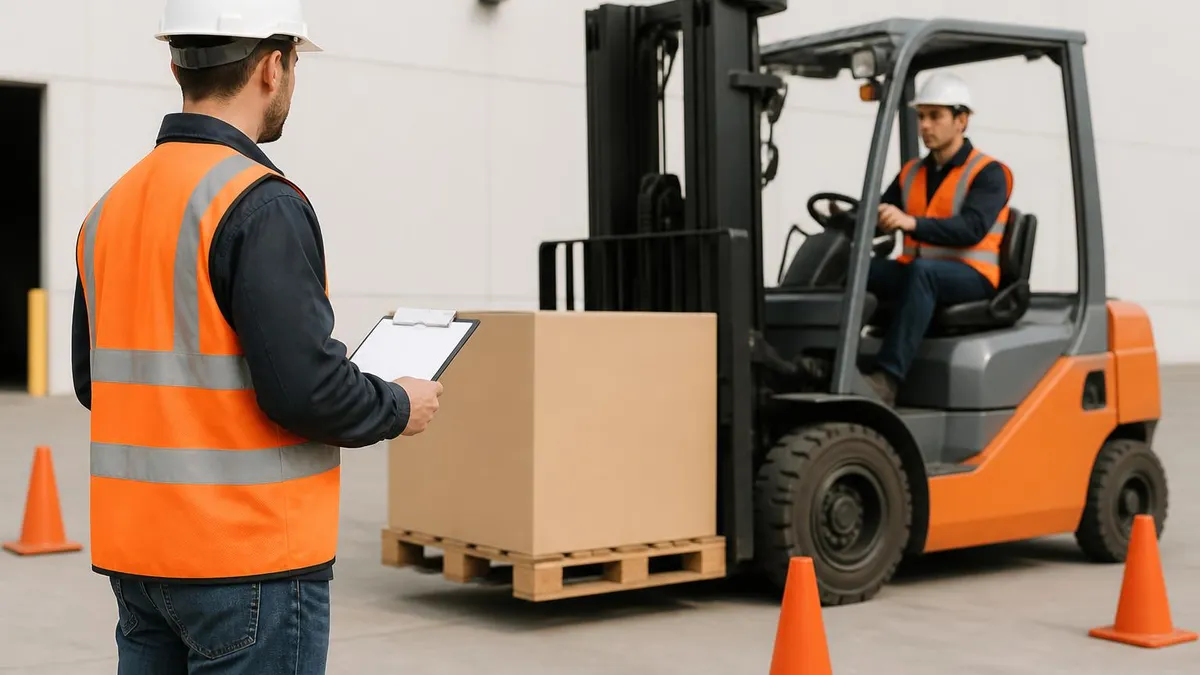
Forklift Parts and Maintenance: Complete Guide to Batteries, Chargers, and Replacement Components
Can a Forklift Enter a 26 ft Box Truck? Complete Guide to Loading, Operations, and Equipment Selection
About the Author

Certified Crane Operator & Skilled Trades Exam Specialist
Ferris State UniversityRobert Martinez is a Journeyman Ironworker, NCCCO-certified crane operator, and forklift trainer with a Bachelor of Science in Construction Technology from Ferris State University. He has 21 years of ironworking, rigging, and heavy equipment operation experience across high-rise and industrial construction sites. Robert prepares candidates for crane operator, rigger, forklift, and skilled trades certification examinations.