
Do You Need a License to Drive a Forklift? Complete US Requirements Guide for Operators and Employers
Do you need a license to drive a forklift? Complete guide to OSHA forklift license requirements, 🎓 training costs, renewal rules, and certification steps.
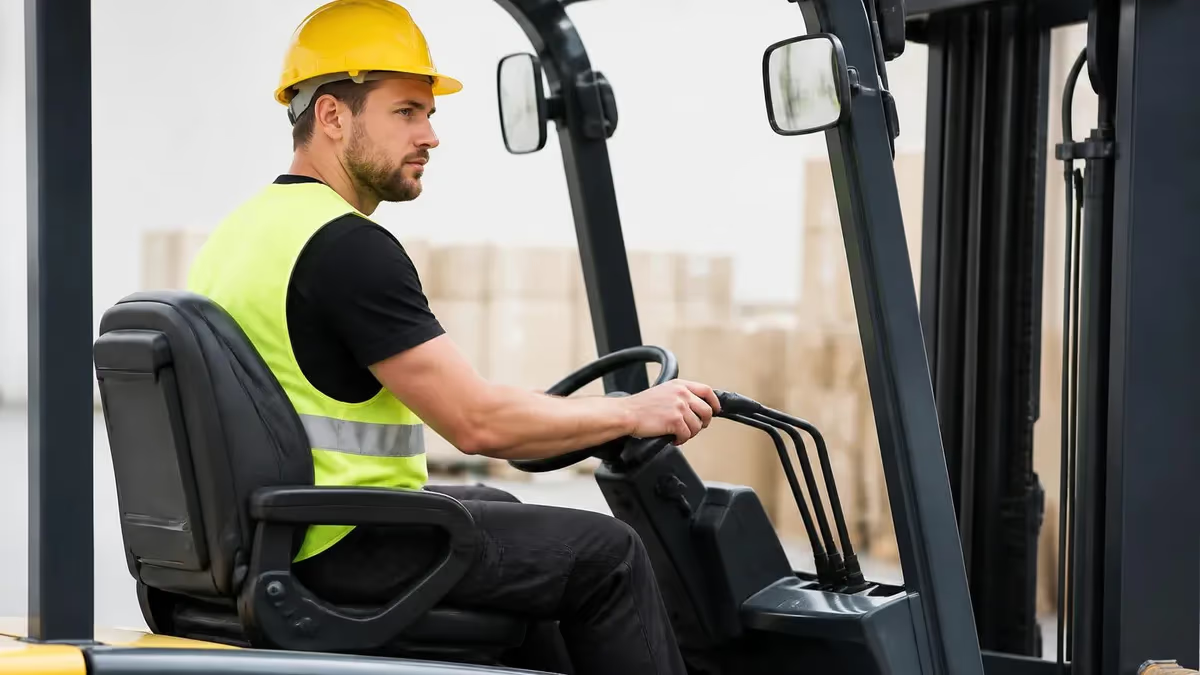
Do you need a license to drive a forklift? The short answer is yes — but not the kind of license you carry in your wallet. In the United States, anyone who operates a powered industrial truck on the job must hold an employer-issued certification under OSHA standard 29 CFR 1910.178. This rule applies whether you drive a brand-new electric forklift in a clean distribution center, a propane-powered counterbalance in a lumberyard, or a rugged rough-terrain unit on a construction site. The federal government does not issue a single nationwide forklift license, but the certification requirement is mandatory.
Employers carry the legal burden of making sure every forklift operator is trained, evaluated, and certified before stepping onto the controls. That responsibility cannot be delegated to the worker or to a staffing agency. If an unlicensed operator causes an injury, OSHA can issue penalties exceeding $16,000 per violation, and willful violations can climb above $160,000. These numbers explain why most warehouses, manufacturers, and retailers treat forklift training like a non-negotiable line item rather than an optional perk.
The certification process is more rigorous than many new hires expect. It blends classroom instruction on stability triangles, load capacity, and pedestrian safety with hands-on driving evaluation in the exact environment where the operator will work. A worker certified on a sit-down electric forklift inside a grocery warehouse is not automatically cleared to run a telehandler outdoors. Each truck class, fuel type, and workplace condition requires a documented evaluation, and that documentation must be available for OSHA inspectors on request.
State and local rules can add another layer. While OSHA sets the floor, states like California, Washington, Oregon, and Michigan operate their own occupational safety plans with stricter recordkeeping and renewal interpretations. Some municipalities also require contractors entering city facilities to show proof of current certification before unloading a single pallet. Knowing where your jurisdiction sits on this map is essential before you assume a generic online course will satisfy your auditor or insurance carrier.
Age is another common question. Federal child labor laws prohibit anyone under 18 from operating a forklift in non-agricultural workplaces, with extremely limited exceptions for apprentices in registered programs. That hard stop applies even if the teen is otherwise an excellent driver in a parking lot or on family property. Employers who let a 17-year-old run a forklift face stacked penalties from both OSHA and the Department of Labor's Wage and Hour Division, and their workers' compensation policies often deny related claims outright.
The good news is that most operators can earn full certification in one to two days of focused training, often for $75 to $200 per person when bundled into a group class. Many companies handle training in-house using qualified trainers, while smaller employers send workers to third-party schools or community colleges. If you also need equipment, search for forklift rentals in your area — most reputable rental yards will require proof of operator certification before they hand over the keys to a $35,000 machine.
This guide walks through every piece of the puzzle: what OSHA actually demands, how training is structured, what it costs, how renewals work, the differences between truck classes, and the practical steps employers and operators can take to stay compliant. By the end you will know exactly what a forklift license is, who needs one, how to get certified, and how to keep that certification valid for the long haul.
Forklift License Requirements by the Numbers

OSHA Forklift License Requirements Explained
Classroom or online lessons covering stability, load handling, pedestrian safety, refueling, and workplace-specific hazards. This portion can be delivered by video, lecture, or interactive e-learning, but a qualified trainer must be available for questions.
Hands-on demonstrations and supervised driving in the actual workplace using the exact truck type the operator will run. Trainees practice maneuvering, stacking, traveling with loads, and emergency procedures under direct trainer observation before solo operation.
A qualified evaluator watches the trainee perform real tasks and scores their competence. The evaluation must be documented with operator name, date, equipment type, and evaluator signature. Only after passing this step is the operator authorized.
Refresher training is required at least every three years, plus immediately after any accident, near-miss, observed unsafe operation, assignment to a new truck type, or major change in workplace conditions such as a facility redesign.
Employers must keep written records showing each operator's name, training date, evaluation date, and trainer identity. These records must be available for OSHA review and typically accompany the operator as a wallet card or digital credential.
Forklift training in the United States is built on a simple framework: teach the theory, demonstrate the skills, evaluate the operator, and document everything. The certification of forklift operators is governed by OSHA 29 CFR 1910.178(l), which spells out every required topic but leaves the format flexible. That flexibility is why you will find training delivered as in-person classroom sessions, blended online modules, dedicated forklift schools, and even mobile units that bring instructors to your warehouse. The key constraint is that the trainer must be qualified by knowledge, experience, and training to teach and evaluate operators.
The classroom portion typically runs three to four hours and covers truck-specific topics like controls, instrumentation, engine or motor operation, steering and maneuvering, visibility limitations, fork attachments, and capacity plates. It also covers workplace-related topics: surface conditions, load composition, stacking, pedestrian traffic, narrow aisles, ramps, hazardous atmospheres, and refueling or recharging procedures. A reputable course weaves real incident case studies into each section so trainees understand why each rule exists rather than memorizing dry checklists.
After the classroom segment, the hands-on phase begins. Trainees climb into the seat, complete a pre-operation inspection, and practice basic maneuvers in a controlled area: traveling without a load, picking up and depositing pallets, tiering loads at height, navigating tight corners, and reversing safely. The trainer rides along or follows on foot, correcting technique in real time. This stage usually consumes another three to five hours, though operators new to the equipment may need additional reps before they are evaluation-ready.
Online-only forklift courses have become popular, but they only satisfy the formal instruction piece. No purely online program can legally certify a forklift operator in the United States because the hands-on evaluation must happen in person, in the workplace, on the actual equipment. Employers who buy a $59 online certificate and skip the practical step are unknowingly setting themselves up for failed OSHA audits and denied insurance claims. The cheapest legitimate route is to combine an online theory course with an in-house evaluation conducted by a qualified trainer.
If you are searching for forklift certification near me, your best options usually fall into four buckets: community college continuing education programs, private forklift training companies, equipment dealer training departments, and trade associations like the Industrial Truck Association affiliates. Community colleges tend to offer the most affordable group rates, while dealer programs often include training when you buy or lease a fleet of new trucks. Mobile trainers cost more per hour but eliminate downtime by coming to you.
Trainee prerequisites are minimal. Operators must be at least 18, physically capable of operating the controls, able to see clearly, and able to understand the instruction language. A high school diploma is not required, and no prior experience is necessary. Some employers add their own internal requirements such as a clean drug test, a valid driver's license (for site-to-site travel), or completion of a general safety orientation, but none of these are mandated by OSHA itself.
The final piece is recordkeeping. Every certified operator should receive a wallet-sized certification card listing their name, the date of training, the date of evaluation, the truck types they are authorized to operate, and the trainer's name. Employers keep the master records on file and update them whenever a new evaluation occurs. Lost cards can be reissued from those records, and many companies now store certifications in cloud-based learning management systems so the documentation is instantly available during an OSHA inspection or insurance audit.

Forklift certification Practice Test Questions
Prepare for the Forklift certification Certification exam with our free practice test modules. Each quiz covers key topics to help you pass on your first try.
Forklift certification Certification Forkl...
Forklift certification Exam Questions covering Certification Forklift certification Maintenance and Repairs. Master Forklift certification Test concepts for certification prep.
Forklift certification Certification Forkl...
Free Forklift certification Practice Test featuring Certification Forklift certification Maintenance and Repairs Questions and Answers. Improve your Forklift certification Exam score with mock test prep.
Forklift certification Certification Forkl...
Forklift certification Mock Exam on Certification Forklift certification Operator Training and Certification Requirements. Forklift certification Study Guide questions to pass on your first try.
Forklift certification Certification Forkl...
Forklift certification Test Prep for Certification Forklift certification Operator Training and Certification Requirements Questions and Answers. Practice Forklift certification Quiz questions and boost your score.
Forklift certification Load Handling and S...
Forklift certification Questions and Answers on Load Handling and Stability. Free Forklift certification practice for exam readiness.
Forklift certification OSHA Regulations an...
Forklift certification Mock Test covering OSHA Regulations and Compliance. Online Forklift certification Test practice with instant feedback.
Forklift certification Pre-Operation Inspe...
Free Forklift certification Quiz on Pre-Operation Inspections. Forklift certification Exam prep questions with detailed explanations.
Forklift certification Refueling and Recha...
Forklift certification Practice Questions for Refueling and Recharging Procedures. Build confidence for your Forklift certification certification exam.
Forklift certification Safe Driving and Ma...
Forklift certification Test Online for Safe Driving and Maneuvering. Free practice with instant results and feedback.
Forklift certification Workplace Hazard Id...
Forklift certification Study Material on Workplace Hazard Identification. Prepare effectively with real exam-style questions.
Forklift certification Forklift Instructions
Free Forklift certification Test covering Forklift Instructions. Practice and track your Forklift certification exam readiness.
Forklift certification Forklift MCQ
Forklift certification Exam Questions covering Forklift MCQ. Master Forklift certification Test concepts for certification prep.
Forklift certification Forklift Employer R...
Free Forklift certification Practice Test featuring Forklift Employer Responsibilities. Improve your Forklift certification Exam score with mock test prep.
Forklift certification Forklift Penalties ...
Forklift certification Mock Exam on Forklift Penalties for Non-Compliance. Forklift certification Study Guide questions to pass on your first try.
Forklift Training Formats and Truck Classes
Class I electric counterbalance trucks and Class II narrow-aisle reach trucks dominate warehouse operations. They are quiet, emit zero exhaust, and are ideal for food handling, pharmaceuticals, and cold storage. Training emphasizes battery charging safety, watering schedules, acid spill response, and the unique braking feel of regenerative motors. Operators must understand state-of-charge gauges and learn to swap or opportunity-charge batteries without short-circuiting terminals or damaging cells.
An electric forklift handles differently than a propane unit because regenerative braking slows the truck when the operator releases the accelerator. New operators often overshoot stop points until they adapt to that feel. Training also covers proper plug-in procedures, equalization charging cycles, and the dangers of hydrogen off-gassing in poorly ventilated charging rooms. Most facilities require a dedicated charging area with eye-wash stations, acid neutralizer, and signage warning of explosive atmosphere risks.
In-House vs Third-Party Forklift Training: Which Path Is Right?
- +In-house training uses your actual trucks, aisles, and load types
- +Per-operator cost drops sharply once you train more than five workers per year
- +Scheduling is flexible and avoids paying for travel or hotel time
- +Internal trainers know your specific hazards and processes intimately
- +Recertifications and refreshers can happen the same day they are triggered
- +Records stay inside your own learning management system for easy audits
- +New hires can be evaluated within their first week instead of waiting for a class
- −Initial trainer qualification and curriculum development take significant time
- −Small employers may not have the volume to justify the setup investment
- −Internal trainers can drift into informal habits without periodic outside calibration
- −OSHA inspectors sometimes scrutinize in-house records more closely
- −Third-party certificates carry external credibility for contractors entering new sites
- −A dedicated school exposes operators to multiple truck brands and scenarios
- −Outside trainers stay current on regulation changes that internal staff may miss

Forklift Operator Certification Checklist
- ✓Confirm trainee is at least 18 years old and physically able to operate controls
- ✓Verify the trainer is qualified by knowledge, training, and experience to instruct
- ✓Complete all OSHA-required truck-related and workplace-related topics in formal instruction
- ✓Provide hands-on practice on the exact truck class the operator will use
- ✓Conduct a documented performance evaluation in the actual workplace
- ✓Issue a written certification card listing operator name, date, and truck types
- ✓Store master training records in a retrievable location for OSHA inspections
- ✓Schedule recertification at least every three years on a tracked calendar
- ✓Trigger immediate refresher training after any accident, near-miss, or unsafe behavior
- ✓Update authorization whenever an operator is assigned to a new truck class
- ✓Maintain pre-shift inspection logs signed by the operator for each daily startup
- ✓Conduct workplace evaluations whenever aisles, racking, or load types change significantly
An online-only certificate is never enough on its own
OSHA explicitly requires hands-on evaluation in the actual workplace before an operator is authorized. Online theory courses are valuable for the formal instruction segment, but a printed PDF from a website cannot replace a qualified evaluator watching the trainee drive. Pairing a $59 online module with a documented in-person evaluation by a qualified trainer is the cheapest legitimate path to a fully compliant forklift license.
Forklift certification costs vary widely depending on the format, location, and number of operators. A standalone online theory course typically runs $55 to $99 per person and covers the formal instruction OSHA requires. In-person group training at a community college or third-party school runs $150 to $300 per operator and usually includes the hands-on evaluation. Mobile trainers who travel to your site charge $500 to $1,200 per day for groups of up to ten operators, which works out to $50 to $120 per person when the class is full.
Train-the-trainer programs are a separate investment. Sending an internal staff member to a certified trainer course costs $700 to $1,500 and usually requires two or three days. After that initial outlay, the company can certify unlimited operators in-house at minimal incremental cost. Most operations with more than 15 forklift drivers find the math favors the train-the-trainer approach within the first year, especially once you factor in the cost of pulling new hires off the floor to attend outside classes.
Recertification adds a recurring cost line. OSHA requires refresher training every three years at minimum, plus immediately after triggering events. A typical recertification runs $50 to $100 per operator because the formal instruction can be shortened to focus on changes and trouble spots. Some employers run annual refreshers as a best practice even though they are not strictly required, particularly in high-turnover environments or facilities with elevated incident rates. Insurance carriers sometimes offer premium discounts for companies that exceed the minimum cadence.
Equipment costs are a separate conversation, but they shape training decisions. A new electric forklift runs $25,000 to $45,000, while a comparable internal combustion unit costs $20,000 to $40,000. Used trucks can be found for $8,000 to $20,000 depending on hours and condition. Many employers cover their seasonal peaks with rentals at $400 to $900 per week for a standard pallet jack or sit-down truck. Before committing to a purchase, browse current forklift for sale listings to understand the market and total cost of ownership.
Employer duties extend beyond writing checks. The employer must select and qualify trainers, ensure training content matches workplace conditions, observe operators periodically to confirm safe practices, retrain after incidents, and maintain records for OSHA inspection. The employer also bears responsibility for assigning trucks only to authorized operators, providing functional equipment with current inspections, and addressing reported defects before the next shift. None of these duties can be transferred to a third-party trainer, even when the training itself is outsourced.
State plan states add their own twists. California's Cal/OSHA enforces the same federal training topics but expects more detailed written programs and conducts more frequent inspections of high-hazard industries. Washington requires employers to make training available in the operator's primary language whenever feasible. Oregon emphasizes pedestrian protection programs alongside operator training. Knowing your state plan's enforcement priorities helps you allocate resources where audits are most likely to land, rather than spreading effort evenly across every possible category.
Insurance carriers have become significant drivers of training quality. Workers' compensation underwriters, general liability insurers, and product liability carriers all ask for certification records during renewal. A clean training program with documented evaluations, signed refresher records, and incident-driven retraining frequently earns 5 to 15 percent premium credits. Conversely, a single uncertified-operator incident can trigger experience modifier increases that cost a midsized company tens of thousands of dollars per year for the following three policy periods.
OSHA penalties for forklift violations increased again in 2026, with serious violations now capped at $16,550 and willful or repeat violations reaching $165,514 each. Citations frequently stack: an uncertified operator running a truck with a missing daily inspection log can produce three separate violations from a single inspection. Maintaining a documented training program is dramatically cheaper than absorbing even one of these penalties after a workplace accident.
Compliance is more than paperwork — it is a living system that protects operators, pedestrians, and your bottom line. The most effective programs start with a written forklift safety policy that defines who is authorized, how training is delivered, when refreshers occur, and what the consequences are for unauthorized operation. That policy becomes the reference document for new hires, supervisors, and OSHA inspectors. Without it, every conversation about discipline, training gaps, or audit findings becomes a debate rather than an enforcement of clear rules.
Daily pre-shift inspections are the second pillar. OSHA requires operators to inspect each forklift at the beginning of each shift, and to take any defective truck out of service immediately. A simple two-sided checklist covering tires, forks, mast, hydraulics, controls, lights, horn, brakes, and overhead guard works for most environments. Many facilities now use mobile apps that timestamp each inspection, photograph defects, and route work orders directly to maintenance. The audit trail these tools generate has saved more than one employer during post-incident OSHA investigations.
Pedestrian safety often gets less attention than operator training, but it is where most serious injuries originate. Painted walkways, blue spotlights on forks, motion-activated intersection lights, mirrors at blind corners, and clear segregation of foot traffic from forklift routes all reduce risk dramatically. Some warehouses now deploy proximity detection systems that slow or stop trucks when a pedestrian enters a defined zone. None of these engineering controls replace training, but layered together they reduce the chance that a momentary lapse turns into a fatality.
Maintenance discipline reinforces training. A forklift with worn tires, weak brakes, leaking hydraulics, or a damaged mast can defeat even an excellent operator. Scheduled preventive maintenance based on hours of use — usually every 200 to 250 hours — catches wear before it becomes a hazard. Battery rooms, propane storage, and refueling areas need their own inspections and signage. Pairing routine service with operator-reported defects creates a feedback loop that surfaces problems early and demonstrates due diligence to insurers and regulators.
Multi-site operators face additional complexity. A national retailer with 400 stores cannot rely on a single trainer to cover every location, so most build a hybrid program: corporate creates the curriculum and standards, regional safety managers qualify in-store trainers, and store managers conduct daily oversight. Cloud-based learning management systems tie the whole network together, flagging expired certifications before they lapse and producing real-time compliance dashboards. Smaller employers can replicate this model on a budget using shared spreadsheets and calendar reminders.
Some states have layered requirements you should verify locally. The full list of state-by-state nuances is summarized on the cherry picker forklift certification reference page, including details on California's CCR Title 8 rules, Washington's WAC 296-863 program, and Michigan's MIOSHA enforcement priorities. Bookmark that resource if you operate across state lines, because each jurisdiction interprets training language requirements, evaluator qualifications, and recordkeeping in slightly different ways that can surprise an out-of-state contractor.
Finally, build a culture where operators feel safe reporting near-misses without fear of discipline. The best leading indicator of forklift safety performance is not the lagging count of recorded injuries — it is the volume of voluntarily reported close calls. A facility that captures and investigates 50 near-misses per year almost always has lower recordable injuries than one that captures none, because each report becomes an opportunity to fix the hazard before someone gets hurt. Training certifies competence; culture sustains it over the long haul.
For new operators preparing for their first forklift certification, the single most important habit is patience. The exam-style questions on the written test are straightforward, but real on-the-floor evaluation rewards smooth, deliberate movement over speed. Trainees who rush picks, ignore the horn at intersections, or skip a fork-tilt check before traveling tend to fail their evaluation and require remedial sessions. Treat each maneuver as a sequence — approach, square up, tilt back, lift, retract, travel, deposit — and the muscle memory will come within the first few hours of practice.
Spend extra time learning the load capacity plate on whatever truck you will operate. The plate lists rated capacity at a specific load center, usually 24 inches. Loads that are longer, wider, or asymmetrical reduce that capacity, sometimes dramatically. Many test failures and real-world incidents trace back to operators who memorized a single number without understanding how attachments, load center shifts, and mast extensions change the math. A 5,000-pound rated truck with a paper roll clamp and a 36-inch load center may legally lift only 3,200 pounds.
Practice the pre-shift inspection until it becomes automatic. Evaluators watch closely to see whether you check tires, forks, hydraulic hoses, chains, overhead guard, controls, horn, lights, fluid levels, and battery or fuel condition. Skipping items signals carelessness even if the truck happens to be in perfect condition. Many trainers fail candidates on the inspection portion alone because it is the clearest predictor of long-term safe behavior. Carry the inspection card on a clipboard and read it out loud during the evaluation if that helps you remember every step.
Stability training pays dividends throughout an operator's career. The stability triangle concept — that a forklift's stability is determined by the position of the combined center of gravity within a triangle formed by the front wheels and the rear pivot — explains why tipping accidents happen. Practice driving with the mast tilted back and forks low. Avoid sudden turns with raised loads. Slow down on ramps and never turn while traveling on an incline. These habits separate operators who finish a 20-year career uninjured from those who become statistics in OSHA's incident database.
Pedestrian awareness is the second career-saving habit. Sound the horn at every blind corner, intersection, and doorway. Make eye contact with anyone on foot before passing. Stop completely when a pedestrian enters your travel path, even if they are clearly aware of you. Forklift-pedestrian collisions account for roughly 20 percent of forklift fatalities each year, and most of them are preventable with conservative driving and constant communication. Treat every aisle as if a coworker might step out from behind a pallet, because eventually one will.
Recertification preparation is straightforward once you have completed the original training. Most employers schedule the refresher about two months before the three-year expiration to allow for rescheduling if an operator is on leave. Review the original training materials, watch a refresher video, and ask your trainer about any new equipment, attachments, or workplace changes since the last evaluation. The refresher itself usually takes two to four hours and ends with a brief re-evaluation. Treat it as an opportunity to sharpen habits rather than a bureaucratic hoop.
Finally, document your own training journey. Keep copies of your certification cards, training rosters, and evaluation forms in a personal file. Forklift operators move between employers, and being able to show prior certifications speeds onboarding even though each new employer must still complete their own workplace-specific evaluation. A well-documented operator with three years of clean experience and current OSHA certification is one of the most employable workers in logistics, manufacturing, and construction. The license itself does not transfer, but the experience and discipline behind it absolutely do.
Forklift Questions and Answers
Forklift Tires: Complete Guide to Types, Sizing, Wear Patterns, and Replacement Costs
Forklift Safety Training: Complete OSHA Compliance Guide for Operators and Employers
Forklift Repair Service: Complete Guide to Costs, Common Repairs, and Choosing the Right Technician
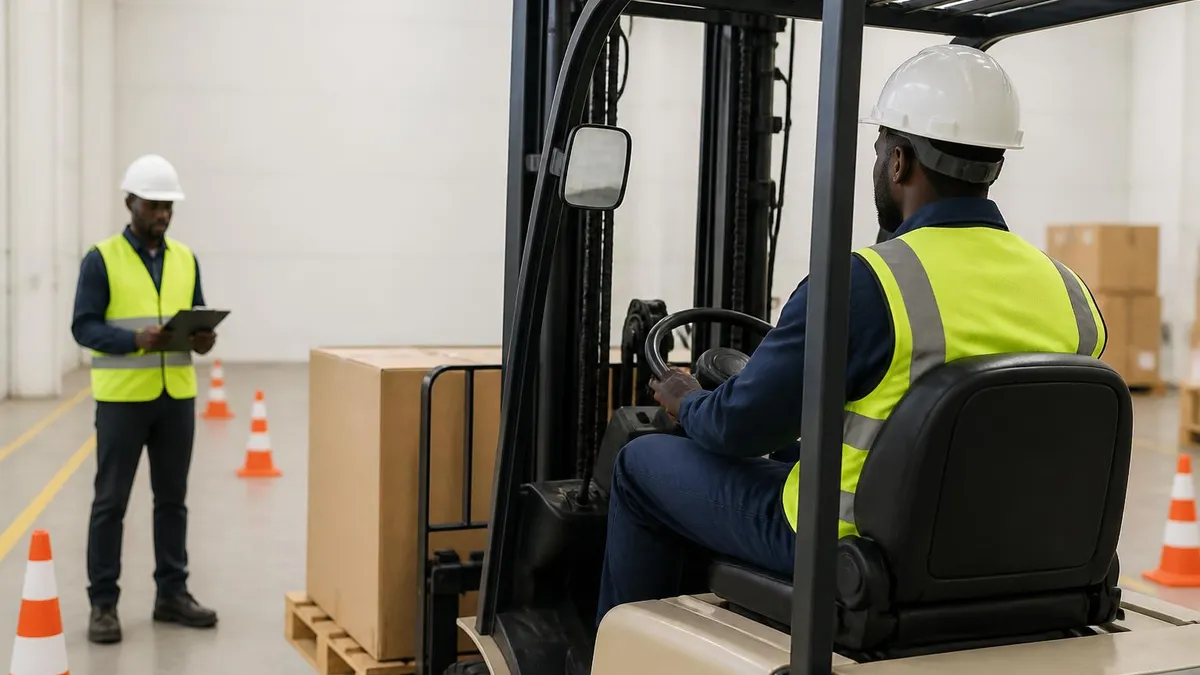
Forklift Certification by State: Complete 50-State Guide to OSHA-Compliant Operator Training, Costs, and Renewal Requirements
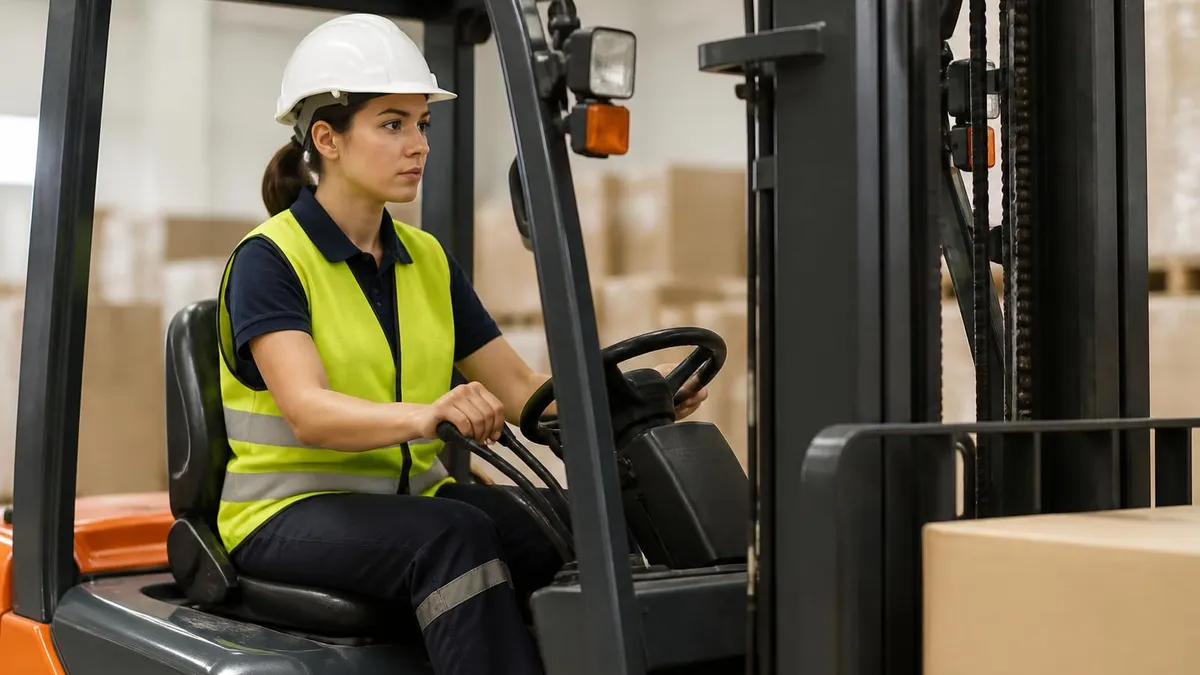
Forklift Price Guide 2026: New, Used, Rental, and Total Cost of Ownership Breakdown
About the Author

Certified Crane Operator & Skilled Trades Exam Specialist
Ferris State UniversityRobert Martinez is a Journeyman Ironworker, NCCCO-certified crane operator, and forklift trainer with a Bachelor of Science in Construction Technology from Ferris State University. He has 21 years of ironworking, rigging, and heavy equipment operation experience across high-rise and industrial construction sites. Robert prepares candidates for crane operator, rigger, forklift, and skilled trades certification examinations.