
Forklift Operator: Job Duties, Pay & Certification Requirements 2026 September
Forklift operator career guide: job duties, salary ranges, OSHA certification requirements, and tips to get hired fast in 2026 September. 📚
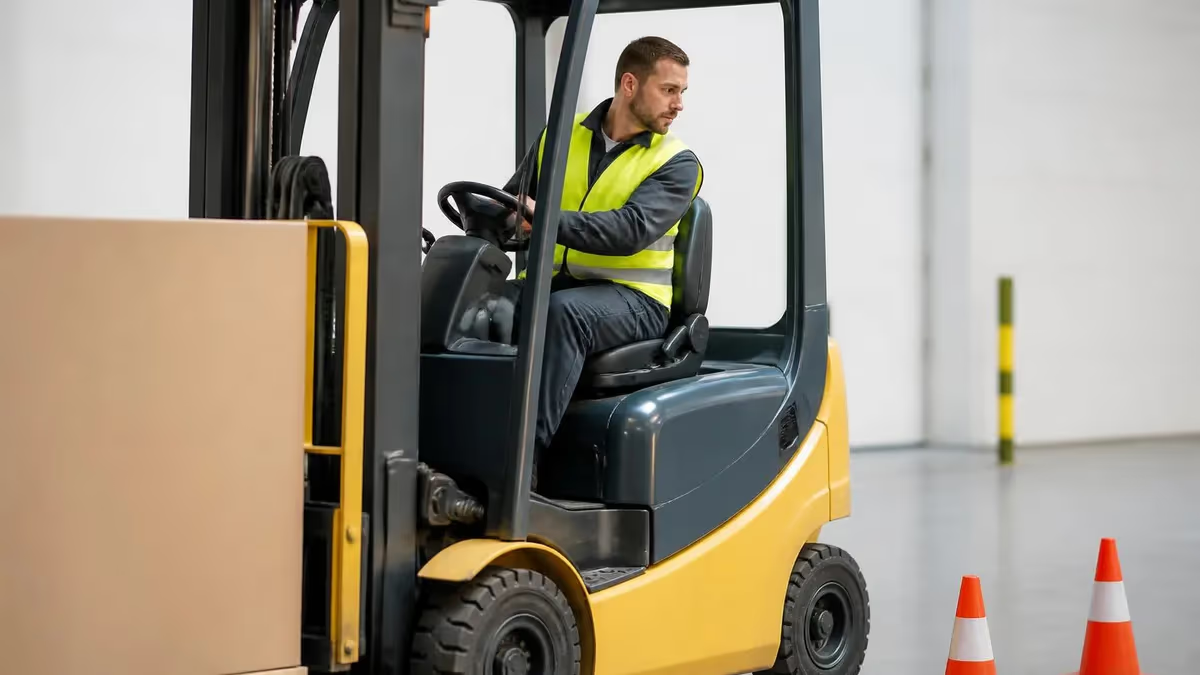
Forklift Operator: Job Duties, Pay & Certification Requirements
A forklift operator moves, stacks, and organizes materials in warehouses, distribution centers, construction sites, and manufacturing plants. It sounds straightforward -- and in many ways it is -- but don't let that fool you. Operating a forklift safely takes real skill, situational awareness, and mandatory OSHA certification. Get those things right, and you've got a career with solid pay, strong demand, and room to grow.
This guide covers everything you need: what the job actually involves day-to-day, how much forklift operators earn, what certifications you need, and how to land your first (or next) operator role.
What Does a Forklift Operator Do?
The core job is moving loads -- pallets, crates, drums, raw materials -- from point A to point B. But the day-to-day reality is more involved than that description suggests.
Most operators start each shift with a pre-operation inspection. You walk around the machine, check tire pressure, test the horn and lights, look for fluid leaks, and verify the forks and mast are in good shape. OSHA requires this inspection before every shift -- it's not optional, and skipping it is a fast track to fines or worse.
Then there's the actual work:
- Loading and unloading trucks -- timing matters here because dock schedules are tight
- Moving pallets to storage locations -- often using WMS (warehouse management system) scan guns
- Order picking -- pulling products for shipment at the correct quantities
- Stacking and racking -- placing loads at height in narrow-aisle racking systems
- Staging areas -- organizing outbound freight for loading crews
You'll also maintain a basic log of loads moved, report damaged goods, and flag any equipment issues to maintenance. Communication with supervisors, loaders, and other operators is constant. Warehouses are loud, busy environments -- situational awareness isn't a nice-to-have, it's what keeps people safe.
Types of Forklifts You'll Operate
There's more than one machine class -- and knowing which you're certified on matters when you apply for jobs.
- Counterbalance forklifts (Class 1, 4, 5) -- the standard sit-down rider; most common in warehouses
- Reach trucks (Class 2) -- used in narrow aisles with high racking; requires more skill to operate
- Order pickers (Class 2) -- operator rides up with the forks; common in e-commerce fulfillment centers
- Rough terrain forklifts (Class 7) -- outdoor construction and lumber yards; larger tires, higher ground clearance
- Pallet jacks (Class 3) -- walk-behind or ride-on; lower-skill entry point but still requires cert
Most employers want operators certified on the specific class they'll use. If you're certified on counterbalance but the job requires a reach truck, you'll typically need additional site-specific training before they put you on that machine.
Forklift Operator Salary -- What You Can Expect
Pay varies by industry, location, and experience. Here's a realistic breakdown for 2026:
- Entry-level (0-1 year): $16-$19/hr in most U.S. markets
- Mid-level (2-5 years): $19-$24/hr; more for specialized equipment like reach trucks
- Experienced operators (5+ years): $24-$30+/hr; lead operator or trainer roles push higher
- High-demand markets (California, New York, Pacific Northwest): $22-$35/hr depending on industry
Amazon, Walmart, UPS, and major 3PLs typically pay on the higher end and offer benefit packages. Temp agency placements pay less -- often $2-$4/hr less -- but they can get you hours fast if you're just starting out.
Overtime availability bumps annual income significantly. Many operators working 45-50 hour weeks earn $50,000-$65,000 annually. Shift differentials for nights or weekends add another $1-$2/hr at most facilities.
OSHA Certification Requirements
You can't legally operate a forklift in a U.S. workplace without a valid OSHA-compliant certification. Full stop. Under 29 CFR 1910.178(l), every powered industrial truck operator must be trained and evaluated by a qualified trainer.
Here's what's actually required:
- Formal instruction -- classroom or online training covering OSHA regulations, load handling, pre-operation inspection, and workplace-specific hazards
- Practical training -- hands-on exercises on the actual equipment you'll use
- Evaluation -- a qualified trainer observes you operating the forklift and signs off on your competency
- Re-certification every 3 years -- or sooner if you're observed operating unsafely, involved in an accident, or returning after a long absence
There's no government-issued forklift license. Your certification is issued by your employer or training provider after you pass. That means certifications aren't always transferable between employers -- a new job often means new site-specific training, even if you're already certified elsewhere.
Want to prep for your certification exam? Our forklift certification guide breaks down the full OSHA process, and you can sharpen your knowledge with the Forklift Certification practice tests before your evaluation.
How to Become a Forklift Operator
The path is shorter than most careers. Here's how it typically goes:
Step 1: Get the basics down. You don't need a degree. A high school diploma or GED is typically sufficient. Physical requirements vary, but most jobs require lifting up to 50 lbs, standing for long periods, and passing a basic physical.
Step 2: Complete a forklift training course. Many employers provide this on the job. If you want to show up already certified -- a real competitive edge -- community colleges, trade schools, and private training centers offer programs ranging from one day to two weeks. Costs run $150-$500 for a full course.
Step 3: Pass your evaluation. This is where the rubber meets the road. You'll demonstrate safe pre-operation inspection, correct load handling, smooth mast operation, and proper travel posture. It's not a written test -- it's observed performance.
Step 4: Build experience. Entry-level positions are widely available. Temp agencies are a legitimate starting point; so are large retailers like Home Depot, Lowe's, or Costco, which hire forklift operators regularly for their distribution operations. Check out our forklift jobs guide for detailed advice on finding positions and negotiating pay.
Forklift Operator vs. Other Warehouse Roles
Not every warehouse job involves a forklift. Understanding the difference helps you target applications more precisely:
- Forklift operator -- operates powered industrial trucks; higher pay; requires certification
- Warehouse associate / picker-packer -- walking routes, pick-and-pack, no equipment cert required; lower pay floor
- Material handler -- mix of manual and equipment operation; often a stepping stone
- Reach truck operator -- specialized high-rack work; typically $1-$3/hr premium over standard counterbalance
- Shipping / receiving clerk -- dock coordination, manifests, BOLs; often involves some equipment operation
If you're targeting operator roles specifically, list your equipment classes clearly on your resume. Employers scan fast -- "Certified Counterbalance Operator -- 3 years" beats a paragraph of description every time.
Safety Risks and How Good Operators Manage Them
Forklifts are involved in roughly 85 fatal accidents and 34,900 serious injuries in U.S. workplaces every year, according to OSHA data. The leading causes aren't mechanical failure -- they're operator error:
- Traveling with load raised
- Exceeding rated load capacity
- Turning too fast on slopes
- Pedestrian blind spots -- especially at intersections
- Improper use on uneven surfaces
Skilled operators internalize these risks until safe habits are automatic. You never rush a load. You always sound the horn at intersections. You know your machine's capacity plate and never exceed it. Pre-operation checklists aren't busywork -- they're the difference between a normal shift and a disaster.
The general forklift safety guide covers OSHA regulations and equipment specifics in depth if you want to go deeper on the safety side.
Career Advancement Paths
Forklift operator isn't a dead end. Here's where experienced operators typically go:
- Lead operator / floor supervisor -- oversee a team, coordinate shifts, higher hourly rate
- Trainer -- become the qualified evaluator who certifies other operators; often a lateral move with extra pay
- Warehouse supervisor -- step into management; may require some coursework in logistics or supply chain
- Equipment specialist roles -- heavy equipment operation, crane operation, or industrial maintenance if you like the mechanical side
Operators who cross-train on multiple equipment classes -- counterbalance plus reach truck plus order picker -- are significantly more valuable. Many employers will pay for that additional training if you ask. It's worth asking.
If you're planning your cert prep timeline, the forklift training requirements guide lays out costs, duration, and what different programs cover so you can pick the right path for your situation.
Getting the Most Out of Your Practice Tests
If you're preparing for your certification evaluation, practice tests matter -- not because the eval is a written exam, but because knowing the rules cold makes your practical performance sharper. You won't be second-guessing yourself on load limits or pre-op steps when a trainer is watching you operate.
Focus especially on: load capacity calculations, OSHA pre-operation inspection requirements, safe travel distances and speeds, and pedestrian safety protocols. These come up in every evaluation and every workplace safety audit.

Ready to Start Your Forklift Operator Career?
Forklift operators are in demand -- and that demand isn't softening. E-commerce growth means more distribution centers, more fulfillment operations, and more shifts to fill. The barrier to entry is real certification and demonstrated safe operation, not years of schooling.
Start with your certification. If your employer isn't providing training yet, look into a private course or community college program. Get certified on counterbalance first, then cross-train on reach truck or order picker as you gain experience. Each added class makes you more hireable and more valuable.
Then use practice tests to cement the knowledge before your evaluation. Our forklift practice tests cover OSHA regulations, pre-operation procedures, load safety, and equipment knowledge -- everything that shows up when a trainer is watching you work.
About the Author
Certified Crane Operator & Skilled Trades Exam Specialist
Ferris State UniversityRobert Martinez is a Journeyman Ironworker, NCCCO-certified crane operator, and forklift trainer with a Bachelor of Science in Construction Technology from Ferris State University. He has 21 years of ironworking, rigging, and heavy equipment operation experience across high-rise and industrial construction sites. Robert prepares candidates for crane operator, rigger, forklift, and skilled trades certification examinations.