
How to Drive a Forklift: Complete Beginner's Guide to Controls, Safety, and OSHA-Compliant Operation
🏆 Learn how to drive a forklift safely: controls, pre-shift checks, load handling, OSHA certification rules, and beginner mistakes to avoid.
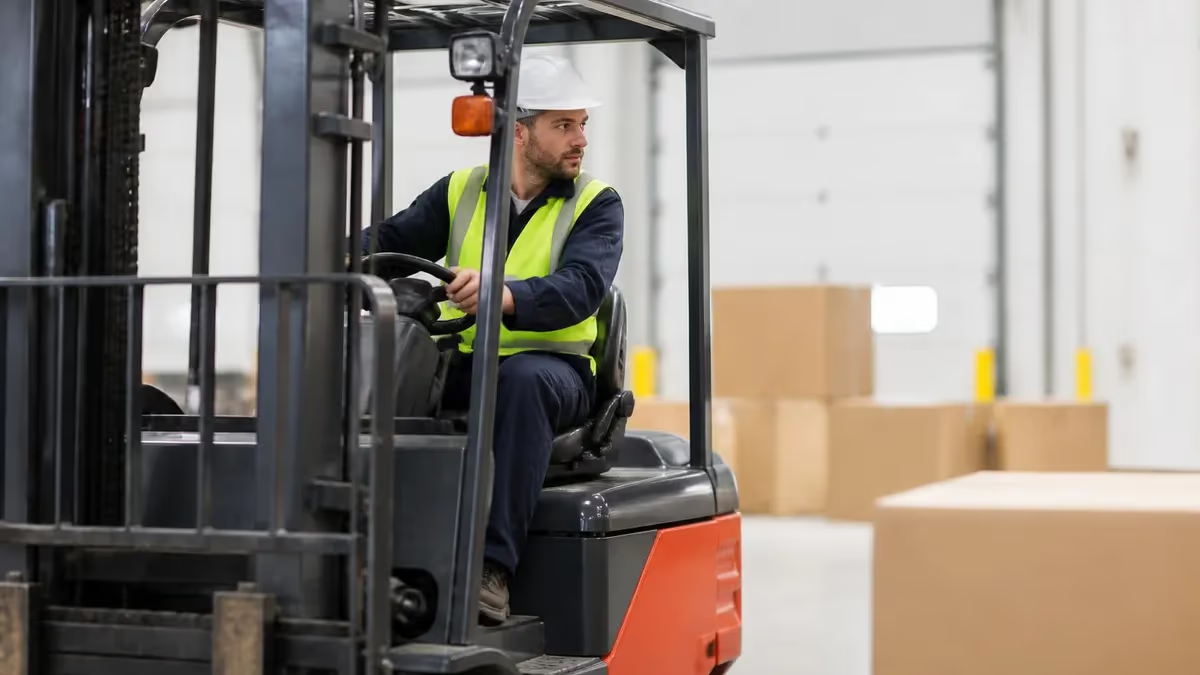
Learning how to drive a forklift is a practical skill that opens doors across warehousing, construction, manufacturing, and retail distribution. Whether you are operating a sit-down counterbalance lift from a forklift rental yard, a stand-up reach truck inside a cold-storage facility, or an electric forklift on a clean factory floor, the fundamentals of safe operation are identical. This guide walks you through controls, pre-shift inspections, mast operation, travel rules, load handling, and the OSHA-mandated steps that turn a curious beginner into a confident, certified operator who can pass a workplace evaluation.
The U.S. Bureau of Labor Statistics estimates more than 1.5 million workers operate powered industrial trucks each year, and OSHA standard 1910.178 requires every single one of them to be formally trained and evaluated before driving alone. That means watching a YouTube clip, riding shotgun with a co-worker, or practicing in an empty lot is not legally enough. Employers must document classroom instruction, hands-on training, and a workplace evaluation specific to the truck type and the environment where it will be used.
Forklifts are deceptively simple to start but unforgiving to mistreat. A 5,000-pound counterbalance lift carrying a 3,000-pound pallet behaves nothing like a car: the rear wheels steer, the load shifts the center of gravity dramatically, and visibility drops the moment forks rise above eye level. Roughly 85 fatalities and nearly 35,000 serious injuries occur in the United States every year from forklift incidents, and the overwhelming majority trace back to tipovers, struck-by accidents, and falling loads — all preventable with proper technique.
This article is built for the absolute beginner who wants to understand what happens between climbing into the operator's seat and parking the truck at end of shift. We cover internal-combustion sit-down lifts, electric three-wheelers, narrow-aisle reach trucks, order pickers, and the cherry picker forklift used for elevated maintenance. Each class has unique controls and stability rules, but a strong foundation in load triangle theory, mast tilt, and travel discipline transfers across all of them. You will also learn how to find a reputable trainer and what a typical forklift certification near me course actually covers.
Beyond the keys-and-pedals mechanics, driving well means thinking in three dimensions. Experienced operators constantly scan for pedestrians, overhead pipes, dock-edge plates, uneven floor seams, and changing load weights. They tilt the mast back before traveling, slow to a walking pace at intersections, sound the horn at blind corners, and never carry passengers. These habits are not optional flourishes — they are the difference between a 20-year career and a citation that lands an employer with a $16,000 OSHA fine per violation.
By the end of this guide you will know exactly what controls do what, how to perform a 30-point pre-operation inspection, the correct sequence for picking up and stacking a pallet, the rules for ramps and trailers, and the certification pathway that turns your knowledge into a portable, employer-recognized credential. We finish with a practical study plan, common test questions, and curated practice quizzes drawn from real operator-training curricula used across U.S. distribution centers.
Driving a Forklift by the Numbers

Step-by-Step: Starting and Driving a Forklift Safely
Mount and Buckle In
Start and Warm Up
Raise Forks and Tilt Back
Direction, Then Throttle
Steer From the Rear
Park and Power Down
A proper pre-shift inspection is the single most important habit a new forklift operator can build. OSHA 1910.178(q)(7) requires that every powered industrial truck be examined at least daily — and before each shift if used around the clock. Skipping this five-minute walkaround is the most common citation auditors find, and it is also the leading reason small mechanical issues turn into expensive repairs or injury events. Treat the inspection as non-negotiable, the same way a pilot treats a preflight checklist.
Start with the engine off and walk around the entire truck. Check tires for cuts, chunking, or low pressure on pneumatic models, and look for hub-loose lug nuts on cushion tires. Inspect the forks themselves: look for cracks at the heel, bent tips, and uneven height between the two blades. A heel-thickness wear of more than 10 percent means the fork must be retired — a snapped fork under load is catastrophic. Check the mast chains for kinks, rust, or stretched links, and confirm the safety pin on each fork is fully seated.
Open the hood and look at fluid levels: engine oil, hydraulic fluid, coolant, and on internal-combustion units, fuel or propane connections. Sniff for leaks around the LP tank coupling — propane has an added odorant for exactly this reason. On an electric forklift, inspect the battery for corroded terminals, low electrolyte, cracked cases, or frayed cables. Confirm the battery is properly latched into the compartment; a shifting battery during a hard turn can damage the truck and unbalance the load.
Now climb in, buckle the seat belt, and run the operational checks. Test the horn, headlights, strobe, and backup alarm. Push the brake pedal to feel firmness — spongy brakes are an immediate out-of-service condition. Test the parking brake on a slight incline. Cycle the hoist, tilt, and side-shift controls through full range of motion, listening for grinding or hesitation.
Steer lock-to-lock to confirm hydraulic assist is working. Finally, test the deadman seat switch by lifting off the seat slightly — power to the drive system should cut immediately. Reputable yards offering cherry picker forklift training drill this inspection into every student.
Document the inspection on the daily checklist provided by your employer. Every U.S. workplace using forklifts is required to keep these logs, and an unsigned or skipped sheet is direct evidence to OSHA inspectors that the program is not being followed. If anything on the inspection fails, tag the truck out of service, notify your supervisor in writing, and select a different unit. Never operate a truck with a known defect — your signature on that checklist transfers liability to you personally if an incident occurs.
Beginners often underestimate how much the daily inspection teaches them. Doing the walkaround on the same truck for several weeks builds intimate familiarity with how it sounds, brakes, and handles. You will notice a slight whine in the hydraulic pump or a soft brake long before they fail completely. That early-warning instinct is exactly what separates a trained operator from a key-jockey, and it is one of the qualities a workplace evaluator looks for when signing off your certification card.

Forklift certification Practice Test Questions
Prepare for the Forklift certification Certification exam with our free practice test modules. Each quiz covers key topics to help you pass on your first try.
Forklift certification Certification Forkl...
Forklift certification Exam Questions covering Certification Forklift certification Maintenance and Repairs. Master Forklift certification Test concepts for certification prep.
Forklift certification Certification Forkl...
Free Forklift certification Practice Test featuring Certification Forklift certification Maintenance and Repairs Questions and Answers. Improve your Forklift certification Exam score with mock test prep.
Forklift certification Certification Forkl...
Forklift certification Mock Exam on Certification Forklift certification Operator Training and Certification Requirements. Forklift certification Study Guide questions to pass on your first try.
Forklift certification Certification Forkl...
Forklift certification Test Prep for Certification Forklift certification Operator Training and Certification Requirements Questions and Answers. Practice Forklift certification Quiz questions and boost your score.
Forklift certification Load Handling and S...
Forklift certification Questions and Answers on Load Handling and Stability. Free Forklift certification practice for exam readiness.
Forklift certification OSHA Regulations an...
Forklift certification Mock Test covering OSHA Regulations and Compliance. Online Forklift certification Test practice with instant feedback.
Forklift certification Pre-Operation Inspe...
Free Forklift certification Quiz on Pre-Operation Inspections. Forklift certification Exam prep questions with detailed explanations.
Forklift certification Refueling and Recha...
Forklift certification Practice Questions for Refueling and Recharging Procedures. Build confidence for your Forklift certification certification exam.
Forklift certification Safe Driving and Ma...
Forklift certification Test Online for Safe Driving and Maneuvering. Free practice with instant results and feedback.
Forklift certification Workplace Hazard Id...
Forklift certification Study Material on Workplace Hazard Identification. Prepare effectively with real exam-style questions.
Forklift certification Forklift Instructions
Free Forklift certification Test covering Forklift Instructions. Practice and track your Forklift certification exam readiness.
Forklift certification Forklift MCQ
Forklift certification Exam Questions covering Forklift MCQ. Master Forklift certification Test concepts for certification prep.
Forklift certification Forklift Employer R...
Free Forklift certification Practice Test featuring Forklift Employer Responsibilities. Improve your Forklift certification Exam score with mock test prep.
Forklift certification Forklift Penalties ...
Forklift certification Mock Exam on Forklift Penalties for Non-Compliance. Forklift certification Study Guide questions to pass on your first try.
Forklift Training Pathways: Self-Study, Employer-Led, or Third-Party
Most warehouse and distribution employees receive forklift training directly from their employer. Under OSHA 1910.178(l), the employer is ultimately responsible for the program even if outside material is used. Expect 4–6 hours of classroom instruction covering stability, load handling, and refueling, followed by hands-on practice with a qualified trainer in the actual workplace.
The advantage is zero out-of-pocket cost and direct evaluation on the same equipment you will use daily. The disadvantage is that the certificate, while OSHA-valid, is tied to that specific employer and equipment. If you change jobs, the new employer must re-evaluate you on their forklifts and re-issue documentation, even if you passed elsewhere recently.
Learning to Drive a Forklift: Pros and Cons of the Career
- +Entry-level position with no college degree required
- +Median wage near $22/hour and overtime common in distribution
- +Certification completed in 1–2 days at low cost
- +Skill is portable across warehousing, construction, and retail
- +Pathway into supervisor, dispatcher, and logistics coordinator roles
- +Indoor, climate-controlled work in most modern facilities
- −Physically demanding — long shifts seated with constant head turning
- −High-stakes safety environment with strict OSHA scrutiny
- −Night-shift and weekend work common in 24/7 operations
- −Repetitive task strain on neck, back, and knees over years
- −Mistakes can cause six-figure property damage in seconds
- −Certification must be renewed every three years and reissued per employer

Daily Forklift Operator Driving Checklist
- ✓Complete the OSHA-required pre-shift inspection and sign the log
- ✓Adjust seat, mirrors, and steering wheel before starting
- ✓Fasten the seat belt every time, regardless of trip length
- ✓Confirm load weight is within the truck's data-plate capacity
- ✓Tilt mast back and keep forks 4–6 inches off the ground while traveling
- ✓Sound the horn at every blind corner, doorway, and intersection
- ✓Travel in reverse when load blocks forward visibility
- ✓Slow to walking speed within 10 feet of any pedestrian
- ✓Never carry passengers and never lift personnel on the forks
- ✓Park with forks down, controls neutral, key removed, and chocks set on inclines
Stability lives inside an invisible triangle
A sit-down counterbalance forklift is stable only while the combined center of gravity of the truck and load stays inside an imaginary triangle formed by the two front wheels and the center of the rear axle. Tilting forward, turning sharply with a raised load, or exceeding capacity pushes the center of gravity outside that triangle — and the truck tips. Every safe-driving habit on this page exists to keep you inside it.
Load handling is where most operator mistakes happen, and it is also where the strongest operators distinguish themselves. The first rule is to know the truck's capacity. Every forklift has a data plate riveted to the dash that lists rated capacity at a specific load center — typically 24 inches for a standard pallet. If you handle a load whose center of gravity is farther out than 24 inches, the effective capacity drops dramatically. A 5,000-pound truck may only safely lift 3,200 pounds when the load center stretches to 36 inches.
Approach the pallet squarely with the mast vertical and the forks spread to roughly two-thirds of the pallet width. Drive straight in until the heels of the forks touch the pallet — never engage at an angle. Lift the load just high enough to clear the floor, then tilt the mast back fully before you begin to travel. This back-tilt seats the load against the carriage and shifts weight rearward toward the drive axle, where stability is highest. A load tilted forward during travel is the textbook setup for a tipover on the first sharp turn.
Travel with the load low and the mast tilted back. If the load blocks forward visibility — common with tall cartons or wide panels — turn around in the seat and drive in reverse. Do not crane your neck to peek around the load. OSHA explicitly authorizes reverse travel for visibility, and warehouse safety culture expects it. Use a spotter for unusually awkward loads, and never lift or lower the forks while the truck is moving — all vertical motion happens at a complete stop.
Ramps and inclines have their own rule set. When loaded, always drive with the load uphill: forward up a ramp, in reverse down. Empty, the opposite is true — drive with the forks pointed downhill, because the heavy counterweight then becomes the uphill mass and prevents forward tip. Never turn on a ramp. Never park on a ramp unless absolutely necessary, and chock the wheels if you must. The same principles apply for trailer loading: verify the trailer is chocked, the dock plate is rated for your truck, and the trailer landing gear is supported.
Stacking in racks requires precision. Approach the rack at a perfect right angle, stop a fork's length short, lift to the destination height plus 2 inches of clearance, then creep forward until the load is centered over the beam. Lower gently until forks are free, back straight out, and lower the carriage before turning. A common rookie error is to begin lowering or turning while forks are still inside the rack — that drags the load and can collapse a bay. Beam collapses are among the costliest forklift accidents on record.
Different lift classes change the rules. A stand-up reach truck extends its forks hydraulically and requires you to think about both truck position and reach extension. An order picker raises the operator with the load — fall arrest harnesses are mandatory and clipped to the platform anchor at all times. A stand up forklift in a narrow aisle has a tighter turn radius but less counterweight, so capacity drops faster as the load center moves out. Always read the data plate for the specific machine before you lift.
OSHA prohibits any person from standing, walking, or working under elevated forks — loaded or empty. A hydraulic failure, accidental control bump, or operator slip can drop several tons in milliseconds. Establish a 10-foot exclusion zone around any lift, sound the horn before raising, and stop immediately if a pedestrian enters the area. Violations carry $16,131 fines per occurrence and rise to $161,000 for willful disregard.
OSHA standard 29 CFR 1910.178(l) is the federal rule that governs every forklift operator in the United States. It requires that operators be trained in formal classroom instruction, demonstrate hands-on competency, and be evaluated by a qualified person on the specific truck type and worksite where they will operate. The certification is documented on a wallet card and a written record that includes the operator's name, training date, evaluation date, and the trainer's name. Without these documents on file, the employer is non-compliant the moment the truck is started.
Recertification is required every three years at minimum, but several events trigger immediate re-evaluation: an accident or near-miss, observation of unsafe operation, assignment to a different truck class, or a change in workplace conditions such as new aisle widths or load types. Employers who skip the three-year refresh assume full liability for any subsequent incident, and OSHA inspectors routinely audit training records during post-accident investigations. A current card in a wallet is not enough — the supporting written evaluation must also be on file.
The seven OSHA truck classes cover the full equipment range you may encounter. Class I is electric counterbalance, Class II is electric narrow-aisle including reach trucks and order pickers, Class III is electric pallet jacks and stackers, Class IV is internal-combustion cushion-tire sit-downs for indoor use, Class V is internal-combustion pneumatic-tire for outdoor use, Class VI is electric or IC tractors, and Class VII covers rough-terrain forklifts used on construction sites. Your certification must explicitly list each class you are authorized to operate.
Getting forklift certified begins with finding a program that matches your state's specific recognition rules. Some states layer additional requirements on top of federal OSHA — California, Washington, and Michigan all have state-plan OSHA programs that mirror but sometimes exceed federal minimums. A reputable trainer documents which standards their course covers and provides take-home reference materials your employer can use during workplace evaluation. Expect to pay $50–$200 for a quality course, more if you need multiple equipment classes.
Many operators ask whether a forklift license is portable. Strictly speaking, no — OSHA does not issue licenses, and the certification only attaches to the employer who performed the workplace evaluation. However, the underlying classroom training and operator skills are universally transferable. A new employer can typically conduct a workplace-specific evaluation in 30–60 minutes if you already hold valid training documentation, dramatically shortening the onboarding ramp compared with a complete from-scratch course.
Liability tracks the operator far more than rookies expect. If you operate without current certification, drive recklessly, ignore the pre-shift checklist, or violate posted speed limits, both you and your employer face citations — and personal injury liability can attach to you individually in civil court. Treat your certification not as a hoop to jump but as the legal foundation that protects your career, your paycheck, and the safety of everyone working around you.
Practical preparation for your first day in the operator's seat is part technical drill and part mindset. Spend a full day before training shadowing an experienced operator if your employer permits. Watch where their eyes go, how they position the truck before lifting, how they communicate with pickers and dock crews, and how they pause at every doorway. This passive observation teaches situational awareness that no classroom can replicate, and it makes the formal hands-on session far more productive when your turn comes.
Invest in proper personal protective equipment from day one. A high-visibility vest is mandatory in nearly every U.S. warehouse, ANSI-rated safety shoes with metatarsal protection prevent crushed feet from dropped loads, and snug-fitting work gloves improve grip on controls. Hearing protection is recommended in any facility with propane lifts running indoors. Ear plugs or muffs need to allow you to hear horns, alarms, and pedestrian warnings — do not use music headphones, which OSHA flags as an explicit hazard.
When you take your first hands-on evaluation, slow down. Evaluators score smoothness, control sequence, and decision-making far more than speed. Do not rush to look professional. Touch every checklist item, narrate your inspection aloud if the evaluator asks, and ask clarifying questions when course routing is ambiguous. Demonstrating that you stop, look, and think is more impressive than dashing through cones in record time. Most evaluators have a mental fail-list that includes failure to honk at corners, traveling with forks high, and forgetting the seat belt — avoid all three and you will pass.
If you are renting equipment as an owner-operator or for a small business, choose your forklift rental yard carefully. Reputable yards inspect every unit between rentals, provide a fresh checklist with the truck, and ask for proof of operator certification before keys leave the counter. Cheaper yards skip these steps and stick you with worn brakes, bald tires, or expired hydraulic seals. The hourly savings vanish the first time a defective truck damages a customer's product or causes an injury claim.
Build a habit of incident reflection. After any near-miss — a close call with a pedestrian, a load that slipped, a wheel that hit a dock edge — pause, write down what happened, and identify what you will do differently. Many U.S. distribution centers run weekly safety huddles for exactly this purpose. Contributing to these conversations builds your reputation as a thoughtful operator, opens doors to lead-operator and trainer roles, and reduces the chance that the same near-miss becomes an actual injury later.
Finally, commit to lifelong learning. The Industrial Truck Association, OSHA, NIOSH, and major manufacturers like Toyota, Crown, and Hyster all publish free safety bulletins and updated stability guidance. Subscribe to one or two newsletters and read them. Skills you absorb in week one of operator training will fade within a year unless you actively refresh them, and the operators who get promoted are invariably the ones who can explain why a rule exists, not just that it exists. That depth is what turns a forklift driver into a forklift professional.
Forklift Questions and Answers
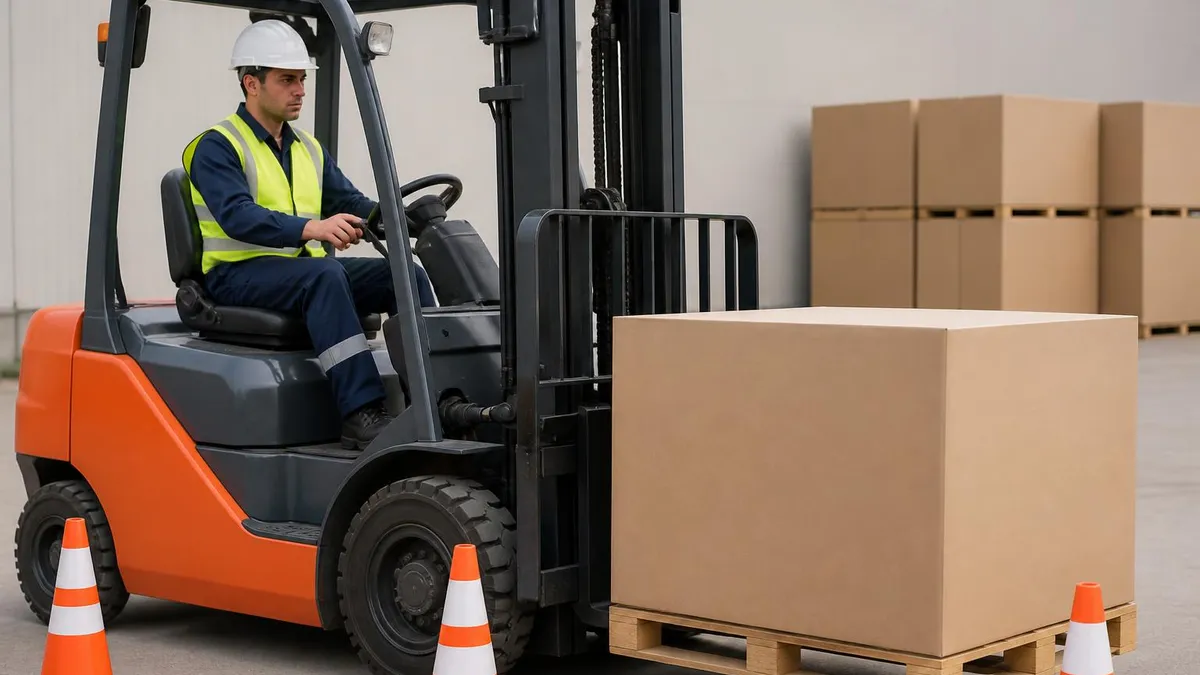
Forklift Tires: Complete Guide to Types, Sizing, Wear Patterns, and Replacement Costs
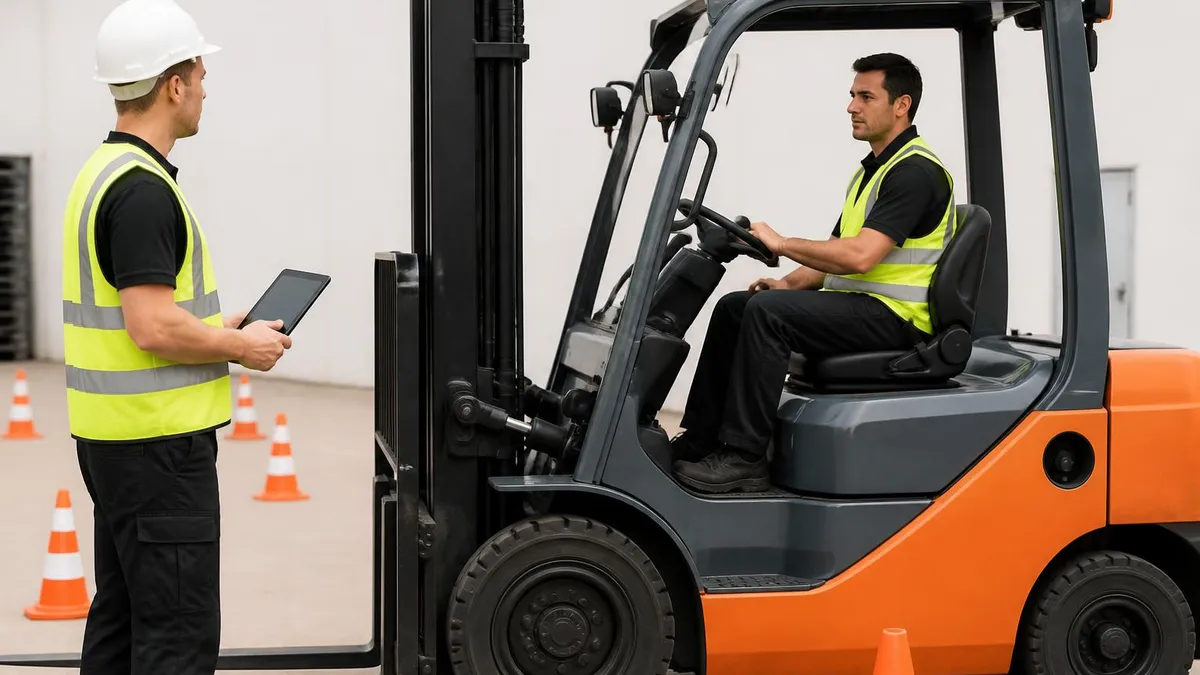
Forklift Safety Training: Complete OSHA Compliance Guide for Operators and Employers
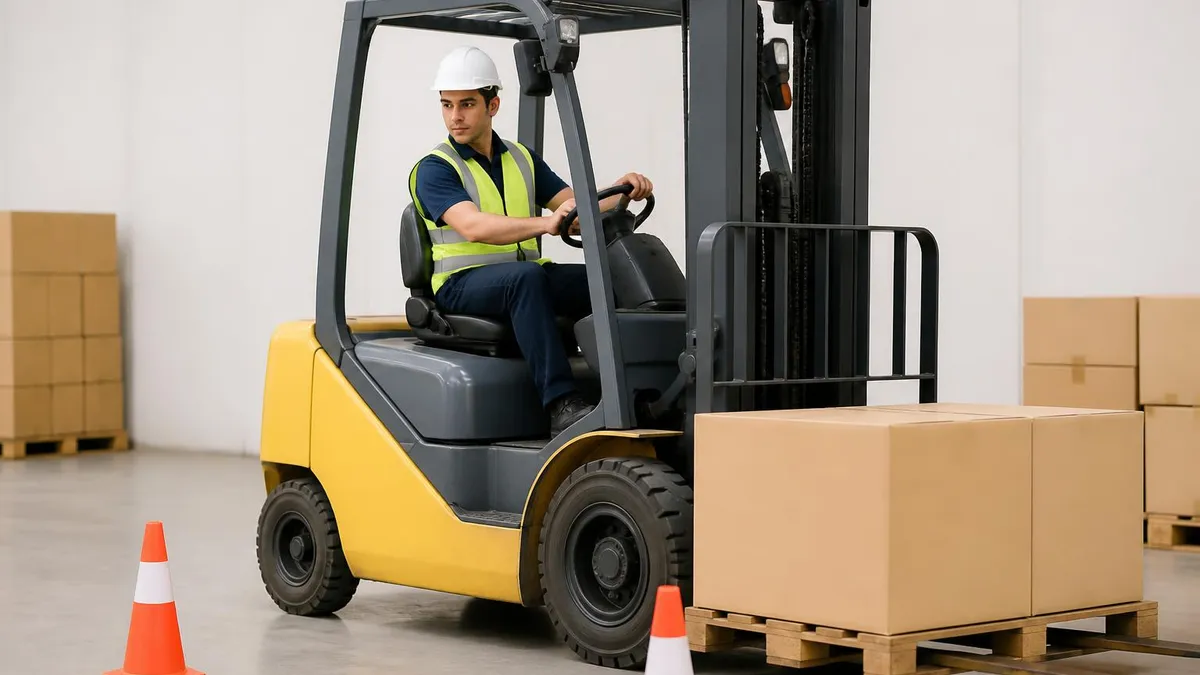
Forklift Repair Service: Complete Guide to Costs, Common Repairs, and Choosing the Right Technician
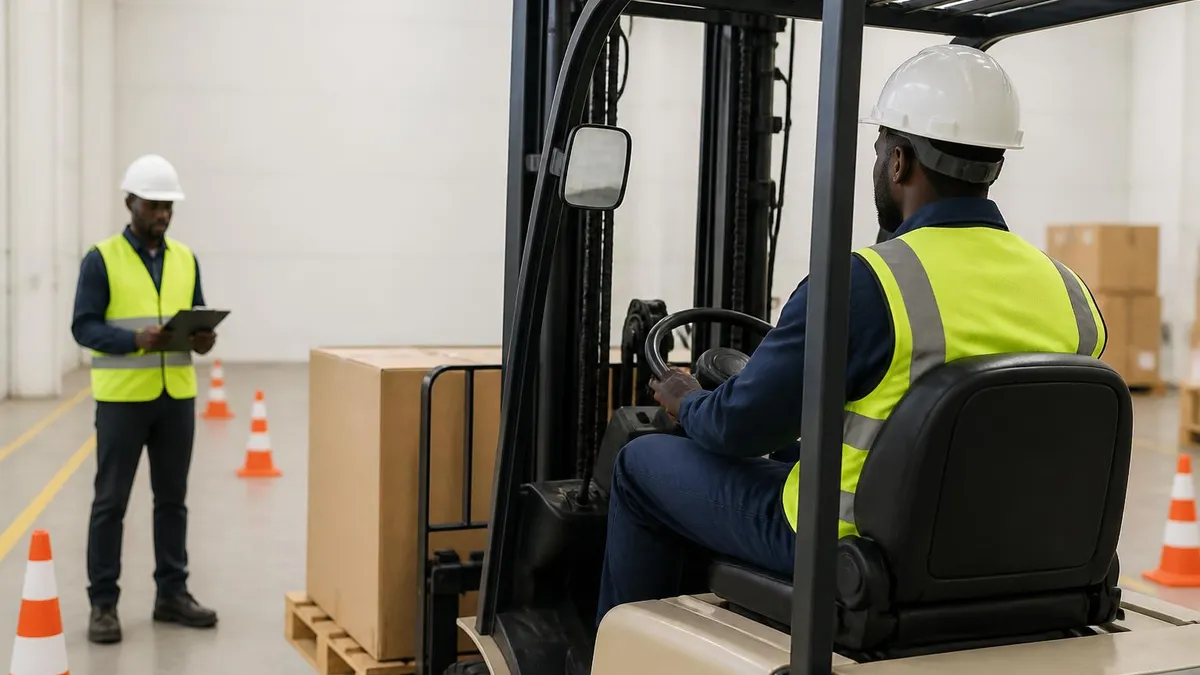
Forklift Certification by State: Complete 50-State Guide to OSHA-Compliant Operator Training, Costs, and Renewal Requirements
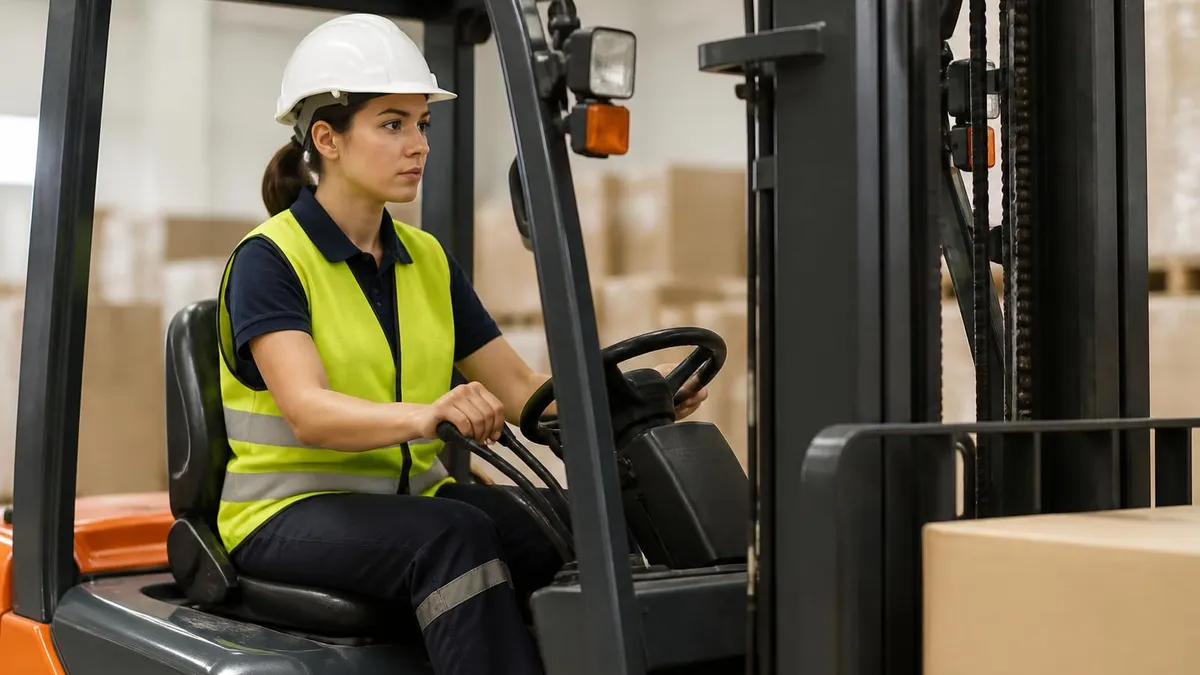
Forklift Price Guide 2026: New, Used, Rental, and Total Cost of Ownership Breakdown
About the Author

Certified Crane Operator & Skilled Trades Exam Specialist
Ferris State UniversityRobert Martinez is a Journeyman Ironworker, NCCCO-certified crane operator, and forklift trainer with a Bachelor of Science in Construction Technology from Ferris State University. He has 21 years of ironworking, rigging, and heavy equipment operation experience across high-rise and industrial construction sites. Robert prepares candidates for crane operator, rigger, forklift, and skilled trades certification examinations.