
Forklift Lifting Attachment Guide: Equipment Parts, Rentals & Operator Training
Complete guide to forklift lifting attachment parts, rentals, electric forklifts, and operator training. ✏️ Compare equipment, costs, and certification
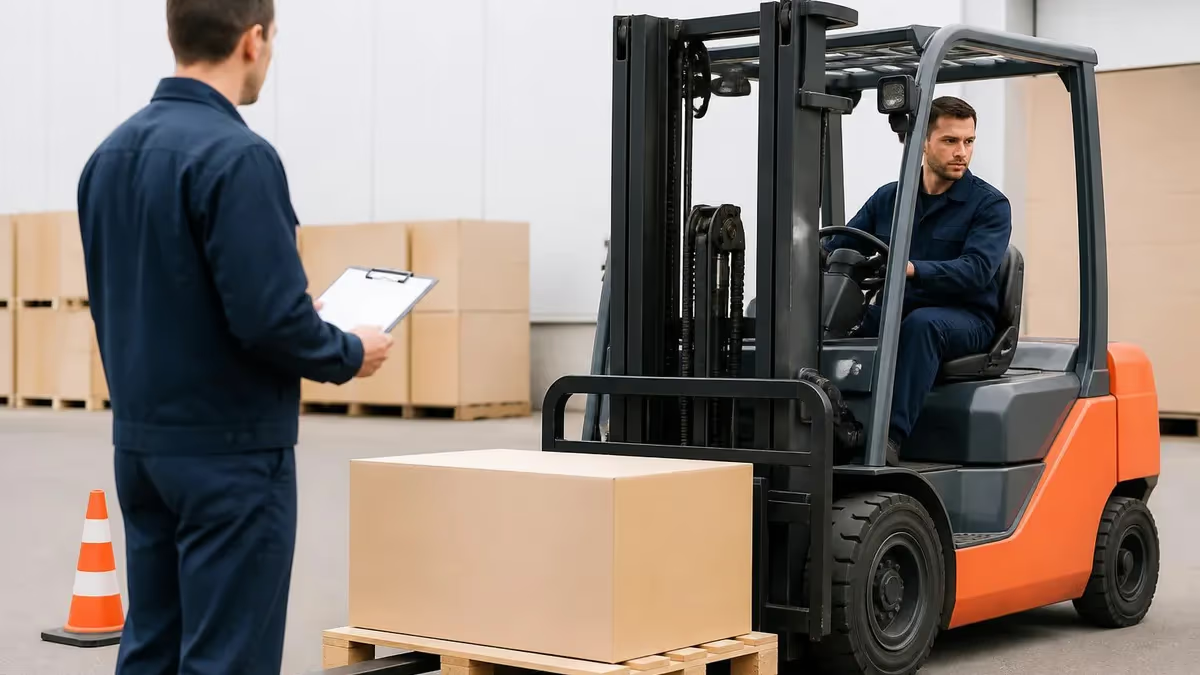
Choosing the right forklift lifting attachment can mean the difference between a smooth shift and a costly equipment failure on the warehouse floor. Whether you are managing a busy distribution center, running a construction site, or simply searching for a reliable forklift rental for a one-week project, understanding the components that make these machines work is essential. From mast assemblies and hydraulic cylinders to fork carriages, side shifters, and clamp attachments, every part plays a specific role in safe, productive material handling across thousands of American workplaces.
The market for forklifts has expanded dramatically over the past decade, with electric forklift adoption surging in indoor warehouses, cold storage facilities, and food processing plants where emissions matter. At the same time, internal combustion models remain dominant in lumber yards, construction sites, and outdoor freight operations. Each power source demands different attachments, maintenance schedules, and operator skills, which is why employers increasingly require specialized training before assigning workers to new equipment categories.
For aspiring operators, earning a recognized certification of forklift credential opens doors to higher pay, safer working conditions, and access to specialty roles involving telehandlers, cherry picker forklifts, and rough terrain machines. OSHA requires every powered industrial truck operator to be certified, evaluated every three years, and retrained whenever equipment, environment, or performance issues warrant it. Skipping this step exposes employers to fines averaging $15,625 per violation and creates serious injury risk.
This guide walks through the major lifting attachments and equipment parts you will encounter in the field, explains how to choose between renting and buying, and breaks down the certification path that turns an entry-level warehouse worker into a sought-after forklift operator. We will cover stand up forklifts, cherry picker forklifts, electric models, and the maintenance fundamentals that keep them running. You will also find practice questions, study checklists, and real cost data drawn from current industry benchmarks.
By the end, you should be able to identify which attachment fits which load, compare daily and weekly forklift rental rates near you, evaluate training programs that lead to job offers, and avoid the most common mistakes new operators make during their first ninety days on the job. We will also flag the regulatory deadlines and inspection requirements that catch many small employers off guard during OSHA visits.
Whether you are a facilities manager comparing fleet options, a worker preparing for certification, or a small business owner pricing your first lift truck, the information below distills hundreds of hours of operator training, equipment catalogs, and inspection reports into a practical reference. Bookmark this page, take the embedded practice quizzes, and return as needed when new equipment arrives at your facility or when your certification renewal date approaches.
Let's start with the numbers that define the modern forklift industry, then move into the attachments, training pathways, and rental strategies that matter most for your specific situation today.
Forklift Industry by the Numbers

Major Forklift Lifting Attachments
Hydraulically slides the fork carriage left and right up to four inches each direction without repositioning the truck. Reduces shift times by 15-20% and minimizes load damage during precision pallet placement in tight racking.
Allows the operator to adjust fork spacing from the cab using hydraulic controls. Essential for facilities handling varied pallet sizes, drums, or specialty loads that would otherwise require manual fork repositioning between every pickup.
Grips cylindrical paper rolls, carpet, or coiled materials with curved arms and force-sensing hydraulics. Common in printing plants and paper mills where damaged product can cost hundreds of dollars per unit lost.
Squeezes boxed appliances, furniture, or palletless loads between padded platens. Lets warehouses skip pallets entirely for high-volume consumer goods, saving floor space and reducing pallet management costs significantly.
Replaces pallets with thin plastic or fiber slip sheets, gripped by a metal tab and pulled onto a platen. Saves up to 25% of trailer space and eliminates pallet costs in international shipping operations.
Rotates forks or clamped loads 360 degrees for emptying containers, dumping waste, or inverting product. Used heavily in foundries, recycling centers, and food manufacturing where dump cycles repeat hundreds of times daily.
The single biggest decision facing fleet managers today is whether to invest in electric forklift technology or stick with internal combustion models powered by propane, diesel, or gasoline. Electric forklifts now represent roughly 64% of new unit sales in North America, driven by indoor air quality regulations, falling lithium-ion battery costs, and the operational simplicity of plugging in at the end of a shift rather than swapping propane tanks every four hours during heavy use.
Electric models excel in food storage, pharmaceutical warehouses, and retail distribution centers where emissions, noise, and floor cleanliness matter. A modern lithium-ion stand up forklift can complete a full eight-hour shift on a single charge, then opportunity charge during operator breaks to extend runtime without a battery swap. Lead-acid batteries remain cheaper upfront but require dedicated charging rooms, weekly watering, and ventilation infrastructure that many smaller operations cannot justify.
Internal combustion forklifts retain a strong foothold outdoors and in heavy-duty applications. Propane-powered cushion tire trucks handle loading docks and yard work where rapid refueling matters, while diesel pneumatic models tackle lumber yards, construction sites, and intermodal freight terminals carrying loads up to 35,000 pounds. Their higher capacity, faster refueling, and tolerance for harsh weather keep them relevant despite environmental trade-offs that newer hydrogen fuel cell systems are beginning to address.
The cherry picker forklift, technically called an order picker, represents a specialized category that combines forklift mobility with a rising operator platform. Workers ride up with the load to manually pick individual cases from racking up to 30 feet high, which is essential for parts distribution, electronics fulfillment, and any operation where full-pallet picks are too coarse. These machines require additional fall protection training and use use that standard counterbalance certification does not cover.
Telehandlers blur the line between forklift and crane, extending a telescoping boom forward and upward to place loads on rooftops, scaffolding, or second-story openings. Construction sites use them for masonry, framing, and roofing material delivery. Operators need a separate endorsement on most certification programs because the load chart, stability triangle, and tip-over physics differ substantially from a standard counterbalanced lift truck on flat warehouse floors.
Rough terrain forklifts share many components with telehandlers but lack the boom extension. Pneumatic tires, four-wheel drive, and high ground clearance let them navigate gravel, mud, and slopes that would strand a warehouse truck within minutes. Lumber yards, landscaping supply businesses, and oilfield service companies make heavy use of these machines, often pairing them with specialty attachments like log forks, bucket attachments, or masonry block clamps.
Before you commit to any equipment category, study the OSHA-compliant operator manual, review the manufacturer's load chart for every attachment combination, and confirm that your training certificate covers the specific truck class. Operators certified only on Class IV cushion tire trucks cannot legally operate a Class VII rough terrain machine without additional training, and many employers reinforce this with internal forklifts evaluations every twelve months.
Forklift certification Practice Test Questions
Prepare for the Forklift certification Certification exam with our free practice test modules. Each quiz covers key topics to help you pass on your first try.
Forklift certification Certification Forkl...
Forklift certification Exam Questions covering Certification Forklift certification Maintenance and Repairs. Master Forklift certification Test concepts for certification prep.
Forklift certification Certification Forkl...
Free Forklift certification Practice Test featuring Certification Forklift certification Maintenance and Repairs Questions and Answers. Improve your Forklift certification Exam score with mock test prep.
Forklift certification Certification Forkl...
Forklift certification Mock Exam on Certification Forklift certification Operator Training and Certification Requirements. Forklift certification Study Guide questions to pass on your first try.
Forklift certification Certification Forkl...
Forklift certification Test Prep for Certification Forklift certification Operator Training and Certification Requirements Questions and Answers. Practice Forklift certification Quiz questions and boost your score.
Forklift certification Load Handling and S...
Forklift certification Questions and Answers on Load Handling and Stability. Free Forklift certification practice for exam readiness.
Forklift certification OSHA Regulations an...
Forklift certification Mock Test covering OSHA Regulations and Compliance. Online Forklift certification Test practice with instant feedback.
Forklift certification Pre-Operation Inspe...
Free Forklift certification Quiz on Pre-Operation Inspections. Forklift certification Exam prep questions with detailed explanations.
Forklift certification Refueling and Recha...
Forklift certification Practice Questions for Refueling and Recharging Procedures. Build confidence for your Forklift certification certification exam.
Forklift certification Safe Driving and Ma...
Forklift certification Test Online for Safe Driving and Maneuvering. Free practice with instant results and feedback.
Forklift certification Workplace Hazard Id...
Forklift certification Study Material on Workplace Hazard Identification. Prepare effectively with real exam-style questions.
Forklift certification Forklift Instructions
Free Forklift certification Test covering Forklift Instructions. Practice and track your Forklift certification exam readiness.
Forklift certification Forklift MCQ
Forklift certification Exam Questions covering Forklift MCQ. Master Forklift certification Test concepts for certification prep.
Forklift certification Forklift Employer R...
Free Forklift certification Practice Test featuring Forklift Employer Responsibilities. Improve your Forklift certification Exam score with mock test prep.
Forklift certification Forklift Penalties ...
Forklift certification Mock Exam on Forklift Penalties for Non-Compliance. Forklift certification Study Guide questions to pass on your first try.
Forklift Operator Training Paths Explained
Most warehouse operators receive their initial certification through their employer's in-house program. Companies like Amazon, Walmart, Home Depot, and UPS run structured training that combines OSHA-required classroom instruction with hands-on evaluation by a designated trainer. This route costs the worker nothing, takes between four and eight hours, and results in a wallet card valid for three years at that specific employer's facilities.
The downside is portability. While the underlying OSHA training transfers, most employers require new hires to repeat at least the practical evaluation portion to confirm competency on their specific equipment. Workers changing jobs every year or two often find themselves recertifying repeatedly, which is why some pursue independent certification through community colleges or third-party schools that issue more widely recognized credentials.

Renting vs. Buying a Forklift: Quick Comparison
- +Lower upfront cost lets small businesses start moving freight immediately
- +Maintenance, repairs, and tire replacement are included in most rental contracts
- +Easy to upgrade or downsize equipment as seasonal demand fluctuates
- +Try different brands and capacities before committing to a long-term purchase
- +Rental costs are fully tax-deductible as operating expenses each month
- +Newer rental fleets often include lithium batteries and modern safety features
- −Long-term rental rates exceed financed purchase costs after roughly 24 months
- −Limited customization for specialty attachments or branding
- −Damage charges and excess-hour fees can surprise unprepared renters
- −Availability shrinks during peak seasons like Q4 retail and harvest
- −Operators may face unfamiliar controls when rental units rotate frequently
- −Insurance and certification documentation must transfer with every swap
Pros and Cons at a Glance
| Pros | Cons |
|---|---|
| Lower upfront cost lets small businesses start moving freight immediately | Limited customization for specialty attachments or branding |
| Maintenance, repairs, and tire replacement are included in most rental contracts | Damage charges and excess-hour fees can surprise unprepared renters |
| Easy to upgrade or downsize equipment as seasonal demand fluctuates | Operators may face unfamiliar controls when rental units rotate frequently |
| Try different brands and capacities before committing to a long-term purchase | Insurance and certification documentation must transfer with every swap |
Pre-Shift Forklift Inspection Checklist
- ✓Walk around the truck looking for fluid leaks under the chassis and mast
- ✓Check tire condition, pressure, and wheel lug torque on pneumatic models
- ✓Inspect forks for cracks, bent tips, and worn heel measurement below 90%
- ✓Verify the load backrest extension is secure and free of bends or cracks
- ✓Test horn, lights, backup alarm, and any blue spotlight or pedestrian sensors
- ✓Confirm seatbelt operates smoothly and the operator presence system engages
- ✓Cycle the mast through full lift, tilt, side shift, and any attachment functions
- ✓Check hydraulic hoses for cracks, swelling, or visible oil weeping at fittings
- ✓Verify battery charge, electrolyte level, and connector condition on electric units
- ✓Inspect propane tank seating, hose integrity, and pressure relief valve on LP trucks
- ✓Document the inspection on the daily checklist and tag-out any defective unit
- ✓Report defects to a supervisor before placing the equipment back in service
OSHA Requires Documented Evaluation Every Three Years
Even experienced operators with decades of service must be re-evaluated at least every three years under 29 CFR 1910.178(l). Sooner re-evaluation is required after any near-miss, accident, equipment change, or assignment to a new workplace. Keep signed evaluation records on file for the duration of employment plus three years to survive an OSHA audit cleanly.
Forklift rental pricing varies more than most newcomers expect. A standard 5,000-pound capacity propane cushion tire truck typically rents for $150 to $250 per day, $500 to $800 per week, and $1,200 to $2,200 per month in major US metropolitan markets. Electric stand up reach trucks command 20% to 40% premiums because of battery and charger logistics. Specialty equipment like rough terrain machines, telehandlers, and order pickers often exceed $4,000 per month before delivery, fuel, and damage waiver fees stack on top.
Searching for forklift rental near me on Google returns a mix of national chains like United Rentals, Sunbelt, and Toyota Material Handling alongside regional independents that often price 10% to 15% below the big names. Independent dealers also tend to offer more flexible week-to-week terms, faster local delivery, and the ability to swap equipment quickly if your initial choice turns out wrong for the job. National chains win on geographic consistency for multi-site operations.
When pricing rentals, always confirm the included hours per period. Most contracts cap usage at 160 hours per month, then bill overage at $4 to $8 per hour. Operations running double shifts blow through this allowance fast, making purchase or long-term lease more economical past the 60-hour-per-week mark. Ask about included routine maintenance, tire replacement, and how repair downtime is credited if the unit fails mid-rental period.
For buyers, used forklifts dominate the market. A well-maintained five-to-seven-year-old 5,000-pound electric counterbalance truck runs $8,000 to $18,000, while comparable propane models sell for $6,000 to $14,000. New units start around $25,000 for entry-level Class IV trucks and climb past $80,000 for specialty electric reach trucks with lithium batteries, telematics, and advanced operator-assist technology. Financing typically spans 36 to 60 months at rates between 6% and 10% for businesses with established credit.
Before purchasing, request the maintenance history, hour meter reading, and any accident records. Industry rules of thumb suggest 10,000 hours represents a typical first major rebuild point for internal combustion trucks, while electric units often run 12,000 to 15,000 hours before motors or controllers need significant work. Telematics dashboards on modern units track impact events, idle time, and operator login data that reveals how hard the truck was actually worked during its prior life.
If your operation handles less than 40 forklift hours per week, renting almost always wins on total cost of ownership. Above 60 hours per week sustained for six months or more, financed purchase typically pulls ahead within the first two years. Lease-to-own arrangements split the difference, locking in monthly payments comparable to long-term rental while building equity in the equipment over a 36- to 60-month term that ends with a buyout option.
Independent operators searching for a permanent solution often check classified listings for forklift rental near me opportunities first, then expand to nearby cities once they have a clearer picture of fair market pricing in their region. Auction sites like IronPlanet and Ritchie Bros routinely sell off-lease and rental retirement units at 30% to 50% below dealer pricing, which can be a smart move for buyers with in-house mechanical expertise.

Operating an uncertified worker on a powered industrial truck triggers a citation under 29 CFR 1910.178(l), with serious violation penalties reaching $15,625 per instance and willful violations climbing to $156,259. Train every operator before their first solo run, document every evaluation, and never let a new hire test-drive a forklift in the yard while paperwork is pending. The financial and human cost of skipping this step is never worth the time saved.
Building a career as a forklift operator starts with strong fundamentals: OSHA-compliant training, a clean evaluation record, and a willingness to certify on multiple truck classes as opportunities arise. Entry-level warehouse operators in the United States average $17 to $22 per hour, with experienced specialists running reach trucks, order pickers, or telehandlers earning $25 to $32 per hour. Cold storage and hazardous materials roles often add a $2 to $4 differential, while union positions in major ports and freight terminals can exceed $40 per hour with full benefits.
The fastest career progression comes from layering specialty certifications onto your base credential. Workers who add cherry picker forklift, rough terrain, and hazmat endorsements within their first two years routinely double their earning potential. Crane and rigging certifications open even higher tiers in construction and shipbuilding, and many operators eventually transition into safety supervisor, fleet manager, or logistics coordinator roles where forklift expertise informs decision-making at the planning level rather than the operator level.
Geographic location matters enormously. Operators in California, Washington, New York, and Illinois consistently out-earn the national average due to higher cost of living, stronger union presence, and concentrations of distribution centers serving major ports and population centers. Texas, Florida, and Georgia offer lower wages but lower living costs, making them attractive for workers focused on take-home savings rather than gross pay. Remote work obviously is not available in this trade, so location choice carries long-term weight.
Searching local listings for forklift for sale alternatives or operator positions reveals current market dynamics in your area. Many job postings list specific equipment classes and certification requirements, which helps you target training to match employer demand rather than guessing. Pay close attention to whether listings require Class I, II, IV, or VII certification, since each represents distinct truck families with different operating characteristics and pay scales.
Beyond certification, employers increasingly value operators who understand inventory systems, RF scanners, and warehouse management software. Workers comfortable toggling between physical material handling and digital documentation move into team lead positions faster than equally-skilled peers who stick to pure equipment operation. Free online training modules from companies like SAP, Manhattan Associates, and Oracle cover the basics in a few hours each.
Soft skills round out the picture. Reliability, punctuality, and clean attendance records carry enormous weight in warehouse hiring because turnover in entry-level positions runs above 100% annually in many distribution centers. Operators who simply show up every day, complete their inspections honestly, and avoid impact events become irreplaceable to managers desperate for consistent performers. A clean six-month record at one employer typically opens doors to permanent positions, internal promotions, or strong references when you do eventually move on.
Finally, never let your certification lapse. Calendar the renewal date the moment you receive your initial card, schedule the refresher at least 30 days before expiration, and keep a digital photo of your current credential accessible from your phone. Employers performing surprise audits or temporary assignment swaps often need to verify certification within minutes, and operators who can produce documentation instantly project the kind of professionalism that gets them tapped for premium assignments first.
Practical preparation makes the difference between passing your forklift evaluation on the first attempt and bouncing back for a retake. Start by reviewing the OSHA powered industrial truck standard, 29 CFR 1910.178, in full. The standard runs roughly 30 pages and covers everything from truck design requirements to operator training, fueling procedures, and load handling rules. Many practical exam questions trace directly to specific subsections, so familiarity with the regulatory language gives you an edge during the written portion.
Next, spend time with the manufacturer's operator manual for the specific truck class you will be tested on. Toyota, Hyster, Crown, Caterpillar, and Yale all publish detailed operator handbooks that walk through controls, load charts, stability triangles, and emergency procedures. Reading the manual end-to-end takes two to three hours and resolves most ambiguities about how individual machines handle differently from one brand to the next during the practical evaluation.
For the hands-on portion, practice the standard course elements before test day. Most evaluations include picking up a pallet from a defined position, navigating a serpentine course between cones, placing the load on a rack or stack at a specific height, retrieving it, and returning to the start position. Smooth, deliberate movements score higher than fast ones, and evaluators consistently mark down for skipped horn use at blind corners, missed seatbelt engagement, or driving with improved forks.
Memorize the stability triangle concept until it feels intuitive. The triangle formed by the two front wheels and the pivot point of the rear axle defines where the truck's combined center of gravity must remain to prevent tipping. Lifting heavy loads high or tilting forward shifts the center forward, while turning shifts it sideways. Most tip-over incidents trace back to operators losing track of this geometry during routine moves they have done thousands of times.
Familiarize yourself with load chart interpretation. Every forklift carries a data plate listing maximum capacity at a specific load center, typically 24 inches. Larger or unusually shaped loads with longer load centers reduce rated capacity, sometimes dramatically. Knowing how to read the capacity derating chart for unusual loads is a frequent topic in the written exam and a common cause of real-world accidents when operators eyeball loads instead of consulting the chart.
Day-of-test logistics matter too. Show up 15 minutes early, wear closed-toe boots and high-visibility clothing if required, and bring photo ID along with any prerequisite documentation. Eat a light meal beforehand and avoid energy drinks that can make hands shaky during fine control work. Confidence and steady breathing on the evaluation course read as competence to the examiner, while obvious nervousness sometimes leads to additional scrutiny on borderline maneuvers.
Finally, use free practice tests like the ones embedded throughout this article. Spaced repetition over a week or two pushes information from short-term to long-term memory, which is exactly what you need when the evaluator asks a curveball question about fueling procedures or pedestrian right-of-way. Quizzing yourself daily for five to ten minutes outperforms cramming the night before, and most operators who follow this approach pass on their first attempt without difficulty.
Sample Forklift certification Practice Questions
Try these questions from our free Forklift certification practice tests. The correct answer and an explanation follow each question.
Who can serve as a qualified trainer for forklift operator training?
- A. Any employee who has operated a forklift for at least one week
- B. A person with the knowledge, training, and experience to train and evaluate operators
- C. Only a certified third-party training company
- D. The newest employee in the warehouse
Answer: B. A person with the knowledge, training, and experience to train and evaluate operators
OSHA requires trainers to have the knowledge, training, and experience necessary to effectively train operators and evaluate their performance.
Can a new forklift operator trainee operate a forklift before completing training?
- A. No, trainees must complete all training before any operation
- B. Yes, but only if they have a driver's license
- C. Yes, with direct supervision by a qualified trainer
- D. Only in storage areas away from other workers
Answer: C. Yes, with direct supervision by a qualified trainer
OSHA allows trainees to operate a forklift during training only under the direct supervision of a qualified trainer.
What must forklift training include regarding the specific types of trucks an operator will use?
- A. Training on all possible forklift models worldwide
- B. Training specific to each type of truck the operator will actually operate
- C. Only generic forklift safety concepts
- D. Manufacturer contact information
Answer: B. Training specific to each type of truck the operator will actually operate
Training must be tailored to the exact types of forklifts the operator will use, since different truck types have different operating characteristics.
Who is responsible for certifying that a forklift operator has completed the required training?
- A. The operator
- B. The employer
- C. OSHA
- D. The equipment manufacturer
Answer: B. The employer
The employer must certify that each operator has been trained and evaluated as required.
Forklift Questions and Answers
Forklift Jobs Near Me: Complete Guide to Finding Best Opportunities
Forklift Operation & Equipment Knowledge Practice Test Video Answer
Forklift Inspection & Maintenance Practice Test Video Answer
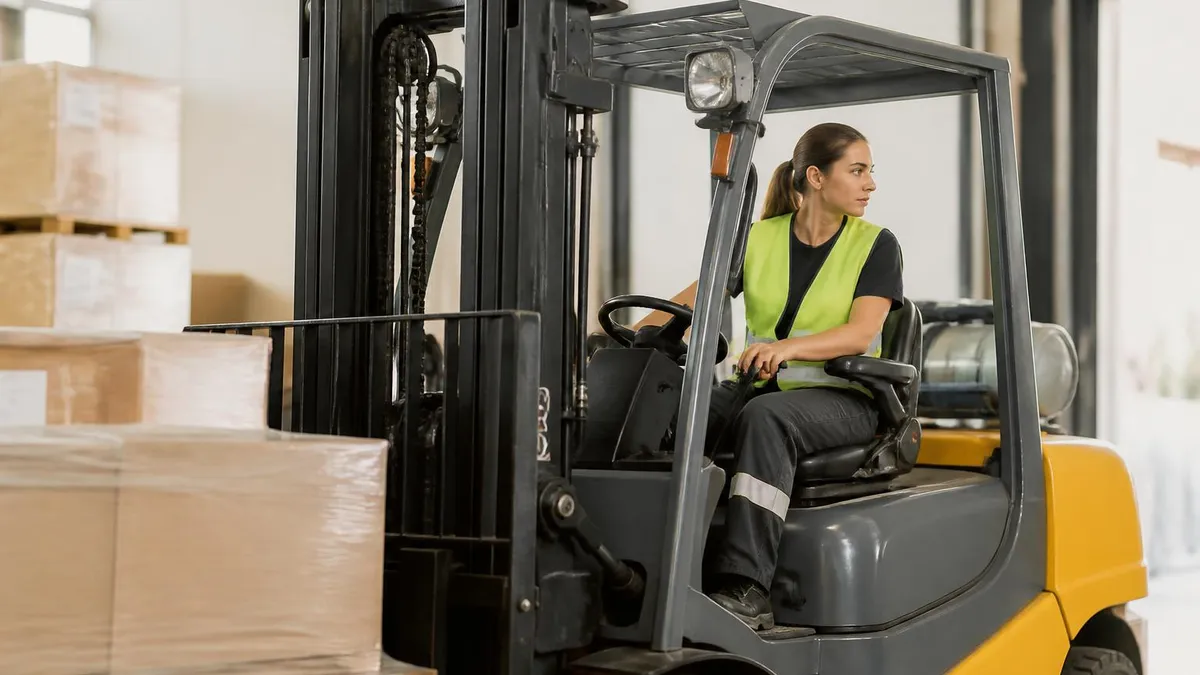
Forklift Operator Jobs Near Me: Pay, Top Employers, Specialty Roles
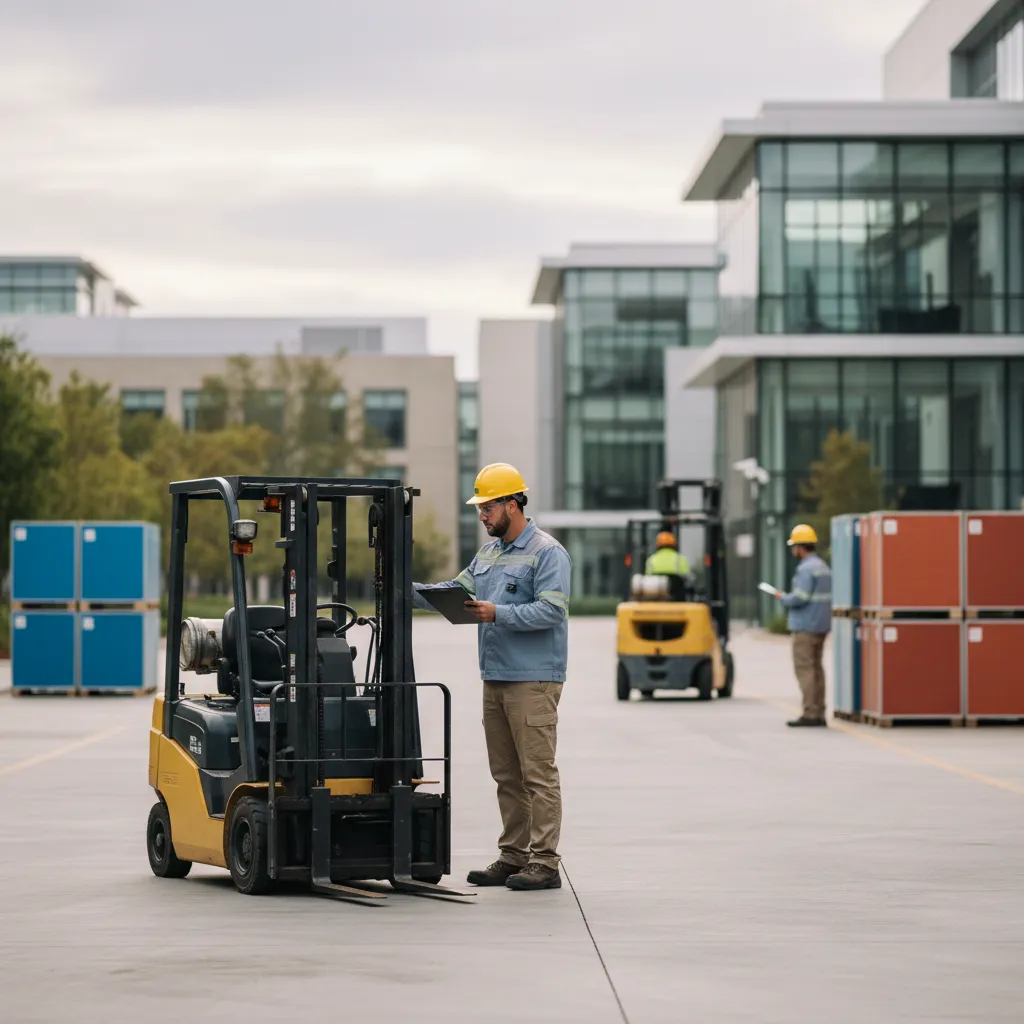
30-Day Forklift certification Certification Study Plan — Pass on Your First Try
About the Author

Certified Crane Operator & Skilled Trades Exam Specialist
Ferris State UniversityRobert Martinez is a Journeyman Ironworker, NCCCO-certified crane operator, and forklift trainer with a Bachelor of Science in Construction Technology from Ferris State University. He has 21 years of ironworking, rigging, and heavy equipment operation experience across high-rise and industrial construction sites. Robert prepares candidates for crane operator, rigger, forklift, and skilled trades certification examinations.