
Heavy Duty Forklift: Complete Guide to Capacities, Rentals, Operator Training, and Industrial Applications for 2026 October
Complete heavy duty forklift guide: 📝 rental costs, capacities, operator certification, electric vs diesel models, and OSHA training requirements for 2026 October.
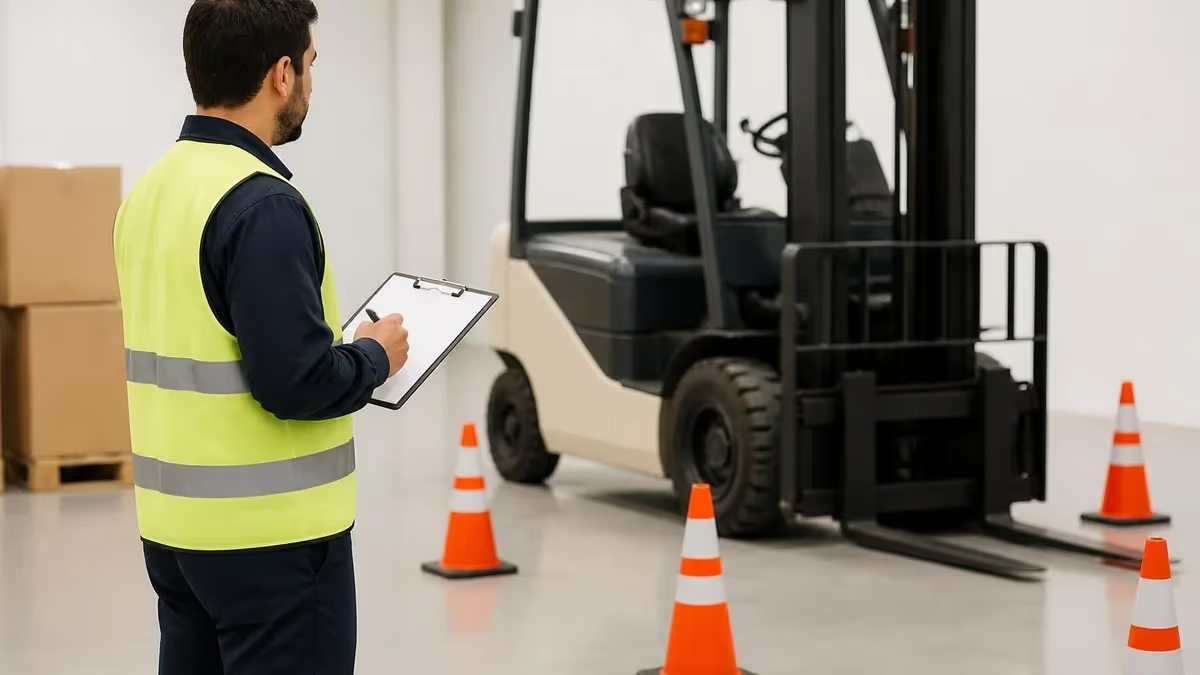
A heavy duty forklift is the workhorse of modern industrial logistics, engineered to lift loads ranging from 10,000 pounds to over 100,000 pounds in steel mills, shipping ports, lumber yards, and heavy manufacturing plants. Unlike standard warehouse forklifts that top out at 5,000 to 8,000 pounds, these machines are built around reinforced mast assemblies, oversized counterweights, and turbocharged diesel or LPG engines designed for sustained high-capacity work. Understanding the right forklift rental option, capacity rating, and operator certification path is critical before placing one of these machines into service.
The market for high-capacity lift trucks has expanded dramatically as ports handle larger containers and renewable energy projects move massive wind turbine components across staging yards. Forklift rental demand for machines above 15,000 pounds has grown roughly 18% year over year, driven by infrastructure spending and just-in-time supply chain rebuilding. Whether you operate a single facility or manage a national fleet, knowing how to spec, rent, certify, and maintain a heavy duty unit will save you tens of thousands of dollars annually.
This guide breaks down everything an operations manager, safety director, or new forklift operator needs to know. We cover capacity classifications under ITA Class IV through Class VII, the differences between cushion-tire and pneumatic-tire models, electric versus internal combustion drivetrains, and the OSHA certification process required for anyone who touches the controls. We also walk through realistic rental pricing for 2026, daily and monthly rates, and the often-overlooked delivery and fuel surcharges that inflate quoted prices.
If you have ever searched for a telehandler forklift or compared rough-terrain machines against traditional counterbalance designs, you already know that capacity alone does not tell the full story. Reach height, load center, attachment compatibility, and ground conditions all influence which machine actually fits the job. We will explain the spec sheets and de-rating tables so you stop overpaying for capacity you do not need and stop ordering machines that cannot safely complete the lift.
Heavy duty forklifts also carry stricter regulatory exposure than smaller units. A 30,000-pound capacity machine that tips over can crush vehicles, collapse storage racks, and cause fatal injuries within seconds. OSHA citations for untrained operators on Class VII machines routinely exceed $15,000 per violation, and willful violations after an incident can climb past $160,000. Proper certification of forklift operators is the single most cost-effective insurance policy any employer can purchase.
By the end of this article, you will know exactly which class of heavy duty forklift suits your application, how to negotiate a fair rental contract, what the operator training curriculum looks like, and how to keep your fleet compliant year after year. We will also point you to free practice tests so your team can prepare for the written certification exam with confidence.
Heavy Duty Forklift Market by the Numbers

Heavy Duty Forklift Classifications by ITA Class
Internal combustion engines with solid cushion tires, designed for indoor smooth-surface use up to 15,500 pounds. Common in manufacturing and beverage warehouses.
Diesel or LPG-powered with air-filled or solid pneumatic tires. The most common heavy duty category, with capacities ranging from 8,000 to 36,000 pounds for outdoor yard work.
Electric and IC tractor units used for towing trailers and material trains in airports, automotive plants, and rail yards. Draw bar pulls exceeding 30,000 pounds.
Massive pneumatic-tire machines including container handlers, reach stackers, and lumber forklifts. Capacities from 6,000 to 100,000+ pounds for ports and construction sites.
Telescoping boom forklifts that extend forward and upward, blending crane and forklift functions. Common in construction with reach heights past 55 feet.
Capacity ratings on heavy duty forklifts are deceptively simple. A data plate showing 30,000 pounds at a 24-inch load center does not mean the machine can lift 30,000 pounds in every configuration. The moment you add a side-shifter, fork positioner, paper roll clamp, or extended forks, the rated capacity drops, sometimes by 20 to 40 percent. Every operator and supervisor needs to read the residual capacity chart that came with the machine and verify the load center matches the actual cargo dimensions before lifting.
Mast height is another spec that demands careful attention. A standard two-stage mast on a 25,000-pound capacity forklift typically reaches 12 to 15 feet. Three-stage and quad masts extend to 20 feet or beyond but reduce free lift, which is the height the forks can rise before the mast extends. Low overhead clearances inside trailers, kilns, or container ships make free lift a critical variable. Order the wrong mast and you cannot enter the loading bay at all.
Tire selection is equally important. Pneumatic tires absorb impact on broken concrete, gravel, and unpaved yards, while solid pneumatic tires eliminate puncture risk in scrap yards and recycling facilities littered with nails and metal shards. Cushion tires only work indoors on smooth surfaces but offer tighter turning radius and lower cost. Many fleet managers regret ordering pneumatic tires for indoor-only operations because the larger footprint forces aisle widening and reduces storage density.
Attachments transform a heavy duty forklift into a specialized tool. Paper roll clamps for printing plants, drum handlers for chemical facilities, coil rams for steel service centers, push-pull slip sheet attachments for grocery distribution, and rotators for foundries are all common. Each attachment adds weight that subtracts from rated capacity. A 4,000-pound paper clamp on a 25,000-pound forklift effectively reduces usable capacity to roughly 17,000 pounds, a fact that experienced forklift truck operators must understand before accepting the load.
Counterweight design separates true heavy duty units from upgraded standard machines. Manufacturers add cast iron counterweights ranging from 8,000 to over 40,000 pounds at the rear of the chassis to balance the load. This is why a 30,000-pound capacity forklift can weigh 50,000 to 70,000 pounds empty. Floor loading calculations matter: many older warehouses and improved docks cannot support these machines without structural reinforcement.
Visibility, ergonomics, and operator comfort have evolved significantly in modern heavy duty forklifts. Enclosed cabs with HVAC, suspension seats, joystick controls, and rear-view cameras are now standard on machines above 20,000 pounds. These features are not luxuries — they reduce operator fatigue on 10-hour shifts and prevent the visibility-related incidents that cause roughly 25 percent of all forklift fatalities. When evaluating rental or purchase options, prioritize cab visibility and seat suspension over cosmetic features.
Finally, consider the data and telematics package. Modern heavy duty forklifts ship with onboard diagnostics, impact sensors, operator login systems, and fleet management software that tracks utilization, idle time, and maintenance intervals. These systems typically pay for themselves within 18 months by identifying underused machines, flagging reckless operators, and preventing unscheduled downtime that costs $1,500 to $5,000 per day in a busy distribution center.
Forklift certification Practice Test Questions
Prepare for the Forklift certification Certification exam with our free practice test modules. Each quiz covers key topics to help you pass on your first try.
Forklift certification Certification Forkl...
Forklift certification Exam Questions covering Certification Forklift certification Maintenance and Repairs. Master Forklift certification Test concepts for certification prep.
Forklift certification Certification Forkl...
Free Forklift certification Practice Test featuring Certification Forklift certification Maintenance and Repairs Questions and Answers. Improve your Forklift certification Exam score with mock test prep.
Forklift certification Certification Forkl...
Forklift certification Mock Exam on Certification Forklift certification Operator Training and Certification Requirements. Forklift certification Study Guide questions to pass on your first try.
Forklift certification Certification Forkl...
Forklift certification Test Prep for Certification Forklift certification Operator Training and Certification Requirements Questions and Answers. Practice Forklift certification Quiz questions and boost your score.
Forklift certification Load Handling and S...
Forklift certification Questions and Answers on Load Handling and Stability. Free Forklift certification practice for exam readiness.
Forklift certification OSHA Regulations an...
Forklift certification Mock Test covering OSHA Regulations and Compliance. Online Forklift certification Test practice with instant feedback.
Forklift certification Pre-Operation Inspe...
Free Forklift certification Quiz on Pre-Operation Inspections. Forklift certification Exam prep questions with detailed explanations.
Forklift certification Refueling and Recha...
Forklift certification Practice Questions for Refueling and Recharging Procedures. Build confidence for your Forklift certification certification exam.
Forklift certification Safe Driving and Ma...
Forklift certification Test Online for Safe Driving and Maneuvering. Free practice with instant results and feedback.
Forklift certification Workplace Hazard Id...
Forklift certification Study Material on Workplace Hazard Identification. Prepare effectively with real exam-style questions.
Forklift certification Forklift Instructions
Free Forklift certification Test covering Forklift Instructions. Practice and track your Forklift certification exam readiness.
Forklift certification Forklift MCQ
Forklift certification Exam Questions covering Forklift MCQ. Master Forklift certification Test concepts for certification prep.
Forklift certification Forklift Employer R...
Free Forklift certification Practice Test featuring Forklift Employer Responsibilities. Improve your Forklift certification Exam score with mock test prep.
Forklift certification Forklift Penalties ...
Forklift certification Mock Exam on Forklift Penalties for Non-Compliance. Forklift certification Study Guide questions to pass on your first try.
Electric Forklift vs Diesel vs LPG — Choosing the Right Power Source
The modern electric forklift has erased most of the historical disadvantages that kept battery power out of heavy duty applications. Lithium-ion battery packs now deliver full-shift runtime up to 16,000-pound capacities, with opportunity charging that eliminates battery swaps. Operating costs run roughly 60 percent lower than diesel over a five-year horizon when you factor in fuel, oil changes, and exhaust system maintenance.
The trade-offs are upfront cost and outdoor performance. A lithium-ion electric forklift costs 30 to 50 percent more than a comparable IC unit. Cold storage environments below 20°F can reduce battery capacity by 20 to 30 percent, requiring oversized packs or thermal jackets. For indoor warehouses with multi-shift operations, the math overwhelmingly favors electric — for outdoor yards in extreme climates, diesel still wins.

Renting vs Buying a Heavy Duty Forklift
- +No capital outlay — preserves cash flow for core operations
- +Maintenance, repairs, and tires usually included in rental contract
- +Flexibility to scale fleet up or down with seasonal demand
- +Access to newer models with latest safety and telematics features
- +Avoids depreciation risk on rapidly evolving electric technology
- +Easier to swap capacity classes as project requirements change
- −Long-term rental costs exceed purchase price within 24-36 months
- −Less control over machine condition and operator habits
- −Mileage and hour limits on contracts can trigger overage fees
- −Damage waivers and insurance riders add 8-15% to monthly rate
- −Delivery and pickup fees of $200-$800 per move add up quickly
- −Cannot customize attachments or paint scheme for branded fleets
Pros and Cons at a Glance
| Pros | Cons |
|---|---|
| No capital outlay — preserves cash flow for core operations | Less control over machine condition and operator habits |
| Maintenance, repairs, and tires usually included in rental contract | Mileage and hour limits on contracts can trigger overage fees |
| Flexibility to scale fleet up or down with seasonal demand | Cannot customize attachments or paint scheme for branded fleets |
Heavy Duty Forklift Operator Certification Checklist
- ✓Complete formal classroom or online training covering OSHA 29 CFR 1910.178
- ✓Review the operator manual for the specific make and model you will operate
- ✓Pass a written knowledge test with a score of 80% or higher
- ✓Demonstrate pre-shift inspection on the actual equipment class
- ✓Perform hands-on evaluation including loaded and unloaded maneuvers
- ✓Document operator name, evaluator name, date, and equipment class on certification record
- ✓Recertify every three years or after any accident, near-miss, or unsafe observation
- ✓Complete site-specific training for each new facility or workplace hazard
- ✓Train separately for each truck classification — Class V does not qualify operator for Class VII
- ✓Maintain training records for OSHA inspection availability at any time
One Certification Does Not Cover All Classes
Many employers wrongly assume a single forklift certification covers every machine on site. OSHA explicitly requires separate evaluation for each truck classification an operator will use. An operator certified on a Class IV cushion tire forklift cannot legally operate a Class VII container handler without additional training and evaluation specific to that equipment. Citations for this oversight average $13,700 per violation in 2026.
Forklift rental pricing for heavy duty machines varies dramatically based on capacity, fuel type, attachments, and rental duration. A 10,000-pound pneumatic diesel forklift typically rents for $900 to $1,400 per month on a long-term contract, while a 30,000-pound machine with a paper clamp can exceed $4,500 per month. Daily rates are punitively expensive — expect to pay 25 to 35 percent of the monthly rate for a single day, making short rentals economical only for emergency replacements during unexpected breakdowns.
When you search for forklift rental near me, always request a written quote that breaks out the base rental, delivery, pickup, damage waiver, environmental fees, and any hour-meter overage rates. The advertised rate rarely matches the final invoice. A $1,200 quoted monthly rate frequently becomes $1,650 after a $300 round-trip delivery fee, a $100 environmental surcharge, and a $50 weekly inspection fee. Always negotiate these line items, especially on rentals longer than 90 days.
Hour-meter overage clauses catch many first-time renters. Standard contracts include 160 to 200 hours per month, after which overage fees of $5 to $15 per hour apply. A heavy duty forklift running double shifts can easily exceed 350 hours in a busy month, turning a $1,500 contract into a $2,800 bill. If you anticipate heavy usage, negotiate unlimited hours upfront — most dealers will accommodate this in exchange for a 10 to 15 percent rate premium.
For purchase decisions, new heavy duty forklifts range from roughly $45,000 for an 8,000-pound LPG cushion tire unit to $250,000 or more for a 50,000-pound container handler with cab, attachments, and telematics. Used forklifts for sale in the heavy duty category typically run 40 to 60 percent of new pricing for machines with under 6,000 hours. Always commission a third-party inspection before buying used equipment over 15,000 pounds — undisclosed mast damage or hydraulic leaks can erase your savings within months.
Total cost of ownership over a five-year horizon includes purchase price, fuel or electricity, batteries or engine rebuilds, tires, attachments, scheduled maintenance, unscheduled repairs, operator training, insurance, and end-of-life disposal. For a 25,000-pound diesel forklift averaging 1,800 hours per year, expect total five-year costs of $180,000 to $260,000 fully loaded. Electric equivalents come in at $140,000 to $200,000 thanks to lower fuel and maintenance burdens.
Financing options for heavy duty forklift purchases include traditional bank loans, manufacturer captive financing through Toyota Financial, Cat Financial, or Yale Financial, and operating leases that keep the asset off your balance sheet. Captive financing often beats bank rates by 1 to 2 percentage points and bundles maintenance plans into the monthly payment. For tax-advantaged structures, Section 179 deductions in 2026 allow up to $1.16 million in equipment purchases to be expensed in the first year.
Whichever route you choose, build a five-year forecast that compares rental versus lease versus purchase against your projected utilization. Machines used fewer than 800 hours per year almost always favor rental. Machines used 1,500 hours or more per year almost always favor purchase. The decision becomes complicated in the middle, where lease structures and tax positioning determine the optimal answer for your specific business.

OSHA increased maximum civil penalties effective January 2026. Serious violations now carry penalties up to $16,550 per instance, and willful or repeated violations can reach $165,514 each. Forklift training and certification violations remain among the top 10 most-cited standards every year. Document every training session, evaluation, and recertification with dated signatures from both the operator and a qualified evaluator.
Safety on heavy duty forklifts begins with a non-negotiable pre-shift inspection. The operator must verify hydraulic fluid levels, brake function, horn operation, lights, mast lift and tilt, fork integrity, tire condition, seatbelt latch, and data plate legibility before the first lift of the day. Document the inspection on a written or electronic log. Skipping this five-minute routine accounts for roughly 30 percent of preventable forklift incidents according to industry safety data, and OSHA inspectors regularly request these logs during compliance audits.
Load handling on heavy duty machines demands constant attention to the stability triangle — the area defined by the two front wheels and the pivot point of the rear axle. Whenever the combined center of gravity of the forklift and load moves outside this triangle, the machine tips over. Tipovers cause approximately 24 percent of forklift fatalities each year. Always travel with the load low and tilted back, accelerate and brake smoothly, and never turn on a ramp or incline while carrying a load.
Pedestrian interaction zones require engineered controls, not just signage. High-traffic facilities should install physical barriers, painted floor markings, blue spotter lights projected on the floor 15 feet ahead of the forklift, motion-activated audible alarms at blind corners, and dedicated pedestrian walkways separated from forklift lanes. Many operations now require operators to come to a complete stop and sound the horn at every intersection, with disciplinary action for non-compliance.
Battery safety on electric heavy duty forklifts involves significant hazards beyond what most operators expect. Lead-acid batteries weigh 2,000 to 4,000 pounds and release hydrogen gas during charging, requiring dedicated ventilated charging rooms with eyewash stations and acid-neutralizing kits. Lithium-ion packs eliminate the gassing concern but introduce thermal runaway risk if damaged. Train every operator on the specific battery technology in your fleet and post emergency response procedures at every charging station.
Preventive maintenance schedules vary by manufacturer but generally follow 250-hour, 500-hour, 1,000-hour, and 2,000-hour intervals. Skipping scheduled service voids most warranties and accelerates wear on expensive components like mast bearings, hydraulic cylinders, and drive axles. A neglected 30,000-pound forklift can require a $25,000 transmission rebuild or a $40,000 mast replacement after only 6,000 hours, while well-maintained machines routinely exceed 15,000 hours before major work. A reliable crown forklift dealer can structure maintenance contracts that bundle parts, labor, and emergency response into a predictable monthly fee.
OSHA recertification every three years is the minimum requirement, but progressive employers retrain more frequently. Annual refresher training reinforces safe practices, introduces operators to new equipment features, and provides documented evidence of an active safety culture during insurance audits or litigation. Many workers compensation insurers offer premium discounts of 5 to 15 percent for employers who can document annual operator training above the OSHA minimum, easily offsetting the cost of additional training sessions.
Finally, near-miss reporting is the single highest-use safety practice available to any heavy duty forklift operation. Every unreported close call is a future incident waiting to happen. Implement a simple anonymous reporting system, review reports weekly, and act on patterns visibly. Facilities that systematically track and address near-misses typically reduce recordable incidents by 40 to 60 percent within 18 months, while saving hundreds of thousands of dollars in workers compensation claims, equipment damage, and lost production time.
Preparing for the heavy duty forklift certification exam starts with understanding what evaluators actually test. The written portion typically covers OSHA regulations, load capacity calculations, stability principles, pre-shift inspection requirements, and basic maintenance terminology. The hands-on portion evaluates whether you can perform a documented inspection, demonstrate smooth lift and travel maneuvers, stack and unstack a load at height, navigate tight aisles or congested yards, and safely shut down and park the machine. Practicing both components in advance dramatically improves first-attempt pass rates.
Free online practice tests are the most underused study resource. Quality question banks cover the same topics OSHA-aligned curricula test, including ITA truck classifications, residual capacity charts, stability triangle calculations, refueling and battery charging procedures, and emergency shutdown protocols. Plan to take at least three full-length practice tests in the week before your exam, reviewing every incorrect answer to identify knowledge gaps. Most operators who fail their first attempt do so because they skipped this preparation step entirely.
If you are searching for forklift certification near me, look for training providers who own their own equipment and offer site-specific evaluation on the actual machines you will operate. National chains often subcontract training and provide generic curricula that may not satisfy site-specific OSHA requirements. Local dealers and community colleges frequently offer better value, with full-day courses ranging from $150 to $300 per operator including the written exam and one hands-on evaluation.
Employers should never rely solely on third-party certification. OSHA explicitly requires the employer to evaluate the operator on the specific equipment and in the specific workplace where the operator will perform work. A certificate from a training company satisfies the formal instruction requirement but does not replace the on-site evaluation. Build a standard evaluation form that mirrors your facility hazards, retain the signed form for at least three years, and update it whenever you introduce new equipment or change workflows.
New forklift operators benefit from a structured 90-day onboarding plan that pairs them with experienced operators for graduated responsibility. Start with empty travel and basic stacking under direct supervision. Progress to loaded travel, narrow aisle work, and trailer loading over the first month. Add specialty attachments, double-shift solo operation, and complex pick-and-place tasks in months two and three. This deliberate progression catches bad habits early, when they are still easy to correct.
Continuing education matters even for veteran operators. Equipment technology changes rapidly — lithium-ion batteries, telematics systems, automated guided forklifts, and advanced operator assist features all require updated training. Subscribe to manufacturer technical bulletins, attend annual industry safety conferences when possible, and review at least one OSHA forklift incident report each quarter as a team. Learning from other facilities' mistakes is far cheaper than learning from your own.
Finally, treat your certification documentation like the legal record it is. Maintain a digital database of every operator, every truck class they are certified on, every evaluation date, and every refresher training session. When an OSHA inspector arrives — and statistically they will visit any facility operating heavy duty forklifts within five years — being able to produce complete records in under 15 minutes can turn a potentially six-figure citation into a routine inspection with no penalties. The administrative effort is trivial compared to the financial exposure of missing records.
Forklift Questions and Answers
Forklift Tires: Complete Guide to Types, Sizing, Wear Patterns, and Replacement Costs
Forklift Accessories: Complete Guide to LED Lights, Attachments, Safety Gear, and Productivity Upgrades for 2026
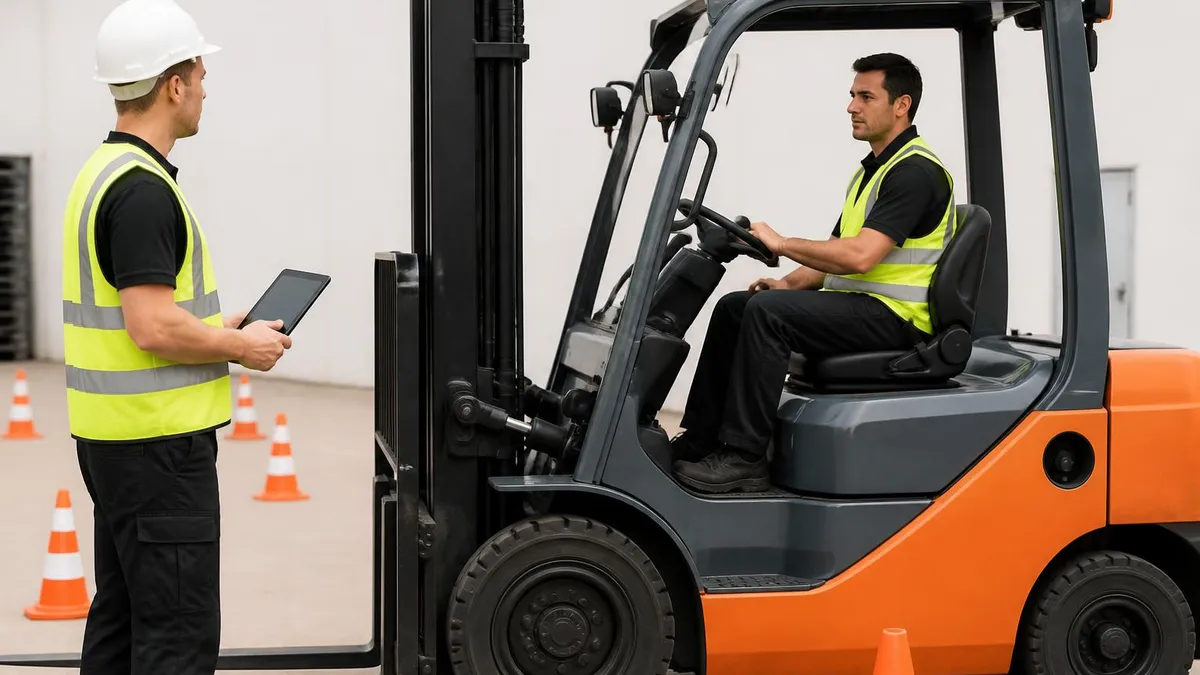
Forklift Safety Training: Complete OSHA Compliance Guide for Operators and Employers
Forklift Repair Service: Complete Guide to Costs, Common Repairs, and Choosing the Right Technician
Forklift Price Guide 2026: New, Used, Rental, and Total Cost of Ownership Breakdown
About the Author

Certified Crane Operator & Skilled Trades Exam Specialist
Ferris State UniversityRobert Martinez is a Journeyman Ironworker, NCCCO-certified crane operator, and forklift trainer with a Bachelor of Science in Construction Technology from Ferris State University. He has 21 years of ironworking, rigging, and heavy equipment operation experience across high-rise and industrial construction sites. Robert prepares candidates for crane operator, rigger, forklift, and skilled trades certification examinations.