
Forklift Rentals: Complete Guide to Pricing, Types, and Operator Requirements
Compare forklift rentals by type, daily and monthly rates, 💯 operator certification rules, and how to choose the right lift for your job site.
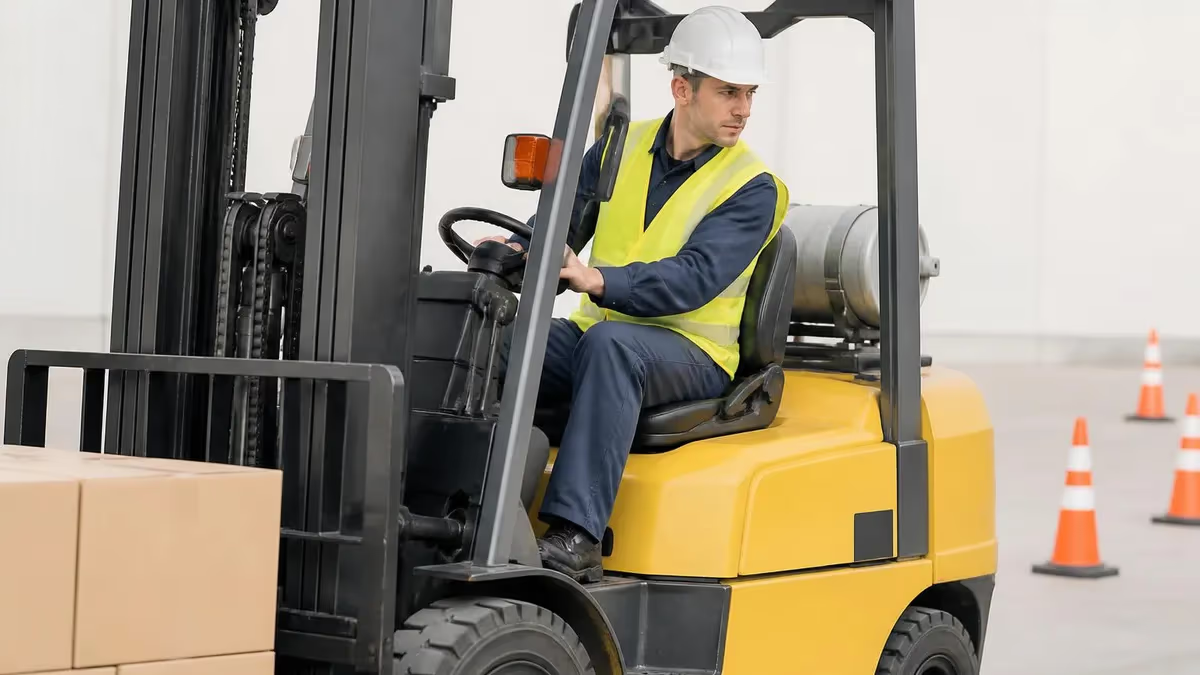
Forklift rentals give warehouses, construction sites, retailers, and event crews the lifting power they need without the cost of buying a machine outright. Whether you need a single pallet jack for a weekend inventory count or a fleet of electric forklifts for a six-month construction project, rental companies offer flexible terms that can save thousands compared with ownership. This guide walks through current rental pricing, the most common lift classes, operator certification rules, and the contract details that catch first-time renters off guard.
The US forklift rental market keeps growing as supply chains rebuild and small businesses avoid capital expenses. National chains like United Rentals, Sunbelt, and Herc Rentals dominate, but regional dealers often beat them on price and delivery speed. Daily rates for a standard 5,000-pound capacity warehouse forklift typically run $150 to $300, weekly rates land between $450 and $900, and monthly contracts range from $1,200 to $2,400 depending on fuel type, capacity, and attachments included.
Choosing between a propane, diesel, or electric forklift matters more than most renters realize. Indoor jobs with food handling, pharmaceuticals, or sensitive electronics almost always require electric units because of emissions limits. Outdoor lumber yards, construction pads, and heavy-duty container work usually call for diesel or rough-terrain machines. Propane sits in the middle and works for mixed environments. Picking the wrong fuel type can lead to OSHA citations, fines, and project delays that dwarf any rental savings.
OSHA still requires every operator to hold a current certification, even on a one-day rental. Rental companies will not formally train your crew, although some will refer you to a partner trainer. The renter, not the equipment company, is responsible for verifying that each operator has completed classroom instruction, hands-on evaluation, and a workplace-specific orientation. A forklift accident on a rented machine creates the same liability as one on a company-owned forklifts fleet, so paperwork must be airtight before keys change hands.
Many renters underestimate how much delivery, fuel, damage waivers, and overtime hours add to the base rate. A quoted $1,500 monthly rental can balloon to $2,400 once you include round-trip transport, a 15% damage waiver, environmental fees, and excess hour charges past the 176-hour monthly allowance. Reading the rental agreement carefully and asking for an all-in itemized quote prevents budget surprises later.
This guide gives you the data and checklists to make smart rental decisions. You will learn what each lift class can lift, how rental contracts are typically structured, where to find legitimate near-me options, what certification documents to bring, and how to inspect a rented machine before signing the receipt. By the end you will be able to call a rental yard, request the right unit, and avoid the most common contract traps.
We pull pricing data from current rental yard quotes across major metro areas, OSHA compliance requirements from 29 CFR 1910.178, and dealer feedback from procurement managers running small to mid-size warehouse operations. The information applies to standard commercial rentals; specialty equipment like 30,000-pound capacity loaders or telehandlers above 60 feet of lift height follows different pricing and licensing rules covered separately.
Forklift Rentals by the Numbers

Common Forklift Rental Classes
Indoor warehouse staple. Quiet, zero emissions, ideal for food, retail, and pharma. Capacity 3,000-12,000 lb. Battery runtime 6-8 hours per charge. Daily rate $175-$275.
Propane-powered, indoor-only on smooth floors. Faster refuel than electric. Great for high-throughput distribution. Capacity 4,000-15,000 lb. Daily rate $165-$260.
Outdoor lumber, construction, and yard work. Pneumatic tires handle rough surfaces. Capacity 5,000-35,000 lb. Daily rate $225-$425. Requires outdoor refueling.
Construction sites with mud, gravel, or uneven grade. Four-wheel drive, high ground clearance. Capacity 6,000-12,000 lb. Daily rate $325-$550 plus delivery.
Extended boom up to 55 feet for masonry, framing, and roofing. Often classified as construction equipment. Daily rate $400-$700. May require separate operator card.
Forklift rental pricing in the US follows a tiered structure based on rental length, lift capacity, fuel type, and attachments. The shortest commercial rental is typically a one-day rate, although some yards offer four-hour minimums for local pickup. Daily rates assume an eight-hour shift; running the machine longer triggers overtime hour fees that range from $8 to $18 per additional hour. Weekly rates assume 40 operating hours, and monthly contracts allow 176 hours before excess charges apply.
National chains publish standard rate cards but almost always negotiate. A small construction contractor signing a three-month commitment can often pull 15% to 25% off published monthly rates, especially during slower winter months. Regional dealers compete aggressively on delivery distance and damage waiver terms. Always request quotes from at least three providers in your zip code before signing, and ask each to itemize delivery, pickup, fuel, environmental fees, and damage protection separately so you can compare apples to apples.
Long-term rentals lasting six months or more often shift into a structure called rental-purchase or lease-to-own. Under these contracts, a percentage of each monthly payment applies to a future purchase price if you decide to buy. This works well when your project length is uncertain or when financing a new machine is tight. However, rental-purchase rates are usually 10% to 20% higher per month than straight rental, so the strategy only pays off if you actually buy at the end.
Attachments significantly affect price. A basic carriage with standard 42-inch forks comes included, but side-shifters, fork positioners, carton clamps, paper roll clamps, drum handlers, and rotators each add $15 to $80 per day in additional rental fees. Confirm attachment availability before booking; rental yards may not stock specialty attachments locally and could need to ship them from a regional hub, which adds delivery costs and one to three days of lead time.
Insurance is another major cost variable. Most rental contracts require renters to carry general liability and either accept the damage waiver or provide a certificate of insurance showing equivalent coverage. A typical damage waiver runs 12% to 18% of the base rental rate. Companies with existing commercial inland marine policies usually save by declining the waiver and adding the rental to their schedule, but small contractors without that coverage almost always benefit from accepting the waiver.
Searching for a forklift rental near me on Google or Yelp returns local results, but the best deals often come from direct dealer relationships. Larger Toyota, Hyster, Crown, and Yale dealers maintain rental fleets specifically for their service area and offer same-day delivery within 30 miles. Building a relationship with a single local dealer often yields better long-term pricing than constantly shopping national chains for one-off jobs.
Fuel charges deserve careful reading. Most yards rent the machine with a full tank or fully charged battery and require the same condition on return. Returning a low-fuel propane forklift triggers a refueling fee that can run two to three times the retail propane price. For electric units, returning with a depleted battery may add a four to eight hour charging fee. Plan return logistics with fuel state in mind to avoid these line items.
Forklift certification Practice Test Questions
Prepare for the Forklift certification Certification exam with our free practice test modules. Each quiz covers key topics to help you pass on your first try.
Forklift certification Certification Forkl...
Forklift certification Exam Questions covering Certification Forklift certification Maintenance and Repairs. Master Forklift certification Test concepts for certification prep.
Forklift certification Certification Forkl...
Free Forklift certification Practice Test featuring Certification Forklift certification Maintenance and Repairs Questions and Answers. Improve your Forklift certification Exam score with mock test prep.
Forklift certification Certification Forkl...
Forklift certification Mock Exam on Certification Forklift certification Operator Training and Certification Requirements. Forklift certification Study Guide questions to pass on your first try.
Forklift certification Certification Forkl...
Forklift certification Test Prep for Certification Forklift certification Operator Training and Certification Requirements Questions and Answers. Practice Forklift certification Quiz questions and boost your score.
Forklift certification Load Handling and S...
Forklift certification Questions and Answers on Load Handling and Stability. Free Forklift certification practice for exam readiness.
Forklift certification OSHA Regulations an...
Forklift certification Mock Test covering OSHA Regulations and Compliance. Online Forklift certification Test practice with instant feedback.
Forklift certification Pre-Operation Inspe...
Free Forklift certification Quiz on Pre-Operation Inspections. Forklift certification Exam prep questions with detailed explanations.
Forklift certification Refueling and Recha...
Forklift certification Practice Questions for Refueling and Recharging Procedures. Build confidence for your Forklift certification certification exam.
Forklift certification Safe Driving and Ma...
Forklift certification Test Online for Safe Driving and Maneuvering. Free practice with instant results and feedback.
Forklift certification Workplace Hazard Id...
Forklift certification Study Material on Workplace Hazard Identification. Prepare effectively with real exam-style questions.
Forklift certification Forklift Instructions
Free Forklift certification Test covering Forklift Instructions. Practice and track your Forklift certification exam readiness.
Forklift certification Forklift MCQ
Forklift certification Exam Questions covering Forklift MCQ. Master Forklift certification Test concepts for certification prep.
Forklift certification Forklift Employer R...
Free Forklift certification Practice Test featuring Forklift Employer Responsibilities. Improve your Forklift certification Exam score with mock test prep.
Forklift certification Forklift Penalties ...
Forklift certification Mock Exam on Forklift Penalties for Non-Compliance. Forklift certification Study Guide questions to pass on your first try.
Choosing the Right Electric Forklift or Fuel Type
Electric forklifts dominate indoor warehouse rentals because they produce zero emissions, run quietly, and cost less to operate over long shifts. A typical Class I rental ships with a 36-volt or 48-volt lead-acid battery and an off-board charger that needs a dedicated 220-volt or 480-volt outlet. Battery runtime ranges from six to eight hours under normal load, which fits a standard shift if the operator avoids constant heavy lifting.
Newer lithium-ion electric forklift rentals charge in one to two hours and tolerate opportunity charging during breaks, but they rent at 20% to 30% premiums over lead-acid units. Indoor food, beverage, retail distribution, and pharmaceutical operations almost always require electric units to satisfy air quality and noise regulations. Confirm your facility has the right outlet and charging space before the unit arrives.

Renting vs. Buying a Forklift
- +No capital outlay frees cash for inventory and labor
- +Maintenance, repairs, and parts included in rental rate
- +Easy to swap classes when project needs change
- +Tax-deductible operating expense rather than depreciating asset
- +Always running current-model equipment with latest safety features
- +Avoid disposal costs and resale hassle at end of useful life
- +Scale fleet up or down seasonally without long-term commitment
- −Long-term rentals cost more than ownership over 5+ years
- −Limited customization for specialty attachments or branding
- −Damage waiver and insurance requirements add 15-20% to base rate
- −Availability tight during seasonal peaks like Q4 retail
- −Hour caps trigger expensive overage fees on heavy use
- −Return-condition fees for cleaning, fueling, or minor damage
- −Less control over equipment age and condition than owned fleet
Pros and Cons at a Glance
| Pros | Cons |
|---|---|
| No capital outlay frees cash for inventory and labor | Limited customization for specialty attachments or branding |
| Maintenance, repairs, and parts included in rental rate | Hour caps trigger expensive overage fees on heavy use |
| Easy to swap classes when project needs change | Return-condition fees for cleaning, fueling, or minor damage |
| Tax-deductible operating expense rather than depreciating asset | Less control over equipment age and condition than owned fleet |
Pre-Rental Inspection Checklist
- ✓Verify lift capacity matches your heaviest planned load with safety margin
- ✓Confirm fuel type is compatible with indoor or outdoor use restrictions
- ✓Check tire condition and type (cushion vs. pneumatic) for the work surface
- ✓Test horn, lights, backup alarm, and seatbelt before signing receipt
- ✓Inspect forks for cracks, bends, or excessive heel wear
- ✓Verify hour meter reading matches the number listed on rental agreement
- ✓Operate hydraulic lift, tilt, and side-shift functions through full range
- ✓Check parking brake and service brake stopping distance on level ground
- ✓Photograph all four sides plus mast and overhead guard for damage record
- ✓Confirm load chart and capacity plate are present and legible
- ✓Verify operator manual is in the cab or available digitally
- ✓Document any existing damage with photos before driver leaves
Negotiate Hour Caps Before Signing
The standard 176-hour monthly cap assumes a single eight-hour shift, five days a week. Two-shift operations blow past it in week three. Before signing a monthly rental, calculate your real expected hours and negotiate a higher cap or buy a block of extra hours upfront at 30-50% discount versus on-the-fly overage rates.
OSHA's 29 CFR 1910.178(l) applies to every powered industrial truck operator, whether the machine is owned, leased, or rented. The rental company does not certify your operators — that responsibility falls entirely on the employer renting the equipment. Each operator must complete formal classroom or computer-based instruction, hands-on training on the specific equipment type, a workplace evaluation, and earn a written certification valid for three years. Skipping any step exposes the company to OSHA penalties starting around $16,000 per serious violation.
Certification must be equipment-specific. An operator certified on a Class I electric counterbalance cannot legally drive a Class V diesel pneumatic without additional training and evaluation on the new class. When renting an unfamiliar type, plan time for refresher training before the unit goes into service. Some rental yards partner with local trainers who can provide same-day or next-day evaluation for an additional fee, typically $75 to $150 per operator.
The certification of forklift operators must also be reviewed every three years and immediately after any accident, near-miss, observed unsafe operation, or change in equipment or workplace conditions. Many companies tie certification renewal to the rental delivery itself, using the new equipment as a trigger to refresh operator training and documentation. This practice protects against OSHA findings during post-incident investigations.
Certification documentation needs to include the operator's name, training date, evaluation date, trainer's name, and equipment type covered. Most rental companies will ask to see this documentation before releasing keys, and some require renters to sign a written acknowledgment that all operators are properly certified. Keep digital copies of certification cards on file and provide them to the rental yard during the booking process to speed up delivery day.
Workplace-specific training matters as much as the core certification. A driver certified at one warehouse must still receive a site orientation covering aisle widths, pedestrian zones, loading dock procedures, and any unique hazards before operating at a new location. For temporary rental sites — construction projects, special events, seasonal pop-ups — this orientation can be brief but must be documented. A 15-minute walk-through covering primary hazards usually satisfies the requirement when paired with proper certification.
Some states layer additional requirements on top of OSHA. California's Cal/OSHA, Michigan's MIOSHA, and several other state-plan programs have stricter or more frequent training rules. Check the state-plan agency in your operating area before assuming federal OSHA rules apply unchanged. Multi-state renters with operations in California, Washington, Oregon, and Nevada in particular should build state-specific certification tracking into their fleet management system.
Documentation should travel with the rental. Keep a binder or digital folder in the operator's vehicle or job-site trailer containing copies of every operator's certification, the rental agreement, the daily pre-shift inspection checklists, and the equipment manual. When OSHA shows up after an incident — and they do show up — having organized paperwork available within 15 minutes can reduce findings from willful to serious, cutting penalty exposure by half or more.

Renters carry full operator liability under OSHA. If an uncertified operator drives a rented forklift and causes injury, the renting company — not the rental yard — faces citations, civil penalties, and potential criminal charges. Verify every certification before keys change hands, and never let untrained workers operate even for a few minutes.
Common rental mistakes start with under-sizing capacity. Renters often look at the heaviest single pallet they plan to move and rent a machine rated exactly for that weight. Forklift load capacity drops as load center distance and lift height increase, so a 5,000-pound capacity machine may only safely lift 3,200 pounds at 20 feet of height with an extended load center. Read the load chart carefully and rent a machine with at least 25% margin above your heaviest expected load at your highest expected lift point.
Another frequent mistake is choosing the wrong tire type. Cushion tires roll smoothly on warehouse concrete but tear apart on gravel, asphalt cracks, or wet outdoor lots. Pneumatic tires handle uneven surfaces but reduce maneuverability and lift capacity in tight warehouse aisles. Rough-terrain tires are mandatory for unpaved construction sites. Walk your work surface before booking and match tire type to the worst surface the machine will encounter, not the best.
Damage waivers confuse many first-time renters. The waiver covers accidental damage to the rented machine but excludes operator negligence, missing parts at return, and damage from improper use. Read the exclusions carefully. Most waivers do not cover damaged forks, bent mast components, or fire damage from battery charging mistakes. Confirm whether your existing commercial insurance covers the rental, and if so, request a certificate of insurance from your carrier listing the rental yard as additional insured.
Return conditions trip up renters at the end of the contract. Standard agreements require the machine to come back clean, with the original attachments, with full fuel or full charge, and with no new damage beyond normal wear. Cleaning fees range from $75 to $250 if mud, oil, or pallet wrap fills the engine compartment or cab. Returning without forks, side-shifters, or other rented attachments triggers replacement billing that often exceeds the deposit. Plan a final inspection 24 hours before pickup to avoid these surprises.
Some renters skip the daily pre-shift inspection that OSHA requires. The pre-shift checklist takes five minutes but creates a documentation trail that protects against false damage claims at return and against OSHA findings after an incident. Use the rental company's checklist or a generic OSHA-compliant form, and require operators to sign and date each daily inspection. Missing pre-shift records is one of the easiest citations for an inspector to write up.
Booking too late during seasonal peaks creates supply problems. Q4 retail, spring construction, and fall harvest all spike rental demand. Calling a national chain on Monday morning for a Tuesday delivery during peak season often returns the answer that nothing is available within 100 miles. Book at least two weeks ahead during peak seasons, or build relationships with multiple local forklift rentals yards so you have backup options when your first choice is sold out.
Finally, many renters underestimate end-of-rental logistics. Pickup scheduling requires 24-72 hours notice, and rental yards bill an extra day if the machine is not ready at the agreed pickup window. Build pickup time into your project schedule, confirm the machine is staged and accessible, and have the operator on site to walk through the equipment with the driver. A smooth return protects your reputation with the rental yard and earns priority on future bookings.
Practical tips for getting the best rental experience start with building a vendor list before you need one. Identify three to five rental yards in your area, request rate cards from each, and note their delivery range, equipment classes available, and damage waiver terms. When a rush rental need hits, you can call your shortlist instead of cold-searching online and accepting whatever pricing the first yard quotes you. Vendors also remember repeat customers and offer better availability during peak demand.
Standardize your booking process. Create a one-page rental request template covering required capacity, fuel type, tire type, attachments, project duration, daily hours, delivery location, and certified operator list. Sending this template to vendors with every request speeds quoting, reduces miscommunication, and creates a paper trail if equipment arrives wrong. Many procurement teams cut quoting time in half by standardizing this single document and emailing it to multiple yards simultaneously.
Build certification into your hiring and onboarding flow. Every warehouse, construction, or logistics hire who might touch a forklift should complete certification during their first week, regardless of whether forklift duties are part of the immediate role. This eliminates scrambling for last-minute training when rental equipment arrives. A trained internal evaluator can recertify operators in under two hours per person at minimal cost compared with hiring outside trainers on rush schedules.
Track utilization on rented machines. Most modern rental units include hour meters, and some include GPS and telematics. Pulling utilization reports weekly identifies underused equipment that can be returned early to save rental days, and overused equipment approaching hour caps that may need a swap. Even simple manual hour tracking on a clipboard pays for itself by flagging contract issues before they become expensive overages.
Consider seasonal rental contracts for predictable peaks. Retail distribution centers, agricultural processors, and event venues all experience predictable annual demand spikes. Negotiating a recurring three-month or six-month seasonal rental at locked-in rates often saves 20% to 30% versus emergency last-minute bookings. National chains will often guarantee equipment availability for recurring seasonal customers, eliminating the supply risk during peak weeks.
Document everything in writing. Verbal agreements about extended hours, attachment swaps, delivery scheduling, or rate adjustments evaporate when disputes arise. Confirm every change with a follow-up email or signed addendum. Photograph the machine at delivery and return. Keep all pre-shift inspections, certification documents, and rental agreements in a single folder or cloud directory tied to the rental contract number. Good documentation costs nothing and prevents thousands in dispute charges.
Build a relationship with the rental yard's service team, not just the sales rep. The mechanics and dispatchers who actually deliver and maintain machines have far more influence over your day-to-day experience than the salesperson who quotes the rate. A friendly greeting, a paid coffee run, and on-time payments build goodwill that translates into faster service calls, better unit assignments, and flexibility on edge cases like minor damage forgiveness or hour cap adjustments.
Forklift Questions and Answers
Forklift Jobs Near Me: Complete Guide to Finding Best Opportunities
Forklift Operation & Equipment Knowledge Practice Test Video Answer
Forklift Inspection & Maintenance Practice Test Video Answer
Forklift Operator Jobs Near Me: Pay, Top Employers, Specialty Roles
30-Day Forklift certification Certification Study Plan — Pass on Your First Try
About the Author

Certified Crane Operator & Skilled Trades Exam Specialist
Ferris State UniversityRobert Martinez is a Journeyman Ironworker, NCCCO-certified crane operator, and forklift trainer with a Bachelor of Science in Construction Technology from Ferris State University. He has 21 years of ironworking, rigging, and heavy equipment operation experience across high-rise and industrial construction sites. Robert prepares candidates for crane operator, rigger, forklift, and skilled trades certification examinations.