
Forklifts for Rent: Complete Guide to Forklift Rental Costs, Types, Daily and Monthly Rates, and What to Know Before Renting in 2026 October
🆕 Forklifts for rent guide: daily, weekly & monthly rates, electric vs propane options, certification rules, and how to choose the right forklift
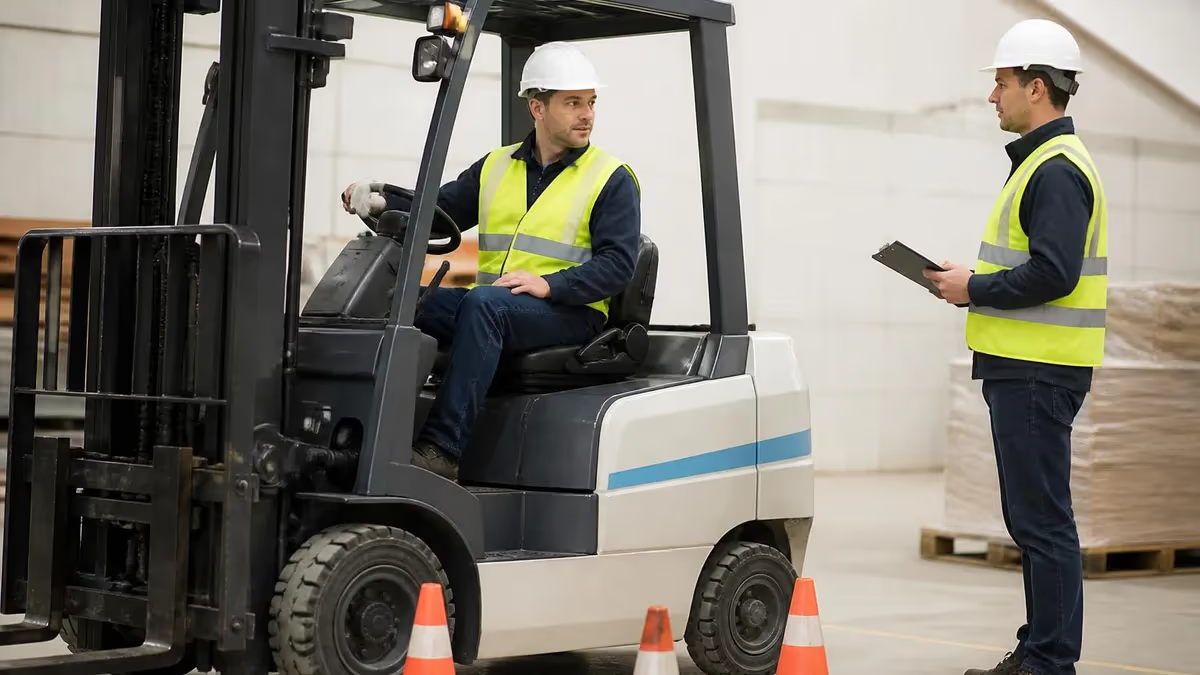
Searching for forklifts for rent has become one of the most common ways American businesses solve short-term material handling needs without taking on the capital expense of ownership. Whether you run a seasonal warehouse operation, a construction site that lasts six weeks, or a manufacturing plant where your owned fleet is in the shop, forklift rental gives you immediate access to the right machine for the right job. The market is enormous — equipment rental in North America crossed $78 billion in 2025, and forklifts make up one of the fastest-growing categories within it.
The phrase forklift rental near me drives roughly 9,900 searches every month in the United States, which tells you something important: most people don't plan their rental needs far in advance. They need a truck on the ground this week, sometimes today. Understanding what's available, what it costs, and what paperwork the rental company will ask for can save you hundreds of dollars and prevent a delivery delay that could shut down your loading dock for days.
This guide walks through every aspect of renting a forklift in 2026, from daily and monthly rate structures to the differences between an electric forklift, a propane cushion-tire truck, and a rough-terrain machine. We'll cover how forklift certification rules apply to rented equipment (spoiler: OSHA still requires every operator to be trained and certified, even on a one-day rental), what to inspect before signing a delivery ticket, and which rental contract clauses cost renters thousands of dollars they didn't expect.
If you're a small business owner, a project manager, or a warehouse supervisor making a rental decision for the first time, you'll learn how to read a rental quote, what fuel and battery type fits your facility, and how to avoid the most common billing surprises. If you're a seasoned operations manager, you'll find updated 2026 pricing benchmarks, fleet-mix strategies, and negotiation tactics that experienced renters use to drive down monthly rates by 15 to 25 percent.
The forklift rental industry is dominated by three types of providers: national chains like United Rentals, Sunbelt, and Herc Rentals; regional dealer networks tied to manufacturers like Toyota, Hyster-Yale, Crown, and Raymond; and independent local rental yards. Each has tradeoffs in price, availability, service response time, and equipment age. We'll show you when each one makes sense — and when it doesn't.
Finally, this guide ties together rental decisions with operator readiness. Renting a forklift is only half the equation; putting a properly trained operator on it is the other half. For a deeper look at what operators are legally required to do every shift, our companion guide on forklift operator duties walks through pre-shift inspections, load handling rules, and end-of-shift documentation that protect both the operator and the rental deposit.
By the end of this article, you'll know exactly which forklift to rent for your application, what fair pricing looks like in your region, and how to keep the entire rental experience efficient, safe, and OSHA-compliant from delivery through return.
Forklift Rental Market by the Numbers

Forklift Rental Types and Equipment Classes
Three- and four-wheel electric sit-down forklifts designed for indoor warehouse use. Zero emissions, quiet operation, and ideal for food storage, retail distribution, and clean manufacturing. Capacities typically range from 3,000 to 12,000 pounds.
Stand up forklift models including reach trucks and order pickers. Built for high-density warehouses with aisles as narrow as eight feet. Reach trucks can lift loads to 40 feet, making them essential for tall pallet racking.
Propane-powered forklifts with solid cushion tires for smooth indoor surfaces. The workhorse of distribution centers because they refuel in minutes versus eight-hour battery charges. Common rental capacity is 5,000 pounds.
Propane or diesel forklifts with air-filled pneumatic tires for outdoor and mixed indoor/outdoor use. Lumberyards, manufacturers with outdoor staging, and cross-dock facilities rely on these. Capacities up to 36,000 pounds available.
Heavy-duty diesel forklifts with massive pneumatic tires for construction sites, agricultural operations, and unpaved yards. Often telehandlers with extending booms reaching 40 to 55 feet. Daily rates start around $325 and climb quickly.
Forklift rental pricing in 2026 follows three primary rate structures: daily, weekly, and monthly. Daily rates are the most expensive per unit of time, typically running $150 to $325 for standard 5,000-pound forklifts depending on power source and tire type. Weekly rates compress that math significantly — most rental yards charge roughly three to four daily rates for an entire week, making any project longer than three days more economical on a weekly contract. Monthly rates are where the real savings live, often pricing out at just two-and-a-half to three weekly rates for thirty days of access.
The national average monthly rate for a Class IV 5,000-pound LP cushion-tire forklift sits at $2,400 in 2026, though that number varies widely by metro market. Major hubs like Los Angeles, New York, Chicago, and Houston tend to run 10 to 15 percent higher because of warehouse density and tight inventory. Mid-sized markets in the Southeast and Midwest often come in 10 percent below the national average. If you're searching forklift rental near me from a smaller town, expect a smaller selection and potentially higher delivery fees that offset any local discount.
Delivery and pickup charges are where renters often get blindsided. Most rental companies charge between $125 and $275 per direction within a defined service radius, and they bill mileage outside that radius. A jobsite 45 miles from the nearest rental yard could easily add $600 in transport fees to a one-week rental, materially changing the per-day economics. Always ask for the all-in quote before comparing providers, and confirm whether weekend delivery carries a surcharge.
Damage waivers — sometimes called Loss Damage Waiver or LDW — typically run 12 to 15 percent of the rental subtotal. They're optional, but most renters take them because they cap your liability for accidental damage at zero or a small deductible. Without the waiver, you're responsible for the full repair cost of any dent, bent fork, cracked overhead guard, or fluid leak the rental company attributes to your possession. Read carefully what the waiver actually covers; tire damage and operator negligence are commonly excluded.
Fuel and battery charges trip up first-time renters constantly. Propane forklifts are typically rented with a full tank and must be returned full, or you'll pay $35 to $60 for the swap plus a service fee. Electric forklifts must be returned with a fully charged battery; if you return one at 40 percent charge, expect a $75 to $150 recharge fee depending on the battery size. Diesel rough-terrain machines follow the same full-tank-out, full-tank-in rule, and diesel surcharges at rental yards can be 30 to 50 cents above retail pump prices.
Capacity upcharges are real. The base rental rate quoted online is almost always for a 5,000-pound capacity truck. Moving up to 8,000 pounds typically adds 25 to 35 percent. A 15,500-pound capacity machine can cost double the base rate, and anything above 20,000 pounds is usually quoted custom. Attachments — side shifters, fork positioners, paper roll clamps, carton clamps, rotators — each add $15 to $75 per day depending on complexity. Side shifters are often included; everything else is extra.
Finally, the rental term itself affects pricing use. A one-month rental gets you a published rate. A six-month or twelve-month rental — sometimes called a long-term rental or short-term lease — opens up negotiation. Rental fleets earn higher utilization on long contracts, so reps will discount aggressively to lock in a machine. For projects running six months or longer, expect 20 to 30 percent off the standard monthly rate, plus often-free delivery and pickup.
Many renters use this strategy as a bridge while a new forklift purchase is on order — sometimes a smarter path than browsing forklift for sale listings under time pressure. If you want a deeper look at how rental damage interacts with repair billing, see our guide on forklift repair service for benchmarks on what individual fixes actually cost.

Forklift certification Practice Test Questions
Prepare for the Forklift certification Certification exam with our free practice test modules. Each quiz covers key topics to help you pass on your first try.
Forklift certification Certification Forkl...
Forklift certification Exam Questions covering Certification Forklift certification Maintenance and Repairs. Master Forklift certification Test concepts for certification prep.
Forklift certification Certification Forkl...
Free Forklift certification Practice Test featuring Certification Forklift certification Maintenance and Repairs Questions and Answers. Improve your Forklift certification Exam score with mock test prep.
Forklift certification Certification Forkl...
Forklift certification Mock Exam on Certification Forklift certification Operator Training and Certification Requirements. Forklift certification Study Guide questions to pass on your first try.
Forklift certification Certification Forkl...
Forklift certification Test Prep for Certification Forklift certification Operator Training and Certification Requirements Questions and Answers. Practice Forklift certification Quiz questions and boost your score.
Forklift certification Load Handling and S...
Forklift certification Questions and Answers on Load Handling and Stability. Free Forklift certification practice for exam readiness.
Forklift certification OSHA Regulations an...
Forklift certification Mock Test covering OSHA Regulations and Compliance. Online Forklift certification Test practice with instant feedback.
Forklift certification Pre-Operation Inspe...
Free Forklift certification Quiz on Pre-Operation Inspections. Forklift certification Exam prep questions with detailed explanations.
Forklift certification Refueling and Recha...
Forklift certification Practice Questions for Refueling and Recharging Procedures. Build confidence for your Forklift certification certification exam.
Forklift certification Safe Driving and Ma...
Forklift certification Test Online for Safe Driving and Maneuvering. Free practice with instant results and feedback.
Forklift certification Workplace Hazard Id...
Forklift certification Study Material on Workplace Hazard Identification. Prepare effectively with real exam-style questions.
Forklift certification Forklift Instructions
Free Forklift certification Test covering Forklift Instructions. Practice and track your Forklift certification exam readiness.
Forklift certification Forklift MCQ
Forklift certification Exam Questions covering Forklift MCQ. Master Forklift certification Test concepts for certification prep.
Forklift certification Forklift Employer R...
Free Forklift certification Practice Test featuring Forklift Employer Responsibilities. Improve your Forklift certification Exam score with mock test prep.
Forklift certification Forklift Penalties ...
Forklift certification Mock Exam on Forklift Penalties for Non-Compliance. Forklift certification Study Guide questions to pass on your first try.
Electric Forklift vs Propane vs Diesel Rentals
An electric forklift rental is the cleanest, quietest option available and the default choice for indoor work in food, pharmaceutical, and retail environments. Lead-acid batteries last six to eight hours under normal duty cycles and need an eight-hour charge. Lithium-ion options now appear in many rental fleets and accept opportunity charging during breaks, dramatically extending shift coverage.
Daily rental rates for electric Class I trucks typically run $150 to $220. The tradeoff is battery management — your facility needs a dedicated charging area with proper ventilation for lead-acid units, and you may need a third-party battery if running multiple shifts. Confirm the charger plug type matches your facility's outlets before delivery.
Renting vs Buying a Forklift: Which Makes Sense?
- +Zero capital outlay — preserves cash for inventory, hiring, and growth
- +Maintenance, tires, and major repairs are the rental company's responsibility
- +Easy to scale fleet up or down with seasonal demand
- +Test different models before committing to a purchase
- +No depreciation, residual value risk, or end-of-life disposal cost
- +Delivery and pickup handled by the rental provider
- +Always access to newer equipment with modern safety features
- −Long-term rental costs exceed purchase price after 18-24 months
- −Limited control over which exact model arrives — fleet substitution is common
- −Damage waivers, fuel surcharges, and delivery fees add 20-30% to base rate
- −No equity built up; payments produce no asset on your balance sheet
- −Tax treatment is operating expense, not depreciable capital asset
- −Rental fleet availability tightens during peak seasons (October-December)
- −Customization with permanent attachments usually not permitted
Pros and Cons at a Glance
| Pros | Cons |
|---|---|
| Zero capital outlay — preserves cash for inventory, hiring, and growth | Limited control over which exact model arrives — fleet substitution is common |
| Maintenance, tires, and major repairs are the rental company's responsibility | No equity built up; payments produce no asset on your balance sheet |
| Easy to scale fleet up or down with seasonal demand | Tax treatment is operating expense, not depreciable capital asset |
| Test different models before committing to a purchase | Rental fleet availability tightens during peak seasons (October-December) |
| No depreciation, residual value risk, or end-of-life disposal cost | Customization with permanent attachments usually not permitted |

Pre-Rental Inspection Checklist for Every Forklift Delivery
- ✓Confirm capacity plate matches the model and capacity you ordered
- ✓Test all hydraulic functions: lift, lower, tilt forward, tilt back, side shift
- ✓Inspect forks for cracks, bends, or excessive heel wear (more than 10% taper rejects)
- ✓Check tire condition — chunks, flat spots, or sidewall damage must be documented
- ✓Verify horn, backup alarm, headlights, and strobe (if equipped) all function
- ✓Test brakes including parking brake — they should hold the truck on any incline
- ✓Confirm seat belt, overhead guard, and load backrest are intact and uncracked
- ✓Photograph all four sides of the truck and any existing damage at delivery
- ✓Verify hour meter reading matches the delivery ticket
- ✓Check fluid levels: hydraulic, engine oil, coolant, battery water if applicable
- ✓Confirm the operator's manual and daily inspection log are in the cab
- ✓Sign delivery ticket only after all issues are noted in writing
15 Minutes Now Prevents $3,500 in Charges Later
Every experienced rental customer does a documented walk-around with photos at delivery. The single most common billing dispute is damage that was already on the truck at delivery but wasn't noted on the ticket. A bent fork tip alone can cost $450 to replace; a cracked overhead guard can run $3,500. Spend fifteen minutes with your phone camera and a pen before the driver leaves — it is the highest-ROI quarter-hour in the rental experience.
Renting a forklift does not relieve your business of any OSHA training obligation. Under 29 CFR 1910.178(l), every operator of a powered industrial truck — owned, leased, or rented — must be trained, evaluated, and certified by the employer before operating the equipment. The rental company does not certify your operators. They will rent a truck to anyone with a valid corporate purchase order, but the moment your employee climbs into the seat, your business owns the OSHA liability for that operator's training.
Certification of forklift operators requires three components: formal instruction (classroom, video, or online), practical hands-on training under a qualified trainer, and a workplace evaluation where the trainer observes the operator handling actual loads in actual conditions. The certification is specific to the truck class — an operator certified on a Class IV LP cushion-tire forklift is not automatically certified on a Class VII rough-terrain machine. If your rental swaps truck classes mid-project, additional familiarization training is required before that operator can run it.
Forklift training must be repeated at least every three years per OSHA. It must also be repeated immediately after any accident, near-miss, observation of unsafe operation, or assignment to a new truck type. Many employers tie recertification to the rental cycle: if you rent a different class of truck for a project, the operator is trained on that specific class before delivery, with documentation kept in the personnel file for at least three years after employment ends.
The penalties for non-compliance are not trivial. OSHA serious citations for untrained forklift operators currently carry penalties up to $16,550 per violation, and willful or repeat violations climb to $165,514 per violation. After a fatal incident, OSHA inspectors will request training records as one of the first documents requested, and "the truck was rented" is not a defense. The employer who put the operator on the machine bears the citation, regardless of who owns the equipment.
Some rental companies offer training as an add-on service for $125 to $300 per operator, but quality varies dramatically. National chains often partner with third-party training providers who deliver standardized curricula meeting OSHA requirements. Local rental yards sometimes offer informal "orientation" sessions that do not meet the formal training, evaluation, and documentation standard. If you use a rental company's training service, verify in writing that all three components — instruction, practical training, and workplace evaluation — are included and documented.
For renewals, our detailed walkthrough on forklift license renewal covers exactly what documentation OSHA inspectors look for and how to keep an operator's certification valid across multiple employers and truck classes. Pair that with the broader forklift safety training overview to build a complete compliance program around your rented and owned equipment alike.
One final compliance point: rental companies are not required to verify operator certification before delivery, and most do not. The signature on the rental agreement transfers operational responsibility to your business the moment the truck is unloaded from the delivery flatbed. Build certification verification into your internal rental request workflow so that no operator runs a rented machine without current, documented training on that specific truck class.
Most rental companies require proof of commercial general liability insurance with limits of $1 million per occurrence and $2 million aggregate before they'll release a forklift. Your business must add the rental company as an additional insured on the policy and provide a certificate of insurance before delivery. Personal auto insurance does not cover rented forklifts, and homeowners policies explicitly exclude them. Allow 24-48 hours for your insurance agent to issue and send the COI.
Negotiating a forklift rental contract is straightforward if you understand which line items have flexibility and which are fixed. The base daily, weekly, and monthly rates are typically the most negotiable, especially for monthly and longer terms. Rental yards measure success by fleet utilization — every day a truck sits idle is lost revenue — so reps have meaningful authority to discount when they sense a customer is comparing quotes. Always ask for the "contract rate" or "corporate rate" before accepting the published price.
Delivery and pickup fees are sometimes negotiable on longer rentals. For a one-day rental, expect the fees to stand. For a thirty-day or longer rental, asking for free delivery is reasonable and frequently granted. If the rental company won't move on delivery fees, ask them to waive the pickup fee instead. Either concession typically saves $150 to $275, and reps will offer one to close the deal.
Damage waivers feel mandatory but aren't. If your business carries its own equipment floater or inland marine policy covering rented equipment, you can decline the waiver and save 12 to 15 percent of the rental subtotal. Confirm with your insurance broker first — and confirm in writing with the rental company — that your policy meets their requirements. Many corporate renters with active fleets find their existing coverage saves them thousands of dollars per year.
Watch the fine print on rental hour limits. Most standard contracts include 40 hours of meter usage per week or 176 hours per month. Exceed those limits and the contract converts to a higher overtime hourly rate, often $4 to $8 per hour over the cap. A two-shift operation can easily blow through the standard cap and create a surprise invoice. If you know you're running heavy hours, negotiate a higher base rate with unlimited hours up front, rather than paying overage penalties later.
Substitution clauses give the rental company the right to send a different model than what you reserved if the specific unit isn't available. Most contracts allow substitution as long as the truck meets or exceeds the agreed capacity and class. In practice, you might order a 5,000-pound electric Class I and receive a 6,000-pound LP cushion-tire. If your facility requires zero-emission equipment for food safety or air quality reasons, write "no substitutions without prior written approval" into the contract.
Return condition standards vary by rental company, but the consistent expectation is "return as delivered minus normal wear." Tires, forks, mast components, and overhead guards are the most commonly disputed items at return. Document everything with photos at return — same as at delivery — and request a return inspection signature before the driver leaves with the truck. If you can't be present for return pickup, request a return inspection report by email within 48 hours.
Finally, build a relationship with one or two rental providers rather than chasing the lowest quote on every transaction. Repeat customers get priority on tight inventory during peak seasons, faster service response when a truck breaks down, more flexibility on damage assessments, and better rates on long-term commitments. Many seasoned operations managers maintain a primary and backup vendor and route 80 percent of business to the primary partner. For deeper context on tire wear — one of the most common disputed return items — see our guide on forklift tires.
Putting all of this together into a practical rental playbook starts with defining the job clearly before you ever pick up the phone. Write down the maximum load weight you'll handle, the highest lift height needed, indoor versus outdoor surface conditions, the number of operating hours per day, and the rental duration. Those five answers determine class, capacity, fuel type, tire type, and rate structure — and they let a rental rep give you an accurate quote on the first call rather than three rounds of back-and-forth.
For short projects under three days, daily rates almost always win, and you should optimize for fast delivery and minimal contract complexity. For projects of one to four weeks, weekly rates are usually best, but compare against monthly rates if the project might extend. Anything beyond a month should default to a monthly contract with negotiated terms; the savings versus stacked weekly rates are substantial. Projects expected to run six months or longer warrant exploring short-term lease options, which include planned maintenance and often deliver better economics than open-ended monthly rentals.
Always get at least three quotes for projects exceeding $5,000 in total rental cost. The forklift rental market is competitive in most metros, and quotes from national chains, dealer networks, and local independents can vary by 20 percent or more for identical equipment. Request all-in pricing including delivery, pickup, damage waiver, fuel handling, and any environmental fees. Compare on total cost, not headline daily rate. A $145 daily rate with $275 round-trip delivery and a 15 percent damage waiver costs more than a $165 daily rate with free delivery and a 10 percent waiver on a five-day rental.
Plan operator readiness in parallel with equipment selection. Confirm which of your operators are currently certified for the truck class you're renting, and schedule any needed training or familiarization in the week before delivery. If you need new operators trained, allow at least three to five business days for scheduling, classroom instruction, hands-on training, and the workplace evaluation. Last-minute certification scrambles produce both compliance gaps and poorly trained operators — a bad combination on rented equipment.
Communicate clearly with the rental company about your site conditions. Tell them about loading dock heights, overhead obstructions, surface conditions, ramps, outdoor staging areas, and any environmental hazards. A good rental rep will steer you toward the right equipment when they understand the work; a rep who's only been told "5,000-pound forklift, one month" will quote you the cheapest unit in inventory regardless of fit. The fifteen extra minutes on the initial call pays off in equipment that actually works for your application.
Track your rental costs and equipment performance the same way you'd track a capital asset. Log the hours used, fuel or electricity consumed, downtime incidents, repair callouts, and any return charges. After two or three rental cycles, you'll have data to support either renewing rental contracts at better rates or making a buy-versus-rent calculation grounded in your actual usage patterns rather than guesswork. Many operations discover their rental usage justifies purchasing a baseline fleet while supplementing with rentals for peak season.
Finally, treat every rental as an opportunity to test equipment you might eventually buy. Renting a Crown stand up forklift for thirty days teaches you whether your warehouse aisles, operator preferences, and racking heights actually match the spec sheet — information no demo or sales call can provide. Some companies deliberately rent different brands and models across a year specifically to inform a future purchase decision, treating the rental cost as part of the procurement research budget. It's a smart approach that has saved buyers from six-figure mistakes on forklifts that looked great on paper but didn't fit the building.
Sample Forklift certification Practice Questions
Try these questions from our free Forklift certification practice tests. The correct answer and an explanation follow each question.
Before starting an electric forklift, what should you check on the battery?
- A. Its color
- B. Charge level, connections, and electrolyte
- C. The manufacturer's logo
- D. Only the weight
Answer: B. Charge level, connections, and electrolyte
Electric forklift inspections include verifying charge, secure cable connections, and proper electrolyte levels.
What should you do before driving a forklift down a ramp with a load?
- A. Drive forward with the load pointed downhill
- B. Drive in reverse with the load pointed uphill
- C. Turn sideways to reduce speed
- D. Raise the load to full height
Answer: B. Drive in reverse with the load pointed uphill
On a ramp with a load, keep the load pointed uphill and travel in reverse when going down to prevent the load from sliding off or the truck tipping.
Before refueling a propane (LPG) forklift, what should the operator do first?
- A. Turn off the engine and remove the key
- B. Leave the engine idling to keep pressure stable
- C. Disconnect the battery
- D. Open all cab windows only
Answer: A. Turn off the engine and remove the key
The engine must be shut off and the ignition key removed before any fuel connection is handled.
The process of lifting loads onto loading out racking is about to commence. Before you start, what do you need to know?
- A. The upper weight that the racking tower can safely hold
- B. What material the racking tower is made of
- C. The length of the forklift
- D. Whether the load is correctly insured
Answer: A. The upper weight that the racking tower can safely hold
Before lifting loads onto racking, it is critical to know the maximum weight the racking tower can safely support. Exceeding this weight limit can lead to structural failure, causing the racking to collapse and resulting in severe accidents, injuries, or fatalities. This information ensures the load is within the racking's capacity, maintaining safety and preventing damage.
Forklift Questions and Answers
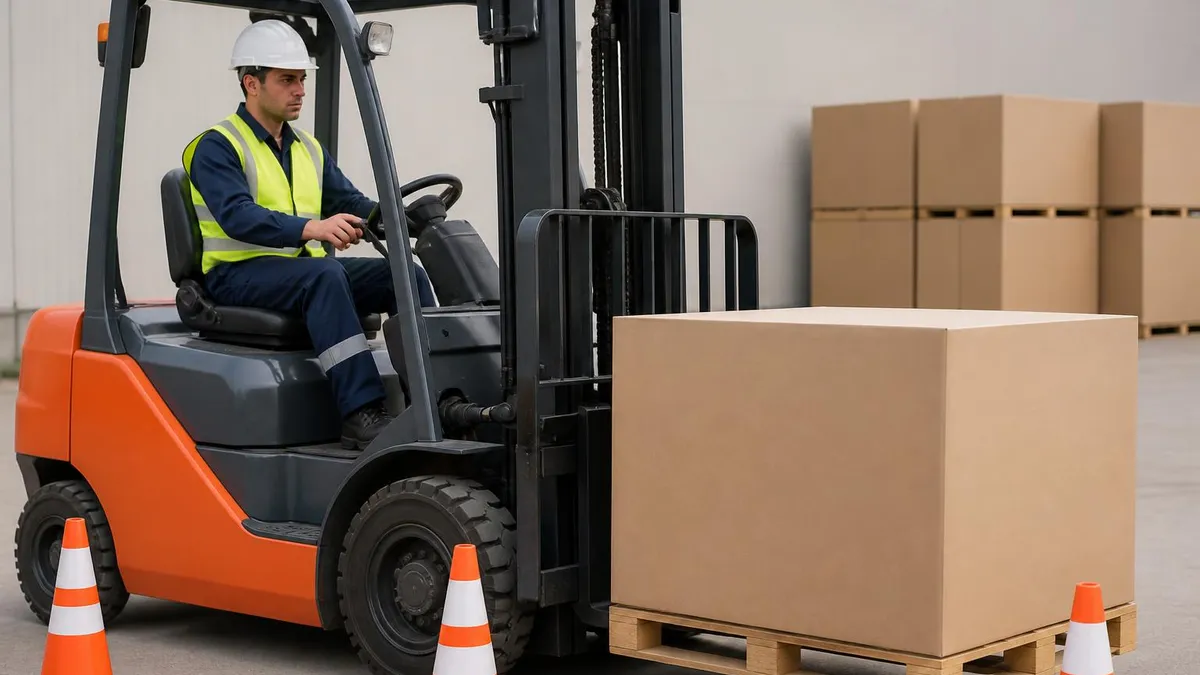
Forklift Tires: Complete Guide to Types, Sizing, Wear Patterns, and Replacement Costs
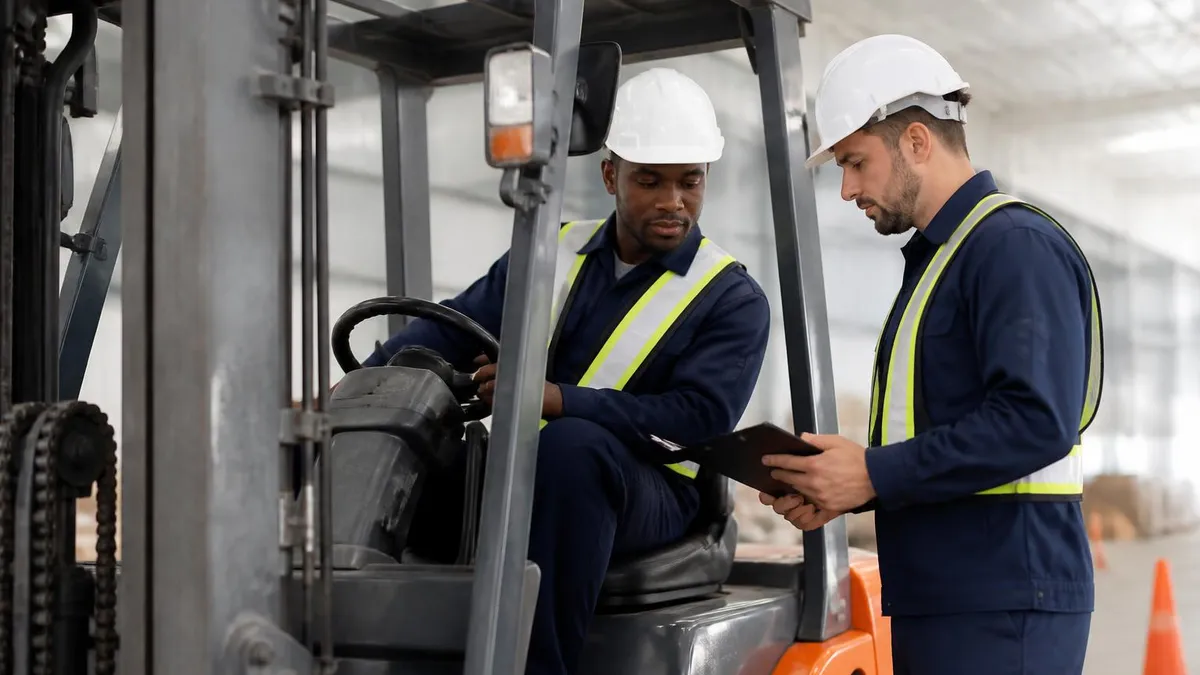
Forklift Operator Duties: Complete Guide to Daily Responsibilities, Safety Tasks, and Career Path for 2026
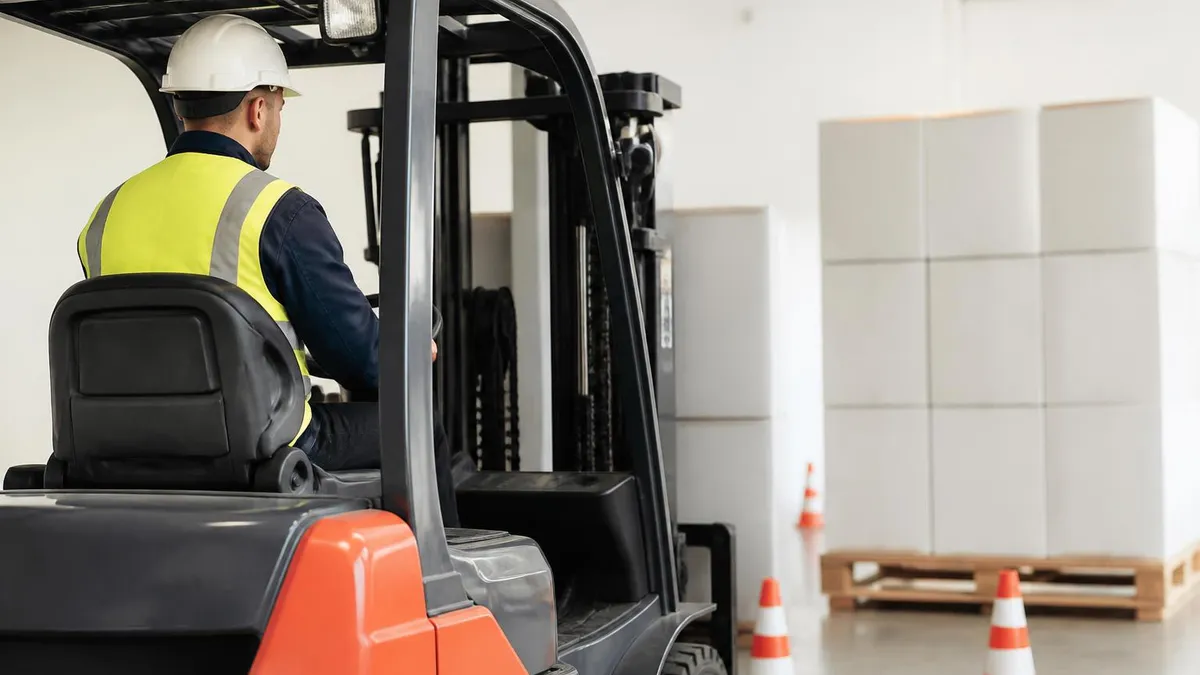
Forklift License Renewal: Complete Guide to Forklift License Expiry, OSHA Recertification, and Operator Requirements for 2026
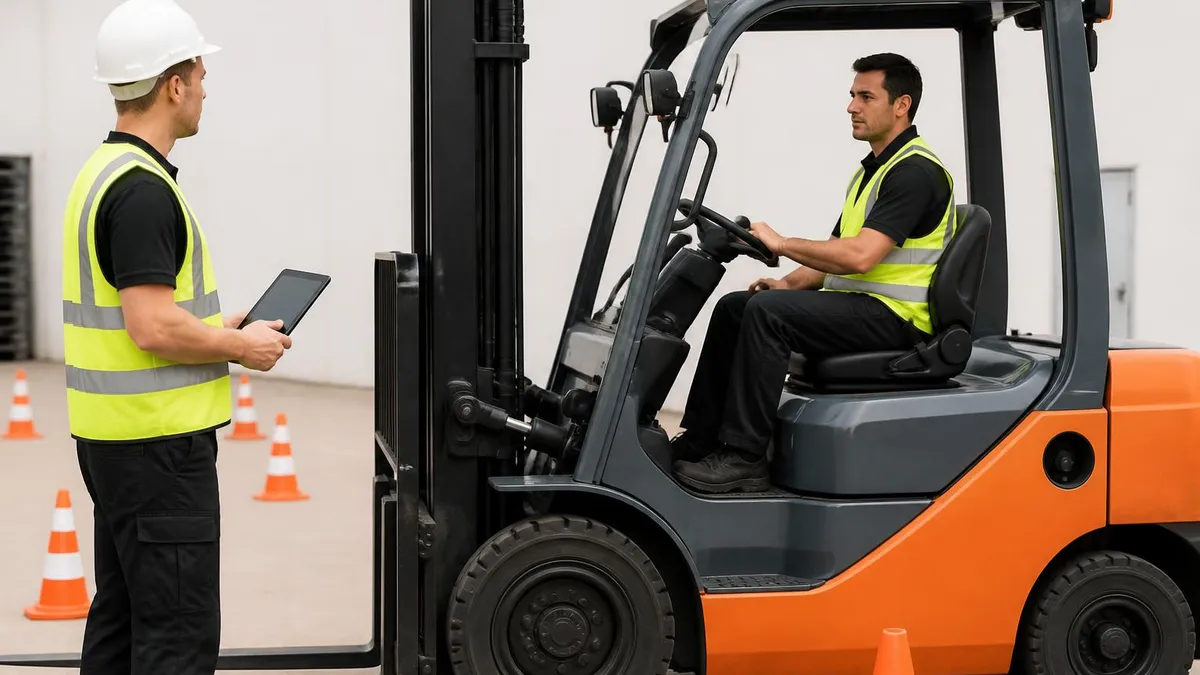
Forklift Safety Training: Complete OSHA Compliance Guide for Operators and Employers
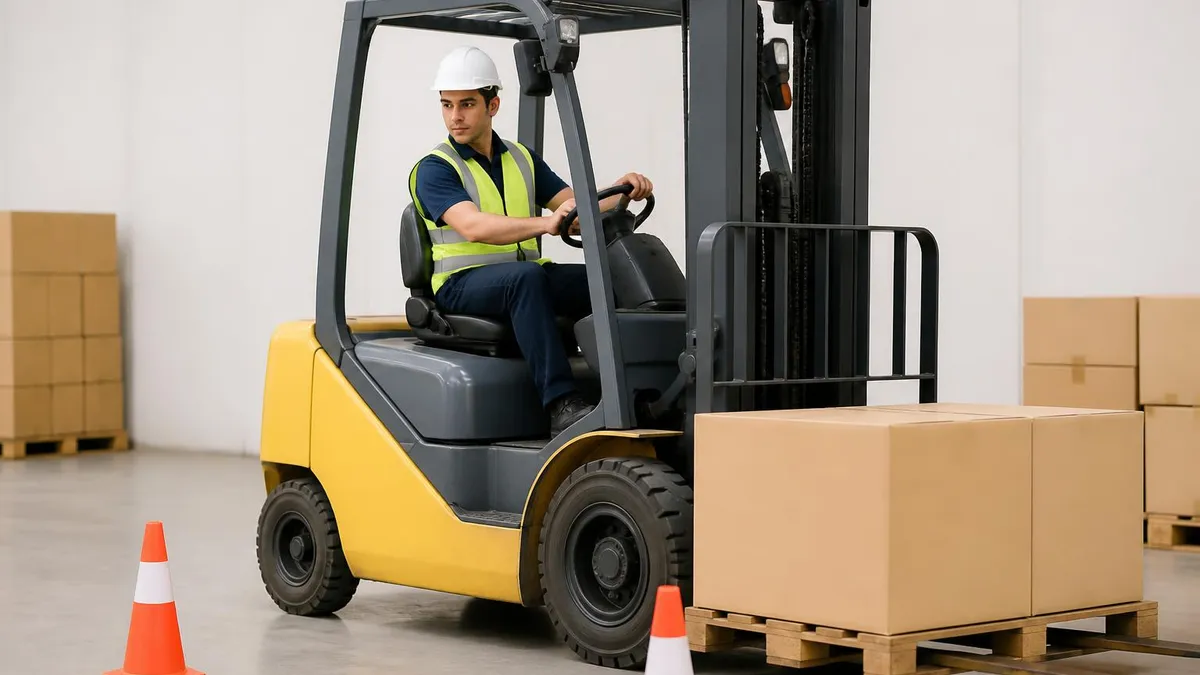
Forklift Repair Service: Complete Guide to Costs, Common Repairs, and Choosing the Right Technician
About the Author

Certified Crane Operator & Skilled Trades Exam Specialist
Ferris State UniversityRobert Martinez is a Journeyman Ironworker, NCCCO-certified crane operator, and forklift trainer with a Bachelor of Science in Construction Technology from Ferris State University. He has 21 years of ironworking, rigging, and heavy equipment operation experience across high-rise and industrial construction sites. Robert prepares candidates for crane operator, rigger, forklift, and skilled trades certification examinations.