
Forklift Fleet Management System: Complete Guide for Operators, Managers, and Certification Prep
Master forklift fleet management systems: rental options, electric forklift choices, operator certification, and maintenance best practices. 🎯

A forklift fleet management system is the backbone of any serious warehouse or distribution operation in the United States. Whether you oversee five forklifts in a regional fulfillment center or manage a mixed fleet of electric forklifts and stand up forklifts across multiple facilities, a robust fleet management platform gives you real-time visibility into equipment location, operator performance, inspection compliance, and total cost of ownership. Companies that invest in structured fleet management consistently report fewer accidents, lower maintenance costs, and higher forklift operator productivity across every shift.
Understanding forklift rental options is the first step many operations managers take before committing to a full purchase. With forklift rental volume searches exceeding 60,500 per month nationally, it is clear that businesses of every size routinely evaluate short-term and long-term rental agreements alongside outright purchase or lease. A fleet management system tracks rental assets alongside owned equipment, ensuring that every forklift on your dock floor — whether it is a forklift rental sourced locally or a machine you have owned for a decade — receives consistent pre-shift inspections, maintenance scheduling, and operator assignment records.
The demand for forklifts spans industries from automotive manufacturing and cold-storage logistics to retail distribution and construction material handling. Fleet managers must balance acquisition strategy — deciding between forklifts for sale on the secondary market, new electric forklift units, or short-term forklift rentals — against operational demands that shift seasonally. A well-configured fleet management system provides the data infrastructure to make those decisions confidently, using real utilization metrics rather than gut instinct or outdated spreadsheets.
Certification of forklift operators is a non-negotiable legal requirement under OSHA 29 CFR 1910.178. Every forklift operator must complete site-specific forklift training before operating any powered industrial truck, and recertification is required every three years or after any observed unsafe act or workplace accident involving a lift truck. Fleet management software links operator certification records directly to equipment access controls, preventing an uncertified worker from starting a machine and exposing the company to OSHA fines that can reach $15,625 per violation or $156,259 for willful violations as of the 2026 penalty schedule.
Electric forklift adoption has accelerated sharply over the last several years as battery technology improves and charging infrastructure becomes more affordable. A fleet management system designed for mixed-fuel environments monitors battery state-of-charge, tracks charging cycle counts, and alerts maintenance teams when a lithium-ion or lead-acid battery pack is approaching end-of-life. This level of telemetry is especially valuable for operations that run two or three shifts continuously, where an unexpectedly dead battery mid-shift can halt an entire production line and create cascading delays worth thousands of dollars per hour.
Stand up forklifts — including reach trucks and order pickers — present unique fleet management considerations compared to counterbalance sit-down units. These machines operate in narrow-aisle racking systems where visibility and spatial awareness are critical. Fleet management systems collect impact and shock data from onboard sensors, flagging incidents that exceed preset g-force thresholds even when no visible damage occurs. Documenting these micro-impacts protects companies from hidden structural damage to racking systems and provides objective data for operator coaching programs that reduce accident frequency over time.
This guide covers everything facility managers, safety coordinators, and forklift operators need to understand about modern fleet management systems: how they are structured, what features matter most, how to evaluate rental versus purchase decisions, and how operator certification integrates with fleet oversight. Whether you are building a fleet management program from scratch or upgrading legacy paper-based inspection systems to a digital platform, the strategies outlined here will help you run a safer, more cost-efficient lift truck operation in 2026 and beyond.
Forklift Fleet Management by the Numbers

Core Components of a Forklift Fleet Management System
Real-time location data, utilization hours, idle time reporting, and geofence alerts allow fleet managers to see exactly where every forklift is operating at any moment and identify underutilized or overworked units across facilities.
RFID or PIN-based login systems prevent unauthorized or uncertified forklift operators from starting equipment. Access logs create an automatic audit trail that satisfies OSHA inspection requirements and simplifies incident investigation.
Pre-shift and post-shift inspection checklists completed on mobile devices replace paper forms, creating searchable, timestamped records of defect reporting, corrective actions, and equipment downtime that protect against liability claims.
Automated work order generation triggered by operating hours, calendar intervals, or sensor alerts ensures that every forklift receives oil changes, hydraulic fluid inspections, and brake checks on time, extending machine service life significantly.
Built-in certification expiration alerts notify safety managers 60 and 30 days before a forklift operator's certification of forklift expires, allowing enough lead time to schedule refresher forklift training before access is automatically revoked.
Deciding whether to rent forklifts or purchase them outright is one of the most financially significant choices a fleet manager makes, and the right answer depends on utilization patterns, capital budget constraints, and the duration of the operational need.
Forklift rental is ideally suited for project-based surges — seasonal retail distribution peaks, construction site mobilizations, or short-term warehouse expansions — where the flexibility to return equipment at the end of a contract outweighs the higher per-hour cost compared to owned assets. Searching for a forklift rental near me typically surfaces local dealerships and national rental chains that can deliver a machine within 24 to 48 hours.
The financial calculus shifts decisively toward ownership when utilization exceeds roughly 1,500 hours per year on a given machine. At that threshold, the cumulative rental cost typically surpasses the total cost of ownership for a comparable unit purchased new or sourced from the secondary market as a forklift for sale.
Fleet management software makes this analysis straightforward by exporting operating hours per unit across any date range, allowing finance teams to model break-even scenarios with accurate runtime data rather than estimates. Operations that cross the ownership threshold on multiple machines often find that a mixed strategy — owning core fleet assets while renting supplemental units for peaks — delivers the best total cost.
Electric forklifts are increasingly attractive for purchase-oriented fleets because of their lower operating costs relative to propane or diesel counterbalances. Electricity costs typically run 30 to 60 percent less than propane fuel expenses on an equivalent energy basis, and electric motors require significantly fewer scheduled maintenance interventions because they have fewer moving parts and no combustion system to service. Fleet management platforms that monitor battery cycle counts and energy consumption per hour allow operations to quantify these savings precisely, building the business case for accelerated transition away from internal combustion equipment in indoor environments.
Long-term forklift rentals — typically defined as agreements of 12 months or more — occupy a middle ground between short-term rentals and outright ownership. These agreements frequently include maintenance provisions where the rental company handles all scheduled service and major repairs, removing those costs and administrative burdens from the lessee. For companies that lack in-house forklift technicians, a maintained long-term rental can be more economical than ownership even at utilization rates that would otherwise favor buying, because the embedded service contract eliminates the need to hire certified mechanics or pay premium rates for third-party service calls on aging equipment.
Stand up forklifts such as reach trucks are often excellent candidates for long-term rental because of their specialized application in narrow-aisle high-bay racking. A food distribution center that installs a new racking system might rent reach trucks for the first 24 months while validating throughput requirements before committing to purchase. If volume projections materialize, the company can exercise a purchase option or negotiate a buyout. If the racking configuration changes — a common occurrence as product mix evolves — the company can return the equipment without absorbing a depreciated asset that no longer fits the facility layout.
Fleet management software also simplifies the vendor management aspect of a mixed owned-and-rented fleet. Rental return dates, maintenance responsibility boundaries, and damage assessment protocols can be tracked within the platform, reducing disputes at contract end. Managers can generate utilization reports that document actual hours run versus hours paid for under the rental agreement, providing leverage in rate renegotiations with rental providers. Over time, this data creates a procurement intelligence asset that sharpens every future forklift acquisition decision the organization makes, whether the outcome is purchase, long-term lease, or short-term forklift rentals sourced from the most competitive local vendor.
Fuel and energy management is another dimension where fleet management systems generate measurable return on investment. Propane consumption logs, electric charging session records, and diesel fuel dispensing data integrated into the fleet platform allow energy cost to be allocated accurately to individual cost centers, departments, or customer accounts in third-party logistics operations. This granularity transforms what was previously an undifferentiated overhead line item into actionable intelligence, revealing which shifts, which operators, and which machine types consume the most energy per productive unit of work and enabling targeted efficiency improvements that compound over months and years of operation.
Electric Forklift, Stand Up Forklift, and Counterbalance Comparison
Electric forklifts powered by lead-acid or lithium-ion batteries dominate indoor warehouse applications because they produce zero direct emissions, operate more quietly than internal combustion alternatives, and generate lower total maintenance costs over their service lives. Fleet management systems track battery state-of-charge in real time, alerting operators before charge levels drop below safe operating thresholds and scheduling charging windows that align with shift breaks to minimize downtime. Modern lithium-ion electric forklift units can opportunity-charge during a 15-minute break, adding significant runtime without requiring a full battery swap cycle.
From a fleet management perspective, electric forklifts generate richer telematics data than their propane or diesel counterparts because the onboard battery management systems communicate continuously with the vehicle controller. Charging cycle counts, depth-of-discharge patterns, and regenerative braking events all feed into the fleet platform, enabling predictive battery replacement scheduling that prevents unexpected capacity loss from disrupting operations. Facilities transitioning from propane to electric equipment typically see a 12 to 18 month payback period on the fleet management software investment through reduced energy and maintenance expenditures alone.

Pros and Cons of Implementing a Forklift Fleet Management System
- +Real-time equipment location and utilization visibility across all facilities reduces phantom asset purchases
- +Automated operator certification tracking prevents uncertified forklift operators from accessing equipment
- +Digital pre-shift inspection records create defensible audit trails for OSHA inspections and liability claims
- +Predictive maintenance scheduling reduces unplanned downtime and extends average equipment service life by 15-25%
- +Impact and shock event monitoring supports data-driven operator coaching that measurably reduces accident frequency
- +Energy consumption analytics for electric forklift fleets identify charging inefficiencies and battery degradation early
- −Upfront software licensing and hardware installation costs can reach $500-$2,000 per forklift unit
- −Older forklifts may require expensive aftermarket telematics hardware retrofits to participate in the platform
- −Operators accustomed to paper systems may resist digital inspection workflows without thorough change management
- −Data privacy and union contract considerations can complicate individual operator performance monitoring programs
- −Integration with existing ERP or maintenance management systems requires IT resources and custom development time
- −Cellular connectivity gaps in metal-dense warehouse environments can cause telematics data transmission delays or gaps
Forklift Fleet Management Implementation Checklist
- ✓Audit your current fleet inventory and record each unit's age, hours, and certification of forklift requirements
- ✓Evaluate at least three fleet management software vendors and request demos using your actual fleet size and equipment mix
- ✓Install telematics hardware on every forklift in the fleet, including any forklift rental units under long-term agreements
- ✓Upload all existing operator certification records and set automated expiration alerts for every forklift operator
- ✓Configure pre-shift digital inspection checklists that match OSHA 29 CFR 1910.178 daily inspection requirements
- ✓Set up operator access control using RFID cards or PIN codes and link each operator profile to their certification status
- ✓Define impact alert thresholds appropriate for your facility type and establish a supervisor notification workflow
- ✓Integrate the fleet platform with your maintenance management system to enable automated work order creation
- ✓Train all supervisors and safety coordinators on report generation and how to investigate flagged incidents
- ✓Schedule a 90-day post-launch audit to measure pre-shift compliance rates, downtime reduction, and certification status across all operators
Operator Certification Lapses Are the Most Common OSHA Violation
OSHA compliance audits consistently find that expired forklift operator certifications are among the most frequently cited violations in warehouse and manufacturing facilities. A forklift fleet management system that automatically locks out operators with expired credentials eliminates this risk entirely — no supervisor needs to manually track renewal dates for every member of a large operator workforce. Companies that automate certification enforcement report near-zero certification lapse violations in subsequent OSHA inspections.
Maintenance program design is where a forklift fleet management system delivers some of its most tangible financial returns. Reactive maintenance — fixing forklifts only after they break down — costs two to three times more per repair event than scheduled preventive maintenance, according to industry benchmarks, because unplanned failures typically occur during peak operational periods when the cost of downtime is highest and premium-rate emergency service calls are required. A fleet management platform converts maintenance from a reactive cost center into a predictable, schedulable operational function that aligns service windows with planned production downtime.
Pre-shift inspections are the foundation of any forklift maintenance program, and fleet management systems dramatically improve compliance rates and data quality compared to paper-based systems. When operators complete digital checklists on a tablet or smartphone before each shift, the timestamp, GPS location, and user identity are automatically recorded, creating an irrefutable audit trail. Defect items flagged during inspection trigger immediate alerts to maintenance supervisors and automatically restrict the equipment from operation until a qualified technician reviews and clears the concern — a workflow that mirrors the OSHA requirement that tagged-out equipment not be returned to service without authorized evaluation.
Hydraulic system health is a particularly important monitoring focus for fleet managers because hydraulic failures often develop gradually and can cause catastrophic mast or attachment failures if undetected. Fleet management systems that integrate with forklift onboard diagnostics can track hydraulic pressure readings, fluid temperature anomalies, and pump cycle counts that indicate developing wear before failure occurs. Pairing this data with scheduled forklift hydraulic fluid analysis intervals — typically every 1,000 operating hours or annually for heavily used equipment — allows maintenance teams to catch contamination or viscosity degradation that accelerates component wear and shortens system service life.
Tire management is another maintenance dimension that fleet systems handle well because tire wear rate is directly proportional to operating hours and load intensity. Cushion tires on indoor electric forklifts typically require replacement every 1,500 to 2,500 hours depending on floor surface conditions and load weights. Fleet management platforms that track hours per unit and flag tire inspection intervals prevent the gradual degradation of handling stability that worn tires cause — a safety hazard that is easy to overlook when individual operators see the machine daily and adjust unconsciously to its handling changes.
Battery maintenance for electric forklift fleets deserves dedicated attention within any fleet management system configuration. Lead-acid batteries require regular watering, equalization charges, and specific charging protocols to achieve their rated cycle life of 1,200 to 1,500 cycles. Lithium-ion batteries are lower maintenance but require temperature monitoring and charge state management to prevent premature capacity degradation.
Fleet management systems that track charging events per battery, flag improper opportunity charging on lead-acid units, and monitor ambient temperature in charging areas protect what is often the single most expensive component of an electric forklift — the battery pack, which can represent 25 to 40 percent of the machine's total acquisition cost.
Parts inventory management integration is an advanced fleet management capability that high-volume operations find particularly valuable. By analyzing historical maintenance records across the fleet, the system can predict parts consumption rates for high-turnover items — brake pads, filters, forks, and rollers — and trigger purchase orders before stockouts occur.
This capability eliminates the expensive practice of carrying excessive safety stock across all part numbers while simultaneously reducing the emergency procurement costs and production delays that result from unexpected parts shortages. For operations with 20 or more forklifts, integrated parts management can reduce parts inventory carrying costs by 15 to 20 percent annually.
Vendor performance tracking rounds out a comprehensive maintenance management approach within the fleet system. Recording which service providers performed each repair, the labor hours billed, parts costs, and subsequent failure rates for the same failure mode creates a vendor scorecard that informs service contract renewals and drives accountability. Operations that share this data transparently with their service vendors consistently report faster response times, more accurate diagnostic work, and lower repeat-repair rates — outcomes that improve fleet availability and reduce total maintenance spend without requiring any confrontational vendor negotiations, simply because the data creates objective performance visibility where none existed before.

Under OSHA 29 CFR 1910.178(l), forklift operator certification must be renewed every three years at minimum — and sooner if an operator is observed operating unsafely, is involved in an accident or near-miss, or is assigned to a different type of forklift. Violations carry penalties up to $15,625 per incident for serious citations and up to $156,259 for willful violations under the 2026 penalty schedule. Fleet management systems that automate certification enforcement are the most reliable way to ensure continuous compliance.
Optimizing fleet performance over time requires moving beyond basic compliance and maintenance tracking toward a continuous improvement mindset informed by the rich data stream that a mature fleet management system generates. The most effective fleet managers review key performance indicators weekly — including pre-shift inspection completion rates, average equipment availability percentages, operator impact event frequency, and certification compliance ratios — and use these metrics to set quarterly improvement targets that align with broader safety and productivity goals for their facilities.
Operator performance data is the most sensitive and highest-impact dimension of fleet management analytics. When handled with appropriate transparency and fairness, individual operator metrics — including impact events, idle time percentages, speed limit violations within designated slow zones, and inspection completion rates — provide a factual foundation for coaching conversations that are far more effective than subjective supervisor impressions.
Operations that roll out operator scorecards consistently report 20 to 30 percent reductions in impact event frequency within the first six months, driven primarily by the awareness effect: operators who know their performance is being measured objectively tend to self-correct behaviors they would not otherwise examine.
Fleet right-sizing is a fleet management output that generates significant capital cost savings for organizations that commit to data-driven decision making. Many warehouses carry 15 to 25 percent more forklifts than they actually need at peak, because purchasing decisions were made conservatively without reliable utilization data.
Fleet management platforms that report average utilization rates — typically anything below 50 percent utilization on a single-shift basis indicates a candidate for removal — allow fleet managers to retire underutilized assets, eliminate associated maintenance costs, and return capital or reduce rental payments. A fleet management system that identifies even two redundant forklift rental agreements at $1,200 per month each saves $28,800 per year with a single strategic decision.
Energy cost optimization is a growing priority as electric forklift penetration increases and electricity rates become more variable with time-of-use pricing structures. Fleet management systems that integrate with facility energy management platforms can schedule charging sessions to avoid peak-rate periods — typically afternoon hours in most utility territories — and shift charging load to overnight off-peak windows when rates may be 30 to 50 percent lower.
For a fleet of 20 electric forklifts each consuming 30 kWh per day, this scheduling optimization can reduce annual energy costs by $15,000 to $25,000 depending on the local utility's rate differential between peak and off-peak periods.
Regulatory reporting is simplified substantially by fleet management data aggregation. Many states and local jurisdictions require periodic reporting of powered industrial truck inventories for fire code compliance, air quality permit purposes in operations using propane or diesel equipment, or insurance verification. Fleet management platforms can generate these reports automatically from current inventory records, eliminating the manual data gathering that compliance reporting otherwise requires and reducing the risk of underreporting that could create regulatory exposure. This administrative efficiency compounds over years as reporting requirements evolve and become more detailed.
Training program effectiveness measurement is an often-overlooked application of fleet management analytics. By comparing operator performance metrics before and after forklift training interventions — whether classroom refresher sessions, simulator training, or hands-on field coaching — safety managers can quantify the ROI of their training investments and identify which training formats produce the most durable behavioral change. Operations that track training outcomes this rigorously make more targeted training investments, concentrating resources on the highest-risk operators and the highest-impact skill gaps rather than administering uniform refresher content to all operators regardless of their individual performance profiles.
Integration with warehouse management systems creates the final dimension of fleet management optimization for operations that want to connect equipment data to productivity data. When forklift operating hours are mapped against pick rates, putaway cycles, and loading dock throughput from the WMS, fleet managers can identify whether productivity bottlenecks originate in equipment availability, operator performance, or workflow design. This cross-system visibility transforms the fleet management platform from an equipment-focused tool into a genuine operational intelligence asset that supports strategic warehouse design decisions, labor planning, and equipment procurement cycles aligned with the business's long-term growth trajectory.
Practical preparation for forklift operator certification begins long before the formal evaluation day. Candidates who perform best on OSHA-compliant certification assessments are those who treat their daily pre-shift inspections as genuine learning opportunities rather than bureaucratic checkbox exercises. Understanding why each inspection item matters — why checking the hydraulic fluid level protects against mast failure, why testing the horn and warning devices is a legal requirement, why inspecting fork tines for cracks prevents catastrophic load drops — builds the operational judgment that distinguishes a truly safe forklift operator from one who merely completes the motions.
Written knowledge assessments for forklift certification typically cover OSHA regulations, load center and stability triangle principles, pedestrian safety procedures, refueling and battery charging requirements, and pre-shift inspection protocols. Most employer-administered certifications use multiple-choice formats with 25 to 50 questions, requiring a passing score of 70 to 80 percent. The best preparation strategy combines reviewing the OSHA 1910.178 standard directly — which is publicly available and written in accessible language — with taking practice tests that expose the specific question formats and topic weightings that appear most frequently in US workplace certification programs.
Practical skills evaluations assess the candidate's ability to perform pre-operation inspection, safely travel with a load, stack and unstack loads at various heights, operate in simulated congested pedestrian zones, and demonstrate proper fueling or charging procedures. Evaluators look specifically for consistent seat belt use, proper horn use at intersections, smooth load handling without abrupt acceleration or stopping, and correct mast tilt technique during load pickup and deposit. Candidates who practice these procedures deliberately and methodically — not just repetitively — develop the muscle memory and situational awareness that prevent the rushed, habitual shortcuts that cause accidents in high-pressure production environments.
Site-specific training is a component of OSHA certification that candidates sometimes underestimate. Even an experienced forklift operator with certifications from previous employers must complete site-specific orientation at each new facility, covering the unique hazards of that workplace — floor load ratings, overhead clearance restrictions, pedestrian traffic patterns, loading dock procedures, and any non-standard load types. Fleet management systems support site-specific training compliance by tracking which orientation modules each operator has completed at each facility location, ensuring that workers transferred between sites do not operate equipment in unfamiliar environments without the required additional training.
Emergency procedures knowledge is tested heavily in forklift certification assessments because the decisions made in the first seconds of an emergency determine whether an incident becomes a minor near-miss or a fatality. Candidates must understand the correct response to a tip-over — staying in the seat, gripping the steering wheel, and leaning away from the direction of fall — which counterintuitively produces better survival outcomes than attempting to jump clear of the machine.
They must also know procedures for fires involving propane-powered forklifts, procedures for battery acid spills on electric forklifts, and evacuation protocols for lift-assisted rescues of personnel trapped at height on an order picker platform.
Maintenance awareness is increasingly tested in modern certification programs because operators who recognize early warning signs of developing mechanical problems prevent failures before they create hazardous conditions. Understanding what abnormal hydraulic drift indicates, recognizing the sounds associated with bearing wear in the mast assembly, and knowing when a battery that is unusually hot after a normal charge cycle requires technician inspection — these knowledge areas transform forklift operators from passive equipment users into the first line of mechanical defense that protects both the equipment and the people working around it.
Ongoing professional development beyond initial certification separates good forklift operators from exceptional ones. Many operators pursue additional credentials in specific equipment types — reach truck operation, order picker operation, rough-terrain forklift operation — that expand their employability and earning potential. Participating in facility safety committees, volunteering for peer coaching roles, and staying current with OSHA regulatory updates through industry publications are habits that correlate strongly with long, incident-free careers and the supervisory advancement opportunities that come with a demonstrated track record of safety leadership in the warehouse environment.
Forklift Questions and Answers
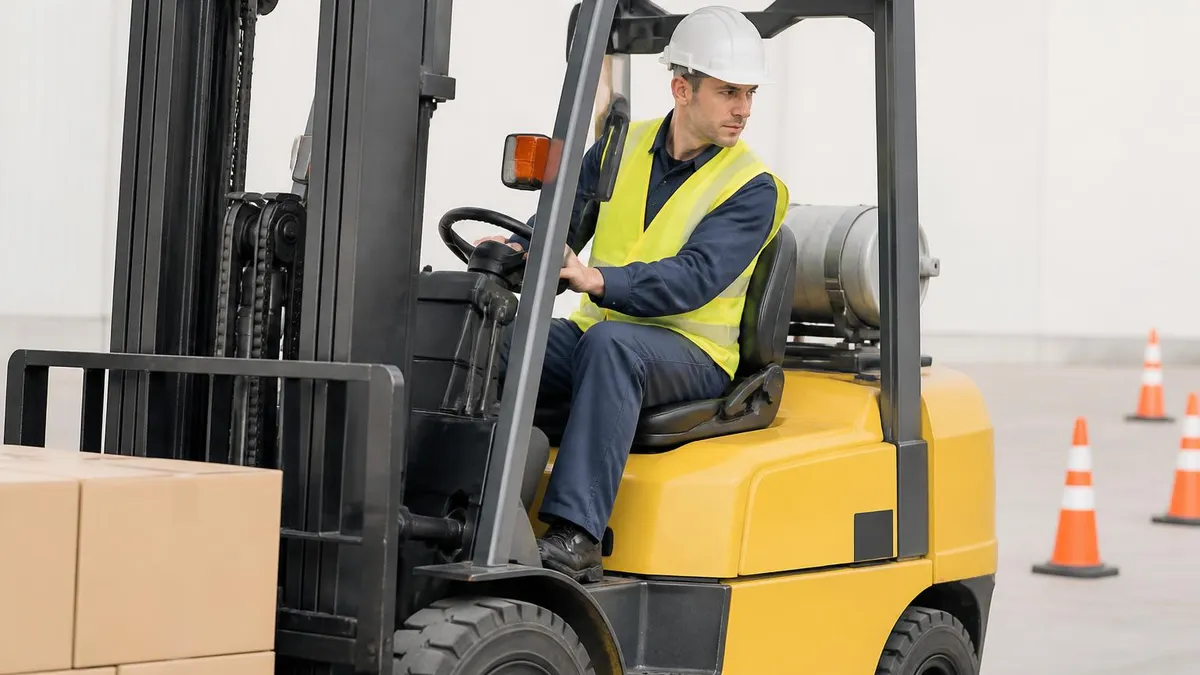
Forklift Rentals: Complete Guide to Pricing, Types, and Operator Requirements
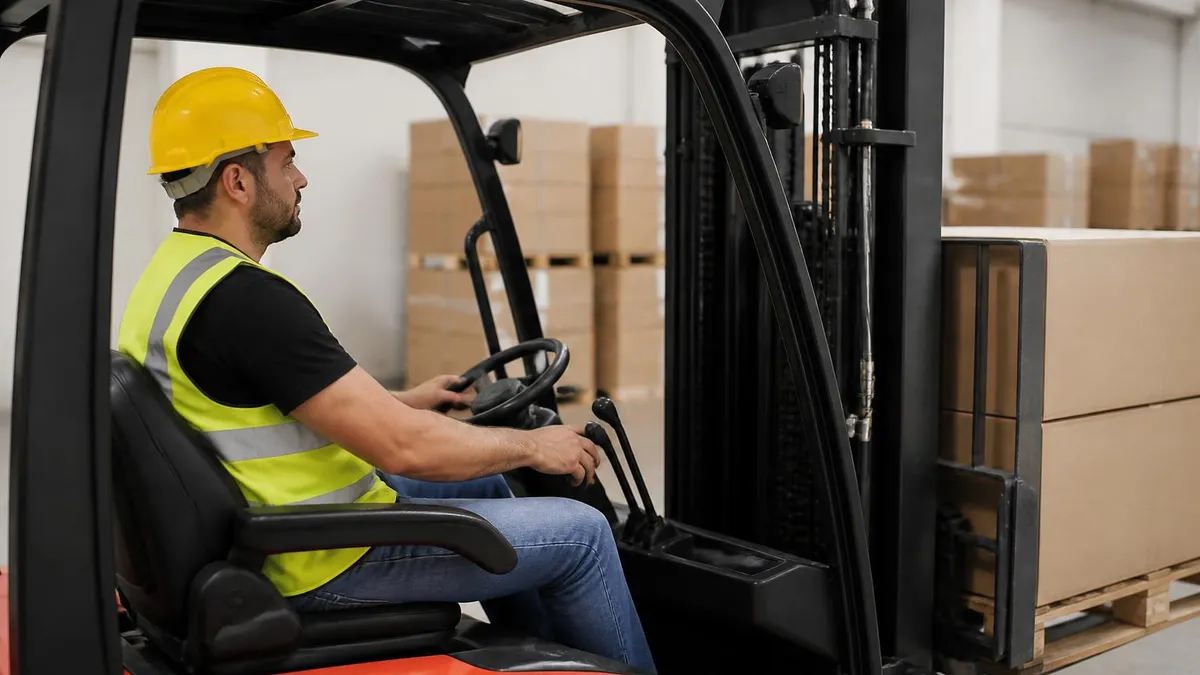
Forklift Hydraulic Fluid: Complete Guide to Types, Specifications, Change Intervals, and Troubleshooting for 2026
Forklift Certification 2026
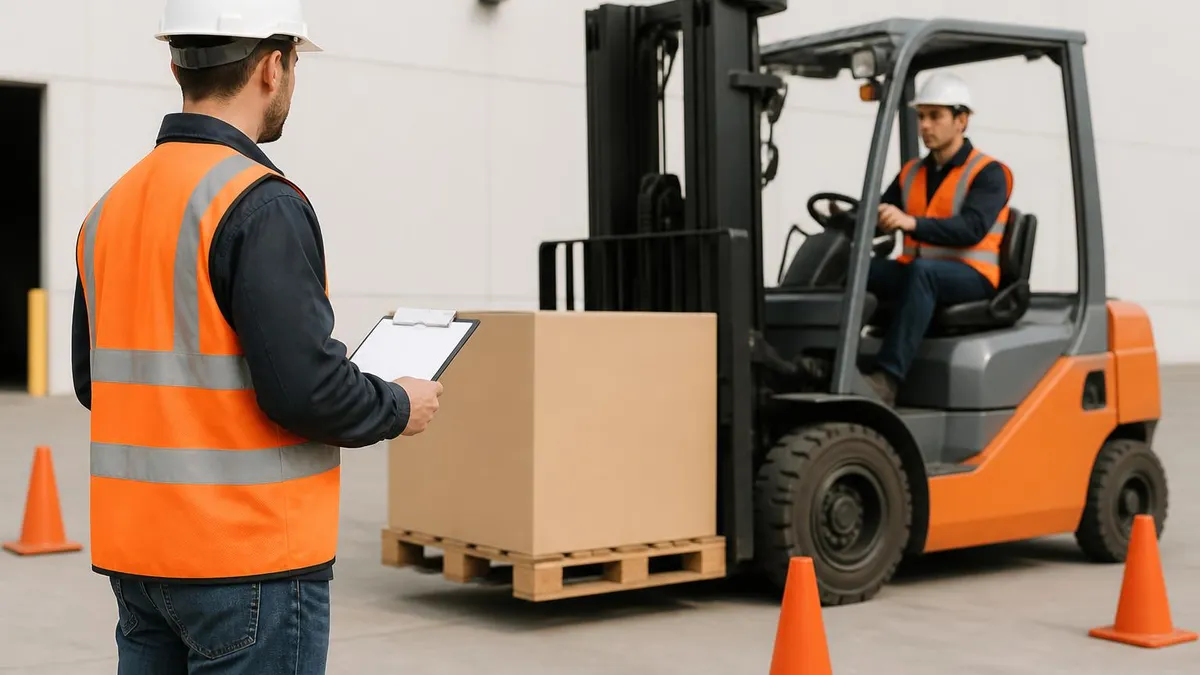
Forklift Parts and Maintenance: Complete Guide to Batteries, Chargers, and Replacement Components
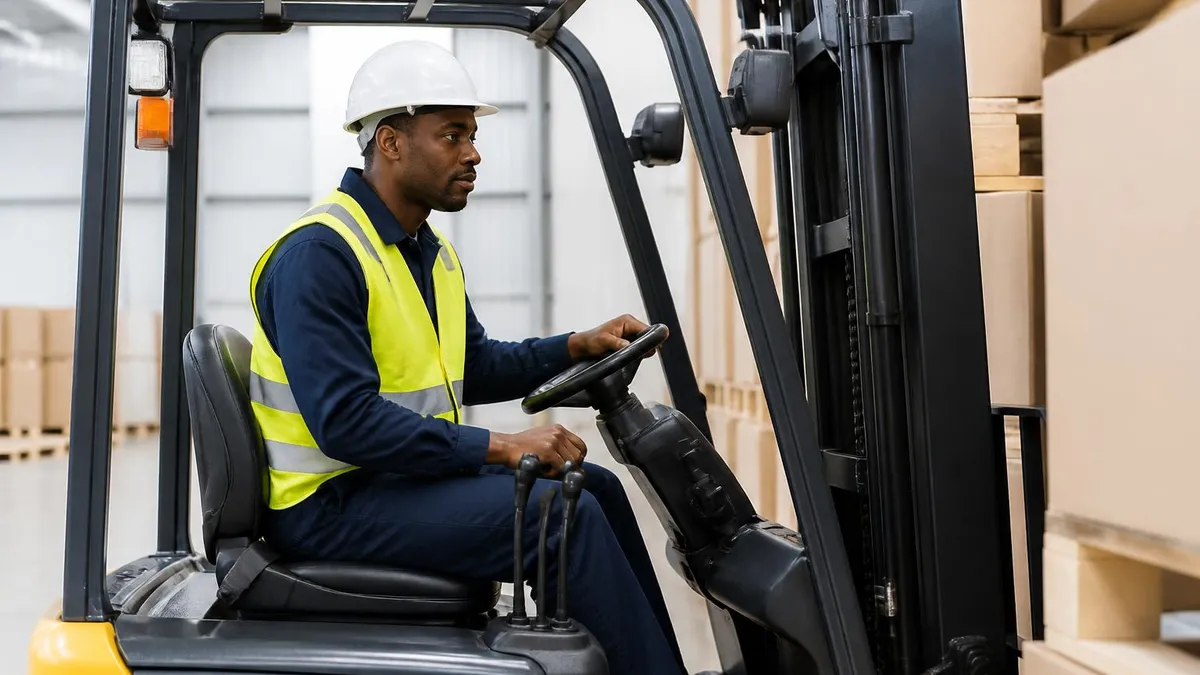
Can a Forklift Enter a 26 ft Box Truck? Complete Guide to Loading, Operations, and Equipment Selection
About the Author

Certified Crane Operator & Skilled Trades Exam Specialist
Ferris State UniversityRobert Martinez is a Journeyman Ironworker, NCCCO-certified crane operator, and forklift trainer with a Bachelor of Science in Construction Technology from Ferris State University. He has 21 years of ironworking, rigging, and heavy equipment operation experience across high-rise and industrial construction sites. Robert prepares candidates for crane operator, rigger, forklift, and skilled trades certification examinations.