
Forklift Rental Brisbane: Complete Guide to Dealers, Pricing, Operator Certification, and Choosing the Right Lift for Your Warehouse in 2026 October
Forklift rental Brisbane guide: 🟢 compare dealers, pricing for electric and stand up forklifts, operator certification, and how to choose the right lift.
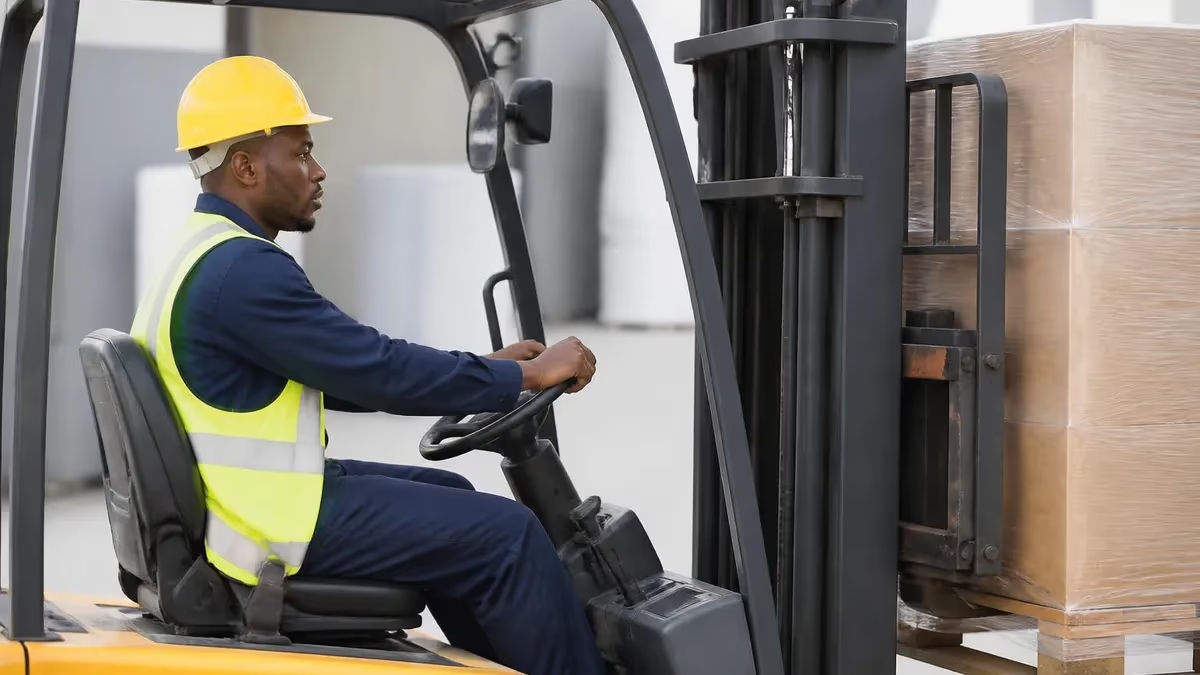
Whether you operate a busy distribution hub, a seasonal warehouse, or a small construction yard, understanding the forklift rental Brisbane market and how it compares to North American dealers is the fastest way to control your material handling costs. The principles that apply when sourcing a forklift in Brisbane, Queensland are nearly identical to those in Atlanta, Chicago, or Dallas: you must match the truck to the load, verify operator certification, calculate the true cost of ownership, and choose a dealer who can support you when something breaks. This guide pulls those decisions together.
Forklift rental remains the single fastest-growing segment of the material handling industry, with U.S. demand expanding roughly 7.4% year over year as warehouses scale up to meet e-commerce volume. Renting offers flexibility that purchasing cannot match, especially when your load profile changes seasonally or when you need a specialized truck for a single project. The trade-off is that long-term renters frequently pay more than buyers over a five-year horizon, which is why most operations end up running a mixed fleet of owned and rented equipment.
The most common search a fleet manager runs is forklift rental near me, and that is rarely a coincidence. Proximity to a dealer matters enormously because a broken-down lift can shut down a loading dock within hours. A dealer five miles away can have a service technician on-site the same morning; a dealer fifty miles away may quote you two days and a trip charge that doubles the repair bill. When you are evaluating quotes, distance to the service center is as important as the rental rate itself.
Forklifts come in a surprising number of configurations, and the wrong choice will cost you in productivity, fuel, and safety incidents. An electric forklift makes sense for indoor food-grade warehouses with smooth concrete floors. A stand up forklift dominates narrow-aisle racking environments where every inch of cube matters. A pneumatic-tire LPG truck rules outdoor lumberyards. A telehandler forklift is the right call for rough-terrain construction sites where you need to reach over obstacles. Mixing these up wastes money.
Operator certification is non-negotiable. OSHA 29 CFR 1910.178 requires every powered industrial truck operator in the United States to complete formal training, hands-on evaluation, and recertification every three years. Penalties for non-compliance run from $16,131 per serious violation up to $161,323 for willful or repeat violations, and a single fatality investigation can shut a site down for weeks. The same logic applies in Australia under WHS regulations, where Brisbane operators need a current HRW LF licence.
This guide walks through every major decision: which forklift class fits your job, how to compare rental dealers, what daily and monthly rates actually include, how to budget for a forklift for sale versus a long-term rental, and how to make sure your forklift operator roster is fully certified before OSHA shows up. We will cover the brands you will see most often — Toyota, Crown, Hyster, Yale, Caterpillar, Mitsubishi, Linde — and the questions you should ask before signing any rental contract.
By the end, you will know how to read a rental quote line by line, how to negotiate damage waivers, and how to spot the red flags that separate a reliable dealer from one that will leave you stranded with a tagged-out truck the week before peak season. Use the practice quizzes embedded throughout to test your readiness for the OSHA certification of forklift operators exam, and bookmark the related articles at the bottom for deeper dives on tires, accessories, repair pricing, and safety training.
Forklift Rental Market by the Numbers

Forklift Classes and Rental Categories Explained
Sit-down electric trucks rated 3,000 to 12,000 lb. Quiet, zero-emission, ideal for indoor warehousing, food, and pharma. Higher upfront and battery costs but lowest cost-per-hour over 10 years.
Reach trucks, order pickers, and stand up forklift models built for 8 to 10 foot aisles. Common in high-density racking. Operators stand or sit sideways to reduce neck strain during long shifts.
Walkie and rider pallet trucks rated 4,500 to 8,000 lb. Cheapest to rent at $40 to $90 per day. Used for dock work, order picking, and floor-level moves where no lifting above shoulder height is needed.
Internal combustion forklifts on solid cushion tires for smooth indoor floors. LPG-powered, 4,000 to 12,000 lb capacity. The workhorse of light manufacturing and cross-docking.
Diesel or LPG forklifts on air-filled tires for outdoor yards, lumber, and construction. Capacities to 36,000+ lb. Best choice when rough surfaces or weather exposure are part of the job.
Forklift rental pricing is a moving target, but once you understand the components of a quote you can compare apples to apples across dealers. Most rental agreements break down into a base rate, a delivery and pickup fee, a damage waiver, a fuel or battery surcharge, an after-hours utilization fee, and optional add-ons like sideshifters or fork extensions. A daily quote that looks cheap often loses its advantage by the second week once delivery and waiver charges are amortized across a short use window.
Daily rates for a standard 5,000 lb cushion-tire LPG truck typically run $150 to $220 in most U.S. metros as of early 2026. Weekly rates compress that to roughly $475 to $650, and monthly rates land between $1,800 and $2,800. Electric models of equivalent capacity run 15 to 25 percent higher on the monthly rate because the dealer is depreciating a more expensive asset and bundling battery wear into the cost. Stand up forklift reach trucks sit in the $2,400 to $3,400 monthly range.
Delivery and pickup fees are where dealers make a surprising amount of margin. Expect $125 to $275 each way within a 25-mile radius, and roughly $4.50 to $7.00 per loaded mile beyond that. A round-trip delivery on a one-week rental can add 20 percent to your total bill. If you are renting repeatedly through the year, ask for a delivery cap or a freight-included contract — most reputable dealers will negotiate this for customers who do more than $15,000 in annual rentals.
Damage waivers run 8 to 14 percent of the base rental and are not insurance — they simply cap your exposure on accidental damage to the truck. If your general liability or commercial auto policy already extends to rented equipment, you can decline the waiver and save real money. Confirm in writing with your broker before signing. Theft is almost never covered by either the waiver or your standard policy without a specific rider, so for outdoor or unsecured sites you may want additional coverage.
Long-term rental, sometimes branded as rental purchase or RPO, becomes economic when you need a truck for 12 months or more but do not want to capitalize the asset. Typical 36-month full-service contracts including planned maintenance, tire wear, and one battery replacement run $850 to $1,400 per month for a 5,000 lb electric model. Many fleets prefer this structure because it keeps the truck off the balance sheet and predicts the monthly cost without the surprise of a $4,200 transmission failure in year five.
The hidden line that wrecks more rental budgets than any other is the hour-bank overage. Most contracts allow 176 hours per month — a single 8-hour shift, five days a week, four weeks per month. If you run two shifts or weekends, you blow past that allowance fast, and overage charges of $4 to $9 per hour add up. A double-shift operation on a $2,400 monthly forklift can easily see a $900 overage surprise. Negotiate a higher bank upfront if you know you will run long.
When you are vetting forklift rentals across multiple dealers, get every quote in writing with line-item breakdowns. Reputable dealers will provide a sample contract, certificate of insurance, and references from comparable customers within 24 hours of your request. If they hedge or send a one-line bid by text message, walk away. The cheapest sticker rate often becomes the most expensive total bill once forklift truck operators on your team start logging hours and accessories get added during the contract.

Forklift certification Practice Test Questions
Prepare for the Forklift certification Certification exam with our free practice test modules. Each quiz covers key topics to help you pass on your first try.
Forklift certification Certification Forkl...
Forklift certification Exam Questions covering Certification Forklift certification Maintenance and Repairs. Master Forklift certification Test concepts for certification prep.
Forklift certification Certification Forkl...
Free Forklift certification Practice Test featuring Certification Forklift certification Maintenance and Repairs Questions and Answers. Improve your Forklift certification Exam score with mock test prep.
Forklift certification Certification Forkl...
Forklift certification Mock Exam on Certification Forklift certification Operator Training and Certification Requirements. Forklift certification Study Guide questions to pass on your first try.
Forklift certification Certification Forkl...
Forklift certification Test Prep for Certification Forklift certification Operator Training and Certification Requirements Questions and Answers. Practice Forklift certification Quiz questions and boost your score.
Forklift certification Load Handling and S...
Forklift certification Questions and Answers on Load Handling and Stability. Free Forklift certification practice for exam readiness.
Forklift certification OSHA Regulations an...
Forklift certification Mock Test covering OSHA Regulations and Compliance. Online Forklift certification Test practice with instant feedback.
Forklift certification Pre-Operation Inspe...
Free Forklift certification Quiz on Pre-Operation Inspections. Forklift certification Exam prep questions with detailed explanations.
Forklift certification Refueling and Recha...
Forklift certification Practice Questions for Refueling and Recharging Procedures. Build confidence for your Forklift certification certification exam.
Forklift certification Safe Driving and Ma...
Forklift certification Test Online for Safe Driving and Maneuvering. Free practice with instant results and feedback.
Forklift certification Workplace Hazard Id...
Forklift certification Study Material on Workplace Hazard Identification. Prepare effectively with real exam-style questions.
Forklift certification Forklift Instructions
Free Forklift certification Test covering Forklift Instructions. Practice and track your Forklift certification exam readiness.
Forklift certification Forklift MCQ
Forklift certification Exam Questions covering Forklift MCQ. Master Forklift certification Test concepts for certification prep.
Forklift certification Forklift Employer R...
Free Forklift certification Practice Test featuring Forklift Employer Responsibilities. Improve your Forklift certification Exam score with mock test prep.
Forklift certification Forklift Penalties ...
Forklift certification Mock Exam on Forklift Penalties for Non-Compliance. Forklift certification Study Guide questions to pass on your first try.
Electric Forklift vs LPG vs Diesel — Rental Comparison
An electric forklift is the default choice for indoor warehousing, food handling, pharmaceutical storage, and any environment where emissions, noise, or fumes matter. Modern lithium-ion models charge to 80 percent in roughly 45 minutes and eliminate the battery-swap labor that plagued older lead-acid fleets. Operating cost per hour runs about 40 percent below LPG once you account for fuel, oil, and filter changes.
The downside is upfront cost and infrastructure. New lithium 5,000 lb counterbalance trucks list around $42,000 to $55,000, and you need three-phase charging at 480V for fast-charge capability. Rentals smooth these costs into a monthly payment, but expect to pay 15 to 25 percent more than the equivalent LPG truck. Cold-storage operations should specifically request freezer-rated battery packages.
Renting vs Buying a Forklift — Honest Trade-Offs
- +No capital outlay — preserves cash and credit lines for inventory or expansion
- +Predictable monthly cost includes maintenance, planned service, and most wear items
- +Easy to scale fleet size up or down with seasonal demand without depreciation hits
- +Access to newer technology and lithium-ion electric models without absorbing tech-risk
- +Tax treatment as operating expense rather than capitalized asset on most contracts
- +Dealer handles compliance documentation, OSHA stickers, and capacity plate verification
- +Replacement truck arrives within 24 hours on full-service contracts if yours fails
- −Long-term rental costs typically exceed purchase price after 48 to 60 months of use
- −Hour-bank overage fees of $4 to $9 per hour punish high-utilization operations
- −Damage waivers add 8 to 14 percent and rarely cover theft or operator-caused major damage
- −Customization is limited — sideshifters and attachments often cost extra monthly
- −You build no equity and have nothing to resell or trade at end of term
- −Delivery and pickup fees can add 15 to 25 percent on short-duration rentals
- −Some dealers require minimum 3-month commitments even on so-called short-term rentals

Pre-Rental Inspection Checklist for Forklift Operators
- ✓Verify capacity plate matches the load profile you intend to move on every shift
- ✓Check fork heel wear — replace if heel is reduced by more than 10 percent of original thickness
- ✓Inspect mast chains for stretch, kinks, or broken links and confirm equal tension on both sides
- ✓Test all hydraulic functions through full range including tilt, lift, lower, and any attachments
- ✓Confirm horn, headlights, taillights, strobe, and reverse alarm operate correctly before first use
- ✓Check tire condition, pressure on pneumatics, and chunking or flat spots on cushion tires
- ✓Verify seatbelt, overhead guard, and load backrest are intact with no cracks or missing fasteners
- ✓Confirm battery state of charge or LPG cylinder secured with chain and pressure-rated hose
- ✓Test parking brake on a 10 percent grade with a loaded fork at standard travel height
- ✓Document any pre-existing damage in writing and photograph it before the dealer leaves the site
- ✓Verify the daily inspection sticker is current and a hard copy of the operator manual is on the truck
- ✓Confirm the dealer service hotline and your assigned account manager phone number are saved in dispatch
The Capacity Derate Almost No One Calculates
A forklift's nameplate capacity assumes a 24-inch load center. If your loads have a 30-inch or 36-inch center of gravity — common with engines, machinery, or oversized pallets — actual safe capacity drops 20 to 40 percent. A 5,000 lb truck rated at 24 inches may only safely handle 3,200 lb at a 36-inch center. Always confirm load center before signing the rental contract, and ask the dealer for the derate chart for any non-standard load profile.
OSHA's certification of forklift operators rule under 29 CFR 1910.178(l) is the most frequently cited material handling standard in the United States, generating more than 2,200 federal citations in fiscal 2024 alone. The rule applies to every powered industrial truck — counterbalance, reach, order picker, pallet jack, rough terrain, and yes, every crown forklift in your warehouse. Operators must complete formal classroom training, hands-on practical evaluation, and a written or oral knowledge assessment before they touch a truck unsupervised.
Forklift training breaks into three required content areas: truck-related topics (controls, capacity, stability triangle, attachments, fueling), workplace-related topics (surface conditions, pedestrian traffic, narrow aisles, ramps, hazardous atmospheres), and OSHA requirements (the standard itself, daily inspections, and refresher triggers). A complete program runs 6 to 10 hours of instruction depending on truck classes covered and is documented with a written certificate that names the operator, evaluator, date, and trucks authorized.
Recertification is required every three years, but the clock can reset early under several conditions: the operator is involved in an accident or near-miss, an evaluation reveals unsafe operation, the operator is assigned to a different truck class, or workplace conditions change in a way that introduces new hazards. Most fleet managers schedule annual refresher training as a defensive practice, which costs $45 to $110 per operator and dramatically reduces incident rates.
The forklift operator workforce in the United States numbers roughly 853,000 people earning a median wage of $42,140 according to the most recent BLS data, with experienced narrow-aisle and high-reach operators in major distribution markets earning $58,000 to $72,000. Demand has grown faster than supply for five consecutive years, especially for operators certified across multiple truck classes and capable of running a reach truck, an order picker, and a counterbalance interchangeably.
Training providers fall into three buckets: in-house programs run by a designated trainer-evaluator on your team, third-party schools that bring trainers to your site, and online theory programs that handle the classroom portion and leave the practical evaluation to you. Online-only programs are not OSHA-compliant on their own — the standard explicitly requires hands-on evaluation by a qualified person who has the knowledge, training, and experience to evaluate operator performance.
Documentation is where most employers fail an OSHA audit. The inspector will ask for the certificate, the evaluation record, the operator's signature, the evaluator's signature, and the date. They will then ask to see the refresher training records for the past three years. Missing any of these documents is treated as if the training never happened, regardless of whether the operator can demonstrate skill on the truck. Build a single binder or digital folder per operator and keep it current.
For Brisbane operators reading this guide, the Australian equivalent is the High Risk Work licence (HRW LF) issued by Workplace Health and Safety Queensland. It is not transferable to the United States, and a U.S. OSHA certification is not transferable to Australia, but the underlying competencies — stability triangle, load handling, pedestrian awareness, daily inspection — are identical. Whichever jurisdiction you operate in, treat certification as a living credential, not a one-time box-tick.
Compliance officers consistently request three documents during a forklift-related inspection: the operator's current training certificate, the most recent practical evaluation record, and the daily pre-shift inspection log signed by the operator. Missing any one of these — even if the operator is genuinely well-trained — is treated as a serious violation. Fines start at $16,131 per instance, and a willful violation runs up to $161,323. Audit your records this quarter.
Choosing the right forklift dealer is a longer-term decision than choosing the truck itself. A truck has a service life of 10,000 to 20,000 hours; a strong dealer relationship can span 30 years across multiple equipment generations. The dealer is who gets you parts at 6:00 a.m. on a Monday when your only working truck blew a hydraulic line, who trains your operators, who handles your warranty claims, and who eventually buys back your aging fleet when you trade up. Pick carefully.
Start by mapping every dealer within 50 miles of your facility. Major brands — Toyota, Crown, hyster forklift, Yale, Caterpillar, Mitsubishi-Caterpillar, Linde, Komatsu, Doosan — operate through factory-authorized dealer networks, and each dealer typically represents one or two brands exclusively. Independent dealers handle used equipment, parts, and service across multiple brands and can be a strong choice if your fleet is mixed or you favor older trucks at lower price points.
Service capacity is the single most important screening criterion. Ask how many road-service technicians the dealer employs, what the average response time is for a downed truck, and whether they guarantee a four-hour response window for contracted customers. A dealer with 12 technicians serving your metro can respond in hours; a dealer with two technicians stretched across three counties cannot. Request real response-time data from the past 90 days, not marketing claims.
Parts inventory matters almost as much. The dealer should stock common wear parts — forks, chains, tires, hydraulic seals, common sensors, mast rollers — for the brands they sell. For specialty parts they should commit to overnight shipping from the manufacturer's regional distribution center. A dealer who tells you parts will arrive in five to seven business days is going to cost your operation thousands in downtime over the life of the relationship.
Financing options separate professional dealers from order-takers. A strong dealer will walk you through purchase, capital lease, operating lease, full-service rental, and rental purchase scenarios with monthly payment math for each. They will also know which structure your CFO will prefer based on your industry — manufacturers often prefer capitalized purchases while 3PLs and seasonal businesses prefer operating leases that flex with contract renewals.
Used and refurbished inventory is worth asking about even if you plan to rent. A reputable dealer reconditions trade-in trucks to documented standards, provides a 90-day to 12-month limited warranty, and prices used Class IV trucks at 35 to 55 percent of new for trucks under 6,000 hours. If you have a stable, predictable need and the patience to find the right unit, a used purchase from a known dealer often beats a long-term rental on total cost.
Finally, ask for three customer references in your industry and call them. Real references will tell you how the dealer behaves when a truck fails on a holiday weekend, how billing disputes are resolved, and whether the account manager you met during the sales pitch is the same person who answers the phone six months later. A dealer who refuses to provide references, or who provides only large national-account references when you are a 4-truck operation, is signaling that you will not be a priority customer.
Practical tips that separate seasoned fleet managers from first-time renters start with timing. Forklift rental demand peaks every September through December as retailers ramp for holiday shipping, and rates rise 15 to 30 percent during that window. If your need is predictable, lock in a rate by July with a forward contract that guarantees a truck and price in October. Dealers will negotiate this aggressively in spring when their utilization is low and they want to fill the back half of the year.
Always ask for the same truck on every renewal. Operators learn the quirks of a specific machine — the steering wheel that pulls slightly left, the mast that hangs for a half-second before lowering, the seat that requires a specific lumbar adjustment. Productivity drops 8 to 12 percent in the first week with a different truck even when capacity and class are identical. A dealer who can commit to unit-level continuity is worth a small premium over one who delivers whatever is on the yard.
Bundle attachments into the original quote rather than adding them mid-contract. Sideshifters, fork positioners, paper roll clamps, carton clamps, and rotators are routinely 10 to 30 percent cheaper when negotiated at signing. Mid-contract additions are treated as separate small-ticket rentals and priced accordingly. If you know your loads will require a sideshifter, ask for it as a standard inclusion — most dealers will agree because it locks you to their truck for the contract duration.
Battery management is the single largest hidden cost on electric rentals. Lead-acid batteries require equalization charging, deionized water top-ups, and temperature-controlled charging rooms — none of which are universally included in rental contracts. Confirm in writing who is responsible for watering, equalization, and replacement, and ask for the battery's age and cycle count before delivery. A 2-year-old battery with 1,200 cycles will deliver 85 percent of rated runtime; one with 2,400 cycles will deliver 55 to 60 percent and bottleneck your shift.
Telematics is now standard on most fleet rentals and can be your strongest negotiation tool. Modern systems track utilization hours, idle time, impact events, operator login, and even pedestrian-detection alerts. Use the data to right-size your fleet — if you discover one of your four rented trucks averages under 90 hours per month, you are paying $2,400 for something a $40-per-day daily rental would cover better. Conversely, if a truck is logging 280 hours monthly, you are eating overage fees and should renegotiate the hour bank.
Schedule planned maintenance during the slowest day of your week, not the slowest hour. A 4-hour PM on a Tuesday morning costs you 4 hours; the same PM during a Friday peak costs you 4 hours of work plus 4 hours of compounding backlog through the weekend. Most dealers have a 7- to 14-day scheduling window for routine PMs, so book early and own the slot. For 24/7 operations, ask whether the dealer can perform PM during your overnight shift when load demand is naturally lower.
Finally, treat the end of every rental contract as a sales event. Dealers measure account managers on renewal rates and on attaching new business, so the 60 to 90 days before your contract expires is when they have the most flexibility on price, term length, and bundled extras. Use that window to request quotes from two competing dealers and bring those quotes back to your incumbent. Whether you switch or stay, you will almost always save 5 to 12 percent on the renewal compared to passively letting the contract auto-extend.
Forklift Questions and Answers
Forklift Tires: Complete Guide to Types, Sizing, Wear Patterns, and Replacement Costs
Forklift Accessories: Complete Guide to LED Lights, Attachments, Safety Gear, and Productivity Upgrades for 2026
Forklift Safety Training: Complete OSHA Compliance Guide for Operators and Employers
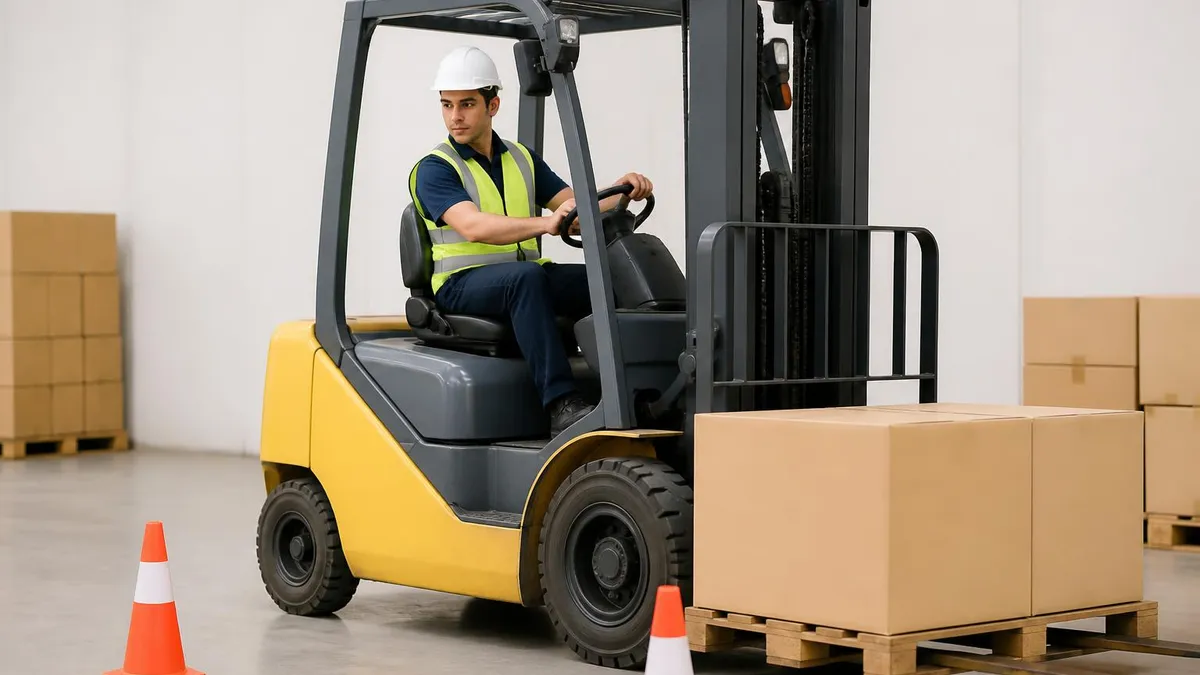
Forklift Repair Service: Complete Guide to Costs, Common Repairs, and Choosing the Right Technician
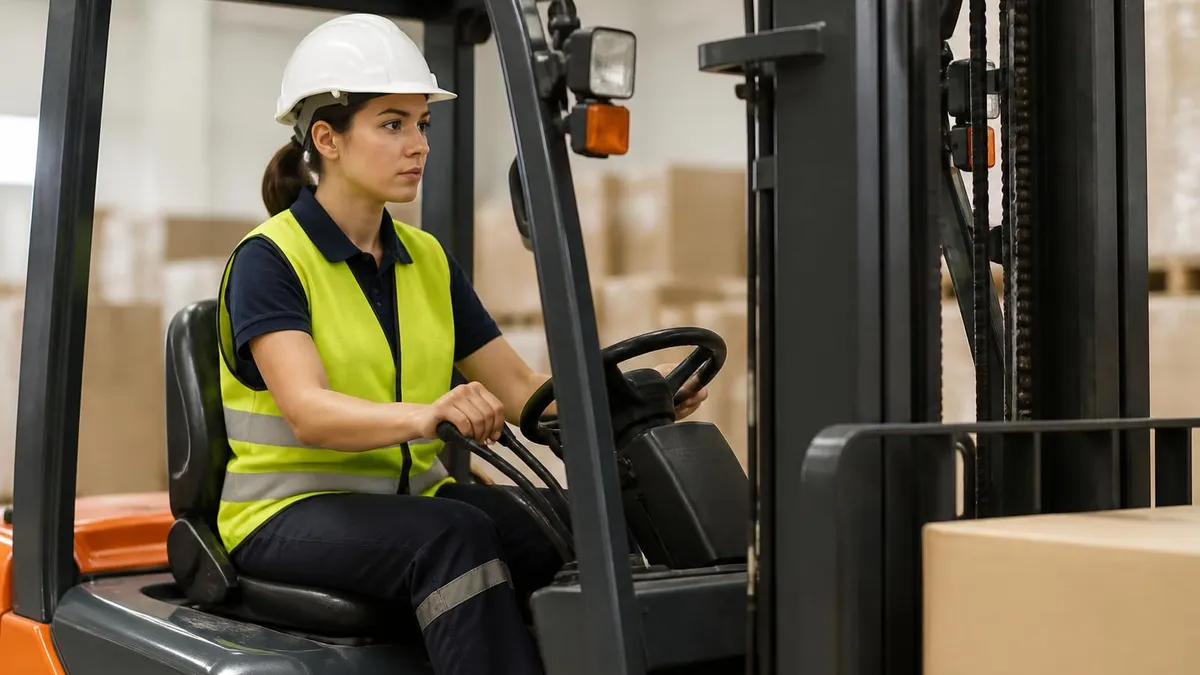
Forklift Price Guide 2026: New, Used, Rental, and Total Cost of Ownership Breakdown
About the Author

Certified Crane Operator & Skilled Trades Exam Specialist
Ferris State UniversityRobert Martinez is a Journeyman Ironworker, NCCCO-certified crane operator, and forklift trainer with a Bachelor of Science in Construction Technology from Ferris State University. He has 21 years of ironworking, rigging, and heavy equipment operation experience across high-rise and industrial construction sites. Robert prepares candidates for crane operator, rigger, forklift, and skilled trades certification examinations.