
Standard Forklift Dimensions and Specs: Complete Guide for Operators, Renters, and Buyers
Standard forklift dimensions explained for rentals, purchases & operators. Capacities, heights, turning radii & more. ✅ Full 2026 September specs guide.

When evaluating a forklift rental or planning a warehouse layout, understanding standard forklift dimensions is the single most critical step operators and facility managers overlook. A forklift that is even six inches too wide can be unable to navigate your existing racking aisles, turning a simple material-handling task into a costly operational bottleneck. Standard forklift dimensions for a counterbalance sit-down model typically range from 8 to 10 feet in length, 3.5 to 4.5 feet in width, and 7 to 8 feet in overall height — but these numbers shift significantly based on capacity class, fuel type, and attachment configuration.
The diversity among forklifts is broader than most buyers and renters realize. A 3,000-pound-capacity electric forklift built for indoor grocery distribution occupies a completely different footprint than a 36,000-pound rough-terrain unit destined for a lumber yard or construction site. Even within the same capacity class, stand up forklift models have shorter overall lengths but taller operator compartments compared to their sit-down counterparts, which directly affects clearance requirements in tight mezzanine areas. Reviewing exact specifications before committing to a forklift for sale or signing a forklift rental agreement can save thousands of dollars in aisle reconfiguration costs.
Beyond the machine's physical envelope, operators must internalize how specifications translate into on-the-job performance. The rated lift capacity almost always reflects a load center of 24 inches — meaning the load's center of gravity sits 24 inches from the face of the forks. If you routinely handle pallets that are unusually deep, oversized, or asymmetrical, the effective capacity drops dramatically.
OSHA requires that the nameplate capacity account for all attachments, so a forklift rated at 5,000 pounds bare may only safely handle 4,200 pounds when fitted with a side-shifter clamp. Certification of forklift operators explicitly covers these capacity reductions, and OSHA 29 CFR 1910.178 mandates that operators be trained on the specific equipment they will use.
Forklift training programs devote considerable time to mast and load-related dimensions because these measurements govern safe tilt angles, maximum stack heights, and the machine's overall stability triangle. The stability triangle is defined by the two front drive wheels and the single rear pivot point of the steer axle. Any load placed outside this triangle dramatically increases tip-over risk. Knowing your forklift's wheelbase and load center distance is therefore not merely an academic exercise — it is a daily safety calculation every forklift operator must perform before each lift cycle, especially when switching between truck configurations mid-shift.
Fuel type also shapes dimensional expectations in ways that surprise first-time renters. Electric forklifts carry heavy lead-acid or lithium-ion battery packs, which add 1,000 to 3,000 pounds to the counterweight area and slightly increase the rear overhang. LP-gas counterbalance models tend to be more compact in the counterweight zone because the propane cylinder occupies less volume than a battery box, yet they require outdoor or well-ventilated operating areas.
Diesel-powered large-capacity forklifts often feature wider tire spacings and reinforced frames that push overall width beyond 5 feet, which is a critical threshold for standard 10-foot-wide warehouse aisles. Reviewing forklift dimensions and specs before signing any rental agreement ensures the machine physically fits your facility.
Understanding specification sheets also becomes essential when evaluating a forklift for sale on the secondary market. Manufacturers publish data sheets listing overhead guard height, front overhang, rear overhang, turning radius, and aisle width requirements. The turning radius figure is especially important in freezer warehouses and cross-dock facilities where space is at an extreme premium. A sit-down counterbalance forklift typically needs 130 to 160 inches of aisle width for a 90-degree turn, while a reach truck can work in aisles as narrow as 96 to 108 inches — a difference that can double the storage density of a given facility footprint.
This guide walks through every major dimension category — length, width, height, mast configurations, tire sizing, and load center math — so that whether you are comparing forklift rentals near your facility, preparing for a forklift operator certification exam, or selecting the right machine for a permanent purchase, you will have the numerical and conceptual framework to make an informed, OSHA-compliant decision every time.
Forklift Dimensions by the Numbers

Key Forklift Dimension Categories Explained
Measured from the front face of the forks to the rear of the counterweight. For a standard 5,000 lb counterbalance model, OAL runs 97 to 118 inches. This number directly determines minimum turning radius and dock approach angles.
Measured across the widest point, usually the rear tires or fender flares. Most Class I and II forklifts fall between 40 and 50 inches wide. Exceeding aisle width limits by even a few inches creates compliance and collision hazards.
Includes the overhead guard and lowered mast assembly. Standard counterbalance models stand 82 to 95 inches tall with mast lowered. This figure is critical for dock door clearance, shipping container entry, and indoor ceiling heights.
Wheelbase is the distance between front and rear axles. A longer wheelbase improves stability but increases turning radius, requiring wider aisles. Typical counterbalance wheelbase spans 55 to 70 inches depending on capacity class.
The horizontal distance from the fork face to the load's center of gravity — standardized at 24 inches. Loads extending beyond this point reduce safe capacity. Always recalculate when handling non-standard pallet depths or odd-shaped cargo.
OSHA and ANSI classify forklifts into seven distinct truck types (Class I through Class VII), and each class carries its own dimensional envelope that operators and warehouse planners must understand before committing to a forklift rental or a permanent purchase. Class I covers electric motor rider trucks — the sit-down counterbalance electric forklift that dominates indoor distribution centers.
These machines typically measure 85 to 105 inches in overall length with 3,000 to 6,500 pound rated capacities, and they represent the vast majority of units available through forklift rentals near major metro areas. Their compact footprint and zero tailpipe emissions make them ideal for food-grade and pharmaceutical environments where combustion gases cannot be tolerated.
Class II includes electric motor narrow-aisle trucks such as order pickers, reach trucks, and side-loaders. These are the workhorses of high-density pallet racking systems where every inch of aisle width translates into an additional storage bay. A standard stand up forklift reach truck in this class measures roughly 68 to 78 inches in overall length and 36 to 42 inches wide — significantly more compact than a counterbalance model of equivalent capacity.
The trade-off is that Class II trucks are purpose-built for specific rack heights and configurations; operating them on uneven surfaces or outdoors is not recommended and may void warranty coverage on forklift for sale listings from reputable dealers.
Class III encompasses electric motor hand trucks and walkie-stackers — pedestrian-controlled units used for short-haul pallet moves in retail back rooms and light manufacturing. While technically forklifts under OSHA's powered industrial truck definition, their overall length rarely exceeds 60 inches and maximum lift heights are usually capped at 15 feet.
Class IV and Class V cover internal combustion engine counterbalance trucks running on LPG or diesel fuel respectively. Class IV is designed for cushion tires on smooth indoor floors, while Class V uses pneumatic tires for outdoor or rough surface operation. The pneumatic tire configuration alone adds 4 to 8 inches to overall width because the tires are significantly larger in diameter and section width than cushion rubber alternatives.
Class VI encompasses electric and internal combustion tow tractors used for pulling multiple loaded trailers across large facilities like airports or auto assembly plants. These units prioritize towing capacity over lift height and therefore have very different dimensional profiles — long coupling decks, low centers of gravity, and wide rear axle spacings.
Class VII is the rough terrain category, encompassing the massive diesel-powered units used in construction, mining, and heavy industrial applications. A Class VII forklift handling 36,000 pounds may measure over 14 feet in length, exceed 8 feet in width, and stand 10 feet tall with the mast fully lowered — dimensions that immediately eliminate most standard warehouse and distribution center applications.
For most operators seeking certification of forklift credentials, Class I and Class IV are the most commonly tested equipment types because they represent the largest share of machines in everyday commercial use. OSHA 29 CFR 1910.178(l) requires employers to evaluate each operator on the specific truck types they will actually operate, so a certification earned on a Class I sit-down electric forklift does not automatically authorize operation of a Class V pneumatic diesel counterbalance model.
The dimensional differences between these classes are significant enough that load-handling techniques, stability management, and braking distances require separate familiarization training before an operator can safely switch between them.
Rental companies typically stock the broadest selection of Class I and Class IV units because these satisfy the widest range of customer applications. When comparing forklift rentals from national providers like United Rentals, H&E Equipment, or Sunbelt, always request the full specification sheet — not just the capacity rating — so you can verify OAL, OAW, OAH, and minimum aisle width requirements before delivery day. A unit dropped at your dock that cannot physically fit through your receiving door wastes an entire workday and may incur redelivery charges from the rental house.
Dealers listing forklifts for sale in the secondary market sometimes omit critical dimensional data, particularly on older models where paper documentation has been lost. In those cases, the ANSI/ITSDF B56.1 standard provides reference dimension ranges by capacity class that you can use as a cross-check. For very precise measurements on a used unit, physically measure the machine before purchase, paying particular attention to fork carriage width, fork length, and overhead guard height — three dimensions that OSHA inspectors frequently verify during compliance audits of industrial facilities.
Electric vs. LP Gas vs. Diesel Forklift Specs Compared
An electric forklift typically carries a battery pack weighing 1,000 to 3,000 pounds mounted in the rear counterweight zone. This extra mass slightly increases rear overhang compared to LP-gas equivalents, pushing overall length up by 4 to 8 inches on most 5,000-pound-class models. However, the absence of an engine compartment allows manufacturers to keep the front overhang shorter, which improves forward visibility and reduces the minimum aisle width needed for 90-degree turns — a genuine operational advantage in dense storage environments.
Charging infrastructure also affects facility layout decisions. A standard 36-volt or 48-volt lead-acid battery requires 8 hours of charge time and occupies a dedicated charging room with ventilation to dissipate hydrogen gas. Lithium-ion options cut charge time to 1 to 2 hours and can opportunity-charge during breaks, eliminating the need for battery change-out rooms. For facilities running two or three shifts, lithium-ion electric forklifts reduce total fleet size requirements by 20 to 30 percent — a significant cost advantage over long-term forklift rental agreements or outright purchase of additional units.

Renting vs. Buying a Forklift: Dimensional Flexibility Trade-Offs
- +Rental lets you right-size the machine for each specific project without permanent commitment
- +Rental companies maintain fleets to OEM specifications, ensuring accurate dimensional data on spec sheets
- +No long-term storage footprint required — machines are returned when the job is complete
- +Short-term rentals allow operators to test different mast heights and configurations before buying
- +Rental agreements often include delivery, which lets you verify clearance fit before the machine is unloaded
- +Nationwide forklift rental networks offer 24/7 breakdown support so downtime is minimized
- −Rental rates for specialized dimensions (very narrow or very large) carry significant premium charges
- −You cannot permanently modify a rented unit to add custom attachments that alter its dimensional profile
- −Long-term rental costs exceed purchase price after 18 to 24 months of continuous use in most capacity classes
- −Availability of specific dimensional configurations can be limited in smaller markets during peak seasons
- −Rental agreements may restrict usage to paved surfaces, excluding rough-terrain applications even when dimensions match
- −Operators must re-familiarize with each rented unit's specific controls and handling characteristics, adding training time
Pre-Rental Forklift Measurement Checklist
- ✓Measure all doorway widths and overhead clearances along the planned travel route before ordering.
- ✓Confirm aisle widths in your racking system exceed the required turning radius for your selected forklift class.
- ✓Verify dock leveler capacity and surface material can support the forklift's gross vehicle weight.
- ✓Request the full OEM specification sheet — not just the rated capacity — from the rental provider.
- ✓Check the load center distance on your most common pallet type and compare it to the nameplate rating.
- ✓Confirm overhead guard height is compatible with the lowest ceiling beam or sprinkler head in your facility.
- ✓Verify the lowered mast height fits under any overhead doors or low-clearance areas on the travel path.
- ✓Confirm tire type (cushion vs. pneumatic) matches your floor surface and outdoor grade requirements.
- ✓Ensure the forklift's electrical voltage matches your battery charging infrastructure if renting electric.
- ✓Confirm all operators are trained and certified on the specific forklift class and type being rented or purchased.
Lowered Mast Height Is Not the Same as Overall Height
Many operators check the overall machine height but forget to separately verify the lowered mast height — the measurement from the ground to the top of the mast when fully retracted. On a triple-stage mast, this can be 12 to 18 inches taller than the overhead guard. Always check both figures before entering a shipping container, low-clearance dock door, or cold-storage facility where ceiling heights are at an absolute premium.
Mast configuration is arguably the most operationally consequential dimension decision in forklift selection, yet it is the specification that receives the least attention from operators who focus almost exclusively on rated lift capacity. A forklift's mast determines not just how high it can lift a load, but also how tall the machine stands when the mast is in the lowered travel position — and those two numbers are very different.
A triple-stage full-free-lift mast on a 5,000-pound counterbalance model may achieve a maximum fork height of 240 inches (20 feet) while maintaining a collapsed mast height of only 83 inches. This makes it compatible with standard 8-foot-high dock doors and shipping container interiors.
The four primary mast types each have distinct dimensional implications for forklift operators and facility planners. The simplex, or single-stage mast, is the most basic design: the inner mast section telescopes directly out of the outer mast, and there is no free-lift phase. This means the forks begin to rise only after the entire mast starts extending upward, which makes simplex masts impractical for container loading or low-clearance warehouse applications.
Duplex masts add a free-lift phase where the forks rise approximately 5 to 8 inches before the outer mast begins to extend, providing just enough clearance improvement for most dock-level operations without requiring massive overhead clearance throughout the travel route.
Triplex masts — the most common configuration on modern warehouse forklifts — offer the best combination of compact lowered height and generous maximum lift height. A triplex mast on a 6,000-pound capacity electric forklift typically collapses to 82 inches while reaching fork heights of 188 to 240 inches, making it compatible with four and five-tier pallet racking systems that are the backbone of modern high-density warehousing. The free-lift on a triplex is usually 5 to 10 percent of the maximum lift height, providing ample low-clearance maneuverability before the outer sections begin extending toward the ceiling.
Quad masts (four-stage) are specialized configurations used when maximum lift height is required in facilities where the collapsed mast height must remain below 85 inches — typically specialized food distribution freezers or automotive parts warehouses with particularly tall racking and low-clearance internal doorways. These masts can achieve 35-foot lift heights with a lowered profile under 7 feet, but they add significant weight and complexity to the forklift's hydraulic system. The additional stages reduce stability at maximum elevation, which is why OSHA and equipment manufacturers require operators to understand forward tilt restrictions at elevated fork heights.
Fork dimensions are another frequently misunderstood specification area. Standard ITA (Industrial Truck Association) Class II fork carriages, which are the most common for 4,000 to 6,000-pound capacity units, accommodate forks 48 inches long and 4 to 5 inches wide with a 1.5-inch blade thickness.
Longer forks — 60 or 72 inches — are available for handling oversized loads or double-stacking pallets end-to-end, but they dramatically increase the forklift's overall length when attached and must be factored into all turning radius and aisle-width calculations. Adding 12 inches of fork length can increase the required aisle width by 8 to 10 inches for a 90-degree turn.
Attachments compound dimensional complexity further. A side-shifter adds 3 to 5 inches to the fork carriage depth, a paper roll clamp can add 18 to 24 inches to the overall front overhang, and a rotator attachment changes both the depth and the weight distribution of the entire front assembly.
Every attachment that changes the load center distance or overall machine envelope requires a re-evaluation of rated capacity and potentially a new nameplate — a legal requirement under OSHA 29 CFR 1910.178(e)(1). Forklift training programs certified under OSHA standards cover attachment-related capacity reductions in detail because this is one of the most common sources of tip-over incidents in facilities that regularly swap between different attachment configurations.
When reviewing a forklift for sale on the used market with existing attachment points, always request the manufacturer's attachment approval documentation. Unapproved attachments installed by previous owners may have permanently altered the machine's stability characteristics without any corresponding update to the nameplate capacity data — creating a hidden safety hazard that a visual inspection will not reveal. A qualified forklift technician can evaluate attachment compatibility and, where necessary, arrange for a new stability test and nameplate issuance from the original manufacturer or a certified third-party testing agency.

Under 29 CFR 1910.178(e)(1), any forklift modified with an attachment that affects capacity or safe operation must have its nameplate updated to reflect the new ratings. Operating a modified forklift without an updated nameplate is an OSHA violation subject to citations and fines. Always verify that any used forklift for sale or rented unit with installed attachments carries current, attachment-specific capacity documentation before allowing operators to use it.
Certification of forklift operators is not optional under US federal law, and understanding forklift dimensions is a core component of the required training curriculum. OSHA 29 CFR 1910.178(l) mandates that every powered industrial truck operator receive both formal training (classroom or computer-based instruction) and practical training (hands-on evaluation by a qualified trainer) before operating any forklift without supervision.
The training must cover the specific type of truck the operator will use, which means dimensional awareness — how wide the machine is, how high the mast extends, what clearances are required — is a legally required training topic, not an optional enhancement.
The practical component of forklift training specifically tests whether operators can accurately judge clearances during real maneuvers. A trained evaluator will observe the candidate navigating through simulated narrow aisles, operating near overhead obstructions, and handling loads at elevation to confirm that the operator maintains safe distances from racking uprights, columns, and other equipment. Candidates who pass demonstrate an internalized understanding of the machine's dimensional envelope — they know instinctively how much margin exists between the fork tips and a rack leg, or between the overhead guard and a ceiling-mounted fire suppression line.
Forklift operator certification must be renewed at least every three years under OSHA requirements, and more frequently if the operator is observed operating unsafely, is involved in a near-miss or accident, or is assigned to a different type of forklift than the one covered by their existing certification.
This renewal requirement is particularly relevant when a facility upgrades its fleet from one capacity class or mast configuration to another — even experienced operators need formal familiarization with the new machine's dimensional characteristics before resuming independent operation. Many employers address this through brief but documented hands-on orientation sessions that specifically highlight dimensional differences between the old and new units.
Third-party forklift training providers and community colleges offer certification programs that range from half-day to two-day formats depending on the operator's prior experience level. The cost of forklift training typically runs from $75 to $250 per operator for group sessions, rising to $300 to $500 for individualized training on specialized equipment types.
Employers are legally responsible for ensuring that their training program meets OSHA's content requirements, which include a specific section on truck capacity, stability, and the physical dimensions that govern safe load handling. Cutting corners on training to reduce short-term costs creates enormous long-term liability exposure when an undertrained operator causes a tip-over, rack strike, or pedestrian injury.
Online forklift certification programs have grown in popularity since 2020, and many OSHA-compliant curricula now deliver the formal training component via video modules and interactive quizzes before following up with an in-person practical evaluation. This hybrid model is convenient and cost-effective, but the practical hands-on evaluation cannot be completed online — OSHA is explicit that a qualified person must physically observe each operator demonstrating competence on the actual equipment.
Practice tests and quiz tools are valuable for reinforcing the formal training content, particularly for questions about load capacity math, stability triangle geometry, and dimensional clearance requirements that appear on employer evaluation assessments.
Operators who work across multiple facility types — temporary staffing agency workers, third-party logistics employees, and construction equipment operators — benefit most from a thorough foundational understanding of how dimensions vary across forklift classes.
When you understand that a stand up forklift has a fundamentally different turning envelope than a counterbalance sit-down, or that a triple-stage mast changes your overhead clearance requirements by 18 inches compared to a duplex, you can adapt safely and quickly to new machine assignments without requiring a full re-certification cycle from scratch. This dimensional fluency is what distinguishes an experienced forklift operator from a technically certified but practically inexperienced one.
For facilities that rotate equipment through forklift rental agreements rather than maintaining a permanent fleet, dimensional awareness is especially critical for supervisors and safety managers. Establishing a facility-specific approved-equipment list — specifying maximum OAL, OAW, OAH, and minimum aisle width requirements — before contacting forklift rentals near your location ensures that the rental provider delivers a machine that is operationally compatible with your space. Post this list in your receiving office so that any supervisor who accepts a delivery can quickly verify compliance before the driver unhooks and leaves the site.
Applying dimensional knowledge in day-to-day forklift operation requires more than memorizing specification numbers — it demands that operators develop spatial awareness habits that keep those dimensions front of mind during every shift.
One of the most effective habits is the pre-shift walk-through, where the operator physically travels the planned route on foot before mounting the forklift, noting any changes in aisle configuration, newly placed obstacles, or overhead hazards that have appeared since the last shift. Construction in adjacent areas, temporarily repositioned rack sections, and maintenance equipment left in travel lanes are among the most common causes of clearance incidents that a brief walk-through would have prevented.
Load stacking height is a dimensional variable that changes multiple times per shift, and operators must constantly recalculate their effective machine height as loads are added to or removed from the forks. A 5,000-pound-class forklift with a load stacked to 60 inches above fork height now presents a combined obstruction height — forks plus load — that may exceed the overhead guard height of the machine itself.
OSHA requires that loads be transported with forks lowered to approximately 6 to 8 inches above ground level in travel position, but even at that height a tall load can snag overhead sprinkler heads, electrical conduit, or racking cross-beams if the operator does not adjust the planned route to avoid low-clearance zones.
Tire condition directly affects the effective dimensional envelope of a forklift in operation. Worn cushion tires reduce overall machine height by 0.5 to 1.5 inches and alter the load center distance by shifting the entire machine slightly closer to the ground. While this may seem minor, it changes the tilt geometry of the mast and can affect the rated capacity at specific lift heights.
OSHA and ANSI standards require that tires be maintained in serviceable condition, and many forklift manufacturer warranties specify minimum tire tread depth requirements that preserve the original dimensional specifications. For rented units, inspect tire condition during pre-delivery acceptance and document any pre-existing wear before signing the rental agreement.
Battery weight management in electric forklifts is an often-overlooked dimensional and stability factor. As a lead-acid battery discharges, it loses essentially no mass — all of the energy is extracted electrochemically without any physical material leaving the battery. This means the counterbalancing effect of the battery remains constant throughout the shift, unlike LP-gas models where the propane cylinder becomes progressively lighter as fuel is consumed.
However, if a facility uses opportunity charging and tops off a partially discharged battery with a hot-swap replacement of a different weight, the forklift's stability characteristics can shift measurably. Always verify that replacement batteries match the OEM-specified weight range, not just voltage and ampere-hour ratings.
Forklift dimensions also interact with loading dock infrastructure in ways that create hazards for inattentive operators. A standard North American loading dock stands approximately 48 to 52 inches above ground level, and dock plates or levelers bridge the gap to trailer beds that may be positioned anywhere from 44 to 58 inches high depending on trailer type and loading state.
When a forklift drives from a dock onto a truck trailer, the combination of the transition slope and the reduced clearance inside the trailer creates a situation where the lowered mast height — not just the overhead guard — determines whether the entry is safe. Many tip-over incidents occur at this exact transition point when operators fail to account for the trailer's reduced interior height relative to the warehouse ceiling they just left.
Documentation habits are the final practical dimension of forklift dimensional awareness that separates good operators from excellent ones. Recording the specific forklift model, serial number, and key dimensions at the start of each shift or rental period creates a paper trail that supports insurance claims, OSHA investigations, and equipment maintenance scheduling.
Many facilities use pre-shift inspection checklists that include a dimensional verification section — confirming that the fork length matches the task, the mast configuration is appropriate for the day's lift heights, and any attachments are properly secured and documented. This takes less than two minutes but provides substantial protection against the operational and legal consequences of using mismatched equipment for a critical lift.
Whether you are preparing for a forklift operator certification exam, evaluating forklift rentals for a short-term project, or selecting a forklift for sale to add to your permanent fleet, dimensional mastery is the competency that underlies safe, efficient, and compliant forklift operation across every industry and application. The numbers in a specification sheet are not bureaucratic details — they are the precise parameters of a physical machine operating in a real physical space, and the gap between those dimensions and the surrounding environment is where safety either holds or fails.
Forklift Questions and Answers
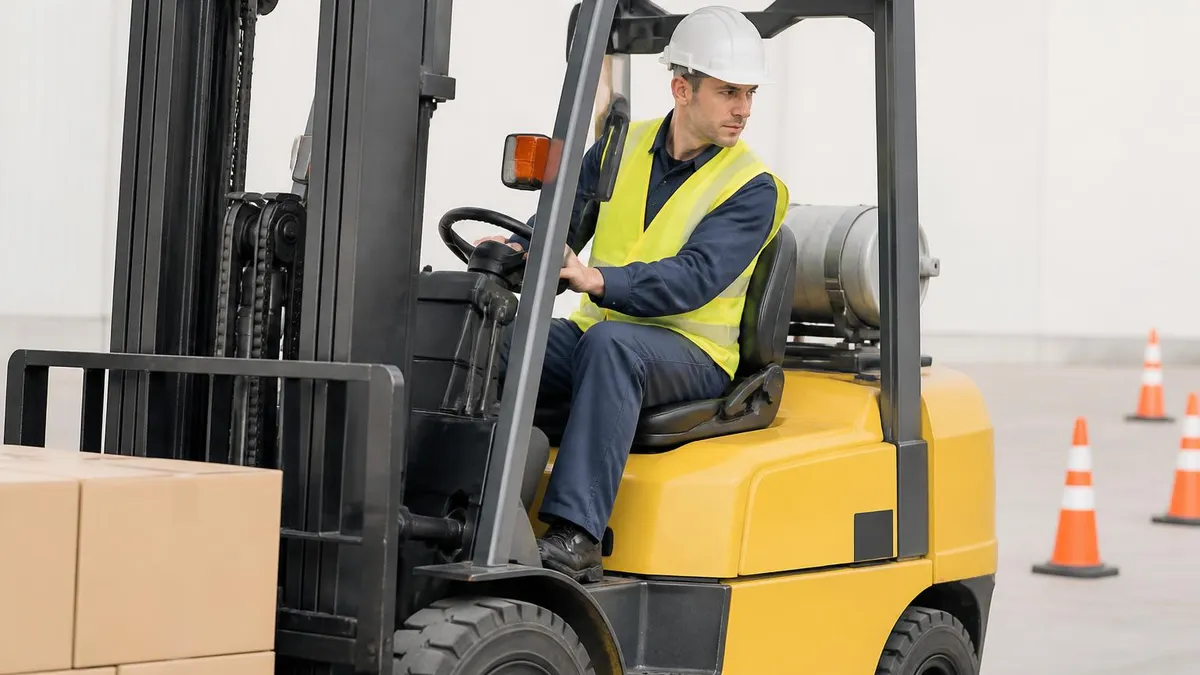
Forklift Rentals: Complete Guide to Pricing, Types, and Operator Requirements
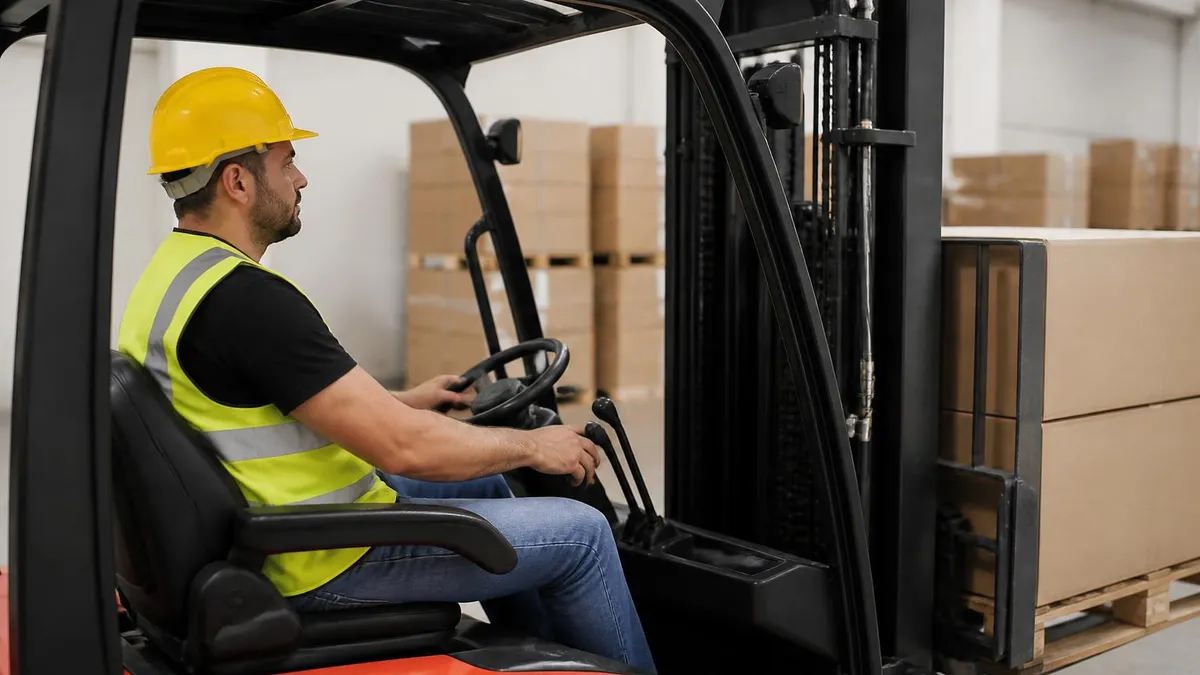
Forklift Hydraulic Fluid: Complete Guide to Types, Specifications, Change Intervals, and Troubleshooting for 2026
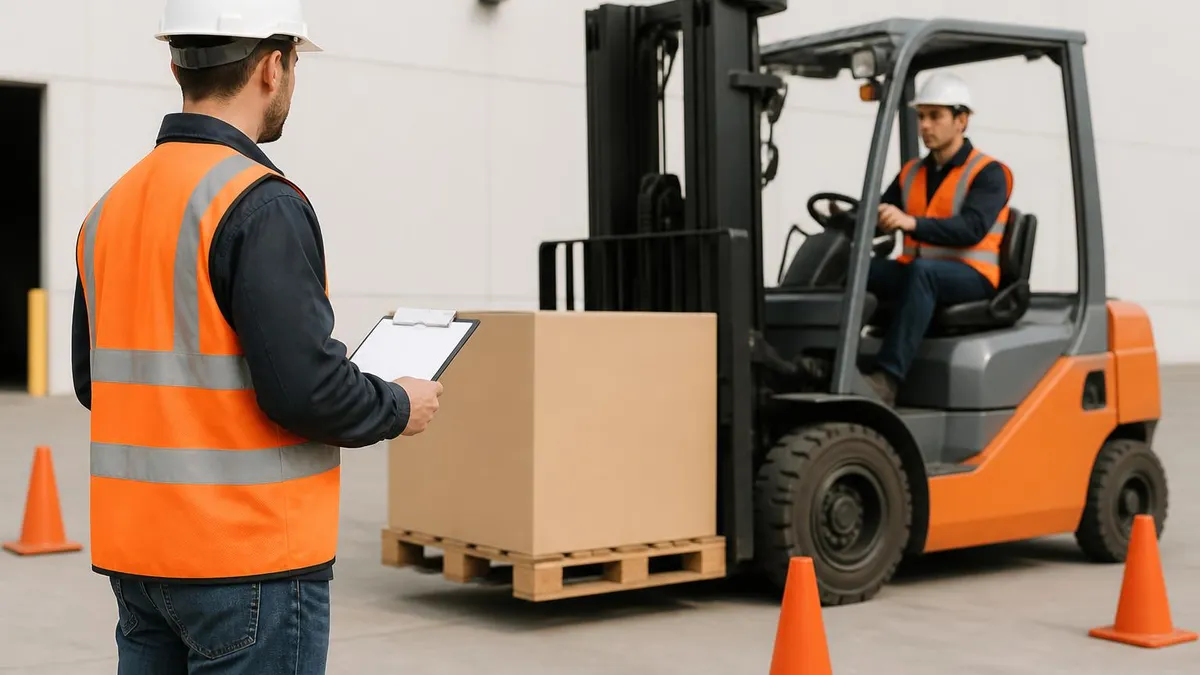
Forklift Parts and Maintenance: Complete Guide to Batteries, Chargers, and Replacement Components
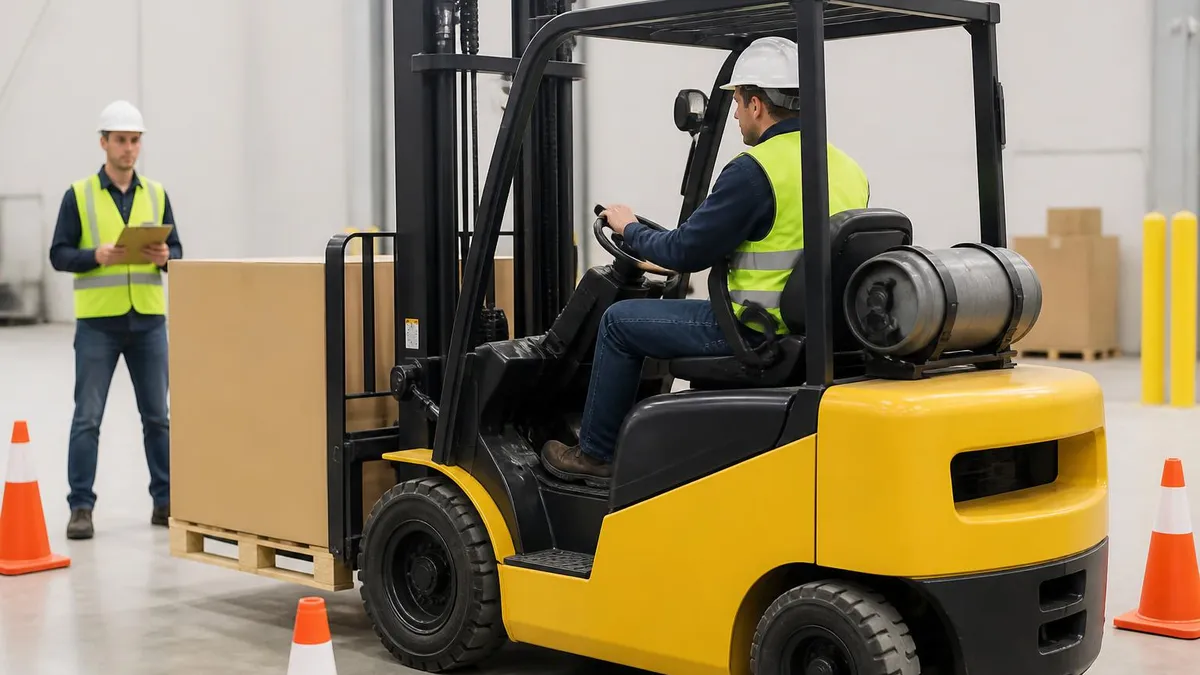
Big Forklift Guide: Heavy-Duty Lift Trucks, Capacity Classes, Rental Costs, and Operator Requirements
Forklift License Renewal: Complete Guide to Forklift License Expiry, OSHA Recertification, and Operator Requirements for 2026
About the Author

Certified Crane Operator & Skilled Trades Exam Specialist
Ferris State UniversityRobert Martinez is a Journeyman Ironworker, NCCCO-certified crane operator, and forklift trainer with a Bachelor of Science in Construction Technology from Ferris State University. He has 21 years of ironworking, rigging, and heavy equipment operation experience across high-rise and industrial construction sites. Robert prepares candidates for crane operator, rigger, forklift, and skilled trades certification examinations.