
Forklift Class Types: Complete Guide to Forklift License Classes, Training, and Certification Requirements
Learn all forklift class types, license requirements & training steps. 🎯 Complete US guide to OSHA certification for every forklift operator.

Forklift rental demand across the United States has surged in recent years, and with it comes a growing need for properly certified operators who understand forklift class types inside and out. Whether you are entering the warehouse industry for the first time or managing a fleet of forklifts at a distribution center, knowing which class of powered industrial truck you operate is the foundation of every OSHA-compliant training program. The seven OSHA-defined forklift classes cover everything from electric motor rider trucks to rough-terrain vehicles, and each class carries its own certification requirements, inspection protocols, and operational safety rules.
Understanding forklift class types is not just a regulatory checkbox — it directly affects workplace safety, productivity, and hiring eligibility. OSHA Standard 29 CFR 1910.178 requires that every forklift operator be trained and evaluated on the specific types of trucks they will use in actual workplace conditions. That means an operator certified on a Class I electric counterbalanced forklift cannot simply jump onto a Class IV internal combustion engine truck without additional training. Employers who ignore these distinctions face fines that can reach $15,625 per serious violation and $156,259 for willful or repeated violations.
The certification of forklift operators involves three core components: formal instruction, practical training, and a workplace evaluation. Formal instruction can be delivered in a classroom, through online video modules, or via written materials. Practical training must occur in the actual work environment using the specific equipment the operator will handle. The workplace evaluation is conducted by a qualified trainer who observes the operator performing real job tasks. All three elements must be completed before a new operator is authorized to drive any powered industrial truck unsupervised.
Forklift training programs vary in length depending on the class type and the operator's prior experience. A brand-new operator learning to drive a stand up forklift — the narrow-aisle reach truck common in high-density warehouses — may spend three to five full days in training before passing their evaluation. An experienced operator adding a new class to their certification profile might complete the process in a single eight-hour session. Most employers document this training with a certification card and a written record that includes the date of training, the equipment covered, and the name of the evaluating trainer.
Electric forklift models have become increasingly popular as warehouses invest in cleaner, quieter, indoor-safe equipment. Classes I, II, and III all use electric power, making them the go-to choice for grocery distribution centers, pharmaceutical warehouses, and cold-storage facilities where internal combustion fumes would be hazardous. These trucks require operators to understand battery management, charging cycles, and the unique handling characteristics of electric drivetrains — all topics covered in class-specific certification training.
For workers exploring forklift license classes and the equipment available through rental providers, understanding which class matches your worksite conditions is critical before signing any rental agreement. Rental companies typically require proof of operator certification before releasing equipment, and choosing the wrong class of truck for your application can create both safety hazards and costly inefficiencies. A rough-terrain Class VII telehandler, for example, requires a fundamentally different skill set than the Class V internal combustion counterbalanced truck used in a standard loading dock environment.
This complete guide walks through all seven OSHA forklift classes, the specific training and certification requirements for each, the costs and timelines involved, and the practical steps you need to take to become a fully certified forklift operator in the United States. Whether you are targeting a career as a warehouse forklift operator, preparing for a recertification evaluation, or simply trying to understand what the credential covers, the sections below provide everything you need to know to get certified, stay compliant, and operate safely.
Forklift Certification by the Numbers

The 7 OSHA Forklift Classes Explained
Sit-down counterbalanced forklifts powered entirely by battery. Common in grocery warehouses, manufacturing plants, and food-distribution facilities. Capacities typically range from 3,000 to 12,000 lbs. Produce zero direct emissions, making them ideal for enclosed indoor environments with strict air-quality requirements.
Includes reach trucks, order pickers, and turret trucks designed for high-density storage aisles as narrow as 8 feet. Operators must master precise mast control at heights exceeding 30 feet. Widely used in pharmaceutical and e-commerce fulfillment centers where vertical storage space is maximized.
Walkie pallet jacks and pallet stackers where the operator walks alongside or stands on a small platform. Load capacities range from 2,000 to 8,000 lbs. Extremely common in retail back-of-house operations, grocery receiving docks, and any facility that needs to move pallets short distances efficiently.
Class IV uses cushion tires for smooth indoor floors; Class V uses pneumatic tires for outdoor use on loading docks and uneven terrain. Both run on liquid propane, gasoline, or diesel. Capacities from 2,500 to 30,000+ lbs. Require ventilation planning due to exhaust emissions.
Class VI covers electric and internal combustion tow tractors used in airports and manufacturing. Class VII includes rough-terrain forklift models — telehandlers and straight-mast trucks — designed for construction sites, lumber yards, and agriculture where ground conditions are unpredictable and load heights can exceed 20 feet.
Forklift training in the United States is governed entirely by OSHA's Powered Industrial Trucks standard, which lays out explicit requirements for what must be covered, who can provide it, and how often operators must be re-evaluated. Every employer who operates forklifts is legally responsible for ensuring that their workforce receives proper instruction before touching a powered industrial truck. Unlike many professional licenses, there is no single national forklift license issued by a government agency — instead, the certification is employer-issued and tied to specific equipment types and specific worksites.
Formal instruction covers the theory behind safe forklift operation. This includes understanding load capacity and the load capacity plate on every truck, stability principles and the concept of the stability triangle, pre-operation inspection procedures, fueling and battery-charging safety, pedestrian awareness protocols, and the specific hazards associated with each class of equipment. For electric forklift models, formal instruction also covers battery water levels, charging room safety, and the risks of working near corrosive battery acid. Internal combustion trucks require additional training on exhaust ventilation, propane cylinder handling, and the fire risks associated with liquid fuel systems.
Practical training takes place in the actual work environment using the equipment the operator will be authorized to use. A trainer — who must be qualified through both knowledge and experience with the truck type — demonstrates each operational task and then supervises the trainee through repeated practice. This hands-on portion typically includes traveling with and without loads, entering and exiting aisles, positioning loads on racking, managing uneven surfaces, and conducting pre-shift inspections. For a stand up forklift operator in a narrow-aisle environment, practical training often includes exercises on managing the truck's unique single-rear-wheel steering and high-reach mast controls.
The workplace evaluation is the final gate before authorization. The qualified trainer observes the operator performing the full range of tasks they will carry out on the job and certifies in writing that the operator has demonstrated safe and competent performance. OSHA requires that this evaluation happen in the specific workplace where the operator will work, using the specific truck model they will operate. If an operator transfers to a new facility or is assigned a different class of equipment, re-evaluation is required even if the operator is experienced and already certified on other truck types.
Refresher training is mandatory under specific conditions: after the operator is observed operating in an unsafe manner, after an accident or near-miss incident, after an evaluation that reveals unsafe operation, and after changes in the workplace conditions or the type of truck being used. Even without these triggers, OSHA requires that all operators be evaluated at least once every three years. Many employers set internal recertification intervals of two years to stay comfortably ahead of the regulatory minimum and to reinforce safety habits as equipment and procedures evolve.
Online forklift training has grown significantly in recent years, and many providers offer OSHA-compliant course materials through video platforms and interactive modules. However, it is critical to understand that online training can only fulfill the formal instruction component of the certification requirement. The practical hands-on training and workplace evaluation must still occur in person with a qualified trainer. Operators who receive only online training without completing the hands-on components are not fully certified and their employers remain in violation of OSHA standards.
Third-party training providers — including community colleges, vocational schools, and private safety companies — offer complete certification packages that include classroom instruction, hands-on equipment time, and written documentation. These programs typically cost between $150 and $500 per operator and take one to three days to complete. Many industrial staffing agencies also provide certification training as part of their placement services, which can be a cost-effective entry point for workers who are new to the forklift operator career path and need to build their credentials before applying for permanent positions.
Electric Forklift vs. Internal Combustion: What Every Forklift Operator Must Know
Electric forklift models — covering OSHA Classes I, II, and III — are powered by lead-acid or lithium-ion batteries and produce zero direct emissions during operation. This makes them the preferred choice for indoor environments such as cold-storage warehouses, pharmaceutical distribution centers, and food-processing plants. A fully charged battery typically provides six to eight hours of continuous operation, after which the battery must be swapped or recharged in a designated battery-charging area equipped with proper ventilation and eyewash stations.
Training for electric forklifts includes battery management procedures that are unique to this class of equipment. Operators learn to check electrolyte levels in lead-acid batteries, recognize signs of a failing cell, and understand the risks of overcharging. Lithium-ion battery systems used in newer electric models require less maintenance but demand operator awareness of battery management system alerts and temperature thresholds. Because electric forklifts weigh significantly more than their internal combustion counterparts — due to the heavy battery pack that also serves as counterweight — operators must account for this extra weight when assessing floor load ratings in older facilities.

Pursuing Forklift Certification: Pros and Cons for Operators
- +Immediate access to a large and growing job market with over 855,000 certified operator positions in the US
- +Relatively low cost to certify — most programs run $150 to $500 and take only one to three days
- +Certified forklift operators earn an average of $18 to $22 per hour, well above minimum wage in most states
- +Certification is recognized nationwide, making it portable across employers, industries, and geographic regions
- +Multiple class certifications dramatically increase job flexibility and earning power within warehousing and logistics
- +Strong long-term demand driven by e-commerce growth, nearshoring trends, and infrastructure investment
- −Certification is equipment-specific and employer-evaluated — there is no universal license that covers all forklifts
- −Recertification is required every three years, and more often after accidents or unsafe operation incidents
- −Online-only training does not satisfy OSHA requirements — hands-on evaluation in the actual work environment is mandatory
- −Operators who change employers or worksites may need re-evaluation even if they are already certified on the same truck class
- −Physical demands of the job — extended sitting or standing, repetitive motions, vibration exposure — can cause long-term health issues
- −Forklift accidents remain one of the leading causes of warehouse fatalities, creating ongoing psychological and physical risk
Forklift Operator Certification Checklist: Complete These 10 Steps
- ✓Identify the exact OSHA class (I through VII) of every forklift you will operate at your worksite.
- ✓Complete the formal instruction component covering load capacity, stability triangle, and pre-operation inspections.
- ✓Attend hands-on practical training sessions supervised by a qualified trainer on each truck class you need.
- ✓Pass your workplace evaluation conducted by a qualified trainer who observes your real job tasks.
- ✓Obtain written certification documentation listing the date, equipment covered, and trainer's name.
- ✓Review and understand the load capacity data plate on every specific truck model you are authorized to operate.
- ✓Complete battery safety or fueling safety training specific to your truck class (electric or internal combustion).
- ✓Understand your employer's internal recertification schedule and mark your re-evaluation due date on your calendar.
- ✓Report any near-miss incidents immediately, since OSHA requires refresher training after any such event.
- ✓Keep a personal copy of your certification records in case you change employers or need to verify credentials quickly.
OSHA Does Not Issue a National Forklift License — Your Employer Does
Many operators are surprised to learn that no government agency issues a forklift license card. Under OSHA 29 CFR 1910.178(l), certification is entirely employer-administered. This means your certification is only valid at the employer who issued it, for the specific equipment types and worksites covered in your training. When you change jobs, your new employer must conduct their own evaluation before authorizing you to operate — even if you have 15 years of experience and existing documentation from your previous employer.
The cost of forklift certification varies significantly depending on the training format, the number of classes covered, and whether the employer or the operator pays for the program. Employer-provided training is the most common scenario in large warehousing and manufacturing companies, where safety departments maintain in-house trainers who certify new hires as part of the onboarding process.
In these cases, the operator incurs no out-of-pocket cost. However, workers who are pursuing certification independently — either to improve their job market position or because their employer does not provide training — should expect to spend between $150 and $500 for a single-class certification program through a third-party provider.
Community college workforce development programs are among the most affordable options, often offering complete forklift training packages for $150 to $250. These programs typically run over one to two days and include both the classroom instruction and hands-on equipment time required by OSHA. Some community colleges also partner with local employers to offer free or subsidized training as part of regional workforce development initiatives, which can eliminate the cost barrier for workers transitioning from other industries into warehousing and logistics careers.
Private forklift training companies offer the widest range of course formats, including on-site training at your employer's facility, open-enrollment classes at their training centers, and hybrid programs that combine online formal instruction with scheduled hands-on evaluation sessions. On-site corporate training packages for groups of 10 or more operators typically cost $500 to $1,500 total — a much lower per-person cost than individual enrollment. Staffing agencies specializing in warehouse and logistics labor frequently offer free certification training as part of their placement services, recouping the cost through the agency fee charged to employers when workers are placed in positions.
The timeline from beginning training to receiving your certification documentation depends on your prior experience and the number of truck classes you are pursuing. A first-time operator with no prior equipment experience should plan for three to five days of training for a single class certification.
An experienced operator adding a second class — such as a stand up forklift reach truck certification for someone already certified on a sit-down counterbalanced truck — can typically complete the training in one full day. Operators pursuing certification on multiple classes simultaneously should allow one to two weeks of training time with daily practice sessions to build the motor skills required for safe independent operation.
Recertification costs are generally lower than initial certification because the operator already has foundational knowledge and skills. Many employers handle three-year recertification evaluations internally at no cost to the operator. Third-party recertification programs typically cost $75 to $200 and can often be completed in a half-day, covering a review of updated OSHA standards, refresher practice on the equipment, and a supervised evaluation. If the operator has been involved in an accident or near-miss incident, more extensive refresher training may be required before re-evaluation, which could extend the timeline and increase the cost of recertification.
Forklift for sale listings often include information about the class and capacity of the equipment, which is directly relevant to the certification training required for new owners or operators. When a company purchases used forklifts, they must ensure that their operators receive class-specific training on the acquired equipment before it enters service, even if those operators are already certified on similar trucks from other manufacturers. Differences in mast controls, load-weight capacities, turning radius, and safety systems between models — even within the same OSHA class — justify hands-on familiarization and re-evaluation as a best practice regardless of regulatory minimums.
Forklift rentals are another scenario where certification costs and timelines become particularly important. Companies that rent forklifts for short-term projects — construction buildouts, seasonal inventory surges, or equipment replacement during repairs — must confirm that their operators hold valid certification for the rented equipment class before the rental period begins.
Forklift rental companies in most US markets require a signed certification declaration before releasing equipment, and some require physical documentation or a brief on-site check-out evaluation. Failing to have certified operators for rented equipment creates both OSHA liability and potential insurance coverage issues if an accident occurs during the rental period.
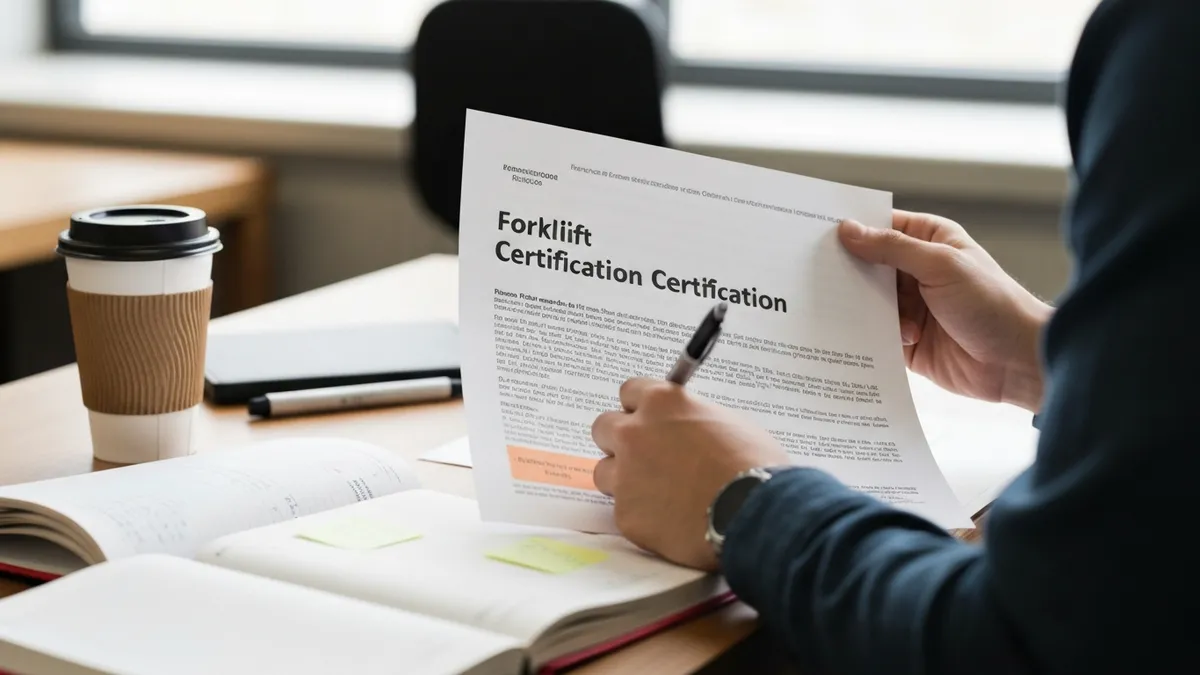
Many companies assume that renting a forklift rather than owning one reduces their OSHA liability — it does not. OSHA 29 CFR 1910.178 applies to any powered industrial truck operated in a workplace, regardless of whether the equipment is owned, rented, or leased. If an uncertified operator is injured while using a rented forklift, the host employer faces the same citation risk — up to $15,625 per violation — as they would with owned equipment. Always verify operator certification before any rental period begins.
A career as a forklift operator offers a well-defined and accessible pathway into the logistics, warehousing, and manufacturing industries. Entry-level operators with a single-class certification — typically Class I or Class IV — start at hourly wages between $16 and $19 in most US markets, with higher wages in metropolitan areas with strong warehouse infrastructure such as the Inland Empire in California, the Dallas-Fort Worth metroplex, and the Chicago logistics corridor.
With two to five years of experience and multi-class certification, experienced operators routinely earn $20 to $26 per hour, and those who add specialized skills such as Class II narrow-aisle reach truck or Class VII telehandler operation can reach $28 or more per hour in competitive labor markets.
The fastest career advancement path for forklift operators typically involves accumulating certifications across multiple classes while simultaneously building knowledge in areas that complement the operator role — such as inventory management systems, forklift maintenance basics, and safety leadership. Operators who can troubleshoot common forklift issues, conduct thorough pre-shift inspections, and mentor new trainees are valuable to employers and are often the first considered for lead operator, training coordinator, and warehouse supervisor positions. Many warehouse supervisors and logistics managers in the industry started their careers as certified forklift operators and advanced through a combination of equipment expertise and demonstrated leadership.
The demand for certified forklift operators has remained consistently strong over the past decade and shows no signs of decreasing. E-commerce growth continues to drive warehouse construction and expansion across the United States, with Amazon, Walmart, Target, and hundreds of third-party logistics providers opening new fulfillment centers annually. Each new facility requires dozens to hundreds of certified operators, creating sustained entry-level job opportunities in virtually every major metropolitan area. The Bureau of Labor Statistics projects continued growth in material moving occupations through 2032, with forklift operation remaining among the most in-demand skilled trades in the warehouse and logistics sector.
Forklifts for sale on the secondary market also create opportunities for entrepreneurial operators who want to build their own forklift services businesses. Independent forklift operators who are fully certified across multiple classes and own their own equipment can contract directly with small manufacturers, construction companies, and event logistics providers who need occasional forklift services without the overhead of maintaining their own equipment fleet. This business model requires business insurance that covers both the equipment and operator liability, but it can be highly profitable for experienced operators in markets where forklift rentals are expensive or availability is limited.
Military veterans transitioning to civilian careers are an important and growing segment of the forklift operator workforce. Many veterans gained relevant equipment operation experience during their service — driving heavy vehicles, operating cranes, or managing logistics in field environments. Veterans can often apply their GI Bill benefits toward forklift certification programs at community colleges and vocational training centers, reducing the out-of-pocket cost to near zero.
Several major warehouse employers including Amazon, Home Depot, and UPS have dedicated veteran hiring programs that include forklift certification training as part of their onboarding, making the transition from military to warehouse logistics careers highly structured and accessible.
For operators interested in expanding beyond standard warehouse work, forklift rentals in the construction sector offer particularly interesting opportunities. Construction site forklift operators — typically Class V and Class VII certified — work on building sites, lumber yards, masonry supply companies, and infrastructure projects. These roles often pay a premium over standard warehouse rates due to the more complex terrain, variable load types, and greater independence required. Many construction forklift operators are employed by equipment rental companies rather than construction firms directly, giving them exposure to a wide variety of jobsite environments and equipment models throughout their careers.
Union membership is another factor that can significantly affect forklift operator wages and career trajectory. In heavily unionized industries such as longshore operations, automotive manufacturing, and grocery distribution, union forklift operators typically earn higher wages, better benefits, and more structured advancement pathways than non-union counterparts.
The International Longshore and Warehouse Union (ILWU), the United Auto Workers (UAW), and the United Food and Commercial Workers (UFCW) all represent significant numbers of certified forklift operators. Union contracts typically specify equipment certification requirements, training reimbursement provisions, and recertification procedures, providing operators with clear rights and employer obligations that go beyond the minimum OSHA standards.
Preparing effectively for your forklift certification evaluation requires a combination of study, hands-on practice, and mental preparation for the specific scenarios your evaluator will observe. The most common areas where trainees struggle during workplace evaluations are pre-shift inspection procedures, load-handling precision, and pedestrian awareness. Evaluators watch closely for operators who rush through pre-shift inspections, skip steps in the inspection sequence, or fail to document deficiencies found during the inspection. Taking the time to learn the full OSHA-required inspection checklist and practicing it consistently from day one of training builds the habits that evaluators want to see.
Load-handling precision is another area where new operators frequently lose points during evaluations. This includes approaching the load squarely, centering the forks correctly before engaging the pallet, tilting the mast back to stabilize the load during travel, traveling at a safe speed with the load at the correct travel height (typically 6 to 10 inches above the floor), and placing loads on racking with controlled, deliberate movements.
Rushing any of these steps — or failing to check overhead clearance before raising the mast — are among the most common errors that lead to evaluation failures and to real-world accidents in production environments.
Pedestrian awareness is perhaps the most safety-critical skill tested during forklift certification evaluations. OSHA data consistently shows that pedestrian-forklift interactions are a leading cause of serious forklift injuries and fatalities. Evaluators watch for operators who sound the horn at intersections and blind corners, make eye contact with pedestrians before proceeding through shared-use areas, yield appropriately to foot traffic, and never allow passengers to ride on the truck unless a designated passenger seat is provided. Operators who demonstrate automatic, consistent pedestrian awareness habits are the ones who pass evaluations decisively and who build long, safe careers in the industry.
Study materials for the formal instruction portion of forklift certification are widely available and should be used extensively before beginning hands-on training. OSHA's own website provides free access to the full text of 29 CFR 1910.178, and many training providers publish study guides that translate the regulatory language into plain-English explanations of the key concepts. Practice questions and mock certification tests — like those available through PracticeTestGeeks.com — are among the most effective ways to identify knowledge gaps before your evaluation, especially for the stability and load-capacity calculation questions that appear frequently in formal instruction assessments.
One practical tip that experienced trainers consistently recommend is to read the load capacity data plate on every forklift you train on, not just the one you will operate in your evaluation. Understanding how capacity changes with load center distance and mast height is a fundamental safety concept, and operators who can interpret the capacity chart confidently demonstrate a level of knowledge that evaluators find reassuring.
The load center distance concept — which explains why a load positioned farther from the forks reduces the truck's rated capacity — is one of the most important and frequently tested topics in both formal instruction assessments and practical evaluations.
For operators pursuing certification on electric forklift models, understanding battery state of charge and the effects of a low battery on forklift performance is an important practical skill. A forklift with a severely depleted battery loses hydraulic power — making mast raising sluggish or impossible — before it loses drive power, which means an operator can find themselves stranded mid-task with a load elevated on racking.
Learning to recognize the battery discharge indicator readings that signal the need for charging, and never operating a forklift below the manufacturer's minimum charge level, prevents these situations and protects both the battery's lifespan and the operator's safety.
Finally, never underestimate the importance of the post-training period immediately following your certification. The first weeks of independent operation after certification are statistically among the highest-risk periods for new forklift operators, as the transition from supervised training to unsupervised production work involves new pressures — production quotas, unfamiliar inventory configurations, and colleagues who may unintentionally encourage cutting corners on safety procedures.
Make a personal commitment to operating exactly as you were trained, regardless of the pace pressures around you. Safe habits built in the first months of independent operation tend to persist throughout a long career, while shortcuts introduced early tend to compound into serious risk over time.
Forklift Questions and Answers
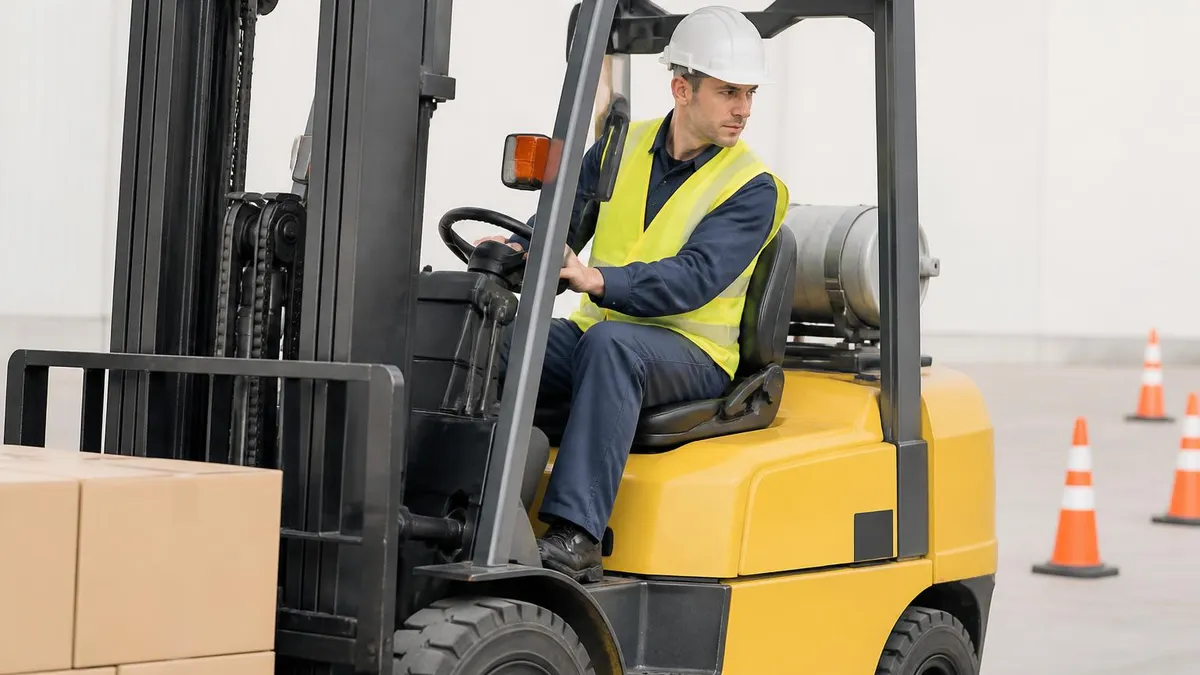
Forklift Rentals: Complete Guide to Pricing, Types, and Operator Requirements
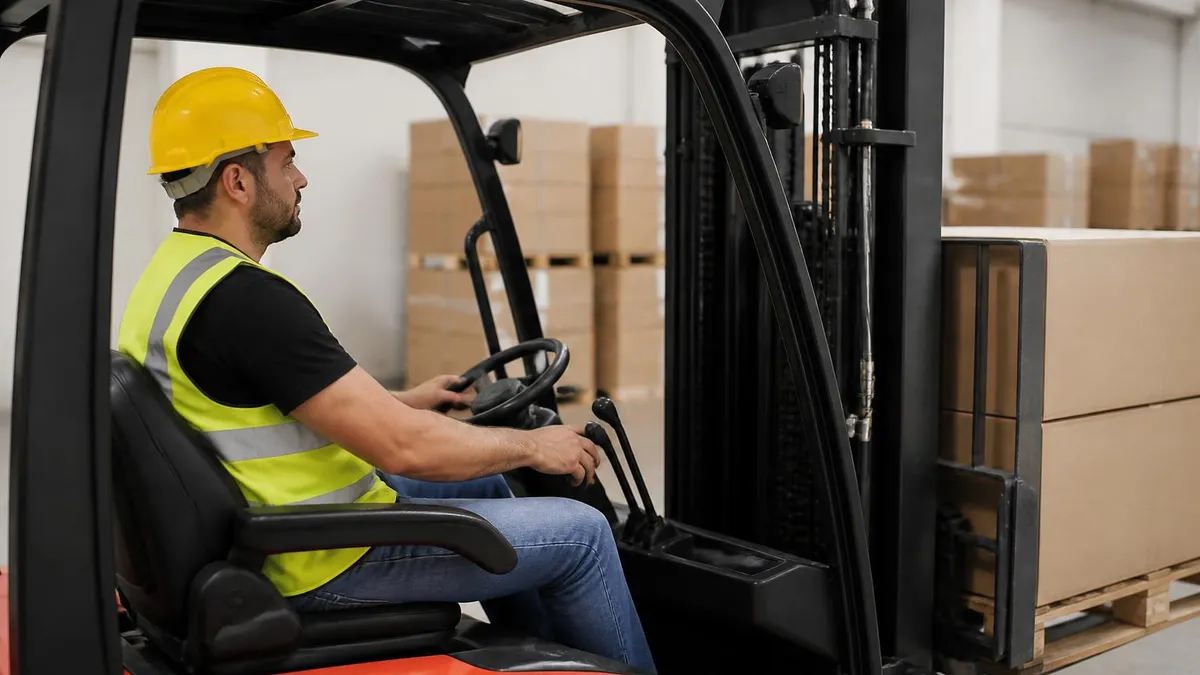
Forklift Hydraulic Fluid: Complete Guide to Types, Specifications, Change Intervals, and Troubleshooting for 2026
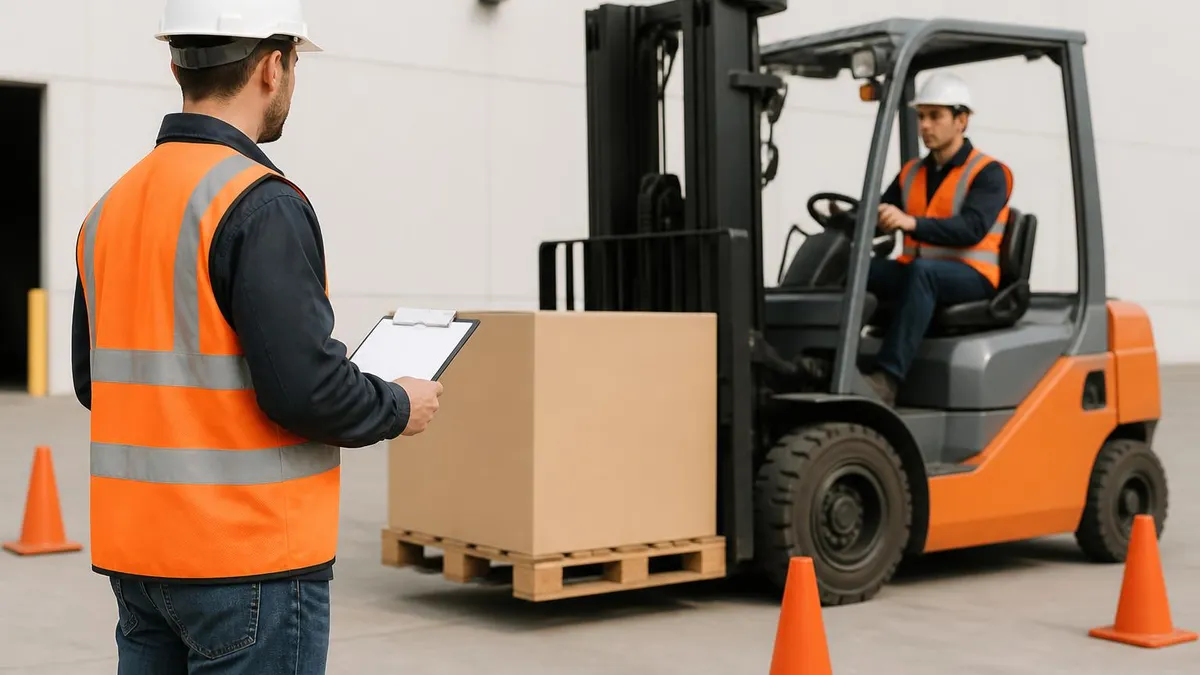
Forklift Parts and Maintenance: Complete Guide to Batteries, Chargers, and Replacement Components
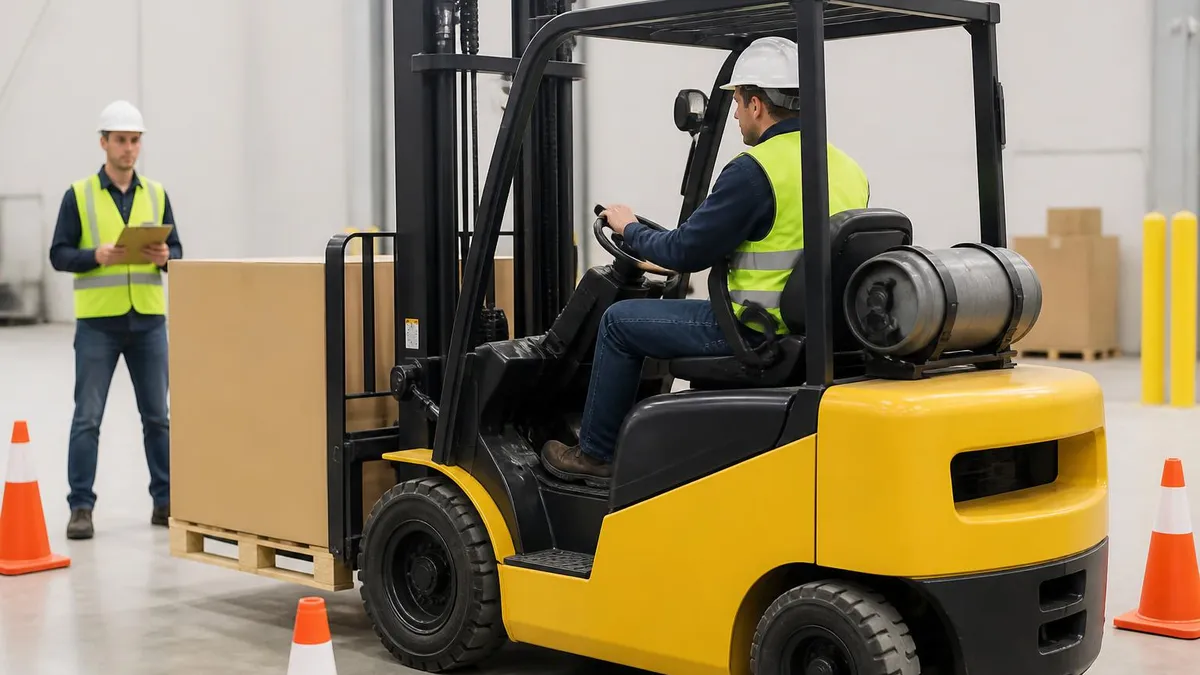
Big Forklift Guide: Heavy-Duty Lift Trucks, Capacity Classes, Rental Costs, and Operator Requirements
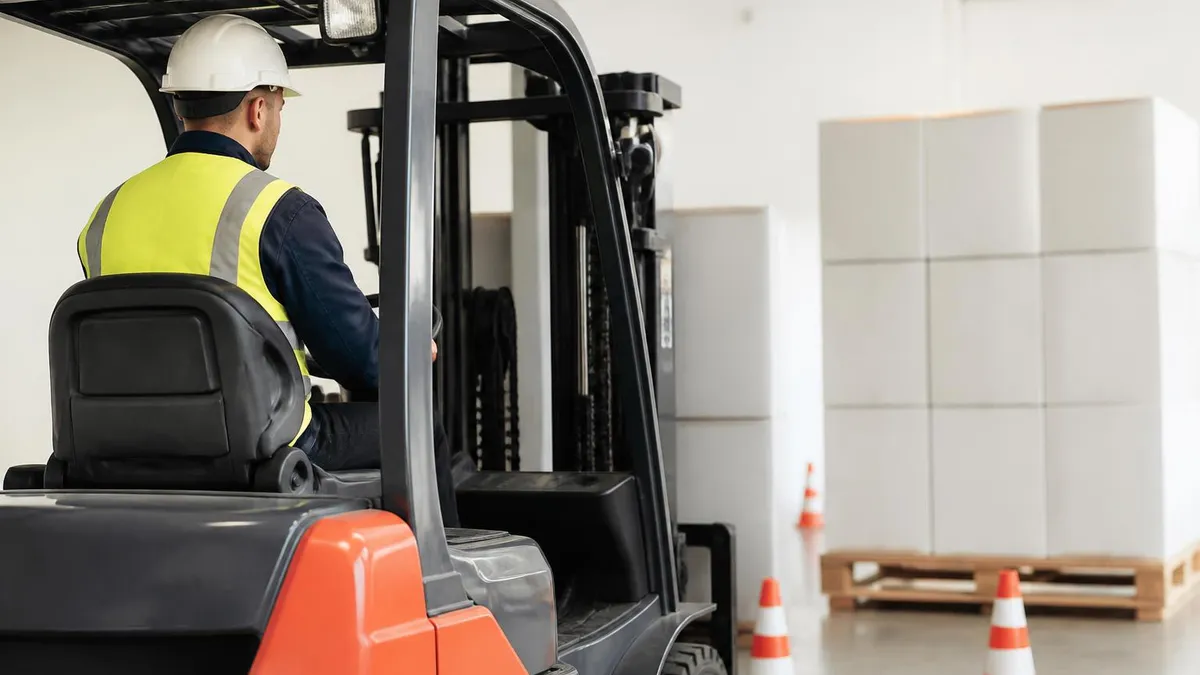
Forklift License Renewal: Complete Guide to Forklift License Expiry, OSHA Recertification, and Operator Requirements for 2026
About the Author

Certified Crane Operator & Skilled Trades Exam Specialist
Ferris State UniversityRobert Martinez is a Journeyman Ironworker, NCCCO-certified crane operator, and forklift trainer with a Bachelor of Science in Construction Technology from Ferris State University. He has 21 years of ironworking, rigging, and heavy equipment operation experience across high-rise and industrial construction sites. Robert prepares candidates for crane operator, rigger, forklift, and skilled trades certification examinations.