
Forklift Course: Complete Training Guide, Certification Requirements, and Operator Tips for 2026 October
📗 Everything about forklift course requirements, training steps, certification of forklift, operator tips, and costs for US workers in 2026 October.
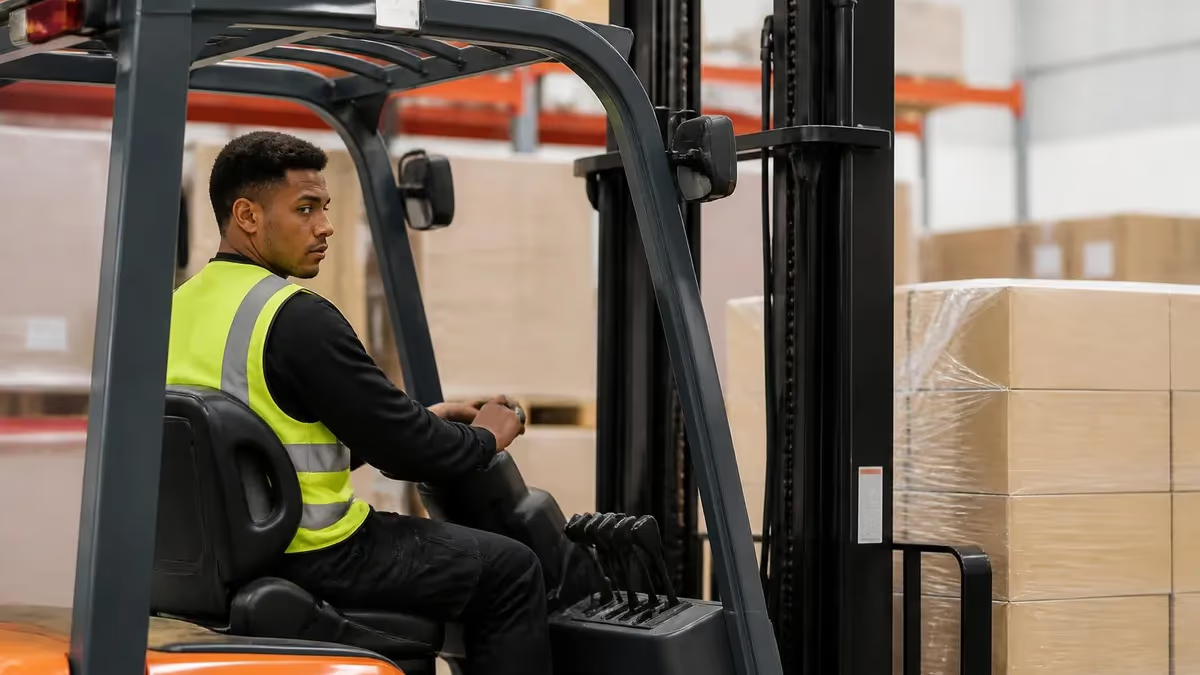
A forklift course is the foundation of every safe and legally compliant warehouse, distribution center, and construction site in the United States. Whether you are pursuing your first forklift course, refreshing lapsed credentials, or managing a team of operators, understanding exactly what OSHA requires — and how to meet those requirements efficiently — can save you time, money, and serious legal exposure. The demand for certified forklift operators continues to grow, driven by e-commerce expansion and record warehouse construction across the country.
OSHA Standard 29 CFR 1910.178(l) mandates that every powered industrial truck operator must be trained and evaluated before operating a forklift independently. This regulation covers counterbalance forklifts, reach trucks, order pickers, pallet jacks, and dozens of other lift truck types. The rule applies uniformly across industries, from automotive plants to grocery distribution warehouses. Employers who skip formal training face fines that start at $15,625 per violation and can reach $156,259 for willful or repeated violations.
The good news is that a forklift training program does not have to be long or expensive to be effective. Most workers complete the formal training portion in four to eight hours, and a competent evaluator can sign off on the practical assessment the same day. Online components, classroom sessions, and hands-on evaluations can often be combined into a single business day, making it realistic for even busy operations to bring new hires into compliance before their first shift on the floor.
Understanding the difference between a forklift operator certification card, an employer-issued training record, and a third-party certificate matters greatly when applying for jobs or managing a fleet. OSHA does not issue certificates itself — certification of forklift operators is the responsibility of the employer, who must keep written records showing that each operator was trained and evaluated on the specific type of equipment they operate. Third-party providers offer training cards that help document compliance, but those cards must still be backed by an employer evaluation on the actual equipment.
Beyond legal compliance, a quality forklift training course produces measurable operational benefits. Trained operators cause fewer product-damage incidents, have lower rates of near-misses, and demonstrate better daily inspection habits that extend equipment life. In fleets that include an electric forklift or a stand up forklift alongside traditional sit-down counterbalance units, type-specific training ensures that operators understand the unique handling characteristics — like the rearward weight bias of a reach truck or the sensitivity of an electric forklift's regenerative braking system.
This guide covers every stage of the forklift course process: how training programs are structured, what topics are covered, how to find quality instruction whether you prefer in-person or online delivery, what certification costs to expect, and how to prepare for the written and practical assessments. We also address recertification timelines, common reasons operators fail evaluations, and how to compare providers when your company is sourcing training for an entire workforce.
By the end of this article, you will have a clear, step-by-step picture of how to earn or maintain forklift certification in 2026, what the process costs, and how to use free practice resources like those available on PracticeTestGeeks to sharpen your knowledge before the written portion of your evaluation.
Forklift Training by the Numbers
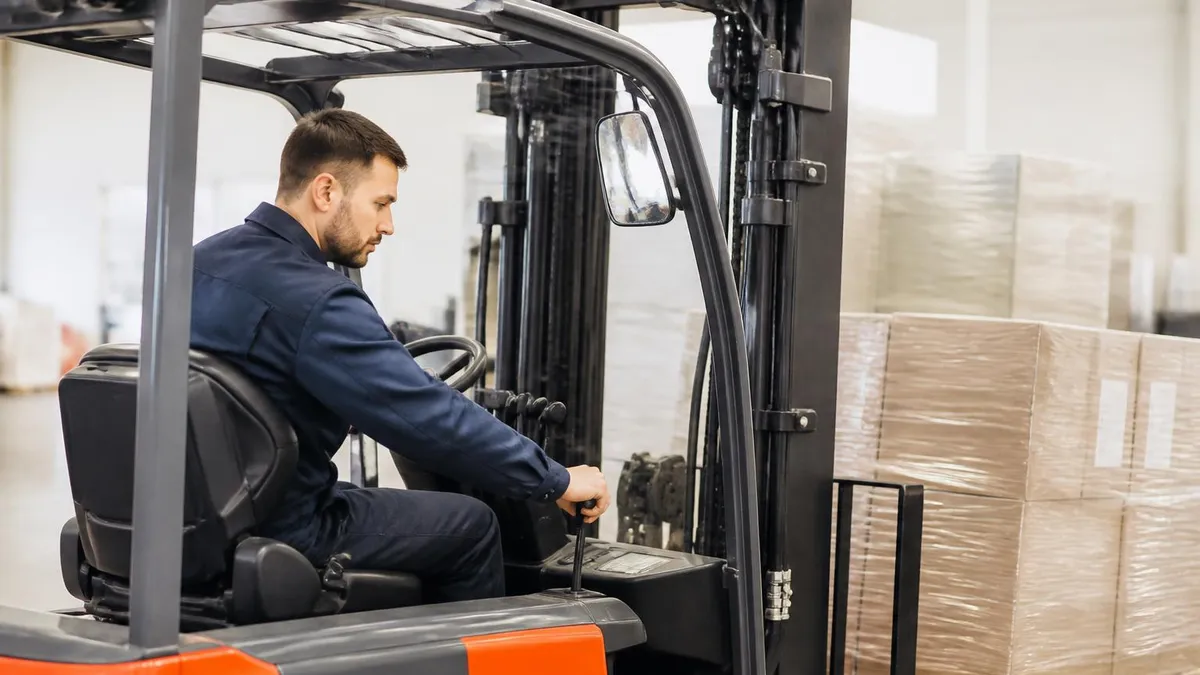
How a Forklift Training Program Is Structured
Step 1 — Formal Instruction
Step 2 — Workplace-Specific Training
Step 3 — Equipment-Specific Instruction
Step 4 — Practical Evaluation
Step 5 — Certification Issuance
Step 6 — Recertification Tracking
The certification of forklift operators in the United States is employer-driven, which surprises many workers who expect a government-issued license similar to a driver's license. OSHA places the full responsibility on employers to ensure that every powered industrial truck operator is evaluated as competent before working independently. This means that even if you completed a forklift training course at a community college five years ago, your current employer must still conduct their own evaluation on the specific equipment used at their facility before they can legally put you in the seat alone.
This employer-responsibility model has a practical upside: it allows training to be highly tailored to real operating conditions. A forklift operator at a cold-storage facility working with an electric forklift in a -10°F freezer environment has very different hazards than an operator at an outdoor lumber yard running a propane-powered stand up forklift over uneven ground. Generic certification from a third party can cover foundational knowledge, but the employer evaluation step ensures the operator understands the hazards specific to their actual job site.
Forklift training covers several core knowledge areas regardless of equipment type or industry. These include the physics of load stability — specifically the concept of the stability triangle formed by the front axle and rear pivot point — which explains why forklifts tip over even when carrying loads below their rated capacity. Understanding dynamic load capacity, which decreases as the load center moves away from the forks or as the mast tilts forward, is a key topic that appears on virtually every written assessment and is critical for preventing tip-overs in real operation.
Pre-shift inspection procedures form another major training block. Operators must learn to check fluid levels, tire condition (critical for safe forklift operation and explored in depth in resources on forklift tires), fork wear and cracks, mast chain lubrication, brake function, horn, lights, and the condition of safety devices like overhead guards and load backrests. OSHA requires that any forklift found to be unsafe must be taken out of service immediately and tagged out until repaired — a discipline that training programs reinforce with real workplace scenarios and case studies.
Fueling and charging procedures are another area where forklift training adds significant value. Propane cylinder exchanges, diesel refueling near ignition sources, and the charging of electric forklift battery banks all carry explosion, fire, and chemical exposure risks that operators must understand before performing these tasks. Battery charging areas in particular require ventilation to prevent hydrogen gas accumulation, and workers who skip this portion of training create hazards for the entire facility, not just themselves.
Traffic management and pedestrian safety training teaches forklift operators to manage the shared-space environment of most warehouses and loading docks. Operators learn right-of-way rules, speed limits on grades and intersections, how to approach and stop at blind corners, and how to communicate with pedestrians using the horn, lights, and verbal warnings. Statistics consistently show that pedestrian-forklift collisions are among the most deadly forklift accidents, making this component one of the most consequential parts of any forklift course.
The practical evaluation component requires operators to demonstrate all of these skills under observation. A qualified evaluator — who must themselves be competent to operate the equipment being evaluated — watches the operator complete a defined set of tasks, documents any deficiencies, and signs off on competency or requires remedial training. Smart operators prepare for this evaluation by reviewing OSHA 1910.178 directly, studying the pre-shift inspection checklist for their specific equipment model, and using practice tools to solidify their knowledge of load capacity tables, stability principles, and regulatory requirements.
Forklift certification Practice Test Questions
Prepare for the Forklift certification Certification exam with our free practice test modules. Each quiz covers key topics to help you pass on your first try.
Forklift certification Certification Forkl...
Forklift certification Exam Questions covering Certification Forklift certification Maintenance and Repairs. Master Forklift certification Test concepts for certification prep.
Forklift certification Certification Forkl...
Free Forklift certification Practice Test featuring Certification Forklift certification Maintenance and Repairs Questions and Answers. Improve your Forklift certification Exam score with mock test prep.
Forklift certification Certification Forkl...
Forklift certification Mock Exam on Certification Forklift certification Operator Training and Certification Requirements. Forklift certification Study Guide questions to pass on your first try.
Forklift certification Certification Forkl...
Forklift certification Test Prep for Certification Forklift certification Operator Training and Certification Requirements Questions and Answers. Practice Forklift certification Quiz questions and boost your score.
Forklift certification Load Handling and S...
Forklift certification Questions and Answers on Load Handling and Stability. Free Forklift certification practice for exam readiness.
Forklift certification OSHA Regulations an...
Forklift certification Mock Test covering OSHA Regulations and Compliance. Online Forklift certification Test practice with instant feedback.
Forklift certification Pre-Operation Inspe...
Free Forklift certification Quiz on Pre-Operation Inspections. Forklift certification Exam prep questions with detailed explanations.
Forklift certification Refueling and Recha...
Forklift certification Practice Questions for Refueling and Recharging Procedures. Build confidence for your Forklift certification certification exam.
Forklift certification Safe Driving and Ma...
Forklift certification Test Online for Safe Driving and Maneuvering. Free practice with instant results and feedback.
Forklift certification Workplace Hazard Id...
Forklift certification Study Material on Workplace Hazard Identification. Prepare effectively with real exam-style questions.
Forklift certification Forklift Instructions
Free Forklift certification Test covering Forklift Instructions. Practice and track your Forklift certification exam readiness.
Forklift certification Forklift MCQ
Forklift certification Exam Questions covering Forklift MCQ. Master Forklift certification Test concepts for certification prep.
Forklift certification Forklift Employer R...
Free Forklift certification Practice Test featuring Forklift Employer Responsibilities. Improve your Forklift certification Exam score with mock test prep.
Forklift certification Forklift Penalties ...
Forklift certification Mock Exam on Forklift Penalties for Non-Compliance. Forklift certification Study Guide questions to pass on your first try.
Forklift Training Options: Online, In-Person, and Blended
Online forklift training platforms allow workers to complete the formal instruction phase — covering OSHA regulations, stability principles, load capacity, and hazard recognition — entirely through a web browser or mobile device. Leading providers offer OSHA-compliant courses that take two to four hours to complete and include video demonstrations, interactive quizzes, and a printable completion certificate. Costs typically range from $50 to $100 per seat, making online delivery the most affordable option for individual workers or small employers.
The important limitation of online training is that it cannot satisfy the hands-on evaluation requirement. OSHA is explicit that operators must be evaluated performing actual tasks on actual equipment. This means online training must always be followed by a workplace practical evaluation conducted by a qualified evaluator. Employers who issue certifications based solely on an online course completion record — without a documented practical evaluation — are not in compliance with 29 CFR 1910.178(l), regardless of how reputable the online provider is.
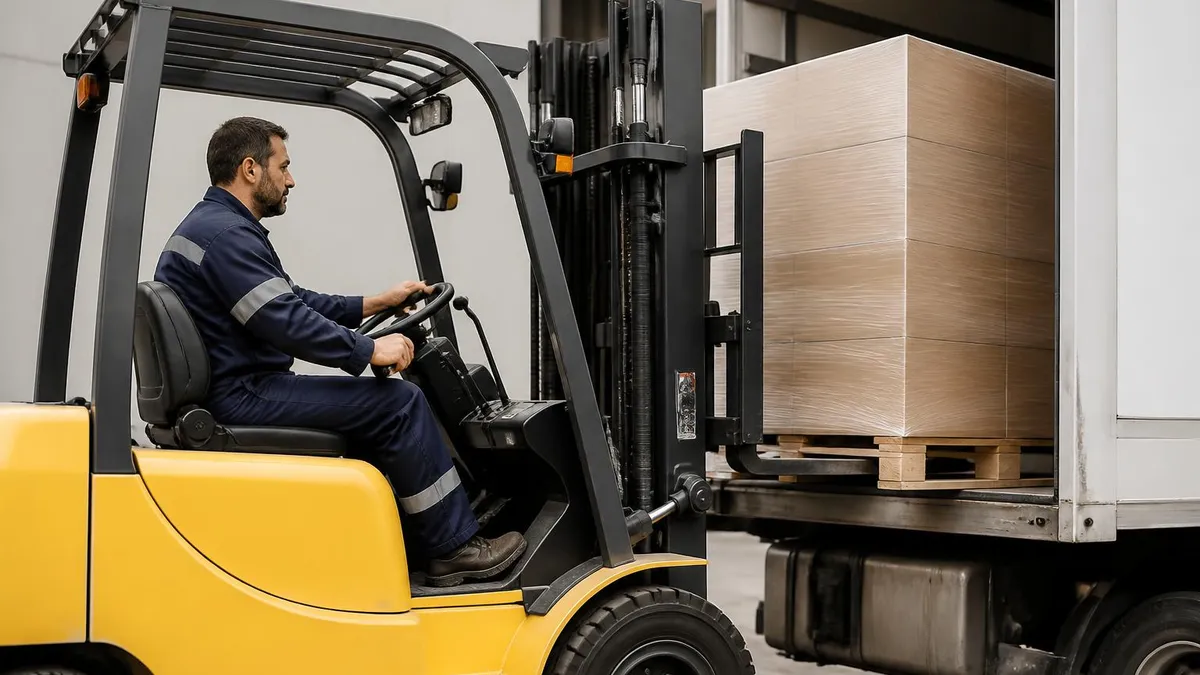
Pros and Cons of Third-Party Forklift Training vs. Employer-Delivered
- +Third-party instructors bring broad industry experience across multiple equipment types and industries
- +Structured curriculum reduces risk of employers skipping required OSHA topic areas
- +Completion certificates provide portable documentation workers can show future employers
- +No internal evaluator training or certification cost for the employer
- +Group sessions allow networking with operators from other facilities
- +Immediate access to training equipment without taking production machinery offline
- −Third-party training cannot replace the mandatory employer-specific practical evaluation
- −Generic curriculum may not address facility-specific hazards like narrow aisles or cold storage
- −Per-seat cost of $150–$300 adds up quickly for large workforces needing annual refreshers
- −Scheduling depends on provider availability, which may not align with production needs
- −Workers may need to travel to a training facility, adding transportation time and cost
- −Certificates from non-OSHA-accredited providers may not withstand regulatory scrutiny
Pros and Cons at a Glance
| Pros | Cons |
|---|---|
| Third-party instructors bring broad industry experience across multiple equipment types and industries | Third-party training cannot replace the mandatory employer-specific practical evaluation |
| Structured curriculum reduces risk of employers skipping required OSHA topic areas | Generic curriculum may not address facility-specific hazards like narrow aisles or cold storage |
| Completion certificates provide portable documentation workers can show future employers | Scheduling depends on provider availability, which may not align with production needs |
| No internal evaluator training or certification cost for the employer | Workers may need to travel to a training facility, adding transportation time and cost |
| Group sessions allow networking with operators from other facilities | Certificates from non-OSHA-accredited providers may not withstand regulatory scrutiny |
Forklift Certification Pre-Test Checklist
- ✓Review OSHA Standard 29 CFR 1910.178 in full, paying attention to subsection (l) on operator training
- ✓Study the stability triangle and dynamic load capacity concepts until you can explain them without notes
- ✓Memorize the pre-shift inspection sequence for your specific forklift type (engine, electric, or LPG)
- ✓Practice reading a capacity data plate and calculating allowable loads at different load centers
- ✓Learn the right-of-way rules for forklifts at intersections, loading docks, and pedestrian crossings
- ✓Review fueling and battery-charging safety procedures including ventilation and PPE requirements
- ✓Complete at least two full practice tests on PracticeTestGeeks to identify weak knowledge areas
- ✓Walk the actual facility where you will be evaluated and note any specific hazards or traffic patterns
- ✓Confirm with your evaluator which equipment type your evaluation will cover and study its operator manual
- ✓Bring documentation of any prior forklift training or employer evaluations to the session
Your Certification Is Equipment-Type Specific
OSHA requires separate training and evaluation for each forklift class an operator uses. Being certified on a counterbalance sit-down forklift does not automatically authorize you to operate a reach truck, order picker, or stand up forklift. If your job changes or you are assigned new equipment, your employer must conduct a new equipment-specific evaluation before you operate that machine independently — even if your general forklift knowledge is excellent.
The cost of a forklift course varies significantly based on delivery format, provider type, equipment class covered, and geographic location. Individual workers seeking personal certification through a community college or private training center can expect to pay between $150 and $350 for a full-day program that includes formal instruction, practical time on training equipment, and a written assessment. Online-only courses that cover just the formal instruction component cost considerably less — typically $50 to $100 — but require the employer to conduct and document the subsequent practical evaluation.
For employers training multiple workers, volume pricing makes a substantial difference. Training companies commonly offer group rates of $75 to $150 per person when booking five or more seats in a session held at the employer's facility. On-site training eliminates travel time, allows instruction to be customized to the facility's actual equipment and layout, and enables the practical evaluation to take place on the exact machines workers will operate daily — which OSHA actually prefers from a compliance standpoint. Employers with high turnover may find that investing in an internal evaluator program pays back within the first year of operation.
Beyond training costs, employers must factor in the cost of maintaining a forklift fleet capable of supporting certification activities. Organizations exploring new equipment have several options: purchasing outright, leasing, or using forklift rental arrangements. Forklift rental is increasingly popular for temporary projects, seasonal volume spikes, or when evaluating a new equipment type before committing to a purchase. Forklift rental near me searches typically return local dealers and national fleet companies offering daily rates of $200 to $400 for standard counterbalance forklifts, with electric forklift rentals often priced at a slight premium due to battery management requirements.
The used forklift for sale market offers another cost-reduction pathway for smaller operations. Reputable dealers sell refurbished equipment with documented service histories, and some bundle operator training as an incentive when you purchase or finance through them. Used electric forklifts are particularly attractive for indoor operations where noise and emissions matter — their lower fuel costs and reduced maintenance frequency can offset a higher purchase price within two to three years of normal operation. Buyers should verify battery condition carefully, as battery replacement alone can cost $2,000 to $8,000 depending on voltage and capacity.
Recertification costs are often overlooked in workforce planning. OSHA's three-year maximum recertification interval means that training is not a one-time cost but an ongoing operational expense. Proactive safety managers build recertification costs into annual HR budgets rather than treating them as surprise line items. Organizations that use blended delivery — online refresher modules followed by a brief internal practical re-evaluation — typically spend $30 to $80 per operator per recertification cycle, a fraction of the initial training cost.
Training quality also has indirect cost implications that dwarf the direct fee. A forklift tip-over incident averages $135,000 in direct and indirect costs when worker injury, equipment damage, product loss, regulatory fines, and productivity disruption are totaled. A single pedestrian fatality can result in OSHA fines exceeding $500,000 plus civil litigation exposure. Employers who view forklift training as a cost-control measure rather than a compliance checkbox consistently see lower insurance premiums, fewer workers' compensation claims, and better equipment utilization ratios in their fleets.
When comparing training providers, look for companies that explicitly state their curriculum is based on OSHA 29 CFR 1910.178(l), that their evaluators are themselves competent operators, and that they provide written documentation — not just a card — showing the equipment types covered, the date of training, and the evaluator's name. Avoid providers who promise certification without any practical evaluation component, as such documentation will not survive an OSHA inspection and may expose the employer to willful violation penalties.
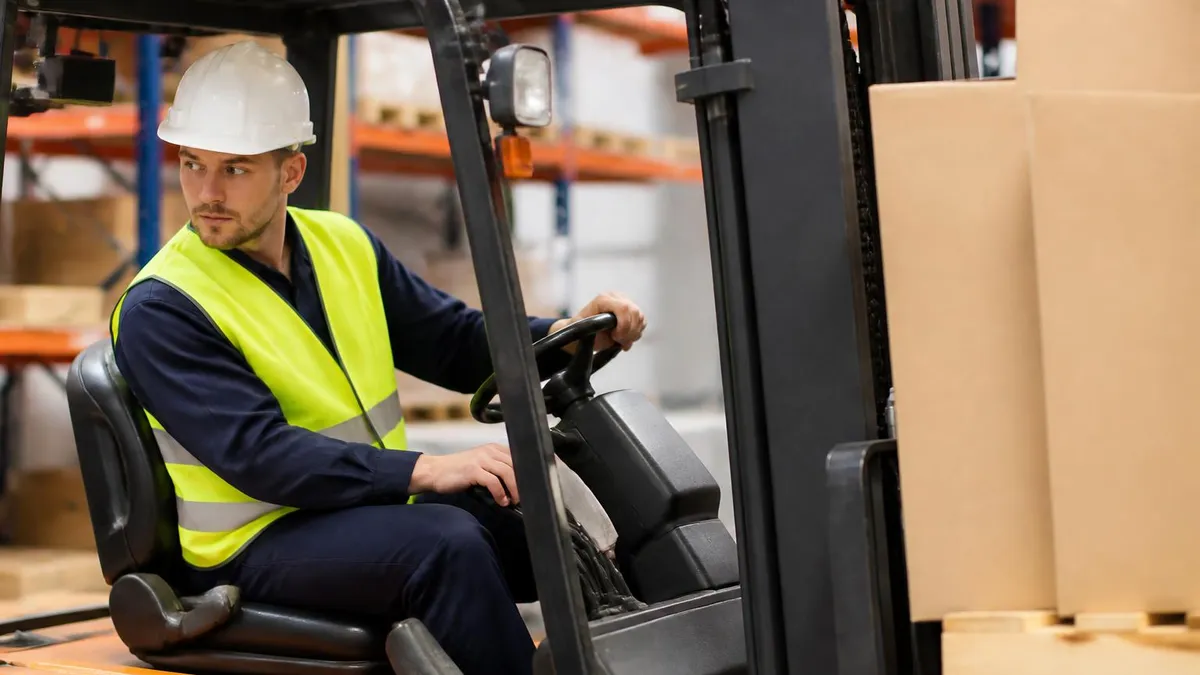
A forklift certification card from a third-party training provider documents that you completed a formal instruction course — it does not legally authorize you to operate a forklift at any specific employer. OSHA requires the employer to conduct and document their own evaluation before you operate independently. Always ensure your employer has a separate written record of your practical evaluation on file, in addition to any card you received from a training program.
Passing the practical evaluation requires more than sitting through a forklift training course — it demands that operators genuinely internalize the habits, judgment calls, and situational awareness that distinguish a competent forklift operator from someone who has merely watched a video. Evaluators are looking for smooth, controlled operation: deliberate pre-shift inspection, proper seating and restraint use, fluid travel with the load positioned low and the mast tilted back, appropriate speeds through intersections and pedestrian zones, and clean load placement without jabbing or forcing the forks into racks.
One of the most common evaluation failures involves the pre-shift inspection — specifically, operators who rush through it or treat it as a formality. A thorough inspection demonstrates to the evaluator that the operator takes ownership of equipment safety and understands that identifying a deficiency before the shift protects both themselves and their co-workers. Practicing the inspection sequence until it becomes automatic — moving methodically from the tires and forks through the hydraulic components, the mast, the overhead guard, and the controls — is time well spent before any evaluation.
Load handling is the second most common area where operators lose points. Common errors include picking up loads without checking the weight tag or warehouse manifest, tilting the mast forward while traveling (which dramatically reduces lateral stability), traveling with the load raised above the safe travel height of six to eight inches, and turning too aggressively while carrying a load. Counterintuitively, turning with a heavy load at the rear of the lift (for counterbalance forklifts) means the heaviest turning moment acts on the rear steer axle — a physics detail that surprises operators who learned on smaller equipment.
Speed management is closely watched during evaluations, particularly at intersections and dock approaches. The evaluator will note whether the operator slows at every intersection — even clear ones — uses the horn at blind spots, and approaches dock edges and ramps at an angle to check the condition of the surface before committing to a crossing. These are not bureaucratic checkboxes; they reflect real accident scenarios that have killed experienced operators who became complacent about precautions they had followed hundreds of times before.
Operators who want to maximize their evaluation performance should approach it as a demonstration of their highest-quality work habits, not their average ones. If you know you sometimes skip the horn at corners because the warehouse is usually empty, fix that habit before your evaluation date.
If you sometimes travel with loads slightly higher than the recommended travel height because it is more convenient, correct that behavior as well. Evaluators are trained to observe the full range of operator behaviors over a complete evaluation cycle, and patterns of noncompliance — even minor ones — will be noted in the written record.
Practice tests are one of the most effective tools available for written assessment preparation. The written component of a forklift evaluation typically covers regulatory requirements, load capacity calculations, stability principles, equipment-specific operating procedures, and emergency response scenarios. Using resources like the free practice tests available on PracticeTestGeeks allows candidates to identify exactly which topics they know solidly and which require more review before the evaluation day. Targeted studying based on practice test performance is far more efficient than re-reading an entire training manual the night before.
After passing, maintain your certification actively by staying current with any equipment changes at your facility, reporting unsafe conditions through your employer's safety management system, and attending any refresher sessions offered by your company. Operators who engage proactively with safety culture — rather than viewing certification as a box to check every three years — consistently have better career outcomes, including preference for lead operator roles, training supervisor positions, and fleet management opportunities that come with meaningful pay increases.
Forklift operators who treat their training as a living, ongoing competency — rather than a one-time credential — build the safest and most productive careers in the industry. This mindset starts with using every pre-shift inspection as a genuine equipment assessment, not a ritual. When you find something wrong — a cracked fork, low hydraulic fluid, a worn tire — and properly take the equipment out of service, you are doing exactly what the training was designed to produce. That kind of behavior gets noticed by supervisors and is the foundation of career advancement in warehouse operations.
Staying current with OSHA guidance as it evolves is another mark of a professional forklift operator. OSHA periodically issues Letters of Interpretation that clarify how 29 CFR 1910.178 applies to specific situations — new battery technologies in electric forklifts, emerging equipment types like autonomous guided vehicles that share spaces with human-operated forklifts, and updated guidance on load stability for irregularly shaped materials. Safety managers who follow these updates and communicate them to their operator workforce demonstrate the kind of proactive compliance culture that reduces liability and attracts quality employees.
Understanding the full range of forklift types available is valuable context for any operator or safety manager. The seven OSHA forklift classes range from Class I electric motor rider trucks and Class II narrow-aisle equipment through Class IV and V internal combustion forklifts to Class VI and VII rough-terrain and specialized vehicles. An operator certified on Class IV sit-down internal combustion equipment is not automatically qualified on Class II stand up forklift reach trucks — the handling characteristics, controls, and hazard profiles are meaningfully different, and OSHA's equipment-specific training requirement reflects this reality.
For operators working in facilities that rely on forklift rentals for peak-season capacity, understanding rental fleet protocols is practically important. When new equipment arrives on a rental basis — including unfamiliar makes or models of electric forklift — operators should receive a brief equipment orientation before using the machine, even if they are already certified on the same class of equipment from a different manufacturer. Control layouts, load capacity ratings, and battery management procedures can vary significantly between brands, and rental equipment arrives without the on-site familiarity of a machine you operate every day.
Career advancement for forklift operators typically follows a path from general operator to lead operator, to trainer or evaluator, and potentially into supervisory or fleet management roles. Each step up requires demonstrated competency at the current level plus additional skills: lead operators need to coordinate with receiving and shipping schedules; trainers and evaluators need strong coaching and documentation skills; supervisors need scheduling, compliance reporting, and team management capabilities. Formal forklift training provides the technical foundation, but long-term advancement comes from building those adjacent skills intentionally throughout your career.
Organizations managing large forklift fleets — particularly those mixing sit-down counterbalance units, electric forklifts, reach trucks, and stand up forklifts in the same facility — benefit significantly from systematic operator tracking. A simple spreadsheet showing each operator's certification date, equipment types covered, and recertification due date can prevent compliance gaps from going unnoticed until an OSHA inspection reveals them. More sophisticated employers use safety management software that sends automatic alerts when certifications are approaching expiration, ensuring no operator is left working uncertified due to an administrative oversight.
Finally, the relationship between daily forklift operator performance and overall warehouse throughput is worth appreciating. Skilled, certified operators pick and place loads faster, cause fewer product damage incidents, navigate congested aisles more efficiently, and require less supervision than operators who received only minimal training. Investments in quality forklift training — whether through in-person courses, online platforms, or strong internal evaluator programs — generate returns that show up in KPIs far beyond the safety metrics column, including order fulfillment speed, inventory accuracy, and equipment availability rates driven by fewer breakdown-inducing operator errors.
Sample Forklift certification Practice Questions
Try these questions from our free Forklift certification practice tests. The correct answer and an explanation follow each question.
Who can serve as a qualified trainer for forklift operator training?
- A. Any employee who has operated a forklift for at least one week
- B. A person with the knowledge, training, and experience to train and evaluate operators
- C. Only a certified third-party training company
- D. The newest employee in the warehouse
Answer: B. A person with the knowledge, training, and experience to train and evaluate operators
OSHA requires trainers to have the knowledge, training, and experience necessary to effectively train operators and evaluate their performance.
During a pre-operation walk-around, an operator notices a small, clear puddle of fluid under the mast. What should be the operator's immediate course of action?
- A. Wipe up the fluid and proceed with the rest of the inspection.
- B. Make a note of it on the checklist and check the hydraulic fluid level after starting the engine.
- C. Ignore it if it's a small amount, as some seepage is normal.
- D. Do not operate the forklift, tag it as 'Out of Service,' and report the leak to a supervisor.
Answer: D. Do not operate the forklift, tag it as 'Out of Service,' and report the leak to a supervisor.
Any potential safety hazard, such as a hydraulic fluid leak, must be addressed before operation. The correct procedure is to immediately take the forklift out of service and report the defect to a supervisor to prevent accidents or further damage.
Before starting a forklift shift, what must the operator complete first?
- A. A pre-operation inspection
- B. A lunch break
- C. A parking check only
- D. A fuel receipt
Answer: A. A pre-operation inspection
OSHA requires a daily pre-operation inspection before the forklift is used.
Who is responsible for certifying that a forklift operator has completed the required training?
- A. The operator
- B. The employer
- C. OSHA
- D. The equipment manufacturer
Answer: B. The employer
The employer must certify that each operator has been trained and evaluated as required.
Forklift Questions and Answers
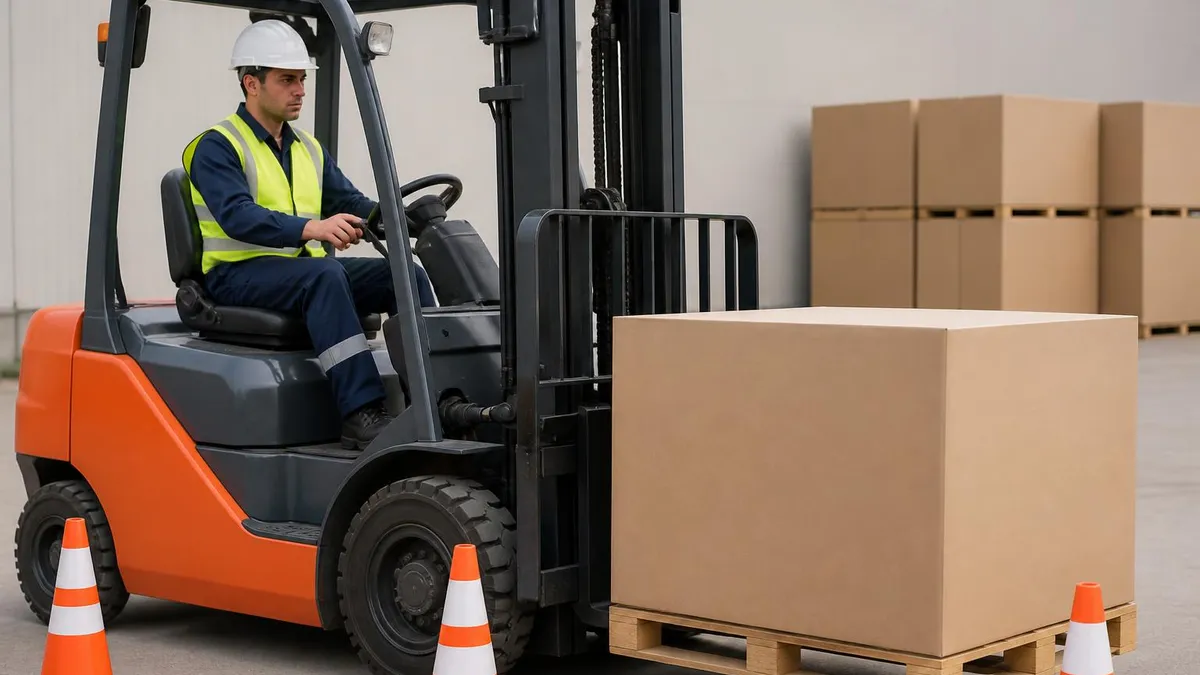
Forklift Tires: Complete Guide to Types, Sizing, Wear Patterns, and Replacement Costs
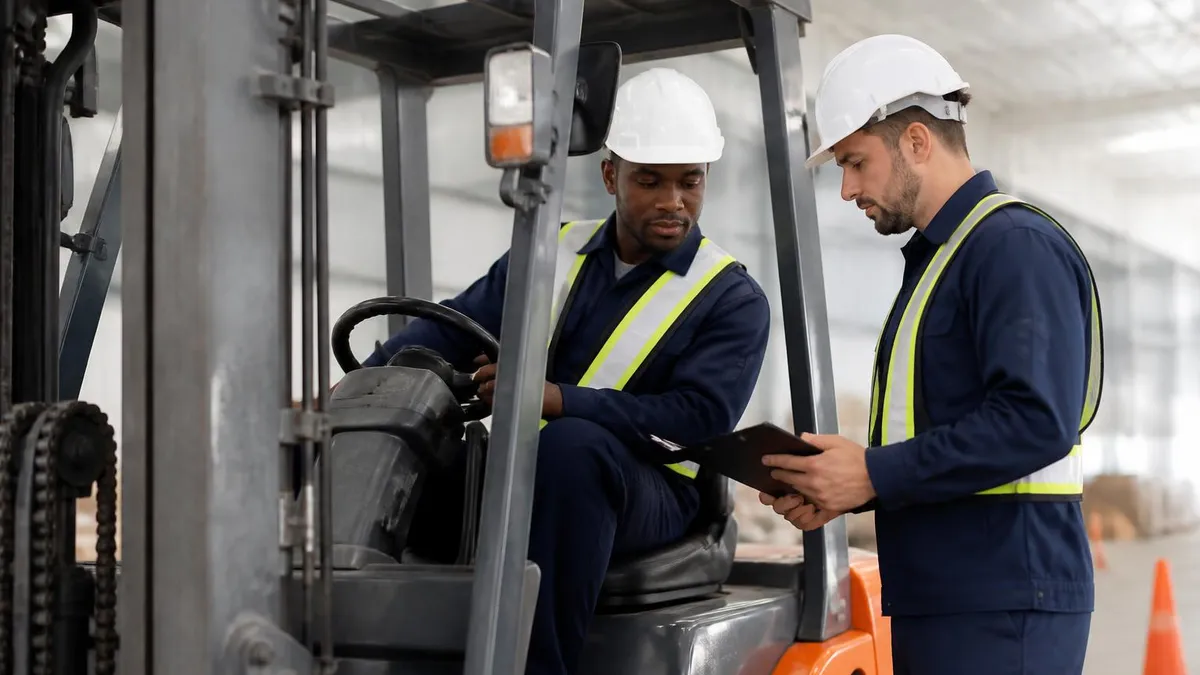
Forklift Operator Duties: Complete Guide to Daily Responsibilities, Safety Tasks, and Career Path for 2026
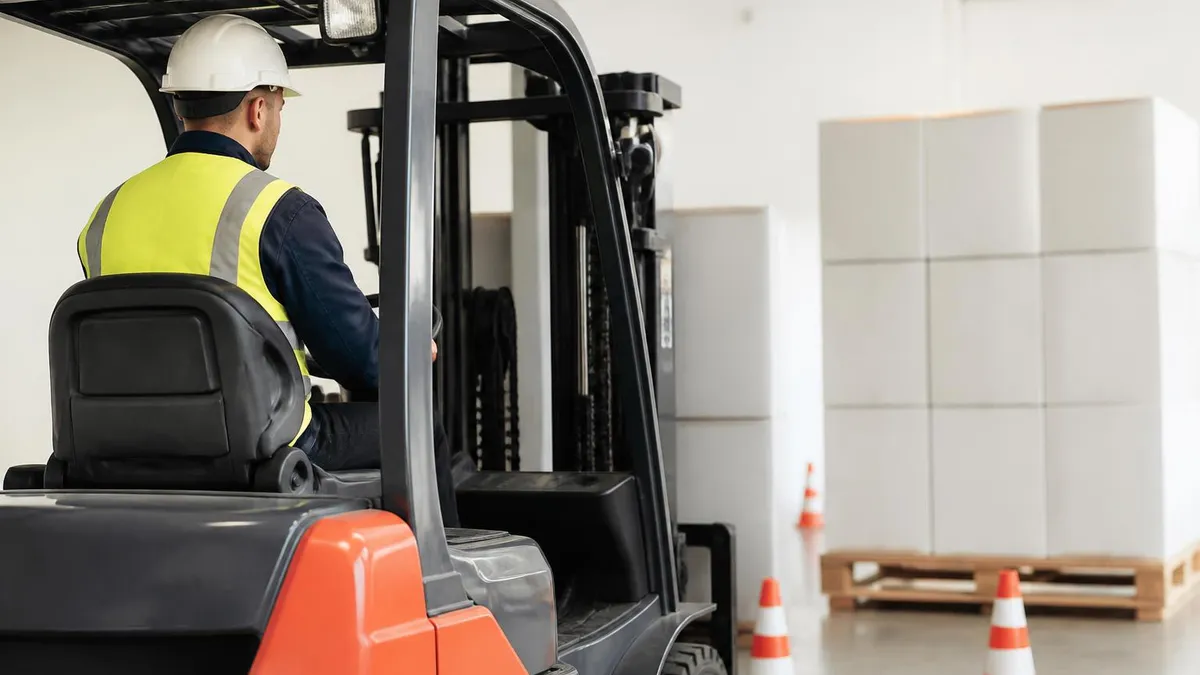
Forklift License Renewal: Complete Guide to Forklift License Expiry, OSHA Recertification, and Operator Requirements for 2026
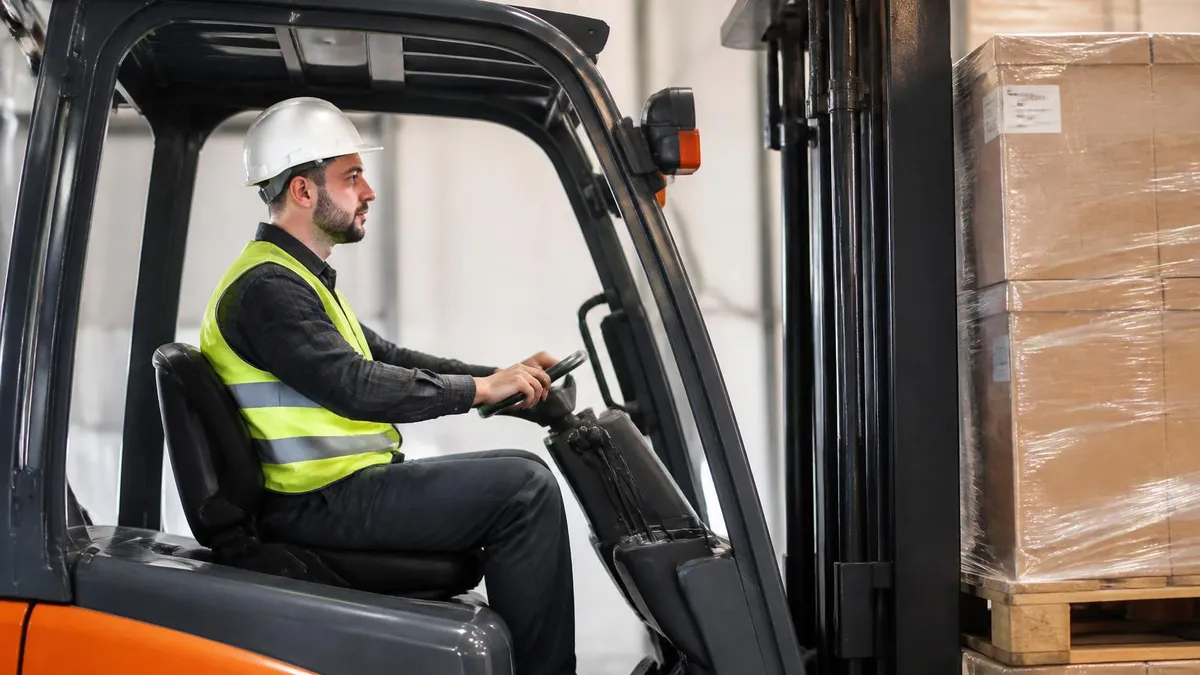
Sit Down Forklift Jobs: Complete Guide to Careers, Pay, Training, and Hiring in 2026
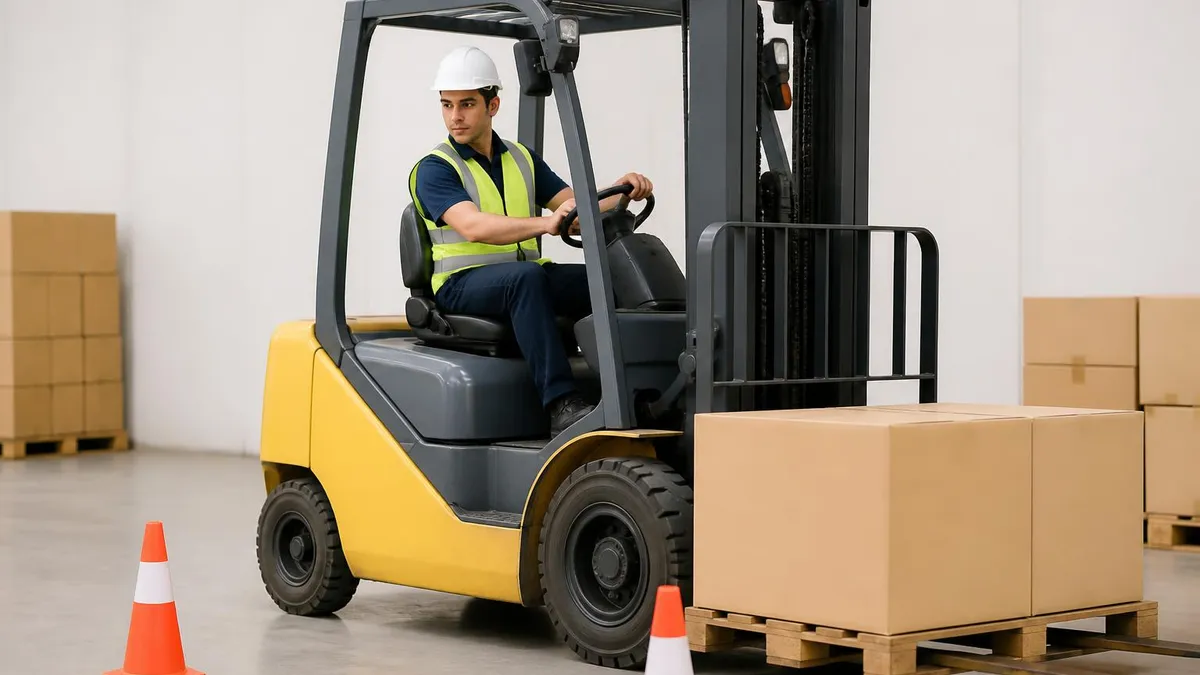
Forklift Repair Service: Complete Guide to Costs, Common Repairs, and Choosing the Right Technician
About the Author

Certified Crane Operator & Skilled Trades Exam Specialist
Ferris State UniversityRobert Martinez is a Journeyman Ironworker, NCCCO-certified crane operator, and forklift trainer with a Bachelor of Science in Construction Technology from Ferris State University. He has 21 years of ironworking, rigging, and heavy equipment operation experience across high-rise and industrial construction sites. Robert prepares candidates for crane operator, rigger, forklift, and skilled trades certification examinations.