
OSHA Forklift Training Requirements: Complete Guide to Certification, Compliance, and Operator Safety for 2026 October
Learn OSHA forklift training requirements for operators, 📗 rental compliance, certification steps, and employer obligations. Complete 2026 October guide.
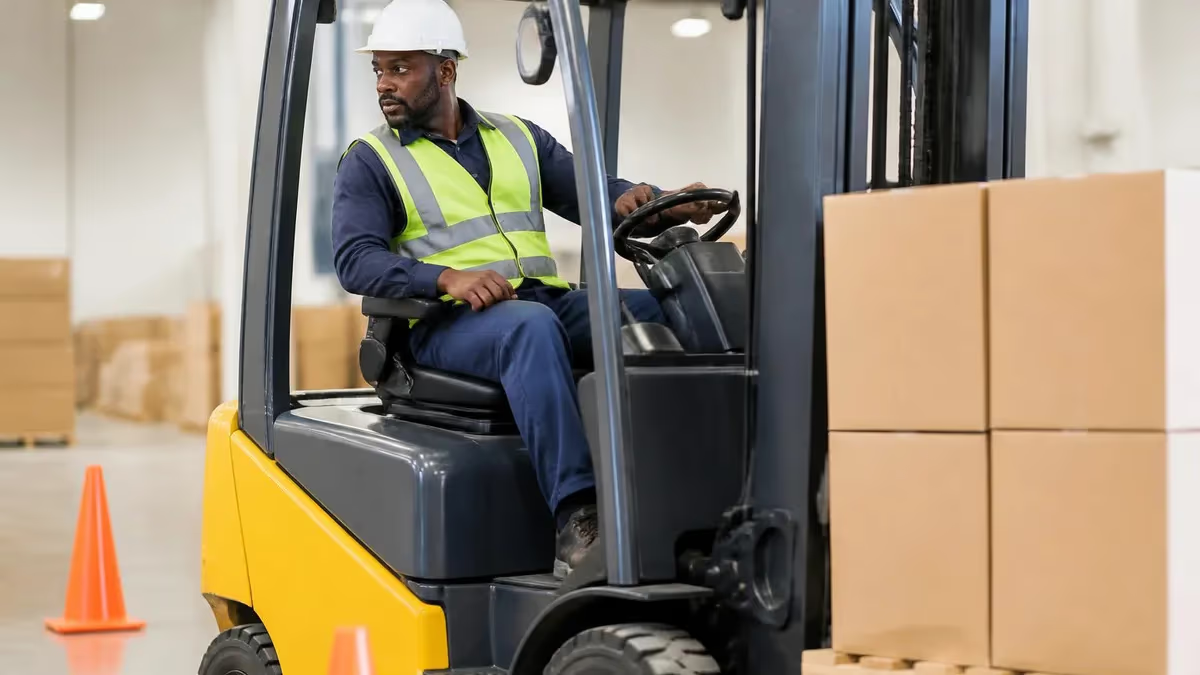
Whether you are searching for a forklift rental or looking to purchase forklifts for your warehouse, understanding OSHA forklift training requirements is essential before anyone operates this heavy machinery. The Occupational Safety and Health Administration mandates that every forklift operator receive proper forklift training before handling powered industrial trucks in any workplace setting. These federal regulations exist because forklifts remain one of the most dangerous pieces of equipment found in warehouses, construction sites, and distribution centers across the United States today.
Each year, approximately 85 workers lose their lives in forklift-related incidents, and roughly 34,900 serious injuries occur on the job. OSHA created the powered industrial truck standard under 29 CFR 1910.178 specifically to reduce these preventable accidents. The standard outlines everything from who must receive training to what topics must be covered and how frequently operators must be recertified. Employers who fail to comply face substantial fines that can exceed $16,000 per violation for serious infractions documented during inspections.
The certification of forklift operators involves more than simply watching a safety video and signing a form. OSHA requires a comprehensive program that includes formal classroom instruction, practical hands-on training, and an evaluation of the operator's ability to safely operate the specific type of equipment they will use on the job. This three-part approach ensures operators gain both the theoretical knowledge and practical skills needed to prevent workplace accidents and protect themselves daily.
Many businesses that rely on forklift rental services often overlook the fact that OSHA places training responsibility squarely on the employer, not the rental company. Even if you rent a forklift for just one day, every person who operates that equipment must hold valid certification. Rental companies provide the machinery, but employers must verify that operators have completed an approved training program covering the specific class and model of forklift being rented for the assigned task.
For individuals looking to become a forklift operator, understanding OSHA requirements opens doors to a stable career with competitive wages. Certified operators typically earn between $35,000 and $50,000 annually, with experienced professionals in specialized industries commanding even higher salaries. The investment in proper training pays dividends through increased job opportunities, reduced workplace injuries, and compliance with federal regulations that protect both workers and employers from costly penalties and legal liability.
Whether you operate an electric forklift in a climate-controlled warehouse or a rough-terrain model on a construction site, the same foundational OSHA requirements apply to your operation. The specific training content varies based on equipment type, workplace conditions, and the materials being handled, but every program must meet the minimum standards established by OSHA. This guide covers everything you need to know about meeting these requirements in 2026, including recent enforcement updates and best practices.
From initial training timelines to renewal schedules, employer obligations to operator responsibilities, this comprehensive resource breaks down every aspect of OSHA forklift training requirements. You will learn exactly what the federal standard demands, how to find compliant training programs, what documentation you need to maintain, and how to avoid the most common compliance mistakes that lead to citations and workplace accidents in facilities across the entire country.
OSHA Forklift Safety by the Numbers

OSHA Forklift Training Process: From Enrollment to Certification
Identify Training Needs
Complete Formal Instruction
Conduct Hands-On Training
Perform Workplace Evaluation
Issue Certification Records
Schedule Ongoing Compliance
The formal instruction component of OSHA forklift training requirements covers a wide range of topics that every forklift operator must understand before handling equipment. This classroom-based portion addresses truck-related subjects including operating instructions specific to the forklift model, differences between the forklift and an automobile, engine or motor operation for both internal combustion and electric forklift models, steering and maneuvering techniques, visibility restrictions including blind spots, and the capacity limitations associated with fork attachments and load modifications.
Workplace-related topics form the second major category of the formal instruction requirement. Operators must learn about surface conditions where the vehicle will operate, including ramps, grades, and areas with uneven terrain. Training must cover the composition and stability of loads that will be handled, pedestrian traffic patterns in the work area, narrow aisles and restricted spaces, the presence of hazardous classified atmospheres, and specific operating rules established by the employer for their particular facility operations and material handling processes.
The practical training component requires each forklift operator to demonstrate proficiency under the direct supervision of a qualified trainer. This hands-on portion takes place in the actual workplace or in a controlled environment that closely replicates real working conditions. Trainees practice pre-operation inspections, proper starting and stopping procedures, traveling with and without loads, turning and maneuvering in confined spaces, stacking and unstacking loads at various heights, and responding to emergency situations they may encounter on the job.
OSHA does not specify a minimum number of training hours, which gives employers flexibility to design programs that match their specific operations. However, most reputable programs require between eight and twenty-four hours to adequately cover both classroom and practical components. Programs for stand up forklift models or specialized attachments typically require additional hours because operators must master unique operating characteristics that differ significantly from standard counterbalanced forklifts commonly found in most warehouse environments across the country.
The evaluation component is where many employers fall short of meeting OSHA forklift training requirements. A qualified evaluator must observe each trainee operating the forklift in the actual workplace conditions where they will perform their duties. This evaluation cannot be a written test alone. The evaluator must confirm the operator can safely perform all required tasks, including pre-shift inspections, load handling, traveling through the facility, and parking or shutting down the equipment properly at the end of each shift.
Trainers and evaluators must themselves possess the knowledge, training, and experience necessary to train and evaluate operators competently. OSHA does not require trainers to hold specific certifications, but they must demonstrate competence in the topics they teach and the equipment being used. Many employers designate experienced senior operators or safety managers as trainers, while others hire third-party training companies that specialize in OSHA-compliant forklift certification programs for various forklift types and workplace configurations.
Documentation of all training activities is critical for demonstrating compliance during an OSHA inspection. Employers must maintain records that include the name of each trained operator, the date of training completion, the date of the hands-on evaluation, and the identity of the person who performed the training and evaluation. These certification records serve as proof that the employer has fulfilled their legal obligation under the powered industrial truck standard and should be kept readily accessible for regulatory review at all times.

Forklift certification Practice Test Questions
Prepare for the Forklift certification Certification exam with our free practice test modules. Each quiz covers key topics to help you pass on your first try.
Forklift certification Certification Forkl...
Forklift certification Exam Questions covering Certification Forklift certification Maintenance and Repairs. Master Forklift certification Test concepts for certification prep.
Forklift certification Certification Forkl...
Free Forklift certification Practice Test featuring Certification Forklift certification Maintenance and Repairs Questions and Answers. Improve your Forklift certification Exam score with mock test prep.
Forklift certification Certification Forkl...
Forklift certification Mock Exam on Certification Forklift certification Operator Training and Certification Requirements. Forklift certification Study Guide questions to pass on your first try.
Forklift certification Certification Forkl...
Forklift certification Test Prep for Certification Forklift certification Operator Training and Certification Requirements Questions and Answers. Practice Forklift certification Quiz questions and boost your score.
Forklift certification Load Handling and S...
Forklift certification Questions and Answers on Load Handling and Stability. Free Forklift certification practice for exam readiness.
Forklift certification OSHA Regulations an...
Forklift certification Mock Test covering OSHA Regulations and Compliance. Online Forklift certification Test practice with instant feedback.
Forklift certification Pre-Operation Inspe...
Free Forklift certification Quiz on Pre-Operation Inspections. Forklift certification Exam prep questions with detailed explanations.
Forklift certification Refueling and Recha...
Forklift certification Practice Questions for Refueling and Recharging Procedures. Build confidence for your Forklift certification certification exam.
Forklift certification Safe Driving and Ma...
Forklift certification Test Online for Safe Driving and Maneuvering. Free practice with instant results and feedback.
Forklift certification Workplace Hazard Id...
Forklift certification Study Material on Workplace Hazard Identification. Prepare effectively with real exam-style questions.
Forklift certification Forklift Instructions
Free Forklift certification Test covering Forklift Instructions. Practice and track your Forklift certification exam readiness.
Forklift certification Forklift MCQ
Forklift certification Exam Questions covering Forklift MCQ. Master Forklift certification Test concepts for certification prep.
Forklift certification Forklift Employer R...
Free Forklift certification Practice Test featuring Forklift Employer Responsibilities. Improve your Forklift certification Exam score with mock test prep.
Forklift certification Forklift Penalties ...
Forklift certification Mock Exam on Forklift Penalties for Non-Compliance. Forklift certification Study Guide questions to pass on your first try.
Forklift Training by Equipment Type
Electric forklift models require specific training content that addresses battery charging safety, hydrogen gas ventilation in charging areas, regenerative braking systems, and the quieter operation that increases pedestrian hazard risks. Operators must understand proper battery handling procedures, including watering schedules, equalization charging, and emergency spill response protocols for battery acid leaks. Training programs for electric forklifts also cover the reduced carbon monoxide risks compared to propane or diesel models, making them ideal for indoor warehouse environments.
The hands-on component for electric forklift certification focuses on the unique control characteristics these machines present. Electric models often feature smoother acceleration curves and more responsive braking than internal combustion counterparts, requiring operators to adjust their driving techniques accordingly. Trainees practice operating in narrow aisles common to electric forklift applications, navigating tight turns around racking systems, and managing the reduced noise profile that makes horn usage and pedestrian awareness especially critical during every shift.
Benefits and Challenges of OSHA Forklift Training Compliance
- +Reduces workplace injuries and fatalities by ensuring every forklift operator possesses verified safe operating skills
- +Protects employers from OSHA fines that can exceed $16,550 per serious violation found during inspections
- +Decreases insurance premiums through documented safety training programs and lower incident rates
- +Improves operational efficiency because trained operators handle loads faster with fewer product damage incidents
- +Creates a verifiable paper trail that demonstrates due diligence in the event of workplace accident litigation
- +Increases employee confidence and morale by investing in professional development and workplace safety culture
- −Initial training programs require 8 to 24 hours per operator, temporarily reducing available workforce productivity
- −Third-party training providers can charge $150 to $500 per operator, creating significant costs for large workforces
- −Three-year recertification cycle demands ongoing administrative tracking and scheduling coordination efforts
- −Refresher training triggered by incidents or workplace changes adds unplanned time and cost to operations
- −Maintaining documentation for OSHA compliance requires dedicated administrative resources and organized record-keeping systems
- −Employers must train operators on each specific forklift type used, multiplying costs for facilities with diverse equipment fleets

OSHA Forklift Training Compliance Checklist
- ✓Identify every employee who operates or may operate a forklift, including occasional and temporary operators.
- ✓Select a training program that includes formal instruction, hands-on practice, and workplace evaluation components.
- ✓Verify that your designated trainer possesses documented knowledge and experience with each forklift type used.
- ✓Deliver classroom instruction covering all truck-related and workplace-related topics required by 29 CFR 1910.178.
- ✓Conduct supervised hands-on training using the actual forklift models operators will use in daily operations.
- ✓Perform a formal workplace evaluation where a qualified evaluator observes each operator performing required tasks.
- ✓Create certification records documenting operator name, training date, evaluation date, and evaluator identity.
- ✓Store training records in an accessible location that can be produced immediately during an OSHA inspection.
- ✓Set calendar alerts for the three-year recertification deadline for every certified operator in your organization.
- ✓Monitor for triggering events that require immediate refresher training, including incidents and equipment changes.
Online Training Alone Does Not Satisfy OSHA Requirements
OSHA has explicitly stated that online-only forklift training programs cannot fulfill the complete certification requirement. While online courses can satisfy the formal instruction component, every operator must also complete supervised hands-on practical training and a workplace-specific evaluation conducted by a qualified evaluator. Employers who rely solely on online certificates risk citations, fines, and increased liability if an accident occurs involving an operator who never demonstrated practical competence on actual equipment.
OSHA mandates that forklift operator evaluations occur at least once every three years, establishing a clear recertification cycle that every employer must follow without exception. This three-year evaluation requirement applies to all certified forklift operators regardless of their experience level or how many years they have operated forklifts in their career. Even an operator with twenty years of experience must undergo a formal evaluation to confirm they continue to demonstrate safe operating practices that meet current OSHA forklift training requirements and workplace standards.
Beyond the three-year cycle, OSHA requires refresher training and re-evaluation whenever specific triggering events occur in the workplace. These events include the operator being involved in an accident or near-miss incident, being observed operating the forklift in an unsafe manner, receiving an evaluation that reveals the operator is not operating safely, being assigned to a different type of forklift than previously certified on, or when changes in the workplace create new hazards that the operator has not been specifically trained to handle safely.
Workplace condition changes that trigger refresher training include the introduction of new equipment, modifications to existing forklifts, changes in warehouse layout or racking configurations, and new types of loads being handled by operators. Even moving from an indoor operation where an electric forklift is used to an outdoor yard where propane-powered forklifts operate requires additional training because the operating environment and equipment characteristics differ substantially and present entirely new risks to the operator and surrounding workers throughout the facility.
The refresher training does not need to repeat the entire initial training program in its entirety. Employers can focus the refresher content on the specific topics relevant to the triggering event or the areas where the operator demonstrated deficiency during the evaluation. For example, if an operator was observed failing to check blind spots while reversing, the refresher training would concentrate on visibility awareness, proper mirror use, safe reversing techniques, and situational awareness rather than covering every single topic in the complete original training curriculum.
Many employers make the mistake of treating the three-year recertification as a paperwork exercise rather than a genuine skills assessment of their operators. OSHA expects a meaningful evaluation that confirms the operator can still safely perform all required tasks in their current workplace environment. Simply having the operator sign a form or watch a video does not satisfy the regulatory requirement. The evaluation must involve direct observation of the operator actually operating the specific forklift they use in their daily work activities and material handling tasks.
Companies with multiple locations or those that frequently use forklift rental equipment face unique challenges with maintaining current certifications across their entire workforce. An operator certified on a specific make and model at one facility may need additional training when transferred to another location that uses different equipment or has different workplace conditions. Employers who manage fleets of forklifts and regularly acquire new equipment or use forklift rentals must track certifications for potentially dozens or even hundreds of operators across various equipment types and diverse work environments.
The consequences of failing to maintain current certifications extend well beyond OSHA fines and administrative penalties. If an accident occurs and the involved operator lacks proper current certification, the employer faces dramatically increased liability in workers compensation claims and potential civil lawsuits. Insurance carriers frequently investigate training records after forklift incidents, and gaps in certification documentation can result in denied claims, increased premiums, and in severe cases the complete cancellation of the employer's workers compensation and liability coverage entirely.
As of 2026, OSHA fines for forklift training violations can reach $16,550 per serious violation and $165,514 per willful or repeated violation. Penalties are assessed per untrained operator, meaning a facility with multiple uncertified operators could face fines exceeding $165,000 from a single inspection. Forklift training violations consistently rank among OSHA's top ten most-cited standards nationwide. Ensure every operator holds current, documented certification before they operate any powered industrial truck at your facility.
Employers bear the primary legal responsibility for ensuring that every forklift operator in their workplace has completed training that meets OSHA forklift training requirements fully. This obligation cannot be transferred to the employee, a staffing agency, or a forklift rental company under any circumstances. When OSHA conducts an inspection and finds untrained operators, the citation and corresponding financial penalty are issued to the employer of record at the worksite, regardless of whether the operator was a temporary worker, contractor, or full-time employee operating the equipment.
Developing an effective compliance program starts with identifying every employee who operates or may be asked to operate a forklift at any point. Many employers overlook occasional operators such as supervisors who move forklifts out of the way, maintenance staff who reposition equipment, or warehouse workers who operate forklifts only during peak shipping seasons. OSHA makes no distinction between full-time and occasional operators. Anyone who operates a powered industrial truck, even once, must receive the complete training program before they are allowed to touch the controls.
Selecting a training provider requires careful evaluation of the program's content against OSHA requirements and your specific operational needs. Many online training programs advertise quick certification of forklift operators but fail to include the mandatory hands-on practical training and workplace-specific evaluation components. OSHA has specifically stated that online training alone cannot satisfy the complete training requirement because it cannot replicate the practical component. A compliant program must combine formal instruction with supervised practical exercises and a hands-on evaluation in the actual workplace environment.
Temporary staffing agencies present a common compliance challenge for employers who use agency workers to operate forklifts in their facilities. While the staffing agency may provide initial forklift training, the host employer must verify the training meets OSHA standards and must provide additional site-specific training covering workplace hazards, pedestrian traffic patterns, and facility-specific operating rules. Both the staffing agency and host employer share responsibility for ensuring operators are properly trained, creating a dual obligation that requires clear and ongoing communication between both organizations.
Record-keeping practices can determine whether an employer passes or fails an OSHA inspection focused on forklift training compliance. Smart employers maintain a centralized database or filing system that tracks each operator's name, date of initial training, training topics covered, type of forklift certified on, evaluator identity, evaluation results, and recertification due dates. Digital systems that automatically flag upcoming renewal deadlines help prevent gaps in certification that could result in costly violations during surprise OSHA inspections at the facility or work site.
Multi-location employers and companies with large forklift fleets should designate a training coordinator responsible for maintaining compliance across all sites and locations. This individual tracks certifications, schedules refresher training, coordinates with third-party trainers, and ensures documentation standards remain consistent throughout the organization. For companies that frequently use forklift rentals or acquire new forklifts for fleet integration, the coordinator ensures every operator receives training on any new or unfamiliar equipment before they begin operating it on the warehouse floor or job site.
OSHA penalties for forklift training violations have increased significantly in recent years due to inflation adjustments and stricter enforcement priorities. As of 2026, serious violations can result in fines up to $16,550 per instance, while willful or repeated violations can reach $165,514 per violation. These penalties apply per operator found without proper training, meaning a company with ten untrained operators could face fines exceeding $165,000 for serious violations alone. Investing in a comprehensive compliant training program is far more cost-effective than risking the financial and human consequences of non-compliance.
Related reading: osha forklift training requirements covers the next step in more detail.
Preparing for forklift training success starts with understanding what to expect from a compliant program and how to make the most of your time in both classroom and practical sessions. Arrive at your training session well-rested and wearing appropriate personal protective equipment, including steel-toed boots, high-visibility clothing, and safety glasses if required by the training facility. Most programs begin with classroom instruction covering OSHA forklift training requirements before transitioning to hands-on practice with the actual equipment you will operate.
During the classroom portion, pay close attention to the sections covering load capacity and stability because these topics cause the most confusion during evaluations and practical assessments. Understanding that a forklift's rated capacity decreases as the load center moves forward or the mast tilts forward is critical for safe operation. Experienced trainers often use real-world examples of tip-over incidents caused by overloading or improper load positioning to illustrate why these calculations matter for every forklift operator working on a warehouse floor daily.
The hands-on training portion is where you build the muscle memory and spatial awareness needed to operate a forklift safely in real conditions. Practice the pre-operation inspection thoroughly because evaluators specifically look for operators who skip steps or rush through the checklist. Check fluid levels, tire condition, fork integrity, mast operation, hydraulic hoses, safety devices, and horn function before starting the engine. Developing a consistent inspection routine during training establishes habits that will protect you throughout your entire career operating various types of forklifts.
When practicing load handling during your training sessions, focus on smooth and deliberate movements rather than speed or efficiency. New operators frequently make the mistake of moving too quickly, which reduces their reaction time and increases the risk of tipping or dropping loads. Keep forks approximately four to six inches above the ground when traveling, tilt the mast slightly back to stabilize loads, and always travel in reverse when carrying loads that obstruct your forward vision. These fundamental techniques apply whether you operate a stand up forklift or a sit-down counterbalanced model.
Choosing the right training program can significantly impact your career prospects and long-term earning potential as a forklift operator. Look for programs that offer certification on multiple forklift classes, as this versatility makes you more valuable to employers seeking qualified operators. The seven OSHA forklift classifications range from electric motor rider trucks to rough-terrain models, and each requires specific training. Programs offered through community colleges, trade schools, or employer-sponsored initiatives often provide more comprehensive instruction than minimum-compliance programs that rush through content.
After completing your initial certification, maintain your skills by consistently following safe operating practices every single day on the job. Many operators develop bad habits over time, such as carrying passengers on the forks, exceeding speed limits in the warehouse, or skipping pre-shift inspections when they are running behind schedule. These shortcuts not only violate OSHA regulations but also increase your risk of being involved in an accident that could trigger mandatory refresher training, disciplinary action, or termination from your position as a certified forklift operator.
Staying current with industry developments enhances your value as a forklift operator and ensures ongoing compliance with evolving OSHA standards and workplace safety expectations. New technologies such as proximity warning systems, automated speed reduction zones, and telematics monitoring are becoming standard features on modern forklifts and electric forklift models. Understanding these systems and incorporating them into your daily operations demonstrates professionalism and commitment to safety that employers consistently recognize when considering promotions, pay raises, and opportunities to operate more advanced or specialized material handling equipment.
Forklift Questions and Answers
Forklift Tires: Complete Guide to Types, Sizing, Wear Patterns, and Replacement Costs
Forklift Operator Duties: Complete Guide to Daily Responsibilities, Safety Tasks, and Career Path for 2026
Forklift Dealers: Complete Guide to Buying, Renting, and Servicing Material Handling Equipment
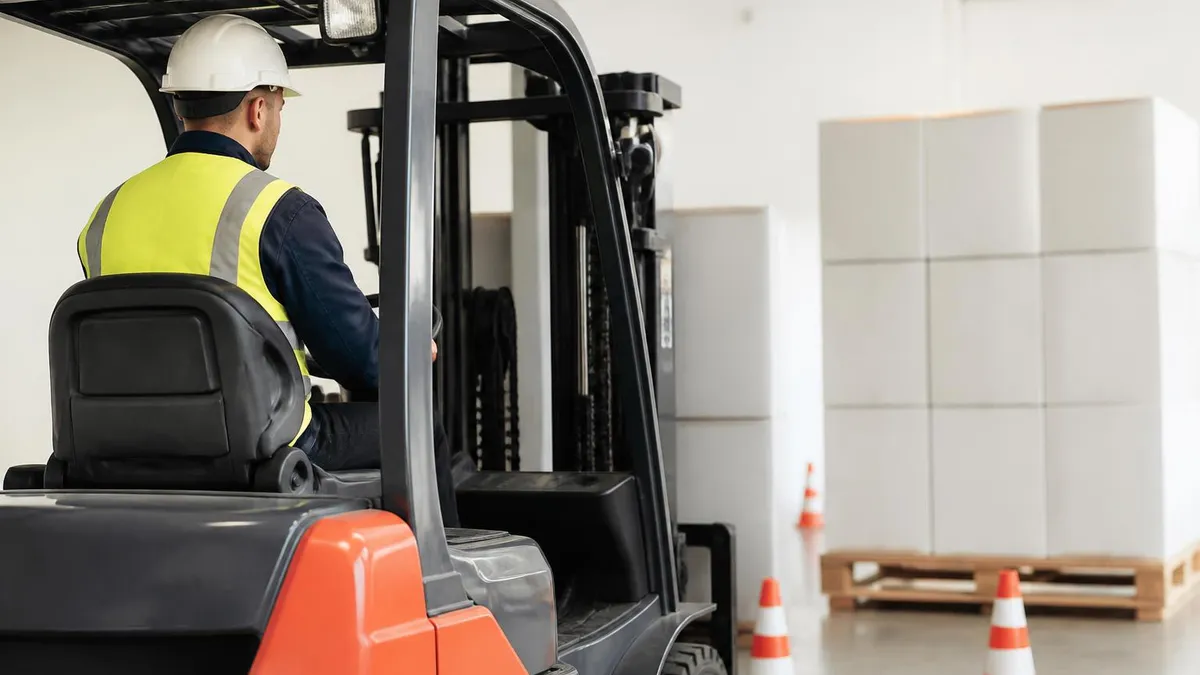
Forklift License Renewal: Complete Guide to Forklift License Expiry, OSHA Recertification, and Operator Requirements for 2026
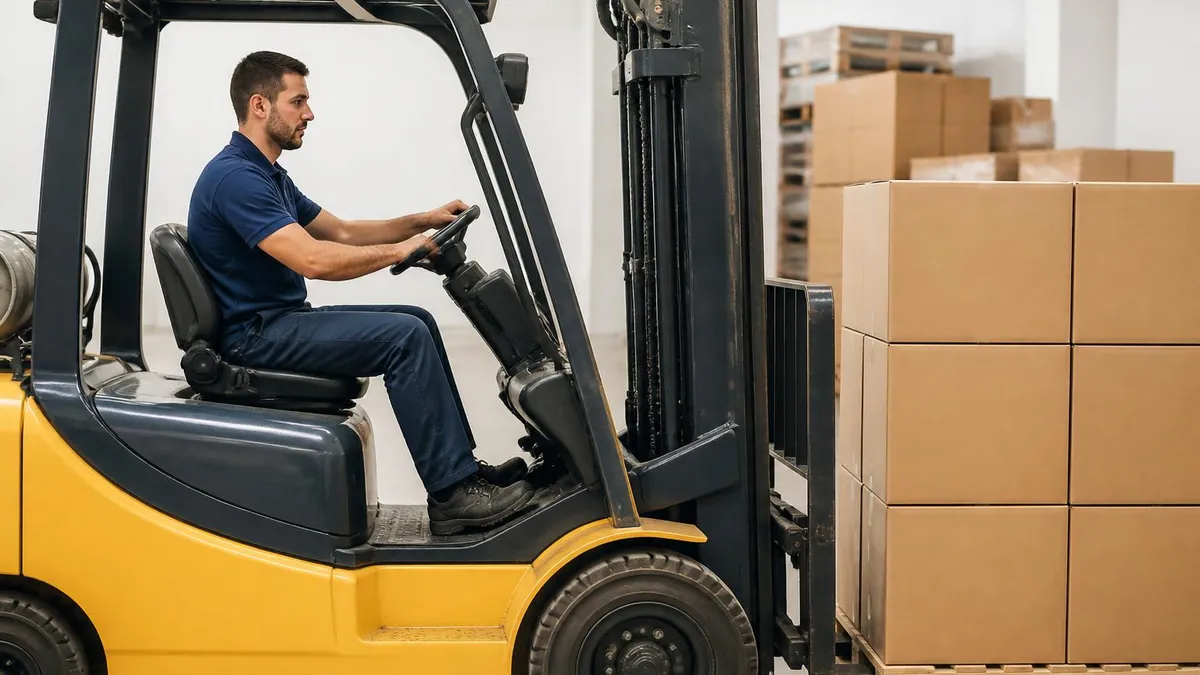
Free Forklift Training Near Me: Complete Guide to No-Cost Certification Programs, Employer-Paid Courses, and OSHA-Compliant Operator Training in 2026
About the Author

Certified Crane Operator & Skilled Trades Exam Specialist
Ferris State UniversityRobert Martinez is a Journeyman Ironworker, NCCCO-certified crane operator, and forklift trainer with a Bachelor of Science in Construction Technology from Ferris State University. He has 21 years of ironworking, rigging, and heavy equipment operation experience across high-rise and industrial construction sites. Robert prepares candidates for crane operator, rigger, forklift, and skilled trades certification examinations.