
Free Forklift Training Near Me: Complete Guide to No-Cost Certification Programs, Employer-Paid Courses, and OSHA-Compliant Operator Training in 2026 October
Find free forklift training near me: 💡 employer-paid courses, OSHA certification options, community programs, and how to get certified at zero cost in 2026 October.
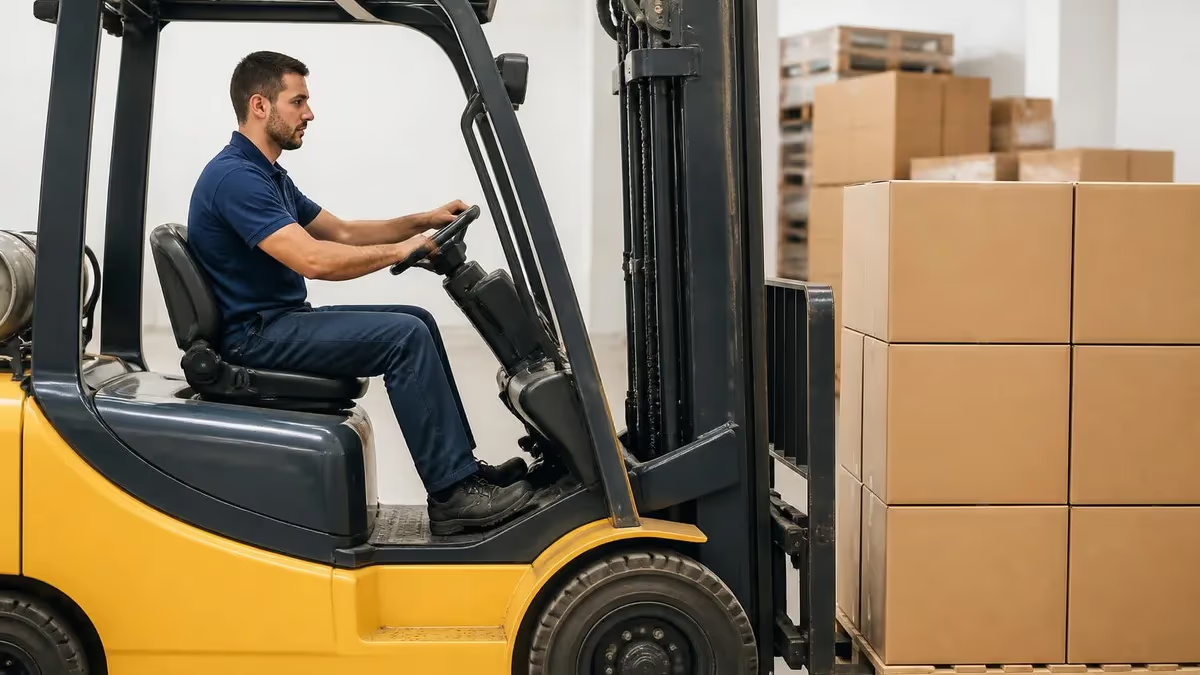
Searching for free forklift training near me has become one of the most common queries among job seekers, warehouse workers, and career changers who want to break into logistics without paying out of pocket. The good news is that genuinely free, OSHA-compliant forklift training does exist across the United States, and it comes from several different channels including state workforce development programs, employer-paid onboarding, community college grants, union apprenticeships, and temp agencies that fold certification into their hiring process. Understanding where to look is the first step.
The forklift industry is enormous, with over 850,000 powered industrial truck operators employed nationally and warehouses adding tens of thousands of new positions each year. Demand for certified forklift operators has pushed many distribution centers, big-box retailers, and third-party logistics companies to absorb the entire cost of forklift training near me rather than require workers to arrive with credentials. This shift makes 2026 an ideal year to pursue zero-cost certification if you know which doors to knock on.
Free programs typically last between four and sixteen hours of combined classroom and hands-on instruction, depending on whether you are learning a stand up forklift, sit-down counterbalance, reach truck, or electric forklift. OSHA standard 1910.178 requires both formal instruction and practical evaluation, so any legitimate course, paid or free, must cover both. Programs that promise online-only certification without an in-person evaluation do not meet federal standards and will not protect you on the job.
This guide walks through every realistic path to no-cost forklift training, including which employers consistently pay for new hires, how to use your state's WIOA workforce funds, which community organizations partner with manufacturers, and what to expect from a free course in terms of equipment, instructor quality, and post-training job placement. We also explain the differences between certification of forklift programs offered by national training providers versus local community colleges.
Beyond the training itself, we cover what happens after you earn your operator card, including how to negotiate higher starting pay, when to add endorsements for specialty equipment like lull forklift telehandlers or order pickers, and how to keep your certification current through the OSHA-mandated three-year recertification cycle. Free initial training is excellent, but understanding the long-term career math matters just as much.
You'll also find practical advice on what to bring to a free training session, how to evaluate whether a so-called free program is actually a sales funnel for a paid upsell, and the red flags that signal a sketchy provider. Not every advertisement for free forklift training is legitimate, and a fake certification card can cost you a job offer or worse if an OSHA inspector visits your worksite.
By the end of this guide, you'll have a clear roadmap for landing genuinely free, OSHA-compliant forklift training in your area, plus a realistic timeline for moving from job application to certified operator earning $18 to $26 per hour in most US markets. Let's dig into the specifics.
Free Forklift Training by the Numbers

Where to Find Genuinely Free Forklift Training Near You
Amazon, Walmart, Costco, FedEx Ground, UPS, Target, and Home Depot all train new hires on company time at no cost. You apply for a material handler position, complete onboarding, and earn your certification within the first week of paid employment.
Every state operates American Job Centers funded by the Workforce Innovation and Opportunity Act (WIOA). These centers cover tuition for approved forklift programs if you are unemployed, underemployed, or transitioning careers. Eligibility is broader than most people realize.
Many community colleges run short forklift programs funded by Perkins grants, state job training credits, or local economic development boards. Programs in Texas, Ohio, Pennsylvania, and Florida frequently run at no cost to participants who meet residency rules.
Integrity Staffing, Kelly Services, Adecco, ProLogistix, and Aerotek often pay for certification when you commit to a placement. The agency bills the host warehouse for training costs, so you pay nothing and start earning during the training period itself.
Teamsters, IUOE, and other building trades unions run apprenticeship programs that include forklift, lull forklift, and rough terrain telehandler certifications. Apprenticeships pay you to learn and often lead to wages of $28 to $40 per hour at journey level.
Employer-paid certification is by far the most reliable path to free forklift training, and the math works out well for both sides. A warehouse spends roughly $75 to $150 per worker on an in-house OSHA evaluation, which is far cheaper than insisting that every applicant arrive pre-certified. This reality has pushed nearly every large logistics employer to build forklift training directly into their onboarding pipeline, which means you can walk in without any experience and walk out certified within your first paid week.
Amazon's fulfillment centers run continuous forklift, reach truck, and order picker certification cycles for their Tier 1 associates. New hires typically spend two to three shifts learning how to get forklift certified on the specific equipment used at that facility, including powered industrial trucks, pallet jacks, and stand up forklifts. The training is performed by on-site safety trainers who hold OSHA train-the-trainer credentials, and the certification card is valid wherever you work next, not just inside Amazon.
Walmart distribution centers and Sam's Club fulfillment hubs run a similar model. Walmart's PIT (Powered Industrial Truck) program covers sit-down counterbalance forklifts, electric forklift pallet jacks, and order pickers. The company pays for all training time at the standard hourly wage, which means you are literally earning money while learning. Most Walmart DCs run new-hire PIT cohorts twice a month, and a returned certification typically takes one to two weeks of part-time instruction.
FedEx Ground, UPS, XPO, and J.B. Hunt all run their own internal training programs. UPS is particularly noteworthy because their package centers use a heavy mix of forklift rentals during peak season, which means they need a deep bench of certified operators on standby. Seasonal workers hired in October frequently receive full certification and then get retained as permanent employees in January when union positions open up.
Home Depot and Lowe's distribution centers, as well as their larger retail stores with lumber yards, also pay for forklift certification. Big-box home improvement retailers operate a wide variety of equipment including sit-down, stand up, and outdoor rough-terrain forklifts. Getting certified through a home improvement retailer often gives you exposure to more equipment classes than a single-truck distribution center, which makes your resume stronger when you move on.
Costco warehouses are sometimes overlooked but offer some of the best pay in the industry combined with employer-paid certification. Starting wages at Costco distribution facilities frequently exceed $22 per hour even for trainees, and full benefits start on day one for many positions. The catch is that Costco hiring is highly selective and competition for openings is steep, especially at established warehouses with low turnover.
Outside the giants, regional grocery distributors like Wegmans, H-E-B, Publix, and Kroger all run strong in-house forklift training programs. Regional players often have shorter hiring queues than Amazon or Walmart, and they tend to offer more stable schedules, which matters if you are training for a long-term career rather than a short-term gig. Apply to two or three at once and pick whichever moves fastest through the interview cycle.

Forklift certification Practice Test Questions
Prepare for the Forklift certification Certification exam with our free practice test modules. Each quiz covers key topics to help you pass on your first try.
Forklift certification Certification Forkl...
Forklift certification Exam Questions covering Certification Forklift certification Maintenance and Repairs. Master Forklift certification Test concepts for certification prep.
Forklift certification Certification Forkl...
Free Forklift certification Practice Test featuring Certification Forklift certification Maintenance and Repairs Questions and Answers. Improve your Forklift certification Exam score with mock test prep.
Forklift certification Certification Forkl...
Forklift certification Mock Exam on Certification Forklift certification Operator Training and Certification Requirements. Forklift certification Study Guide questions to pass on your first try.
Forklift certification Certification Forkl...
Forklift certification Test Prep for Certification Forklift certification Operator Training and Certification Requirements Questions and Answers. Practice Forklift certification Quiz questions and boost your score.
Forklift certification Load Handling and S...
Forklift certification Questions and Answers on Load Handling and Stability. Free Forklift certification practice for exam readiness.
Forklift certification OSHA Regulations an...
Forklift certification Mock Test covering OSHA Regulations and Compliance. Online Forklift certification Test practice with instant feedback.
Forklift certification Pre-Operation Inspe...
Free Forklift certification Quiz on Pre-Operation Inspections. Forklift certification Exam prep questions with detailed explanations.
Forklift certification Refueling and Recha...
Forklift certification Practice Questions for Refueling and Recharging Procedures. Build confidence for your Forklift certification certification exam.
Forklift certification Safe Driving and Ma...
Forklift certification Test Online for Safe Driving and Maneuvering. Free practice with instant results and feedback.
Forklift certification Workplace Hazard Id...
Forklift certification Study Material on Workplace Hazard Identification. Prepare effectively with real exam-style questions.
Forklift certification Forklift Instructions
Free Forklift certification Test covering Forklift Instructions. Practice and track your Forklift certification exam readiness.
Forklift certification Forklift MCQ
Forklift certification Exam Questions covering Forklift MCQ. Master Forklift certification Test concepts for certification prep.
Forklift certification Forklift Employer R...
Free Forklift certification Practice Test featuring Forklift Employer Responsibilities. Improve your Forklift certification Exam score with mock test prep.
Forklift certification Forklift Penalties ...
Forklift certification Mock Exam on Forklift Penalties for Non-Compliance. Forklift certification Study Guide questions to pass on your first try.
Forklift Training Formats Compared
Employer onboarding is the fastest and most common path to certification. You apply for a warehouse or distribution job, complete the standard hiring paperwork, and receive forklift training as part of your first one to two weeks on payroll. The instruction is delivered by an in-house safety trainer who tailors the course to the exact make, model, and class of forklift you'll operate daily, which makes the practical evaluation highly relevant to your actual job duties.
The biggest advantage is that you are paid the entire time, often at a slight training-pay differential below the full operator rate, but still earning income from day one. The downside is that certification is initially tied to that specific employer and that specific equipment, so if you move to a different facility with different forklifts, your new boss may want to re-evaluate you on their site. This is normal under OSHA rules and not a sign your card is invalid.
Free Training vs Paid Training: Which Path Is Right for You?
- +No upfront cost when employer or government pays tuition
- +Paid training time at most major warehouse employers
- +Direct pipeline to immediate job placement
- +Often includes hands-on time with multiple forklift classes
- +WIOA programs may include transportation and childcare stipends
- +Certifications are fully OSHA-compliant when delivered by accredited trainers
- +Builds an established employment relationship from day one
- −Free employer programs may tie you to a specific job or contract length
- −Limited to whatever equipment that employer uses on site
- −Class schedules less flexible than paid private programs
- −Some free programs have waiting lists of two to six weeks
- −WIOA paperwork can be slow and bureaucratic
- −Quality of instruction varies widely between locations
- −Card may need reissue if your trainer's credentials lapse

Pre-Training Checklist: What to Do Before Your Free Forklift Course
- ✓Confirm the training provider is OSHA-compliant and issues a portable certification card
- ✓Verify whether the program covers stand up forklift, sit-down, reach truck, or all three
- ✓Ask if hands-on evaluation is included on-site or scheduled separately
- ✓Bring photo ID, Social Security card, and proof of address for WIOA enrollment
- ✓Wear closed-toe steel-toed boots, long pants, and a high-visibility vest if required
- ✓Review the OSHA forklift safety manual the night before training begins
- ✓Eat a solid breakfast since hands-on sessions often run four to six hours straight
- ✓Complete any pre-training online modules before arriving for the classroom portion
- ✓Bring reading glasses or vision correction since written tests have small print
- ✓Ask the trainer for a digital copy of your certification card in addition to the wallet card
Free training pays you, paid training costs you
The single most overlooked fact about forklift certification is that the best free programs actually pay you to attend. Major warehouse employers fold training into your first week of paid employment, which means you can walk in with zero experience and walk out three days later with a certification card, a paycheck, and a permanent job. Compare this to a $150 to $400 private course where you pay the trainer and then still need to find work.
OSHA standard 29 CFR 1910.178(l) sets the federal floor for all forklift operator training in the United States, and understanding what the standard actually requires helps you evaluate whether any free program is legitimate. The rule has three core pillars: formal instruction covering general truck operation and workplace hazards, practical training that demonstrates the operator can safely handle the equipment, and a performance evaluation conducted by a qualified evaluator before the operator works unsupervised. Any program that skips one of these pillars does not meet federal standards, full stop.
Formal instruction covers topics like operating instructions, vehicle stability, load handling, surface conditions, pedestrian traffic, ramps, narrow aisles, refueling and battery charging procedures, and any other operational hazards specific to your workplace. This portion can be delivered in a classroom, online, or through written materials, and it typically runs three to six hours depending on the depth. Free programs at large employers tend to compress this into a single half-day session, while community college programs often spread it across two evenings.
Practical training is where the operator gets behind the wheel and demonstrates competence on the specific type of forklift they'll be using. This is non-negotiable and cannot be done online. The trainer observes the operator performing actual material handling tasks, including picking up loads, traveling with loads, stacking, unstacking, refueling, and conducting pre-shift inspections. Free programs at warehouse employers typically dedicate the entire second day to this practical phase.
The performance evaluation is the final OSHA-required step, and it must be conducted by a person who has the knowledge, training, and experience to evaluate operator competence. This is usually the same trainer who delivered the practical instruction, but it does not have to be. The evaluation results in a written record that includes the operator's name, training date, evaluation date, and the evaluator's identity. This record is what makes your certification card legally valid.
One critical point that confuses many job seekers is that OSHA does not actually issue forklift licenses. The word license is colloquial. What you actually receive is an employer-issued operator certification card backed by training records on file. This means the card itself is only as credible as the employer or training provider that issued it. A card from Amazon or Walmart carries serious weight, while a card from a fly-by-night online program may not be accepted by future employers.
OSHA also requires refresher training in specific circumstances, including when an operator has been observed driving unsafely, has been involved in an accident or near-miss, has been assigned to drive a different type of truck, or when conditions in the workplace have changed in a way that affects safe operation. Refresher training is also required every three years through formal evaluation, not necessarily a full course retake.
Employers are responsible for keeping training records on file for the duration of employment. If you change jobs, your new employer technically must evaluate you on their site even if you hold a valid card from a previous employer. This is not a sign of distrust, it is a federal requirement, and the new evaluation is usually quick if you already have solid skills. Knowing this helps you understand why every employer wants to do at least a brief evaluation regardless of your prior credentials.
Any program that promises a complete OSHA-compliant forklift certification through online video lessons alone is misleading at best and fraudulent at worst. OSHA explicitly requires hands-on practical training and an in-person performance evaluation. Online classroom content can satisfy the formal instruction portion only. If a program charges you $49.99 for a printable certificate with no practical component, that card will not protect you legally and may get you fired the moment your employer realizes you do not have a real evaluation on record.
Once you complete free forklift training and earn your operator card, the earning potential opens up quickly. Entry-level forklift operator positions in 2026 typically pay between $17 and $22 per hour in most US metro areas, with major distribution hubs like Memphis, Louisville, Columbus, and Dallas often pushing starting wages above $20. Experienced operators with two to three years on the floor and multiple equipment endorsements regularly earn $24 to $28 per hour, and night-shift or weekend differentials add another $1.50 to $3 on top.
Specialty endorsements are the fastest path to higher pay. Adding a reach truck or order picker endorsement to your standard counterbalance certification can bump your hourly rate by $2 to $4. Stand up forklift and electric forklift specialty work in cold storage or pharmaceutical warehouses often pays a premium because of the more challenging conditions. Operating a lull forklift or other rough-terrain telehandler on construction sites can push wages above $30 per hour, especially in union markets like Chicago, New York, and Seattle.
Heavy equipment operators who can move between forklifts, hoists, and overhead cranes are highly valued in steel mills, paper mills, and aerospace facilities. These positions often pay $28 to $40 per hour with full benefits and union representation. The free initial forklift certification you earn from a basic warehouse job becomes the foundation for these higher-skill roles, so think of your first certification as the start of a career ladder rather than the ceiling.
Long-term, many forklift operators move into supervisory and trainer roles. A warehouse lead or shift supervisor with forklift experience typically earns $52,000 to $68,000 annually plus bonuses. The natural next step beyond supervisor is becoming a certified OSHA forklift trainer yourself, which can be a full-time role at large employers or a freelance side business that pays $300 to $600 per training session. Train-the-trainer credentials cost between $400 and $900 to earn, and many employers will pay for that step too.
Diversifying into related equipment also pays well. Operators who add hazmat certification, DOT medical clearance, or a Class A CDL can move into shuttle driving, yard jockey work, or full over-the-road trucking with wages well above $60,000 per year. Forklift skills also transfer naturally into lull forklift work, port crane operation, and rail-yard loading, all of which represent step-ups in pay and stability compared to standard indoor warehouse jobs.
Knowing the equipment side helps too. Workers who understand forklift maintenance, basic hydraulic troubleshooting, and battery management often earn extra hours on second shift performing minor repairs. Some forklift operators eventually move into full-time forklift technician roles, which require additional vocational training but pay $25 to $35 per hour with strong job security. Forklift mechanics are in chronic short supply nationally, and the wage premium reflects that scarcity.
Finally, your free training and operator card give you negotiating use you may not realize you have. Once you have six months of clean operating history, you can comparison-shop between warehouses, staffing agencies, and direct-hire employers in your area. Many operators use their certification to jump employers every 12 to 18 months, picking up a $1 to $3 hourly raise each time. The free start is the on-ramp to a career with real upward mobility.
Practical preparation before your first free training session can be the difference between sailing through certification and needing to repeat the practical evaluation. Start by reviewing the OSHA 1910.178 standard at a high level, not because you'll be tested on legal citations, but because understanding the framework makes the trainer's instructions click faster. Knowing the difference between Class I (electric counterbalance), Class II (narrow aisle), Class III (electric pallet jacks), Class IV (cushion tire internal combustion), and Class V (pneumatic tire) forklifts helps tremendously.
Dress appropriately for the hands-on portion. Steel-toed boots are mandatory at virtually every training site, and many will turn you away if you arrive in sneakers. Long pants, a fitted shirt without loose drawstrings, and a high-visibility vest are typical. If you wear prescription glasses, bring them and a backup pair if possible. Some sites also require hearing protection, hard hats, and safety glasses, and they usually provide loaner gear, but bringing your own marks you as serious.
Show up early. Arriving fifteen to twenty minutes before the scheduled start lets you complete any last-minute paperwork, ask the trainer about the day's plan, and observe the equipment you'll be using. This reduces nerves dramatically and signals to the instructor that you take the work seriously. Trainers notice attitude and often give the benefit of the doubt during borderline evaluation moments to candidates who clearly want to be there.
Practice basic pre-shift inspection routines in your head before you sit in the operator seat. Every OSHA-compliant evaluation includes a pre-shift inspection where you check tires, forks, mast chains, hydraulic lines, horn, lights, brakes, and steering. Memorize the sequence using the acronym TOLDST: Tires, Operator controls, Lights, Drive train, Steering, and Tilt mechanisms. Walking through this confidently in front of the evaluator can swing the practical evaluation toward a clean pass.
Once certified, treat your card as a professional credential and store the original safely. Take a clear photograph of both sides and email it to yourself for backup. Many employers will accept a phone photo if you lose the physical card, but reissuing a lost card can take two to four weeks depending on who issued it. Keep a copy in your vehicle, your work bag, and your home file cabinet so a misplaced wallet card never costs you a shift.
Plan for recertification well before your three-year window expires. OSHA requires refresher evaluation every three years, and most employers schedule refresher training six months early to avoid lapses. If you change employers in the meantime, expect a brief on-site evaluation at the new job, which is normal and not a sign of distrust. Keeping your forklift repair knowledge sharp, your inspection routine fluent, and your operating skills smooth makes every recertification a non-event.
Finally, build a habit of continuous learning. Even after you earn your free initial certification, follow up by studying additional forklift types, reading manufacturer manuals for the equipment you operate, and asking experienced operators for tips. The operators who treat certification as a one-and-done credential plateau at entry-level wages, while those who keep adding skills move into the $28 to $40 per hour bracket within five years. Free training is the start of the journey, not the end.
Forklift Questions and Answers
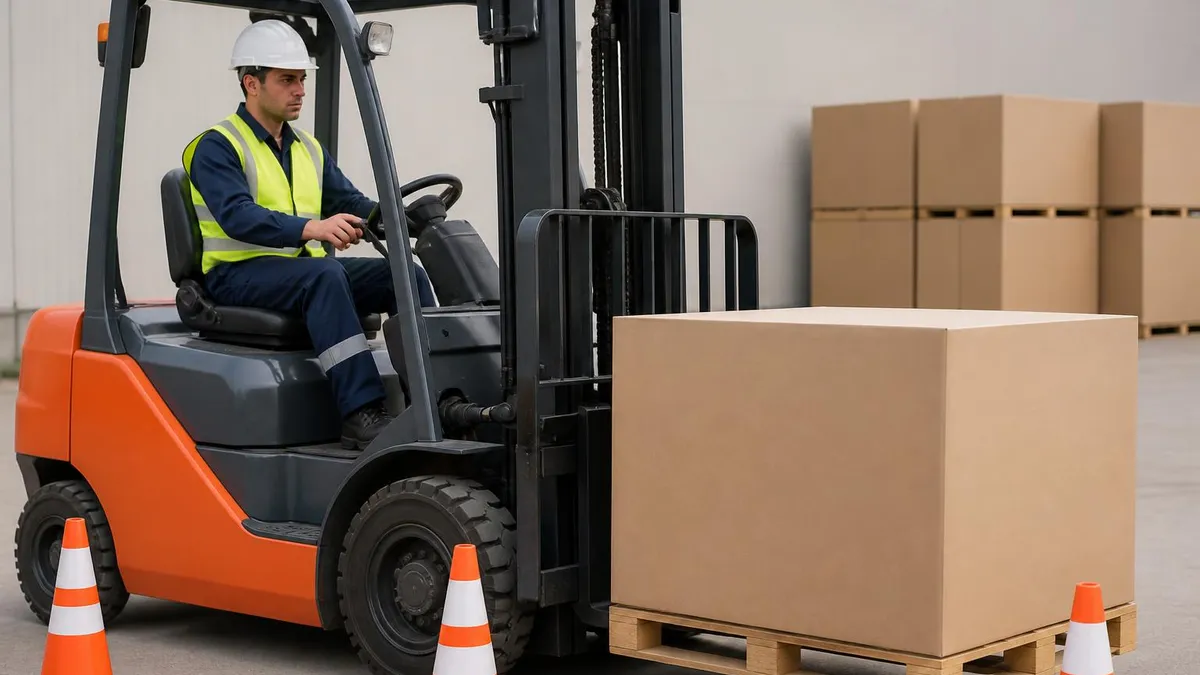
Forklift Tires: Complete Guide to Types, Sizing, Wear Patterns, and Replacement Costs
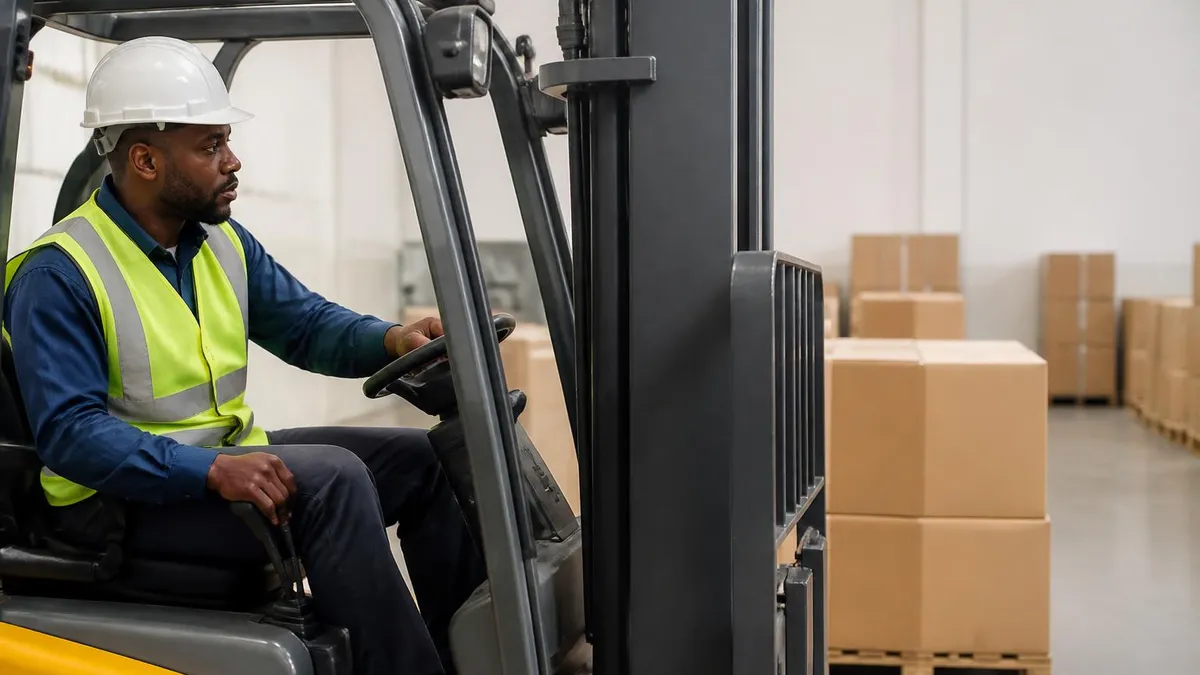
Forklift Accessories: Complete Guide to LED Lights, Attachments, Safety Gear, and Productivity Upgrades for 2026
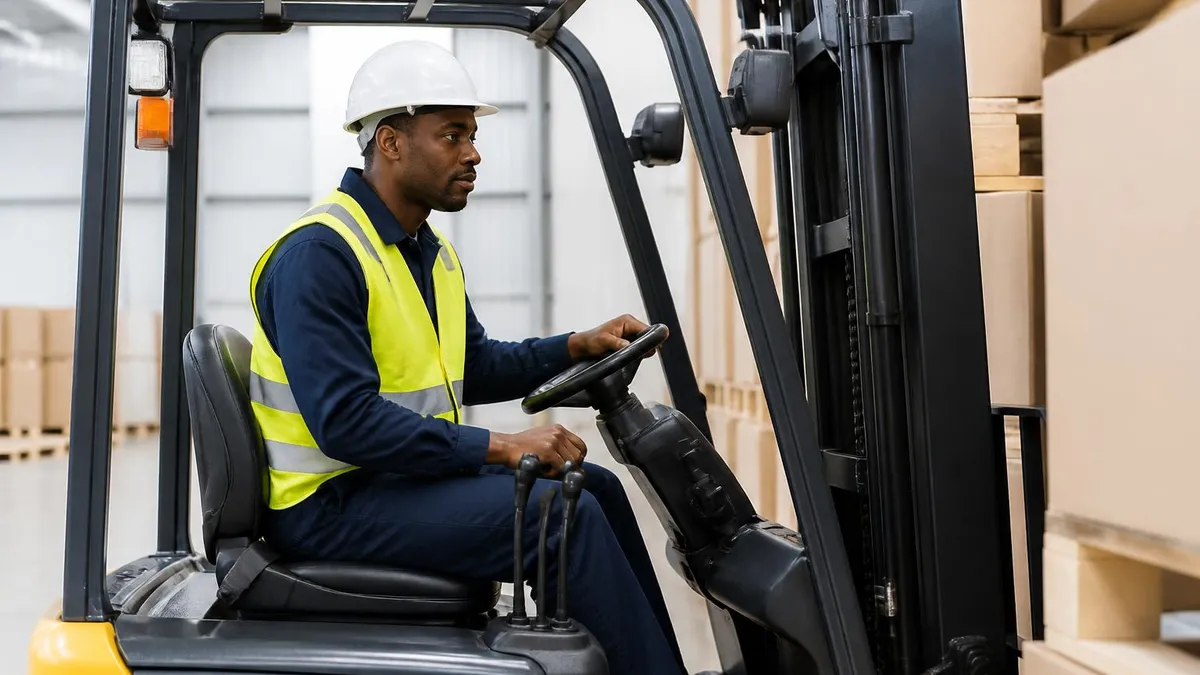
Can a Forklift Enter a 26 ft Box Truck? Complete Guide to Loading, Operations, and Equipment Selection
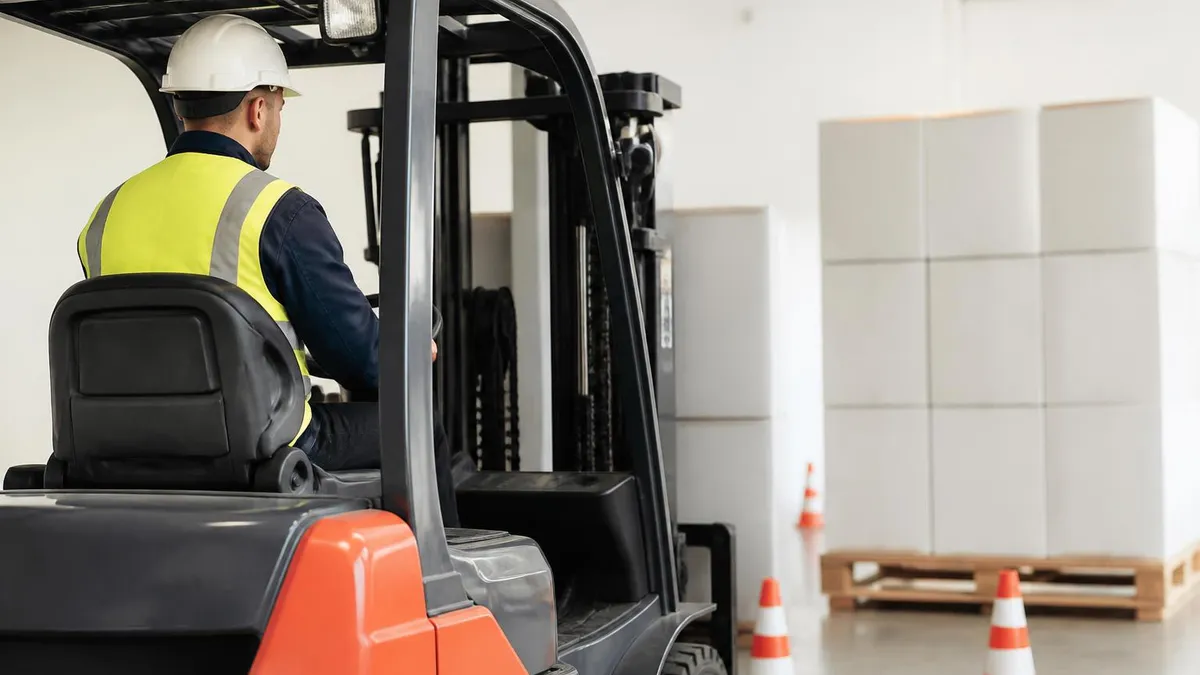
Forklift License Renewal: Complete Guide to Forklift License Expiry, OSHA Recertification, and Operator Requirements for 2026
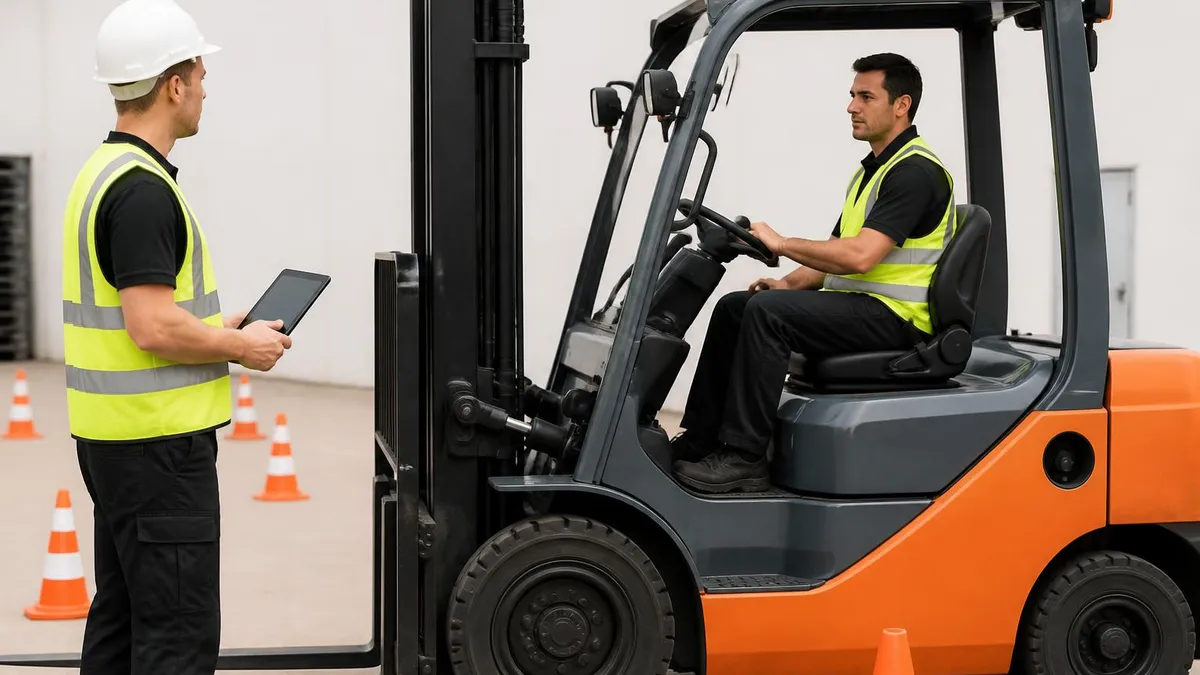
Forklift Safety Training: Complete OSHA Compliance Guide for Operators and Employers
About the Author
Certified Crane Operator & Skilled Trades Exam Specialist
Ferris State UniversityRobert Martinez is a Journeyman Ironworker, NCCCO-certified crane operator, and forklift trainer with a Bachelor of Science in Construction Technology from Ferris State University. He has 21 years of ironworking, rigging, and heavy equipment operation experience across high-rise and industrial construction sites. Robert prepares candidates for crane operator, rigger, forklift, and skilled trades certification examinations.