
Free Forklift Training: Complete Guide to No-Cost OSHA Certification Programs, Employer-Paid Courses, and Government-Funded Operator Classes in 2026 October
📚 Free forklift training options: employer-paid OSHA certification, WIOA grants, vocational programs, and online courses. Get certified at no cost in 2026 October.
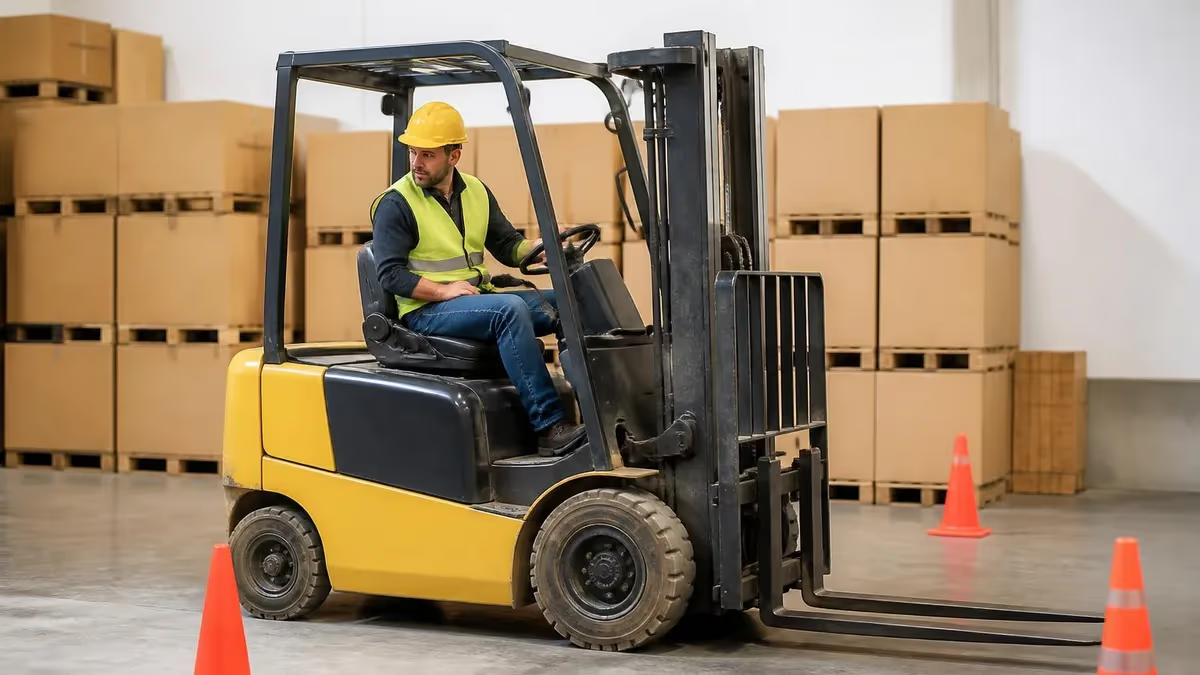
Free forklift training is one of the most valuable career investments a warehouse worker, logistics employee, or job seeker can pursue in 2026, especially as demand for certified forklift operators continues to climb across distribution centers, manufacturing plants, construction sites, and retail warehouses nationwide. With certification costs ranging from $75 to $300 at private schools, many workers wrongly assume they must pay out of pocket. The reality is that dozens of legitimate pathways exist to get OSHA-compliant certification at zero cost, including employer-sponsored programs, government-funded workforce grants, community college vocational tracks, union apprenticeships, and state-run reemployment initiatives.
The forklift industry remains massive. With roughly 855,900 forklift operator jobs in the United States and an average hourly wage hovering around $20.50, the financial return on a free certification is substantial. Many entry-level workers see a $3 to $7 per hour pay bump simply by adding a forklift card to their resume, and warehouses operating reach trucks, order pickers, or a forklift driver certification on cushion tires often pay even more for specialized endorsements like stand up forklift or electric forklift operation.
OSHA Standard 29 CFR 1910.178(l) requires every powered industrial truck operator in the United States to be formally trained and evaluated before independent operation, regardless of whether the equipment is owned, leased through a forklift rental company, or rented short-term. This federal mandate is precisely why so many employers offer free training. Hiring an uncertified operator exposes the company to fines up to $16,131 per violation, and willful violations can reach $161,323. From the employer's perspective, training you for free is dramatically cheaper than the alternative.
This complete 2026 guide walks through every credible free forklift training pathway, what each program actually covers, eligibility rules, what to expect during the classroom and hands-on portions, how long certification lasts, and how to verify whether a free program meets full OSHA compliance. We also cover red flags to avoid, including online-only "certifications" that skip the mandatory practical evaluation and are not legally valid on a job site.
Whether you are unemployed, currently working in a warehouse without a card, transitioning careers, or a veteran exploring trade work, there is almost certainly a free pathway that matches your situation. Some require nothing more than walking into an HR office and asking. Others involve a brief application through your state workforce agency. A few demand a short commitment, like accepting a specific job or completing a community college term, but none should require you to pay for certification itself.
By the end of this guide, you will know exactly which free forklift training program fits your goals, how long it takes to complete, what documents to bring, and how to use your new certification of forklift skills into a higher-paying role or career path in material handling, distribution, or industrial operations.
The keyword to remember is access. Free training exists, it is plentiful, and the only thing standing between most workers and a no-cost OSHA card is knowing where to look and what to ask for at intake. We will solve that problem in the next eighteen sections.
Free Forklift Training by the Numbers
Key Facts at a Glance
| Item | Value | Details |
|---|---|---|
| Cost of Employer-Sponsored OSHA Training | $0 | Required by federal law for new hires |
| Typical Free Course Length | 4–8 hrs | Classroom plus practical evaluation |
| OSHA Certification Validity | 3 yrs | Refresher required every 3 years |

Where to Find Free Forklift Training in 2026
Warehouses, distribution centers, retailers like Walmart, Amazon, Home Depot, and Lowe's, and most logistics companies provide free OSHA-compliant training as a condition of employment, often within the first week of hire.
The Workforce Innovation and Opportunity Act funds forklift certification through American Job Centers for unemployed, underemployed, or displaced workers. Apply at your local CareerOneStop office for full tuition coverage.
Many community colleges offer free or subsidized forklift courses through continuing education divisions, often packaged with warehouse logistics certificates funded by state job training dollars.
Teamsters, longshoremen, and warehouse worker unions provide free training to apprentices and members. Programs combine paid on-the-job hours with structured classroom and hands-on instruction.
VA-approved training, state vocational rehabilitation, and TANF reemployment services cover full forklift certification costs for veterans, dislocated workers, and qualifying parents returning to the workforce.
OSHA Standard 29 CFR 1910.178(l) sets the legal floor that every free forklift training program must meet to produce a certification an employer can actually rely on. Any program that skips required elements is not just low quality, it is legally invalid, meaning the operator card it produces will not protect either you or your employer during an OSHA inspection. Understanding these requirements helps you separate legitimate free programs from scam websites that sell worthless "certificates" for $59.
The standard breaks training into three mandatory parts. First, formal instruction covering truck operating principles, surface conditions, load handling, pedestrian traffic, narrow aisles, ramps, refueling, and battery charging. Second, practical training where the operator demonstrates competence on the specific equipment they will use, including reach trucks, sit-down counterbalance forklifts, order pickers, pallet jacks, and stand up forklift models. Third, a workplace performance evaluation completed by a qualified trainer who watches the operator handle real tasks in the actual environment.
This is why online-only courses cannot legally certify anyone. Federal law requires hands-on evaluation by a qualified person, full stop. If a website promises full OSHA certification entirely online for $39, it is selling you the classroom portion only, and you still need an employer or qualified trainer to complete the practical evaluation before that card means anything on a job site. Most reputable free programs combine online or classroom theory with in-person evaluation precisely to satisfy this requirement.
The classroom portion of free OSHA training typically covers stability triangles and load center math, daily pre-operation inspections, fluid leaks, tire wear, and parking brake function. You will learn the differences between Class I electric riders, Class II narrow-aisle reach trucks, Class III electric pallet jacks, Class IV cushion-tire sit-downs, Class V pneumatic-tire sit-downs, Class VI tractors, and Class VII rough-terrain models. Free training rarely covers every class, but it covers the class you will actually operate, which is what OSHA requires.
Topic-specific training is also mandatory. If your workplace uses propane forklifts, you must be trained on LPG cylinder handling. If you operate near loading docks, dock plate procedures are required. If your facility has narrow aisles, racking systems, or mezzanine floors, those hazards must be addressed in your training. Free programs offered by employers excel here because they tailor content to actual workplace conditions, something a generic $99 online course cannot do.
Recertification is required every three years under OSHA rules, and any time an operator is observed driving unsafely, involved in an accident or near-miss, assigned new equipment, or moved to a new workplace with different hazards. Most employer-sponsored free programs automatically schedule recertification, sparing operators the need to research forklifts for sale or training providers on their own. For anyone shopping around for forklifts for sale, accessories, or upgraded equipment, recertification on the new model is mandatory before operation.
Verifying that your free training meets OSHA standards is straightforward. Ask the program for written documentation of curriculum, the trainer's qualifications, and a sample evaluation form. A legitimate certification of forklift competency includes the operator's name, training date, evaluation date, trainer's name and signature, and the specific truck classes covered. Anything missing those elements is not OSHA-compliant, no matter how official the certificate looks.

Forklift certification Practice Test Questions
Prepare for the Forklift certification Certification exam with our free practice test modules. Each quiz covers key topics to help you pass on your first try.
Forklift certification Certification Forkl...
Forklift certification Exam Questions covering Certification Forklift certification Maintenance and Repairs. Master Forklift certification Test concepts for certification prep.
Forklift certification Certification Forkl...
Free Forklift certification Practice Test featuring Certification Forklift certification Maintenance and Repairs Questions and Answers. Improve your Forklift certification Exam score with mock test prep.
Forklift certification Certification Forkl...
Forklift certification Mock Exam on Certification Forklift certification Operator Training and Certification Requirements. Forklift certification Study Guide questions to pass on your first try.
Forklift certification Certification Forkl...
Forklift certification Test Prep for Certification Forklift certification Operator Training and Certification Requirements Questions and Answers. Practice Forklift certification Quiz questions and boost your score.
Forklift certification Load Handling and S...
Forklift certification Questions and Answers on Load Handling and Stability. Free Forklift certification practice for exam readiness.
Forklift certification OSHA Regulations an...
Forklift certification Mock Test covering OSHA Regulations and Compliance. Online Forklift certification Test practice with instant feedback.
Forklift certification Pre-Operation Inspe...
Free Forklift certification Quiz on Pre-Operation Inspections. Forklift certification Exam prep questions with detailed explanations.
Forklift certification Refueling and Recha...
Forklift certification Practice Questions for Refueling and Recharging Procedures. Build confidence for your Forklift certification certification exam.
Forklift certification Safe Driving and Ma...
Forklift certification Test Online for Safe Driving and Maneuvering. Free practice with instant results and feedback.
Forklift certification Workplace Hazard Id...
Forklift certification Study Material on Workplace Hazard Identification. Prepare effectively with real exam-style questions.
Forklift certification Forklift Instructions
Free Forklift certification Test covering Forklift Instructions. Practice and track your Forklift certification exam readiness.
Forklift certification Forklift MCQ
Forklift certification Exam Questions covering Forklift MCQ. Master Forklift certification Test concepts for certification prep.
Forklift certification Forklift Employer R...
Free Forklift certification Practice Test featuring Forklift Employer Responsibilities. Improve your Forklift certification Exam score with mock test prep.
Forklift certification Forklift Penalties ...
Forklift certification Mock Exam on Forklift Penalties for Non-Compliance. Forklift certification Study Guide questions to pass on your first try.
Forklift Training Program Comparison
Employer-paid programs are by far the most common path to free forklift training in 2026. Companies like Amazon, Walmart, FedEx, UPS, Target, Home Depot, Lowe's, and almost every regional warehouse operator provide certification within the first one to two weeks of employment. The training is built into your paid onboarding, so you actually earn money while learning, and the certification belongs to you afterward, transferable to any future job.
The typical employer program runs four to eight hours over one or two days. You watch a video module, take a short written quiz, then walk the warehouse floor with a qualified trainer who evaluates your handling of a real forklift through cone courses, racking exercises, and pallet movement. Many companies also include refresher modules tied to safety incidents, and they cover the cost of any additional endorsements you need for reach trucks, order pickers, or specialized attachments.
Free Forklift Training: Pros and Cons
- +Zero out-of-pocket cost when programs meet eligibility requirements
- +Real OSHA-compliant certification valid for three years at any employer
- +Hands-on practice with actual industrial equipment, not just video
- +Often bundled with job placement assistance and hiring partnerships
- +Many programs pay you to attend through stipends or paid onboarding
- +Builds resume credentials that increase hourly pay by $3 to $7
- +Includes ongoing recertification support at most participating employers
- −Schedule flexibility is limited compared to paid online courses
- −Employer-sponsored programs may tie you to a specific job for 30 to 90 days
- −WIOA and community college spots fill quickly during peak hiring seasons
- −Some free programs only cover one truck class, requiring later endorsements
- −Documentation paperwork at intake can take one to two weeks
- −Quality varies significantly between programs, so verification is essential
- −Most free programs require in-person attendance, limiting remote workers

Free Forklift Training Eligibility Checklist
- ✓You are at least 18 years old, as required by federal labor law for powered industrial truck operation
- ✓You have a valid government-issued photo ID, such as a driver's license, state ID, or passport
- ✓You can provide proof of US work authorization, such as Social Security card or work permit
- ✓You can pass a basic vision and depth perception screening, often provided free at intake
- ✓You are physically able to climb in and out of equipment and operate hand and foot controls
- ✓You have completed any required pre-employment drug screening if pursuing employer-sponsored training
- ✓For WIOA eligibility, you can document unemployment, underemployment, or qualifying income status
- ✓You have reliable transportation to attend in-person classroom and hands-on training sessions
- ✓You can commit to the full program length, typically one to five days depending on the provider
- ✓You understand that online-only certificates do not satisfy OSHA hands-on evaluation requirements
The Hidden Pathway Most Workers Miss
If you cannot wait for a WIOA appointment or community college term to start, apply directly to a high-volume warehouse like Amazon, Walmart, Home Depot, or a third-party logistics company. Most will train you for free within your first week as part of paid onboarding. Once certified, the card is yours forever, transferable to any future job, and you can use it into higher-paying positions within ninety days of certification.
What to expect during free forklift training depends on whether you are taking an employer-sponsored program, a WIOA-funded course at a community college, or a union apprenticeship, but the core structure is remarkably similar because every program must meet the same OSHA baseline. Knowing the typical flow helps you walk in prepared, finish faster, and avoid the awkward surprise of being asked to demonstrate something you did not realize was on the evaluation.
Day one typically begins with paperwork, including I-9 verification, photo ID copies, and signed acknowledgments of safety policies. You then move into classroom instruction, either in a small training room with a TV or in a multi-purpose breakroom with laptops loaded with the program curriculum. Modules cover the OSHA basics, equipment classes, stability principles, daily inspection checklists, load handling math, pedestrian safety, and emergency procedures. Most classroom blocks run two to four hours with breaks.
Many programs include a written quiz at the end of the classroom portion. Passing scores are usually 70 percent or higher, and you can almost always retake the quiz if you miss. The questions are not designed to fail you, they are designed to confirm you understood the safety material. Practice questions in advance, especially around stability triangles, load capacity charts, and pre-operation inspection items, can cut your prep time in half and dramatically reduce nerves on test day.
The hands-on portion is where most candidates feel anxious, but it is also the most engaging part of training. A qualified trainer demonstrates correct technique, then watches you operate the actual forklift through a series of skills: pre-operation walkaround, mounting the equipment, mirror and seatbelt adjustment, starting procedures, smooth acceleration and braking, turning radius management, pallet pickup and placement, racking, ramp navigation, and parking with forks down and brake set. Most evaluations take thirty to ninety minutes per candidate.
Common evaluation challenges include picking up a pallet from the bottom shelf without scraping, raising it to a target height, traveling through a cone course without knocking cones over, placing the pallet on an improved rack, and reversing into a tight parking spot. The trainer is looking for smooth control, awareness of surroundings, correct fork tilt, proper horn use at corners, and consistent application of the techniques covered in the classroom. Minor mistakes are allowed, repeated unsafe behavior is not.
If you fail any portion, most programs let you retake it the same day or the following day at no additional cost. Failure is rare because trainers genuinely want you to succeed, but it does happen, usually due to nerves or skipping the pre-operation inspection. Workers should also note that if you ever need a forklift repair near me during your career, your training will help you communicate effectively with technicians about symptoms and operating conditions.
Upon successful completion, you receive a certification card, sometimes laminated, sometimes a digital credential accessed through an app or portal. Keep this card with you whenever you operate, and store a backup copy at home. The trainer should also provide a copy of the evaluation form showing the date, equipment class, and trainer credentials, all of which OSHA requires to be retained by your employer for the duration of your employment plus three years.
Websites that promise full OSHA forklift certification for $39 to $99 completely online are selling you a worthless piece of paper unless you complete the mandatory hands-on evaluation with a qualified person at your actual workplace. OSHA 29 CFR 1910.178(l)(2)(iii) explicitly requires practical exercises and workplace evaluation. Any program that skips this step is not legally valid, and your employer can still be fined up to $16,131 per untrained operator even if you wave a printed online certificate at the inspector.
Turning your free forklift training into a higher-paying career is where the real return on investment shows up, and the strategy is straightforward but requires intentional moves over the first ninety days after certification. Most newly certified operators leave several thousand dollars per year on the table simply because they do not understand which roles, shifts, and equipment endorsements pay the most in the current US warehouse and logistics market.
The first move is to identify the equipment that pays a premium. Reach truck operators in distribution centers typically earn $2 to $4 per hour more than sit-down counterbalance operators because reach trucks require precise high-rack work, often forty to sixty feet up, and warehouses depend on them for dense storage. Order pickers, which require working at height while standing, also pay a premium. Stand up forklift operators in cold storage facilities often earn the highest rates because the working conditions are harsh and qualified operators are in short supply.
The second move is to target the right employer category. Third-party logistics providers, also called 3PLs, typically pay more than retail warehouses because they handle high-volume contracts with strict performance metrics. Cold storage, hazmat, and food distribution facilities pay above-market rates because of the certifications and conditions involved. Manufacturing plants often offer the highest base wages plus production bonuses, especially in automotive, aerospace, and heavy industry sectors where reliable forklift operators are essential.
The third move is to layer additional credentials on top of your base forklift card. OSHA 10 or OSHA 30 general industry cards are cheap, often free through WIOA, and they signal serious commitment to safety. Hazmat handling, dock plate certification, electric pallet jack endorsement, propane handling, and lift truck instructor credentials all stack value onto your resume and open higher-paying roles. Some workers also pursue forklift rentals near me coordinator roles, which combine operating skills with customer service and inventory management.
Shift differential is the fastest way to raise hourly pay without adding new skills. Night shifts, often called second or third shift, typically pay 10 to 15 percent above day shift rates, and many warehouses also offer weekend premiums. If you can tolerate a six PM to two AM schedule, you can essentially convert your free training into an extra $4,000 to $6,000 per year compared to a daytime equivalent role, often with quieter conditions and faster promotion timelines.
Documenting your accident-free hours is the slow but powerful play. After twelve months without a recordable incident, many employers move operators into lead positions or supervisor tracks that pay $25 to $35 per hour. Maintain perfect daily inspection records, never skip a pre-shift walkaround, report near-misses honestly, and keep your certification card on you at all times. These habits separate operators who stay at entry-level wages from those who reach lead, trainer, or warehouse supervisor roles within two to three years.
Finally, consider the lateral moves available after two years of operating experience. Yard truck and spotter trucking, dispatching, inventory control, parts management at dealerships that sell forklifts for sale or operate forklift rental fleets, and equipment sales positions all draw heavily from experienced forklift operators. Your hands-on knowledge of equipment, load handling, and warehouse operations makes you uniquely qualified for these roles, often without needing any additional formal training beyond what your free certification provided.
Practical preparation tips can shave hours off your training time and dramatically improve your performance on evaluation day. The single best thing you can do before walking into any free forklift training program is to spend two to three hours studying OSHA 29 CFR 1910.178 in plain language, focusing on the seven powered industrial truck classes, daily inspection requirements, load center calculations, and the basic physics of the stability triangle. This background knowledge transforms the classroom portion from confusing to familiar.
Bring the right documents to intake. A government-issued photo ID, your Social Security card, proof of address, and any prior training records you have should all travel with you. WIOA and community college programs additionally require income documentation, recent pay stubs or unemployment paperwork, and sometimes a DD-214 for veterans or court documentation for returning citizens. Showing up prepared signals seriousness and often moves your application to the front of the queue when intake counselors triage incoming applications.
Dress for the hands-on portion even on day one. Most programs require closed-toe shoes, ideally steel-toed boots, full-length pants, and a shirt that covers your shoulders. Avoid loose clothing, dangling jewelry, lanyards that could catch on controls, and rings that could conduct electricity during battery checks. If you do not own steel-toed boots, many programs offer loaners or include them in the wraparound services funded by WIOA or state workforce grants. Wraparound services often cover much more than people realize, including transportation passes, childcare stipends, and even meal vouchers during longer training days.
Practice the daily inspection out loud, even with an imaginary forklift, until it feels automatic. The checklist typically covers tires, forks, mast, chains, hoses, hydraulic fluid, battery or fuel level, horn, lights, mirrors, seatbelt, brake, parking brake, steering, and overhead guard. Trainers are impressed when candidates do this confidently because it shows safety culture rather than rote memorization. The inspection also gives you the most points on the practical evaluation, so mastering it pays direct dividends on test day.
Watch your local warehouse parking lots during shift change to observe how experienced operators handle real-world tasks. Notice how they approach pallets, the angle of fork entry, the timing of horn use at corners, the speed they maintain in lanes versus open spaces, and how they park at end of shift. This kind of passive observation builds an intuitive sense of professional operation that you cannot get from videos alone, and it tells you what your future workplace will expect from a competent operator.
Schedule your evaluation when you are well-rested, hydrated, and not anxious. Many candidates rush into evaluation immediately after a long classroom session, then perform below their capability because of mental fatigue. If your program offers flexibility, ask to do the practical portion in the morning, fresh, after a full night of sleep. Eat a light meal, avoid excessive caffeine that can cause hand tremors, and take three deep breaths before mounting the equipment for the first evaluation run.
After certification, immediately make three digital copies of your card: one in your phone photos, one in cloud storage like Google Drive or iCloud, and one emailed to yourself. Loss of a physical card is the most common reason operators must redo paperwork, and having instant access to a backup copy means you can start a new job, prove compliance to a forklift rental company, or satisfy an OSHA inspector within minutes rather than days.
Sample Forklift certification Practice Questions
Try these questions from our free Forklift certification practice tests. The correct answer and an explanation follow each question.
What must an employer's training certification record include?
- A. Operator name, training date, and evaluator identity
- B. Only the operator's signature
- C. The forklift serial number only
- D. A copy of the OSHA standard
Answer: A. Operator name, training date, and evaluator identity
The certification must record the operator's name, the date of training/evaluation, and who performed the evaluation.
What happens if an employer fails to address unsafe forklift operations after an OSHA warning?
- A. Immediate forklift seizure
- B. Repeat violation fines up to $136,532
- C. Employees face fines
- D. Certification is permanently revoked
Answer: B. Repeat violation fines up to $136,532
OSHA imposes significant penalties for employers who repeatedly fail to address safety violations. If an employer receives a warning for unsafe forklift operations and does not correct the issue, they can face substantial repeat violation fines. These fines, which can be as high as $136,532 per violation, are designed to deter negligence and ensure strict compliance with safety regulations.
An employer observes an operator driving with a raised load blocking visibility. What is the employer's proper responsibility?
- A. Ignore it if no accident occurred
- B. Provide refresher training and re-evaluation
- C. Wait for the next 3-year evaluation
- D. Only issue a verbal warning with no record
Answer: B. Provide refresher training and re-evaluation
Observed unsafe operation triggers the employer's duty to provide refresher training and evaluation.
Which document must an employer keep to prove operator certification?
- A. A verbal acknowledgment
- B. A written record of training and evaluation
- C. The operator's resume
- D. A photo of the operator
Answer: B. A written record of training and evaluation
Employers must maintain a written record certifying each operator's training and evaluation.
Forklift Questions and Answers
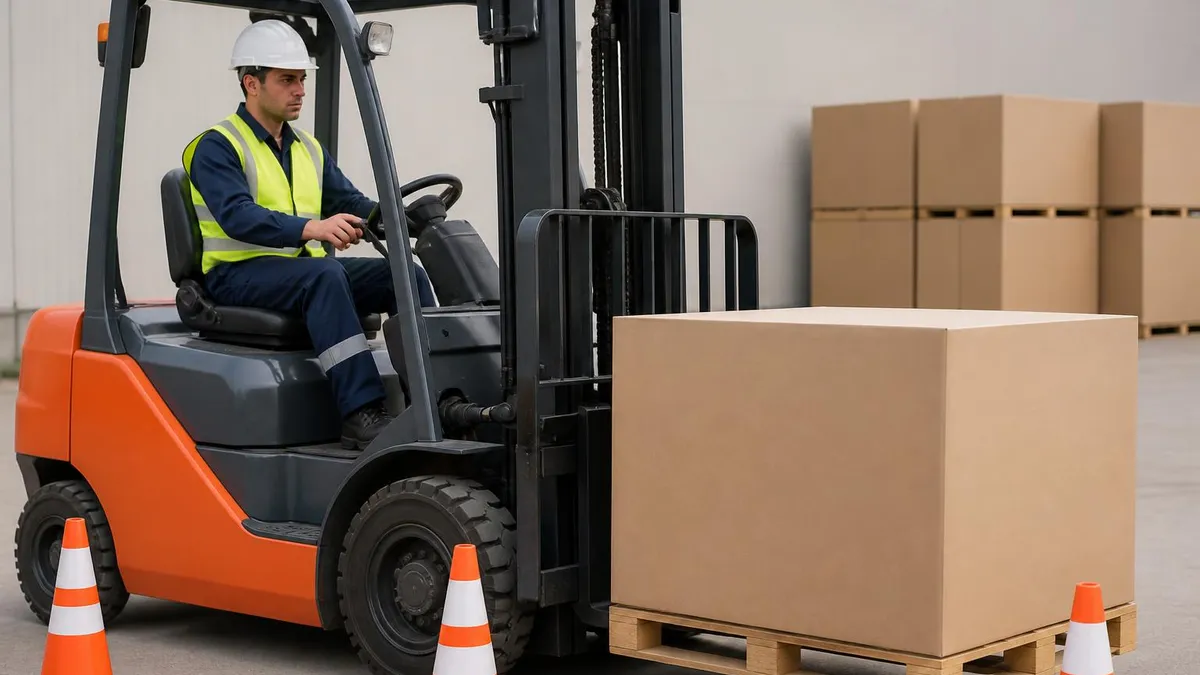
Forklift Tires: Complete Guide to Types, Sizing, Wear Patterns, and Replacement Costs
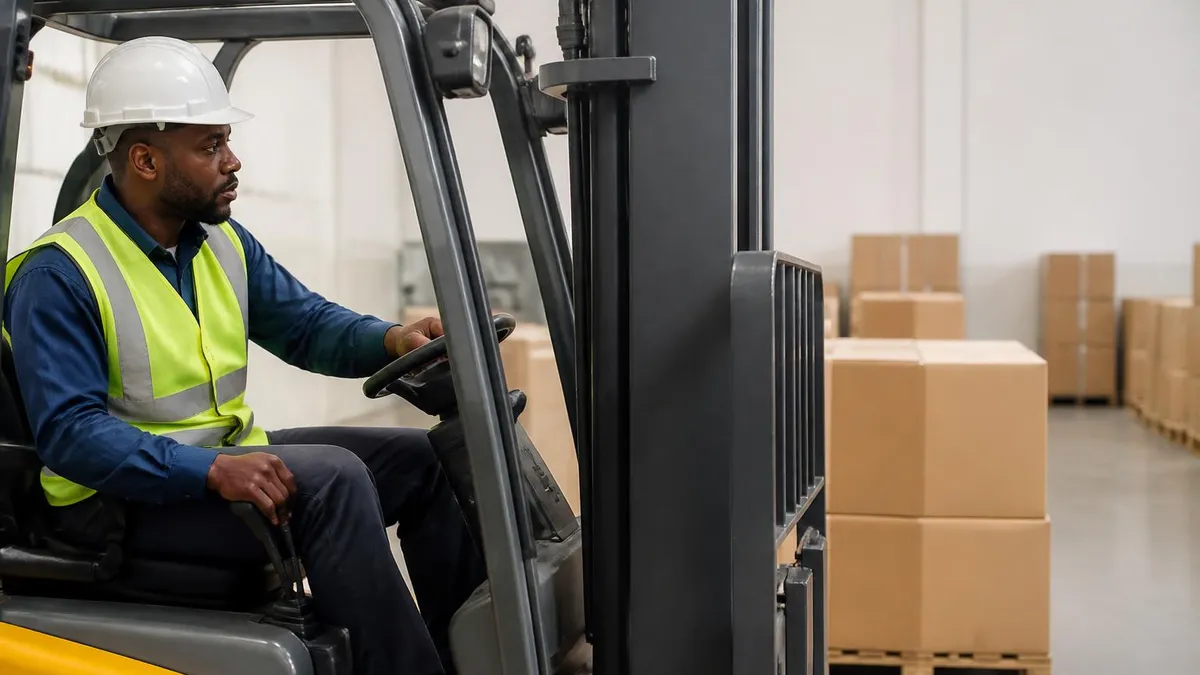
Forklift Accessories: Complete Guide to LED Lights, Attachments, Safety Gear, and Productivity Upgrades for 2026
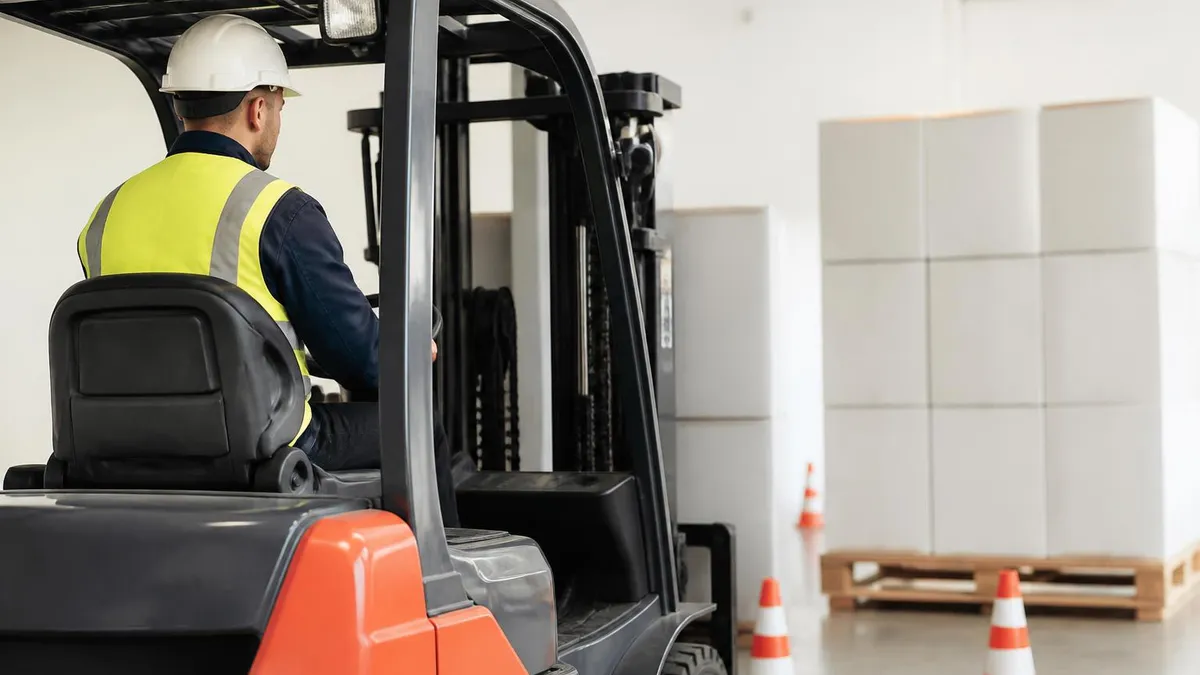
Forklift License Renewal: Complete Guide to Forklift License Expiry, OSHA Recertification, and Operator Requirements for 2026
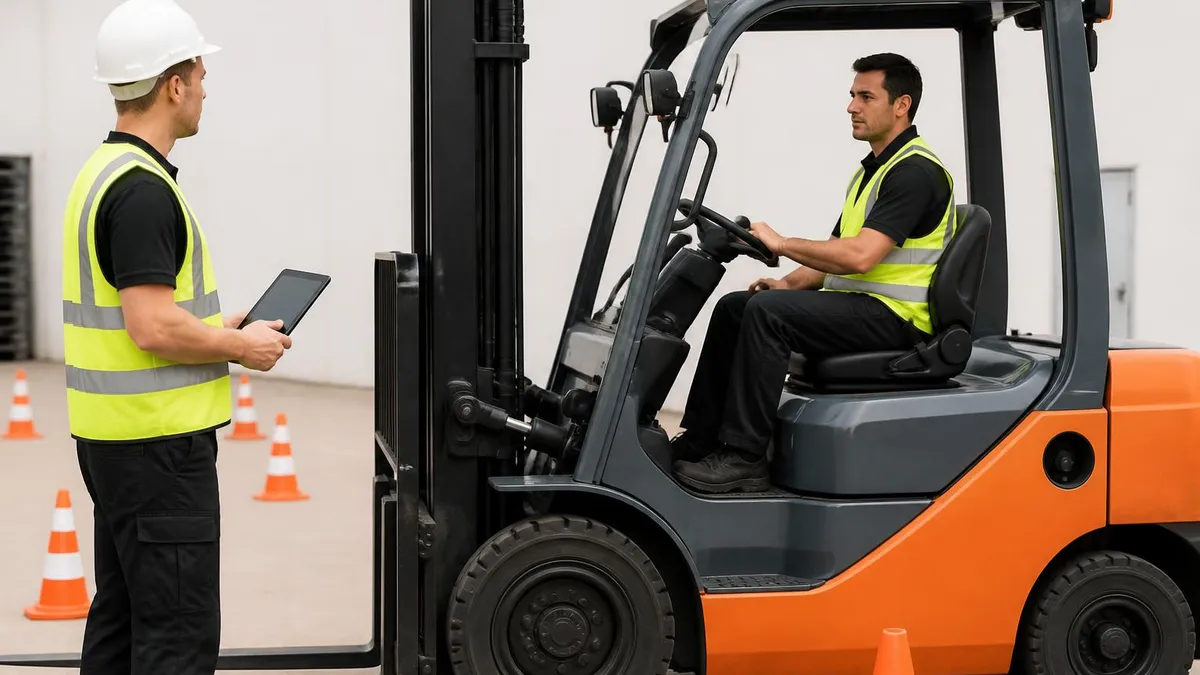
Forklift Safety Training: Complete OSHA Compliance Guide for Operators and Employers
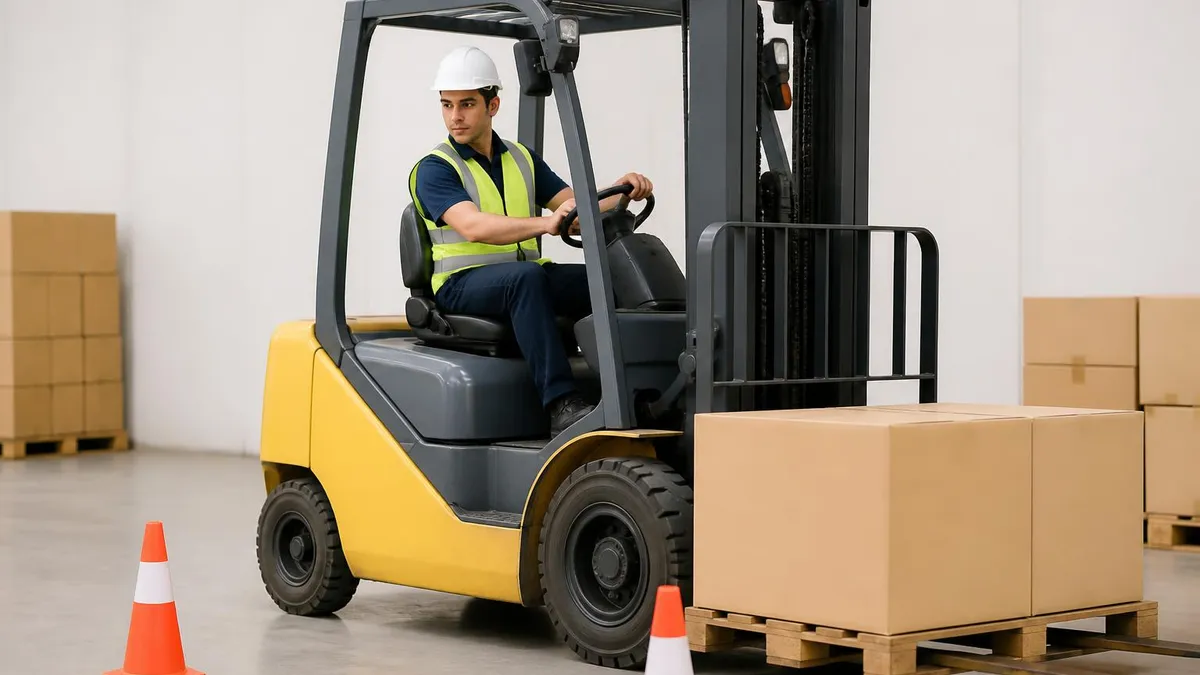
Forklift Repair Service: Complete Guide to Costs, Common Repairs, and Choosing the Right Technician
About the Author
Certified Crane Operator & Skilled Trades Exam Specialist
Ferris State UniversityRobert Martinez is a Journeyman Ironworker, NCCCO-certified crane operator, and forklift trainer with a Bachelor of Science in Construction Technology from Ferris State University. He has 21 years of ironworking, rigging, and heavy equipment operation experience across high-rise and industrial construction sites. Robert prepares candidates for crane operator, rigger, forklift, and skilled trades certification examinations.