
Big Joe CB35 Forklift Price: Complete Buyer's Guide to Costs, Specs, and Forklift Rental Options
Discover the Big Joe CB35 forklift price, rental costs, electric forklift options, 📗 and certification requirements. Full 2026 buyer's guide for US operators.

When businesses evaluate forklift rental options or consider an outright purchase, understanding the big joe cb35 forklift price is an essential starting point for budgeting decisions. The Big Joe CB35 is a compact, electric counterbalanced forklift designed for indoor warehouse environments, distribution centers, and retail backrooms where space is tight and zero emissions matter. New units typically list between $18,000 and $28,000 depending on mast height, load capacity configuration, and dealer-added accessories. Used and refurbished CB35 models can drop that figure to $8,000–$14,000, making them attractive for small operations watching their capital budget closely.
Big Joe Forklifts, headquartered in the United States, has built a reputation for producing durable, operator-friendly equipment that competes directly with Crown, Raymond, and Yale in the electric stand-up and sit-down segments. The CB35 specifically targets the 3,500-pound capacity class, which is arguably the most versatile tier for general warehouse work — capable of handling standard pallets loaded with consumer goods, building supplies, or manufacturing components without the bulk of larger 5,000- or 8,000-pound machines. Understanding where this price falls relative to the broader forklifts market helps procurement teams negotiate smarter and avoid overpaying on features they may not need.
Beyond the sticker price, total cost of ownership for an electric forklift like the CB35 includes battery replacement cycles (typically every five to seven years), charger costs, preventive maintenance contracts, and operator training. Skipping certified forklift training is a false economy — OSHA 1910.178 mandates that every forklift operator complete formal instruction before operating powered industrial trucks, and non-compliance fines can exceed $15,000 per violation. If you need help with servicing, searching for forklift repair near me can connect you with authorized Big Joe service centers that stock OEM parts and offer maintenance contracts.
The forklift rental market has also matured significantly, giving businesses a flexible alternative to purchasing. Daily forklift rental rates for a comparable electric counterbalanced unit run $150–$300 per day, while monthly rates for longer-term needs typically fall in the $900–$1,800 range. For seasonal operations — think holiday distribution surges or construction project staging — rental almost always makes more financial sense than committing capital to ownership. Comparing total rental spend against the CB35 purchase price is a straightforward calculation once you factor in depreciation, maintenance, and battery replacement into the ownership side of the equation.
Stand up forklift models like the CB35 excel in high-frequency, short-cycle picking environments because operators can hop on and off quickly without adjusting a seat position. The ergonomic platform design reduces operator fatigue over a full eight-hour shift compared to sit-down counterbalanced trucks. Big Joe engineers the CB35 with a tilt-adjustable steering column, cushioned platform mat, and proportional hydraulic controls — all features that contribute to measurable productivity gains when forklift operators are cycling through dozens of picks per hour in a busy warehouse setting.
This guide covers everything you need to know about the Big Joe CB35 from a price-and-value perspective: new versus used pricing tiers, how rental compares to purchase, what certification requirements your operators must meet, and how to evaluate competing electric forklift models in the same capacity class. Whether you manage a single warehouse or oversee a fleet across multiple distribution points, the information here will help you make a confident, cost-effective equipment decision backed by current market data and OSHA compliance fundamentals.
Big Joe CB35 & Forklift Market by the Numbers

Big Joe CB35 Forklift Price Breakdown
The electric forklift segment has seen remarkable price stability over the past several years, even as lithium-ion battery technology begins displacing traditional lead-acid packs in newer models. The Big Joe CB35 ships standard with a 24-volt or 36-volt lead-acid battery depending on configuration, and the charger is typically bundled into the purchase price at authorized dealers. Buyers evaluating total acquisition cost should note that lithium-ion upgrade packages from Big Joe add roughly $4,000–$7,000 to the base price but extend battery service life to 10-plus years and virtually eliminate watering and equalization maintenance tasks that lead-acid packs demand weekly.
Comparing the CB35 against propane-powered alternatives in the 3,500-pound class reveals meaningful operational cost differences over a five-year horizon. A propane forklift typically costs $15,000–$22,000 new — slightly less than an equivalent CB35 — but ongoing forklift propane tank exchange costs, engine oil changes, spark plug replacements, and exhaust system service can add $3,000–$5,000 per year in operating costs that electric owners largely avoid. Indoor air quality regulations in many states also restrict propane and internal combustion forklifts in enclosed facilities, making the CB35's zero-emission profile a compliance asset, not just an environmental one.
The stand up forklift design of the CB35 positions it differently from sit-down counterbalanced trucks even when the load capacities match. Stand-up riders accelerate operator movement in environments where the operator frequently dismounts to handle freight manually — think cross-dock operations, grocery distribution, or light manufacturing lines. The CB35's turning radius is also notably tighter than comparable sit-down models, allowing operation in aisles as narrow as 8 feet, which is a critical specification for warehouses maximizing storage density with selective or push-back racking systems.
Dealers typically offer several financing structures for the CB35, including fair market value (FMV) leases, $1 buyout leases, and traditional installment loans. An FMV lease on a new CB35 priced at $22,000 might run $380–$450 per month over a 60-month term with a competitive interest rate, keeping the monthly cash outlay well below short-term forklift rental rates while building toward eventual ownership — or the option to upgrade to a newer model at lease end.
Tax considerations under Section 179 of the IRS code allow US businesses to expense the full purchase price in the year of acquisition, which can dramatically reduce the effective after-tax cost of buying rather than leasing.
Forklift for sale listings on platforms like Machinery Trader, IronPlanet, and Equipment Trader regularly surface used CB35 units, and prices fluctuate with regional demand, hours on the machine, battery condition, and mast height. A CB35 with a 120-inch lift height and 2,000 operating hours in acceptable cosmetic condition typically sells for $9,000–$12,000 in the secondary market. Units with over 4,000 hours or documented battery issues can fall to $4,000–$7,000, but buyers should budget for a battery replacement that could add $3,000–$5,000 to the effective acquisition cost before the machine is production-ready.
Service network density is a practical consideration that often tips buyers toward Big Joe over smaller electric forklift brands. Big Joe maintains an authorized dealer and service network across all 48 contiguous states, with most metropolitan areas having at least one dealer within a 30-mile radius.
Response time on service calls under an active maintenance agreement is typically 4–8 business hours for non-emergency repairs, with 24-hour emergency service available in major markets. For operations where every hour of forklift downtime translates to measurable productivity loss, that service infrastructure is worth factoring into the brand selection decision alongside the base price comparison.
Forklift Rental vs. Purchase vs. Lease: Which Makes Sense?
Forklift rental near me searches spike during Q4 holiday seasons and construction peaks because short-term rental offers immediate equipment access without capital commitment. Daily rates for an electric counterbalanced forklift like the CB35 range from $150 to $300 depending on your market, while weekly rates typically run $600–$1,100. Most rental agreements include basic maintenance and a replacement unit if the machine goes down, which eliminates unexpected repair costs during critical operational periods.
Rental is the right choice when your forklift need is seasonal, project-based, or uncertain in duration. If you anticipate using a forklift for fewer than six months per year, rental economics almost always beat purchase when you account for depreciation, storage, insurance, battery maintenance, and the opportunity cost of tying up capital. Large forklift rental fleets from companies like Crown, Toyota, and Hyster-Yale also mean most markets have reliable supply even on short notice — typically 24–48 hours for standard electric units.

Big Joe CB35: Pros and Cons vs. Competing Electric Forklifts
- +Compact footprint fits aisles as narrow as 8 feet, maximizing warehouse storage density
- +Zero-emission electric drivetrain meets indoor air quality regulations in all 50 states
- +Strong US dealer network ensures parts availability and fast service response times
- +Ergonomic stand-up platform reduces operator fatigue during high-frequency picking shifts
- +Lithium-ion upgrade option eliminates weekly battery watering and equalization tasks
- +Competitive residual value in the secondary market compared to off-brand electric units
- −Higher upfront price than propane equivalents — typically $3,000–$6,000 more at point of purchase
- −Lead-acid battery standard configuration requires regular watering and equalization maintenance
- −Limited to indoor or covered outdoor use — not suitable for rough terrain or uneven surfaces
- −Battery charging downtime (6–8 hours for lead-acid) requires opportunity charging planning on multi-shift operations
- −Narrower dealer presence in rural markets compared to Toyota or Hyster which have broader rural coverage
- −Stand-up operator position may not suit all workers — some operators prefer sit-down counterbalanced trucks for comfort on long shifts
Forklift Operator Certification Checklist Before You Buy or Rent
- ✓Verify all operators have completed OSHA 1910.178-compliant forklift training before touching the CB35
- ✓Confirm certification of forklift training covers the specific truck type — stand-up electric requires separate evaluation from sit-down propane
- ✓Schedule a hands-on operator evaluation with a qualified trainer before the machine goes live in production
- ✓Renew operator certification every three years or immediately after any observed unsafe operation incident
- ✓Document all training records including trainer name, date, equipment type, and evaluation results on file
- ✓Perform a pre-shift inspection checklist on the CB35 before every shift — battery charge, forks, tires, lights, and horn
- ✓Confirm your facility has a designated charging area with proper ventilation even for electric forklift battery charging
- ✓Review OSHA's required topics: load capacity, stability triangle, pedestrian safety, and refueling/recharging procedures
- ✓Ensure new operators complete both formal classroom instruction and practical on-equipment training hours
- ✓Post load capacity placards on the CB35 and never exceed the rated 3,500-pound limit regardless of product type
The purchase price is only 40–50% of five-year total cost of ownership
When you add battery replacement ($3,000–$6,000), annual maintenance contracts ($800–$2,500/year), operator training and recertification ($200–$500 per operator every three years), insurance ($400–$1,200/year), and facility charging infrastructure, a $22,000 Big Joe CB35 can cost $35,000–$45,000 over five years of active use. Build these costs into your rent-vs-buy analysis before signing anything.
OSHA's forklift operator certification requirements apply equally whether your business owns, rents, or leases its equipment — the obligation follows the operator, not the machine. Under 29 CFR 1910.178(l), every powered industrial truck operator must complete formal training covering truck-related topics (controls, capacity, stability, inspection, refueling), workplace-related topics (surface conditions, load manipulation, pedestrian hazards), and a practical evaluation conducted by a person with the knowledge, training, and experience to train operators. This isn't a one-time formality; certification must be refreshed every three years or whenever an operator is observed operating the truck in an unsafe manner.
Forklift training programs are offered by community colleges, trade associations, online providers, and authorized equipment dealers. A comprehensive eight-hour certification course covering classroom instruction and hands-on evaluation typically costs $150–$350 per operator. Online-only programs that issue certificates without practical evaluation are not OSHA-compliant on their own — the hands-on evaluation must occur in person on equipment representative of what the operator will actually use. A certification earned on a sit-down propane counterbalanced truck does not automatically transfer to stand-up electric models like the CB35 without a supplemental evaluation.
The practical and financial consequences of running uncertified forklift operators are severe and well-documented. OSHA data consistently shows that forklift accidents result in roughly 85 fatalities and 34,900 serious injuries in US workplaces every year. Businesses found operating uncertified operators face fines up to $15,625 per serious violation, with willful violations reaching $156,259 per incident. Beyond regulatory penalties, workers' compensation costs for forklift-related injuries average $40,000–$150,000 per claim depending on severity, and a single serious accident can trigger OSHA inspections that expose additional compliance gaps across your entire operation.
For businesses building a forklift fleet that includes a CB35 or similar electric models, developing a strong internal training program often proves more cost-effective than relying on external training vendors for every new hire. Designating an in-house trainer — an experienced forklift operator who has completed a train-the-trainer course — allows on-demand certification of new hires and refresher training for existing operators without scheduling delays or per-seat training fees. Train-the-trainer courses typically cost $300–$600 and provide the trainer with OSHA-compliant curriculum materials, evaluation forms, and documentation templates.
The relationship between forklift training quality and machine utilization efficiency is often underappreciated by operations managers focused purely on equipment cost. Well-trained operators demonstrate measurably lower rates of product damage, rack impacts, and pedestrian near-misses — all of which carry real costs beyond the regulatory compliance dimension.
A study by the Industrial Truck Association found that operations with structured, ongoing operator training programs reported 30–50% fewer forklift-related incidents than those relying on informal on-the-job instruction. When you are evaluating the big joe forklift price in context of total operational investment, the training program budget should be viewed as a core line item rather than a peripheral expense.
Electric forklift models including the CB35 require specific training components that propane or diesel operators may not have encountered: battery management procedures, opportunity charging protocols, regenerative braking behavior, and the distinct handling characteristics that result from a lower center of gravity and different weight distribution compared to internal combustion trucks.
Operators transitioning from IC forklifts to the CB35 often report that the smooth, proportional power delivery takes adjustment, particularly in tight spaces where throttle modulation is critical. Including model-specific familiarization in your certification program — not just the generic OSHA-required topics — reduces incident rates during the critical first 30 days of operating a new machine type.

A forklift operator certified on a sit-down propane counterbalanced truck is NOT automatically certified to operate the Big Joe CB35 or any other stand-up electric model. OSHA requires a separate practical evaluation for each class of powered industrial truck. Running an operator on an uncertified equipment class — even if they are otherwise certified — constitutes a compliance violation subject to fines up to $15,625 per incident. Always document equipment-specific evaluations in your training records.
Choosing between the Big Joe CB35 and competing electric forklifts in the same 3,500-pound class requires evaluating several dimensions beyond the sticker price: mast height options, battery voltage compatibility with your existing charging infrastructure, dealer service proximity, parts availability, and operator ergonomic preferences. Crown's RC 5500 series, Raymond's 8400 series, and Yale's ERC35 are all credible alternatives that compete directly with the CB35 on specifications, and procurement teams that invest time in a structured side-by-side evaluation consistently make better decisions than those who default to brand familiarity alone.
Mast height is one of the most consequential specifications in any forklift purchase decision because it directly determines the vertical storage density your facility can achieve. The CB35 is available with triplex masts reaching lift heights up to 240 inches (20 feet), which accommodates most selective racking systems in standard warehouse facilities with 24–28 foot clear heights. If your operation runs narrow-aisle racking above 25 feet, you may need to evaluate reach truck alternatives, as counterbalanced stand-ups like the CB35 are generally not the right tool for very high stacking applications where turret trucks or wire-guided VNA machines excel.
Load center is a specification that buyers frequently overlook when comparing forklift rentals near me or evaluating purchase options. The industry standard load center is 24 inches, meaning rated capacity assumes the load's center of gravity is 24 inches from the face of the forks.
Loads that are deeper than standard — oversized appliances, furniture, or industrial equipment on custom pallets — effectively reduce the usable capacity of any forklift. A CB35 rated at 3,500 pounds at a 24-inch load center may only safely lift 2,800 pounds at a 30-inch load center. Understanding this relationship prevents overloading incidents and ensures you specify the right capacity class for your actual product mix.
Tire selection for the CB35 is another specification decision with meaningful cost and performance implications. The standard configuration ships with cushion tires optimized for smooth concrete floors typical of indoor warehouses. Pneumatic tire options are available for operations that need to traverse dock plates, slightly uneven concrete, or covered outdoor areas with minor surface variation.
Cushion tires are less expensive to replace (typically $150–$300 per tire vs. $250–$500 for pneumatic), but they provide less shock absorption and are categorically unsuitable for outdoor or rough surface operation. Verifying that your facility surfaces match the specified tire type is basic due diligence that dealers sometimes fail to emphasize during the sales process.
Attachment options significantly expand the CB35's versatility beyond standard pallet handling. Big Joe and third-party manufacturers offer side shifters, fork positioners, rotators, push-pull attachments, and carton clamps compatible with the CB35 hydraulic system. Each attachment reduces the forklift's rated capacity by a documented derarate factor — typically 10–25% depending on attachment weight and offset — and requires notation on the forklift's capacity data plate.
OSHA requires that capacity plates be updated whenever an attachment is added, and operators must be trained on the derated capacity before using any attachment-equipped configuration. Budgeting $1,500–$6,000 for quality attachments is realistic, and selecting dealers who offer attachment integration with capacity plate updates as part of their delivery process simplifies the compliance documentation significantly.
The forklift market in 2026 continues to shift toward connected equipment with telematics systems that track utilization hours, impact events, battery state, and operator identification. Big Joe offers optional telematics packages for the CB35 that integrate with fleet management platforms, providing real-time data that supports preventive maintenance scheduling, operator accountability programs, and battery optimization.
For fleets of five or more units, telematics ROI is well-documented through reduced battery replacement frequency, earlier identification of abuse patterns, and more efficient PM scheduling that reduces unplanned downtime. The monthly subscription cost of $25–$60 per unit for connected services is modest relative to the operational intelligence these systems provide across a managed fleet.
Related reading: big joe cb35 forklift price covers the next step in more detail.
When you are ready to negotiate the purchase of a Big Joe CB35 or finalize a forklift rental agreement, preparation is the single biggest use point available to you. Dealers operate on margin structures that allow meaningful negotiation, particularly on accessories, service contracts, and financing terms even when the base machine price is relatively fixed. Knowing the published MSRP, understanding what competitors are quoting for equivalent machines, and being prepared to walk away are the three fundamentals that experienced procurement professionals use to consistently land below the first quoted price on any capital equipment purchase.
Requesting a demo unit for a two- to four-hour evaluation in your actual facility is standard practice and any serious dealer will accommodate it. A demo evaluation allows your operators to assess the CB35's real-world handling in your specific aisles, with your actual product loads, on your floor surface.
This is infinitely more valuable than a dealer's showroom demonstration and frequently reveals specification mismatches — wrong mast height, inappropriate tire type, or hydraulic speed settings — that would cause frustration after delivery. Operators who participate in equipment demos also develop ownership of the decision, which reduces resistance to new machine adoption and speeds up the learning curve when the production unit arrives.
Timing your purchase can also yield meaningful savings. Quarter-end and year-end periods (particularly December) are historically the best times to negotiate with dealers who are managing inventory and sales quota pressures. Trade-in programs for older electric forklifts — even non-Big Joe units — can offset CB35 purchase costs by $2,000–$6,000 depending on the condition and demand for the traded machine. If you're replacing aging equipment, get trade-in valuations from at least two dealers and one independent equipment appraiser to ensure you're receiving fair market value rather than an inflated trade credit that simply gets buried in a higher machine price.
For multi-unit purchases of three or more CB35s, fleet pricing discounts of 5–12% are negotiable at most Big Joe dealers, and fleet service agreements with guaranteed response times and capped annual costs become available at volumes that individual buyers cannot access.
Centralized fleet management — coordinating maintenance schedules, battery rotation, and operator certification records across multiple machines — also delivers compounding efficiency benefits that small operations running one or two forklifts rarely experience. If your operation is scaling toward fleet-level equipment needs, building a relationship with a single primary dealer often yields better long-term economics than shopping every purchase on the spot market.
Understanding the warranty coverage on a new CB35 is essential before signing the purchase agreement. Big Joe's standard warranty covers the truck structure for one year and the drivetrain components for two years, with battery coverage typically limited to 90 days or 500 cycles depending on configuration.
Extended warranty packages covering years three through five are available for $800–$2,000 and are generally worth the premium for operations with high utilization rates where mechanical failures carry significant downtime costs. Always read warranty exclusions carefully — most forklift warranties void coverage for damage caused by overloading, unauthorized modifications, or failure to follow specified maintenance intervals.
The certification and training investment you make before putting any forklift — CB35 or otherwise — into service pays dividends that compound over the entire asset lifecycle. Operators who receive thorough initial training and regular refresher instruction consistently demonstrate lower rates of product damage, rack impacts, and equipment wear.
They also tend to stay in their roles longer, reducing the costly cycle of training new hires. Whether you're pricing a new CB35, comparing forklift rental rates, or building out a multi-unit electric fleet, the human capital investment in proper forklift operator certification is the one line item that consistently delivers the highest and most reliable return in any warehouse operation.
Forklift Questions and Answers
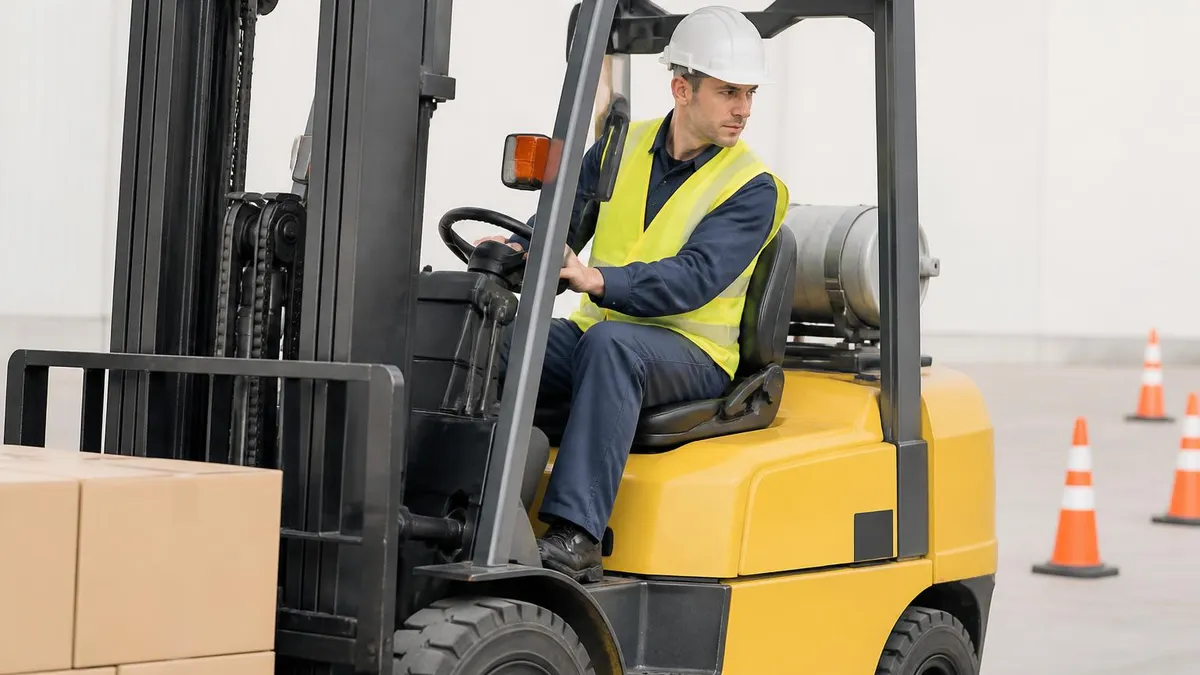
Forklift Rentals: Complete Guide to Pricing, Types, and Operator Requirements
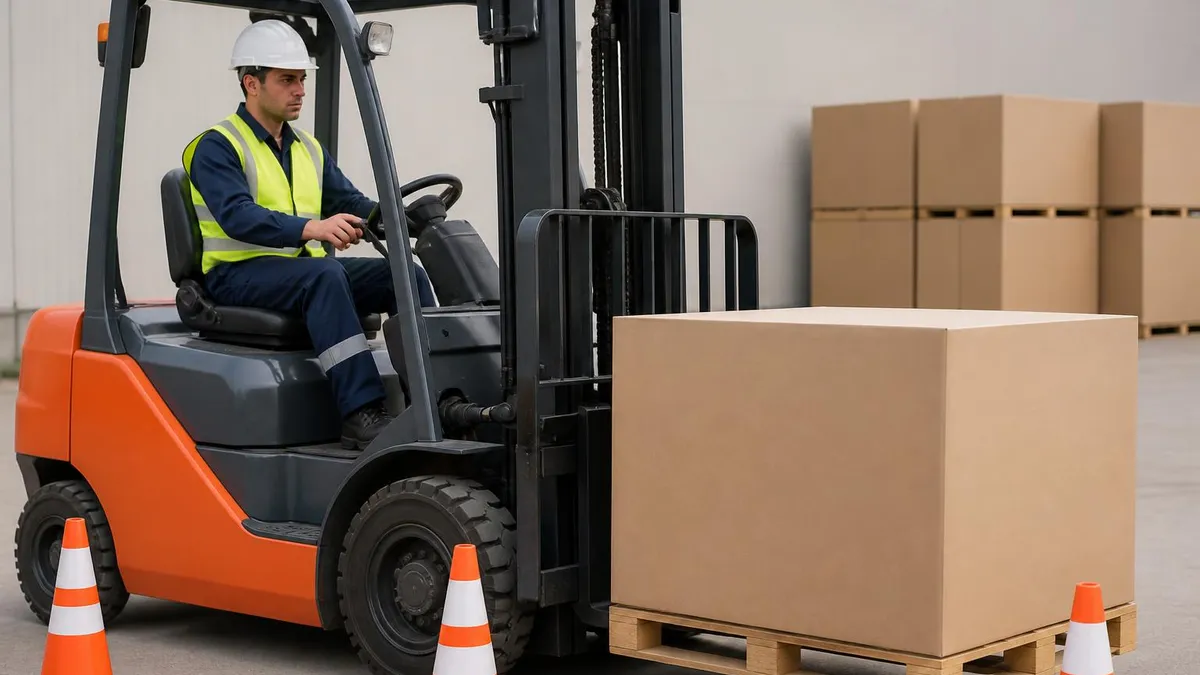
Forklift Tires: Complete Guide to Types, Sizing, Wear Patterns, and Replacement Costs
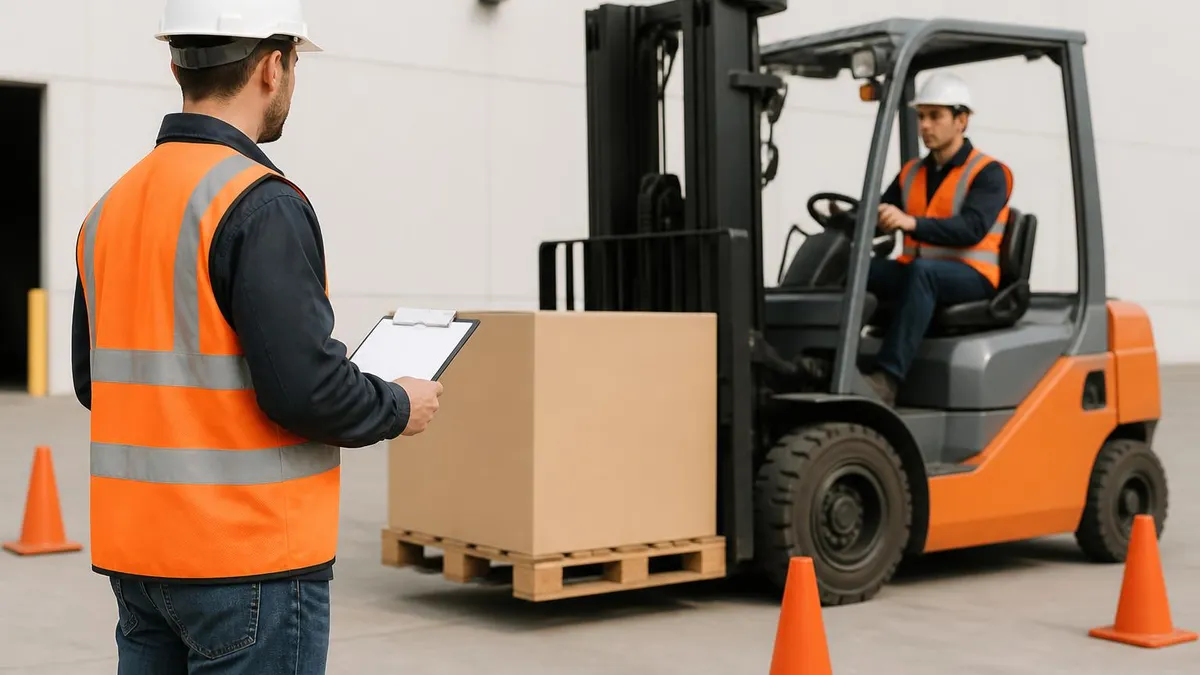
Forklift Parts and Maintenance: Complete Guide to Batteries, Chargers, and Replacement Components
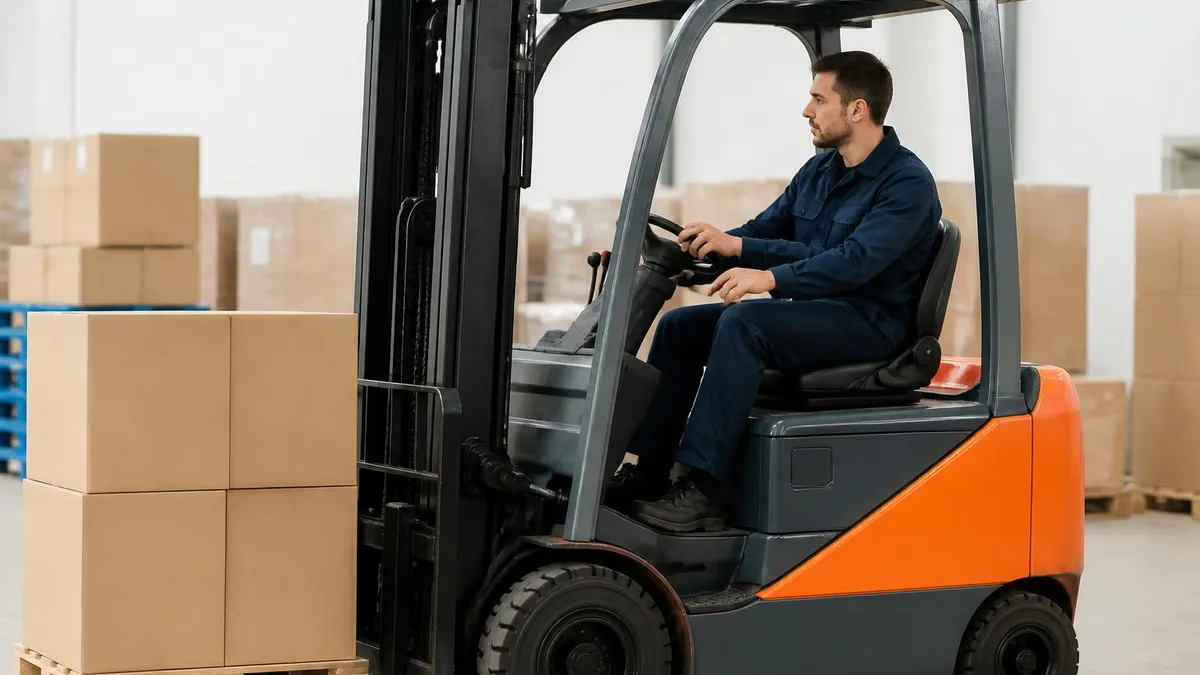
What Is a Forklift? Complete Guide to Types, Uses, Operation, and Certification Requirements
How to Drive a Forklift: Complete Beginner's Guide to Controls, Safety, and OSHA-Compliant Operation
How this page was made: written with AI tools and published by Nathan Beja, founder of Practice Test Geeks, who is responsible for its content. Exam facts are checked against the official sources listed below. Not reviewed by a subject-matter expert. Editorial policy
Sources & references
Exam facts on this page (fees, format, dates, passing scores) are checked against these official sources; the date is our last check. Editorial policy
- osha.gov — Test delivery, eligibility, renewal · verified Oct 2026