
What Is a Forklift? Complete Guide to Types, Uses, Operation, and Certification Requirements
What is a forklift? Complete guide covering types, uses, ✍🏼 certification, forklift rental options, training requirements, and operator safety basics.
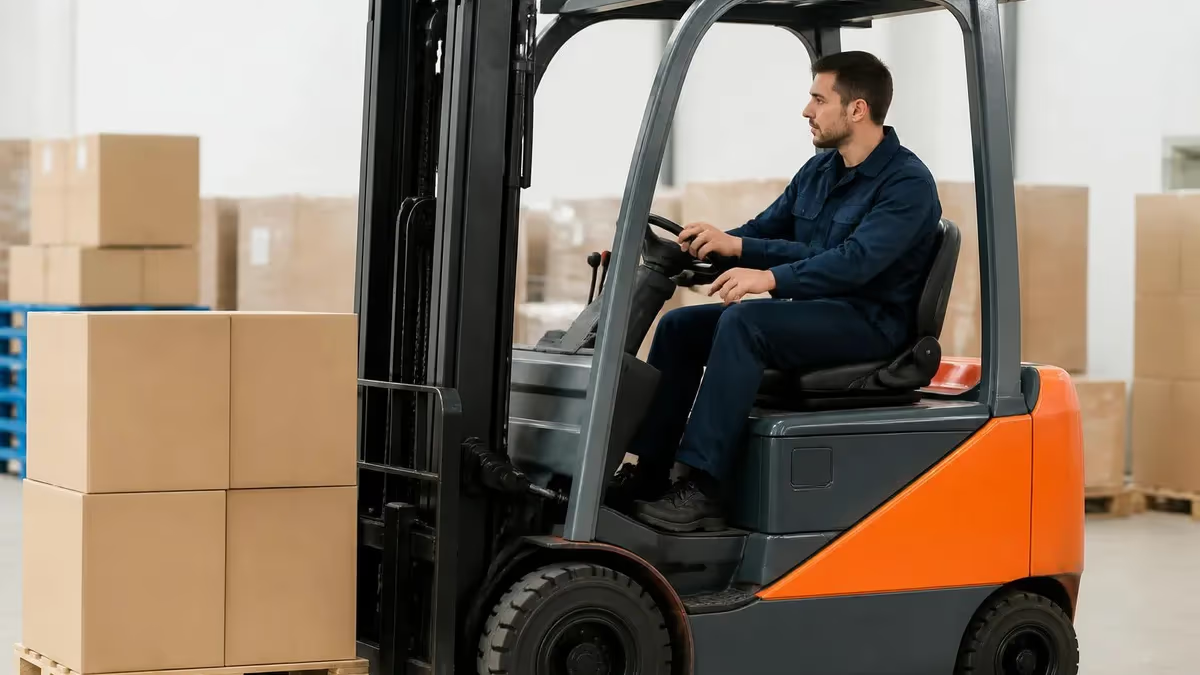
What is a forklift? A forklift is a powered industrial truck designed to lift, lower, and transport heavy materials over short distances using two horizontal forks that slide under pallets or loads. These machines are foundational to warehouses, construction sites, manufacturing plants, lumber yards, and shipping terminals across the United States, and demand for both forklift rental and ownership has grown sharply as e-commerce fulfillment expanded. Most people encounter forklifts daily without realizing it, since nearly every product on store shelves has been moved by one at some point.
The modern forklift evolved from early hoists and tiered platforms developed in the 1910s and 1920s by Clark Material Handling and Yale, eventually becoming the counterbalanced design we recognize today. A typical forklift weighs between 9,000 and 30,000 pounds, lifts loads from 3,000 to 35,000 pounds, and operates on electric batteries, propane (LPG), diesel, or gasoline. Each fuel type fits a specific environment: electric units thrive indoors, while diesel handles rough outdoor terrain on construction sites and lumber yards.
Forklifts are classified by OSHA into seven classes based on power source, tire type, and design. Class I covers electric counterbalanced trucks, Class II includes narrow-aisle reach trucks, Class III handles electric pallet jacks and a stand up forklift, Class IV uses cushion tires for indoor combustion engines, Class V uses pneumatic tires for outdoor combustion units, Class VI covers electric and combustion tow tractors, and Class VII includes rough terrain forklifts. Each class requires its own training endorsement under federal law.
The operator sits in a cab equipped with a steering wheel, accelerator, brake, hydraulic controls, and a mast that raises and lowers the forks. Lift heights commonly range from 10 feet for small warehouse units to 36 feet or more for high-bay storage and a telehandler forklift used on construction sites. Modern units include features like load-sensing hydraulics, operator presence sensors, blue safety lights, and integrated telematics systems that track usage, maintenance intervals, and operator behavior.
Demand for trained operators has remained consistently high, with the U.S. Bureau of Labor Statistics projecting steady employment growth through 2032 for industrial truck operators. The average forklift operator earns between $18 and $24 per hour, with certified operators commanding premium wages and overtime opportunities in distribution centers. Many employers now require OSHA-compliant certification of forklift training before allowing any new hire to step onto a machine, even for trial runs or yard moves.
This guide explains everything you need to know about forklifts, including the main types and classes, how they work, what training and certification looks like, rental versus purchase decisions, safety considerations, and the realistic costs of ownership. Whether you are a small business owner weighing a forklift rental near me search against buying used, a job seeker preparing for certification, or a warehouse manager updating your safety program, you will find the practical answers below.
By the end, you will understand the difference between an electric forklift and a propane unit, why a stand up forklift dominates narrow-aisle work, what OSHA requires for legal operation, and how rental rates compare across markets. Each section is built around real numbers, manufacturer specifications, and current 2026 industry data.
Forklifts by the Numbers

The Seven OSHA Forklift Classes
Sit-down electric riders with cushion or pneumatic tires. Common in warehouses, retail backrooms, and food-grade facilities where emissions matter. Capacities typically range from 3,000 to 12,000 pounds.
Reach trucks, order pickers, and turret trucks designed for aisles under 9 feet wide. Built for high-density racking up to 40 feet, dominating modern e-commerce fulfillment centers nationwide.
Walkie pallet jacks, rider pallet trucks, and a stand up forklift used for fast loading dock work and short hauls. Lightweight, agile, and ideal for high-throughput cross-docking operations.
Cushion-tire (IV) for indoor smooth floors and pneumatic-tire (V) for outdoor rough surfaces. Powered by LPG, diesel, or gasoline. The workhorses of lumber yards, ports, and outdoor distribution.
Class VI tractors tow trailers across airports and large facilities. Class VII rough terrain units, including telehandlers, work on construction sites with massive pneumatic tires and 4WD.
Understanding how forklifts actually work helps both new operators and managers make smarter equipment decisions. At its core, every forklift uses a hydraulic system to lift loads and a counterweight at the rear to balance the cargo on the forks. This counterbalance principle is why a 5,000-pound forklift can safely lift a 3,000-pound load: the weight of the truck itself, concentrated behind the front axle, acts as a fulcrum that keeps the machine stable when properly loaded within its rated capacity.
The hydraulic system relies on an engine-driven or battery-driven pump that pressurizes fluid into cylinders attached to the mast. When the operator pulls the lift lever, fluid flows into the cylinders, extending pistons that raise the carriage. Lowering reverses the flow back to the reservoir, with a control valve managing speed. Tilt cylinders at the base of the mast let the operator pitch the forks forward to enter a pallet and back to cradle the load against the carriage during travel.
The data plate, mounted near the operator seat, is the single most important reference on any forklift. It lists the maximum capacity at a specific load center, usually 24 inches from the heel of the forks. Lifting a load whose center of gravity sits farther forward dramatically reduces capacity. A truck rated 5,000 pounds at 24 inches may only safely handle 3,500 pounds at 36 inches. Every operator must know how to read this plate before each shift.
Steering on most counterbalanced forklifts is rear-wheel, which produces the swing-out turning motion that surprises new forklift truck operators. This design lets the front of the truck pivot tightly around stacked loads, but the rear end swings wide and is a leading cause of pedestrian struck-by incidents. Training programs spend significant time on this single dynamic, since it is fundamentally different from driving a car and requires constant horn use, mirrors, and pedestrian awareness.
Mast configurations vary by application. A simplex mast offers a single stage of lift, common on low-clearance trucks. Duplex masts add a second stage for higher reach, while triplex masts can stack to 240 inches or more for tall rack work. Free-lift masts let the carriage raise without extending the outer mast, critical for trailer loading where overhead clearance is tight. Choosing the wrong mast for your facility creates either capacity loss or expensive clearance damage.
Attachments expand what a forklift can do beyond standard pallet handling. Side shifters let the operator slide the forks left or right without repositioning, side-shifting fork positioners adjust spread on the fly, paper roll clamps handle printing facilities, drum handlers grip 55-gallon barrels, and rotating carriages dump bulk material into hoppers. Each attachment derates the truck capacity, so the data plate must be updated whenever an attachment is permanently mounted.
Modern forklifts integrate sensors, telematics, and operator monitoring. Pre-shift checklists are now often digital, requiring scanned operator badges before the truck will start. Impact sensors detect collisions and lock out unauthorized drivers, while geofencing reduces speed automatically in pedestrian zones. These systems have measurably lowered incident rates in facilities that adopt them, and many insurance carriers offer premium discounts when telematics are installed across the fleet.

Forklift certification Practice Test Questions
Prepare for the Forklift certification Certification exam with our free practice test modules. Each quiz covers key topics to help you pass on your first try.
Forklift certification Certification Forkl...
Forklift certification Exam Questions covering Certification Forklift certification Maintenance and Repairs. Master Forklift certification Test concepts for certification prep.
Forklift certification Certification Forkl...
Free Forklift certification Practice Test featuring Certification Forklift certification Maintenance and Repairs Questions and Answers. Improve your Forklift certification Exam score with mock test prep.
Forklift certification Certification Forkl...
Forklift certification Mock Exam on Certification Forklift certification Operator Training and Certification Requirements. Forklift certification Study Guide questions to pass on your first try.
Forklift certification Certification Forkl...
Forklift certification Test Prep for Certification Forklift certification Operator Training and Certification Requirements Questions and Answers. Practice Forklift certification Quiz questions and boost your score.
Forklift certification Load Handling and S...
Forklift certification Questions and Answers on Load Handling and Stability. Free Forklift certification practice for exam readiness.
Forklift certification OSHA Regulations an...
Forklift certification Mock Test covering OSHA Regulations and Compliance. Online Forklift certification Test practice with instant feedback.
Forklift certification Pre-Operation Inspe...
Free Forklift certification Quiz on Pre-Operation Inspections. Forklift certification Exam prep questions with detailed explanations.
Forklift certification Refueling and Recha...
Forklift certification Practice Questions for Refueling and Recharging Procedures. Build confidence for your Forklift certification certification exam.
Forklift certification Safe Driving and Ma...
Forklift certification Test Online for Safe Driving and Maneuvering. Free practice with instant results and feedback.
Forklift certification Workplace Hazard Id...
Forklift certification Study Material on Workplace Hazard Identification. Prepare effectively with real exam-style questions.
Forklift certification Forklift Instructions
Free Forklift certification Test covering Forklift Instructions. Practice and track your Forklift certification exam readiness.
Forklift certification Forklift MCQ
Forklift certification Exam Questions covering Forklift MCQ. Master Forklift certification Test concepts for certification prep.
Forklift certification Forklift Employer R...
Free Forklift certification Practice Test featuring Forklift Employer Responsibilities. Improve your Forklift certification Exam score with mock test prep.
Forklift certification Forklift Penalties ...
Forklift certification Mock Exam on Forklift Penalties for Non-Compliance. Forklift certification Study Guide questions to pass on your first try.
Power Sources: Electric Forklift vs Propane vs Diesel
An electric forklift runs on a lead-acid or lithium-ion battery and produces zero emissions, making it the dominant choice for indoor warehouses, food and beverage facilities, pharmaceutical plants, and any application where air quality matters. Lead-acid batteries typically last 1,500 charge cycles and require dedicated charging rooms with ventilation, while lithium-ion options offer opportunity charging, faster fills, and 3,000+ cycles with no watering or equalizing.
Total cost of ownership often favors electric over a 7-year horizon despite higher upfront prices. Energy costs run 30 to 50 percent lower than propane, there are fewer moving parts to service, and brake life extends thanks to regenerative braking. The tradeoff is upfront capital, charging infrastructure investment, and reduced suitability for cold storage below 35 degrees Fahrenheit without specialty thermal-managed packs.
Forklift Rental vs Buying: Which Makes Sense?
- +Lower upfront capital outlay, freeing cash for inventory or payroll
- +Maintenance and repairs typically included in rental contracts
- +Easy to scale fleet up or down for seasonal demand spikes
- +Try different models and capacities before committing to purchase
- +Newer equipment with current safety features and telematics
- +Tax-deductible as an operating expense rather than capital depreciation
- +No resale risk when technology or business needs change
- −Long-term rental costs exceed purchase price after 30 to 36 months
- −No equity built; the asset never becomes yours
- −Daily and weekly rates are significantly higher per hour
- −Damage charges at return can be substantial without protection plans
- −Availability tightens during peak season in many local markets
- −Customization and permanent attachment options are limited
- −Branding and configuration changes typically require approval
Pros and Cons at a Glance
| Pros | Cons |
|---|---|
| Lower upfront capital outlay, freeing cash for inventory or payroll | No equity built; the asset never becomes yours |
| Maintenance and repairs typically included in rental contracts | Daily and weekly rates are significantly higher per hour |
| Easy to scale fleet up or down for seasonal demand spikes | Damage charges at return can be substantial without protection plans |
| Try different models and capacities before committing to purchase | Availability tightens during peak season in many local markets |
| Newer equipment with current safety features and telematics | Customization and permanent attachment options are limited |
| Tax-deductible as an operating expense rather than capital depreciation | Branding and configuration changes typically require approval |

Daily Pre-Shift Forklift Inspection Checklist
- ✓Inspect tires for cuts, gouges, embedded debris, and proper inflation pressure
- ✓Check forks for cracks, bent tips, heel wear, and that locking pins are secured
- ✓Test horn, backup alarm, headlights, taillights, and strobe before starting any work
- ✓Verify fluid levels: hydraulic oil, engine oil, coolant, brake fluid, and fuel or battery state
- ✓Inspect mast chains for stretching, broken links, and adequate lubrication on all stages
- ✓Examine the overhead guard and load backrest for cracks, bends, or missing welds
- ✓Confirm seat belt buckles properly, retracts smoothly, and shows no fraying or damage
- ✓Test the parking brake, service brake, steering response, and tilt and lift functions
- ✓Look under the truck for fresh fluid leaks indicating hydraulic, fuel, or coolant problems
- ✓Read the data plate and confirm the planned load is within capacity at its load center
- ✓Verify the fire extinguisher is charged, accessible, and inspection-tagged within date
- ✓Document the inspection in writing or via the digital app before operating the truck
Forklifts tip over more often than they collide
Tip-overs account for roughly 24 percent of all forklift fatalities, more than any other single incident type. The most common cause is operators jumping out during a tip-over, which crushes them under the overhead guard. OSHA training is explicit: stay in the seat, brace against the steering wheel, lean opposite the direction of fall, and ride it out. The cage is engineered to protect you.
Certification of forklift operation is not optional in the United States — it is a federal requirement under OSHA standard 29 CFR 1910.178(l). Every operator must complete formal classroom or online instruction, hands-on practical training, and a performance evaluation by a qualified trainer before being allowed to operate any powered industrial truck. This includes every employee regardless of how briefly they will use the equipment, including supervisors who occasionally move a pallet or maintenance staff who reposition trucks.
Training must be specific to the truck class and the workplace environment. An operator certified on a Class IV cushion-tire propane truck is not automatically certified to drive a Class II reach truck or a Class VII rough terrain unit. Each new truck type requires additional training and a new evaluation. Similarly, switching from a flat warehouse floor to a sloped lumber yard or a refrigerated cold storage facility introduces new hazards that must be addressed in supplementary instruction.
Forklift training typically covers truck stability principles, load handling, refueling and recharging procedures, surface conditions, pedestrian interactions, ramps and grades, narrow aisles, dock plates, trailer entry, and emergency response. Programs run from 4 to 16 hours depending on depth, with most reputable in-person courses lasting 6 to 8 hours plus a separate evaluation. Online-only programs are legal for the classroom portion but must always be paired with in-person hands-on testing — never skipped.
Refresher training is required every three years at minimum, but OSHA also mandates immediate refresher training after any of these triggers: an observed unsafe operation, an accident or near-miss, an evaluation showing the operator is not performing the duties safely, assignment to a different truck type, or a change in workplace conditions that affects safe operation. Many facilities now conduct annual evaluations to stay ahead of these triggers and to support insurance compliance.
Many operators also pursue manufacturer-specific training when they work primarily on one brand. A crown forklift operator might attend Crown-authorized training to learn proprietary features and diagnostic procedures, while a hyster forklift operator could complete Hyster-Yale curriculum covering their specific control layouts and service points. These supplemental certifications do not replace OSHA certification but signal advanced competency to employers and can support higher pay rates.
Certification documentation must include the operator's name, training date, evaluation date, and the trainer or evaluator's name and signature. Employers must keep this on file and produce it during OSHA inspections. The most common citation under 1910.178 is missing or incomplete documentation, even when training actually occurred. A simple wallet card or PDF kept in HR records is enough — but it must exist and be current to satisfy auditors.
The cost of certification ranges from $50 to $200 per operator when an employer trains in-house using approved curriculum, or $150 to $400 for third-party training providers. Online courses paired with employer-conducted hands-on evaluations are the most affordable, while full in-person courses at vocational schools or training centers cost more but produce better-prepared operators. Either path satisfies OSHA when properly documented and combined with practical evaluation.
As of 2026, OSHA serious violations for missing forklift certification can reach $16,550 per occurrence, and willful or repeat violations climb to $165,514. Allowing even one uncertified operator on a forklift exposes employers to significant fines, criminal liability if an injury occurs, and dramatically increased workers' compensation premiums. Documentation is your only defense — keep it current.
Forklift rental is the fastest way to access equipment without committing capital. Daily rates for a standard 5,000-pound capacity propane forklift run $150 to $250 in most US markets, weekly rates land at $600 to $900, and monthly rates fall between $1,400 and $2,200. Larger 8,000-pound trucks add roughly 20 to 30 percent, and specialty units like reach trucks, order pickers, or rough terrain telehandlers can double those figures depending on availability.
A forklift rental near me search typically surfaces national chains like United Rentals, Sunbelt, and Herc Rentals alongside regional dealers. National chains offer broader availability and consistent rate structures, while regional dealers often provide better service, more flexible terms, and lower rates for repeat customers. Ask about delivery and pickup fees, fuel charges, damage waiver costs, and minimum rental periods before signing — these add-ons can increase the quoted rate by 20 to 35 percent.
Buying new is the right path for facilities running a forklift more than 1,000 hours per year on a stable schedule. A new 5,000-pound propane forklift retails for $25,000 to $35,000, while comparable electric units run $30,000 to $45,000 including battery and charger. High-capacity diesel, reach trucks, and specialty units climb into the $50,000 to $120,000 range. Most dealers offer financing at 60-month terms with 0 to 10 percent down for qualified buyers.
Used forklifts represent the best value for many small businesses. A well-maintained 5-to-7-year-old propane truck with under 6,000 hours typically sells for $8,000 to $15,000 and offers another 8,000 to 12,000 hours of productive life with routine service. Look for forklift for sale listings through certified dealers who provide service histories, recent maintenance, and limited warranties — buying from auction or private parties without inspection often results in costly hidden repairs.
Total cost of ownership extends well beyond the purchase price or rental rate. Annual maintenance for a propane forklift averages $1,200 to $2,500, electric units run $600 to $1,500, and diesel can hit $2,500 to $4,000 depending on emissions system condition. Tires are a recurring cost: cushion tires last 1,000 to 1,500 hours and run $200 to $400 per set; pneumatic tires last longer but cost $500 to $1,200 per set. Plan on tire replacement every 12 to 18 months under normal use.
Service contracts and finding a qualified hyster forklift technician matter as much as the purchase decision. Full-service planned maintenance agreements typically run $80 to $150 per month and cover routine inspections, fluid changes, and minor adjustments. Major repairs — mast cylinders, transmissions, batteries — fall outside these contracts and can cost $2,000 to $15,000 individually. Many small fleets carry a parts and labor warranty on top of PM agreements to cap exposure.
Insurance and storage round out the budget. Liability insurance for a single forklift typically runs $400 to $800 annually, and physical damage coverage adds $300 to $600 depending on truck value. Indoor storage is ideal for electric and cushion-tire units to protect electronics and tires; outdoor storage requires a cover and battery disconnect to prevent weather damage. Every dollar invested in proper storage extends useful life and resale value.
Practical safety habits separate experienced forklift operators from new hires who become statistics. The first habit is always reading the data plate and matching it to the planned load before lifting. Capacity changes dramatically with load center, attachment use, and mast height — a truck rated 6,000 pounds at floor level may only handle 4,000 pounds at 200 inches of lift. Veteran operators check capacity charts before every nonstandard lift, not just on training day.
Pedestrian interactions cause more forklift fatalities than any other category combined. Develop the habit of sounding the horn at every blind intersection, every doorway, and every aisle end — even when you are sure no one is there. Make direct eye contact with anyone within 10 feet before moving, and stop completely if a pedestrian is in your travel path. Many facilities now require operator and pedestrian wearables that beep when proximity drops below safe thresholds, which is worth the investment.
Travel with the load tilted back and the forks 4 to 6 inches off the floor. This position protects the load, improves stability, and prevents fork tips from catching on uneven surfaces or hitting workers. When traveling without a load, the forks should be lowered to the same height. Never travel with elevated forks except inside the immediate stacking zone — this single rule prevents the majority of tip-overs and overhead strikes.
Ramps and grades require special technique. Always travel with the load uphill, meaning forks face uphill when loaded and downhill when empty. This counterintuitive rule keeps the heaviest part of the system on the high side and prevents the truck from tipping forward. Never turn on a ramp — descend or ascend straight, stop on level ground, and only then change direction. Loading dock plates deserve the same caution and a careful inspection before each crossing.
Refueling and recharging are routine but dangerous operations. Propane tank exchanges must happen in well-ventilated areas with no ignition sources, and the operator should always check the date stamp and inspect the tank valve before connecting. Battery charging requires eye protection, gloves, ventilation, and proper electrolyte handling for lead-acid units. Lithium-ion batteries are safer but still require trained handling for connection, equalization, and thermal monitoring during fast charging.
Parking discipline matters more than most operators realize. At end of shift, lower the forks fully to the ground, tilt the mast forward until the tips touch the floor, set the parking brake, neutralize controls, turn off the engine, and remove the key. Never park on grades, in front of fire equipment, in pedestrian walkways, or blocking emergency exits. A parked forklift with forks raised has injured many workers who walked into the tips in low light — this is easily prevented.
Finally, build the habit of reporting every incident, every near-miss, and every mechanical concern, no matter how small. A scraped rack, a slipping brake, or a hydraulic drip becomes a serious incident when ignored. The best safety programs in the country share one trait: operators report freely without fear of blame, and management responds quickly with repairs, retraining, or process changes. This culture protects everyone, lowers insurance costs, and turns forklift operation into a genuinely safe profession.
Sample Forklift certification Practice Questions
Try these questions from our free Forklift certification practice tests. The correct answer and an explanation follow each question.
An operator is about to use an electric forklift. In addition to the standard checks, what is a specific inspection point unique to this type of forklift?
- A. Engine oil and coolant levels
- B. Condition of battery connectors and looking for frayed cables
- C. Proper mounting of the propane tank
- D. The condition of the radiator and air filter
Answer: B. Condition of battery connectors and looking for frayed cables
Electric forklifts have specific components to inspect related to their power source. This includes checking for frayed or exposed wires, ensuring battery connectors are secure, and checking electrolyte levels (with proper PPE). Engine oil, coolant, and propane tanks are components of internal combustion forklifts.
What must forklift training include regarding the specific types of trucks an operator will use?
- A. Training on all possible forklift models worldwide
- B. Training specific to each type of truck the operator will actually operate
- C. Only generic forklift safety concepts
- D. Manufacturer contact information
Answer: B. Training specific to each type of truck the operator will actually operate
Training must be tailored to the exact types of forklifts the operator will use, since different truck types have different operating characteristics.
During a pre-operation walk-around, an operator notices a small, clear puddle of fluid under the mast. What should be the operator's immediate course of action?
- A. Wipe up the fluid and proceed with the rest of the inspection.
- B. Make a note of it on the checklist and check the hydraulic fluid level after starting the engine.
- C. Ignore it if it's a small amount, as some seepage is normal.
- D. Do not operate the forklift, tag it as 'Out of Service,' and report the leak to a supervisor.
Answer: D. Do not operate the forklift, tag it as 'Out of Service,' and report the leak to a supervisor.
Any potential safety hazard, such as a hydraulic fluid leak, must be addressed before operation. The correct procedure is to immediately take the forklift out of service and report the defect to a supervisor to prevent accidents or further damage.
How does one use a ROPS frame?
- A. It protects the load if the forklift rolls over
- B. It protects pedestrians if they are struck by the vehicle
- C. It protects the operator if the forklift rolls over
- D. It protects the operator from falling materials
Answer: C. It protects the operator if the forklift rolls over
A ROPS (Roll-Over Protective Structure) frame is a critical safety feature designed to protect the forklift operator in the event of a rollover accident. Its sturdy construction creates a survival space around the operator, preventing them from being crushed by the vehicle. This significantly reduces the risk of serious injury or fatality during such incidents.
Forklift Questions and Answers
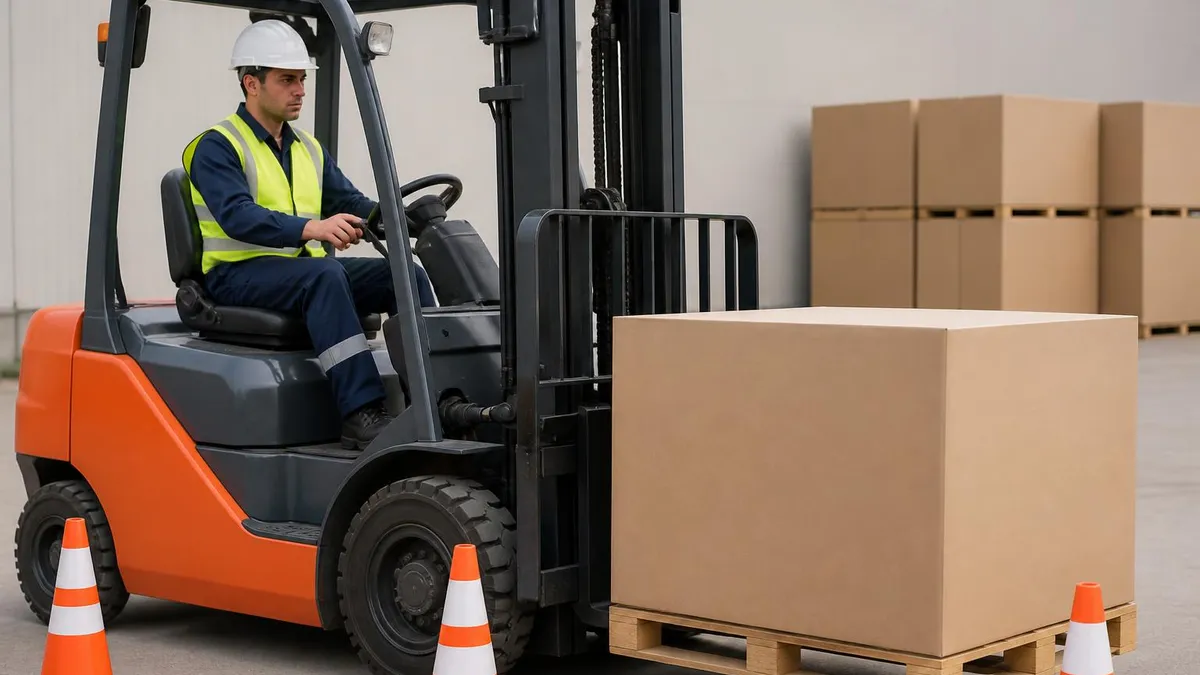
Forklift Tires: Complete Guide to Types, Sizing, Wear Patterns, and Replacement Costs
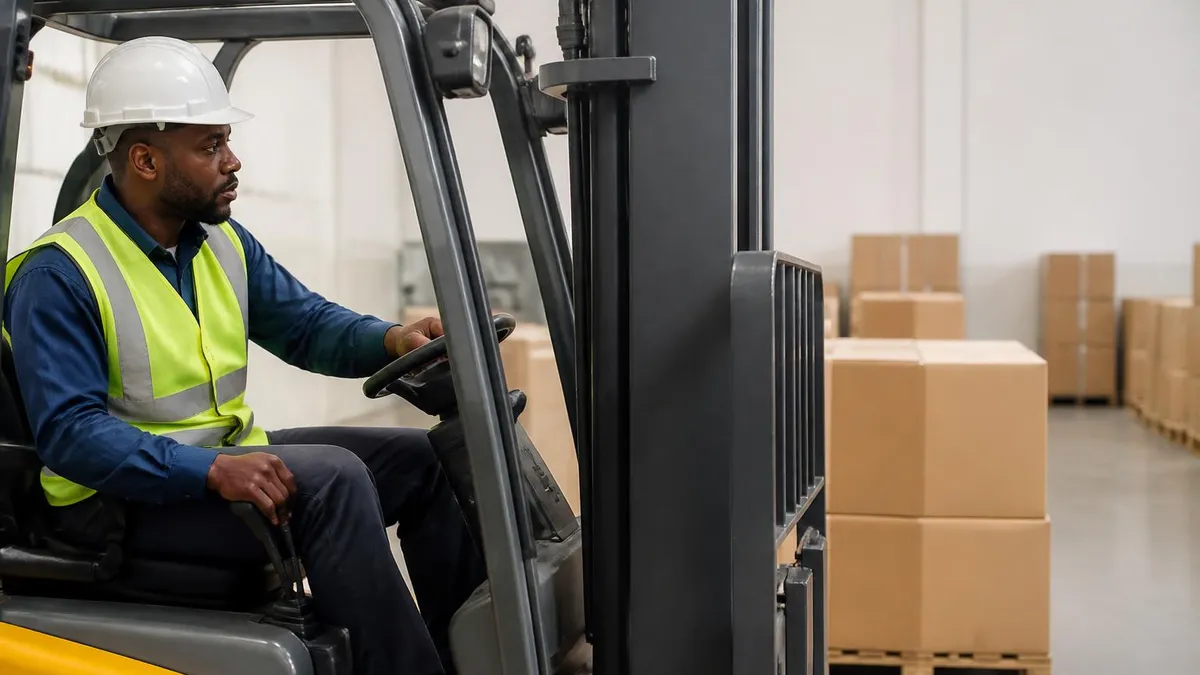
Forklift Accessories: Complete Guide to LED Lights, Attachments, Safety Gear, and Productivity Upgrades for 2026
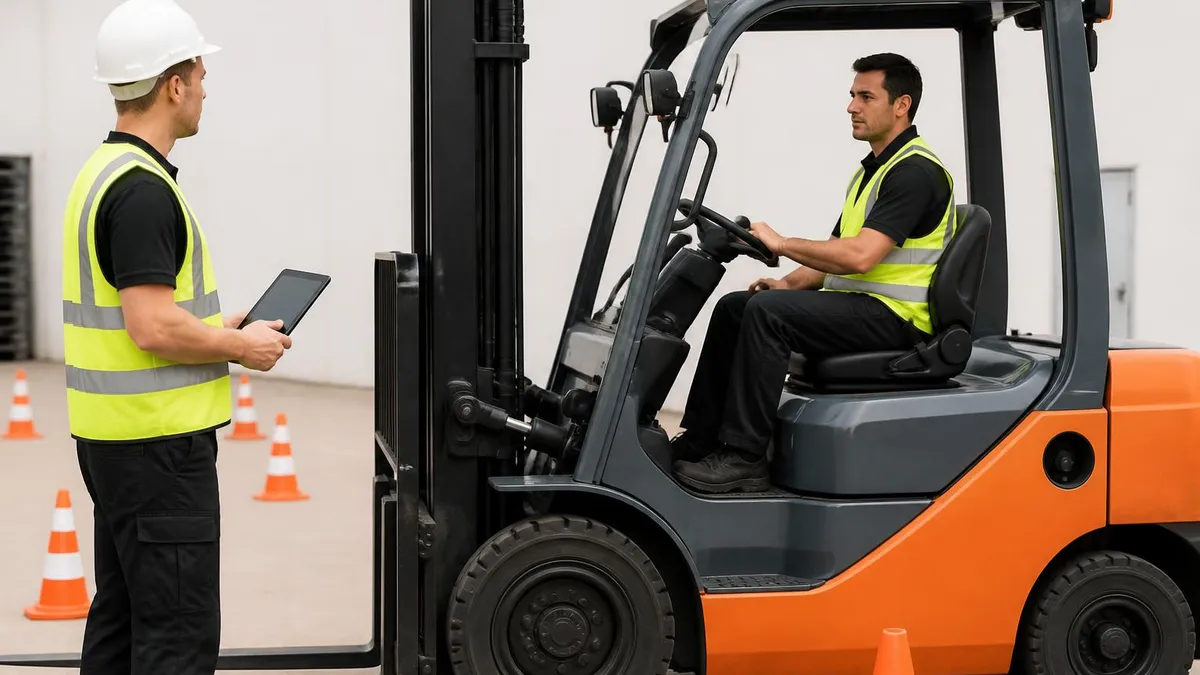
Forklift Safety Training: Complete OSHA Compliance Guide for Operators and Employers
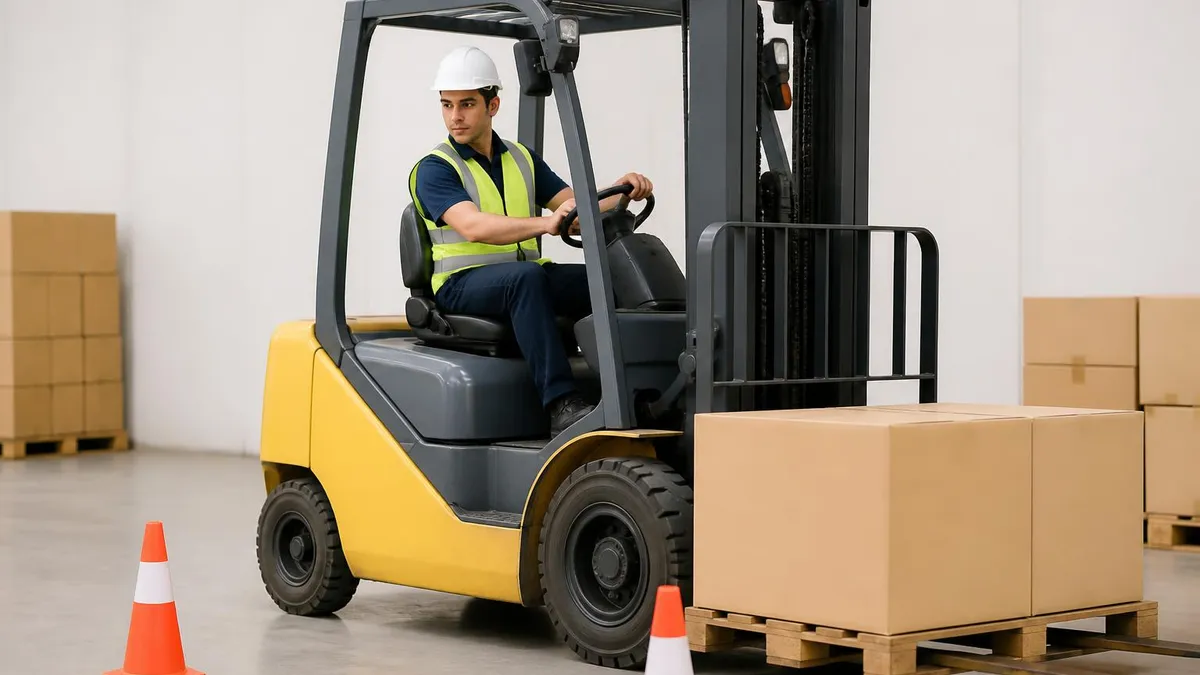
Forklift Repair Service: Complete Guide to Costs, Common Repairs, and Choosing the Right Technician
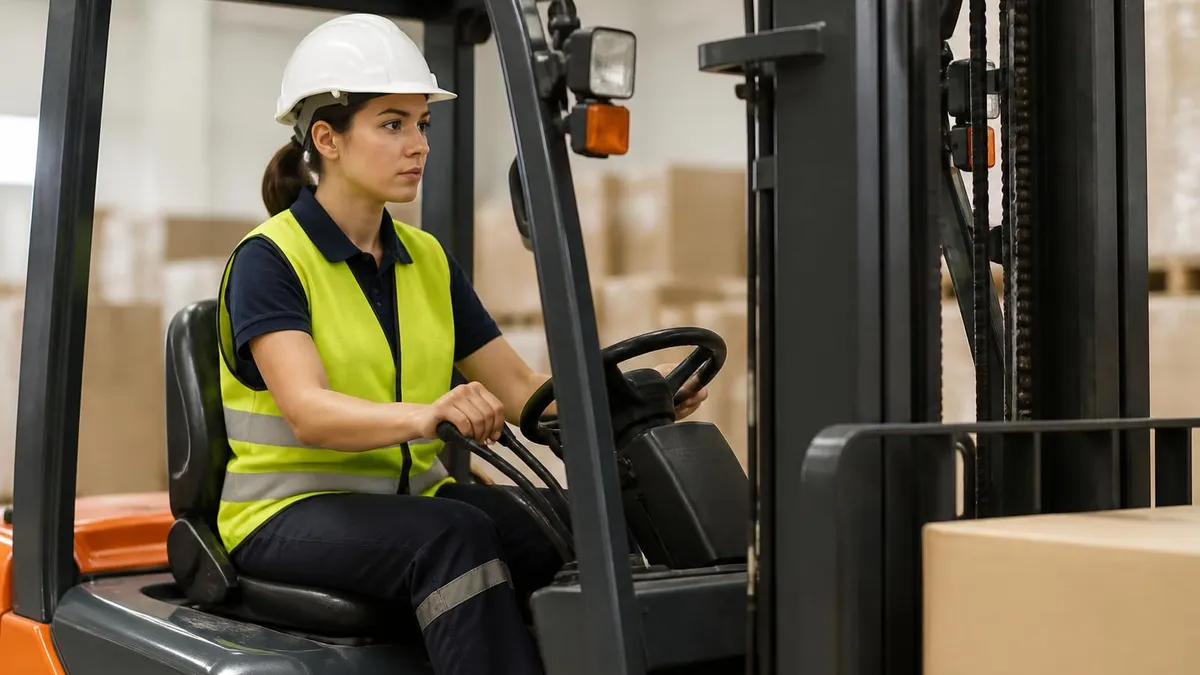
Forklift Price Guide 2026: New, Used, Rental, and Total Cost of Ownership Breakdown
About the Author

Certified Crane Operator & Skilled Trades Exam Specialist
Ferris State UniversityRobert Martinez is a Journeyman Ironworker, NCCCO-certified crane operator, and forklift trainer with a Bachelor of Science in Construction Technology from Ferris State University. He has 21 years of ironworking, rigging, and heavy equipment operation experience across high-rise and industrial construction sites. Robert prepares candidates for crane operator, rigger, forklift, and skilled trades certification examinations.