
Forklift Financing: Complete Guide to Loans, Leases, and Rental Options for Your Business
🎯 Forklift rental, financing loans, and lease options explained. Compare costs, types, and find the best deal for your business in 2026 September.

Understanding forklift financing is essential for any warehouse manager, logistics director, or small business owner who needs to move heavy loads without committing hundreds of thousands of dollars upfront. Whether you are exploring a short-term forklift rental for a seasonal project, evaluating a multi-year lease for your distribution center, or considering an outright purchase of forklifts for a growing fleet, the financing path you choose will significantly affect your cash flow, tax liability, and long-term operational flexibility. Getting this decision right from the start can save your business tens of thousands of dollars over the life of the equipment.
The US material handling equipment market is enormous, and forklifts represent one of the most commonly financed pieces of industrial machinery in the country. Businesses ranging from small construction contractors to Fortune 500 manufacturers rely on some form of forklift financing to keep operations running efficiently. With average new forklift prices ranging from $20,000 for a basic electric forklift to over $100,000 for a specialized heavy-duty model, very few companies purchase equipment outright with cash. Financing spreads the cost over time and preserves working capital for other operational needs.
There are several distinct paths available when it comes to acquiring the use of a forklift. You can finance a purchase through a traditional equipment loan, negotiate an operating or capital lease directly with a dealer, arrange a sale-leaseback if you already own equipment, or opt for a short-term or long-term forklift rental. Each approach carries different implications for your balance sheet, your monthly cash outflow, and your flexibility to upgrade when better technology becomes available. Understanding the tradeoffs between each option is the foundation of a smart forklift financing strategy.
Lenders and leasing companies evaluate forklift financing applications based on factors including your business credit score, years in operation, annual revenue, existing debt obligations, and the type and age of the equipment you want to acquire. New businesses often face higher interest rates or require larger down payments, while established companies with strong credit histories can access competitive rates that make financing far more attractive than paying cash. Knowing your creditworthiness before approaching a lender gives you negotiating power and helps you avoid wasting time on applications that are unlikely to be approved.
The type of forklift you need also matters enormously to the financing equation. A standard sit-down counterbalanced forklift used in a general warehouse setting is easy for lenders to value and resell, which translates into favorable financing terms. More specialized equipment like a stand up forklift used in narrow-aisle environments, a rough-terrain model for outdoor construction sites, or a large container handler for port operations may have a smaller pool of potential buyers, making lenders slightly more cautious. Understanding how the resale market affects your financing terms can help you make smarter equipment selections.
Forklift training and certification of forklift operators is a regulatory requirement under OSHA standard 29 CFR 1910.178, and it intersects directly with your financing decisions. Lenders and insurance carriers want to know that your operators are properly trained before they extend credit or issue coverage for leased or financed equipment. Some financing packages from dealers actually bundle operator training costs into the total financed amount, allowing you to spread those expenses over the same period as the equipment itself. Planning for training costs as part of your overall financing budget is a best practice that prevents unpleasant surprises.
This guide covers everything you need to know about forklift financing in the United States: how loans, leases, and rentals compare on total cost, what qualifications lenders look for, how to negotiate better terms, and what to watch for in the fine print of a financing agreement. Whether you are a forklift operator looking to understand the business side of the industry or a business owner preparing to expand your fleet, the information here will help you make a confident, informed decision that serves your operation for years to come.
Forklift Financing by the Numbers

Forklift Acquisition Cost Breakdown
Equipment loans and leases are the two most common financing structures used to acquire forklifts, and the differences between them go far beyond the monthly payment amount. An equipment loan works much like a vehicle loan: the lender provides the capital to purchase the forklift, you take ownership immediately, and you repay the principal plus interest over an agreed term — typically 36 to 84 months.
At the end of the loan, you own the equipment outright and can continue using it, sell it, or trade it in. This structure works best for companies that plan to keep equipment for many years and want to build equity in their assets.
A capital lease (also called a finance lease) is structured like a loan for accounting purposes but is technically a lease agreement. You make fixed monthly payments over the lease term, and at the end you typically have the option to purchase the forklift for a predetermined residual value — often as little as $1. Capital leases appear on your balance sheet as both an asset and a liability, similar to a loan.
The key benefit is that you can depreciate the equipment for tax purposes while maintaining the flexibility that a lease structure provides in terms of the original agreement with the dealer or leasing company.
An operating lease is very different from a capital lease and functions more like a true rental arrangement. Under an operating lease, the leasing company retains ownership of the forklift throughout the term, and you simply pay for the right to use it. Monthly payments for operating leases are typically lower than capital lease or loan payments because you are only paying for the equipment's depreciation during the lease period, not its full value.
At the end of the lease, you return the forklift, renew the agreement, or upgrade to newer equipment. This structure is ideal for businesses that want to avoid owning aging equipment and prefer to keep up with technology advances in electric forklift design and energy efficiency.
The tax treatment of each financing structure differs meaningfully and should be a key consideration in your decision. Equipment loans allow you to depreciate the asset under IRS Section 179, potentially deducting the full purchase price in the year of acquisition up to the annual limit (over $1 million in recent years). Capital leases offer similar depreciation benefits.
Operating leases, by contrast, allow you to deduct the full lease payment as a business expense each month but do not provide depreciation deductions. Consulting with a tax professional before signing any financing agreement can help you identify which structure produces the most favorable tax outcome for your specific situation.
Interest rates on forklift loans and leases vary considerably based on your credit profile, the loan term, and current market conditions. In 2026, creditworthy businesses are seeing equipment loan rates ranging from approximately 5% to 9% APR, while businesses with weaker credit histories may face rates of 12% to 18% or higher.
Some manufacturers and dealers offer promotional financing programs with rates as low as 0% for short terms — these promotions are most commonly available at the end of fiscal quarters when dealers are working to hit sales targets. Timing your financing application to coincide with these promotional periods can result in substantial savings.
Down payment requirements also vary by lender and credit quality. Most traditional equipment lenders require a down payment of 10% to 20% of the equipment's purchase price, though some SBA-backed loan programs allow for lower down payments for qualifying businesses. Businesses with excellent credit and long operating histories sometimes negotiate zero-down financing, particularly through manufacturer-affiliated financing companies. However, a larger down payment generally results in lower monthly payments, reduced total interest paid, and a better loan-to-value ratio that can open doors to more favorable terms on future equipment financing.
One important aspect of forklift financing that many buyers overlook is the role of the dealer in the process. Most forklift dealers have established relationships with multiple lenders and leasing companies, and they can often originate financing directly at the point of sale. While this is convenient, it is not always the most cost-effective option.
Dealers earn referral fees or markups on the financing they arrange, which can result in rates that are slightly higher than what you might obtain by approaching lenders directly. Getting at least two or three competing financing quotes before accepting dealer-arranged financing is a simple step that frequently saves businesses thousands of dollars over the life of a loan or lease.
Forklift Rental Options: Short-Term, Long-Term & Specialty
Short-term forklift rental is the most flexible acquisition option available, typically covering periods from a single day up to three months. Daily rental rates for a standard sit-down electric forklift range from $200 to $500 depending on your geographic market, the forklift's capacity, and whether the rental includes a trained forklift operator. Searching for forklift rental near me through regional dealers and national rental networks like Sunbelt Rentals, United Rentals, and BigRentz can surface competitive pricing. Rates generally include basic maintenance and breakdown coverage, reducing your risk exposure significantly compared to ownership.
The primary advantage of short-term forklift rentals is that they require no long-term commitment and minimal upfront cost, making them ideal for seasonal demand spikes, project-based work, or filling gaps when owned equipment is being repaired. Construction contractors frequently rely on short-term rentals to access rough-terrain stand up forklift models for specific job sites without the overhead of ownership. The downside is that per-unit costs are highest in the short-term rental market — a piece of equipment that costs $30,000 to purchase might cost $3,000 to rent for a single month, meaning you could finance a full purchase for roughly the same monthly outlay over a 36-month loan term.

Financing vs. Renting Forklifts: Pros and Cons
- +Financing builds equity — you own the forklift outright at loan payoff
- +Lower total cost over time compared to long-term rental arrangements
- +Tax benefits via Section 179 depreciation deductions on purchased equipment
- +Ability to customize or modify owned equipment for specific operational needs
- +No mileage or usage restrictions that limit operational flexibility
- +Financing payments are predictable and fixed, simplifying long-term budget planning
- −Significant upfront down payment required — typically 10–20% of purchase price
- −You absorb full maintenance costs and risk of unexpected repair expenses
- −Equipment becomes obsolete over time while payments remain fixed
- −Disposal or trade-in logistics become your responsibility at end of life
- −Approval process can take days to weeks and may require extensive documentation
- −Poor credit history can result in very high interest rates or outright denial
Forklift Financing Application Checklist
- ✓Obtain your business credit report and FICO score before applying to any lender.
- ✓Gather two to three years of business tax returns and current profit-and-loss statements.
- ✓Prepare a list of all existing equipment loans, leases, and outstanding debt obligations.
- ✓Get at least three competing quotes — from your bank, a dealer, and an independent equipment lender.
- ✓Confirm the forklift model, serial number, and purchase price with the dealer in writing.
- ✓Verify that your facility's floor, doorways, and load areas can accommodate the specific forklift model.
- ✓Budget for operator training and certification costs as part of your total financing package.
- ✓Review insurance requirements specified in the financing agreement before signing anything.
- ✓Understand the early termination penalties and buyout options in any lease agreement.
- ✓Confirm that the equipment meets OSHA standards and that your forklift operator certifications are current.
Section 179 Can Make Financing Even Cheaper Than It Looks
Under IRS Section 179, businesses can deduct the full purchase price of qualifying equipment — including financed forklifts — in the year it is placed in service, up to the annual deduction limit (over $1.16 million in 2026). For a business in the 25% tax bracket purchasing a $40,000 forklift with a loan, this deduction can effectively reduce the net cost to roughly $30,000 before interest, making financed purchases significantly more attractive than the sticker price suggests. Always consult a tax advisor to confirm eligibility for your specific situation.
Negotiating better forklift financing terms is a skill that can save your business thousands of dollars, and it begins long before you walk into a dealership or submit a loan application. The most effective negotiating position comes from preparation: know your credit score, have competing quotes in hand, understand the market value of the equipment you want, and be clear about how long you actually intend to keep the forklift.
Lenders and dealers are far more likely to offer favorable terms to buyers who demonstrate that they have done their homework and are prepared to walk away if the terms do not meet their expectations.
One of the most powerful but underused negotiating tools in forklift financing is timing. Dealers operate on quarterly and annual sales cycles, and the pressure to hit volume targets at the end of a quarter — particularly March, June, September, and December — often translates into more flexible financing terms, larger discounts on the equipment price itself, or bundled incentives like free first-year maintenance contracts.
If your timeline for acquiring forklifts is flexible, positioning your purchase decision at the end of a fiscal quarter can yield meaningful savings without any additional effort on your part beyond patience and awareness of the sales cycle.
The total cost of the financing package matters far more than the monthly payment alone, and this is a distinction that savvy buyers keep front of mind throughout negotiations. A dealer who offers you a low monthly payment may be extending the loan term or rolling in additional fees that significantly increase the total amount you pay over the life of the agreement.
Always calculate the total of all payments under any financing proposal and compare that number — not just the monthly amount — across competing offers. A loan with a $50 higher monthly payment but a lower interest rate and shorter term often costs far less in total than the option with the attractive low payment.
Used and refurbished forklifts represent another financing opportunity that many businesses overlook in their focus on new equipment. A quality reconditioned forklift from a reputable dealer or manufacturer-certified refurbishment program can provide 80% of the functionality of a new unit at 40% to 60% of the price.
Financing a used forklift for sale typically involves slightly higher interest rates than new equipment financing — lenders view older equipment as carrying more residual value risk — but the lower principal amount often results in meaningfully lower total financing costs and monthly payments. For businesses with tight budgets or limited credit histories, the used equipment market can be the most practical path to fleet expansion.
Government-backed financing programs represent a valuable but often underutilized resource for small and mid-sized businesses seeking forklift financing. The US Small Business Administration (SBA) 7(a) loan program can be used to finance equipment including forklifts, and it offers longer repayment terms (up to 10 years for equipment) and lower down payment requirements than conventional equipment loans.
SBA 504 loans, designed for fixed asset acquisition, are another option particularly suited to large fleet purchases. USDA Business and Industry (B&I) loans are available for businesses in rural areas. These programs involve more paperwork and longer approval timelines than conventional financing, but the terms can be substantially more favorable for eligible businesses.
Maintenance agreements and extended warranty packages are frequently offered as add-ons during the financing process, and evaluating them carefully is worthwhile. A comprehensive maintenance contract bundled into your monthly payment can provide genuine value by making repair costs predictable — this is particularly true for electric forklift equipment where battery replacement alone can cost $5,000 to $15,000.
However, standalone extended warranties sold at high margins are often poor value compared to what you would pay for the same repairs out of pocket. Ask for an itemized breakdown of what any maintenance package covers and compare that to the historical repair costs for the specific forklift model you are considering before agreeing to bundle these costs into your financing.
Insurance is a non-negotiable requirement for virtually all financed or leased forklifts, and shopping for coverage at the same time as you shop for financing is a smart practice. Most lenders require that you carry a minimum level of property damage and liability coverage, and they will typically require to be named as an additional insured on the policy.
Forklift insurance costs vary based on the value of the equipment, your location, your claims history, and the nature of your operations, but $1,200 to $3,000 per year is a typical range for a single unit. Bundling your forklift insurance with your general commercial liability and property policies often produces the best pricing from most carriers.

Many forklift lease agreements include clauses that are easy to miss but expensive to encounter, including excess usage fees charged per hour over a stated limit, return condition standards that require professional cleaning or refurbishment at your expense, and automatic renewal provisions that extend the lease for an additional term unless you provide written cancellation notice 60 to 90 days before expiration. Read every clause of a lease agreement carefully and negotiate to remove or cap any fees that seem unreasonable before you sign.
The connection between forklift certification and financing is stronger than most businesses realize when they first start exploring their equipment acquisition options. Under OSHA 29 CFR 1910.178, every forklift operator must be formally trained and evaluated before operating a powered industrial truck.
Lenders and insurance companies are increasingly asking for documentation of operator training compliance as part of the underwriting process, and failure to provide it can delay approval or result in higher premiums. Building forklift training costs into your overall financing budget from the beginning, rather than treating it as a separate operational expense, produces a cleaner financial picture and prevents cash flow surprises.
The certification of forklift operators involves both a formal training component — covering pre-use inspections, load handling, stability, refueling, and workplace hazard recognition — and a practical evaluation where the operator demonstrates competency on the specific type of equipment they will use.
This means that if your financing allows you to add an electric forklift or a stand up forklift model to your fleet that your team has not previously operated, you need to budget for type-specific training in addition to general forklift training. Each new equipment type requires its own evaluation, and refresher training is required at least every three years under OSHA standards.
Dealerships and manufacturers have recognized that bundling training and certification services with equipment financing is a value proposition that resonates with customers, and many now offer these packages explicitly. Toyota, Crown, Hyster, Yale, and Raymond — the major forklift brands in the US market — all have authorized dealer networks that can arrange financing and training together.
Third-party forklift training providers can sometimes deliver equivalent certification at lower cost, but the convenience of a bundled package has real value when you are managing a complex equipment acquisition alongside regular business operations and cannot afford to let administrative tasks fall through the cracks.
Operator certification also has direct financial implications beyond the initial training investment. OSHA citations for untrained forklift operators carry penalties that can reach $16,131 per violation for serious infractions, and repeat or willful violations can result in penalties up to $161,323 per incident.
Beyond regulatory fines, an accident involving an uncertified operator could expose your business to significant tort liability and dramatically increase your insurance premiums. Some commercial insurers will deny claims outright if they can demonstrate that the operator involved in an incident lacked proper certification, turning what should be a covered loss into an uninsured catastrophe that could threaten the financial viability of your entire operation.
For businesses building a forklift fleet from scratch, sequencing the training and certification process alongside the financing timeline requires active planning. A typical equipment loan or lease can close in five to fifteen business days once all documentation is complete. Forklift training programs, depending on class size and provider availability, may require scheduling two to four weeks in advance.
Starting the training process at the same time you submit your financing application — rather than waiting for the equipment to arrive — ensures that your forklift operator team is certified and ready to work on the day the equipment hits your dock, eliminating costly downtime between delivery and productive use.
Insurance underwriters who specialize in material handling equipment increasingly use telematics data — GPS tracking, impact monitoring, and speed logging built into modern forklifts — as a factor in premium pricing. Some lenders are also beginning to offer interest rate discounts for borrowers who install and share telematics data, since the monitoring reduces accident risk and makes it easier to locate and repossess equipment in the event of default.
When evaluating newer electric forklift models, ask the dealer about telematics capabilities and whether they can be connected to your insurer's driver scoring program, as this intersection of technology and financing is one of the emerging cost-reduction opportunities in the industry.
Understanding the full lifecycle cost of financed equipment is the final piece of a comprehensive forklift financing strategy. Most forklifts have useful service lives of 10,000 to 12,000 hours of operation, which translates to roughly 10 to 15 years for a unit running one shift per day, five days per week.
Financing terms of five to seven years mean you will likely own your forklift debt-free for several years at the end of its working life, during which time your only costs are maintenance and insurance. Planning for this debt-free ownership period — and setting aside reserves for the eventual replacement cycle — is how sophisticated fleet managers turn individual financing decisions into a long-term, cost-optimized equipment strategy that consistently supports their business goals.
Making the most of your forklift financing arrangement requires attention not just at the signing table but throughout the entire term of the agreement. Establishing a consistent preventive maintenance routine from day one is the single most important practice for protecting the residual value of financed equipment and avoiding costly repair surprises. Most forklift manufacturers publish recommended maintenance intervals — typically every 250 hours for basic inspections and every 500 to 1,000 hours for more comprehensive service — and following these schedules religiously keeps your equipment running efficiently and preserves your warranty coverage if applicable.
Keeping detailed maintenance logs for every piece of financed equipment is both good practice and often a contractual requirement under lease agreements. These records document that you have fulfilled your care obligations under the lease terms, protect you against disputed return condition assessments at lease end, and increase the resale value of owned equipment when your loan is paid off. Simple digital tools — including apps from major dealers and third-party fleet management platforms — make it easy to log service events, track hours, and schedule upcoming maintenance without creating administrative burdens for your operations team.
Reviewing your financing arrangement annually is a practice that pays dividends, particularly in a period of changing interest rates. If market rates have declined significantly since you originated your loan, refinancing your forklift equipment debt can reduce your monthly payments and total interest cost without requiring any new equipment purchase.
Equipment refinancing is straightforward for most lenders as long as the forklift is in good condition, your business credit remains strong, and the remaining loan balance does not significantly exceed the equipment's current market value. The administrative effort of refinancing is modest compared to the potential savings, which can amount to hundreds of dollars per month on a large fleet.
Understanding your exit options at the end of a financing arrangement is just as important as understanding the entry terms. For equipment loans, payoff is straightforward — the lien is released and you own the equipment. For capital leases, you will typically exercise the purchase option, which may be as low as $1 or as high as 10% to 15% of the original equipment value depending on how the lease was structured.
For operating leases, you have the option to return the equipment, renew the lease at a market rate, or in many cases purchase the equipment at its then-current fair market value. Knowing which path you intend to take before the lease expiration date gives you time to negotiate favorable buyout or renewal terms rather than simply accepting the default option.
Fleet-level financing strategies differ meaningfully from financing a single unit and deserve attention as your operation scales. Businesses operating five or more forklifts often qualify for master lease agreements or fleet financing programs that offer more favorable aggregate rates than individual unit financing, standardized maintenance packages across all equipment, and simplified administration through a single monthly payment covering the entire fleet. Major manufacturers including Crown and Toyota offer fleet programs with dedicated account managers who can structure complex multi-unit acquisitions with staggered replacement schedules designed to smooth capital expenditure and keep your fleet consistently modern without large periodic cash outlays.
Sustainability considerations are increasingly influencing forklift financing decisions, particularly as businesses face pressure from customers, regulators, and investors to reduce their carbon footprints. The shift from propane and diesel forklifts to electric forklift equipment is accelerating, and several financing incentives have emerged to support this transition.
Federal tax credits for certain electric equipment and battery storage systems can offset part of the premium cost of electric models, and some states offer additional incentives for businesses converting indoor fleets from combustion to electric power. When building a financing model for a fleet electrification project, factor in these potential credits alongside the operational savings from lower energy and maintenance costs.
Finally, building strong relationships with your financing partners creates long-term value that extends well beyond the initial transaction. Lenders and leasing companies who know your business well, understand your industry, and have a positive payment history with you are far more likely to offer flexible terms when you need to expand quickly, approve additional financing without extensive re-underwriting, and work with you if an unexpected business challenge temporarily affects your ability to make payments.
Treating your equipment financing relationship as a strategic business partnership — communicating proactively, paying on time, and keeping your partners informed of your business trajectory — is a practice that consistently produces better outcomes than treating financing as a purely transactional interaction with interchangeable providers.
Forklift Questions and Answers
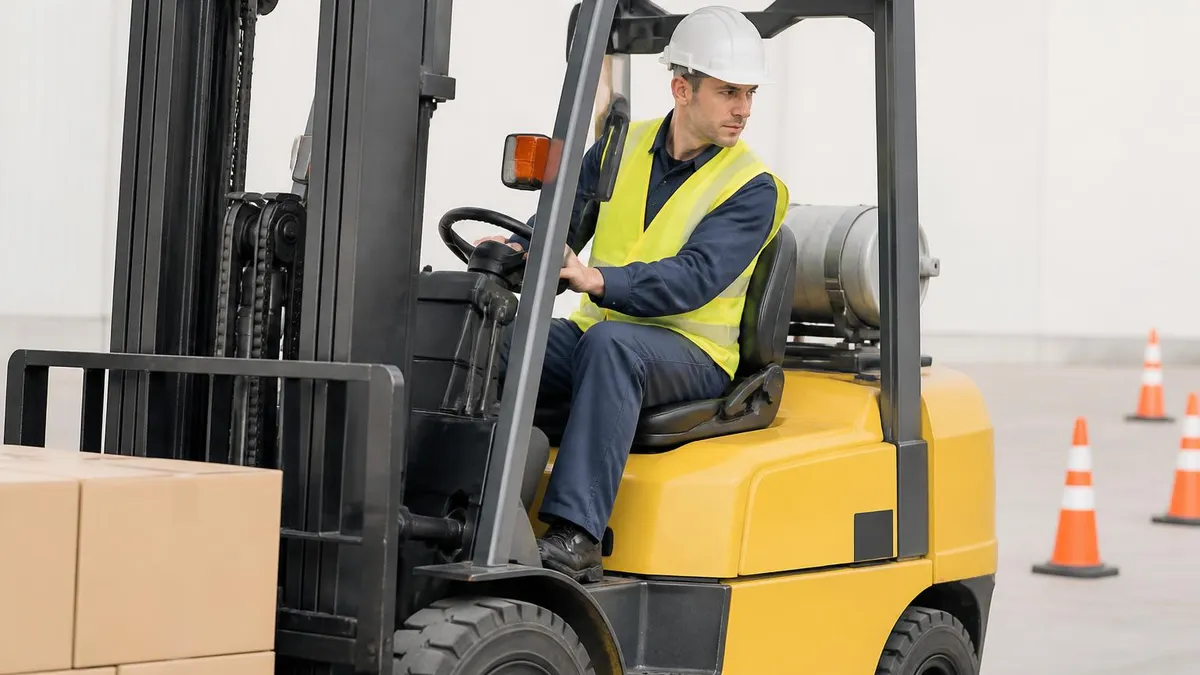
Forklift Rentals: Complete Guide to Pricing, Types, and Operator Requirements
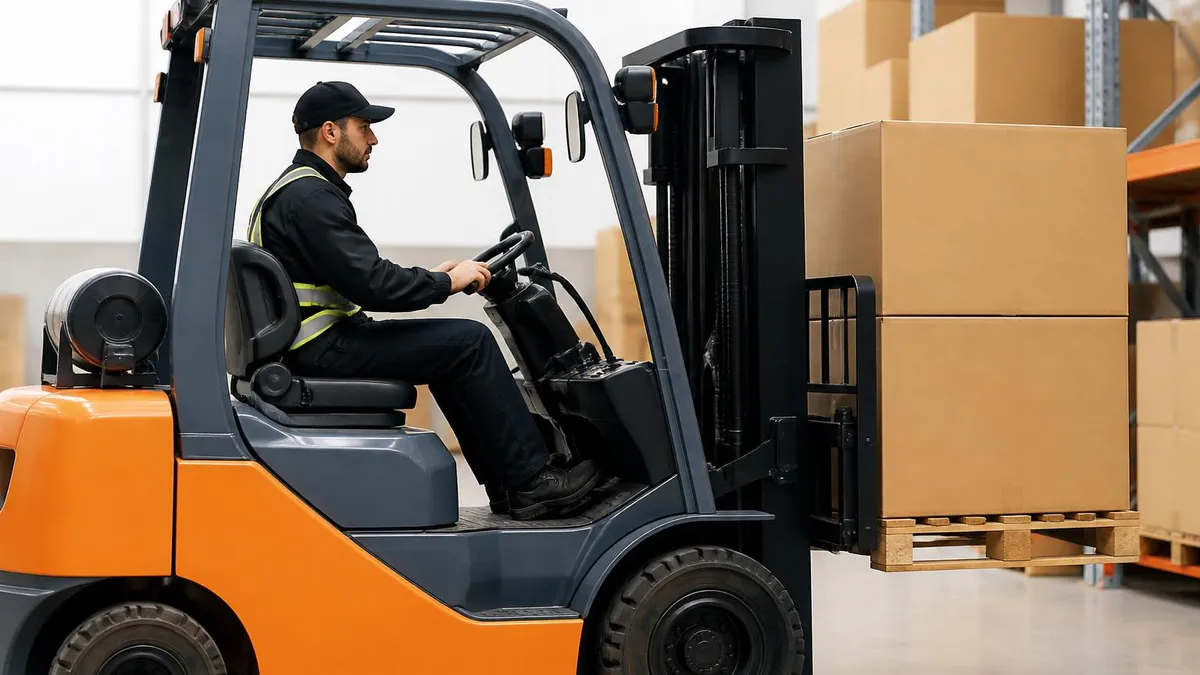
Forklift Hand Signals: The Complete OSHA Guide to Spotter Communication, Standard Gestures, and Safe Warehouse Operations
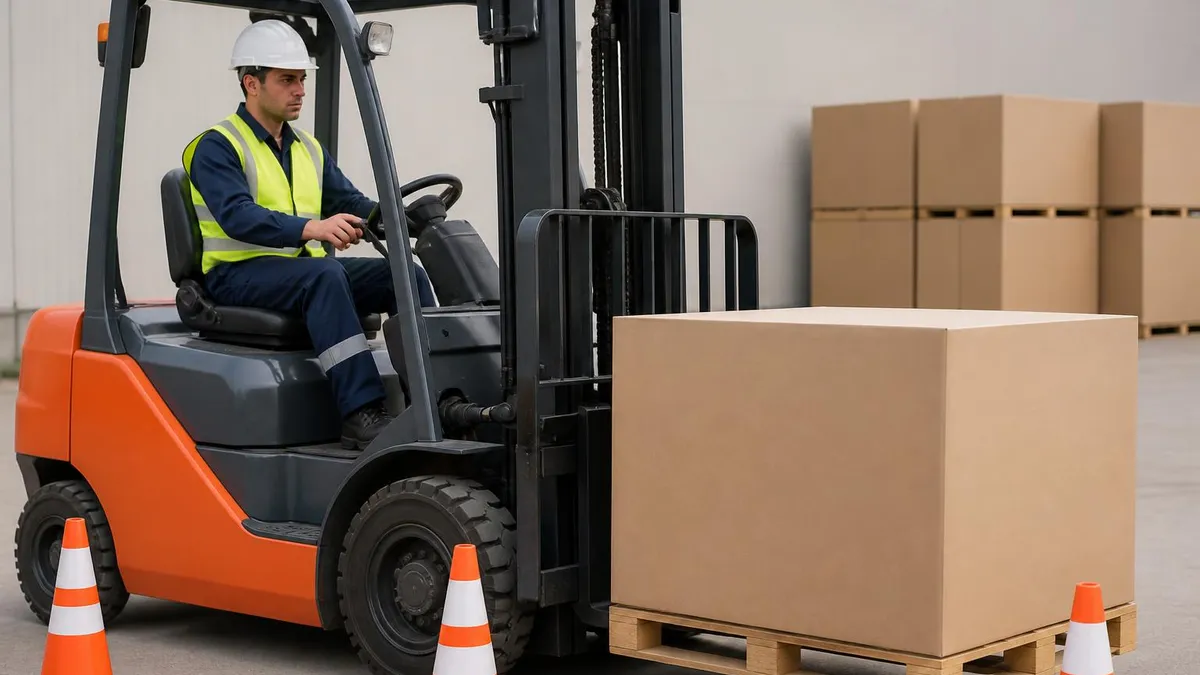
Forklift Tires: Complete Guide to Types, Sizing, Wear Patterns, and Replacement Costs
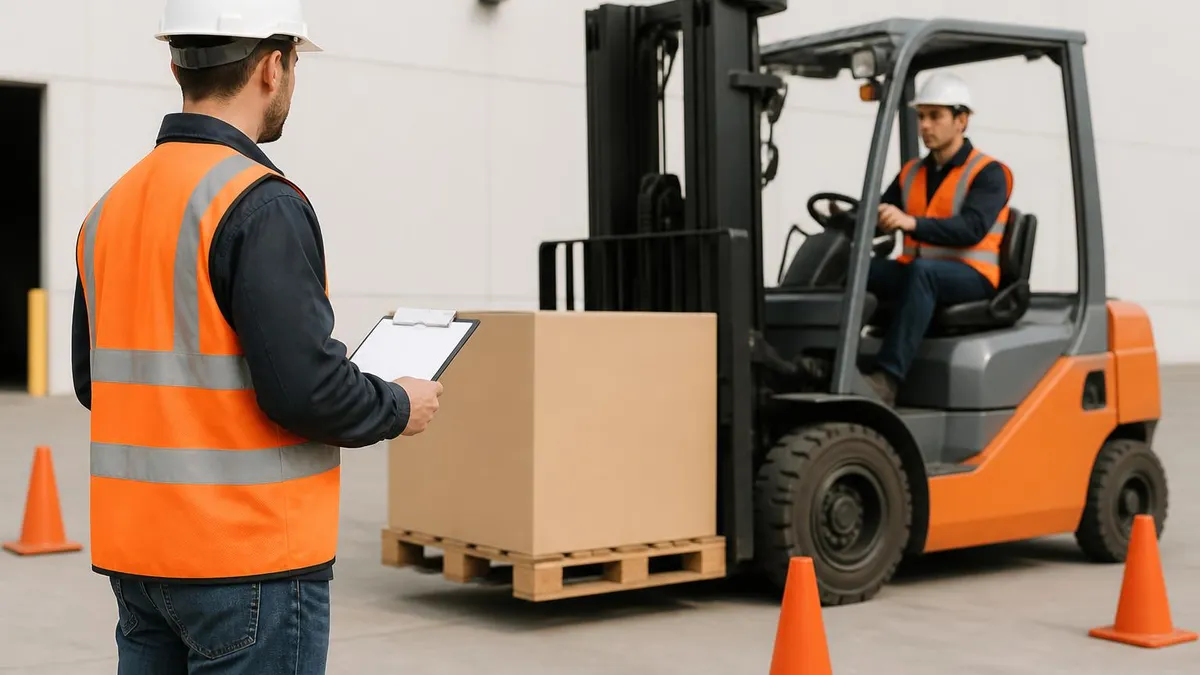
Forklift Parts and Maintenance: Complete Guide to Batteries, Chargers, and Replacement Components
What Is a Forklift? Complete Guide to Types, Uses, Operation, and Certification Requirements
About the Author

Certified Crane Operator & Skilled Trades Exam Specialist
Ferris State UniversityRobert Martinez is a Journeyman Ironworker, NCCCO-certified crane operator, and forklift trainer with a Bachelor of Science in Construction Technology from Ferris State University. He has 21 years of ironworking, rigging, and heavy equipment operation experience across high-rise and industrial construction sites. Robert prepares candidates for crane operator, rigger, forklift, and skilled trades certification examinations.