
Construction Forklift Guide: Rentals, Training, Certification, and Operator Requirements
Construction forklift guide covering forklift rental, training, certification, electric models, and operator requirements with real costs and prep tips. 🎓
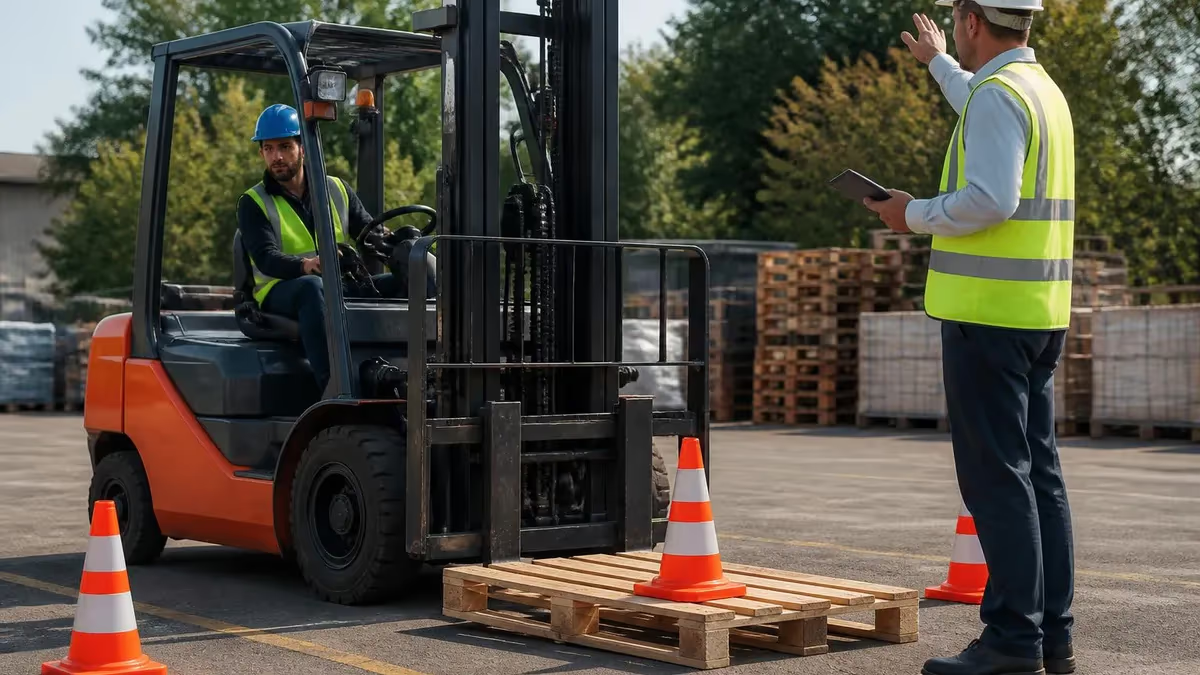
A construction forklift is one of the most versatile machines on any jobsite, moving palletized brick, bagged concrete, rebar bundles, and roofing materials across uneven terrain that a standard warehouse truck could never handle. Whether you manage a residential framing crew or a commercial high-rise project, understanding how these machines work, what they cost, and how operators get certified will save you money and prevent serious injuries. This guide walks through everything from forklift rental options to training requirements so you can make confident decisions.
The term covers several distinct machine types. Rough terrain forklifts ride on large pneumatic tires and conquer mud, gravel, and slopes. Telehandlers extend a boom forward and upward to place loads on second-story decks. Industrial counterbalance units handle paved staging yards and material laydown areas. Each has a specific lifting envelope, and choosing the wrong one wastes both budget and time. Knowing the difference between these construction forklift categories is the first step toward smart equipment planning.
Cost is the question most contractors ask first. A daily forklift rental for a compact rough terrain unit runs roughly $200 to $350, while a weekly rate typically lands between $700 and $1,400 depending on capacity and attachments. Larger telehandlers reaching 10,000 pounds and 55 feet command $1,800 to $3,500 per week. Buying outright shifts the conversation entirely, with new machines priced from $35,000 to well past $120,000, which is why so many crews search for forklift rental near me before committing capital.
Beyond the machine itself, federal law requires that every person who operates one be trained and evaluated. The Occupational Safety and Health Administration mandates this under standard 1910.178, and it applies to construction sites through 1926.602. Skipping certification of forklift operators is not a paperwork shortcut you can afford. Citations regularly exceed $16,000 per violation, and an untrained operator who tips a load can cause fatalities that shut a project down entirely while investigations proceed for weeks.
Electric forklift technology has also changed the equation in recent years. Lithium-ion and advanced lead-acid powered units now deliver torque comparable to diesel for many indoor and paved applications, with zero tailpipe emissions and dramatically lower noise. While most heavy outdoor construction still relies on diesel for raw pulling power, electric forklift models increasingly appear in interior finishing, warehouse-to-site logistics, and emissions-restricted urban zones where idling diesel engines are simply not allowed anymore.
This article is built to give you a complete picture: machine types, rental versus purchase math, the full forklift training and certification pathway, daily inspection routines, and answers to the questions real operators and site managers ask. By the end you will know how to scope the right machine, budget accurately, keep your crew compliant, and prepare anyone on your team to pass an OSHA-aligned evaluation with confidence on their first attempt on the equipment.
Construction Forklifts by the Numbers
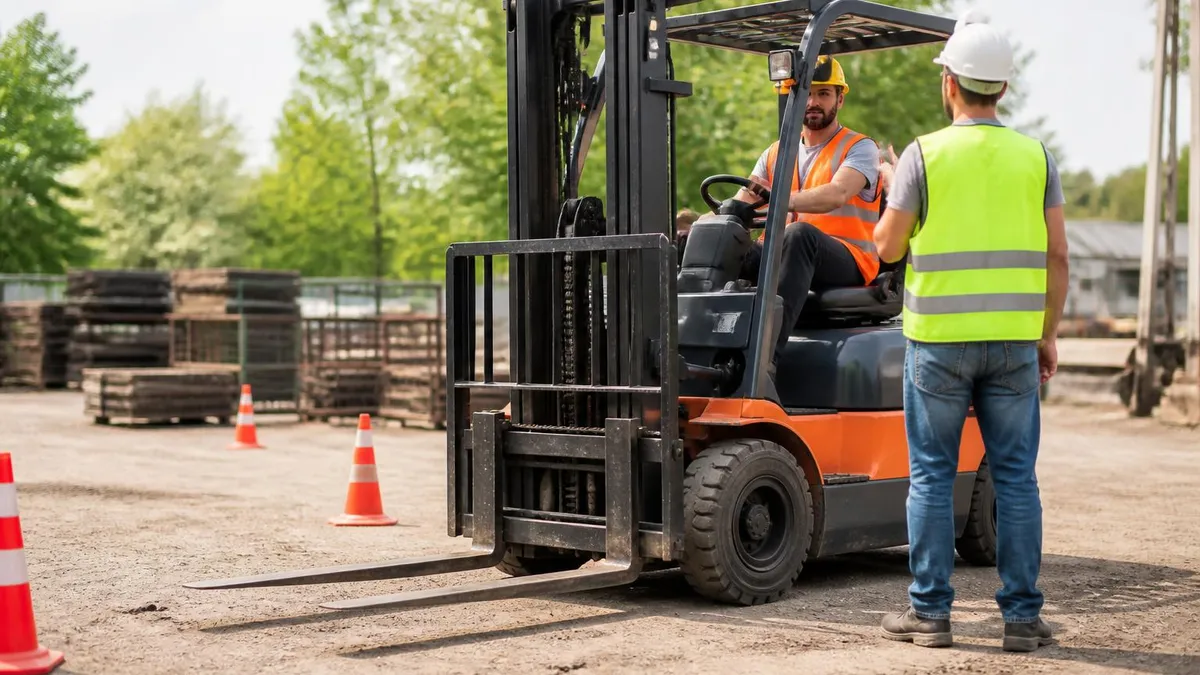
Types of Construction Forklifts and What They Lift
Built with large pneumatic tires and high ground clearance to cross mud, gravel, and slopes. Ideal for moving palletized material across active dirt jobsites where paved surfaces do not yet exist.
Features an extending telescoping boom that reaches forward and upward to place loads on improved decks. Common on multi-story builds where material must travel up to scaffolding or roof lines.
A paved-surface workhorse that uses rear counterweight rather than outriggers. Best for staging yards, material laydown, and loading docks where the ground is firm and level.
Battery-powered units delivering quiet, zero-emission operation for indoor finishing work and emissions-restricted urban sites. Modern lithium models rival diesel torque for lighter construction tasks.
Deciding between renting and buying a construction forklift comes down to how often you actually need the machine and how much capital you want tied up in equipment that depreciates. For a contractor who runs three or four projects a year, each lasting a few weeks, forklift rentals almost always win the math. You avoid maintenance overhead, storage, insurance on idle iron, and the steep depreciation that hits new machines hardest in their first two years of ownership on the resale market today.
Rental pricing tiers are fairly predictable across the United States. A compact 5,000-pound rough terrain unit rents for roughly $200 to $350 a day, $700 to $1,400 a week, and $2,000 to $3,500 a month. Step up to a 10,000-pound telehandler with 55 feet of reach and weekly rates climb to $1,800 through $3,500. Attachments such as buckets, jibs, and rotating carriages add $50 to $200 per day, so always confirm exactly what is bundled before signing the rental agreement.
When operators type forklift rental near me into a search bar, proximity matters more than they realize. Delivery and pickup fees are charged by the mile, and a yard 40 miles away can add $300 in transport on a single rental. Local dealers also turn around emergency swaps faster when a hydraulic line bursts mid-project. Building a relationship with a nearby rental house often earns you priority during peak season when every contractor in the region wants the same machines at once.
Buying makes sense once your utilization crosses a clear threshold, generally when a machine would otherwise be rented more than roughly 60 to 70 percent of the year. A forklift for sale on the used market, perhaps a three-year-old telehandler with 2,000 hours, might list for $45,000 to $70,000 against $110,000 new. Used units carry risk, so a pre-purchase inspection of the mast, boom welds, hydraulics, and transmission is non-negotiable before you wire any funds to a seller.
Ownership brings hidden costs that rental quietly absorbs. Annual maintenance on a working construction forklift runs $2,000 to $5,000, tires can cost $1,500 to $4,000 a set, and a hydraulic rebuild easily exceeds $6,000. You also need a place to park it, a way to haul it between sites, and commercial insurance. Factor all of this into any buy-versus-rent spreadsheet, because the sticker price is only the beginning of the true total cost of equipment ownership over time.
Many crews land on a hybrid strategy that captures the best of both worlds. They own one or two core machines sized for their most common work and rent specialty units, such as a high-reach telehandler or a compact electric forklift, only when a specific job demands it. This keeps capital efficient while ensuring the right tool is always available. Reviewing your project calendar each quarter helps you decide which approach fits the season ahead most economically.
Whichever path you choose, document everything. Keep rental agreements, maintenance logs, and inspection records organized, because they protect you during OSHA audits and insurance claims alike. A clean paper trail also boosts resale value when you eventually sell an owned machine. Smart equipment management is not glamorous, but on tight-margin construction projects it is frequently the difference between a profitable quarter and one that quietly bleeds cash through avoidable equipment waste and downtime.
Electric Forklift vs Diesel for Construction Work
An electric forklift runs on a battery pack, producing zero tailpipe emissions and very low noise. Modern lithium-ion units charge fully in one to three hours and deliver instant torque that rivals diesel for lighter construction and interior finishing tasks. They shine indoors, in tunnels, and in emissions-restricted urban zones where idling combustion engines are prohibited or heavily regulated by local ordinance across many major metropolitan markets today.
The tradeoffs are runtime and terrain. Battery capacity limits continuous heavy-duty outdoor work, and most electric models prefer firm, level surfaces over deep mud. Upfront cost runs higher, but lower fuel and maintenance expenses often recover that premium within a few years. For sites prioritizing air quality, worker health, and quiet operation, electric is increasingly the default rather than an exception on modern construction projects.
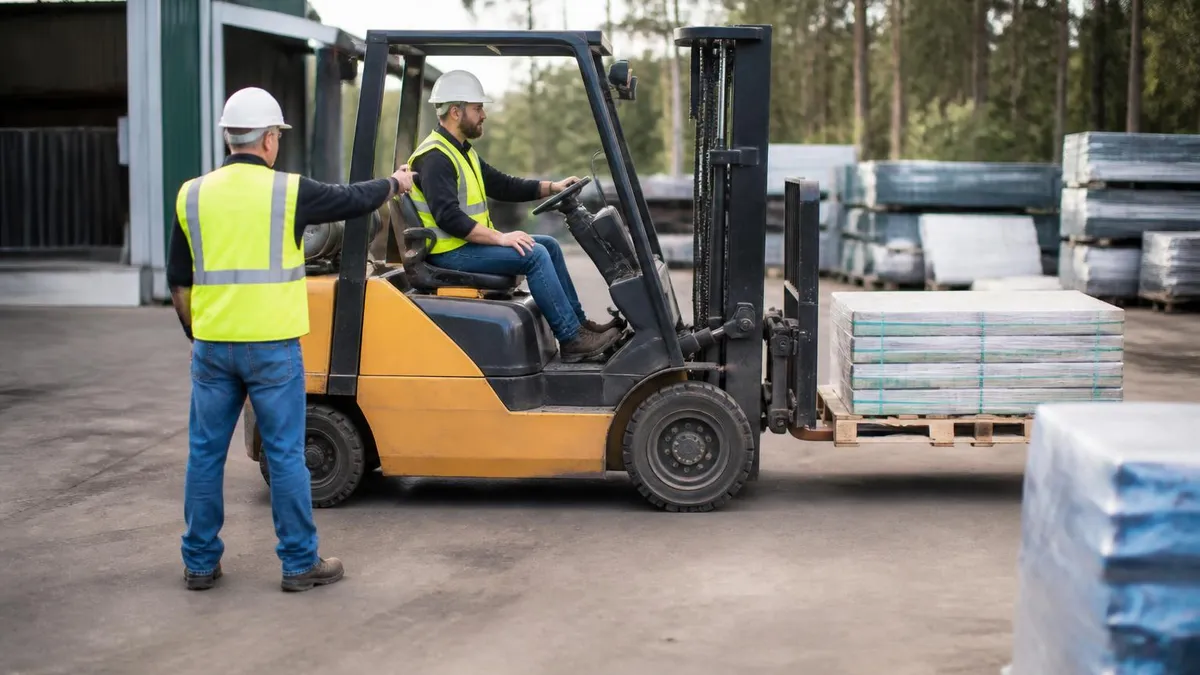
Should You Rent or Buy a Construction Forklift?
- +Renting avoids steep first-year depreciation on new machines
- +No storage, transport, or idle-insurance costs between projects
- +Access to specialty units like high-reach telehandlers on demand
- +Maintenance and repairs are the rental house's responsibility
- +Easy to scale capacity up or down per project phase
- +Local rental yards offer fast emergency swaps and priority service
- −Long-term rental costs exceed purchase for high-utilization fleets
- −Availability tightens sharply during peak construction season
- −You build no equity in equipment you rent repeatedly
- −Delivery and pickup fees add up on distant rental yards
- −Less control over machine age, condition, and attachment options
- −Buying suits crews using a machine over 60-70% of the year
Pros and Cons at a Glance
| Pros | Cons |
|---|---|
| Renting avoids steep first-year depreciation on new machines | Long-term rental costs exceed purchase for high-utilization fleets |
| No storage, transport, or idle-insurance costs between projects | Availability tightens sharply during peak construction season |
| Access to specialty units like high-reach telehandlers on demand | You build no equity in equipment you rent repeatedly |
| Maintenance and repairs are the rental house's responsibility | Delivery and pickup fees add up on distant rental yards |
| Easy to scale capacity up or down per project phase | Less control over machine age, condition, and attachment options |
Daily Construction Forklift Pre-Operation Inspection
- ✓Check engine oil, coolant, and hydraulic fluid levels before startup.
- ✓Inspect tires for cuts, proper inflation, or excessive tread wear.
- ✓Examine forks and mast for cracks, bends, or weld separation.
- ✓Test the horn, lights, backup alarm, and warning beacons.
- ✓Verify the seatbelt latches securely and retracts properly.
- ✓Confirm brakes, including the parking brake, hold firmly on a slope.
- ✓Operate the lift, tilt, and any attachment functions through full range.
- ✓Look underneath for hydraulic leaks, loose hoses, or dripping fluid.
- ✓Check that the data plate and load capacity chart are legible.
- ✓Test steering response across the full left and right range.
- ✓Inspect the overhead guard and load backrest for damage.
- ✓Document the inspection and tag any defect that requires repair.
OSHA requires a documented check before every shift
OSHA standard 1910.178(q)(7) requires forklifts to be examined before each shift and removed from service if any condition affecting safety is found. A two-minute walkaround catches worn tires, low fluids, and cracked forks before they cause a tip-over or dropped load. Operators who skip it risk citations, injuries, and personal liability.
Every person who operates a construction forklift in the United States must complete forklift training and be certified under OSHA standard 1910.178(l), which applies to construction work through 1926.602. This is not optional or a formality that smaller crews can quietly skip. The law requires formal instruction, hands-on practice, and a workplace evaluation before anyone independently operates a powered industrial truck. Employers who allow untrained operation face citations that routinely exceed $16,000 per violation, and far steeper penalties when injuries result.
Certification of forklift operators has three required components. First comes formal instruction covering operating principles, stability, load handling, and site-specific hazards, often delivered through classroom or online modules. Second is practical training, where the trainee operates the machine under direct supervision of a qualified instructor. Third is an evaluation, in which a designated evaluator watches the operator perform real tasks and confirms competence. Only after all three are documented can the operator work independently on your jobsite legally and safely.
The certification is operator-specific and equipment-specific. A worker certified on a sit-down counterbalance truck is not automatically qualified to run a telehandler or a stand up forklift, because each class handles differently and presents distinct hazards. Employers must evaluate operators on the specific types of trucks they will actually use. This is why thorough programs train across multiple machine classes rather than issuing a single generic card that fails to reflect the real equipment found on jobsites.
OSHA requires re-evaluation at least once every three years, and sooner if certain triggers occur. An operator must be retrained after an accident or near-miss, after being observed operating unsafely, when assigned to a different type of truck, or when workplace conditions change in ways that affect safe operation. This three-year cycle is a floor, not a ceiling, and many responsible contractors run refresher evaluations annually to keep skills sharp and documentation current for audits and inspections.
Costs for getting certified vary by delivery method. Online forklift training courses run roughly $50 to $150 per operator and cover the formal instruction portion, but they cannot replace the hands-on practice and live evaluation that OSHA also requires. In-person programs that include practical training and evaluation typically cost $150 to $300 per person. Many employers run training in house using a qualified internal evaluator, which lowers per-operator cost once the program is established and documented properly across the crew.
Documentation is the part crews most often neglect, and it is exactly what inspectors ask for first. You must keep a written record showing the operator's name, the training and evaluation dates, and the identity of the person who performed the evaluation. Wallet cards are convenient but are not themselves proof of compliance; the underlying records are. Store these securely and keep them current, because a missing evaluation date can convert a clean site into a cited one almost instantly during a surprise visit.
Preparing your crew to pass on the first attempt pays dividends in both time and cost. Practice tests that mirror real OSHA-aligned question banks help operators internalize stability principles, the data plate, and inspection requirements before the live evaluation. Reviewing the rated capacity, the center of gravity, and load-handling rules ahead of time means fewer retakes and a smoother evaluation day, keeping your project on schedule and your operators confident behind the controls of any machine.
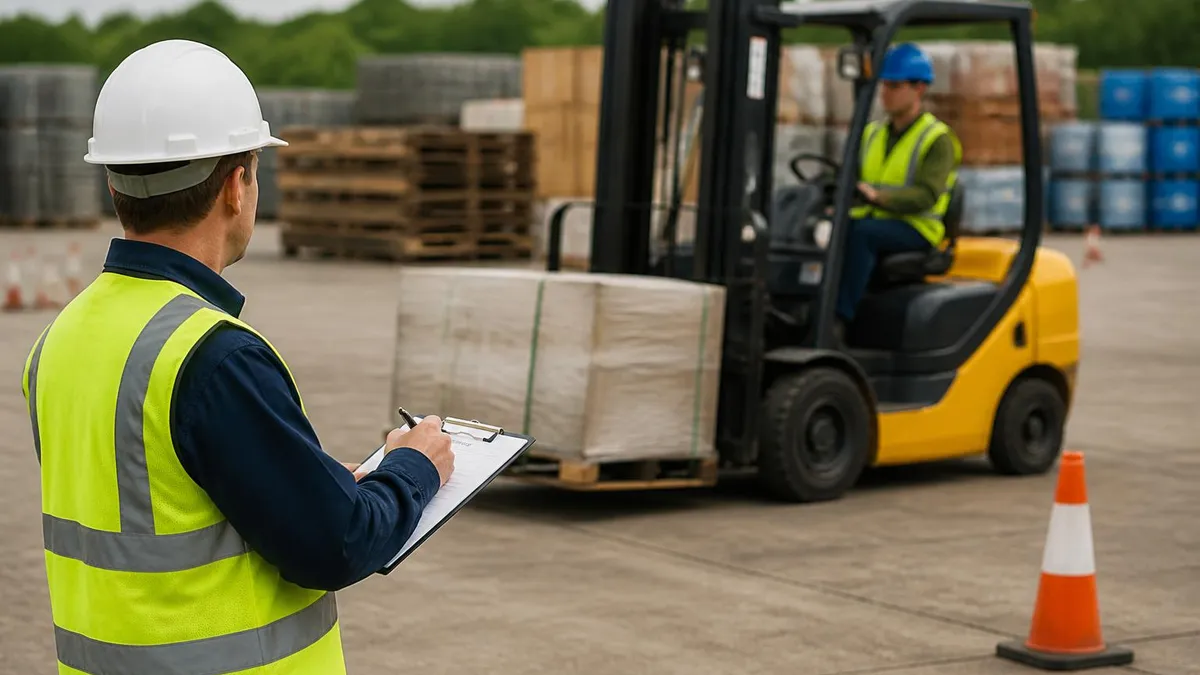
OSHA requires forklift operators to be re-evaluated at least once every three years, and immediately after any accident, near-miss, or unsafe operation. Letting certification lapse exposes both the operator and employer to citations exceeding $16,000 per violation. Track expiration dates and schedule refresher evaluations before they come due.
Operating a construction forklift safely starts with understanding load capacity and the data plate riveted to every machine. The rated capacity assumes a specific load center, usually 24 inches, and that rating drops sharply as the load extends farther out or higher up. Overloading or extending beyond the rated envelope is the leading cause of tip-overs, which remain among the deadliest construction equipment accidents. Always read the capacity chart for your specific attachment before lifting anything questionable on a job.
Stability is governed by the stability triangle formed between the front axle and the rear pivot point. The combined center of gravity of the machine and its load must stay inside that triangle at all times. Travel with the load low and tilted back, slow down on grades and turns, and never raise a load while moving. On a slope, always point the load uphill, because a downhill-facing loaded forklift can pitch forward and dump its cargo or overturn entirely without warning.
Jobsite ground conditions deserve constant attention on construction projects, where surfaces change daily as work progresses. Soft soil, hidden trenches, edges of excavations, and recently backfilled areas can collapse under the concentrated weight of a loaded machine. Maintain a safe distance from drop-offs, use spotters near excavations, and confirm that temporary bridging and dock plates are rated for your combined machine and load weight before crossing them with any cargo aboard the forks.
Pedestrian safety is a shared responsibility that kills workers every year when it breaks down. Construction sites are chaotic, with trades moving constantly through the same space where forklifts operate. Use designated travel lanes, sound the horn at blind corners and intersections, make eye contact with workers on foot, and never allow anyone to walk or stand under raised forks. Many fatal incidents involve a pedestrian crushed against a wall or rack by a machine that simply had no clear path forward.
Weather and visibility add another layer of risk that operators underestimate. Rain turns dirt sites slick, reduces braking traction, and limits sightlines through a fogged or muddy windshield. High winds can catch large or sheet-goods loads and shift the center of gravity unexpectedly. In low light, ensure work lights and beacons function, and slow down. When conditions exceed what the machine or operator can safely handle, the correct decision is to stop and wait rather than risk a costly accident.
Renting also intersects with safety in ways crews overlook. When you pick up a unit from a forklift rental yard, inspect it as thoroughly as you would your own machine, because rental units see hard use across many sites and defects slip through. Confirm the data plate matches the attachments installed, verify all safety systems function, and document any pre-existing damage before it leaves the lot so you are not blamed for it at return time when fees are assessed.
Finally, build a culture where stopping work is always acceptable. The best-equipped, best-trained crew still fails if operators feel pressured to rush, overload, or skip inspections to hit a deadline. Enable every worker to halt an unsafe lift without fear of blame. Reviewing a thorough construction forklift safety plan at each project kickoff sets expectations early and keeps everyone aligned on the principle that no schedule justifies an avoidable injury on the site.
Preparing to pass a forklift operator certification evaluation is straightforward when you focus on the topics that matter most. Start by mastering the data plate. Evaluators consistently ask trainees to locate the rated capacity, the load center, the machine weight, and the fuel or power type. Being able to read this plate fluently signals to any evaluator that you understand the single most important factor governing whether a given lift is safe to perform on the job at hand.
Next, internalize the stability triangle and how load center affects capacity. Many operators fail their first evaluation not because they cannot drive, but because they cannot explain why a 4,000-pound rated machine becomes unsafe with a 3,000-pound load held high and far forward. Practice questions that walk through these scenarios build the mental models you need. Free online practice tests aligned to OSHA standards are among the most efficient ways to close these conceptual gaps quickly before evaluation day arrives.
Practice the daily inspection until it is second nature. A strong evaluation almost always begins with the operator performing a complete pre-shift walkaround out loud, narrating each check. Knowing the inspection sequence cold, including fluid levels, tires, forks, mast, brakes, horn, lights, and leaks, demonstrates the safety mindset evaluators want to see. Rehearse it on the actual machine class you will be tested on so the muscle memory transfers directly to evaluation day without hesitation.
Hands-on practice time is irreplaceable, so request it before your evaluation if you are new to a machine class. Smooth load engagement, controlled tilt, gentle braking, and confident maneuvering in tight spaces come only from repetition. If your employer offers supervised practice sessions, take every one. The difference between a nervous first-timer and a confident operator is usually just a few hours of guided seat time on the specific equipment you will be running daily.
Understand the OSHA framework at a high level even if the test is practical. Knowing that certification lasts three years, that retraining is triggered by accidents or new equipment, and that operation requires formal instruction plus hands-on training plus evaluation shows evaluators you grasp the bigger compliance picture. This knowledge also protects you throughout your career, since you will recognize when your own certification needs renewal before a supervisor or inspector ever has to point it out to you.
Finally, manage evaluation-day nerves with preparation and rest. Arrive early, review your practice notes, and treat the evaluation as a demonstration of habits you have already built rather than a high-stakes exam to cram for. Operators who have practiced consistently pass at rates of 70 to 90 percent on their first attempt. Combine quality practice tests, real seat time, and a calm methodical approach, and certification becomes a predictable milestone rather than an obstacle standing between you and steady construction work.
Keep building your knowledge after you pass, because the best operators never stop learning. New attachments, unfamiliar machine classes, and changing site conditions all demand fresh judgment. Stay current with refresher training, review your inspection habits periodically, and mentor newer operators when you can. A reputation for safe, reliable operation is one of the most valuable assets a construction professional can carry from one project and one employer to the next throughout a long and rewarding career.
Sample Forklift certification Practice Questions
Try these questions from our free Forklift certification practice tests. The correct answer and an explanation follow each question.
Which of the following is a valid reason for requiring refresher training for a certified operator?
- A. The operator passed the three-year re-evaluation
- B. The operator is involved in a near-miss incident
- C. The employer hires a new safety director
- D. The forklift manufacturer releases a new model
Answer: B. The operator is involved in a near-miss incident
Near-miss incidents indicate unsafe operation or knowledge gaps and trigger a mandatory refresher training requirement under OSHA.
An employee has been operating the same counterbalanced forklift safely for five years. Workplace conditions and the type of forklift have not changed. According to OSHA 29 CFR 1910.178(l)(4), what is the MAXIMUM interval at which this operator must receive refresher training and an evaluation?
- A. Every year.
- B. Only after an accident or near-miss.
- C. Every five years.
- D. At least once every three years.
Answer: D. At least once every three years.
OSHA standard 1910.178(l)(4)(iii) mandates that all forklift operators must be evaluated at least once every three years to ensure their skills are current. Refresher training is also required sooner if the operator is involved in an accident, is observed operating unsafely, is assigned to a different truck, or if workplace conditions change.
Who is responsible for certifying that a forklift operator has completed the required training?
- A. The operator
- B. The employer
- C. OSHA
- D. The equipment manufacturer
Answer: B. The employer
The employer must certify that each operator has been trained and evaluated as required.
What must forklift training include regarding the specific types of trucks an operator will use?
- A. Training on all possible forklift models worldwide
- B. Training specific to each type of truck the operator will actually operate
- C. Only generic forklift safety concepts
- D. Manufacturer contact information
Answer: B. Training specific to each type of truck the operator will actually operate
Training must be tailored to the exact types of forklifts the operator will use, since different truck types have different operating characteristics.
Forklift Questions and Answers
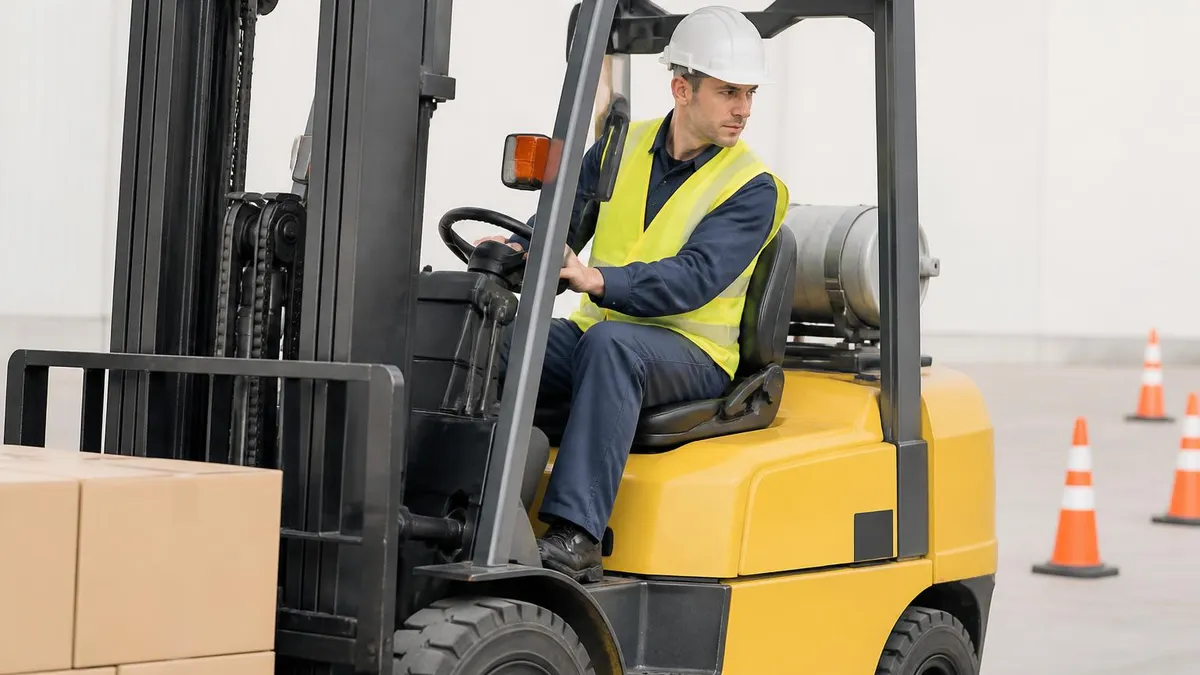
Forklift Rentals: Complete Guide to Pricing, Types, and Operator Requirements
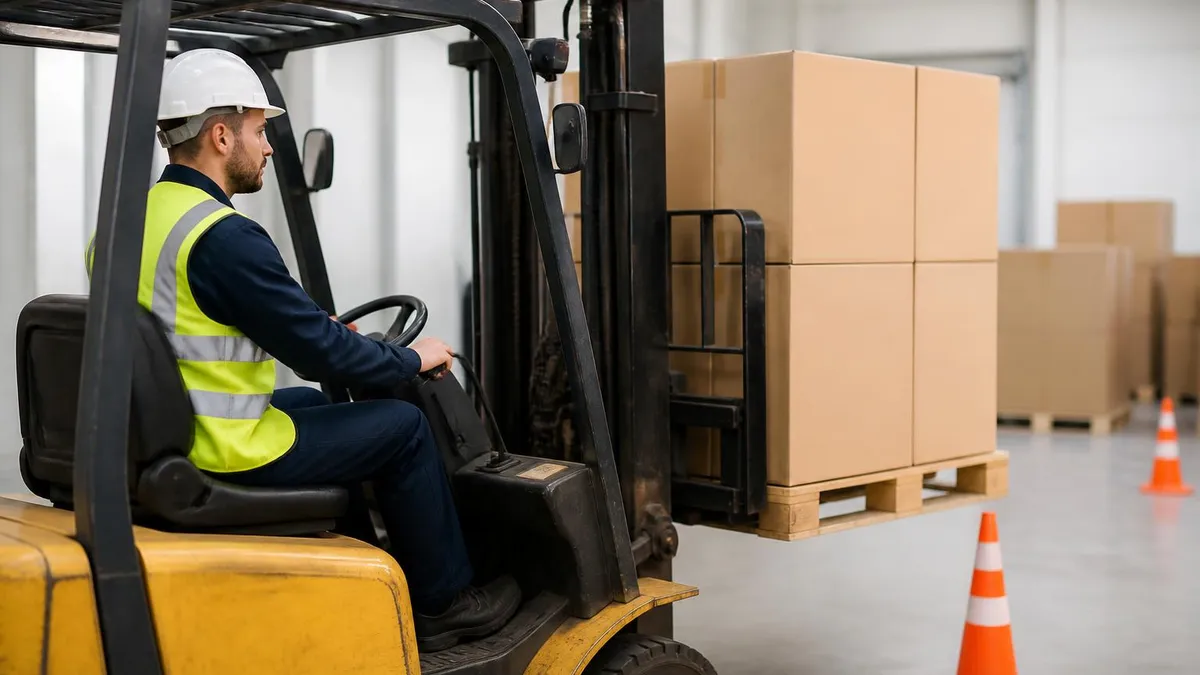
Forklift Training Course Near Me: Complete Guide to Finding Local OSHA-Certified Programs, Costs, and Schedules in 2026
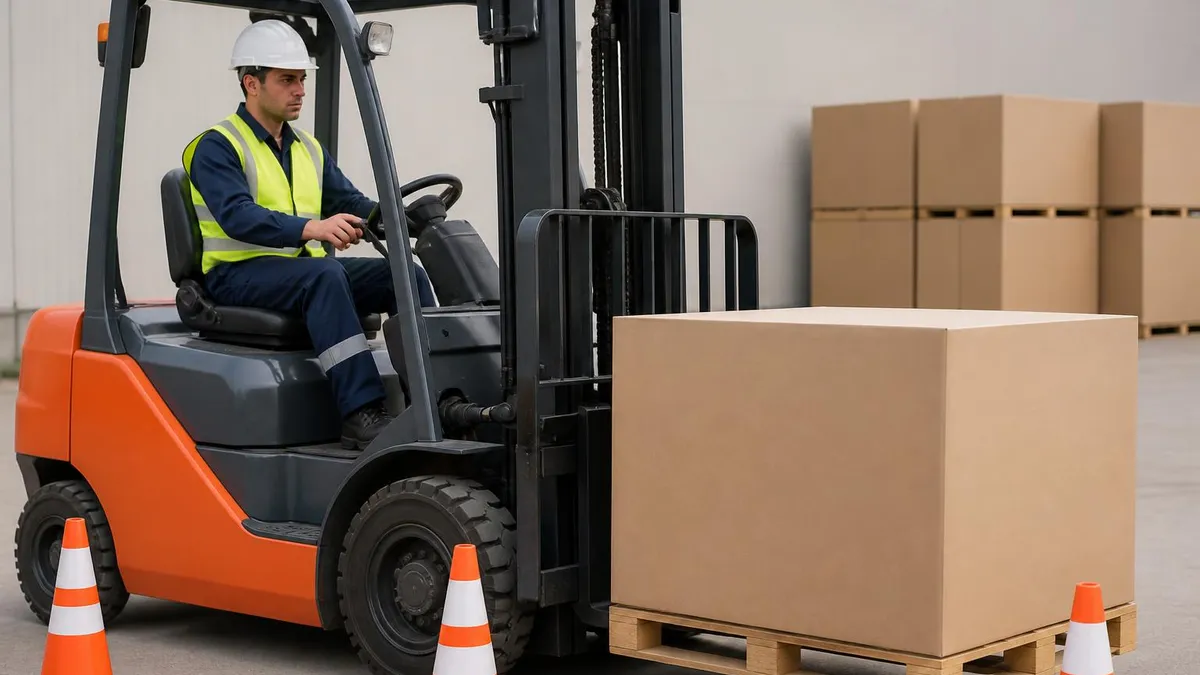
Forklift Tires: Complete Guide to Types, Sizing, Wear Patterns, and Replacement Costs
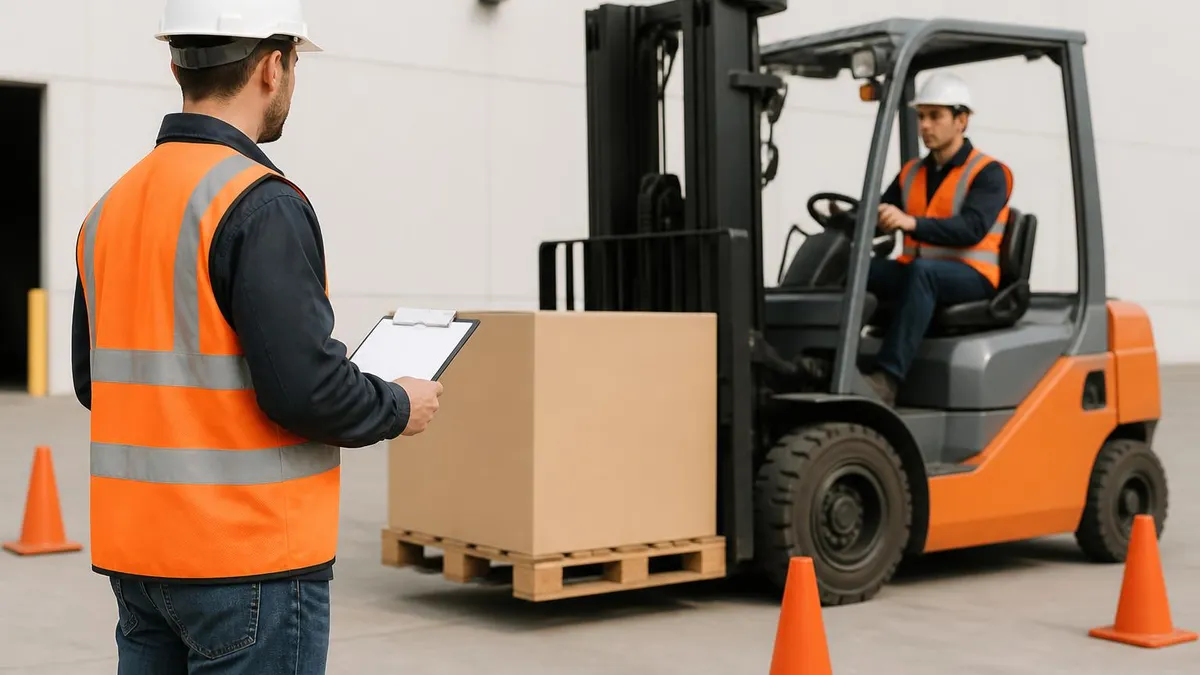
Forklift Parts and Maintenance: Complete Guide to Batteries, Chargers, and Replacement Components
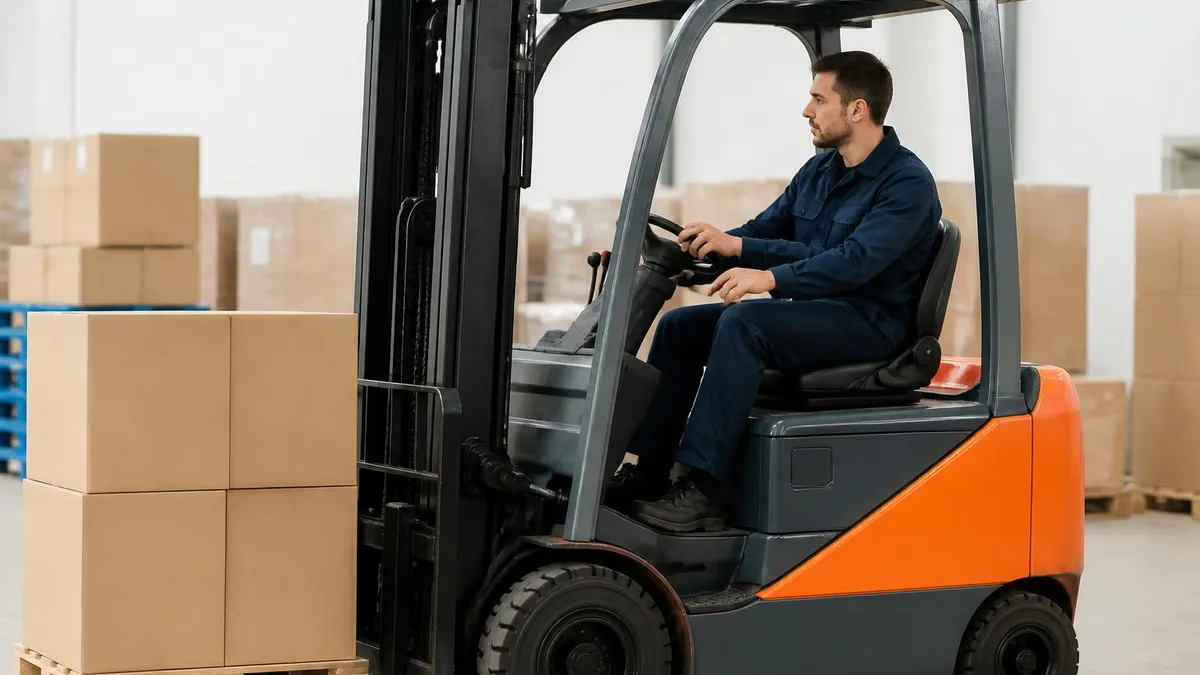
What Is a Forklift? Complete Guide to Types, Uses, Operation, and Certification Requirements
How this page was made: written with AI tools. Exam facts are checked against the official sources listed below. Not reviewed by a subject-matter expert. Editorial policy
Sources & references
Exam facts on this page (fees, format, dates, passing scores) are checked against these official sources; the date is our last check. Editorial policy
- osha.gov — Test delivery, eligibility, renewal · verified Oct 2026