
Certified Nursing Assistant Jobs: Where to Work, What to Expect & How to Get Hired
Free Certified Nursing Assistant practice test with instant feedback and detailed answer explanations. Prepare for your exam.
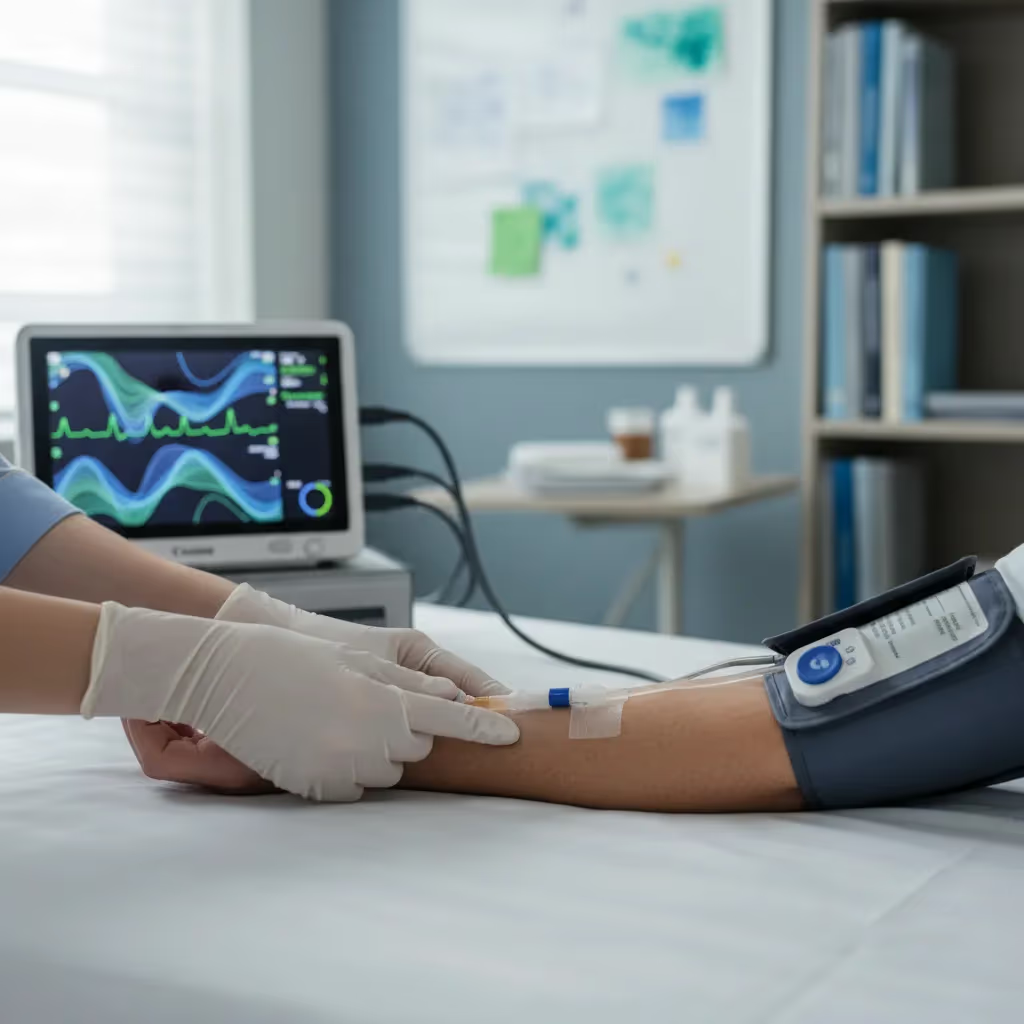
Certified nursing assistant jobs are everywhere right now. Hospitals can't fill shifts fast enough, nursing homes are posting openings weekly, and home health agencies are scrambling to keep up with an aging population that needs hands-on care. If you've got your CNA certification — or you're working toward it — the job market is tilted heavily in your favor.
The Bureau of Labor Statistics projects 4% growth for nursing assistants through 2032, but that number undersells the reality. Turnover in this field runs between 30% and 50% annually at many facilities, which means certified nursing assistant jobs open constantly even without net growth. You won't struggle to find postings. The real challenge? Picking the right setting, the right shift, and the right employer so you don't burn out in six months.
This page covers the major work settings for a certified nurse assistant job — from acute care floors in hospitals to long-term care facilities, from home health visits to rehabilitation centers. We'll break down what each setting actually looks like day-to-day, what they pay, and which ones match different career goals. Whether you want certified nursing assistant jobs hospital positions or prefer the flexibility of home health, you'll find concrete details below — not vague advice.

Hospitals are the top-paying environment for certified nursing assistant jobs hospital roles, and they're also the most demanding. On a med-surg floor, you might have 8 to 12 patients at once. You're taking vitals every four hours, helping patients ambulate after surgery, changing linens, answering call lights — all while documenting everything in the electronic health record. The pace is relentless during a 12-hour shift, but the trade-off is real: hospital CNAs earn 15% to 25% more than their counterparts in nursing homes.
Emergency departments use CNAs differently. You're not building relationships with patients over weeks — you're cycling through new arrivals every few hours. Splinting, wound prep, EKG hookups, specimen collection. Some hospitals cross-train their ED CNAs as patient care techs, which bumps pay another $1 to $3 per hour. That's a certified nurse assistant job with genuine upward mobility built into the role itself.
Intensive care units represent the other end of the hospital spectrum. Lower patient ratios — often 1:2 or 1:3 — but higher acuity. You're repositioning ventilated patients, monitoring I&O carefully, and working shoulder-to-shoulder with RNs who depend on your observations. ICU experience looks exceptional on a nursing school application if that's your long-term plan. Not every hospital hires CNAs directly into ICU, though. Most want at least six months of med-surg experience first.
Certified nursing assistant jobs part time exist at virtually every facility type, but some settings make flexible scheduling much easier than others. Staffing agencies are the fastest route to part-time CNA work — you pick your shifts through an app, show up, and get paid a premium rate that's often $2 to $5 above what staff CNAs make at the same facility. The downside? No benefits, no guaranteed hours, and you're always the new face on the floor.
Nursing homes and assisted living facilities are the most reliable source of certified nurse assistant jobs with part-time options. Many run three shifts — 7-3, 3-11, 11-7 — and they'll happily slot part-timers into the evening and night shifts that full-time staff avoid. Weekend-only positions (sometimes called "Baylor shifts") pay premium rates at some facilities: work two 12-hour weekend shifts and get paid for 36 or even 40 hours.
Home health offers the ultimate scheduling flexibility. You're matched with one client at a time, visits run 2 to 8 hours, and you can often choose which days you work. The catch? Travel time between clients isn't always compensated, and cancellations happen. One week you're booked solid, the next your client is hospitalized and your hours vanish overnight. It's freedom with unpredictability baked in.
CNA Work Settings Compared
Pay range: $16–$22/hr depending on region and department. Shift differentials add $1–$4/hr for evenings, nights, and weekends.
Typical ratio: 8–12 patients on med-surg, 2–3 in ICU.
Pros: Highest pay, best benefits (health insurance, tuition reimbursement, retirement matching), exposure to diverse conditions. Many hospitals promote CNAs into PCT or unit secretary roles.
Cons: Fast pace, heavy physical demands, mandatory overtime during short-staffing. Burnout risk is real — average hospital CNA tenure is under 2 years.
Jobs certified nursing assistant professionals land aren't limited to the three big settings above. Rehabilitation centers — both inpatient and outpatient — hire CNAs to assist patients recovering from strokes, hip replacements, traumatic brain injuries, and spinal cord injuries. The work is physically demanding but deeply rewarding because you see measurable progress. A patient who couldn't sit up on Monday is walking with a walker by Friday. That kind of visible improvement doesn't happen in most CNA roles.
Part time certified nursing assistant jobs also show up in unexpected places. Schools hire CNAs for special education programs where students need medical support during the school day. Dialysis clinics bring on CNAs for patient intake, weight checks, and post-treatment monitoring. Correctional facilities — jails, prisons, juvenile detention — employ CNAs alongside LPNs and RNs in institutional healthcare units. The pay at correctional facilities often surprises people: $18 to $24 per hour in many states, plus state employee benefits.
Hospice is another setting worth serious consideration. You're providing comfort care — bathing, repositioning, mouth care, emotional support — for patients in their final weeks or months. The emotional weight is significant. Not everyone can do this work long-term. But hospice CNAs consistently report higher job satisfaction than their peers in nursing homes, partly because ratios are lower and the pace is slower. You have time to actually sit with your patients. That matters more than most job descriptions acknowledge.
Certified nursing assistant jobs Los Angeles represent one of the strongest metro markets in the country. LA County alone employs over 40,000 CNAs across hospitals, nursing homes, and home health agencies. The cost of living is brutal — no question — but CNA wages in LA range from $17 to $23 per hour, and California's staffing ratio laws guarantee lower patient loads than most other states. Certified nursing assistant jobs hiring in LA rarely stay posted longer than two weeks.
California also leads in CNA protections. Mandatory meal breaks, overtime after 8 hours in a single shift (not just 40 hours weekly), and some of the strictest workplace safety regulations in healthcare. If you're comparing states, California pays more and protects more — but housing eats a chunk of that premium. A CNA making $20/hr in Fresno keeps more take-home pay than one making $22 in Santa Monica. Geography within the state matters almost as much as the state itself.
Outside California, the Southeast and Midwest offer the highest demand relative to supply. States like Georgia, Texas, and Florida have aging populations growing faster than their CNA training pipeline can keep up. The pay is lower — $13 to $17 in many areas — but the cost of living is dramatically lower too. A CNA making $15/hr in Atlanta can afford a one-bedroom apartment. Good luck doing that in Boston or San Francisco on the same wage.
Pros and Cons of CNA Careers
- +High demand means you can find work in almost any city within days of getting certified
- +Short training period — most CNA programs take 4 to 12 weeks, not years
- +Direct patient care experience builds a strong foundation for nursing school or PA programs
- +Multiple work settings let you switch environments without starting over in a new field
- +Shift flexibility makes it possible to work while pursuing further education
- +Emotional reward of helping patients with daily needs that restore dignity and comfort
- −Pay ceiling is real — most CNAs top out between $18 and $22/hr without additional credentials
- −Physical strain from lifting, transferring, and repositioning patients accumulates over years
- −Emotional burnout, especially in hospice and long-term care with high patient mortality
- −Understaffing at many facilities means unsafe patient ratios and mandatory overtime
- −Limited upward mobility without additional schooling (LPN, RN, or specialized certification)
- −Exposure to infectious diseases, bodily fluids, and combative patients is routine
Certified nursing assistant jobs in Chicago cluster heavily around the city's massive hospital systems — Northwestern, Rush, University of Chicago Medical Center, Advocate Aurora. These systems hire hundreds of CNAs annually and offer structured career ladders. Start as a CNA, cross-train as a PCT, then move into a clinical coordinator role while pursuing your nursing degree. Chicago's union presence (SEIU Healthcare Illinois) also means better wages and stronger job protections than non-union states. Entry-level CNA pay in Chicago runs $16 to $20 per hour.
Certified nursing assistant jobs in Atlanta GA paint a different picture. Atlanta's healthcare market is dominated by Emory, Grady, Piedmont, and WellStar — all expanding their CNA workforce. Pay ranges from $14 to $18 per hour, which stretches further than you'd expect because Atlanta's cost of living sits well below other major metros. Georgia doesn't have the staffing ratio mandates that California does, so patient loads can run higher. But the sheer volume of openings means you can afford to be selective about which facility and shift you take.
Both cities share one thing: sign-on bonuses are common right now. $500 to $2,000 for committing to a full-time position for 6 to 12 months. Some facilities front-load the bonus. Others split it — half at 90 days, half at 6 months. Read the fine print. If you leave before the commitment period ends, most employers claw back the full amount. That "free money" has strings attached, and those strings can cost you if you switch jobs too early.
CNA Job Search Checklist
- ✓Verify your CNA certification is current and listed on your state's nurse aide registry
- ✓Get BLS/CPR certification — most hospitals require it before your first day
- ✓Update your resume with clinical hours, patient ratios, and specific skills (vitals, wound care, EHR)
- ✓Create profiles on Indeed, ZipRecruiter, and your state's healthcare job board
- ✓Apply to at least 3 facilities in your preferred setting (hospital, SNF, or home health)
- ✓Prepare for skills demonstration — many employers test CNA competencies during interviews
- ✓Request references from clinical instructors or preceptors who supervised your training
- ✓Research each facility's CMS star rating and recent inspection reports before your interview
- ✓Ask about shift differentials, tuition reimbursement, and career advancement during the offer stage
- ✓Complete any facility-specific onboarding requirements (drug screening, background check, TB test)
Certified nursing assistant jobs Houston TX represent one of the largest CNA job markets in the Sun Belt. The Texas Medical Center alone — the world's largest medical complex — employs thousands of CNAs across its 60+ institutions. Houston CNA wages range from $14 to $19 per hour, with shift differentials pushing night and weekend rates higher. Texas doesn't mandate staffing ratios, so facility culture matters enormously. Some Houston hospitals maintain excellent ratios voluntarily. Others don't. Check Glassdoor reviews and ask current staff during your interview.
Certified nursing assistant jobs Fresno CA offer a different value proposition. Fresno's cost of living runs 25% to 35% below LA and San Francisco, but CNA wages stay competitive — $16 to $21 per hour — because California's minimum staffing laws apply statewide. Community Regional Medical Center and Kaiser Permanente Fresno are the two biggest employers. Rural facilities surrounding Fresno often pay even more because they struggle to attract staff. A CNA willing to commute 30 minutes outside the city center can earn $2 to $4 more per hour than their urban counterparts.
The Texas-California comparison captures a fundamental trade-off in CNA careers. Texas offers lower costs, no state income tax, and massive job volume — but fewer worker protections and no ratio mandates. California offers higher wages, legal staffing minimums, and stronger labor laws — but brutal housing costs that eat into your paycheck. Neither is objectively better. It depends on what you value: take-home dollars or workplace structure. Plenty of CNAs relocate between these states depending on their life stage.
Certified nursing assistant jobs Sacramento CA have grown steadily as the state capital's suburbs expand. UC Davis Medical Center, Sutter Health, and Dignity Health run the largest CNA operations in the region. Sacramento wages mirror the statewide average — $16 to $21 per hour — but housing costs here sit 30% below the Bay Area, making the take-home math much more favorable. The city's light rail system also makes commuting without a car feasible if you work at a facility near a station.
Certified nursing assistant jobs in Orlando FL tap into a different dynamic entirely. Florida's retirement population drives massive demand for long-term care CNAs. AdventHealth, Orlando Health, and HCA Florida are the dominant hospital employers, while dozens of skilled nursing facilities ring the metro area. Orlando CNA pay ranges from $14 to $18 per hour — lower than California but paired with no state income tax and housing costs that, while rising, remain below the national average for a city its size.
Florida has another advantage new CNAs overlook: reciprocity. Florida's CNA certification transfers relatively easily to neighboring states like Georgia, Alabama, and the Carolinas. If you get certified and start working in Orlando, you're not locked into Florida. That portability matters if you're young, mobile, and exploring where you want to settle long-term. California-certified CNAs face more friction when transferring out of state because California's training requirements exceed what most states mandate.
Always verify three things before signing: (1) the facility's CMS star rating and recent state inspection reports — available free at medicare.gov/care-compare; (2) the actual patient-to-CNA ratio on your specific shift, not just what they quote in the interview; (3) whether the sign-on bonus has a clawback clause if you leave before the commitment period ends. These details separate good CNA employers from ones that churn through staff every few months.
Certified nursing assistant jobs for beginners are more accessible than most entry-level healthcare roles. You don't need a college degree. You don't need prior medical experience. Most CNA training programs accept anyone with a high school diploma or GED, a clean background check, and up-to-date immunizations. Some programs don't even require a diploma — they'll accept you at 16 or 17 with parental consent, depending on your state. That low barrier to entry is one of the biggest draws of this career path.
The key to finding certified nursing assistant jobs easily is understanding where the gaps are. Night shifts and weekend shifts are chronically understaffed everywhere. If you're willing to work 11 PM to 7 AM, you'll get hired faster and often at a higher rate than your day-shift peers. Holidays — Thanksgiving, Christmas, New Year's — are another use point. Facilities that can't fill holiday shifts will offer time-and-a-half or even double time. Your willingness to work unpopular hours is literally worth money.
Staffing agencies are the fastest path for brand-new CNAs who want immediate work. Agencies like AMN Healthcare, Cross Country, and local agencies specific to your region place CNAs within days of completing their registry paperwork. The hourly rate is higher than permanent staff positions, but there are no benefits, no paid time off, and no job security.
Think of agency work as a trial period — you get to see multiple facilities from the inside and figure out which one you'd actually want to commit to long-term. Many CNAs spend 3 to 6 months on agency contracts before accepting a permanent position.
CNA Practice Test Questions
Prepare for the CNA - Certified Nursing Assistant exam with our free practice test modules. Each quiz covers key topics to help you pass on your first try.
CNA Activities of Daily Living
CNA Exam Questions covering Activities of Daily Living. Master CNA Test concepts for certification prep.
CNA Aging Process
Free CNA Practice Test featuring Aging Process. Improve your CNA Exam score with mock test prep.
CNA Anatomy and Physiology Basics
CNA Mock Exam on Anatomy and Physiology Basics. CNA Study Guide questions to pass on your first try.
CNA Assisting with Daily Living
CNA Test Prep for Assisting with Daily Living. Practice CNA Quiz questions and boost your score.
CNA Assisting with Range of Motion Exercises
CNA Questions and Answers on Assisting with Range of Motion Exercises. Free CNA practice for exam readiness.
CNA Basic Human Anatomy and Age-Related Ch...
CNA Mock Test covering Basic Human Anatomy and Age-Related Changes. Online CNA Test practice with instant feedback.
CNA Basic Nursing Skills
Free CNA Quiz on Basic Nursing Skills. CNA Exam prep questions with detailed explanations.
CNA Basic Nursing Skills 10
CNA Practice Questions for Basic Nursing Skills 10. Build confidence for your CNA certification exam.
CNA Basic Nursing Skills 11
CNA Test Online for Basic Nursing Skills 11. Free practice with instant results and feedback.
CNA Basic Nursing Skills 1
CNA Study Material on Basic Nursing Skills 1. Prepare effectively with real exam-style questions.
CNA Basic Nursing Skills 12
Free CNA Test covering Basic Nursing Skills 12. Practice and track your CNA exam readiness.
CNA Basic Nursing Skills 13
CNA Exam Questions covering Basic Nursing Skills 13. Master CNA Test concepts for certification prep.
CNA Basic Nursing Skills 14
Free CNA Practice Test featuring Basic Nursing Skills 14. Improve your CNA Exam score with mock test prep.
CNA Basic Nursing Skills 15
CNA Mock Exam on Basic Nursing Skills 15. CNA Study Guide questions to pass on your first try.
CNA Basic Nursing Skills 16
CNA Test Prep for Basic Nursing Skills 16. Practice CNA Quiz questions and boost your score.
CNA Basic Nursing Skills 17
CNA Questions and Answers on Basic Nursing Skills 17. Free CNA practice for exam readiness.
CNA Basic Nursing Skills 18
CNA Mock Test covering Basic Nursing Skills 18. Online CNA Test practice with instant feedback.
CNA Basic Nursing Skills 19
Free CNA Quiz on Basic Nursing Skills 19. CNA Exam prep questions with detailed explanations.
CNA Basic Nursing Skills 20
CNA Practice Questions for Basic Nursing Skills 20. Build confidence for your CNA certification exam.
CNA Basic Nursing Skills 21
CNA Test Online for Basic Nursing Skills 21. Free practice with instant results and feedback.
CNA Basic Nursing Skills 2
CNA Study Material on Basic Nursing Skills 2. Prepare effectively with real exam-style questions.
CNA Basic Nursing Skills 3
Free CNA Test covering Basic Nursing Skills 3. Practice and track your CNA exam readiness.
CNA Basic Nursing Skills 4
CNA Exam Questions covering Basic Nursing Skills 4. Master CNA Test concepts for certification prep.
CNA Basic Nursing Skills 5
Free CNA Practice Test featuring Basic Nursing Skills 5. Improve your CNA Exam score with mock test prep.
CNA Basic Nursing Skills 6
CNA Mock Exam on Basic Nursing Skills 6. CNA Study Guide questions to pass on your first try.
CNA Basic Nursing Skills 7
CNA Test Prep for Basic Nursing Skills 7. Practice CNA Quiz questions and boost your score.
CNA Basic Nursing Skills 8
CNA Questions and Answers on Basic Nursing Skills 8. Free CNA practice for exam readiness.
CNA Basic Nursing Skills 9
CNA Mock Test covering Basic Nursing Skills 9. Online CNA Test practice with instant feedback.
CNA Basic Restorative Services
Free CNA Quiz on Basic Restorative Services. CNA Exam prep questions with detailed explanations.
CNA Basic Restorative Services 1
CNA Practice Questions for Basic Restorative Services 1. Build confidence for your CNA certification exam.
CNA Bathing and Dressing
CNA Test Online for Bathing and Dressing. Free practice with instant results and feedback.
CNA Body Mechanics
CNA Study Material on Body Mechanics. Prepare effectively with real exam-style questions.
CNA Career Advancement and Opportunities
Free CNA Test covering Career Advancement and Opportunities. Practice and track your CNA exam readiness.
CNA Career Opportunities and Benefits
CNA Exam Questions covering Career Opportunities and Benefits. Master CNA Test concepts for certification prep.
CNA Care for Residents with Cognitive Impa...
Free CNA Practice Test featuring Care for Residents with Cognitive Impairment. Improve your CNA Exam score with mock test prep.
CNA Care of Cognitively Impaired Residents
CNA Mock Exam on Care of Cognitively Impaired Residents. CNA Study Guide questions to pass on your first try.
CNA Care of Cognitively Impaired Residents 1
CNA Test Prep for Care of Cognitively Impaired Residents 1. Practice CNA Quiz questions and boost your score.
CNA Care Of Cognitively Impaired Residents 4
CNA Questions and Answers on Care Of Cognitively Impaired Residents 4. Free CNA practice for exam readiness.
CNA Common Medical Terms and Abbreviations
CNA Mock Test covering Common Medical Terms and Abbreviations. Online CNA Test practice with instant feedback.
CNA Communication and Interpersonal Skills
Free CNA Quiz on Communication and Interpersonal Skills. CNA Exam prep questions with detailed explanations.
CNA Communication and Interpersonal Skills 1
CNA Practice Questions for Communication and Interpersonal Skills 1. Build confidence for your CNA certification exam.
CNA Communication And Interpersonal Skills 4
CNA Test Online for Communication And Interpersonal Skills 4. Free practice with instant results and feedback.
CNA Eligibility and Qualifications
CNA Study Material on Eligibility and Qualifications. Prepare effectively with real exam-style questions.
CNA Emergency Procedure
Free CNA Test covering Emergency Procedure. Practice and track your CNA exam readiness.
CNA Ethics and Professionalism
CNA Exam Questions covering Ethics and Professionalism. Master CNA Test concepts for certification prep.
CNA Exam Structure and Content
Free CNA Practice Test featuring Exam Structure and Content. Improve your CNA Exam score with mock test prep.
CNA Feeding and Hydration
CNA Mock Exam on Feeding and Hydration. CNA Study Guide questions to pass on your first try.
CNA Infection Control
CNA Test Prep for Infection Control. Practice CNA Quiz questions and boost your score.
CNA Infection Control and Safety
CNA Questions and Answers on Infection Control and Safety. Free CNA practice for exam readiness.
CNA Isolation Precautions
CNA Mock Test covering Isolation Precautions. Online CNA Test practice with instant feedback.
CNA Legal & Ethical Behaviours
Free CNA Quiz on Legal & Ethical Behaviours. CNA Exam prep questions with detailed explanations.
CNA Legal & Ethical Behaviours 1
CNA Practice Questions for Legal & Ethical Behaviours 1. Build confidence for your CNA certification exam.
CNA Legal & Ethical Behaviours 4
CNA Test Online for Legal & Ethical Behaviours 4. Free practice with instant results and feedback.
CNA Mental Health and Social Services Needs
CNA Study Material on Mental Health and Social Services Needs. Prepare effectively with real exam-style questions.
CNA Mental Health and Social Services Needs 1
Free CNA Test covering Mental Health and Social Services Needs 1. Practice and track your CNA exam readiness.
CNA Mental Health And Social Services Needs 4
CNA Exam Questions covering Mental Health And Social Services Needs 4. Master CNA Test concepts for certification prep.
CNA Nutrition and Hydration Management
Free CNA Practice Test featuring Nutrition and Hydration Management. Improve your CNA Exam score with mock test prep.
CNA Patient Care Procedure
CNA Mock Exam on Patient Care Procedure. CNA Study Guide questions to pass on your first try.
CNA Personal Care Skills
CNA Test Prep for Personal Care Skills. Practice CNA Quiz questions and boost your score.
CNA Personal Care Skills 1
CNA Questions and Answers on Personal Care Skills 1. Free CNA practice for exam readiness.
CNA Personal Care Skills 4
CNA Mock Test covering Personal Care Skills 4. Online CNA Test practice with instant feedback.
CNA Personal Care Skills 5
Free CNA Quiz on Personal Care Skills 5. CNA Exam prep questions with detailed explanations.
CNA Personal Hygiene and Grooming
CNA Practice Questions for Personal Hygiene and Grooming. Build confidence for your CNA certification exam.
CNA Practice Test - Basic Nursing Skills #2
CNA Test Online for Practice Test - Basic Nursing Skills #2. Free practice with instant results and feedback.
CNA Practice Test - Basic Nursing Skills #2 1
CNA Study Material on Practice Test - Basic Nursing Skills #2 1. Prepare effectively with real exam-style questions.
CNA Preventing Patient Falls and Injuries
Free CNA Test covering Preventing Patient Falls and Injuries. Practice and track your CNA exam readiness.
CNA Promoting Resident Independence and Ch...
CNA Exam Questions covering Promoting Resident Independence and Choice. Master CNA Test concepts for certification prep.
CNA Proper Hand Hygiene and PPE Usage
Free CNA Practice Test featuring Proper Hand Hygiene and PPE Usage. Improve your CNA Exam score with mock test prep.
CNA Resident Rights and Communication
CNA Mock Exam on Resident Rights and Communication. CNA Study Guide questions to pass on your first try.
CNA Resident’s Rights
CNA Test Prep for Resident’s Rights. Practice CNA Quiz questions and boost your score.
CNA Resident's Rights 1
CNA Questions and Answers on Resident's Rights 1. Free CNA practice for exam readiness.
CNA Resident's Rights 4
CNA Mock Test covering Resident's Rights 4. Online CNA Test practice with instant feedback.
CNA Roles and Responsibilities
Free CNA Quiz on Roles and Responsibilities. CNA Exam prep questions with detailed explanations.
CNA Safety and Emergency Procedures
CNA Practice Questions for Safety and Emergency Procedures. Build confidence for your CNA certification exam.
CNA Safety and Emergency Procedures 1
CNA Test Online for Safety and Emergency Procedures 1. Free practice with instant results and feedback.
CNA Safety And Emergency Procedures 4
CNA Study Material on Safety And Emergency Procedures 4. Prepare effectively with real exam-style questions.
CNA Safety and Infection Control
Free CNA Test covering Safety and Infection Control. Practice and track your CNA exam readiness.
CNA Scope of Practice
CNA Exam Questions covering Scope of Practice. Master CNA Test concepts for certification prep.
CNA Skills and Competencies
Free CNA Practice Test featuring Skills and Competencies. Improve your CNA Exam score with mock test prep.
CNA Supporting Rehabilitation Activities
CNA Mock Exam on Supporting Rehabilitation Activities. CNA Study Guide questions to pass on your first try.
CNA The Nurse Aide's Role and Responsibili...
CNA Test Prep for The Nurse Aide's Role and Responsibilities. Practice CNA Quiz questions and boost your score.
CNA Time Management and Prioritization
CNA Questions and Answers on Time Management and Prioritization. Free CNA practice for exam readiness.
CNA Toileting and Elimination
CNA Mock Test covering Toileting and Elimination. Online CNA Test practice with instant feedback.
CNA Using Adaptive Devices
CNA Practice Questions for Using Adaptive Devices. Build confidence for your CNA certification exam.
Certified nursing assistant employment opportunities extend well beyond traditional bedside roles. Some CNAs specialize — becoming medication aides (where state law permits), restorative CNAs focused on rehabilitation exercises, or feeding assistants for patients with swallowing difficulties. These specializations add $1 to $3 per hour to your base pay and reduce the physical strain of general CNA work because the scope is narrower. Not every state offers these pathways, so check your state's nurse aide registry website for available endorsements.
Certified nurses assistant jobs are also a proven stepping stone into nursing. Roughly 20% of RNs started as CNAs, according to the American Nurses Association. Working as a CNA while enrolled in nursing school has tangible advantages: you've already mastered patient handling, vital signs, and clinical documentation. Your clinical rotations feel less overwhelming because you've done most of the tasks before. Some hospitals offer tuition reimbursement specifically for CNAs pursuing their RN — $3,000 to $5,000 per year is common at large systems.
The financial ceiling for CNA work tops out around $22 to $25 per hour in the highest-paying states and settings. That's roughly $45,000 to $52,000 annually for a full-time CNA working overtime and shift differentials. It's decent — but it doesn't grow much from there without additional education.
LPN programs take 12 to 18 months and bump your pay to $25 to $35 per hour. Associate-degree RN programs take 2 years and move you into the $35 to $50+ range. The CNA credential opens the door. What you do once you're through it determines your earning trajectory for the next 20 years.
CNA Questions and Answers
How this page was made: written with AI tools and published by Nathan Beja, founder of Practice Test Geeks, who is responsible for its content. Exam facts are checked against the official sources listed below. Not reviewed by a subject-matter expert. Editorial policy
Sources & references
Exam facts on this page (fees, format, dates, passing scores) are checked against these official sources; the date is our last check. Editorial policy
- floridasnursing.gov — Test delivery, exam format, retake policy, time limit · verified Oct 2026
- law.cornell.edu — Test delivery, retake policy · verified Oct 2026
- prometric.com — Fees, exam information · verified Oct 2026