
Free CPR Classes Online: Complete 2026 October Guide to Certified Training, Costs, and Top Programs
Find free certified CPR classes online in 2026 October. Compare programs, learn the ACLS algorithm, infant CPR, AED use, and how to earn a valid 📚
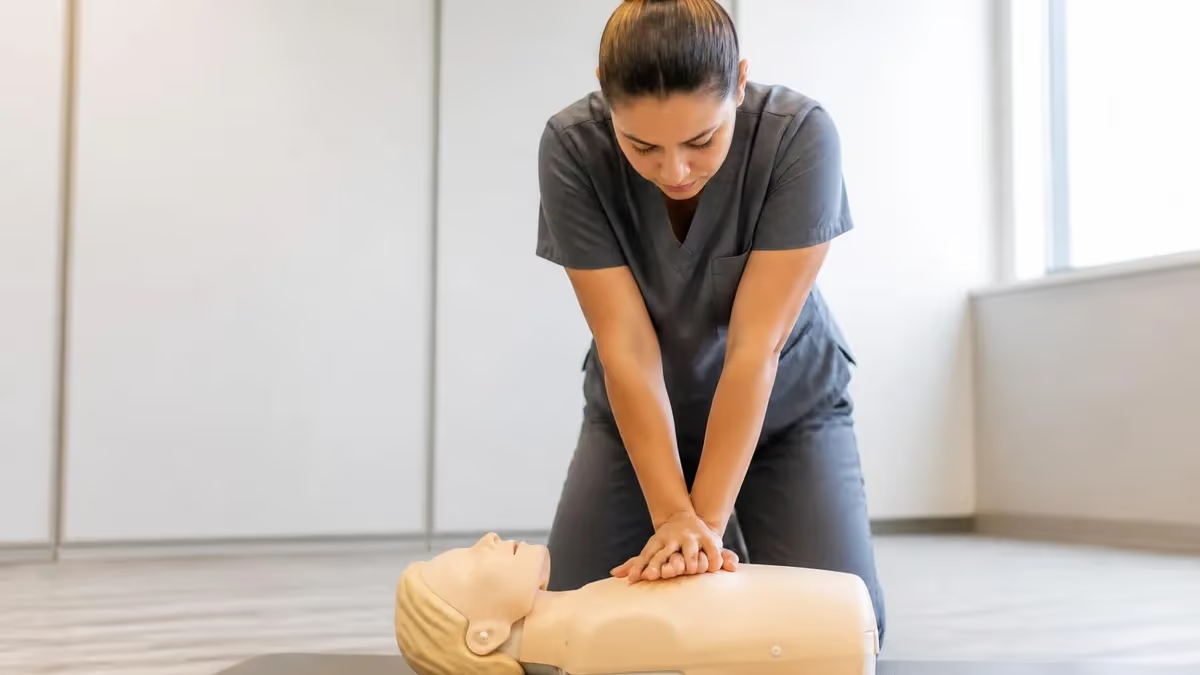
Searching for free certified cpr classes online in 2026 can feel overwhelming because hundreds of providers advertise no-cost training, yet only a fraction issue certifications that employers, schools, and licensing boards actually accept. This guide cuts through the noise by explaining which free programs award legitimate completion cards, which require a small fee only for the printed certificate, and which are strictly educational refreshers. Whether you are a teacher, babysitter, lifeguard candidate, healthcare worker, or concerned parent, you will leave with a clear path forward.
Online CPR education has matured dramatically since the American Heart Association approved blended learning formats. Today you can complete didactic instruction on a laptop, watch high-definition demonstrations of compressions and rescue breaths, and review the latest acls algorithm flowcharts from your kitchen table. Free providers like the National CPR Foundation, ProCPR previews, and American Red Cross awareness modules teach the same core skills covered in $80 in-person courses, including hands-only compressions, infant CPR techniques, and AED operation.
The biggest question consumers ask is whether a free online certification is genuinely valid. The answer depends on the issuing organization, your state, and your employer. OSHA-compliant workplaces typically accept any nationally recognized provider that follows current ECC and ILCOR guidelines, while clinical settings almost always require an AHA, ARC, or ASHI card with a hands-on skills check. Before you enroll, check our leather cpr comparison to see how Basic Life Support differs from layperson CPR.
This article walks you through the eight most reputable free programs, the exact steps to earn a certification card, the difference between awareness-level and credentialed training, and the skills you must master regardless of which course you choose. We also cover adult, child, and infant techniques, the recovery position, recognizing respiratory arrest, and using an automated external defibrillator. Expect concrete checklists, real cost data, and answers to questions like "what does AED stand for" and "how long does certification last?"
You will also find practice quizzes embedded throughout so you can test your knowledge as you read. CPR is a perishable skill — research from the AHA shows that competency declines noticeably within three to six months of training. Active recall through practice questions is the single most effective way to retain compression depth, rate, and ventilation ratios. The free quizzes linked below mirror real certification exams and reinforce every concept covered in this guide.
By the end of this guide you will know exactly which free CPR class to choose, how to verify a certificate's legitimacy, what to expect during an optional in-person skills test, and how to renew before your card expires. We will also explore career pathways for those who want to teach CPR professionally and the difference between layperson and healthcare provider tracks. Let's begin with the numbers that define free online CPR training in 2026.
Free Online CPR Training by the Numbers

Top Free CPR Programs Compared
The national cpr foundation offers a free comprehensive course covering adult, child, and infant CPR plus AED use. Certification card costs $14.95 but instruction is fully free and self-paced with unlimited exam retakes.
ProCPR provides free video lessons and a free practice exam. Full certification requires payment, but the educational content is excellent for refreshers and matches AHA 2025 guidelines including updated compression rates.
The ARC offers free hands-only CPR and AED awareness training. These modules do not produce a certification card but are ideal for community members who want basic emergency response skills quickly.
The American Heart Association hosts a free 90-second training video and one-hour digital module on hands-only compressions. Excellent for laypersons but not equivalent to BLS or HeartSaver certification.
CPR Select offers a fully free trial of their certification course including the final exam. A small fee applies only if you want the printed wallet card or wall certificate mailed to your address.
The question of validity is where most learners get tripped up. A certification is only as good as the organization standing behind it and the standards it follows. Reputable free providers align their curriculum with the International Liaison Committee on Resuscitation (ILCOR) consensus and the Emergency Cardiovascular Care (ECC) guidelines updated every five years. If a course claims to teach CPR but does not reference these standards or the current acls algorithm, treat the certificate with serious skepticism.
For most non-clinical roles — childcare workers, personal trainers, coaches, build parents, security guards, and corporate first responders — a free online certification from a nationally recognized provider is sufficient under OSHA general industry guidelines. The key requirement is that training covers the current compression-to-ventilation ratio (30:2 for single rescuer adult), correct compression depth (at least 2 inches but no more than 2.4 inches), and a rate of 100–120 compressions per minute. The cpr index — a measure of compression quality — is now embedded in many online simulations.
Healthcare professionals face a stricter standard. Nurses, EMTs, paramedics, physicians, dental hygienists, and respiratory therapists must hold Basic Life Support (BLS), Advanced Cardiovascular Life Support (ACLS), or pals certification from the AHA or an equivalent body. These credentials always require a hands-on skills evaluation conducted in person, even if the cognitive portion is completed online. Free awareness courses cannot substitute for these credentials, though they make excellent supplementary study material before a paid BLS class.
State licensing boards add another layer of complexity. California's EMSA, Texas DSHS, and New York DOH each maintain approved provider lists. Before enrolling in any free program, verify that your state, employer, or licensing body explicitly accepts certifications from that issuer. A two-minute phone call to your HR department or licensing office can save you from completing a course that will not be honored. Many learners also reference cpr fix phones resources to verify whether a previously earned certification is still valid.
One common misconception is that free always means lower quality. In reality, several free providers offer better video production, more interactive simulations, and more comprehensive testing than $50 paid alternatives. The cost structure typically inverts in two scenarios: when a physical card is required, and when a hands-on skills check is mandated. The instructional content itself is frequently free because providers monetize the credential rather than the education.
Another red flag to watch for is any program promising "instant certification" without an examination or claiming to be "OSHA certified." OSHA does not certify CPR providers — it regulates workplace safety standards that reference CPR training. Legitimate free programs always require completion of a knowledge test, typically 20–25 questions with a passing score of 75–80%. If you can download a card without testing, the certificate is essentially decorative and will not survive employer scrutiny.
Finally, remember that certification is the floor, not the ceiling. Even a perfect score on a free online exam does not guarantee you will perform effective CPR under stress. Repeated practice, mental rehearsal, and refresher courses every six to twelve months produce far better outcomes than a single certification followed by years of inactivity. Treat the free credential as the beginning of an ongoing competency, not a one-time accomplishment.
CPR Practice Test Questions
Prepare for the CPR Cardiopulmonary Resuscitation Practice exam with our free practice test modules. Each quiz covers key topics to help you pass on your first try.
CPR Basic CPR
CPR Exam Questions covering Basic CPR. Master CPR Test concepts for certification prep.
CPR and First Aid
Free CPR Practice Test featuring and First Aid. Improve your CPR Exam score with mock test prep.
CPR (Cardiopulmonary Resuscitation) Adult ...
CPR Mock Exam on (Cardiopulmonary Resuscitation) Adult CPR and AED Usage. CPR Study Guide questions to pass on your first try.
CPR (Cardiopulmonary Resuscitation) Airway...
CPR Test Prep for (Cardiopulmonary Resuscitation) Airway Obstruction and Choking. Practice CPR Quiz questions and boost your score.
CPR (Cardiopulmonary Resuscitation) Cardio...
CPR Questions and Answers on (Cardiopulmonary Resuscitation) Cardiopulmonary Emergency Recognition. Free CPR practice for exam readiness.
CPR (Cardiopulmonary Resuscitation) Child ...
CPR Mock Test covering (Cardiopulmonary Resuscitation) Child and Infant CPR. Online CPR Test practice with instant feedback.
CPR (Cardiopulmonary Resuscitation) High-P...
Free CPR Quiz on (Cardiopulmonary Resuscitation) High-Performance Team Dynamics. CPR Exam prep questions with detailed explanations.
CPR (Cardiopulmonary Resuscitation) Legal ...
CPR Practice Questions for (Cardiopulmonary Resuscitation) Legal and Ethical Considerations. Build confidence for your CPR certification exam.
CPR for Specific Populations
CPR Test Online for for Specific Populations. Free practice with instant results and feedback.
CPR Airway & Breathing Management
CPR Exam Questions covering Airway & Breathing Management. Master CPR Test concepts for certification prep.
CPR Assessment & Recognition of Cardiac Ar...
Free CPR Practice Test featuring Assessment & Recognition of Cardiac Arrest. Improve your CPR Exam score with mock test prep.
CPR Chest Compressions & Defibrillation
CPR Mock Exam on Chest Compressions & Defibrillation. CPR Study Guide questions to pass on your first try.
CPR Post-Resuscitation Care & Recovery
CPR Test Prep for Post-Resuscitation Care & Recovery. Practice CPR Quiz questions and boost your score.
Course Content and the ACLS Algorithm
Adult CPR training begins with scene safety, checking responsiveness with the shout-tap-shout technique, and activating the emergency response system. Free online courses then teach proper hand placement on the lower half of the sternum, locking elbows, and using body weight rather than arm strength to achieve compressions of 2–2.4 inches at 100–120 per minute. Allowing full chest recoil between compressions is emphasized because incomplete recoil reduces coronary perfusion pressure significantly.
The 30:2 ratio for single-rescuer adult CPR is universal across providers. After 30 compressions, deliver two breaths over one second each using a barrier device, pocket mask, or bag-valve-mask if available. Switch rescuers every two minutes to prevent fatigue-related quality decline. Pause only briefly for rhythm analysis when an AED arrives, and resume compressions immediately after shock delivery or when prompted that no shock is advised by the device.
Are Free Online CPR Classes Worth It?
- +Zero tuition cost makes training accessible to anyone with internet access
- +Self-paced format allows completion around work or school schedules
- +Unlimited exam retakes in most programs reduce test anxiety
- +Video demonstrations show technique better than textbook diagrams
- +Accepted by most non-clinical employers under OSHA general industry rules
- +Excellent refresher option between mandatory in-person renewals
- +Includes adult, child, infant CPR, and AED operation in one curriculum
- −Most programs charge $10–$30 for the printed wallet card
- −Not accepted for healthcare provider roles requiring BLS or ACLS
- −No hands-on skills evaluation means technique cannot be corrected in real time
- −Manikin practice with feedback devices is unavailable in pure online formats
- −Some state licensing boards do not recognize specific free providers
- −Quality varies widely between providers — research before enrolling
- −Cannot substitute for PALS, ACLS, or specialized neonatal resuscitation training
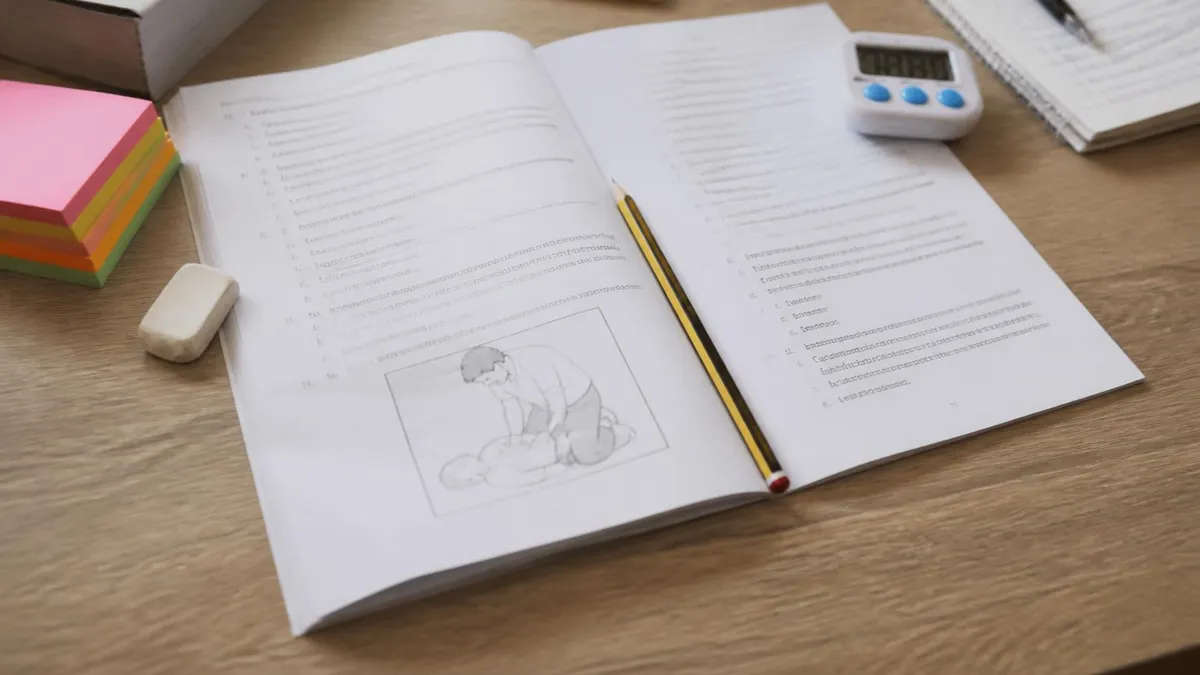
Free CPR Class Enrollment Checklist
- ✓Verify your employer or licensing board accepts the specific provider before enrolling
- ✓Confirm the course follows current ECC/ILCOR 2025 guidelines
- ✓Check whether a physical wallet card is required and what it costs
- ✓Ensure the program covers adult, child, infant CPR, and AED operation
- ✓Allocate 2–4 uninterrupted hours for video instruction and the final exam
- ✓Use a reliable internet connection — buffering interrupts learning continuity
- ✓Take notes on compression depth, rate, and ventilation ratios for each age group
- ✓Practice mental rehearsal of the chain of survival before the final exam
- ✓Download or print your certificate immediately upon passing
- ✓Schedule a renewal reminder for 18–24 months out to avoid lapsing
Compression Quality Beats Speed Every Time
Research shows that compression depth and full chest recoil predict survival far better than compression count alone. Aim for the high end of the 2–2.4 inch range, allow the chest to fully rise between compressions, and minimize interruptions to under 10 seconds. The cpr index metric used in modern manikins quantifies exactly this — quality over quantity saves lives.
Once you complete a free certified CPR class online, you will have mastered a defined set of skills that translate directly to real emergencies. The first is recognition — identifying sudden cardiac arrest versus simple fainting, stroke, or seizure. Free courses train you to assess responsiveness, look for normal breathing (not gasping or agonal respirations), and check the carotid pulse for no more than 10 seconds. Misidentification delays treatment, and every minute without CPR drops survival probability by roughly 10 percent.
The second core skill is high-quality chest compressions. Trainees learn to position the heel of one hand on the lower sternum, interlace fingers, lock elbows, and drive straight down using hips and shoulders. The cadence of 100–120 per minute matches songs like "Stayin' Alive," "Crazy in Love," and "Cecilia." Many courses link to dedicated cpr songs playlists that help cement the rhythm before you ever touch a real patient or manikin.
Ventilation technique is the third pillar. After 30 compressions, deliver two rescue breaths using a pocket mask or face shield. Each breath should last one second and produce visible chest rise. Avoid hyperventilation, which increases intrathoracic pressure and reduces venous return. If you cannot or prefer not to deliver breaths, hands-only CPR is acceptable for adult victims of witnessed sudden collapse and is associated with similar survival rates as conventional CPR in this specific scenario.
Skill four is AED operation. Trainees learn to power on the device, expose the chest, apply pads in the correct anatomical position, allow rhythm analysis, deliver shocks when indicated, and resume compressions immediately. Modern AEDs are remarkably user-friendly — voice prompts guide every step, and the device will not deliver a shock to a non-shockable rhythm. Free courses include simulated AED scenarios with realistic decision points.
The fifth skill is recognizing and responding to choking. Conscious adults receive abdominal thrusts (Heimlich maneuver) until the obstruction clears or they become unresponsive. Conscious infants receive five back blows followed by five chest thrusts. Unresponsive choking victims of any age receive standard CPR with a visual check for the foreign body each time you open the airway for ventilation. This skill alone has saved thousands of lives in restaurants and homes.
The sixth skill is the recovery position. Once a patient regains spontaneous circulation and breathing, place them on their side with the lower arm extended, upper leg bent, and head tilted to maintain airway patency. This prevents aspiration if vomiting occurs and is especially important during the transport phase before paramedics arrive. Free courses include video demonstrations of the proper sequence for moving an unresponsive but breathing patient into recovery.
Finally, you will learn to monitor respiratory rate and recognize impending arrest. Normal adult respirations are 12–20 per minute, while children breathe faster (15–30) and infants faster still (30–60). Slow, shallow, or absent respirations signal imminent collapse. Identifying respiratory arrest before cardiac arrest occurs allows you to begin rescue breathing and potentially prevent the full cascade — a skill that distinguishes competent rescuers from bystanders.
Some employers and state licensing boards reject specific free providers regardless of curriculum quality. Always confirm acceptance in writing before paying any fee for a physical card. Healthcare roles almost always require AHA, ARC, or ASHI BLS — free awareness courses will not satisfy those requirements no matter how comprehensive the content.
Renewal is where many certified rescuers fall through the cracks. Standard CPR certifications expire two years after the issue date, and most providers send no automatic reminders. Mark your calendar 90 days before expiration so you have time to complete a refresher and replacement card without a lapse. A lapsed certification at work can result in being pulled from patient care, removed from a coaching roster, or temporarily losing childcare licensure depending on your role.
The renewal process for free online providers is typically identical to initial certification. You retake the full course or a condensed refresher module, pass the same examination, and download a new card. Some providers offer discounted printed cards for renewals. If you originally certified through an AHA-aligned program, renewal must include a hands-on skills check by an authorized instructor — even if the cognitive portion is repeated free online. Plan around this in-person requirement well in advance.
For those who want to do more than just maintain personal certification, teaching CPR is a meaningful career pathway. The AHA Instructor pathway requires holding current BLS or HeartSaver provider status, completing an Instructor Essentials course, and aligning with a Training Center. Compensation varies from $25 per hour for community classes to $75+ per hour for corporate contracts. Many instructors teach part-time alongside healthcare or education careers.
Specialized credentials open further doors. PALS (Pediatric Advanced Life Support) certifies providers for pediatric emergencies and is required in many emergency departments and pediatric wards. ACLS extends BLS with advanced airway, pharmacology, and team dynamics for adult cardiovascular emergencies. NRP (Neonatal Resuscitation Program) covers newborn resuscitation in delivery rooms. Free online refreshers exist for each of these, but full certification always requires paid courses with hands-on components.
For laypersons who want to deepen their preparedness without pursuing healthcare credentials, consider community CERT (Community Emergency Response Team) training, wilderness first aid, or Stop the Bleed. These programs complement CPR by adding hemorrhage control, basic triage, and disaster response. Many are offered free through local fire departments, the Red Cross, and FEMA. Stacking these credentials creates a well-rounded emergency responder capable of acting confidently across many scenarios.
Maintaining competency between renewals matters more than the certificate itself. Watch a short refresher video every six months. Practice compressions on a pillow or dedicated manikin. Mentally rehearse the chain of survival when you enter unfamiliar buildings — locate the AED, identify exits, and note where to direct EMS responders. These habits keep skills accessible under the adrenaline of a real emergency, which is the entire point of certification.
Finally, consider becoming a CPR ambassador in your workplace or community. Encourage colleagues to certify, organize lunchtime refresher sessions, and advocate for AEDs in public spaces. Bystander CPR remains the single most modifiable factor in out-of-hospital cardiac arrest survival. Every additional trained responder in a community measurably increases survival rates — your free online certification is genuinely a public health contribution, not just a checkbox on a job application.
Practical preparation tips will help you get the most from any free CPR class. Start by setting aside dedicated, uninterrupted time. The biggest predictor of poor retention is splitting a four-hour course across two weeks of distracted sessions. Block one morning or afternoon, silence notifications, and treat the training with the seriousness it deserves. Real emergencies do not allow you to pause and Google the compression rate — internalize it now while the stakes are zero.
Take handwritten notes even if the platform offers digital ones. Cognitive science consistently shows that writing by hand improves retention of procedural knowledge compared to typing. Sketch the chain of survival, draw the AED pad placement diagrams, and write out the compression-to-ventilation ratios for each age group. These artifacts become quick-reference cards you can review before annual renewals or whenever you want a sixty-second refresher.
Practice on a household object. While nothing replaces a feedback-enabled manikin, a firm couch cushion or a rolled-up towel placed on a hardwood floor is enough to rehearse hand placement, body position, and rhythm. Set a metronome to 110 beats per minute and perform two-minute compression sets. You will quickly discover how physically demanding high-quality CPR is — far more tiring than most videos suggest. This realization alone will make you a better real-world responder.
Use multiple senses while studying. Watch the videos, narrate the steps aloud, and physically mime the technique. This multimodal encoding embeds the skill more deeply than passive viewing. When you reach the final exam, you will find that the answers feel familiar rather than memorized. Many free programs allow unlimited retakes, so treat the first attempt as a diagnostic — note any topics you struggled with and review those sections before retesting.
Join an online community of CPR-trained responders. Reddit forums like r/EMS and r/CPR, plus Facebook groups for parents, teachers, and coaches, share real-world stories that reinforce learning. Reading accounts of bystander rescues — and occasional failures — teaches lessons no textbook covers. You will see how often rescuers report freezing momentarily, how the rhythm of compressions snaps them into focus, and how AED voice prompts genuinely guide untrained bystanders through successful saves.
Finally, schedule a refresher every six months even if your certification is good for two years. Watch the AHA hands-only CPR video, run through an AED simulator, or take a free practice quiz. Skill decay is real and measurable — studies show competency drops by 25–40% within six months of training. Brief, frequent refreshers cost nothing and can mean the difference between confidence and hesitation when seconds matter. Treat CPR like any other perishable skill: maintain it deliberately.
One last consideration: many free programs partner with retailers like Amazon and Walmart for discounted CPR equipment. A pocket mask with one-way valve costs under $10, an infant CPR manikin runs $30–$50, and home AEDs start around $1,200. While not required for certification, owning your own pocket mask is a meaningful step toward genuine preparedness. Carry it in your car, gym bag, or kitchen drawer — a free certification combined with $10 of equipment dramatically expands what you can do in the first crucial minutes.
CPR Questions and Answers
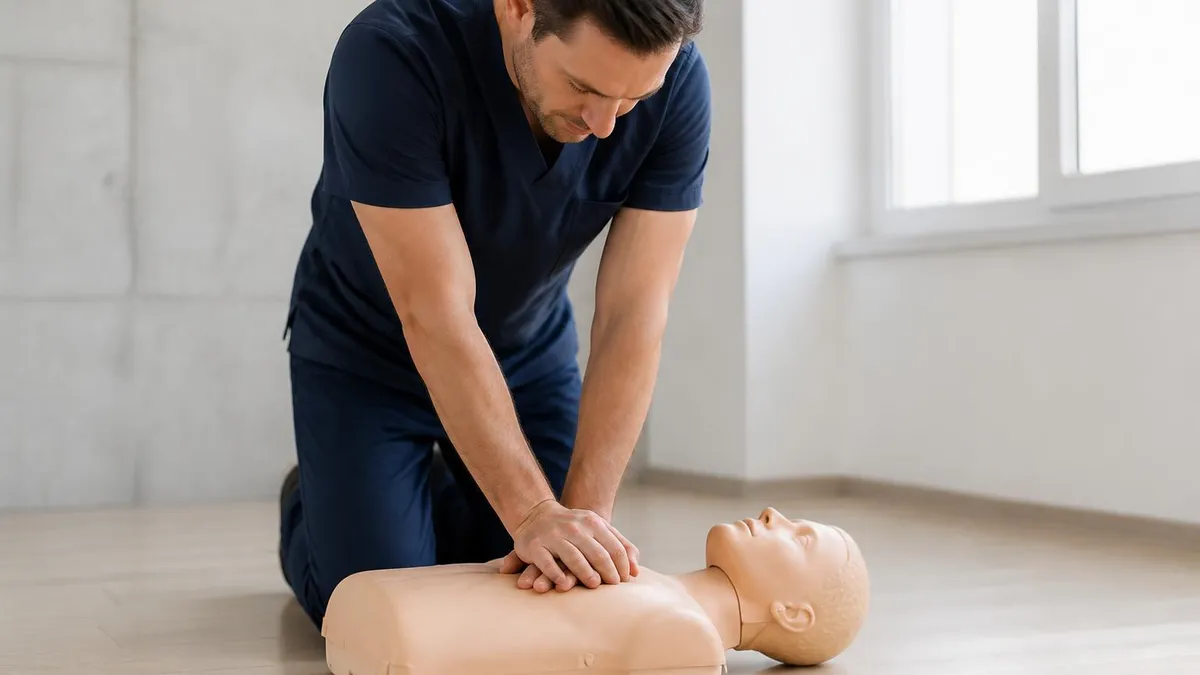
CPR vs BLS: Complete Comparison Guide for 2026 — Which Certification Do You Need?
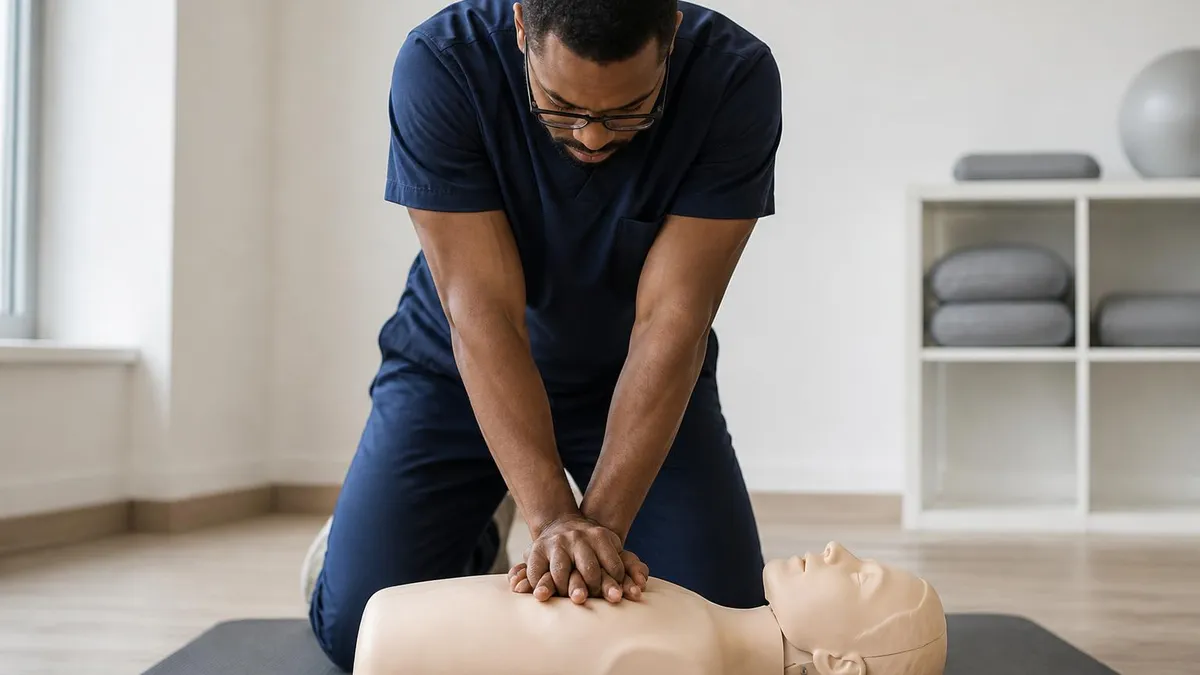
CPR Card Lookup: How to Verify, Replace, and Access Your CPR Certification in 2026
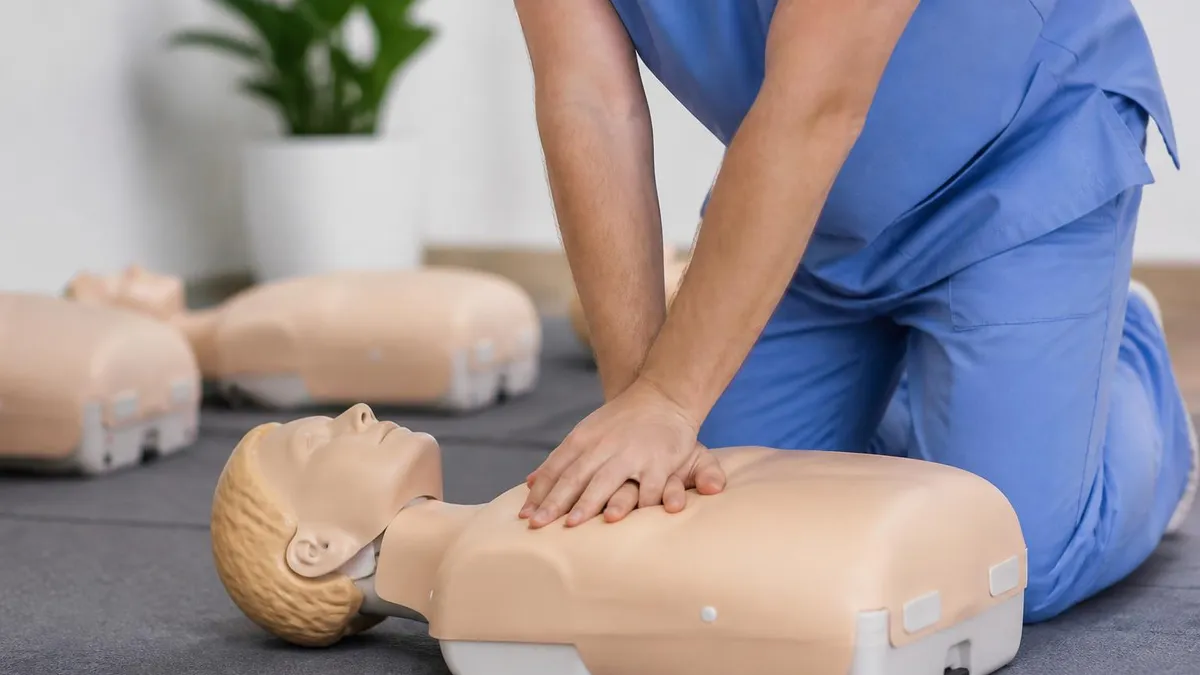
AHA CPR: What It Is, Which Course You Need, and How to Get Certified
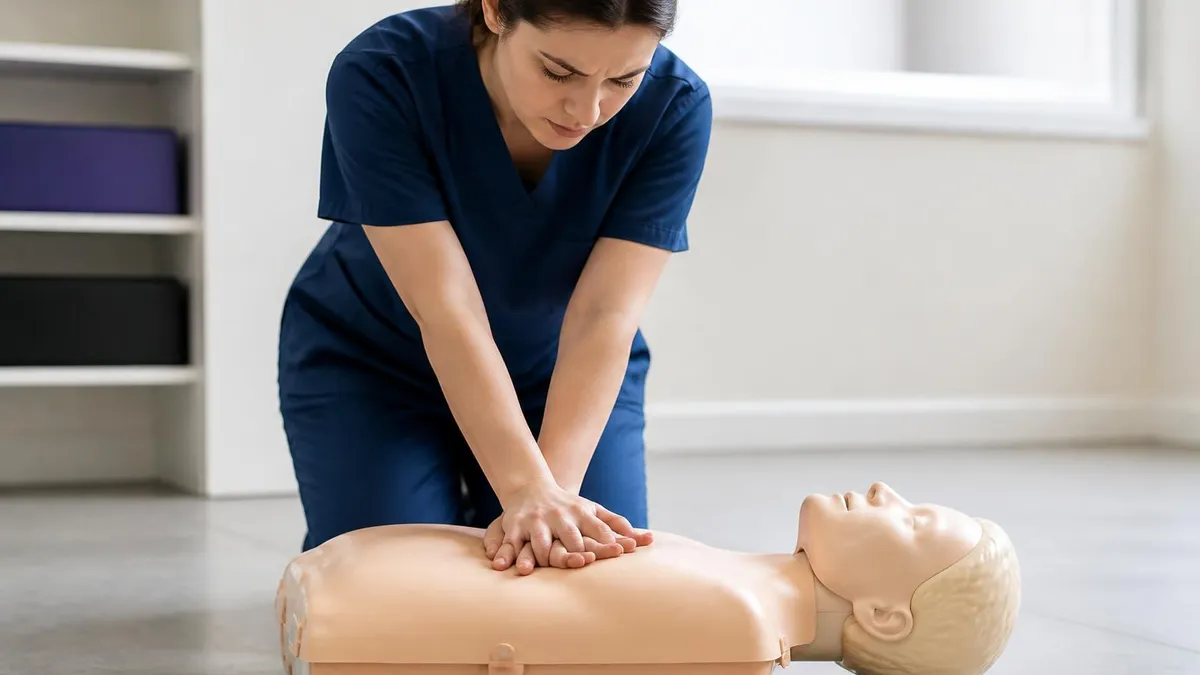
CPR Instructor Jobs 2026: How to Become a Certified Instructor, Salary Expectations, and Career Pathways
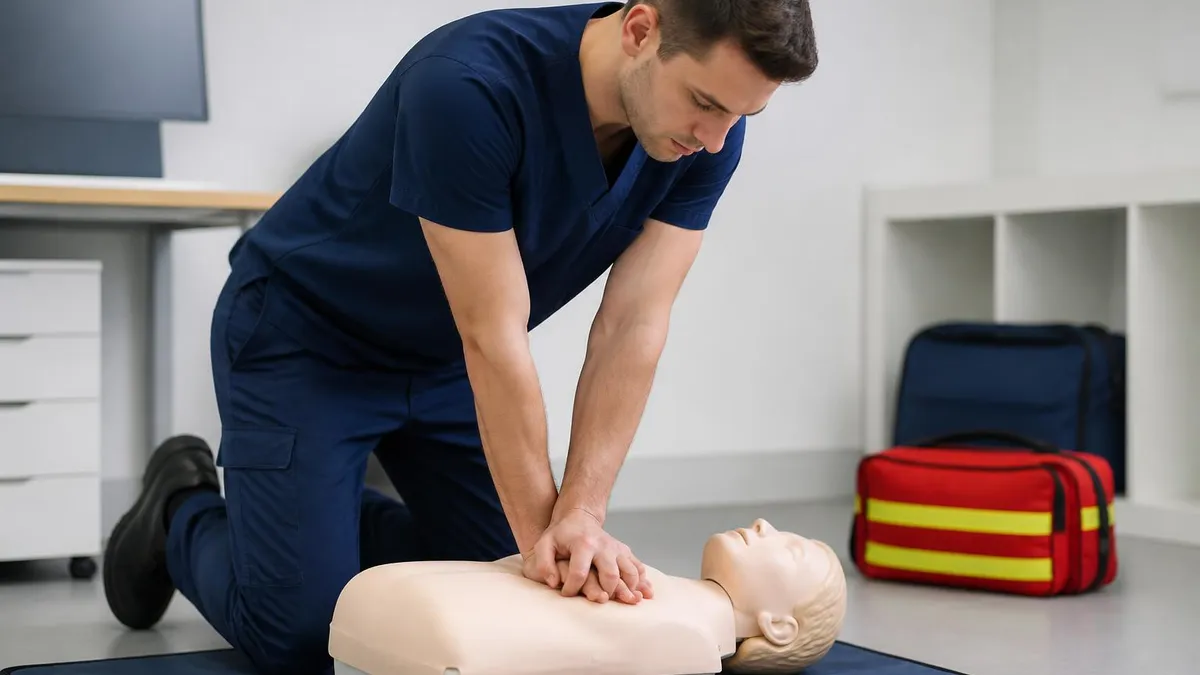
Adult CPR: Complete Step-by-Step Guide to Hands-Only and Standard CPR in 2026
About the Author

Registered Nurse & Healthcare Educator
Johns Hopkins University School of NursingDr. Sarah Mitchell is a board-certified registered nurse with over 15 years of clinical and academic experience. She completed her PhD in Nursing Science at Johns Hopkins University and has taught NCLEX preparation and clinical skills courses for nursing students across the United States. Her research focuses on evidence-based exam preparation strategies for healthcare certification candidates.
Join the Discussion
Connect with other students preparing for this exam. Share tips, ask questions, and get advice from people who have been there.
View discussion (5 replies)