
CPR Guidelines 2026 October: Complete Guide to AHA Standards, Compression Rates, and Updated Protocols
Master CPR guidelines 2026 October: 🆕 AHA compression rates, ACLS algorithm steps, infant CPR ratios, AED use, and updated rescue breathing protocols explained.
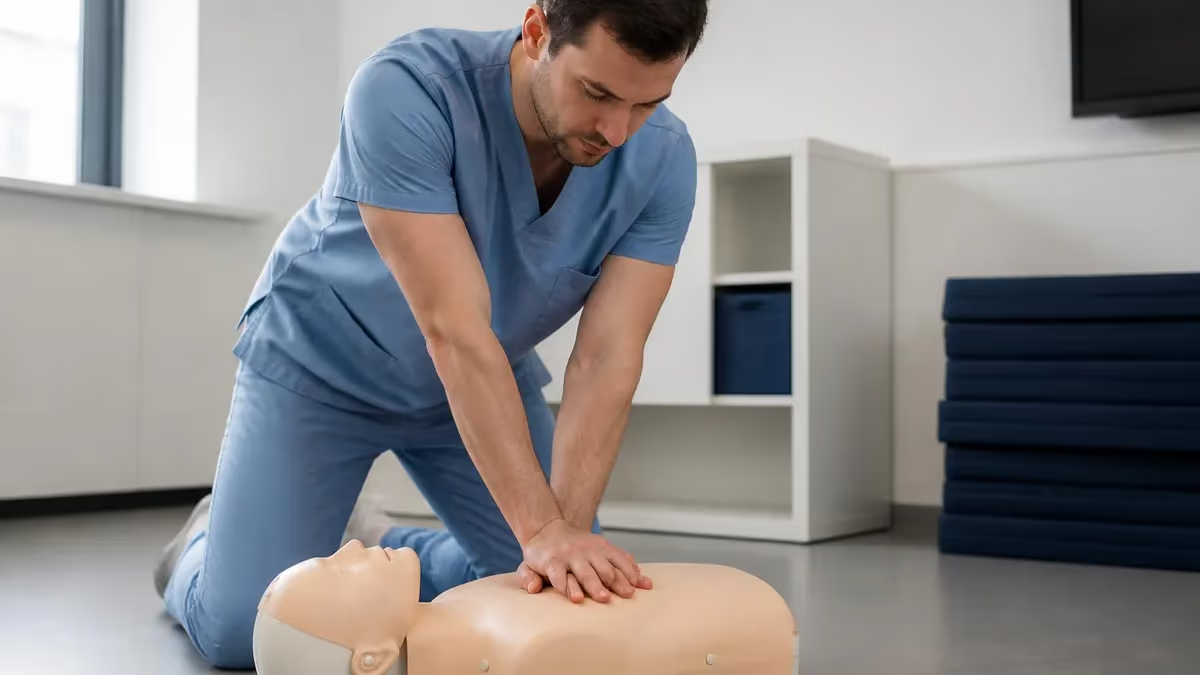
The 2026 cpr guidelines represent the most significant update to resuscitation science in nearly a decade, blending findings from the International Liaison Committee on Resuscitation with real-world cardiac arrest survival data. Whether you are a healthcare provider following the acls algorithm or a bystander attempting hands-only CPR in a parking lot, the core principles remain the same: push hard, push fast, minimize interruptions, and shock early when indicated. These standards now reflect feedback from more than 600 peer-reviewed studies published since the previous revision cycle.
Out-of-hospital cardiac arrest claims roughly 350,000 American lives every year, and bystander CPR before EMS arrival can double or triple a victim's chance of survival. Yet only about 40% of victims receive that critical intervention. The updated guidelines emphasize bystander empowerment, simplified instructions for telephone-CPR, and expanded recognition of agonal breathing as a sign of cardiac arrest rather than evidence of normal breathing.
Compression depth for adults remains 2 to 2.4 inches, with a target rate of 100 to 120 compressions per minute. Full chest recoil after every compression is now flagged as one of the most commonly missed quality metrics, contributing to lower coronary perfusion pressure and worse neurological outcomes. New manikin feedback technology and wearable rescuer aids are recommended in training environments to reinforce proper technique from day one.
For professional providers pursuing pals certification or advanced cardiac life support, the 2026 updates clarify drug timing, post-arrest temperature control, and the role of point-of-care ultrasound during resuscitation. The advanced airway placement window has been refined, with an emphasis on continuous compressions and avoiding hyperventilation, which remains a stubbornly common error in real codes despite years of training emphasis.
Pediatric and infant CPR receive substantial updates too. The compression-to-ventilation ratio remains 30:2 for single rescuers and 15:2 for two healthcare providers working on a child or infant. New language stresses early identification of respiratory failure in pediatric patients because most pediatric arrests originate from hypoxia rather than primary cardiac causes, unlike adult sudden cardiac arrest.
This guide walks through every major change in plain English, with citations to the chain-of-survival framework, AHA position statements, and current return-of-spontaneous-circulation data. By the end, you will know exactly what to do in the first ten minutes of an arrest, how to interpret the ACLS algorithm at a glance, and which technical details separate passing from failing on a certification exam.
CPR Guidelines 2026 by the Numbers
Chain of Survival: Six Critical Links
Recognize cardiac arrest within 10 seconds by checking for unresponsiveness and absent or abnormal breathing. Agonal gasping is not normal breathing — treat it as an arrest.
Call 911 or activate emergency response immediately. Put the phone on speaker so the dispatcher can guide compressions while you keep hands on the chest.
Begin chest compressions within seconds of recognition. Push 2-2.4 inches deep at 100-120 per minute with full chest recoil and minimal pause.
Apply an AED as soon as it arrives. Every minute of delayed defibrillation reduces survival from shockable rhythms by approximately 7-10%.
EMS or hospital teams provide advanced airway, IV access, epinephrine every 3-5 minutes, and reversible-cause assessment using the H's and T's mnemonic.
Targeted temperature management, hemodynamic optimization, neurological assessment, and coronary intervention when indicated for survivors of cardiac arrest.
Adult cpr guidelines center on a deceptively simple principle: high-quality, uninterrupted chest compressions deliver oxygenated blood to the heart and brain when the patient cannot do it themselves. The American Heart Association continues to recommend a compression depth of at least 2 inches but not exceeding 2.4 inches in adults. Compressions that are too shallow fail to generate adequate forward flow, while compressions that are too deep risk rib fractures and visceral injury without measurable survival benefit.
The compression rate window remains 100 to 120 per minute. Rates above 120 reduce compression depth and impair venous return; rates below 100 fail to maintain coronary perfusion pressure. Real-time feedback devices such as accelerometer-equipped manikins and CPR-monitoring AED pads can keep rescuers in the correct range. Studies show that without feedback, even trained rescuers drift outside the target rate within the first two minutes of compressions due to fatigue and adrenaline.
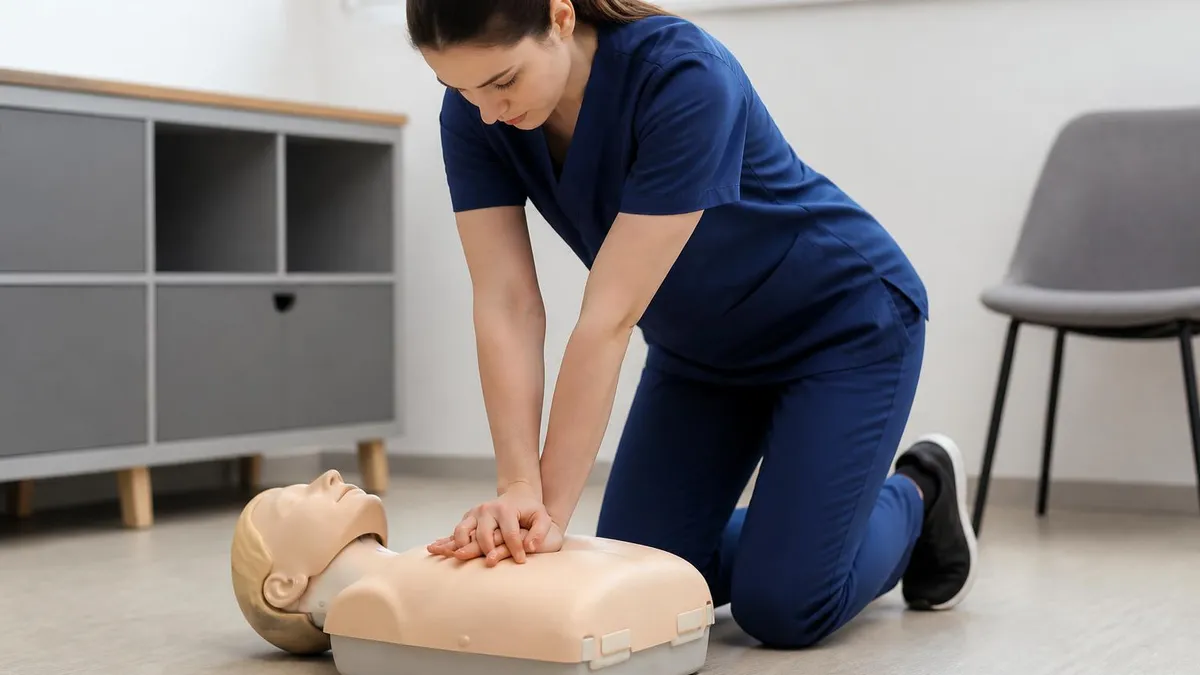
Full chest recoil is the most frequently overlooked element of high-quality CPR. Leaning on the chest between compressions raises intrathoracic pressure, reduces venous return to the heart, and lowers the next compression's stroke volume. Rescuers should lift the heel of the hand just enough to allow full recoil without losing chest contact. This single technique change can improve return-of-spontaneous-circulation rates by an estimated 25%.
Compression-to-ventilation ratios remain 30:2 for adult single-rescuer or two-rescuer CPR without an advanced airway. Once an endotracheal tube or supraglottic airway is in place, ventilations occur asynchronously at 1 breath every 6 seconds, or 10 breaths per minute. Hyperventilation — giving too many breaths or too forcefully — remains one of the most damaging errors in real resuscitations, raising thoracic pressure and crushing cardiac output.
Hands-only CPR is now the recommended approach for untrained or unwilling bystanders responding to adult arrest. Removing the rescue-breath requirement dramatically increases bystander participation. Telephone dispatchers are trained to coach hands-only CPR to callers, walking them through compression placement, depth cues, and pacing using common songs such as Stayin' Alive, which clocks in at approximately 103 beats per minute.
For learners studying the cpr index of essential skills, the priority order has not changed: scene safety, responsiveness, breathing check, 911, compressions, AED. Each step should flow into the next without unnecessary pause. The total time from recognition to first compression should be under 10 seconds in trained providers, with the goal of beginning defibrillation within 2 minutes of a witnessed shockable arrest.
Quality metrics are now widely tracked using CPR-monitoring defibrillators that record compression depth, rate, fraction, and pre-shock pause times. Hospitals using these systems report higher survival to discharge, suggesting that what gets measured, gets improved. Even community responders can benefit from feedback-equipped public AEDs, which are increasingly common in airports, schools, and corporate offices.

CPR Practice Test Questions
Prepare for the CPR Cardiopulmonary Resuscitation Practice exam with our free practice test modules. Each quiz covers key topics to help you pass on your first try.
CPR Basic CPR
CPR Exam Questions covering Basic CPR. Master CPR Test concepts for certification prep.
CPR and First Aid
Free CPR Practice Test featuring and First Aid. Improve your CPR Exam score with mock test prep.
CPR (Cardiopulmonary Resuscitation) Adult ...
CPR Mock Exam on (Cardiopulmonary Resuscitation) Adult CPR and AED Usage. CPR Study Guide questions to pass on your first try.
CPR (Cardiopulmonary Resuscitation) Airway...
CPR Test Prep for (Cardiopulmonary Resuscitation) Airway Obstruction and Choking. Practice CPR Quiz questions and boost your score.
CPR (Cardiopulmonary Resuscitation) Cardio...
CPR Questions and Answers on (Cardiopulmonary Resuscitation) Cardiopulmonary Emergency Recognition. Free CPR practice for exam readiness.
CPR (Cardiopulmonary Resuscitation) Child ...
CPR Mock Test covering (Cardiopulmonary Resuscitation) Child and Infant CPR. Online CPR Test practice with instant feedback.
CPR (Cardiopulmonary Resuscitation) High-P...
Free CPR Quiz on (Cardiopulmonary Resuscitation) High-Performance Team Dynamics. CPR Exam prep questions with detailed explanations.
CPR (Cardiopulmonary Resuscitation) Legal ...
CPR Practice Questions for (Cardiopulmonary Resuscitation) Legal and Ethical Considerations. Build confidence for your CPR certification exam.
CPR for Specific Populations
CPR Test Online for for Specific Populations. Free practice with instant results and feedback.
CPR Airway & Breathing Management
CPR Exam Questions covering Airway & Breathing Management. Master CPR Test concepts for certification prep.
CPR Assessment & Recognition of Cardiac Ar...
Free CPR Practice Test featuring Assessment & Recognition of Cardiac Arrest. Improve your CPR Exam score with mock test prep.
CPR Chest Compressions & Defibrillation
CPR Mock Exam on Chest Compressions & Defibrillation. CPR Study Guide questions to pass on your first try.
CPR Post-Resuscitation Care & Recovery
CPR Test Prep for Post-Resuscitation Care & Recovery. Practice CPR Quiz questions and boost your score.
Understanding the ACLS Algorithm
The acls algorithm for shockable rhythms — ventricular fibrillation and pulseless ventricular tachycardia — prioritizes early defibrillation. After confirming the rhythm, deliver one biphasic shock at the manufacturer-recommended dose, typically 120-200 joules, and immediately resume compressions for two minutes before reassessing. Do not pause to check a pulse after a shock; pulse checks delay compressions and reduce coronary perfusion pressure significantly.
Between shocks, administer epinephrine 1 mg IV/IO every 3-5 minutes and consider amiodarone 300 mg IV/IO bolus after the third shock, with a repeat 150 mg dose if needed. Lidocaine 1-1.5 mg/kg is an acceptable alternative. Search for reversible causes using the H's and T's framework while continuous compressions and ventilations proceed without interruption.
Hands-Only CPR vs Traditional CPR with Breaths
- +Easier for bystanders to remember and perform under stress
- +Eliminates hesitation around mouth-to-mouth contact with strangers
- +Allows continuous, uninterrupted compressions for full circulation
- +Matches outcomes for witnessed adult sudden cardiac arrest
- +Telephone dispatchers can coach untrained callers more effectively
- +Reduces total scene chaos and decision-making burden during emergency
- +Higher bystander participation rates in community settings
- −Not appropriate for drowning, drug overdose, or pediatric arrests
- −Less effective when arrest is from hypoxia rather than cardiac cause
- −Cannot replace full CPR for prolonged resuscitations beyond 10 minutes
- −Children and infants typically need rescue breaths due to respiratory etiology
- −Provides no airway support if obstruction is the underlying cause
- −May give untrained bystanders false confidence about pediatric scenarios
Pros and Cons at a Glance
| Pros | Cons |
|---|---|
| Easier for bystanders to remember and perform under stress | Not appropriate for drowning, drug overdose, or pediatric arrests |
| Eliminates hesitation around mouth-to-mouth contact with strangers | Less effective when arrest is from hypoxia rather than cardiac cause |
| Allows continuous, uninterrupted compressions for full circulation | Children and infants typically need rescue breaths due to respiratory etiology |
| Matches outcomes for witnessed adult sudden cardiac arrest | Provides no airway support if obstruction is the underlying cause |
| Telephone dispatchers can coach untrained callers more effectively | May give untrained bystanders false confidence about pediatric scenarios |

High-Quality CPR Performance Checklist
- ✓Confirm scene safety before approaching the victim or touching anyone
- ✓Check responsiveness with shoulder tap and shout in both ears
- ✓Scan for normal breathing for no more than 10 seconds total
- ✓Activate emergency response and request an AED before starting compressions
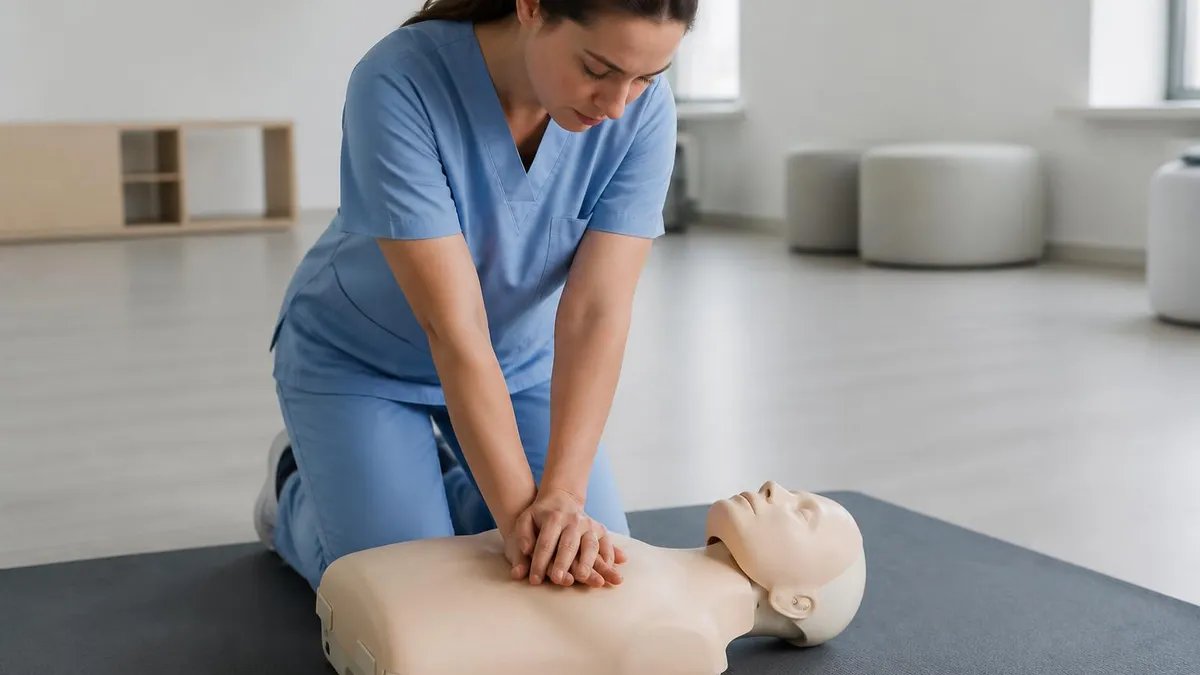
- ✓Position heel of hand on lower half of sternum between the nipples
- ✓Compress to a depth of 2 to 2.4 inches for adult patients
- ✓Maintain compression rate between 100 and 120 per minute consistently
- ✓Allow complete chest recoil after every single compression delivered
- ✓Minimize compression interruptions to less than 10 seconds at a time
- ✓Rotate compressors every two minutes to prevent fatigue-related quality drop
- ✓Deliver rescue breaths over 1 second each with visible chest rise
- ✓Use the AED as soon as it arrives without delay or hesitation
Aim for at least 80% compression fraction
Compression fraction is the percentage of total resuscitation time spent actively compressing the chest. The latest cpr guidelines target a minimum of 60%, with 80% or higher associated with the best neurological survival rates. Every unnecessary pause — rhythm checks longer than 10 seconds, pre-shock pauses, switching compressors slowly — directly lowers this number. Track it during simulation training and aim for excellence, not just adequacy.
Infant cpr differs from adult resuscitation in compression technique, ratio, and underlying physiology. Infants — defined as patients under 1 year of age, excluding newborns immediately after delivery — are most often arrested due to respiratory failure rather than primary cardiac causes. This shifts the priority slightly toward ventilation while still maintaining the centrality of high-quality compressions throughout the resuscitation effort.
For single-rescuer infant CPR, use the two-finger technique with the fingers placed just below the nipple line on the lower half of the sternum. Compress approximately 1.5 inches deep, or about one-third the anteroposterior diameter of the chest. The rate remains 100-120 per minute, identical to adults. The compression-to-ventilation ratio is 30:2 for a single rescuer and 15:2 when two healthcare providers respond, which provides more frequent breaths for the respiratory-driven arrest.
Two-rescuer infant CPR shifts to the two-thumb encircling-hands technique, which generates higher peak pressures, more consistent depth, and better coronary perfusion than the two-finger approach. Both thumbs are placed side by side on the lower sternum while the remaining fingers encircle the chest and support the back. This technique should be used whenever a second trained provider is available and is now the preferred method for in-hospital infant arrests.
Pediatric CPR — for children from 1 year of age to puberty — uses one or two hands depending on the child's size, with a compression depth of approximately 2 inches or one-third chest depth, whichever is less. The same 30:2 single-rescuer and 15:2 two-rescuer ratios apply. Providers pursuing PALS certification will encounter additional pediatric-specific topics including respiratory distress recognition, shock classification, and weight-based drug dosing using length-based resuscitation tapes.
Pediatric respiratory rate during CPR with an advanced airway is faster than for adults: 1 breath every 2-3 seconds, or 20-30 breaths per minute. This reflects the higher metabolic demand and faster baseline respiratory rate of children. Avoid the temptation to push more breaths than this guideline — hyperventilation in pediatric arrest is just as harmful as in adult arrest, raising intrathoracic pressure and reducing cardiac output.
Foreign body airway obstruction is a more common cause of pediatric arrest than in adults. The 2026 cpr guidelines retain abdominal thrusts (Heimlich maneuver) for conscious children and adults, and back-blows alternating with chest thrusts for conscious infants. If the patient becomes unresponsive, begin CPR immediately and look in the mouth for visible foreign bodies before each set of rescue breaths, removing only what you can clearly see.
AED use in children and infants has expanded under the new guidelines. Pediatric attenuator pads or a pediatric setting should be used for children under 8 years if available, but a standard adult AED is acceptable if pediatric equipment is not on hand — defibrillation, even at adult doses, is far better than no defibrillation at all. Place pads in the anterior-posterior position on small chests to avoid contact between pads.
If pediatric attenuator pads are not immediately available, use standard adult AED pads on a child or infant rather than waiting. Survival drops with every minute of delay. Place pads anterior-posterior on small chests so the pads do not touch each other. The benefit of any shock far outweighs the theoretical concern of using adult-dose energy on a pediatric patient in cardiac arrest.
Even with strong training, predictable errors creep into every real resuscitation. Recognizing them in advance is the fastest way to perform at a high level under pressure. The single most common mistake is delayed recognition: rescuers wait too long to confirm arrest, watch the patient breathe agonally, or repeatedly check pulses they cannot find. The 2026 cpr guidelines reinforce a 10-second cap on the entire recognition phase before compressions must begin.
The second predictable error is compression-rate drift. Rescuers start fast under adrenaline, then slow as fatigue sets in, often dropping below 90 per minute within two minutes. Use feedback devices when available, count out loud with a partner, or play music with a 100-120 BPM tempo silently in your head. Rotating compressors every 2 minutes — even when the current compressor insists they are not tired — preserves quality across long resuscitations.
Inadequate depth is closely related. Rescuers often perceive their compressions as deeper than they actually are, especially on soft hospital mattresses where the body compresses into the bed before the chest compresses. A backboard or hard surface is essential for accurate depth. In-hospital codes should use a backboard or move the patient to the floor when feasible without delaying compressions for more than a few seconds.
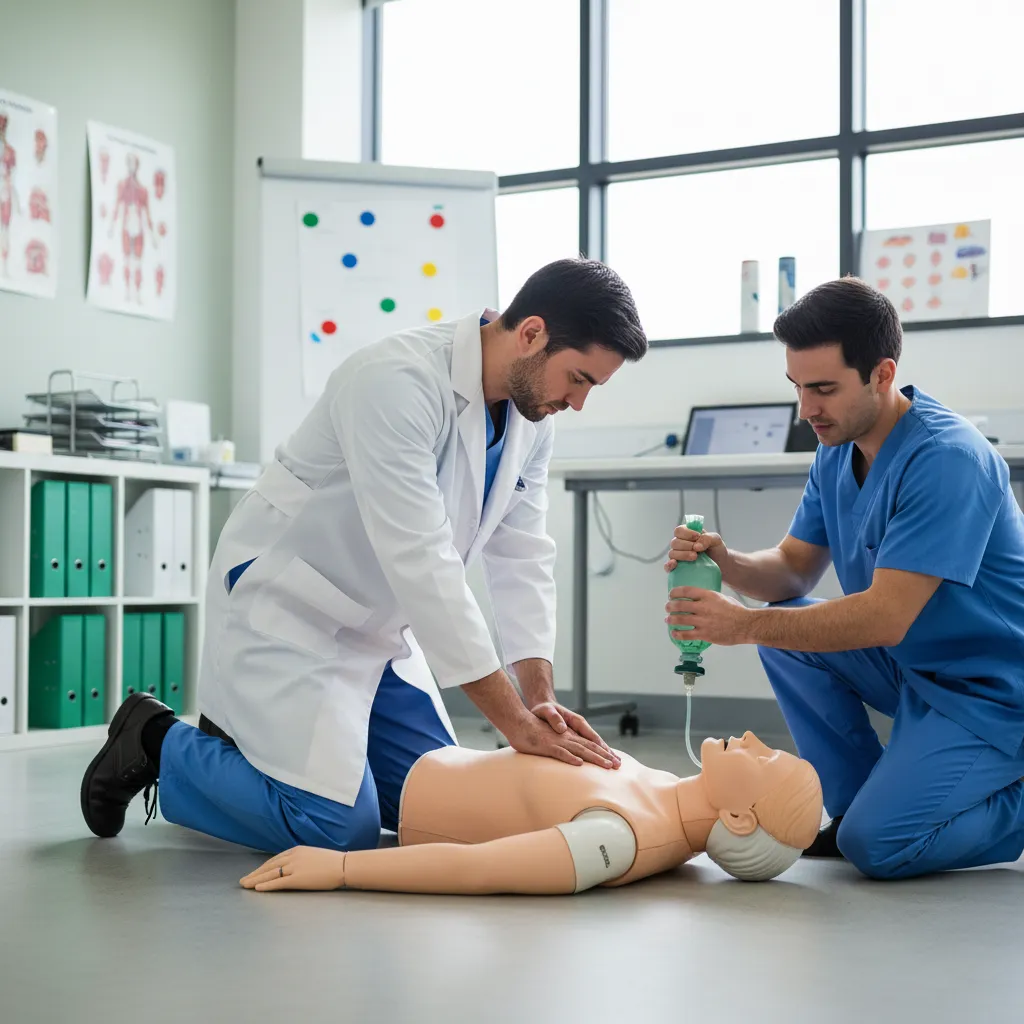
Hyperventilation remains stubbornly common. Bag-mask providers often squeeze too hard and too fast, generating high airway pressures that reduce venous return and drop cardiac output. Each ventilation should be delivered over 1 second with just enough volume to produce visible chest rise — typically 500-600 mL in adults. A timing aid, such as a digital metronome on the defibrillator or a colleague counting, dramatically improves performance on this metric.
Pre-shock and post-shock pauses are another preventable problem. The pre-shock pause — the gap between stopping compressions and delivering a shock — should be under 5 seconds. Modern defibrillators allow charging while compressions continue, then a brief clearing pause before discharge.
Finally, leaning on the chest during recoil is invisible without feedback technology. Even skilled providers lean unintentionally as they fatigue or shift their weight forward to push harder. Conscious effort to lift the heel of the hand between compressions while keeping hands lightly in contact eliminates leaning. Real-time feedback devices that measure recoil have made this metric one of the most rapidly improvable elements of CPR quality with brief training interventions.
National CPR Foundation and AHA-aligned training programs now emphasize team dynamics as much as individual skills. Closed-loop communication, clear role assignment, and a designated team leader who stays hands-off to maintain situational awareness reduce errors and shorten time-to-intervention. Simulation training with video debriefing is the gold standard for building these team-level skills, and many hospitals now run quarterly mock codes for this reason.
Beyond the technical guidelines, practical preparation determines whether you actually deliver effective CPR when it matters. Recertify on schedule — every two years for most providers, more often for high-risk roles. Skills decay measurably within 3-6 months without practice, even among experienced providers, so brief refresher sessions every quarter outperform a single annual marathon training day for retention and real-world performance.
Know where AEDs are located at your workplace, your gym, your children's school, and the venues you visit regularly. PulsePoint and similar smartphone apps can show nearby AED locations during an emergency. Some communities now register every public AED so dispatchers can direct bystanders to the closest device while EMS is en route. Take 30 seconds today to check your own building's AED location — it could save a colleague's life next month.
Practice on a manikin at least twice a year if you can access one, even briefly. Muscle memory for compression depth and rate is the single biggest predictor of real-world performance. Many fire departments and AHA training centers offer free or low-cost open practice sessions. Phone apps with metronome features and on-screen depth coaching can supplement physical practice when a manikin is not available.
If you supervise or train others, build a culture where any team member can call out quality issues without hierarchy concerns. The most experienced provider can drift on rate or depth without realizing it, and a junior team member with a metronome and a fresh perspective often catches it first.
For laypeople, the single most valuable thing you can do is commit to compressing if you witness an arrest. Imperfect CPR is dramatically better than no CPR. Bystander hesitation — usually from fear of doing harm, fear of legal liability, or uncertainty about technique — kills more victims than improper technique ever has. Good Samaritan laws protect bystanders acting in good faith in all 50 US states, with no documented case of successful lawsuit against a layperson performing CPR.
Stay current with guideline updates. The AHA, European Resuscitation Council, and International Liaison Committee on Resuscitation release focused updates between major revisions when high-quality evidence warrants a change. Subscribing to a free professional newsletter, or simply revisiting the AHA guidelines page once a year, keeps your practice aligned with the latest science. Many of the updates are subtle but meaningful — a small change in epinephrine timing, for example, has been shown to materially affect survival.
Finally, take care of yourself after a real resuscitation. Cardiac arrests — particularly those that do not end in survival — take a real psychological toll on responders, both professional and lay. Critical-incident stress debriefing, peer support programs, and employee assistance counseling are all evidence-based interventions. Acknowledging the emotional weight of resuscitation work makes you a more sustainable, more effective responder over the long run, not a less competent one.
CPR Questions and Answers

About the Author

Registered Nurse & Healthcare Educator
Johns Hopkins University School of NursingDr. Sarah Mitchell is a board-certified registered nurse with over 15 years of clinical and academic experience. She completed her PhD in Nursing Science at Johns Hopkins University and has taught NCLEX preparation and clinical skills courses for nursing students across the United States. Her research focuses on evidence-based exam preparation strategies for healthcare certification candidates.
Join the Discussion
Connect with other students preparing for this exam. Share tips, ask questions, and get advice from people who have been there.
View discussion (5 replies)