
National CPR Foundation: Courses, Certification & Cost 2026 September
🎓 National CPR Foundation offers AHA-aligned CPR, AED, and First Aid certifications online. Compare courses, costs, and get certified fast.
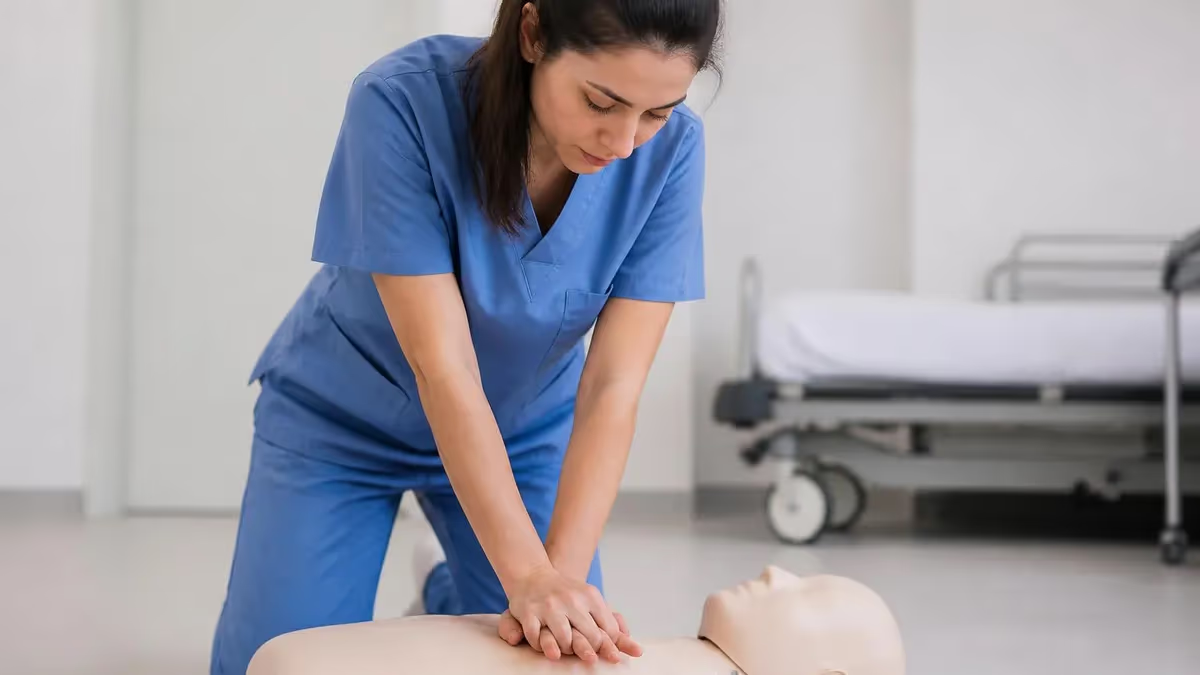
What Is the National CPR Foundation?
The National CPR Foundation (NCPRF) is an online CPR and first aid certification provider that makes emergency training accessible to everyday people—not just healthcare professionals. If you've been searching for a flexible, affordable way to get certified, you'll find NCPRF's self-paced online model worth a close look.
Founded to address the gap between traditional in-person CPR classes and busy modern schedules, the organization delivers American Heart Association-aligned curriculum through an entirely digital platform. That means you can complete the coursework at midnight in your kitchen if that's what works for you.
It's worth knowing upfront: the National CPR Foundation is one of several national online certification providers. It sits alongside names like the American CPR Care Association and the Red Cross. Each has different pricing, renewal cycles, and card acceptance policies—so the right choice depends on what you need the certification for. We'll break all of that down below.
Courses Offered by the National CPR Foundation
NCPRF focuses primarily on three core certification categories:
- CPR/AED Certification — Covers adult, child, and infant CPR techniques, plus how to use an automated external defibrillator (AED). This is the bread-and-butter course most people need for workplace compliance or volunteer work.
- First Aid Certification — Teaches wound care, choking response, allergic reactions, burns, and other common emergencies. Can be bundled with CPR/AED.
- CPR/AED + First Aid Combo — The bundled version covers both skill sets at a reduced total price. Popular with fitness instructors, teachers, and childcare workers.
All courses are video-based with written assessments. There's no skills check-off with a live instructor, which is an important distinction. That format works well for certain certifications—but read on, because it matters enormously depending on your employer's requirements.
How the Online Certification Process Works
Here's the basic flow: you purchase a course, watch the instructional videos, pass a multiple-choice test, and receive a digital card. Most people finish in under two hours.
The certificate arrives as a PDF you can download immediately after passing. A physical card can be mailed upon request, though delivery timelines vary. NCPRF says certifications are valid for two years, consistent with how long CPR certification lasts across most major providers.
One practical note: since everything is online, there's no hands-on component. You won't practice chest compressions on a mannequin. For most non-clinical roles—think gym staff, teachers, coaches—this is fine. But hospitals, nursing facilities, and many EMT programs require BLS (Basic Life Support) certification with an in-person skills session. Don't assume an online cert will satisfy every employer.
Pricing: What Does NCPRF Certification Cost?
Costs vary by course and current promotions, but here's a general picture based on publicly listed pricing:
- CPR/AED only: approximately $17–$30
- First Aid only: approximately $15–$25
- CPR/AED + First Aid combo: approximately $25–$45
These prices are notably lower than many competitors. Discounts are frequently available through coupon codes or group purchasing—if you're certifying a whole team, it's worth contacting them directly for bulk rates.
Compare that against an in-person AHA class, which typically runs $50–$100+ depending on your location. The cost difference is real, and if your employer accepts online certification, the savings add up fast for an organization certifying dozens of employees.
Is National CPR Foundation Accepted by Employers?
This is the most important question—and honestly, it depends entirely on your specific employer or licensing board.
Online CPR certifications from providers like NCPRF are widely accepted in:
- Schools and childcare centers (varies by state)
- Gyms, fitness studios, and personal training roles
- Corporate workplace safety programs
- Volunteer organizations
- Some healthcare-adjacent roles (dental offices, medical assistants—check your state board)
They are not accepted in most:
- Hospital nursing roles requiring BLS certification
- EMT and paramedic programs
- Lifeguard certifications (usually require Red Cross in-water skills)
- Certain state-regulated healthcare roles
Before purchasing, call your HR department or licensing board and ask specifically: "Do you accept online-only CPR certification with no hands-on component?" A ten-minute phone call can save you a lot of hassle.
If you're unsure which type of CPR course fits your needs, reviewing CPR training options can help you compare in-person and online formats side by side.
National CPR Foundation vs. AHA: What's the Difference?
The American Heart Association is the gold standard for CPR training—full stop. NCPRF aligns its curriculum with AHA guidelines, but it is not an AHA-authorized training center. That distinction matters.
AHA certification specifically requires hands-on skills practice with a certified instructor. Many employers and all hospital systems require AHA-issued cards. If your job description or licensing requirement says "AHA BLS" or "AHA Heartsaver," you need an AHA class—not an online alternative.
That said, NCPRF (and similar online providers) fill a real need. Not everyone needs hospital-grade BLS. A daycare worker, a corporate office safety warden, or a personal trainer may need proof of CPR knowledge for compliance—and an online cert satisfies that perfectly well. Check what the American Heart Association CPR Certification Guide requires if you're aiming for an AHA credential specifically.
Renewal: Keeping Your Certification Current
NCPRF certifications are valid for two years. Renewal is straightforward—you retake the course online at a discounted renewal rate. There's no waiting period, and you can renew early without losing time on your current certification cycle.
This is one area where online providers genuinely shine. Scheduling an in-person renewal class around work and family is genuinely difficult. Being able to renew in an evening from your laptop is a real quality-of-life advantage.
Just make sure you track your expiration date. Set a calendar reminder 60 days out—don't wait until you're asked for a current card by an employer to discover yours expired six months ago.
Who Should Consider National CPR Foundation?
NCPRF is a solid option for you if:
- You need certification for a non-clinical role and your employer accepts online-only courses
- Budget is a priority and you can't justify $80 for an in-person class
- Your schedule makes a fixed-time in-person course impractical
- You're refreshing knowledge between formal recertifications
- You're a student who wants foundational CPR knowledge before a clinical skills course
It's probably not the right fit if you're applying for hospital jobs, EMS certification, or any role where a governing body explicitly lists AHA or Red Cross by name.
Understanding what CPR stands for and the core technique is the same regardless of which provider certifies you. The content itself—chest compressions, rescue breaths, AED use—follows the same evidence base.
Tips for Passing the National CPR Foundation Assessment
The online test isn't difficult, but a little prep goes a long way—especially if you've never taken CPR training before.
Focus on these core concepts:
- Compression rate and depth: 100–120 compressions per minute, at least 2 inches deep for adults. These numbers come up constantly.
- Compression-to-breath ratio: 30 compressions to 2 rescue breaths for single-rescuer CPR on adults and children. Infants use a 2-finger technique with the same ratio.
- AED steps: Power on → attach pads → follow prompts → shock if advised → resume CPR immediately. Don't overthink it—the AED tells you what to do.
- Chain of Survival: Call 911 → early CPR → early defibrillation → advanced care → post-cardiac arrest care. Many questions reference this framework.
- Infant CPR differences: Head tilt-chin lift is gentler, compressions are shallower (1.5 inches), and you cover both the mouth and nose when delivering rescue breaths.
Watch all the video modules—don't skip ahead even if the content seems basic. The assessment pulls questions directly from the video content, so rushing through can trip you up on a detail you half-absorbed.
You can typically retake the assessment if you don't pass on the first try. The passing score is usually 70–80% depending on the course.
Preparing Beyond Certification
Getting certified is step one. Staying sharp is step two—and honestly, most people aren't as prepared as their card suggests.
Research consistently shows that CPR skills degrade significantly within months of training, especially without practice. Here's how to stay ready:
- Review your course videos annually, even outside renewal cycles
- Practice compression depth and rate on a firm pillow occasionally—muscle memory matters more than you'd think
- Know where AEDs are in your workplace, gym, and local public spaces
- Walk through the Chain of Survival mentally when you see a public AED
If you want to go deeper, consider taking a hands-on in-person refresher every other renewal cycle. Combine your online cert with occasional mannequin practice at a local community class—many fire stations and hospitals offer free or low-cost sessions.
The goal isn't just a card on your wall. It's being the person who actually helps when something goes wrong. Bystander CPR before paramedics arrive can double or triple survival odds in a cardiac arrest. That's not marketing copy—it's consistent with decades of emergency medicine research.
Frequently Confused Terms: CPR, BLS, and First Aid
A lot of people mix these up when searching for courses, so here's a quick reference:
- CPR (Cardiopulmonary Resuscitation) — The core technique: chest compressions plus rescue breaths to maintain circulation and oxygenation when the heart stops. This is what NCPRF's core course teaches.
- BLS (Basic Life Support) — A higher-level certification typically required for healthcare providers. It includes CPR but also covers bag-mask ventilation, two-rescuer CPR, and other clinical skills. BLS requires in-person training and a hands-on skills check.
- First Aid — Broader emergency response skills: bleeding control, choking response, shock management, allergic reactions, and more. Often bundled with CPR courses.
- AED (Automated External Defibrillator) — A device that analyzes heart rhythm and delivers a shock to restore normal rhythm. AED training is included in NCPRF's CPR/AED course.
When your employer says "CPR certified," they usually mean a basic CPR/AED course—which online providers like NCPRF cover. When they say "BLS certified" or specifically "AHA BLS," they mean the clinical-level course that requires in-person training.
Still unsure about the difference between how providers compare? The CPR Practice Test 2026 May — Pass on First Try page has additional context on certification types and what employers typically require.

Final Thoughts
The National CPR Foundation fills a legitimate space in the CPR certification market. It's affordable, fast, and flexible—real advantages if your situation calls for an online cert. Just do your homework first. A two-minute conversation with your employer or HR team before you buy can prevent the frustration of completing a course that doesn't meet your specific requirements.
If you're preparing for a CPR certification exam—whether through NCPRF or another provider—practice quizzes help you internalize the content faster than passive review. Testing yourself on compression ratios, AED steps, and infant technique differences will stick with you far better than rewatching the same video twice.
Good luck with your certification. The skills you're learning genuinely matter—cardiac arrest can happen anywhere, to anyone, and bystander CPR saves lives every day.
About the Author

Registered Nurse & Healthcare Educator
Johns Hopkins University School of NursingDr. Sarah Mitchell is a board-certified registered nurse with over 15 years of clinical and academic experience. She completed her PhD in Nursing Science at Johns Hopkins University and has taught NCLEX preparation and clinical skills courses for nursing students across the United States. Her research focuses on evidence-based exam preparation strategies for healthcare certification candidates.
Join the Discussion
Connect with other students preparing for this exam. Share tips, ask questions, and get advice from people who have been there.
View discussion (5 replies)