
CPR Classes: Types, Cost, and Where to Find Them 2026 September
Find CPR classes near you — compare BLS, Heartsaver, and First Aid courses from Red Cross and AHA. Learn what to expect and how much it costs. ✍🏼
CPR Classes at a Glance
CPR classes are available in more formats, locations, and price points than ever before — but that variety also makes choosing the right course more confusing than it needs to be. Should you take an American Heart Association course or Red Cross? Do you need BLS Healthcare Provider or will Heartsaver do? Can you complete the whole thing online, or do you have to show up in person? These are the questions people ask before registering, and they all have clear answers once you understand what each course type actually covers.
The short version: every accredited CPR certification requires hands-on practice. You can't demonstrate compression depth through a video. That's why all legitimate CPR courses — from both AHA and the Red Cross — require at least an in-person skills session where a certified instructor confirms that you can actually perform the technique. What varies is how much of the course can be done online beforehand, how long the in-person portion takes, and which specific scenarios the course covers.
CPR training matters because cardiac arrest happens without warning. The American Heart Association estimates that 350,000 out-of-hospital cardiac arrests occur in the United States every year. Survival rates outside of a hospital average less than 12%, but that number roughly doubles when a bystander performs CPR before emergency services arrive. Getting trained isn't just something employers require — it's something that creates real, concrete capability to help when a crisis actually unfolds.
This guide covers every major type of CPR class, how to find one near you, what the courses include, how much they cost, and how to decide which format is right for your role and situation. Whether you're a nurse renewing BLS, a parent taking your very first CPR class, or a business owner certifying a team, you'll find what you need here.
Both the AHA and Red Cross have online class finders. At heart.org, use the 'Find a Course' tool. At redcross.org, search under 'Take a Class.' Enter your zip code and filter by course type. Many hospitals, fire stations, YMCAs, and community colleges also host CPR classes independently — calling your local hospital's education department or community education office often turns up options not listed on national sites.
CPR classes aren't one-size-fits-all. The right course depends on your role, what your employer or licensing body requires, and whether you're learning CPR for personal preparedness or professional certification. The two most widely recognized CPR certification bodies in the United States are the American Heart Association (AHA) and the American Red Cross, and both offer several different course types at different levels.
BLS Healthcare Provider is the gold standard for clinical professionals. It covers adult, child, and infant CPR for single and two-rescuer scenarios, bag-valve-mask (BVM) ventilation, AED use, and relief of choking. It's required for nurses, physicians, EMTs, paramedics, dental hygienists, respiratory therapists, and most other licensed clinical roles. BLS courses typically run 2.5 to 4 hours in person, or can be completed as a blended course where you do an online knowledge module first and then attend a 2-hour in-person skills session. Finding heart association cpr classes is straightforward through the AHA's training center locator.
Heartsaver CPR/AED is the course designed for lay responders — anyone who needs CPR certification for a non-clinical job or for personal preparedness. Heartsaver covers adult CPR and AED use, and it can be paired with an infant/child module or first aid component depending on the need. Childcare workers, teachers, coaches, personal trainers, and workplace safety officers typically use Heartsaver. It's available as a classroom-only course (3 to 4 hours) or a blended format where the online portion takes 1.5 to 2 hours and the skills session adds another 1.5 hours.
First Aid/CPR/AED combined courses bundle CPR training with first aid response — covering bleeding, burns, allergic reactions, fractures, and stroke recognition alongside the standard CPR skills. These are common for workplace safety compliance, summer camps, and fitness professionals. The Red Cross First Aid/CPR/AED course typically runs 5 to 6 hours in person, or as a blended course with a longer online module. The comprehensive coverage makes it the most versatile option for someone who wants a single certification to satisfy multiple requirements.
Infant and pediatric CPR courses focus specifically on techniques for infants under 12 months and children up to puberty. These are often taken as standalone courses by parents, grandparents, and childcare workers, but the technique is also included in the infant module of Heartsaver and in the full BLS course. If your employer or licensing board requires a specific course that includes infant cpr classes, verify the course type before enrolling — not every general CPR class includes infant-specific manikin practice.
Compare CPR Course Types
- Who it's for: Clinical professionals — nurses, EMTs, doctors, dental hygienists, respiratory therapists
- Duration: 2.5–4 hrs in-person or blended (online + 2-hr skills)
- Covers: Adult, child, infant CPR; 2-rescuer scenarios; BVM; AED; choking
- Certification body: AHA BLS or Red Cross BLS Healthcare Provider
- Validity: 2 years
- Cost: $70–$120

Knowing what to expect during a CPR class makes the experience less intimidating and more productive. Most CPR courses follow a consistent structure, whether you're taking BLS at a hospital training center or a Heartsaver class at the YMCA. You'll typically start with a video or instructor-led lecture covering the chain of survival, how to recognize cardiac arrest and choking, and the science behind why compression depth and rate matter. This portion takes 30 to 60 minutes in a classroom setting or can be done as a pre-work online module in blended courses.
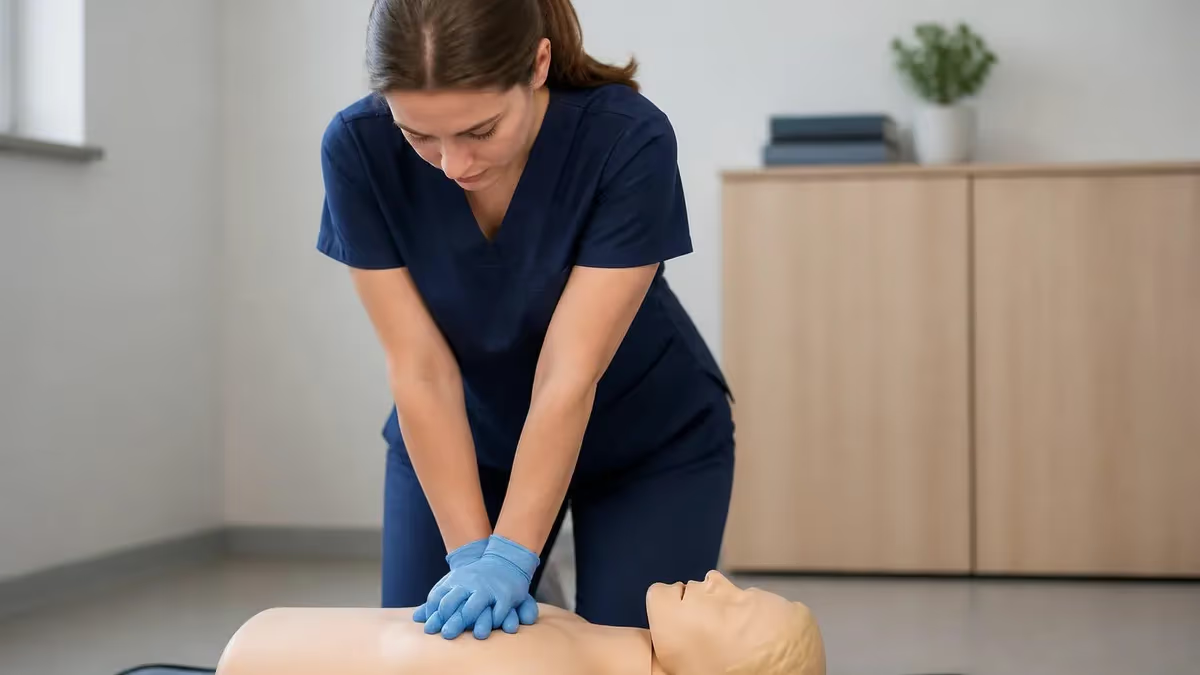
The skills portion is where the real learning happens. You'll work with a CPR manikin — usually one per student or two students share one — practicing the exact technique while an instructor observes and corrects. Common feedback points include compression depth (most first-time learners compress too shallow), hand placement (slightly off-center is common), and rescue breath technique. Don't be intimidated by corrections — that's the whole point of the session, and instructors are trained to give feedback in a supportive, non-judgmental way.
For BLS courses, you'll also practice two-rescuer CPR with a partner, which involves coordinating compression and breathing roles and switching off to maintain compression quality over time. AED stations are set up so every student practices attaching pads, following voice prompts, and resuming CPR after a simulated shock. Some courses include a choking relief component with back blows and chest thrusts on an infant manikin.
At the end of the skills session, each student completes a skills check with the instructor. This isn't a written exam — it's a brief demonstration that you can perform the skills correctly. If you don't pass a portion on the first try, instructors will typically coach you through it again until you can demonstrate competency. After passing, you'll receive a course completion card that serves as your certification — either digital or physical depending on the provider.
Class Preparation Checklist
- Wear comfortable, loose-fitting clothing — you'll be kneeling and leaning forward during compression practice
- Bring your registration confirmation or student ID number
- For blended courses, complete the online module before the skills session
- Bring a CPR face shield if you have one (often provided, but you can keep your own)
- Arrive 5–10 minutes early — skills sessions start on time and the room fills up quickly
- Know your employer's required certification level before enrolling (BLS vs. Heartsaver matters)
Both AHA and Red Cross allow you to look up your certification status online using your name and date of birth. If you're not sure whether your current CPR certification is still valid, check before enrolling in a full course — you may only need a renewal. Understanding how long does cpr certification last is important, since some employers require renewal before the card actually expires to avoid any gap in credentials.
CPR class costs vary widely depending on the provider, location, course type, and whether you enroll individually or as part of a group. AHA and Red Cross instructor-led courses at training centers typically run $50 to $100 per person. BLS Healthcare Provider courses trend toward the higher end at $70 to $120. Combined First Aid/CPR/AED courses are also on the higher end because of the longer format and broader content. If you're comparing options, always verify that the course you're enrolling in is from an authorized training center — discount sites sometimes list outdated or unauthorized providers.
Many people don't realize that free or low-cost CPR training options exist in most communities. Local fire departments frequently offer free community CPR classes, particularly after high-profile cardiac arrest events that highlight the need for bystander training. Many hospitals host free classes for new parents through their maternity or pediatric departments.
YMCAs and community recreation centers sometimes offer subsidized CPR classes as part of their community health programs. Calling your local chapter of the American Red Cross about free community events or group discount programs is always worth trying before paying full price. Student discounts are also available through some training centers for college students or those enrolled in healthcare programs.
For workplaces certifying multiple employees, group rates significantly reduce the per-person cost. Both AHA and Red Cross offer group pricing for employers bringing 5 or more people. Some training centers also offer on-site group classes where an instructor travels to your facility — this eliminates employee travel time and is often cost-neutral at scale. Many human resources departments have established relationships with local CPR training centers that include annual group discounts.
One cost people overlook is the renewal class every two years. Most employers track certification expiration dates and will prompt renewal, but it's your responsibility to maintain current certification in most licensed roles. Renewal courses are typically shorter and less expensive than initial certification — a BLS renewal skills session at many training centers runs 60 to 90 minutes and costs $40 to $60. For those who want to know exactly when they need to renew, reviewing how long is cpr certification good for across different providers helps avoid a lapse.
Online-only CPR courses from non-accredited providers should be treated with caution. Some websites sell digital CPR certificates that are not recognized by employers, state licensing boards, or OSHA. Legitimate CPR certification always requires in-person skills demonstration. If an online-only course claims to fully certify you without any hands-on component, it won't satisfy most professional or regulatory requirements — and it doesn't actually teach you how to perform CPR under pressure.
Classroom vs. Blended CPR Classes
- +Classroom-only: Immediate Q&A with instructor throughout knowledge and skills portions
- +Classroom-only: Single-session commitment — no pre-work required
- +Blended: Complete online knowledge module on your own schedule before skills day
- +Blended: Shorter in-person sessions (often 1.5–2 hrs vs. 3–4 hrs total in classroom)
- +Both formats: Provide the same AHA or Red Cross certification card
- −Classroom-only: Requires longer in-person time commitment — typically 3–6 hours
- −Classroom-only: Schedule limited to available class times at training centers
- −Blended: Requires internet access and a device to complete the online module
- −Blended: Some students show up underprepared if they rush through the online portion
- −Both formats: Renewal required every 2 years regardless of which format you chose

Maintaining CPR certification means renewing every two years, but research consistently shows that skills degrade faster than that. A study published in Resuscitation found that compression quality and confidence declined significantly within 3 to 6 months of initial training for people who didn't practice between certifications. This suggests that getting certified is a starting point, not a finish line.
The most effective approach is scheduled practice between certification renewals. Some workplaces use quarterly CPR refresher drills that run 20 to 30 minutes — not full recertification, just hands-on repetition with a manikin. Apps like PulsePoint and Laerdal's QCPR app allow people to practice compression rate and depth on a phone screen with coaching feedback. Watching short refresher videos from the AHA or Red Cross every few months also reinforces the technique mentally, even without a manikin available.
For those who want to do more, becoming a CPR instructor is a path that builds deep competency through the act of teaching. AHA Instructor courses train you to teach Heartsaver and BLS, and Red Cross offers similar Instructor certification. Instructors must maintain their own CPR certification and teach a minimum number of courses per year to stay active. Some people pursue instructor certification specifically to deliver free or low-cost community training — it's one of the most direct ways to build CPR capability at scale in a community or workplace.
One underused resource is the national cpr foundation, which offers low-cost online blended courses that are accepted in many workplace and non-clinical settings. The foundation focuses specifically on expanding access to CPR certification at reduced cost, which makes it a practical option for individuals paying out of pocket. Comparing their course acceptance policy against your employer's requirements before enrolling will confirm whether it meets your specific need.
For healthcare workers specifically, many hospital systems now offer CPR training as part of new hire orientation with no cost to the employee. Checking with your HR department before paying for a certification you'd otherwise receive for free saves money and ensures you get the exact course type your employer requires. The free cpr training online options through some hospital education portals are also worth exploring if you need a refresher between renewals.
The Red Cross class finder at redcross.org lets you search by zip code and filter by course type — Heartsaver, BLS, or First Aid/CPR/AED. You can also filter for blended formats if you prefer to complete the knowledge portion online. If you're looking for red cross cpr classes near me, the class finder updates in real time as new sessions open. Some classes fill weeks in advance, especially in urban areas, so booking early gives you the most scheduling flexibility.
Choosing where to take a CPR class comes down to three main factors: which certification type your employer or licensing body requires, how much time you can spend in person, and your budget. If your employer specifies AHA BLS, you need an AHA-authorized training center. If you're getting certified for personal use or a non-clinical job, any accredited Red Cross or AHA course at a local fire station, hospital, or YMCA will work. Group discounts are available through both organizations for workplaces certifying multiple employees at once.
The reputation of the training center matters too. A well-run class uses current manikins (ideally with feedback indicators that measure compression depth and rate), limits class sizes so everyone gets adequate manikin time, and employs instructors who are current in their own certification. Checking Google reviews for local training centers before booking is worth five minutes — reviews often mention specific instructors and whether the skills session felt rushed or thorough. A cheap class where you don't actually get to practice on a manikin for more than a few minutes doesn't serve you well when a real emergency happens.
CPR certification isn't just a box to check on an HR checklist. It's a skill with a direct connection to human survival. Taking the time to find a good class, preparing for it properly, and practicing between renewals transforms a credential into genuine capability. When cardiac arrest happens in a grocery store, a school, or your own home, the trained bystander in the room is the single most important factor in whether someone survives to see the ambulance arrive.
Schedule your CPR class before you think you need it. Two-year renewal windows go by faster than most people expect, and a lapsed certification isn't just a professional liability — it's a gap in real-world readiness. Most urban areas have multiple class options available within any given week. Booking takes five minutes online, and the skill you build will last far longer than the two years on your card. There's no better time to start than today, and no more straightforward first step than searching for an accredited class near you.
Who Needs to Take CPR Classes
Nurses, physicians, EMTs, paramedics, respiratory therapists, dental hygienists, and medical assistants are typically required to hold current BLS certification. Many hospital systems require renewal before the card expires to avoid any gap in credentials. Most healthcare employers specify AHA BLS or Red Cross BLS Healthcare Provider — verify which one your employer accepts before enrolling.
Most state childcare licensing regulations require CPR certification for anyone who supervises infants and young children. K–12 teachers, coaches, school nurses, and daycare staff are often required to hold current Heartsaver or equivalent certification. Requirements vary by state — check your state's childcare licensing board for the specific course type required.
Personal trainers certified by ACE, NASM, ACSM, and other major bodies are required to hold current CPR certification as a condition of their credential. Group fitness instructors, lifeguards, camp counselors, and park rangers commonly need CPR certification. Aquatic facilities may specify a Lifeguarding CPR course rather than standard Heartsaver — verify the requirement before registering.
OSHA regulations require employers in certain high-hazard industries — construction, manufacturing, mining — to designate first responders who hold current CPR and first aid certification. The Red Cross First Aid/CPR/AED course is widely used for this purpose. Organizations with AED units on-site are also strongly advised to certify designated employees in AED operation.
New parents, grandparents, and family members caring for infants or elderly relatives benefit significantly from CPR training. Cardiac arrest is most likely to happen at home, and the bystander in the room is almost always a family member. Many hospitals offer free or low-cost CPR classes for new parents before discharge from the maternity ward — ask your hospital's education department.
CPR Classes Questions and Answers
About the Author

Registered Nurse & Healthcare Educator
Johns Hopkins University School of NursingDr. Sarah Mitchell is a board-certified registered nurse with over 15 years of clinical and academic experience. She completed her PhD in Nursing Science at Johns Hopkins University and has taught NCLEX preparation and clinical skills courses for nursing students across the United States. Her research focuses on evidence-based exam preparation strategies for healthcare certification candidates.
Join the Discussion
Connect with other students preparing for this exam. Share tips, ask questions, and get advice from people who have been there.
View discussion (5 replies)