
What Does CPR Stand For? Cardiopulmonary Resuscitation 2026 September
📗 What does CPR stand for? CPR means Cardiopulmonary Resuscitation — a lifesaving technique used in cardiac arrest. Learn what it is, how it works, and why.
What Does CPR Stand For?
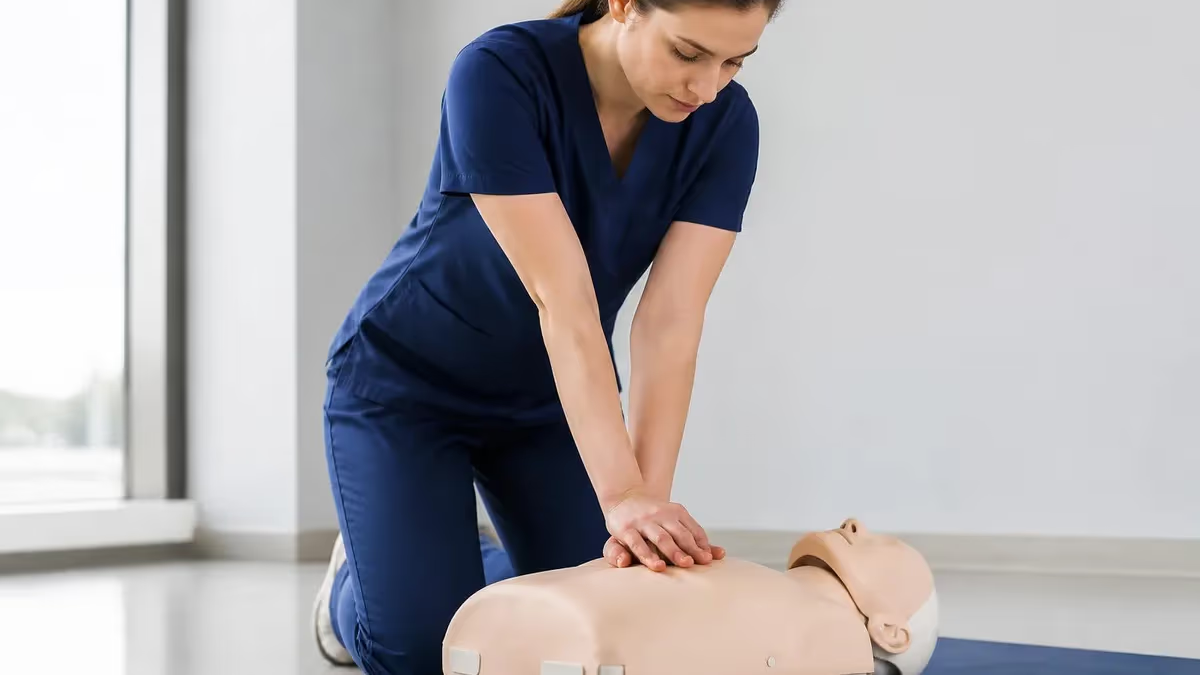
CPR stands for Cardiopulmonary Resuscitation. Break the word down and it tells the whole story: cardio refers to the heart, pulmonary refers to the lungs, and resuscitation means reviving someone who's stopped breathing or whose heart has stopped beating. Put those together and you've got a technique designed to manually keep blood and oxygen circulating when the body can't do it on its own.
It's a skill that can mean the difference between life and death. When someone's heart stops — what's called cardiac arrest — the brain starts suffering damage within minutes. CPR buys time. It keeps oxygenated blood moving to vital organs until advanced medical help arrives or until a defibrillator can restore a normal heart rhythm.
If you've ever wondered whether this is something worth learning, the answer is an unqualified yes. Cardiac arrest can happen anywhere — at home, at a restaurant, on a sports field. Over 350,000 out-of-hospital cardiac arrests happen in the United States every year, and bystander CPR can double or even triple survival rates. Knowing what CPR stands for is just the start — understanding when and how to use it is what saves lives.
The Full Meaning: Cardiopulmonary Resuscitation Explained
Each part of the term carries real meaning:
- Cardio (heart): CPR addresses cardiac arrest — when the heart stops pumping blood effectively. Chest compressions physically squeeze the heart to push blood through the circulatory system.
- Pulmonary (lungs): The lungs are the other half of the equation. Rescue breaths push oxygen into the lungs so it can enter the bloodstream. In hands-only CPR, passive air movement still occurs during compressions.
- Resuscitation (revival): The goal is to resuscitate — to revive — someone who's in cardiac or respiratory arrest. CPR isn't always successful, but without it, survival odds drop dramatically.
Modern CPR protocols, developed primarily by the American Heart Association and the Red Cross, have evolved considerably over the decades. Today's guidelines emphasize chest compressions first — fast and hard — over rescue breathing for most adult victims. This is sometimes called "hands-only CPR," and it's been proven highly effective for witnessed cardiac arrest in adults.
For infants, children, and drowning victims, rescue breaths remain critical because respiratory failure — not cardiac failure — is often the primary problem in those cases. Check out the American Heart Association CPR Certification Guide for the most current guidelines by victim type.
A Brief History: Where CPR Comes From
CPR as we know it today wasn't always a thing. The technique emerged through decades of medical research and trial.
In the 1950s and 1960s, three separate discoveries came together. Peter Safar and James Elam demonstrated that mouth-to-mouth ventilation worked better than older manual methods. Around the same time, William Kouwenhoven, James Jude, and Guy Knickerbocker showed that external chest compressions could circulate blood without opening the chest. By 1960, these techniques were combined into what the American Heart Association officially recognized as CPR.
Since then, guidelines have been updated every five years based on the latest research. The biggest shift in recent history? The 2010 guidelines changed the sequence from A-B-C (Airway, Breathing, Compressions) to C-A-B (Compressions, Airway, Breathing) — because getting compressions started immediately matters more than anything else.
Types of CPR: Not One-Size-Fits-All
There isn't just one version of CPR. Different situations call for different approaches.
Hands-Only CPR (Adult): Push hard and fast in the center of the chest — at least 2 inches deep, at a rate of 100 to 120 compressions per minute. No rescue breaths required. This is the version most recommended for untrained bystanders.
Conventional CPR (Adult): 30 chest compressions followed by 2 rescue breaths. Repeat until help arrives or the person recovers. This is the standard protocol for trained responders.
Child CPR (Ages 1 to 8): Same 30:2 ratio, but use one hand (or two fingers for very small children) and compress about 2 inches. The force is proportional to the child's size.
Infant CPR (Under 1 year): Two fingers on the breastbone, 1.5 inches deep, same 30:2 ratio. Rescue breaths cover both the mouth and nose simultaneously.
If you want to learn which approach is right for which situation, a structured course is the best route. Many people start with CPR training classes and certification courses to understand all the variations before attempting to get certified.
CPR vs. AED: Understanding the Difference
CPR and AED (Automated External Defibrillator) often go together — but they're not the same thing.
CPR keeps blood circulating. An AED delivers an electric shock that can actually restart a heart in certain rhythms, specifically ventricular fibrillation and pulseless ventricular tachycardia. CPR alone can't defibrillate — it just buys time until a defibrillator is available.
The survival chain for out-of-hospital cardiac arrest looks like this: call 911, start CPR, use AED if available, wait for advanced care. Each link matters. CPR without an AED is still far better than doing nothing, and AED use without prior CPR reduces the effectiveness of the shock.
Who Should Learn CPR?
Everyone. Seriously.
Many people assume CPR is only for healthcare workers or lifeguards. That's a dangerous misconception. The majority of cardiac arrests happen at home, meaning the first responder is most likely a family member or neighbor — not a paramedic.
Parents of young children, teachers, coaches, office workers, anyone who's around elderly relatives — all of these groups have strong reasons to get certified. How long does CPR certification last? Most certifications are valid for two years, so it's a commitment that requires occasional renewal, but the time investment is small compared to what's at stake.
Even without formal training, hands-only CPR — which you can learn from a two-minute instructional video — is better than no CPR at all. The American Heart Association and the Red Cross actively promote bystander response for exactly this reason.
What Happens During a CPR Certification Course?
If you've decided to get certified, here's what to expect. Most CPR certification courses run two to four hours and cover:
- Recognizing signs of cardiac arrest and respiratory distress
- Calling 911 and activating the emergency response system
- Performing hands-only CPR and conventional CPR
- Using an AED
- Infant and child CPR techniques
- Choking response
You'll practice on mannequins and get real-time feedback on compression depth and rate. Some courses offer a blended format — online learning followed by an in-person skills check. Others are fully in-person.
Costs vary. Community courses through fire departments or hospitals are sometimes free. Red Cross and AHA-affiliated courses typically run $30 to $80. Employer-sponsored training is common in healthcare, education, and fitness industries.
If you're preparing for a CPR certification exam, practice questions sharpen your recall of protocols, compression ratios, and rescue breath techniques. A solid CPR study guide can help you walk in knowing exactly what to expect.
Common Misconceptions About CPR
Let's clear up a few things people often get wrong.
"CPR always saves lives." It doesn't — but it dramatically improves odds. Survival rates for out-of-hospital cardiac arrest with bystander CPR are roughly 10 to 12% versus 4 to 6% without it. Those numbers sound low, but at scale, that's tens of thousands of lives per year.
"You can hurt someone by doing CPR wrong." You might break a rib — that's real with effective compressions. But if someone's in cardiac arrest, a broken rib isn't the problem. You won't make a dead person worse. Don't let fear of imperfection stop you from acting.
"Mouth-to-mouth is always required." For adults, hands-only CPR is perfectly acceptable and often preferred by untrained bystanders. Rescue breaths are more critical for children, infants, and drowning victims — but for a collapsed adult, chest compressions alone are your best move.
"CPR is too complicated to learn." The basics — push hard, push fast, in the center of the chest — can be picked up in minutes. Formal training adds nuance and confidence, but the core skill is accessible to almost everyone.
CPR in the Real World: Statistics That Matter
Numbers tell the story better than anything else when it comes to CPR's impact.
According to the American Heart Association, about 350,000 out-of-hospital cardiac arrests occur in the US annually. Of those, roughly 70% happen at home. Bystander CPR is performed in only about 40% of those cases — meaning the majority of victims receive no CPR before paramedics arrive.
Why does that gap exist? Studies point to a few factors: fear of doing it wrong, not knowing whether the person actually needs CPR, concerns about legal liability, and simply never having learned. Public awareness campaigns and Good Samaritan laws (which protect bystanders who attempt CPR in good faith) have helped, but there's still a long way to go.
Here's another striking number: for every minute that passes without CPR after cardiac arrest, survival odds drop by roughly 7 to 10%. Paramedic response time in most US cities averages 8 to 12 minutes. Do the math — that's a 56 to 84% reduction in survival probability by the time professional help arrives if no one acts in between.
Early CPR combined with early defibrillation can push survival rates above 50% in the best-case scenarios — witnessed arrest, immediate bystander response, fast AED use. The system works when all the pieces come together, and it starts with someone knowing what CPR stands for and what to do with that knowledge.
For those considering a career in emergency medicine or related fields, CPR is just the entry point. CPR instructor salary and career paths span a wide range, from basic certification as a prerequisite to more advanced roles in paramedicine, nursing, and emergency response.
Getting Certified: Your Next Step
If you've read this far, you now know what CPR stands for, how it works, and why it matters. The next logical step is getting certified — or at minimum, watching a hands-only CPR demonstration so you'd know what to do in an emergency.
Certification options are widely available. The American Heart Association offers courses through thousands of training centers nationwide. The Red Cross has its own network of in-person and blended courses. Many hospitals, fire departments, and community organizations offer free or low-cost training.
If you're preparing for a certification exam, working through practice questions is one of the most effective ways to lock in the protocols. You'll encounter questions on compression ratios, rescue breath technique, when to use an AED, infant versus adult differences, and more. A focused CPR exam prep guide helps you walk in knowing exactly what to expect.
Don't wait for a crisis to wish you'd learned. CPR is one of those skills that takes a few hours to acquire and could last a lifetime — someone else's lifetime.
About the Author

Registered Nurse & Healthcare Educator
Johns Hopkins University School of NursingDr. Sarah Mitchell is a board-certified registered nurse with over 15 years of clinical and academic experience. She completed her PhD in Nursing Science at Johns Hopkins University and has taught NCLEX preparation and clinical skills courses for nursing students across the United States. Her research focuses on evidence-based exam preparation strategies for healthcare certification candidates.
Join the Discussion
Connect with other students preparing for this exam. Share tips, ask questions, and get advice from people who have been there.
View discussion (5 replies)