
Cardiopulmonary Resuscitation: The Complete Clinical Guide 2026 September
Master cardiopulmonary resuscitation with AHA guidelines: 🎓 compression mechanics, ventilation ratios, chain of survival, AED use, and certification steps.
What Cardiopulmonary Resuscitation Actually Means
Cardiopulmonary resuscitation — the full name behind that three-letter acronym everyone knows — is a lifesaving intervention that manually maintains blood circulation and breathing when the heart stops or becomes too ineffective to sustain life on its own.
Break the word down and it tells you everything: cardio for the heart, pulmonary for the lungs, resuscitation from the Latin resuscitare, meaning to revive. It's not a single action. It's a coordinated set of mechanical interventions — chest compressions, ventilations, and now almost always AED integration — that keep oxygen-rich blood flowing to the brain and vital organs until advanced care arrives.
Most people learn the basics during a certification class and walk away thinking they know CPR. The truth is more complex. The difference between survival and death often comes down to compression quality, not just the act of pushing on a chest. This guide covers the physiology, the mechanics, the guidelines, and the clinical nuances that actually matter — whether you're a healthcare professional refreshing your knowledge or preparing for your first certification. If you want to test yourself alongside reading, our CPR practice test covers both technique and guideline knowledge.

Cardiac Arrest: Critical Numbers
The Physiology of Cardiac Arrest: Why Every Second Counts
Cardiac arrest isn't the same as a heart attack, though a heart attack can trigger it. In cardiac arrest, the heart either stops beating entirely or enters a chaotic rhythm — ventricular fibrillation (VF) or pulseless ventricular tachycardia (pVT) — that produces no effective pumping action. Blood stops moving. Oxygen delivery to the tissues collapses instantly.
Within 4–6 seconds of circulatory arrest, a person loses consciousness. Within 10 seconds, the brain's electrical activity falls silent. After 4–5 minutes without oxygen — a state clinicians call anoxia — neurons begin dying in irreversible numbers. This is the physiological clock that makes bystander response so decisive.
Here's what CPR actually does. It doesn't restart the heart — that's the most persistent misconception in first aid training. Compressions create a pressure gradient that forces blood out of the thoracic cavity, generating what's called forward cardiac output. Research suggests CPR produces roughly 25–33% of normal cardiac output — enough to keep the brain and myocardium marginally perfused. You're not restoring normal circulation. You're buying time, keeping the brain and heart viable until defibrillation or medications can restore an organized rhythm.
Two mechanisms explain how chest compressions move blood. The cardiac pump theory describes direct compression of the heart between the sternum and spine. The thoracic pump theory describes compression raising intrathoracic pressure, driving blood out of the pulmonary vasculature into systemic circulation. In most adults, both mechanisms contribute — the thoracic pump plays a larger role during sustained resuscitation efforts.
High-Quality CPR: The AHA Standards That Actually Save Lives
The AHA's concept of “high-quality CPR” isn't marketing language. It describes a specific, evidence-based set of technical standards that meaningfully affect survival. Study after study confirms: the difference between adequate and excellent CPR technique has measurable impact on patient outcomes. If any parameter is off, perfusion suffers.
Rate: 100–120 compressions per minute. Faster than 120/min reduces cardiac filling time and drops cardiac output. Slower than 100/min doesn't generate adequate pressure. Use a metronome app if you're unsure of your pace — the Bee Gees' “Stayin' Alive” runs at about 104 BPM, which is why it became a training mnemonic.
Depth: 2–2.4 inches (5–6 cm) in adults. Too shallow and you're not compressing effectively. Too deep — beyond 2.4 inches — and you risk rib fractures, pneumothorax, liver laceration, or cardiac contusion. Rescuers consistently underestimate depth; real-time CPR feedback devices noticeably improve compliance.
Full chest recoil between compressions. Full recoil allows the thoracic cavity to re-expand and venous blood to return to the heart. Leaning on the chest between compressions — a surprisingly common error — prevents venous return and dramatically reduces cardiac output. Lift your hands slightly. Don't maintain pressure.
Minimize interruptions. Every pause drops coronary perfusion pressure precipitously. The AHA recommends keeping interruptions under 10 seconds. Your “chest compression fraction” — the percentage of time compressions are actually occurring — should be at least 60%, ideally above 80%.
High-Quality CPR Checklist (AHA Standards)
- ✓Rate: 100–120 compressions per minute (use metronome app or hum 'Stayin' Alive')
- ✓Depth: 2–2.4 inches (5–6 cm) for adults — push harder than you think
- ✓Full chest recoil: lift hands slightly between compressions — don't lean
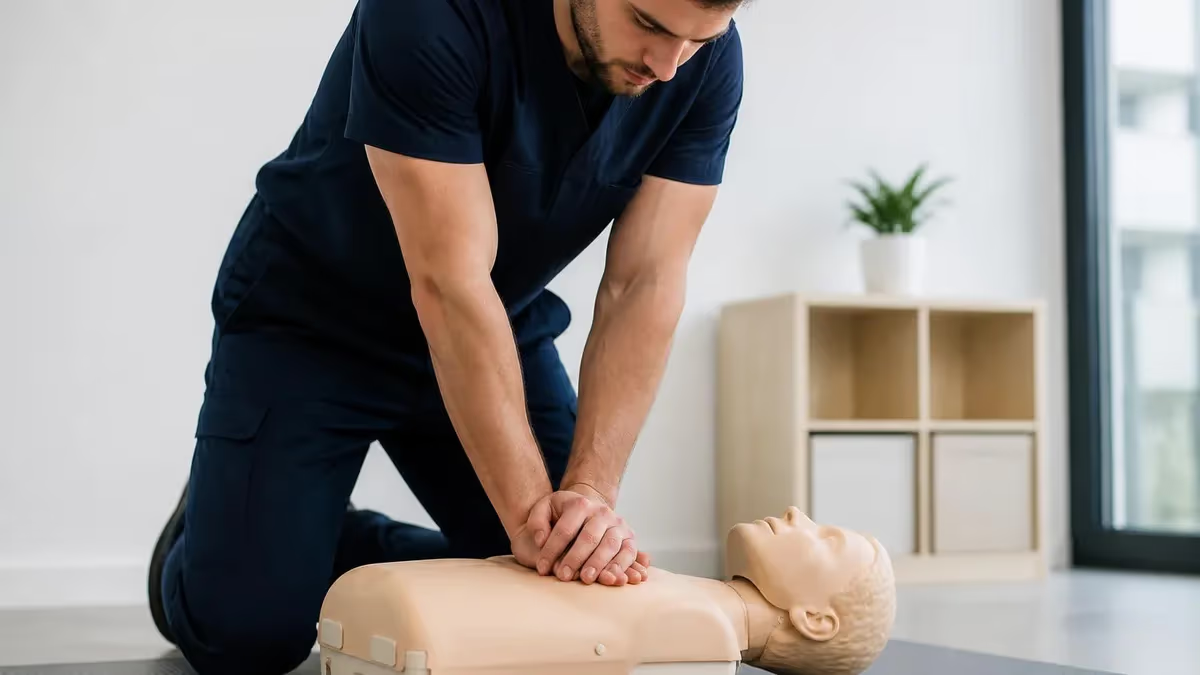
- ✓Hand placement: heel of hand on lower half of sternum, fingers interlocked
- ✓Arms straight, elbows locked — use body weight, not arm strength
- ✓Minimize interruptions: keep pauses under 10 seconds (chest compression fraction ≥60%)
- ✓30:2 ratio (single rescuer): 30 compressions then 2 breaths
- ✓Switch compressors every 2 minutes to prevent fatigue-related depth loss
- ✓Avoid hyperventilation: 1 breath per second, watch for chest rise only
- ✓AED: apply pads without stopping compressions, resume immediately after shock
Ventilation in CPR: Rescue Breaths and When They Matter
For witnessed cardiac arrest in adults, many guidelines now support compression-only CPR as an acceptable alternative for bystanders who aren't comfortable with mouth-to-mouth. But for healthcare providers — and for pediatric victims, drowning, and respiratory arrest — ventilations are essential. Don't skip them. The reason: cardiac arrest from asphyxia (drowning, airway obstruction, pediatric etiologies) involves low blood oxygen before circulatory failure, so ventilation addresses the primary problem, not just a secondary one.
The 30:2 ratio means thirty compressions followed by two rescue breaths — standard for one-rescuer CPR in adults and children. In two-rescuer CPR with an advanced airway (endotracheal tube or supraglottic device) in place, switch to 10 breaths per minute continuously, asynchronous with compressions. Don't pause compressions for breaths once an advanced airway is secured.
Each rescue breath should deliver roughly 500–600 mL — enough to produce visible chest rise. That's about one second of steady inhalation. You do not need to force a large breath. Over-ventilation is a real problem: excessive tidal volume or breaths delivered too fast increase intrathoracic pressure, reduce venous return, and can trigger gastric inflation — which risks regurgitation and aspiration. Slow, controlled breaths are the goal.
If you're using a bag-mask device, use the E-C grip: thumb and index finger forming a C over the mask, remaining three fingers lifting the jaw in an E shape. A proper mask seal is everything. Leaks mean the breath isn't going into the lungs — and two rescuers make bag-mask ventilation dramatically more effective than one.

CPR by Population: Adults, Children, and Infants
Compression depth: 2–2.4 inches (5–6 cm). Rate: 100–120/min. Technique: Two hands on the lower half of the sternum, elbows locked, arms straight.
Ratio (single rescuer): 30:2. Ratio (two rescuer, no advanced airway): 30:2. With advanced airway: continuous compressions at 100–120/min + 10 breaths/min asynchronously.
AED energy: Follow manufacturer guidance — typically 120–200 J for biphasic devices. If unknown, use maximum available energy. Alone: Call 911 before starting CPR.
The Chain of Survival: Where CPR Fits
The AHA's chain of survival describes the sequence of actions that — each link in order — produce the best possible outcome. Break any link and survival rates drop dramatically. The chain isn't metaphorical. Every step has measurable impact on whether a patient walks out of the hospital neurologically intact.
The in-hospital chain has six steps: recognition of cardiac arrest, activation of the emergency response, early CPR, rapid defibrillation, advanced resuscitation by EMS and emergency medicine teams, and post-cardiac arrest care. Out-of-hospital cardiac arrest has the same links but adds recovery as a distinct final phase, recognizing that surviving the arrest is only the beginning — many patients need weeks of rehabilitation and cardiac monitoring afterward.
CPR occupies the third link — but it's the link that bridges recognition to defibrillation. Without bystander CPR in out-of-hospital arrests, survival to hospital discharge in the U.S. hovers around 5–8%. With bystander CPR, it rises to 12–15% and can exceed 30% in communities with strong public access defibrillation programs. You can explore the technique nuances further with our CPR practice test, which covers chain-of-survival scenarios healthcare providers need to know.
AHA Chain of Survival: Out-of-Hospital Cardiac Arrest
1. Recognition
2. Activate EMS
3. Early CPR
4. Rapid Defibrillation
5. Advanced Care
6. Post-Arrest Care
7. Recovery
AED Integration: Coordinating Shocks with Compressions
Defibrillation — an electrical shock that momentarily depolarizes the entire myocardium, allowing a normal pacemaker rhythm to resume — is the only definitive treatment for ventricular fibrillation and pulseless VT. CPR alone cannot convert these rhythms. An AED is essential.
The core principle: minimize the gap between the last compression and shock delivery, and minimize the gap between shock delivery and resumption of compressions. Even a 5-second pre-shock pause measurably reduces defibrillation success. Modern protocol is clear — continue compressions while AED pads are applied, stop only for rhythm analysis and shock delivery (which takes only a few seconds), then resume compressions immediately after the shock — without waiting to check for a pulse. That pause to check costs precious perfusion time.
Post-shock, the heart is often in a stunned state. It may have resumed an organized electrical rhythm but still lacks the mechanical coordination to produce adequate cardiac output for several seconds to a minute or more. Immediate post-shock compressions support perfusion during that vulnerable window and prevent the brain from suffering additional ischemic damage while the myocardium recovers its contractile function.
Pad placement: Upper-right chest (below the clavicle, right of the sternum) and lower-left chest (below the left armpit, over the cardiac apex). Keep pads at least 1 inch from pacemakers or ICDs. Dry a wet chest before applying. Remove transdermal medication patches in the pad area — they cause burns and can interfere with current delivery.
Two-Rescuer CPR: Roles and Coordination
- ▸Perform chest compressions at 100–120/min
- ▸Call out compression count aloud
- ▸Pause after 30 (or 15 for peds two-rescuer) for ventilations
- ▸Switch roles every 2 minutes — announce before switching
- ▸Maintain correct depth and full recoil throughout
- ▸Manage airway — head-tilt chin-lift or jaw-thrust
- ▸Deliver 2 breaths after each 30 compressions (30:2)
- ▸With advanced airway: 10 breaths/min asynchronously
- ▸Watch for chest rise — avoid over-inflation
- ▸Apply AED pads while compressor continues
- ▸Coordinate role assignments and switching
- ▸Call switch: count down '3... 2... 1... switch'
- ▸Monitor compression quality and call corrections
- ▸Manage medication timing (epinephrine q3–5min)
- ▸Track time from arrest and announce rhythm check timing

Medications in Cardiac Arrest: What ACLS Adds
Advanced cardiac life support adds pharmacological interventions to CPR and defibrillation. Two drugs dominate cardiac arrest management — and understanding their role helps contextualize why mechanical quality still trumps everything else.
Epinephrine is given every 3–5 minutes throughout cardiac arrest. It works primarily as a vasopressor — increasing systemic vascular resistance, elevating aortic diastolic pressure and coronary perfusion pressure during compressions. This makes each compression cycle more effective at delivering oxygenated blood to the myocardium. For non-shockable rhythms (PEA and asystole), epinephrine goes in as soon as IV/IO access is available. For shockable rhythms (VF/pVT), it's given after the second shock — not before. Standard dose: 1 mg IV/IO every 3–5 minutes.
Amiodarone is the antiarrhythmic of choice for VF or pVT refractory to defibrillation — meaning the rhythm persists after two or more shocks. It stabilizes myocardial membranes and prolongs the action potential refractory period. First dose: 300 mg IV/IO. Second dose if needed: 150 mg. Lidocaine (1–1.5 mg/kg IV/IO) is an acceptable alternative if amiodarone isn't available, though evidence for one over the other remains inconclusive in terms of survival to discharge.
Worth noting: neither drug consistently improves neurologically intact survival at discharge. The large PARAMEDIC-2 trial showed epinephrine improved short-term ROSC but not meaningful neurological outcomes at 30 days. The honest interpretation: high-quality CPR and rapid defibrillation remain the most powerful determinants of good outcomes. Medications improve the chance of getting a patient's heart beating again. What you do mechanically determines whether their brain survives the experience.
ACLS Medication Reference
Post-Cardiac Arrest Care: What Happens After ROSC
Return of spontaneous circulation (ROSC) — when the heart begins beating on its own again — is not the end of resuscitation. It's the beginning of a new, equally critical phase. Post-cardiac arrest syndrome involves whole-body ischemia-reperfusion injury, brain injury, myocardial dysfunction, and whatever underlying process caused the arrest.
Targeted temperature management (TTM) involves maintaining core body temperature at 32–36°C for 24 hours following resuscitation in comatose patients. The rationale: lower temperature slows the metabolic cascades responsible for secondary neuronal death after ischemia. Recent large trials (TTM-2, HYPERION) have complicated the picture, but current AHA guidance recommends preventing fever (above 37.7°C) for at least 72 hours post-arrest.
Hemodynamic targets: mean arterial pressure (MAP) ≥65 mmHg, oxygen saturation 94–99% (avoid hyperoxia — it worsens reperfusion injury), and carbon dioxide 35–45 mmHg (avoid both hypocapnia and hypercapnia). Early coronary angiography is recommended when STEMI or high-suspicion ACS is the presumed cause. Neurological prognosis assessment should not be rushed — wait at least 72 hours post-arrest before multimodal prognostication.
Post-Cardiac Arrest Care Checklist
- ✓Prevent fever: maintain temperature below 37.7°C for at least 72 hours post-arrest
- ✓Target MAP ≥65 mmHg — use vasopressors if needed to maintain perfusion
- ✓Target SpO2 94–99% — avoid hyperoxia (worsens reperfusion injury)
- ✓Target CO2 35–45 mmHg — avoid both hypocapnia and hypercapnia
- ✓Order 12-lead ECG immediately — look for STEMI or ischemic changes
- ✓Consider early coronary angiography if ACS is suspected cause of arrest
- ✓Begin TTM (32–36°C) in comatose patients who don't follow commands post-ROSC
- ✓Delay neurological prognostication until at least 72 hours post-arrest
CPR Certification: Requirements and How to Get Certified
CPR certification requirements vary by profession, state, and setting. Most healthcare professionals — nurses, paramedics, physicians, respiratory therapists, medical assistants — must maintain current BLS (Basic Life Support) certification, typically renewed every two years. ACLS is required for those in higher-acuity environments (emergency, ICU, OR). PALS (Pediatric Advanced Life Support) is standard for pediatric-focused providers.
The two major certifying organizations in the U.S. are the American Heart Association and the American Red Cross. Both offer in-person, blended learning (online theory plus in-person skills check), and fully online formats for layperson-level certifications. For professional-grade BLS, in-person skills demonstration is required — online-only doesn't satisfy most employer requirements.
If you're wondering how long does cpr certification last, the answer is two years for both AHA and Red Cross courses. If you're looking for heart association cpr classes, the AHA's HeartCode BLS blended format is widely available through hospitals and community centers. For Red Cross options, red cross cpr classes near me can be found through their national locator.
The how long is cpr certification good for question comes up constantly for healthcare employment — set a renewal reminder 30–60 days before expiration. Note that the american cpr care association is separate from the AHA — confirm your employer accepts the certifying body before enrolling.
CPR Certification: What to Know Before You Enroll
- +AHA and Red Cross courses follow evidence-based guidelines updated regularly
- +Blended learning formats fit around full-time work schedules
- +Two-year validity period balances currency with renewal convenience
- +Hands-on skills checks with mannequins build real muscle memory
- +Good Samaritan laws protect certified and untrained bystanders alike
- −In-person component required for professional BLS — online-only doesn't satisfy most employers
- −Some employers only accept AHA or Red Cross — check before enrolling elsewhere
- −Renewal every two years means ongoing time and cost commitment
- −Certification doesn't equal proficiency — practice and real scenarios build real skill
- −Not all certifying bodies are universally recognized across states and employers
CPR Questions and Answers
Understanding cardiopulmonary resuscitation at this level of depth — the physiology, the mechanics, the evidence behind every guideline — transforms you from someone who has taken a class into someone who can genuinely make a difference in a critical moment. The guidelines exist because the science is clear: compression rate, compression depth, full chest recoil, minimized interruptions, early defibrillation. These aren't suggestions. They're the variables that determine whether someone's brain survives the next ten minutes without irreversible damage.
When it comes to where to get certified, make sure you know your employer's requirements first. The american cpr care association is distinct from the AHA — and not all certifying organizations are accepted at every hospital or clinical facility. Know which body your employer recognizes before you spend time and money on a course. And when you're ready to validate your technical knowledge before your next certification exam, the CPR practice test is the place to start.
About the Author

Registered Nurse & Healthcare Educator
Johns Hopkins University School of NursingDr. Sarah Mitchell is a board-certified registered nurse with over 15 years of clinical and academic experience. She completed her PhD in Nursing Science at Johns Hopkins University and has taught NCLEX preparation and clinical skills courses for nursing students across the United States. Her research focuses on evidence-based exam preparation strategies for healthcare certification candidates.
Join the Discussion
Connect with other students preparing for this exam. Share tips, ask questions, and get advice from people who have been there.
View discussion (5 replies)