
CPR vs BLS: Complete Comparison Guide for 2026 October — Which Certification Do You Need?
🏆 CPR vs BLS explained: scope, audience, cost, skills, and certification differences. Learn which course you need for work, school, or daily readiness.
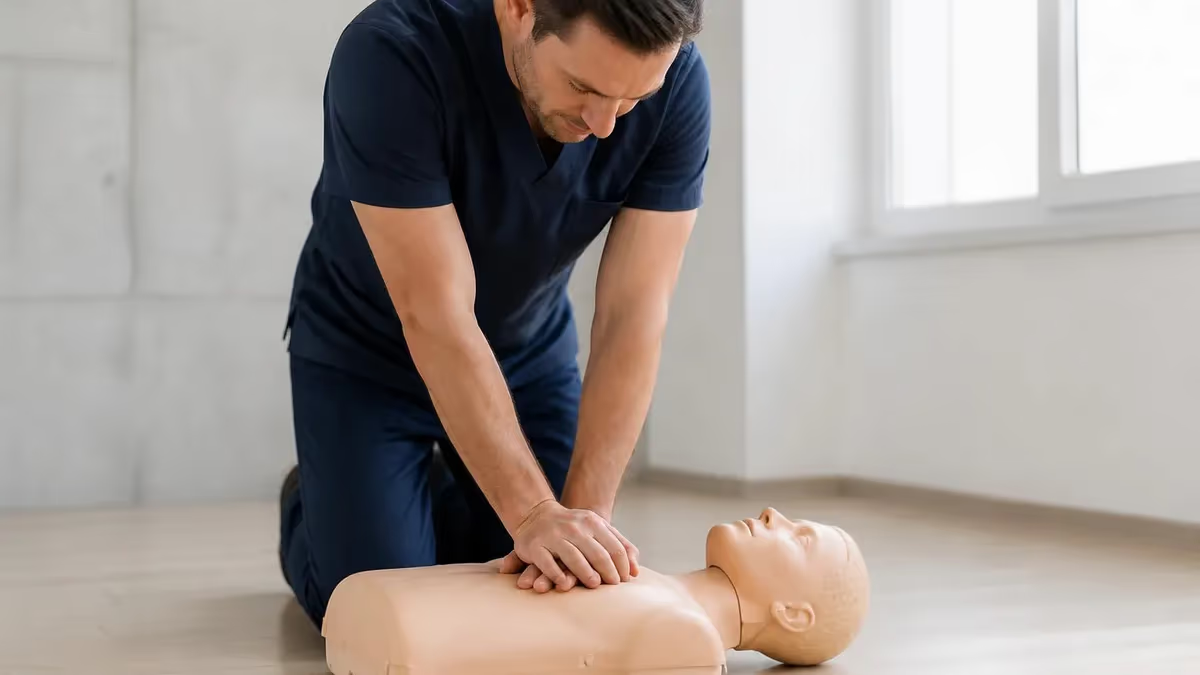
The cpr vs bls debate confuses thousands of healthcare students, daycare workers, gym staff, and corporate trainees every year, and the confusion is understandable because both terms get used interchangeably in job postings. In reality, CPR (cardiopulmonary resuscitation) is a single life-saving skill, while BLS (Basic Life Support) is a structured professional course that includes CPR plus airway management, two-rescuer coordination, AED operation, and integration with the acls algorithm. Choosing the wrong one can mean failing a hospital onboarding requirement or wasting tuition dollars on a credential your employer will not accept.
At its core, CPR is the manual technique of chest compressions and rescue breaths that keeps oxygenated blood circulating when a heart stops. A standard community CPR class typically lasts three to four hours, costs $30 to $80, and is open to anyone aged twelve and up. It teaches you how to recognize cardiac arrest, call 911, push hard and fast on the center of the chest, and use a public AED. The audience is parents, teachers, lifeguards, coaches, and bystanders who want to be ready in a worst-case scenario.
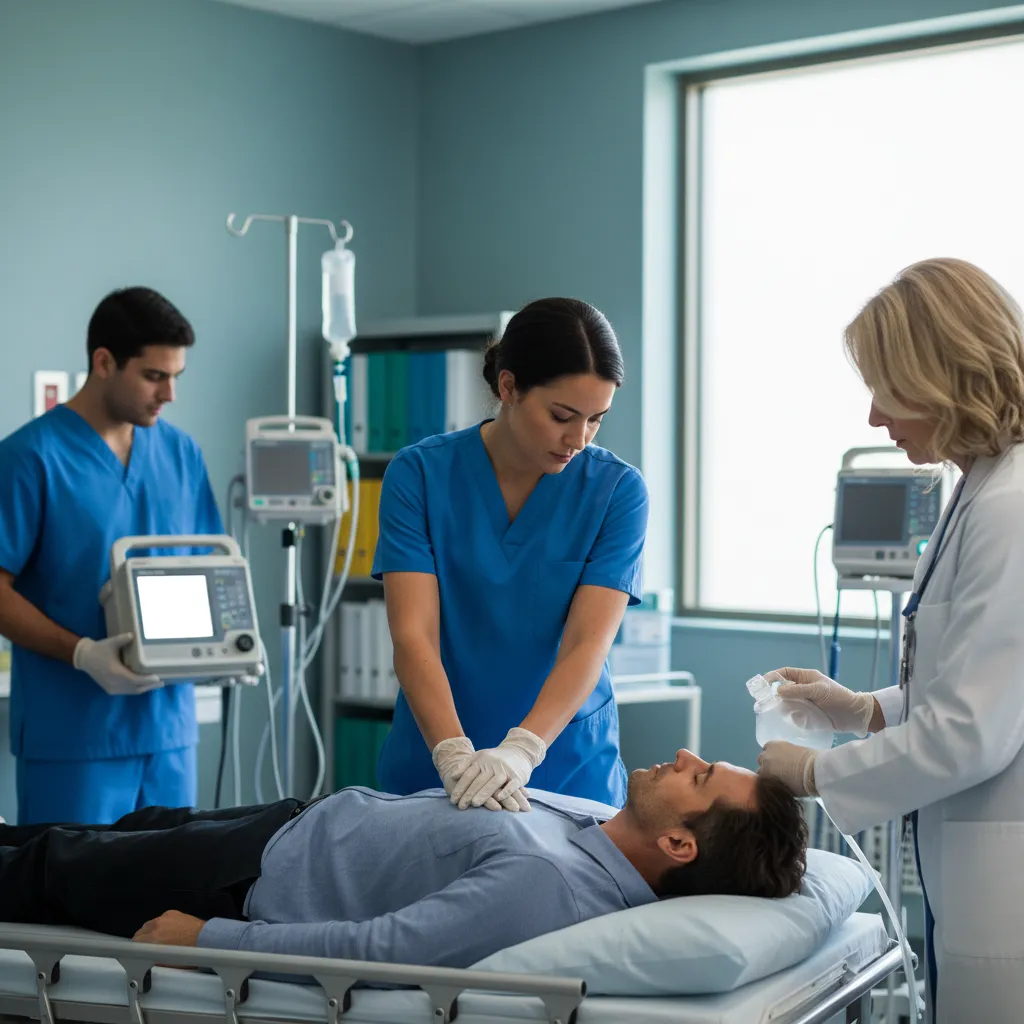
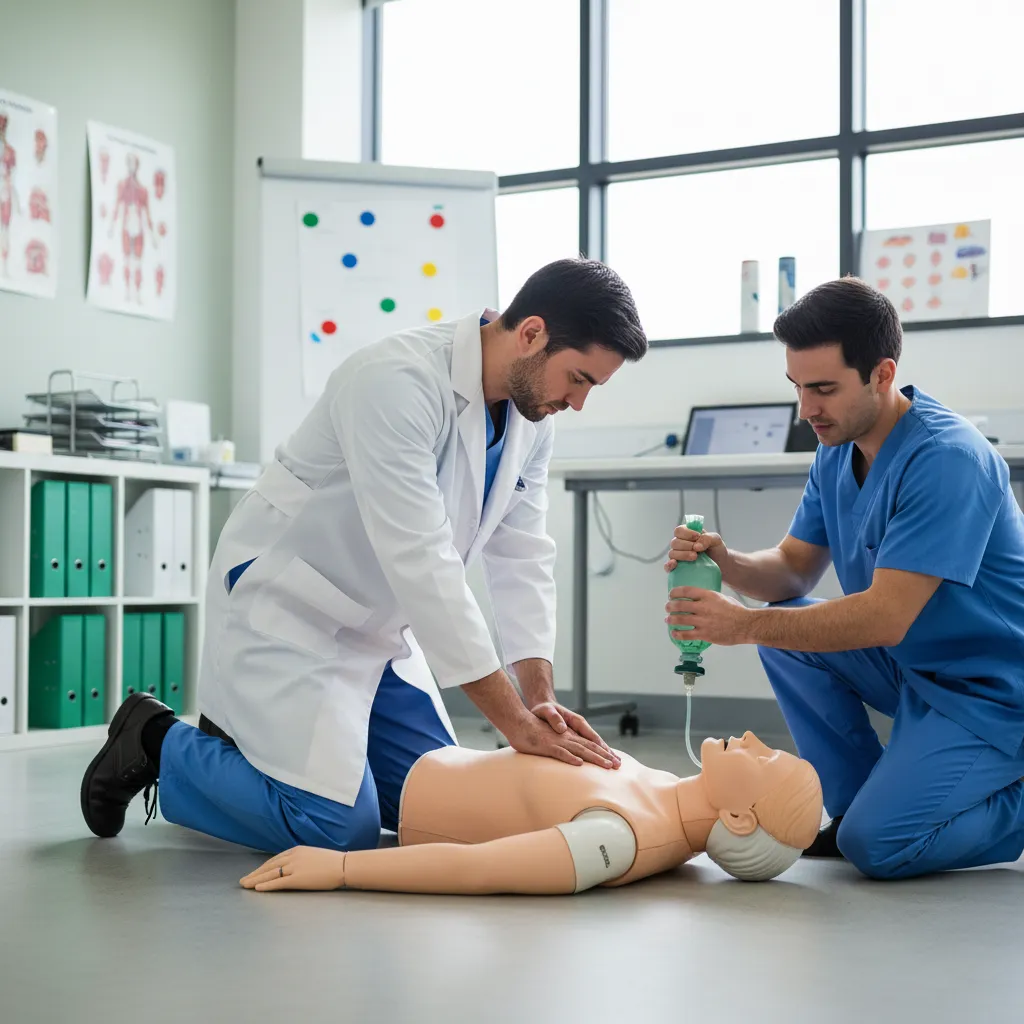
BLS, by contrast, is the professional rescuer standard used inside hospitals, ambulances, dental clinics, surgical centers, and physical therapy practices. A BLS course runs four to six hours, costs $60 to $110, and follows the American Heart Association or Red Cross Healthcare Provider curriculum. It assumes you already understand basic anatomy and adds skills like bag-valve-mask ventilation, pulse checks at the carotid and brachial sites, switching compressors every two minutes, and recognizing agonal breathing within seconds of arrival.
The legal stakes also differ. A community CPR certification is generally a goodwill credential — employers like to see it, but most states do not regulate it. BLS is the opposite: nursing boards, medical schools, and clinical placement coordinators require an active, in-date BLS card signed by a credentialed instructor, and many will not let you start a shift if it expires. Understanding the gap between heart attack vs cardiac arrest is also baked into BLS training because professional rescuers must triage the difference in seconds, while community CPR only requires you to act on unresponsiveness.
Cost, time, and depth all scale up with BLS, but so does liability protection. Healthcare workers covered under a BLS certification are explicitly protected by Good Samaritan and scope-of-practice statutes when they follow the algorithm exactly. Community CPR rescuers are also covered by Good Samaritan laws in all fifty states, but the standard of care expected is lower. This article breaks down every meaningful difference — curriculum, audience, cost, renewal, and which credential matches your specific career or family situation.
By the end of this guide, you will know exactly which course to enroll in, what to expect on test day, how to renew before your card lapses, and which mistakes cause the highest failure rates on the skills check-off. We will also cover the most common myths — like the false belief that BLS replaces ACLS, or that online-only CPR is accepted by hospitals — so you do not waste money on a credential your employer will reject.
CPR vs BLS by the Numbers
Side-by-Side: How CPR and BLS Courses Compare
A 3-hour entry-level course teaching single-rescuer adult, child, and infant CPR plus AED use. Designed for the general public, teachers, fitness staff, and parents. No prerequisites — anyone twelve or older can enroll and pass.
A 4–6 hour professional course covering one- and two-rescuer CPR, bag-valve-mask ventilation, team dynamics, high-quality compressions, and AED integration. Required for nurses, paramedics, dentists, and medical students before clinical rotations begin.
A 2–3 hour shorter course for providers whose card is still active or recently expired. Skills-focused with a written exam and hands-on skills check-off. Often offered in hybrid format with online modules plus in-person testing.
A 5–7 hour bundled class for workplaces under OSHA requirements. Teaches CPR, AED, bleeding control, splinting, burns, and allergic reactions. Popular for construction sites, manufacturing plants, and summer camp staff.
Determining whether you need CPR or BLS comes down to one question: are you a professional rescuer who will respond to cardiac arrest as part of your job, or are you a bystander who wants to be ready if it happens at home, school, or a public venue? If the answer is professional rescuer, BLS is non-negotiable. If the answer is bystander, community CPR is almost always sufficient and far less expensive.
Professional rescuers include registered nurses, licensed practical nurses, certified nursing assistants, paramedics, EMTs, dentists, dental hygienists, physical therapists, occupational therapists, respiratory therapists, medical assistants, and every level of physician from medical student through attending. Allied health programs — radiology tech, ultrasound, surgical tech, and phlebotomy — almost universally require BLS before clinical placement. Even pharmacists who administer immunizations now need BLS in most states, and the same applies to anesthesia assistants who must integrate with the broader acls algorithm during sedation events.
Bystander-tier CPR fits a different group: K-12 teachers, daycare staff, school bus drivers, build parents, lifeguards, personal trainers, group fitness instructors, youth sports coaches, scout leaders, hotel front-desk staff, and corporate safety officers. These workers benefit from knowing how to act in the first five minutes of an emergency but are not expected to operate inside a coordinated medical response team. For parents specifically, learning baby cpr is the single highest-yield investment because infant cardiac arrests are usually respiratory in origin and respond well to early intervention.
There is a third category that often gets overlooked: parents of medically complex children, home caregivers for elderly relatives, and family members of patients with implanted defibrillators or cardiomyopathy. For this audience, the AHA recommends a Family & Friends CPR class — even simpler than Heartsaver, free at many fire departments, and focused on real-world recognition rather than testing. It is not a certification, but it builds the muscle memory that saves lives at home where most cardiac arrests actually occur.
Workplace safety officers face their own decision tree. OSHA does not specify CPR or BLS by name, but it does require that designated responders be trained appropriately for the hazards present. A warehouse with forklifts and an AED on the wall typically only needs CPR-trained staff. A surgical center with sedation, IV access, and emergency medications needs BLS — and often ACLS — for at least one staff member per shift. When in doubt, ask your compliance officer or local OSHA consultation office for a written recommendation.
Finally, some employers create their own confusion. Job listings sometimes say "CPR certification required" when they actually mean BLS, especially in dental and outpatient settings. Always call the HR department or hiring manager and ask specifically: "Do you require AHA BLS for Healthcare Providers, or is a standard CPR/AED card acceptable?" A five-minute phone call before enrolling can save you a hundred dollars and a wasted Saturday.

CPR Practice Test Questions
Prepare for the CPR Cardiopulmonary Resuscitation Practice exam with our free practice test modules. Each quiz covers key topics to help you pass on your first try.
CPR Basic CPR
CPR Exam Questions covering Basic CPR. Master CPR Test concepts for certification prep.
CPR and First Aid
Free CPR Practice Test featuring and First Aid. Improve your CPR Exam score with mock test prep.
CPR (Cardiopulmonary Resuscitation) Adult ...
CPR Mock Exam on (Cardiopulmonary Resuscitation) Adult CPR and AED Usage. CPR Study Guide questions to pass on your first try.
CPR (Cardiopulmonary Resuscitation) Airway...
CPR Test Prep for (Cardiopulmonary Resuscitation) Airway Obstruction and Choking. Practice CPR Quiz questions and boost your score.
CPR (Cardiopulmonary Resuscitation) Cardio...
CPR Questions and Answers on (Cardiopulmonary Resuscitation) Cardiopulmonary Emergency Recognition. Free CPR practice for exam readiness.
CPR (Cardiopulmonary Resuscitation) Child ...
CPR Mock Test covering (Cardiopulmonary Resuscitation) Child and Infant CPR. Online CPR Test practice with instant feedback.
CPR (Cardiopulmonary Resuscitation) High-P...
Free CPR Quiz on (Cardiopulmonary Resuscitation) High-Performance Team Dynamics. CPR Exam prep questions with detailed explanations.
CPR (Cardiopulmonary Resuscitation) Legal ...
CPR Practice Questions for (Cardiopulmonary Resuscitation) Legal and Ethical Considerations. Build confidence for your CPR certification exam.
CPR for Specific Populations
CPR Test Online for for Specific Populations. Free practice with instant results and feedback.
CPR Airway & Breathing Management
CPR Exam Questions covering Airway & Breathing Management. Master CPR Test concepts for certification prep.
CPR Assessment & Recognition of Cardiac Ar...
Free CPR Practice Test featuring Assessment & Recognition of Cardiac Arrest. Improve your CPR Exam score with mock test prep.
CPR Chest Compressions & Defibrillation
CPR Mock Exam on Chest Compressions & Defibrillation. CPR Study Guide questions to pass on your first try.
CPR Post-Resuscitation Care & Recovery
CPR Test Prep for Post-Resuscitation Care & Recovery. Practice CPR Quiz questions and boost your score.
Life Support Skills: What Each Course Actually Teaches
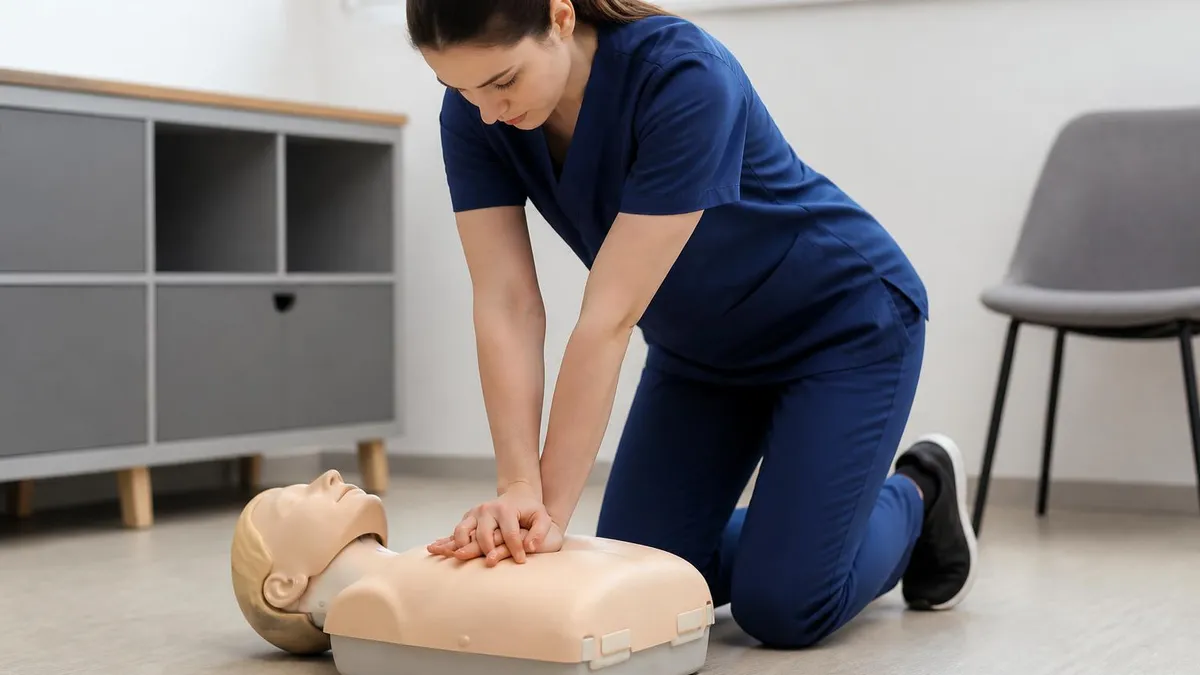
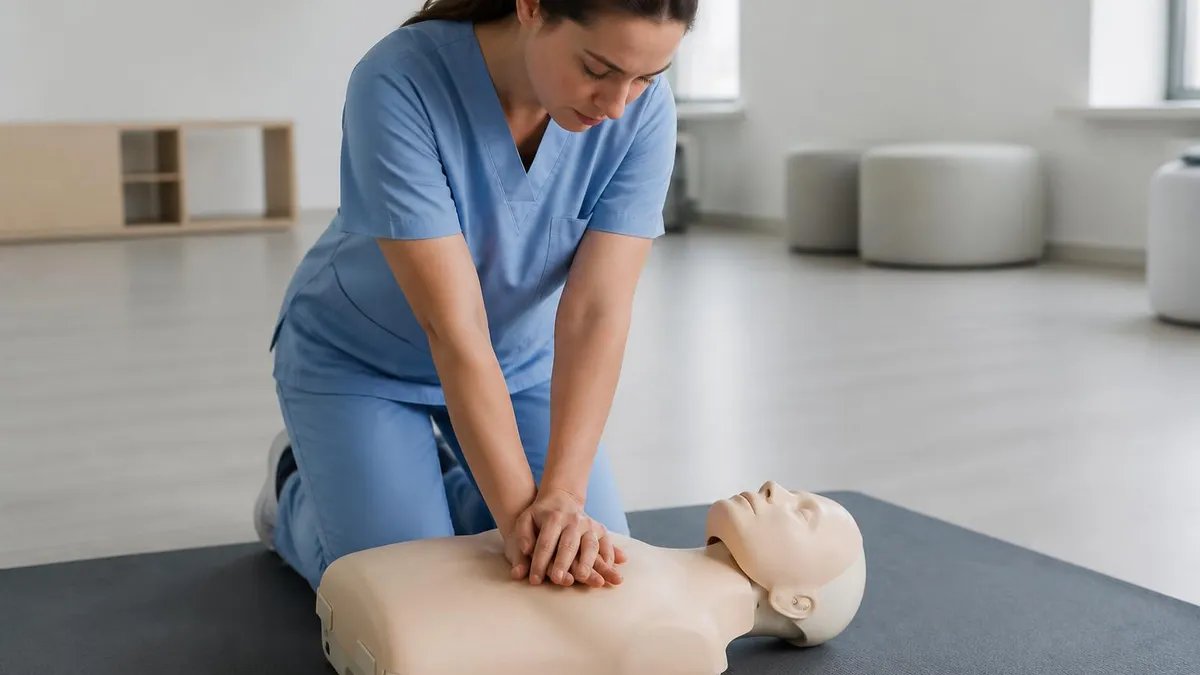
Community CPR teaches the universal compression-ventilation cycle: 30 compressions at a depth of at least two inches, a rate of 100–120 per minute, followed by two rescue breaths delivered over one second each. Students practice on adult, child, and infant manikins, learning to modify hand placement for each age group and to allow full chest recoil between compressions.
The course also covers AED operation — pad placement, voice-prompt response, and clearing the patient before shock delivery. Students learn to recognize a cardiac arrest within ten seconds by checking responsiveness and respiratory rate, and to start compressions immediately. The skills check-off is observational only; there is no high-stakes written exam, and most providers issue cards same-day.
Should You Take BLS Instead of CPR?
- +Required for nearly every healthcare and allied health job in the United States
- +Covers two-rescuer scenarios, bag-valve-mask ventilation, and team dynamics
- +Includes the same AED skills as community CPR plus advanced placement scenarios
- +Recognized across all fifty states by nursing boards and medical schools
- +Provides stronger legal protection under scope-of-practice statutes
- +Counts toward continuing education hours for many license renewals
- +Often reimbursed by employers as a required job-related expense
- −Costs 50–100% more than community CPR ($60–$110 vs $30–$80)
- −Requires a longer time commitment (4–6 hours vs 3 hours)
- −Includes a written exam with a higher passing threshold
- −Renewal must be completed every two years without exception
- −Not necessary for most non-healthcare workers or parents
- −Skills sessions must be in-person — online-only is not accepted
- −Some employers also require ACLS or PALS on top of BLS
Pros and Cons at a Glance
| Pros | Cons |
|---|---|
| Required for nearly every healthcare and allied health job in the United States | Includes a written exam with a higher passing threshold |
| Covers two-rescuer scenarios, bag-valve-mask ventilation, and team dynamics | Renewal must be completed every two years without exception |
| Includes the same AED skills as community CPR plus advanced placement scenarios | Not necessary for most non-healthcare workers or parents |
| Recognized across all fifty states by nursing boards and medical schools | Skills sessions must be in-person — online-only is not accepted |
| Provides stronger legal protection under scope-of-practice statutes | Some employers also require ACLS or PALS on top of BLS |

What Is a BLS Certification Checklist Before You Enroll
- ✓Confirm your employer accepts AHA, Red Cross, or both — never assume
- ✓Verify the course is in-person or hybrid (skills must be tested in person)
- ✓Check that your instructor is credentialed and the card is valid for two years
- ✓Bring photo ID and any required tuition or registration paperwork
- ✓Wear comfortable clothes — you will be on the floor doing compressions
- ✓Review the compression rate (100–120 per minute) and depth (2 inches) before class
- ✓Memorize the adult ratio (30:2) and child/infant two-rescuer ratio (15:2)
- ✓Know that what is a bls certification means provider-level, not bystander
- ✓Plan your renewal date — cards expire exactly two years from issue
- ✓Save digital and physical copies of your card for HR and clinical placement
Switch compressors every two minutes — quality drops fast
Research from the American Heart Association shows that compression depth and rate decline measurably within ninety seconds of starting CPR, even in trained rescuers. That is why BLS courses drill the two-minute switch rule during two-rescuer scenarios. If you are alone, do not stop — but if a second rescuer arrives, swap roles every two minutes to keep perfusion pressure high and survival odds rising.
Cost is one of the biggest reasons people choose CPR over BLS — or end up taking the wrong course entirely. A standard community CPR/AED class through the American Heart Association or American Red Cross runs $30 to $80 depending on your zip code, instructor availability, and whether the class is offered through a fire department, community college, or private training center. Online-only options through providers like the national cpr foundation can run as low as $14.95, but acceptance varies wildly by employer.
BLS pricing falls in the $60 to $110 range for the full initial certification, with renewal courses available for $45 to $80. AHA-aligned training centers typically charge more than Red Cross sites because of the brand premium and stricter instructor-to-student ratios. Hospital-run programs often subsidize the cost for current employees and bill it as part of onboarding, while travel nurses and contract workers usually pay out of pocket and submit for reimbursement after their first paycheck.
Watch out for online-only "BLS" certifications priced under $20. These are typically not accepted by any accredited hospital, nursing program, or state licensing board because BLS requires hands-on skills verification by a credentialed instructor. The AHA explicitly states that any BLS card without an in-person skills check is invalid for clinical use. If a website promises a downloadable BLS card with no in-person component, treat it as a red flag — even if the site looks polished.
Renewal timelines are identical for both: every two years from the issue date printed on your card. AHA cards now use eCards delivered by email rather than physical cards, which makes verification by HR departments faster and reduces lost-card replacement fees. Red Cross uses a similar digital credential system. Set a calendar reminder ninety days before expiration so you can schedule a renewal class without scrambling — last-minute renewals often cost more and have limited availability.
For families, the math frequently favors a low-cost community class plus a free online refresher. For healthcare students, BLS is usually bundled into tuition or required as a prerequisite, so the out-of-pocket cost is unavoidable. For workplaces, a single instructor-led on-site class for ten to twenty employees costs $400 to $1,200 total — far cheaper than sending each employee to an open enrollment class, and often easier to schedule around shifts.
Finally, do not get distracted by lookalike search results. Always verify the URL matches a legitimate training organization (AHA, Red Cross, ASHI, or national cpr foundation) before paying. If you also see leather cpr cleaning products, that is yet another unrelated brand using the acronym.
The American Heart Association, American Red Cross, and every state nursing board require hands-on skills verification for BLS certification. Any provider offering a fully online BLS card with no in-person skills check is selling an invalid credential. Verify your course includes a live skills check-off with an AHA or Red Cross instructor before you pay — and ask your future employer to confirm acceptance in writing.
Choosing between CPR and BLS comes down to three practical factors: your job requirements, your timeline, and your budget. Start by checking the exact language in your job offer, school admission packet, or clinical placement agreement. If the document says "BLS for Healthcare Providers," "AHA BLS," or "Healthcare Provider CPR," you need the professional course. If it says "CPR/AED," "Heartsaver," or "basic CPR," the community course is almost certainly acceptable.
Timeline matters because BLS classes fill up fast, especially during August and September when nursing students scramble before clinical rotations. Book at least three to four weeks in advance during peak season. Community CPR is more flexible — fire departments and community centers often run weekly classes, and hybrid options let you complete the online portion at your own pace before booking a skills-check appointment. The cpr fix phones franchise has no connection to either, despite the similar branding.
Budget-wise, consider total cost of ownership across two years. A community CPR class at $50 plus renewal at $40 totals $90. A BLS initial at $90 plus renewal at $60 totals $150. The difference is real but small relative to the career value if BLS is required for your role. If you need pals certification on top of BLS — which applies to pediatric ICU nurses, ER staff, and many pediatricians — budget another $200 to $300 every two years for that credential as well.
Audience considerations matter for parents and caregivers. If you are caring for an infant, prioritize infant cpr training above all else. Infant cardiac arrests are usually triggered by respiratory failure, so early ventilation matters more than defibrillation. The AHA's Heartsaver Pediatric First Aid CPR AED course is purpose-built for parents, nannies, and daycare staff and runs about $75 — slightly more than basic Heartsaver because of the expanded pediatric content.
For workplaces, think about scenarios. An office with no hazards and an AED in the lobby needs at least two CPR-trained employees per floor. A construction site needs CPR plus first aid for trauma. A dental practice or outpatient surgery center needs BLS for every clinical employee and ACLS for the dentist or surgeon performing sedation. The position recovery placement — left side, head tilted back, top leg bent — is taught in every level of training and remains a core skill for unconscious-but-breathing patients.
One final tip: do not chase the cheapest option blindly. A $14.95 online card from a no-name provider may save money upfront but cost you a job offer if HR rejects it. Stick with AHA, Red Cross, ASHI, or the national cpr foundation for community-level CPR, and stick exclusively with AHA or Red Cross for BLS. Spending an extra $30 to ensure acceptance is the cheapest insurance you will ever buy in healthcare.
If you are still uncertain, default to the higher credential. BLS satisfies every requirement that CPR satisfies, plus more. The reverse is not true. Spending an extra hour and forty dollars now to get BLS instead of CPR ensures you never have to retake a class because a future employer rejected your card. For a deeper look at testing and exam prep, see how to pass the cpr exam in our companion guide.
Final prep advice depends on which course you chose. For community CPR, the biggest pitfalls are compression depth (most people push too softly) and rate (most people go too fast or too slow). Practice on a manikin or a firm couch cushion before class — push at least two inches deep and aim for the beat of "Stayin' Alive" by the Bee Gees, which is exactly 103 beats per minute. Allow full chest recoil between compressions because incomplete recoil drops cardiac output dramatically.
For BLS, the additional pressure point is bag-valve-mask technique. Most students fail their first skills check on BVM seal — they either fail to tilt the head back enough or they squeeze the bag too quickly and force air into the stomach instead of the lungs. Practice the E-C clamp grip with your dominant hand and squeeze the bag slowly over one full second. Watch the chest rise; if it does not rise, reposition the head before squeezing harder.
Memorize the high-quality CPR metrics before walking in: compression rate 100–120 per minute, depth 2.0 to 2.4 inches for adults, allow full recoil, minimize interruptions to less than ten seconds, and avoid excessive ventilation. These five metrics show up on every BLS written exam and skills station. Knowing them cold lets you focus on technique during the practical and saves you from second-guessing during the test.
For the written exam, read every question twice. BLS questions frequently include distractors that look correct at first glance — like a 15:2 ratio for adult single-rescuer CPR (incorrect; adults are always 30:2 for single rescuer). Watch for keywords like "single rescuer," "two rescuers," "adult," "child," and "infant" because the correct ratio changes based on those variables. The most-missed question type involves identifying agonal breathing as cardiac arrest rather than as normal respiration.
Bring snacks and water — BLS classes run long, and skills stations require physical stamina. Compressions on a manikin for two consecutive minutes is harder than most students expect, and dehydration plus low blood sugar make the skills check far more difficult than it needs to be. Eat a protein-rich meal beforehand and drink water consistently throughout the class. If you feel lightheaded during compressions, ask to switch out — instructors expect this and will not mark you down.
After certification, practice quarterly. Skills decay measurably within three months without practice, and most rescuers who freeze during a real emergency do so because their last training was over a year ago. Use a pool noodle on the kitchen floor, an old throw pillow, or a dedicated home CPR manikin to run through compressions for two minutes every few months. Combine that with AED app simulations and you will retain peak readiness between renewals.
Finally, register your BLS card with your employer's compliance portal within twenty-four hours of receiving it. Delays here are the single biggest cause of last-minute hiring holds for new nurses, medical assistants, and clinical staff. Submit early, save a screenshot of your eCard confirmation email, and set a calendar reminder for ninety days before expiration so renewal never becomes a fire drill that derails your career.
CPR Questions and Answers
About the Author

Registered Nurse & Healthcare Educator
Johns Hopkins University School of NursingDr. Sarah Mitchell is a board-certified registered nurse with over 15 years of clinical and academic experience. She completed her PhD in Nursing Science at Johns Hopkins University and has taught NCLEX preparation and clinical skills courses for nursing students across the United States. Her research focuses on evidence-based exam preparation strategies for healthcare certification candidates.
Join the Discussion
Connect with other students preparing for this exam. Share tips, ask questions, and get advice from people who have been there.
View discussion (5 replies)