
CPR Steps and Procedures: The Complete Adult, Child, and Infant Guide (2026 October)
Master CPR steps and procedures for adults, children, and infants. ❓ Full 10-step algorithm, compression depth, rates, AED use, and rescue breaths.
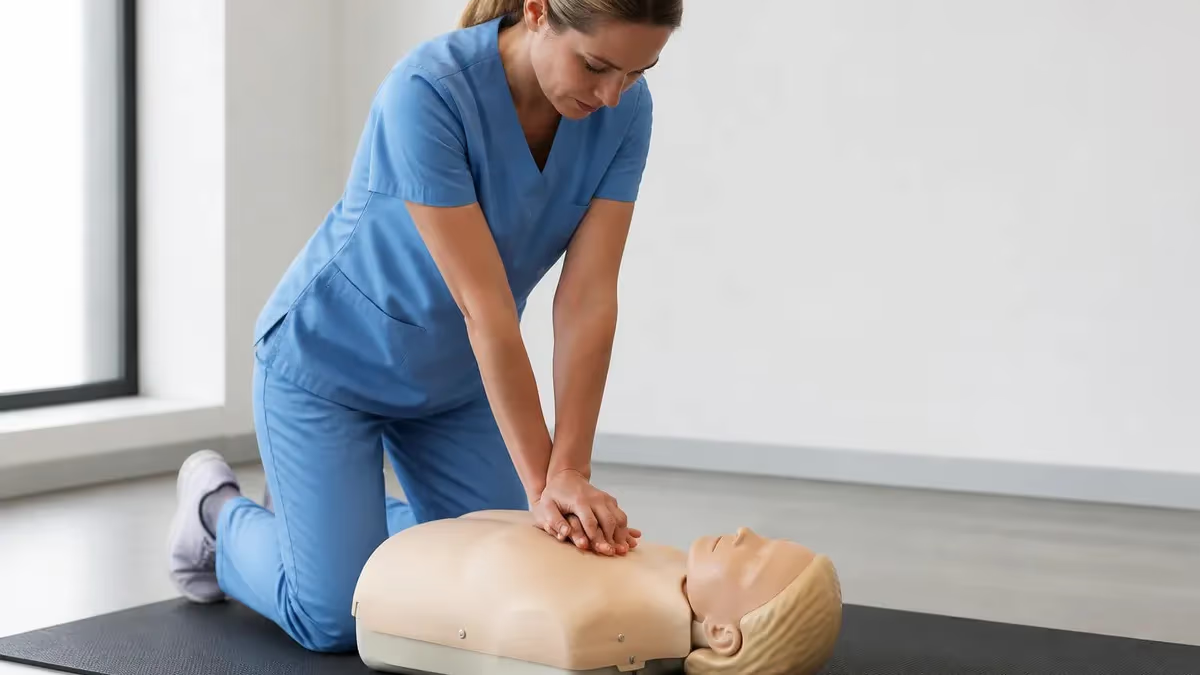
You walk into the break room. A coworker collapses. No warning, no words — just down on the tile. Seconds matter now, and the question is whether you remember what to do.
That moment is the whole reason CPR steps and procedures exist as a memorized sequence. When the adrenaline hits, you don't think — you act. Cardiopulmonary resuscitation buys time. It pushes blood with what little oxygen is still in the lungs out to the brain, holding the line until paramedics arrive with a defibrillator and advanced care.
This guide walks you through the full algorithm. Adult, child, infant. Hands-only versus standard. AED use. The numbers you absolutely have to know: depth, rate, ratio. And the small details that quietly separate effective CPR from chest pumping that doesn't actually move blood.
Survival rates for out-of-hospital cardiac arrest hover near 10 percent. That figure jumps sharply when a bystander starts compressions inside the first two minutes. You — the person reading this — are the first link in that chain. Not the ambulance. Not the hospital. You.
Read once today. Re-read before your certification class. Then keep this page open in a browser tab on your phone, because the sequence is shorter than you think and the rate is faster than feels comfortable. Let's go.
CPR by the Numbers

The Complete CPR Algorithm — 10 Steps
Scan for traffic, fire, downed wires, hostile bystanders, or fumes. A second victim helps no one. If the scene is unsafe, do what you can to remove the danger or move the patient only if absolutely necessary.
Tap both shoulders firmly. Shout loudly — use the person's name if you know it. No response means unconscious. Proceed immediately to the next step.
Call 911 yourself if alone (speaker mode), or point at a specific person and tell them to call. Vague commands to a crowd often produce no action — direct delegation works.
Point at a second person and tell them to find and bring the AED. If alone, retrieve it only if it's seconds away — otherwise stay and start compressions.
Look at the chest while feeling the carotid pulse on the side of the neck closest to you. No definite pulse and no normal breathing within 10 seconds means cardiac arrest. Don't exceed 10 seconds — start compressions.
Center of chest, heel of one hand, other hand stacked. Depth 2 to 2.4 inches for adults. Rate 100 to 120 per minute. Push hard, push fast, full recoil, minimize interruptions.
Head-tilt chin-lift for most patients. Jaw-thrust without head tilt if you suspect cervical spine injury such as a fall, crash, or diving accident. Move the tongue off the back of the throat.
Pinch the nose, seal the mouth, deliver one breath over one second. Watch the chest rise. If it rises, give the second breath. If not, reposition and try again — but don't waste time on multiple attempts.
30 compressions, 2 breaths, repeat. Don't stop except for AED rhythm checks or rescuer swaps. Count out loud — it keeps your rhythm and helps any second rescuer track timing.
Turn it on. Follow voice prompts. Bare and dry the chest, remove medication patches, place pads. Stand clear during analysis. Shock if advised. Resume compressions immediately after — no pulse check.
Before you compress anything, the algorithm asks one question: does this person actually need CPR? Pumping the chest of someone who's breathing and has a pulse can crack ribs and bruise the heart for no reason. So check first.
A person who needs immediate CPR is unresponsive and either not breathing at all or only gasping. That second one — agonal breathing — is the trap. It looks like breathing to a panicked bystander. It isn't. Slow, irregular gasps every several seconds are a brainstem reflex during cardiac arrest, not effective ventilation. If you see it, you start compressions.
Tap the shoulders firmly. Shout. Use the loudest version of their name you've got. No response? You're committed. Send someone to call 911 and grab the AED while you begin. If you're alone with a phone, put it on speaker mode and dial as you kneel down.
One more thing about timing: spending more than ten seconds searching for a pulse is wasted time. Don't probe the carotid for thirty seconds trying to be sure. If they're unresponsive and not breathing normally, compressions begin. The cost of doing CPR on someone who didn't quite need it is small. The cost of not doing CPR on someone who did is everything.
CPR Practice Test Questions
Prepare for the CPR Cardiopulmonary Resuscitation Practice exam with our free practice test modules. Each quiz covers key topics to help you pass on your first try.
CPR Basic CPR
CPR Exam Questions covering Basic CPR. Master CPR Test concepts for certification prep.
CPR and First Aid
Free CPR Practice Test featuring and First Aid. Improve your CPR Exam score with mock test prep.
CPR (Cardiopulmonary Resuscitation) Adult ...
CPR Mock Exam on (Cardiopulmonary Resuscitation) Adult CPR and AED Usage. CPR Study Guide questions to pass on your first try.
CPR (Cardiopulmonary Resuscitation) Airway...
CPR Test Prep for (Cardiopulmonary Resuscitation) Airway Obstruction and Choking. Practice CPR Quiz questions and boost your score.
CPR (Cardiopulmonary Resuscitation) Cardio...
CPR Questions and Answers on (Cardiopulmonary Resuscitation) Cardiopulmonary Emergency Recognition. Free CPR practice for exam readiness.
CPR (Cardiopulmonary Resuscitation) Child ...
CPR Mock Test covering (Cardiopulmonary Resuscitation) Child and Infant CPR. Online CPR Test practice with instant feedback.
CPR (Cardiopulmonary Resuscitation) High-P...
Free CPR Quiz on (Cardiopulmonary Resuscitation) High-Performance Team Dynamics. CPR Exam prep questions with detailed explanations.
CPR (Cardiopulmonary Resuscitation) Legal ...
CPR Practice Questions for (Cardiopulmonary Resuscitation) Legal and Ethical Considerations. Build confidence for your CPR certification exam.
CPR for Specific Populations
CPR Test Online for for Specific Populations. Free practice with instant results and feedback.
CPR Airway & Breathing Management
CPR Exam Questions covering Airway & Breathing Management. Master CPR Test concepts for certification prep.
CPR Assessment & Recognition of Cardiac Ar...
Free CPR Practice Test featuring Assessment & Recognition of Cardiac Arrest. Improve your CPR Exam score with mock test prep.
CPR Chest Compressions & Defibrillation
CPR Mock Exam on Chest Compressions & Defibrillation. CPR Study Guide questions to pass on your first try.
CPR Post-Resuscitation Care & Recovery
CPR Test Prep for Post-Resuscitation Care & Recovery. Practice CPR Quiz questions and boost your score.
Chest Compressions: Depth, Rate, Recoil
Adult compression depth is at least 2 inches but no more than 2.4 inches. Going shallower fails to generate enough forward flow; going deeper raises the risk of rib fractures and visceral injury without adding cardiac output. The chest is more compliant than most people expect — committing to a real 2 inches feels aggressive, but it's the target.
For children aged 1 year to puberty, compress about 1.5 inches or one-third the depth of the chest, whichever is less. For infants under 1 year, the same 1.5-inch or one-third depth applies, using two fingers or two thumbs depending on rescuer count.
This is the heart of the heart of CPR. Get the compressions right and almost everything else can be imperfect.
Place the heel of one hand on the lower half of the breastbone — about the level of the nipples on most adults. Stack the other hand on top, interlace fingers, and lift them off the chest so only the heel of the lower hand is in contact. Lock your elbows. Position your shoulders directly over your hands so the force comes from your bodyweight, not your arms.
Push hard and push fast. The American Heart Association calls for a depth of at least 2 inches but no more than 2.4 inches in adults, with a rate of 100 to 120 compressions per minute. That cadence matches "Stayin' Alive" by the Bee Gees. It also matches "Another One Bites the Dust" by Queen, which most CPR instructors avoid mentioning at training.
Full recoil between compressions is non-negotiable. If you lean on the chest at the top of each push, blood can't return to the heart and your next compression moves nothing. Up all the way. Down hard. Repeat.
The other invisible killer of effective CPR is interruption. Every pause — to check a pulse, to attach pads, to swap rescuers — drops coronary perfusion pressure, and that pressure takes several compressions to rebuild. Keep interruptions under ten seconds. If you're sharing the work, swap rescuers every two minutes during the AED rhythm check, not whenever someone gets tired.
Rib fractures during CPR happen in roughly 30 percent of cases — and that's fine. A broken rib heals; a dead brain doesn't. Hesitating to push deep because you're worried about the sound or feel of a cracking rib is the single most common reason bystander compressions fail to circulate blood. Commit to the full 2 to 2.4 inches. The body recovers from rib trauma. It does not recover from minutes of unperfused brain.
After 30 compressions, it's time to open the airway and deliver two rescue breaths. This is the part most rescuers feel awkward about, and that's fine — the breaths are quick and the technique is forgiving.
Use the head-tilt chin-lift. Place one hand on the forehead and gently tilt the head back. With two fingers under the bony part of the chin, lift the jaw forward. That single motion moves the tongue off the back of the throat, which is where airways usually obstruct in an unconscious person.
If you suspect a spinal injury — a fall from height, a car crash, a diving accident — use a jaw-thrust instead. Place fingers behind the angles of the jaw on each side and push the jaw forward without tilting the head. It's harder, especially solo. But for trauma, it's the safer choice.
Pinch the nose closed. Make a complete seal over the mouth — either mouth-to-mouth, with a pocket mask, or with a bag-valve mask if one's available. Deliver one breath over about one second. Watch the chest. If it rises visibly, the breath worked. Let the chest fall, then deliver the second breath.
The chest didn't rise? Reposition the head and try again. If it still doesn't go in, return immediately to compressions. Don't make three or four attempts — every second without compressions is a second the brain isn't perfused. Standard ratio is 30 compressions to 2 breaths. Counting out loud helps your rhythm and helps any second rescuer track where you are.

AED Operation Checklist
- ✓Turn the AED on by opening the lid or pressing the power button — voice prompts begin immediately
- ✓Bare the chest — cut clothing if needed, modesty is not a priority during cardiac arrest
- ✓Wipe the chest dry — sweat, water, or vomit prevents the pads from sticking
- ✓Remove medication patches such as nicotine, nitroglycerin, or hormone patches, and wipe away any residue
- ✓Shave excessive chest hair where pads will go — most AED kits include a razor for this
- ✓Place one pad on the upper right chest below the collarbone, the second on the lower left side below the armpit
- ✓Stop touching the patient and stand clear while the AED analyzes the rhythm
- ✓If a shock is advised, confirm everyone is clear, then press the shock button firmly
- ✓Resume chest compressions immediately after the shock — do not check the pulse first
- ✓Continue 30:2 CPR until the AED prompts another rhythm check, usually every 2 minutes
The AED is the single most important piece of equipment in cardiac arrest. Compressions buy time. The shock — when the rhythm is shockable — actually restarts the heart. Survival roughly doubles when an AED is used within the first three to five minutes of collapse.
When the AED arrives, turn it on. Every modern unit talks to you from that point forward. The voice prompts are the script — follow them in order, and the machine handles the medical decisions.
Bare the chest. Cut or tear the shirt; modesty is not on the priority list. The skin needs to be dry, so wipe off sweat, water, or vomit with whatever cloth you have. Look for medication patches such as nicotine, nitroglycerin, or hormone patches, and peel them off. They can interfere with the shock and risk skin burns.
For a hairy chest, the pads won't stick. Most AED kits include a razor for this exact problem. Shave quickly under where the pads will go. No razor? Press the pads on firmly, peel them off (this rips out some hair), then apply fresh pads from the spare set if available.
Place one pad on the upper right chest, just below the collarbone. Place the second pad on the lower left side, below the armpit. Diagrams on the pads themselves show you exactly where they go. The AED will then say "analyzing rhythm — stand clear." Make sure no one is touching the patient, including you.
If a shock is advised, the machine will charge and tell you to press the shock button. Confirm everyone is clear, then push. Immediately after the shock — no pulse check — resume compressions. If no shock is advised, also resume compressions. Either way, the machine re-analyzes every two minutes. You keep going until paramedics take over or the patient starts moving and breathing.
Children and infants aren't small adults. The physiology of cardiac arrest in pediatrics is usually different — most of the time, it starts as a breathing problem (drowning, choking, severe asthma) that becomes a heart problem when oxygen runs out. That changes priorities slightly.
For children aged 1 to puberty, compression depth is about 1.5 inches, or roughly one-third the depth of the chest. Use one hand on a small child and two hands on a larger one — whatever it takes to reach the depth without crushing. The rate stays the same as adults: 100 to 120 per minute. The ratio is 30:2 for a single rescuer, but 15:2 when two trained rescuers are present, because the higher breath frequency matters more in pediatric arrest.
Infants under one year old use a different technique entirely. With one rescuer, use two fingers in the center of the chest, just below the nipple line. Compress about 1.5 inches deep, or one-third the chest depth. With two rescuers, use the two-thumb encircling hands technique: thumbs on the sternum, fingers wrapped around the back, squeezing as the thumbs push. It produces better blood pressure than two fingers and lets you sustain effort longer.
Rescue breaths for infants are gentle. Cover the mouth and nose together with your mouth and deliver small puffs — just enough to make the chest rise. A full adult breath into an infant lung will cause stomach distension or barotrauma. Easy puffs, watch for the rise, that's it.
For an infant or child arrest where you're alone and didn't see them collapse, give two minutes of CPR before stopping to call 911 — get oxygen circulating before you leave the room. This reverses the adult sequence because the cause is usually respiratory.
Hands-Only CPR vs Standard CPR (with Breaths)
- +Hands-only CPR is easier for untrained bystanders to perform under stress
- +No risk of disease transmission from mouth-to-mouth contact with strangers
- +Continuous compressions maintain coronary perfusion better than interrupted cycles
- +Equally effective for adult cardiac arrest from cardiac causes in the first few minutes
- +Endorsed by the AHA for laypeople who can't recall or refuse to perform rescue breaths
- +Allows a single rescuer to focus mental effort on rate and depth without divided attention
- +Bystander hands-only CPR doubles or triples survival compared with no CPR at all
- −Less effective for arrests from respiratory causes such as drowning, choking, or opioid overdose
- −Not appropriate for infants and children, who almost always need ventilation
- −Misses the contribution of fresh oxygen after several minutes, when residual lung oxygen runs low
- −Healthcare providers and trained rescuers should still perform standard 30:2 CPR
- −May give bystanders false confidence that breaths aren't important even in non-cardiac arrests
- −Doesn't train muscle memory for breath delivery if the rescuer later faces a respiratory arrest
Push hard. Push fast. Push deep. Don't stop. If you remember nothing else from this guide, remember those four phrases. Compressions at 2 to 2.4 inches deep, 100 to 120 per minute, with full recoil and minimal interruption — that single sequence is responsible for the majority of CPR survival outcomes. Breaths help. The AED is critical. But uninterrupted, high-quality compressions are the foundation everything else builds on. When you're tired and unsure if you're doing it right, the answer is almost always: push harder, push faster, and don't stop until someone takes over.
Sometimes the best moment happens: the patient gasps, moves, or starts breathing on their own. This is return of spontaneous circulation, or ROSC. Don't celebrate yet. The next minutes are fragile, and what you do matters.
If they're breathing normally and have a pulse, but they're still unconscious, place them in the recovery position. Roll them onto their side with the lower arm extended and the upper leg bent forward to stabilize the body. Tilt the head back slightly so the airway stays open. This position prevents the tongue from blocking the airway and lets fluids drain from the mouth instead of being aspirated.
Stay with them. Monitor breathing constantly. If they stop breathing again or pulse fades, roll them back and resume CPR immediately. Cardiac arrest survivors often re-arrest within minutes — the underlying problem hasn't been fixed yet. The AED stays on, the pads stay attached.
When emergency services arrive, hand off cleanly. Tell them when the collapse happened, when you started CPR, how many shocks were delivered, whether the patient ever responded between cycles, and any medical history you know (allergies, medications, diabetes, anticoagulants). That handover information shapes the next 30 minutes of advanced care.
Real-world CPR is rarely textbook clean. Knowing the predictable mistakes — and how to avoid them — separates a rescuer who feels prepared from one who panics.
The most common error is compressing too slowly. People underestimate how fast 100 to 120 per minute really feels until they count out loud or use a metronome app. If you're not breathing hard within a minute, you're probably going too slow.
The second most common error is incomplete recoil. Rescuers lean. Bodyweight settles between compressions, the chest doesn't spring back, and forward flow stops. Visualize the chest fully rising after every push, even if it takes mental effort to lift your weight off.
Long pauses for breath delivery are a quiet killer. The goal is no more than ten seconds total off the chest for both breaths combined. If breaths are taking longer — bag-mask isn't sealing, you can't find the chin — go straight to hands-only compressions and let a paramedic worry about ventilation. Hands-only is far better than slow, poorly delivered breaths.
One more: rescuers often stop when they get tired and don't say so. Fatigue degrades compression depth within two minutes, and the rescuer doesn't notice. If a second person is available, swap during AED rhythm checks. Set a mental timer.
Top CPR Mistakes to Avoid
- ✓Compressing too slowly — aim for 100 to 120 per minute, not the panicked 60 or 70 most untrained rescuers default to
- ✓Compressing too shallow — the real target is 2 to 2.4 inches and it feels more aggressive than expected
- ✓Leaning on the chest between compressions — full recoil is required for the heart to refill
- ✓Stopping for long pauses to check pulse — never exceed 10 seconds off the chest between cycles
- ✓Tilting the head wrong for trauma — use jaw-thrust without head extension if cervical injury is suspected
- ✓Delivering breaths too forcefully — the chest should rise gently, not balloon, especially in infants
- ✓Forgetting to remove medication patches before placing AED pads — they can cause burns and reduce shock effectiveness
- ✓Checking a pulse after AED shock — resume compressions immediately, the machine re-analyzes in 2 minutes
- ✓Not swapping rescuers every 2 minutes — compression quality drops within 2 minutes even when the rescuer feels fine
- ✓Stopping too early — keep going until paramedics take over or the patient is breathing and moving on their own
Reading about CPR is necessary but not sufficient. Hands-on practice on a manikin builds muscle memory you can't develop by watching videos. The skill is physical: depth, rate, hand position, recoil. You only learn it by doing it.
For laypeople, the American Heart Association Heartsaver course or the American Red Cross Adult CPR course covers exactly the steps in this guide and adds AED practice, choking response, and basic first aid. Most courses take three to four hours, cost between $40 and $90, and result in a two-year certification card. The investment is small. The return is the muscle memory you've now anchored to your hands.
For healthcare professionals, Basic Life Support certification is the standard. BLS adds team dynamics, advanced ventilation devices, and pediatric arrest scenarios. It's required for nurses, paramedics, dental staff, physical therapists, athletic trainers, and most clinical roles. Renewal is every two years and runs about $60 to $80.
Recertification is faster than initial certification because you already know the moves. Most providers offer hybrid recert: online cognitive learning at your own pace, then a skills session lasting 60 to 90 minutes. Don't let your card lapse — you'll have to take the full course again, which is twice the time and cost.
CPR Certification at a Glance
The moment you'll use CPR is unpredictable. The skills aren't. Memorize the sequence, get the rate burned into your hands, take a real class every two years, and trust the protocol when it counts.
If you remember nothing else from this page, remember this: compressions in the center of the chest, at least two inches deep, 100 to 120 per minute, with full recoil between each push. That single sentence — performed for ten minutes without interruption — is what carries an unresponsive person through the longest minutes of their life. Everything else is refinement.
Public CPR awareness has climbed steadily over the last decade. AEDs now sit on the wall in airports, gyms, schools, train stations, office lobbies, and grocery stores. The chain of survival depends on ordinary people recognizing what's happening, calling for help, starting compressions, using the device on the wall, and continuing until paramedics arrive. None of those steps requires a medical degree. All of them require a willing bystander who has run the sequence mentally before the moment arrives.
That bystander, today, is you. Take a class. Practice on a manikin. Then forget you ever read this, until the day you need it. That's how the chain of survival works.
CPR Questions and Answers
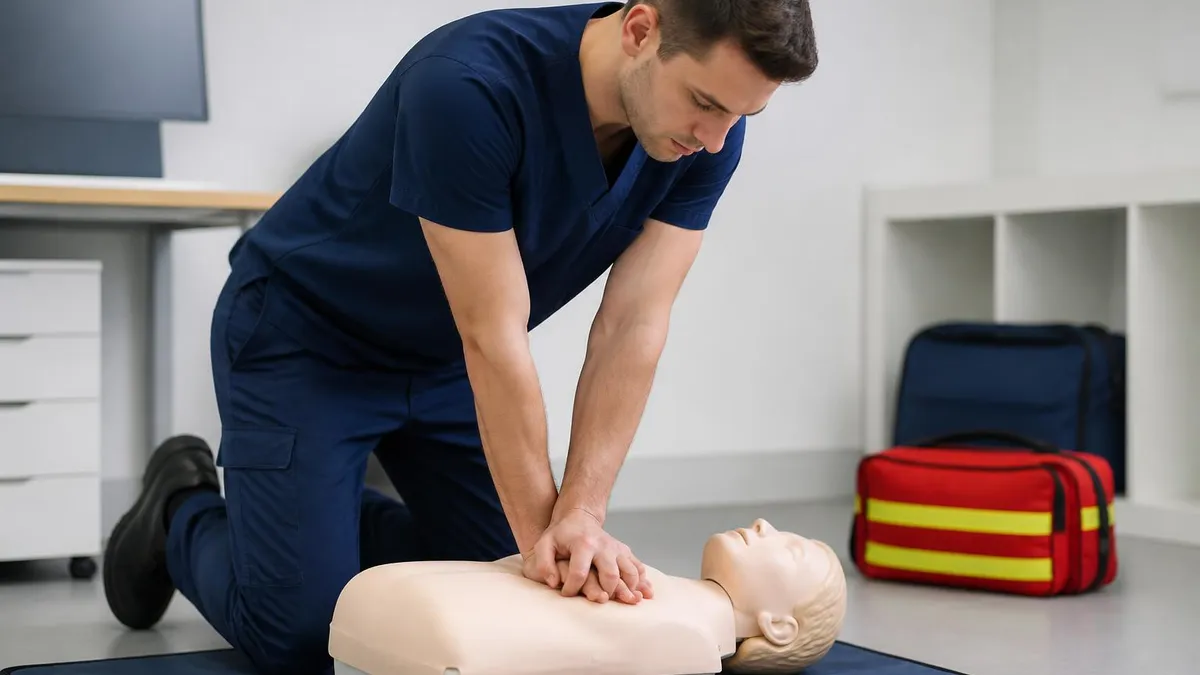
Adult CPR: Complete Step-by-Step Guide to Hands-Only and Standard CPR in 2026
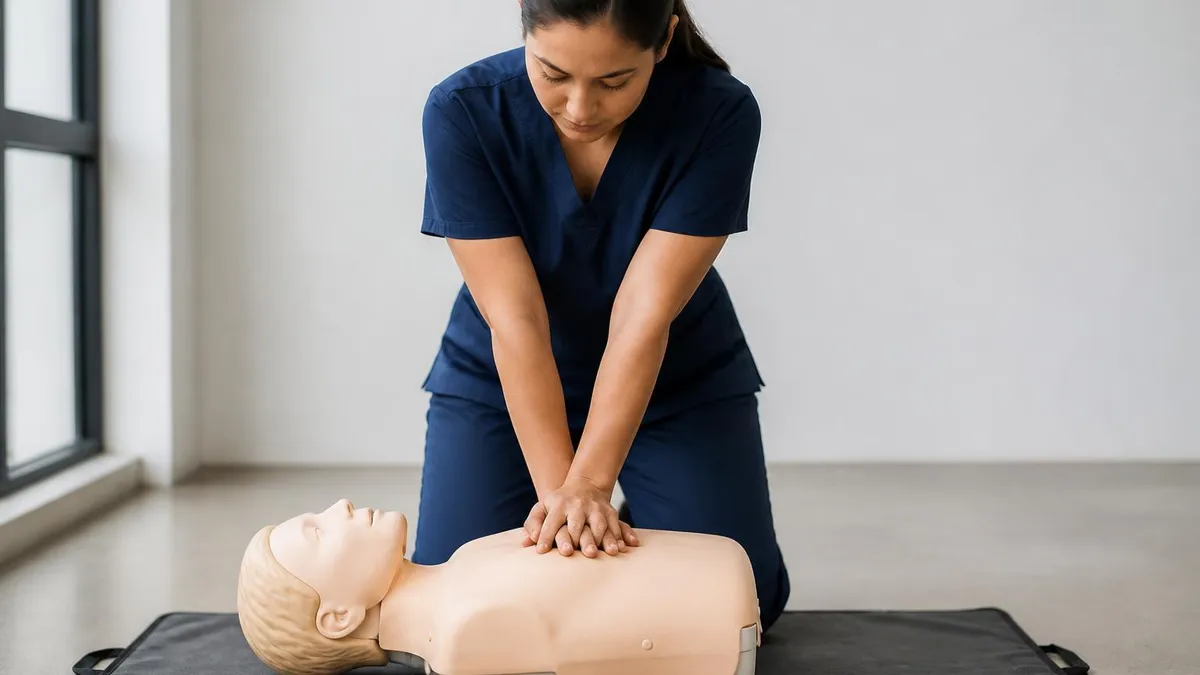
AHA Cardiopulmonary Resuscitation Guidelines 2026: Complete Reference
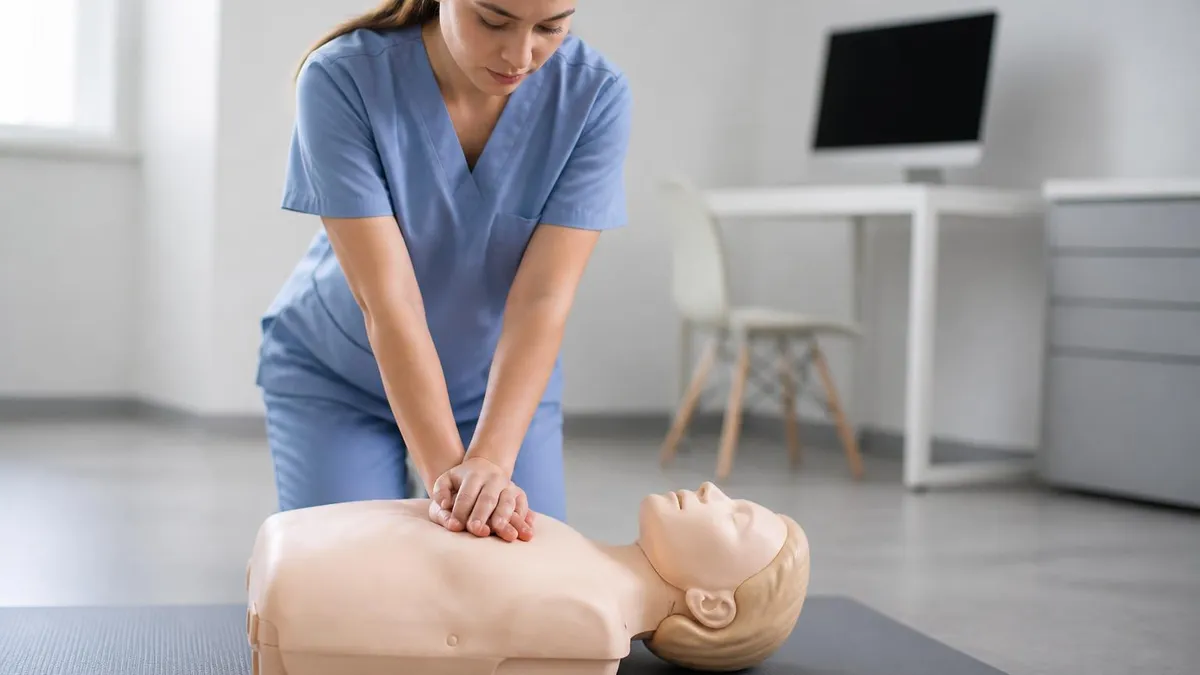
CPR Basics: The Complete 2026 Guide to Saving a Life
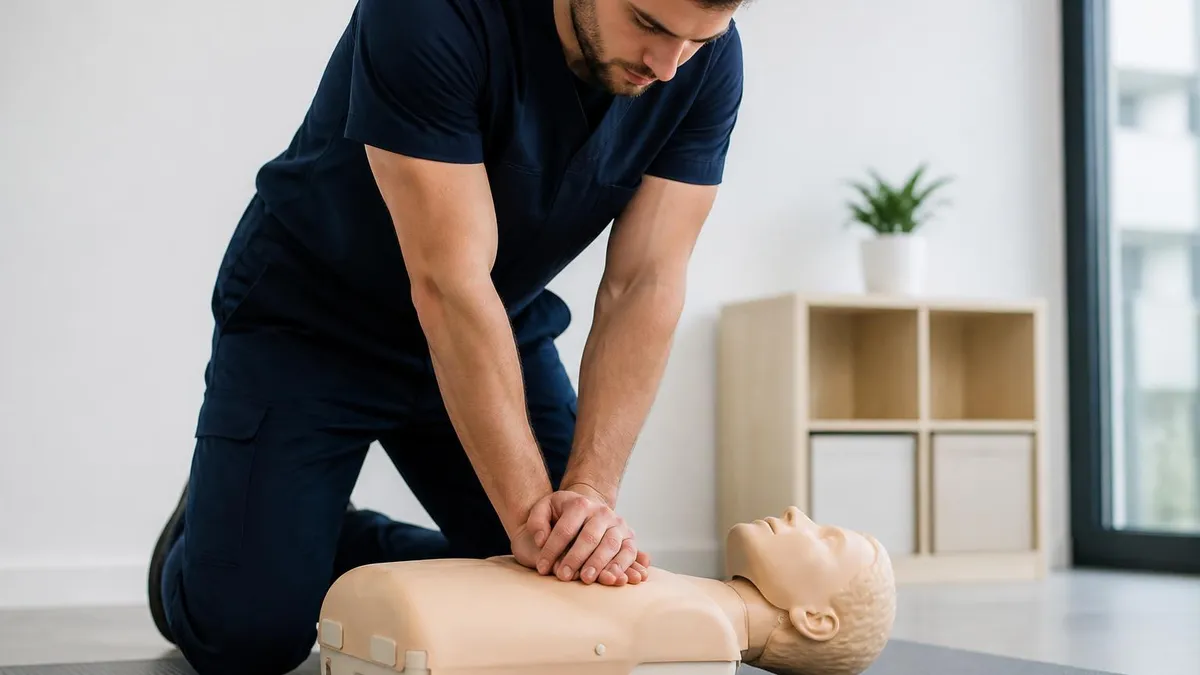
Cardiopulmonary Resuscitation: The Complete Clinical Guide
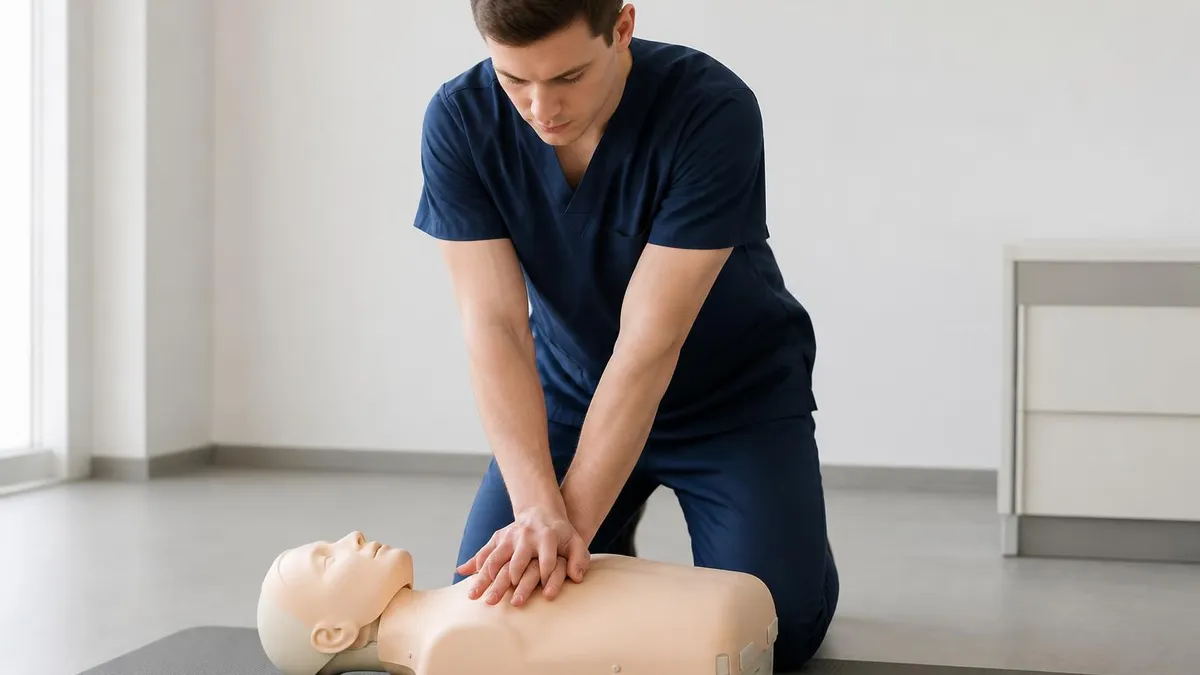
When to Do CPR: A Complete Guide to Recognizing Cardiac Arrest and Acting Fast in 2026
About the Author

Registered Nurse & Healthcare Educator
Johns Hopkins University School of NursingDr. Sarah Mitchell is a board-certified registered nurse with over 15 years of clinical and academic experience. She completed her PhD in Nursing Science at Johns Hopkins University and has taught NCLEX preparation and clinical skills courses for nursing students across the United States. Her research focuses on evidence-based exam preparation strategies for healthcare certification candidates.
Join the Discussion
Connect with other students preparing for this exam. Share tips, ask questions, and get advice from people who have been there.
View discussion (5 replies)