
National CPR and AED Awareness Week: Complete Guide to Saving Lives in 2026 October
National CPR and AED Awareness Week 2026 October guide covering ACLS algorithm, infant CPR, AED use, and life support training to save lives. ❓
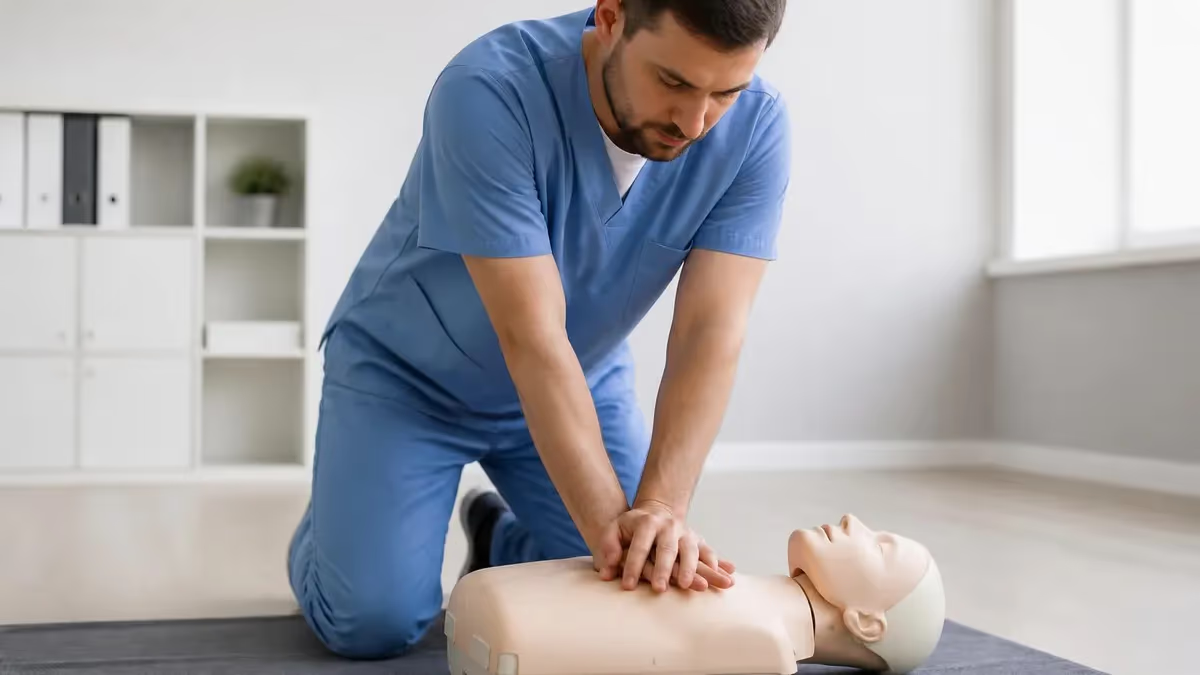
National CPR and AED Awareness Week, observed every June 1-7, is the single most important week of the year for cardiac arrest education in the United States. Established by Congress in 2007, this annual observance highlights a sobering reality: more than 350,000 cardiac arrests occur outside hospitals each year, and survival rates remain stuck near 10 percent. Yet bystander CPR can double or triple the odds of survival, and a publicly accessible AED used within the first three minutes can push survival above 70 percent in witnessed events.
The week is co-sponsored by the American Heart Association, the American Red Cross, the National Safety Council, and the National CPR Foundation, with participation from fire departments, hospitals, schools, and corporate wellness programs nationwide. Each organization runs free hands-only CPR demonstrations, AED locator campaigns, and discounted certification drives. Whether you are a parent, teacher, healthcare worker, gym manager, or simply a concerned neighbor, this week offers a structured opportunity to learn skills that genuinely save lives.
This guide walks you through everything that matters during awareness week and beyond. We cover the simplified ACLS algorithm that paramedics follow, how to recognize sudden cardiac arrest in seconds, the differences between adult, child, and infant CPR, what AED stands for and how to operate one without prior training, and how respiratory rate and pulse checks fit into the chain of survival. You will also find practice quizzes, certification pathways, and answers to the questions people search most often during early June.
The statistics behind awareness week are not abstract. Roughly 70 percent of cardiac arrests happen in homes, meaning the life you save will most likely be a spouse, parent, child, or close friend. Despite this, only about 40 percent of victims receive bystander CPR before professional rescuers arrive. The gap between knowledge and action is what awareness week aims to close. Even five minutes of hands-only CPR education has been shown in randomized studies to dramatically increase the likelihood that a witness will intervene.
Beyond the human cost, the economic case for widespread CPR training is overwhelming. Out-of-hospital cardiac arrest survival varies wildly by region, from under 5 percent in some counties to over 20 percent in places like Seattle that have invested in mass training and dispatch-assisted CPR. Communities that achieve high bystander response rates demonstrate that public education, not just better ambulances, is the single largest modifiable factor. Awareness week is the launchpad for the year-round culture change that makes this possible.
This article is designed for the general public, but it includes enough detail to be useful for nursing students preparing for clinicals, lifeguards refreshing their seasonal skills, and corporate safety officers planning June trainings. We have also embedded free practice questions throughout, so you can test your knowledge as you read. By the end, you will know exactly what to do in the first 60 seconds of a cardiac emergency, how to talk to friends and family about getting trained, and where to find a certification class in your zip code.
If you have ever wondered whether your actions could really matter during a sudden collapse, the answer is yes, and the evidence is overwhelming. Read on, take the quizzes, share the article, and consider committing one hour during the first week of June to learn or refresh a skill that takes minutes to teach and lasts a lifetime.
CPR Awareness by the Numbers

National CPR and AED Awareness Week Timeline
Pre-Week Planning (May)
Day 1 — June 1 Kickoff
Mid-Week Workplace Drives
Family Weekend Events
Year-Round Follow-Up
The Chain of Survival is the foundational concept behind every awareness week message and the organizing framework for the American Heart Association's guidelines. It consists of six links for out-of-hospital cardiac arrest: immediate recognition and activation of emergency response, early high-quality CPR with an emphasis on chest compressions, rapid defibrillation with an AED, advanced resuscitation by EMS, post-cardiac-arrest care in the hospital, and recovery including rehabilitation and psychological support. A weakness in any single link dramatically reduces the chance the patient survives neurologically intact.
Recognition is deceptively difficult. Sudden cardiac arrest looks nothing like the dramatic chest-clutching scenes from television. The victim collapses, becomes unresponsive within seconds, and often takes agonal gasps, irregular snorting breaths that fool bystanders into thinking the person is still breathing normally. Awareness week training teaches one simple test: shake and shout. If there is no response and breathing is absent or gasping, start compressions immediately. Hesitation costs roughly 10 percent of survival odds for every minute of delay.
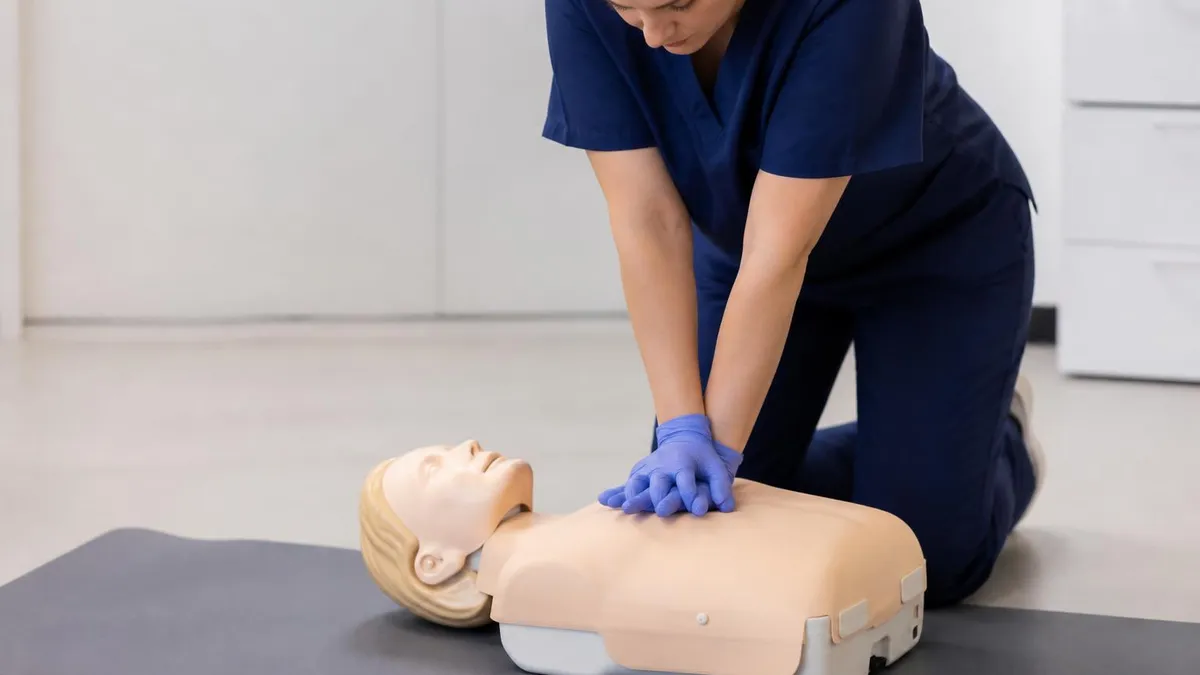
High-quality CPR has measurable standards that have tightened with each guideline revision. Compressions must be delivered at 100 to 120 per minute, to a depth of at least 2 inches but no more than 2.4 inches in adults, with full chest recoil between each push and minimal interruptions. Studies using accelerometer feedback devices show that even trained healthcare providers compress too shallow or too slow under stress, which is why awareness week emphasizes practice on a mannequin rather than passive video watching.
Defibrillation is the only definitive treatment for ventricular fibrillation, the most common rhythm in sudden cardiac arrest. An AED analyzes the heart rhythm and delivers a shock only when one is needed, removing the diagnostic decision from the bystander. Modern AEDs guide users through every step with voice prompts in multiple languages, illustrated pad placement, and even CPR coaching with metronome cues. The device cannot harm a person who does not need a shock, which removes the primary fear that prevents people from grabbing one off the wall.
EMS arrival typically takes 7 to 10 minutes in urban areas and significantly longer in rural ones. This is why bystander action during the first 5 minutes is so consequential. Dispatch-assisted CPR programs, in which 911 operators coach callers through compressions in real time, have increased bystander CPR rates from roughly 30 percent to over 60 percent in cities that adopt them. Awareness week often highlights local 911 centers that have implemented these protocols and encourages other municipalities to follow.
Post-arrest care has advanced dramatically over the past decade. Targeted temperature management, urgent coronary catheterization, and protocolized neurological prognostication in ICUs have improved meaningful recovery rates for patients who achieve return of spontaneous circulation. None of this matters, however, if the patient does not survive the first 10 minutes. The hospital chain only activates because someone in the community knew what to do. That is the message awareness week drives home year after year.
Finally, recovery is the newest link, added in 2020 to acknowledge that survivors face significant cognitive, emotional, and physical challenges. Survivor networks, cardiac rehab programs, and mental health support for both patients and their rescuers are now considered integral to a complete response system. If you ever perform CPR, even unsuccessfully, debriefing and counseling resources exist and should be used. The action you take is heroic regardless of outcome.
CPR Practice Test Questions
Prepare for the CPR Cardiopulmonary Resuscitation Practice exam with our free practice test modules. Each quiz covers key topics to help you pass on your first try.
CPR Basic CPR
CPR Exam Questions covering Basic CPR. Master CPR Test concepts for certification prep.
CPR and First Aid
Free CPR Practice Test featuring and First Aid. Improve your CPR Exam score with mock test prep.
CPR (Cardiopulmonary Resuscitation) Adult ...
CPR Mock Exam on (Cardiopulmonary Resuscitation) Adult CPR and AED Usage. CPR Study Guide questions to pass on your first try.
CPR (Cardiopulmonary Resuscitation) Airway...
CPR Test Prep for (Cardiopulmonary Resuscitation) Airway Obstruction and Choking. Practice CPR Quiz questions and boost your score.
CPR (Cardiopulmonary Resuscitation) Cardio...
CPR Questions and Answers on (Cardiopulmonary Resuscitation) Cardiopulmonary Emergency Recognition. Free CPR practice for exam readiness.
CPR (Cardiopulmonary Resuscitation) Child ...
CPR Mock Test covering (Cardiopulmonary Resuscitation) Child and Infant CPR. Online CPR Test practice with instant feedback.
CPR (Cardiopulmonary Resuscitation) High-P...
Free CPR Quiz on (Cardiopulmonary Resuscitation) High-Performance Team Dynamics. CPR Exam prep questions with detailed explanations.
CPR (Cardiopulmonary Resuscitation) Legal ...
CPR Practice Questions for (Cardiopulmonary Resuscitation) Legal and Ethical Considerations. Build confidence for your CPR certification exam.
CPR for Specific Populations
CPR Test Online for for Specific Populations. Free practice with instant results and feedback.
CPR Airway & Breathing Management
CPR Exam Questions covering Airway & Breathing Management. Master CPR Test concepts for certification prep.
CPR Assessment & Recognition of Cardiac Ar...
Free CPR Practice Test featuring Assessment & Recognition of Cardiac Arrest. Improve your CPR Exam score with mock test prep.
CPR Chest Compressions & Defibrillation
CPR Mock Exam on Chest Compressions & Defibrillation. CPR Study Guide questions to pass on your first try.
CPR Post-Resuscitation Care & Recovery
CPR Test Prep for Post-Resuscitation Care & Recovery. Practice CPR Quiz questions and boost your score.
ACLS Algorithm, PALS Certification, and Life Support Pathways
The acls algorithm is the systematic decision tree advanced providers follow during cardiac arrest. It begins with high-quality BLS, then layers in rhythm analysis every two minutes, IV or IO access, epinephrine every 3 to 5 minutes, and antiarrhythmics like amiodarone for shockable rhythms. The algorithm explicitly prioritizes minimizing interruptions to compressions, since each pause drops coronary perfusion pressure that takes many compressions to rebuild.
Awareness week is the perfect time for nurses, paramedics, and physicians to refresh ACLS skills, even outside the standard two-year recertification cycle. The 2025 update emphasizes capnography for confirming tube placement and gauging CPR quality, with ETCO2 values under 10 mmHg signaling inadequate compressions. Free algorithm posters and digital flashcards are widely distributed during the first week of June by the American Heart Association and the National CPR Foundation.

Hands-Only CPR vs. Conventional CPR: Which Should You Learn?
- +Hands-only CPR is easier to remember under stress and has no breath component
- +Bystanders are more willing to act without mouth-to-mouth contact concerns
- +Equally effective as conventional CPR for the first several minutes of adult arrest
- +Training takes as little as 60 seconds with a video demonstration
- +Reduces fatigue from coordinating breaths during single-rescuer CPR
- +Encourages immediate action rather than hesitation over technique
- +Recommended by the AHA for untrained or refresher-trained lay rescuers
- −Not appropriate for drowning, drug overdose, or pediatric arrest where breaths matter
- −Provides less oxygenation in prolonged resuscitations beyond 6-8 minutes
- −Cannot be used effectively for infant or child cardiac arrest
- −Misses an opportunity to teach airway management skills
- −May give false confidence that breaths are never needed
- −Less effective when arrest cause is primarily respiratory rather than cardiac
- −Does not satisfy full BLS certification requirements for healthcare workers
Pros and Cons at a Glance
| Pros | Cons |
|---|---|
| Hands-only CPR is easier to remember under stress and has no breath component | Not appropriate for drowning, drug overdose, or pediatric arrest where breaths matter |
| Bystanders are more willing to act without mouth-to-mouth contact concerns | Cannot be used effectively for infant or child cardiac arrest |
| Equally effective as conventional CPR for the first several minutes of adult arrest | Misses an opportunity to teach airway management skills |
| Reduces fatigue from coordinating breaths during single-rescuer CPR | May give false confidence that breaths are never needed |
| Encourages immediate action rather than hesitation over technique | Less effective when arrest cause is primarily respiratory rather than cardiac |
| Recommended by the AHA for untrained or refresher-trained lay rescuers | Does not satisfy full BLS certification requirements for healthcare workers |
Your National CPR and AED Awareness Week Action Checklist
- ✓Watch a 90-second hands-only CPR video from the American Heart Association
- ✓Locate the nearest AED at your workplace, gym, and grocery store using PulsePoint
- ✓Register for a free or discounted BLS class during the first week of June
- ✓Practice the 100-120 compressions per minute beat using a familiar song
- ✓Teach a family member the difference between agonal gasping and normal breathing
- ✓Verify your CPR certification expiration date and renew if within 90 days
- ✓Add 911 and your local poison control number to favorites on your phone
- ✓Check that your home or workplace AED has fresh pads and battery
- ✓Share one CPR awareness post on social media using #CPRWeek hashtag
- ✓Practice infant CPR technique if you live with or care for children under one
Push hard, push fast, do not stop
The single most important message of National CPR and AED Awareness Week is that imperfect CPR is vastly better than no CPR. Studies consistently show that even untrained bystanders performing chest compressions at the wrong rate or depth still significantly improve survival. The only fatal mistake is doing nothing. If you witness a collapse, call 911, push hard and fast in the center of the chest, and send someone for an AED.
Infant cpr differs from adult CPR in ways that matter enormously and that awareness week training programs go out of their way to teach. An infant is defined as a child under one year old, and the technique uses two fingers on the breastbone just below the nipple line, compressing about 1.5 inches deep at the same 100 to 120 per minute rate.
For two-rescuer infant CPR, the two-thumb encircling-hands technique is preferred because it generates better blood flow. Rescue breaths are essential because most infant arrests originate from respiratory causes like choking, drowning, or SIDS rather than primary cardiac events.
Child CPR, for ages one through puberty, falls between adult and infant techniques. You use one or two hands depending on the size of the child, compress about 2 inches deep, and maintain the same 30:2 compression-to-ventilation ratio for single rescuers. Two-rescuer pediatric CPR shifts to a 15:2 ratio. Healthcare providers should know that pediatric defibrillation pads or pediatric attenuators on adult AEDs are preferred for children under eight, but if pediatric pads are unavailable, adult pads should be used rather than withholding defibrillation entirely.
Recognition in children is also different. A normal pediatric respiratory rate is much faster than an adult's, ranging from 30 to 60 breaths per minute in newborns down to 12 to 20 in adolescents. Parents and caregivers should learn what normal looks like before an emergency strikes. A child who is unusually quiet, has retractions or nasal flaring, or whose skin is mottled may be in early respiratory distress, which is the most common precursor to pediatric arrest. Early intervention at this stage often prevents the need for CPR altogether.
Choking is the most common reversible cause of pediatric arrest, and awareness week prominently features choking response training. For conscious infants, alternate five back blows and five chest thrusts. For conscious children and adults, the Heimlich maneuver, or abdominal thrusts, is appropriate. If the victim becomes unresponsive, lower them to the ground, begin CPR, and check the mouth for visible objects before each set of breaths. Never perform blind finger sweeps, as these can push obstructions deeper into the airway.
Recovery position is taught alongside infant and child CPR for the breathing but unresponsive victim. The position recovery technique places the victim on their side with the lower arm extended, the upper leg bent at the knee to stabilize the body, and the head tilted slightly to keep the airway open and allow fluids to drain. This prevents aspiration in patients who have a pulse and are breathing but cannot protect their own airway, such as during a postictal state after a seizure or following a drug overdose with respiratory depression.
For families with young children, awareness week is an ideal time to baby-proof the home with cardiac arrest in mind. Keep small objects off the floor, secure cabinets containing medications, install pool fencing, and never leave an infant unattended in a bathtub. Combined with a parental knowledge of infant CPR and the location of the nearest pediatric emergency department, these measures dramatically reduce the risk of preventable death. Many local fire departments offer free car seat inspections and infant CPR classes during the first week of June.
If you work in childcare, schools, or pediatrics, awareness week is also when most states audit emergency preparedness plans. Confirm that your AED has pediatric pads, that staff are current on pediatric BLS, and that emergency action plans for specific situations like anaphylaxis, asthma exacerbation, and seizure are posted and rehearsed. The combination of skills training and environmental preparation is what converts awareness into measurable improvements in pediatric survival outcomes.

If you are searching for life-saving training, look specifically for the American Heart Association, American Red Cross, or National CPR Foundation. Bookmark legitimate certification sites now so you do not waste time during a future emergency search.
What does aed stand for? AED stands for Automated External Defibrillator, a portable device that automatically analyzes a victim's heart rhythm and delivers an electrical shock to restore a normal rhythm when ventricular fibrillation or pulseless ventricular tachycardia is detected. Awareness week places enormous emphasis on AEDs because they are the only intervention that can definitively reverse the most common cause of sudden cardiac arrest in adults. Every minute that defibrillation is delayed reduces survival by approximately 10 percent, making rapid access the single most consequential community investment.
Operating an AED requires no prior training, which is the most important fact awareness week communicates. The device powers on with a single button, then provides clear voice instructions: expose the chest, apply pads as shown in the illustrations, ensure no one is touching the victim during analysis, and press the shock button if prompted. Modern AEDs even coach the rescuer through compressions between rhythm analyses, using built-in metronomes and depth feedback. The device will not deliver a shock unless it detects a shockable rhythm, eliminating the fear of accidentally harming someone.
Public access defibrillation programs have transformed survival in places with high foot traffic. Airports, casinos, and gyms with deployed AEDs and trained staff have documented survival rates above 70 percent for witnessed arrests, compared to the national average of about 10 percent. The success of these programs has driven legislation requiring AEDs in schools, sports venues, and large office buildings in many states. Awareness week often features state-by-state report cards on AED accessibility and proposed legislation to expand coverage.
Maintenance is the unglamorous backbone of any AED program. Pads expire every two to five years depending on the brand, batteries typically last three to five years, and the device runs self-tests but should be visually inspected monthly. Awareness week is when many organizations schedule their annual AED audit, replacing expired components and verifying that the device's location is clearly marked and accessible 24/7. A nonfunctional AED is worse than no AED at all, because it creates false confidence in the response plan.
Integration with 911 dispatch is the newest frontier in AED deployment. Apps like PulsePoint connect AED registries with dispatch centers so that when a cardiac arrest is reported, nearby trained citizens are notified and given GPS directions to the closest device. These crowdsourced response networks have shown promising results in pilot cities, cutting time-to-defibrillation by several minutes. Registering your workplace or community AED in PulsePoint or your state registry is a concrete awareness week action that has measurable downstream benefits.
Special populations require modified AED use. For pregnant women, follow standard adult protocols and do not delay defibrillation, since fetal survival depends on maternal survival. For patients with implanted pacemakers or defibrillators, place pads at least one inch away from the visible scar. For patients with transdermal medication patches, remove the patch and wipe the area before applying pads. For wet patients, dry the chest quickly before pad application, but do not waste time moving the patient out of standing water unless absolutely necessary.
Finally, the legal landscape strongly protects AED users. All 50 states have Good Samaritan laws that shield bystanders who use an AED in good faith from civil liability, even if the outcome is unfavorable. Some states have additional protections for businesses that deploy AEDs. The barrier to using an AED is psychological, not legal, and awareness week exists in large part to dismantle that psychological barrier. Touch the device, push the button, and trust the technology.
Practical preparation for awareness week starts with honest self-assessment. Ask yourself when you last performed CPR on a mannequin, not just watched a video. Manual skills decay quickly, with measurable degradation in compression quality within three to six months of training. This is why the American Heart Association recommends frequent short practice sessions over infrequent long courses. Many fire stations now offer 15-minute drop-in skills checks during the first week of June, allowing professionals and lay rescuers alike to refresh muscle memory without committing to a full recertification course.
If you have never trained, start with the free hands-only CPR module available on the American Heart Association website. It takes under two minutes and dramatically increases the likelihood that you will act in an emergency. From there, register for a Heartsaver or BLS course in your zip code. Heartsaver is appropriate for non-medical audiences and includes adult, child, and infant CPR plus AED use. BLS Provider is the standard for healthcare workers and includes team-based resuscitation, advanced airway integration, and pediatric scenarios with stricter performance benchmarks.
Workplace planning during awareness week pays year-round dividends. OSHA does not mandate CPR training for most employers, but it is required for specific industries and is strongly recommended in any workplace with public access or physically demanding work. Build a response plan that designates trained responders for each shift, maps AED locations, posts emergency contact numbers, and runs quarterly drills. The plan should explicitly address who calls 911, who retrieves the AED, who performs compressions, and who manages bystanders.
For families, awareness week is an opportunity to discuss not just CPR but the entire spectrum of medical emergency preparedness. Identify which family members know CPR, plan a family CPR class together, ensure car seats and bike helmets are properly fitted, post emergency contact information visibly in the home, and discuss what to do if a parent collapses. Children as young as six can learn to call 911, unlock a phone, and provide a home address. These conversations are uncomfortable but transformational, and awareness week provides natural cover for initiating them.
Community organizing amplifies the impact of any individual training. If you belong to a faith community, sports league, neighborhood association, or volunteer group, propose a CPR training event during the first week of June. Most fire departments and Red Cross chapters will provide instructors at low or no cost for group bookings. Combine the training with a social event to maximize attendance, and offer incentives like free meals or small giveaways to non-medical participants. These events build a layer of community resilience that no single individual can achieve alone.
Documentation matters more than people realize. After completing any CPR course, save your certification card digitally and in print, note the expiration date in your calendar with a 90-day renewal reminder, and verify that your employer's HR system has an updated copy. For healthcare professionals, lapsed certifications can prevent you from working shifts and may result in loss of clinical privileges. Awareness week is the natural prompt to audit your professional credentialing and plan recertifications well before they expire.
Finally, give yourself permission to participate even if you feel nervous. Most adults overestimate the embarrassment of practicing CPR in public and underestimate the satisfaction of mastering a tangible life-saving skill. Instructors are accustomed to working with nervous beginners, and group classes create a supportive environment where mistakes become learning opportunities. The goal is not perfection during practice but competence under pressure. Awareness week is the one time per year when the cultural permission to learn is at its absolute highest. Take advantage of it.
CPR Questions and Answers
CPR Card Lookup: How to Verify, Replace, and Access Your CPR Certification in 2026
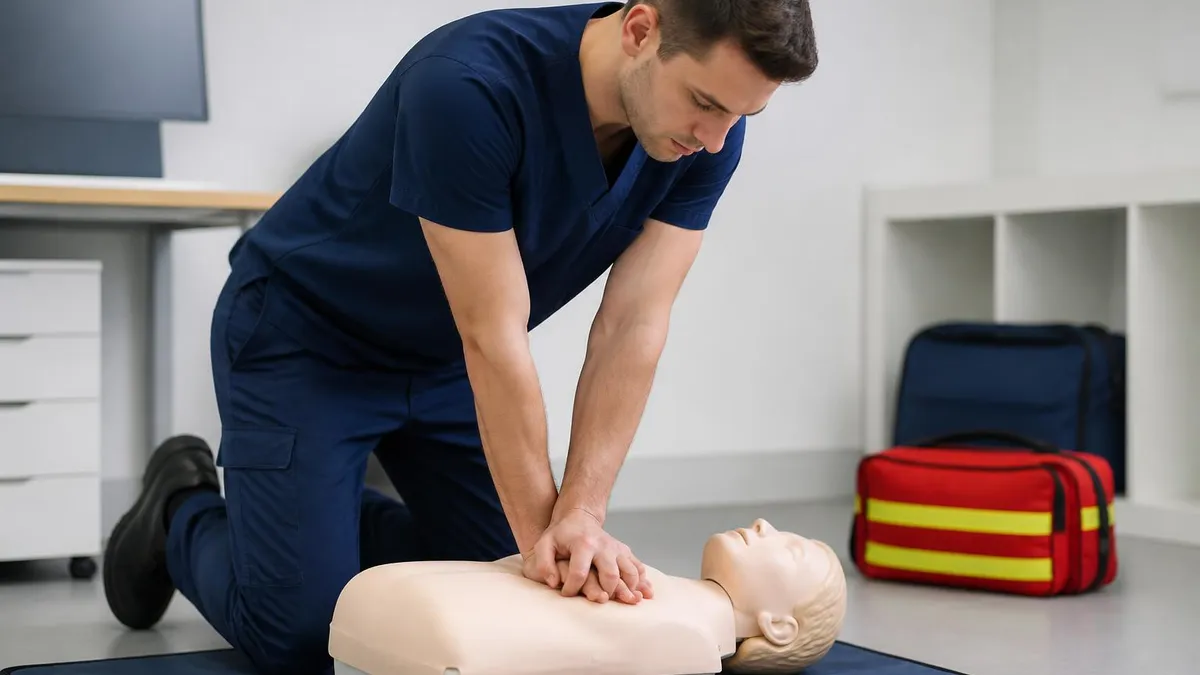
Adult CPR: Complete Step-by-Step Guide to Hands-Only and Standard CPR in 2026

CPR - Cardiopulmonary Resuscitation: Complete Study Guide 2026
Inappropriate CPR Songs: What Not to Play, Why It Matters, and Better Beat-Per-Minute Alternatives
AHA CPR Recertification: How to Recertify CPR Online with the American Heart Association in 2026
About the Author

Registered Nurse & Healthcare Educator
Johns Hopkins University School of NursingDr. Sarah Mitchell is a board-certified registered nurse with over 15 years of clinical and academic experience. She completed her PhD in Nursing Science at Johns Hopkins University and has taught NCLEX preparation and clinical skills courses for nursing students across the United States. Her research focuses on evidence-based exam preparation strategies for healthcare certification candidates.
Join the Discussion
Connect with other students preparing for this exam. Share tips, ask questions, and get advice from people who have been there.
View discussion (5 replies)