
Dr Safar CPR: The Complete History of Cardiopulmonary Resuscitation from Ancient Times to 2026 October
📝 Discover Dr Safar CPR history, the ACLS algorithm evolution, AED development, and how modern resuscitation saved millions of lives since 1956.
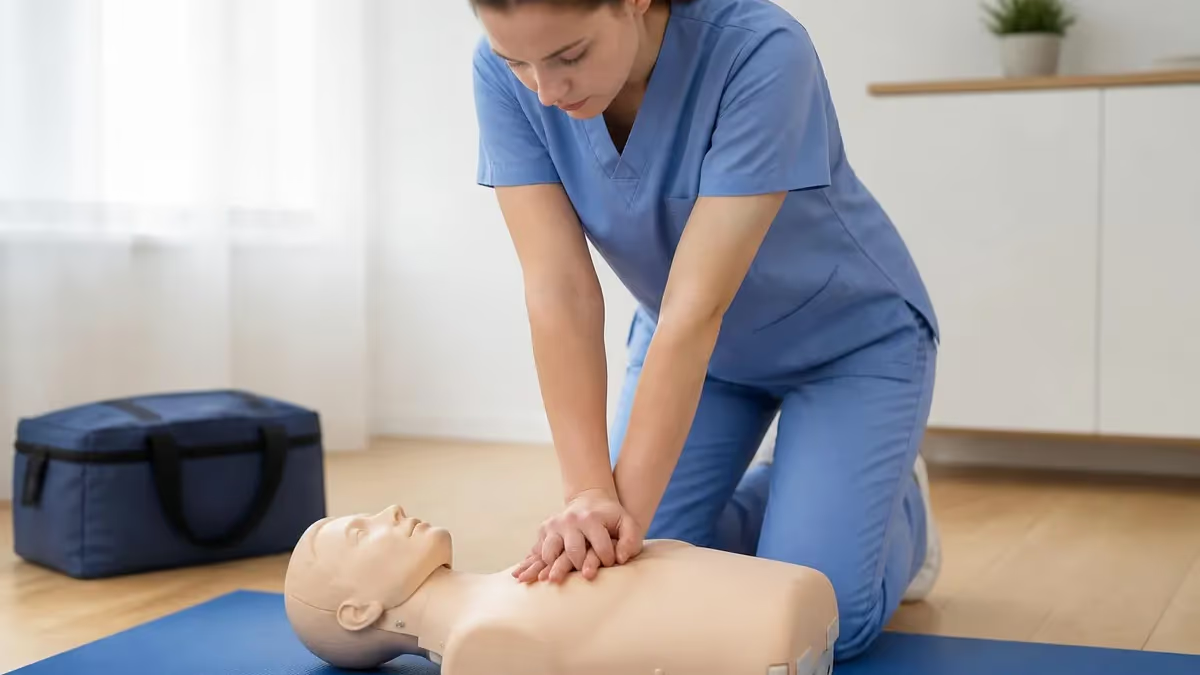
The story of dr safar cpr begins in a Baltimore hospital in the mid-1950s, when Austrian-American anesthesiologist Peter Safar systematically proved that mouth-to-mouth ventilation combined with chest compressions could restart a stopped heart. Before his pioneering work, resuscitation was a chaotic mix of folk remedies, manual back-pressure techniques, and largely ineffective rescue maneuvers. Safar's research, alongside contributions from James Elam and William Kouwenhoven, gave the modern world a reproducible, teachable method that has since saved millions of lives across hospitals, ambulances, schools, gyms, and ordinary kitchens worldwide.
Understanding the history of CPR matters because every component of today's cpr compression rate guidance, the acls algorithm, and the AED protocols traces back to specific experiments, tragedies, and breakthroughs. The 30:2 ratio you learn in a Red Cross class did not appear out of thin air. It evolved through decades of dog studies, drowning victim case reports, anesthesia accidents, and battlefield medicine. The respiratory rate targets, the compression depth standards, and even the position recovery technique used today all have traceable origins in twentieth-century medical research.
This guide walks through the complete timeline, from ancient Egyptian bellows resuscitation attempts to the latest 2025 American Heart Association guideline updates. We cover the personalities behind the science, including Peter Safar, James Elam, Leonard Cobb, and Frank Pantridge. We trace how infant cpr techniques diverged from adult protocols, how PALS certification emerged as a separate discipline, and why the national cpr foundation and similar organizations now train millions annually. By the end, you will understand why CPR looks the way it does in 2026.
The phrase "cardiopulmonary resuscitation" itself was coined by Safar's circle in the late 1950s. Cardio refers to the heart, pulmonary to the lungs, and resuscitation to the act of reviving. Combining chest compressions with rescue breathing was a radical concept at the time. Doctors had assumed for centuries that once a heart stopped beating, death was permanent. Safar demonstrated otherwise using paralyzed but conscious volunteers, proving that an external rescuer could maintain oxygenation and circulation long enough for advanced care to arrive on scene.
What makes the history particularly compelling is how quickly bystander CPR moved from research laboratory to mainstream public health. Within a decade of Safar's foundational papers, fire departments in Seattle were training citizens on residential blocks. By the 1970s, life support training had become a standard requirement for healthcare workers, lifeguards, and many teachers. Today, hands-only CPR campaigns reach hundreds of millions through television, social media, and quick smartphone tutorials, and AED placement in airports and stadiums is mandated in most developed nations.
Modern certification pathways, including what is a bls certification, ACLS, and PALS, were built on the educational frameworks Safar helped design. He believed CPR should be teachable to laypeople in under an hour, a philosophy that drove the simplification of guidelines over the decades. The shift from complex multi-step protocols to the streamlined compression-first approach we use today reflects his vision of resuscitation as a universal civic skill rather than an esoteric medical specialty.
Throughout this article, we present the science, the people, the controversies, and the practical takeaways. Whether you are studying for a certification exam, teaching a class, writing a history paper, or simply curious about how a single technique reshaped emergency medicine, this comprehensive guide gives you the full picture of CPR's remarkable evolution from a fringe idea to a global standard of care.
CPR History by the Numbers

The Complete CPR Timeline
Ancient & Biblical Era
1740s Drowning Societies
1950s Safar & Elam Era
1970s Public Training
2000s AED Revolution
2020s Modern Standards
Peter Safar arrived in the United States in 1949 as a refugee from Nazi-occupied Austria, completing his anesthesiology residency at Yale and the University of Pennsylvania. By 1954 he had become chief of anesthesiology at Baltimore City Hospital, where he encountered the same problem facing every hospital of that era: patients whose breathing or circulation stopped during surgery or recovery had almost no chance of survival. Existing techniques like the Holger Nielsen back-pressure arm-lift method produced only minimal air exchange and did nothing for cardiac arrest.
Safar's pivotal experiment used 31 paralyzed but conscious adult volunteers, including physicians and medical students, who agreed to have their breathing chemically suppressed so he could test ventilation techniques. He measured tidal volumes during mouth-to-mouth and confirmed that exhaled rescuer breath, despite containing only 16 percent oxygen, was sufficient to maintain adequate blood oxygenation. The studies, published in JAMA and Anesthesiology in 1957 and 1958, established mouth-to-mouth as superior to every previous method by a wide margin.
Working in parallel, William Kouwenhoven and his Johns Hopkins team published their landmark 1960 paper demonstrating closed-chest cardiac massage. The combination of Safar's airway and breathing work with Kouwenhoven's circulation technique produced what we now call the ABC sequence: Airway, Breathing, Circulation. The acls algorithm, the basic life support flowchart, and every modern CPR class still organizes around this fundamental sequence, though hands-only CPR for laypeople has reversed the priority to compressions first.
Safar did not stop at developing the technique. He created the first manikin for CPR training, working with Norwegian toymaker Asmund Laerdal. The result, Resusci Anne, debuted in 1960 and became the prototype for every training manikin since. Her face was modeled after the death mask of an unidentified woman pulled from the Seine River in Paris in the 1880s, giving CPR practice an oddly poignant historical thread. By 2026, more than 500 million people have practiced on a Resusci Anne descendant.
Beyond the technical innovations, Safar helped invent modern emergency medical services. He designed the prototype ambulance interior, lobbied for paramedic training programs, and founded one of the world's first intensive care units in Baltimore in 1958. His belief that critical care should extend from the street through the emergency department to the ICU shaped the entire continuum of acute medicine that we take for granted today, including standardized respiratory rate monitoring and structured handoff protocols.
Tragedy gave Safar's work additional urgency. In 1966 his 11-year-old daughter Elizabeth died from an asthma attack, partly because emergency response was inadequate in her suburban neighborhood. Rather than retreat from his field, Safar redoubled efforts to bring resuscitation training to the public. He spent the rest of his career advocating for school-based CPR education, faster ambulance response times, and what he called "reanimatology," the holistic study of preventing death from reversible causes.
Safar was nominated for the Nobel Prize three times, though he never won. He passed away in 2003 at age 79, having lived to see his techniques become global standard. The Safar Center for Resuscitation Research at the University of Pittsburgh continues his work today, exploring brain protection during cardiac arrest, therapeutic hypothermia, and the next generation of life support technology that may further improve survival from sudden death.

CPR Practice Test Questions
Prepare for the CPR Cardiopulmonary Resuscitation Practice exam with our free practice test modules. Each quiz covers key topics to help you pass on your first try.
CPR Basic CPR
CPR Exam Questions covering Basic CPR. Master CPR Test concepts for certification prep.
CPR and First Aid
Free CPR Practice Test featuring and First Aid. Improve your CPR Exam score with mock test prep.
CPR (Cardiopulmonary Resuscitation) Adult ...
CPR Mock Exam on (Cardiopulmonary Resuscitation) Adult CPR and AED Usage. CPR Study Guide questions to pass on your first try.
CPR (Cardiopulmonary Resuscitation) Airway...
CPR Test Prep for (Cardiopulmonary Resuscitation) Airway Obstruction and Choking. Practice CPR Quiz questions and boost your score.
CPR (Cardiopulmonary Resuscitation) Cardio...
CPR Questions and Answers on (Cardiopulmonary Resuscitation) Cardiopulmonary Emergency Recognition. Free CPR practice for exam readiness.
CPR (Cardiopulmonary Resuscitation) Child ...
CPR Mock Test covering (Cardiopulmonary Resuscitation) Child and Infant CPR. Online CPR Test practice with instant feedback.
CPR (Cardiopulmonary Resuscitation) High-P...
Free CPR Quiz on (Cardiopulmonary Resuscitation) High-Performance Team Dynamics. CPR Exam prep questions with detailed explanations.
CPR (Cardiopulmonary Resuscitation) Legal ...
CPR Practice Questions for (Cardiopulmonary Resuscitation) Legal and Ethical Considerations. Build confidence for your CPR certification exam.
CPR for Specific Populations
CPR Test Online for for Specific Populations. Free practice with instant results and feedback.
CPR Airway & Breathing Management
CPR Exam Questions covering Airway & Breathing Management. Master CPR Test concepts for certification prep.
CPR Assessment & Recognition of Cardiac Ar...
Free CPR Practice Test featuring Assessment & Recognition of Cardiac Arrest. Improve your CPR Exam score with mock test prep.
CPR Chest Compressions & Defibrillation
CPR Mock Exam on Chest Compressions & Defibrillation. CPR Study Guide questions to pass on your first try.
CPR Post-Resuscitation Care & Recovery
CPR Test Prep for Post-Resuscitation Care & Recovery. Practice CPR Quiz questions and boost your score.
Respiratory Rate, Compressions, and the Science Safar Built
The modern respiratory rate guidance of 10 to 12 breaths per minute during CPR with an advanced airway traces directly to Safar's tidal volume experiments. He demonstrated that adult lungs require roughly 500 to 600 milliliters of air per breath to oxygenate effectively, and that pausing compressions for ventilation could be minimized without harming outcomes when delivered at this rate.
Earlier protocols recommended much faster breathing, sometimes 20 or 30 per minute, which we now know causes hyperventilation, raises intrathoracic pressure, and reduces venous return to the heart. The 2020 AHA guideline update reinforced slower ventilation rates based on decades of outcome data, including studies showing that excessive breathing during cardiac arrest measurably reduces survival to hospital discharge across all age groups.
How Modern CPR Improved Over Historical Methods
- +Standardized 30:2 ratio replaced inconsistent improvised techniques used before 1960
- +Hands-only CPR removed the mouth-to-mouth barrier that deterred bystanders
- +AED integration restores rhythm in shockable arrests that compressions alone cannot fix
- +Telephone-guided dispatch CPR triples response from untrained bystanders
- +Manikin-based training under Safar's influence reaches millions annually worldwide
- +Compression-depth feedback devices reduce rescuer fatigue and improve consistency
- +Public access defibrillation places life-saving tools in airports, schools, and gyms
- −Even modern CPR achieves only 10 to 12 percent out-of-hospital survival nationally
- −Rib fractures remain common at 30 to 80 percent of resuscitations in older adults
- −Bystander participation rates still hover around 40 percent in most US communities
- −Training certification expires every two years, leaving many skills lapsed
- −Neurological outcomes after prolonged arrest remain poor without rapid response
- −AED placement inequity leaves rural and low-income areas underserved
- −Pediatric and infant cpr protocols are less practiced and more complex to remember
Pros and Cons at a Glance
| Pros | Cons |
|---|---|
| Hands-only CPR removed the mouth-to-mouth barrier that deterred bystanders | Training certification expires every two years, leaving many skills lapsed |
| AED integration restores rhythm in shockable arrests that compressions alone cannot fix | Neurological outcomes after prolonged arrest remain poor without rapid response |
| Telephone-guided dispatch CPR triples response from untrained bystanders | AED placement inequity leaves rural and low-income areas underserved |
| Manikin-based training under Safar's influence reaches millions annually worldwide | Pediatric and infant cpr protocols are less practiced and more complex to remember |

Historical CPR Milestones Every Student Should Know
- ✓1740: Paris Academy of Sciences first recommends mouth-to-mouth for drowning victims
- ✓1767: Amsterdam's Society for Recovery of Drowned Persons founded as first organized resuscitation group
- ✓1891: Friedrich Maass performs first documented external chest compressions on a human in Germany
- ✓1954: James Elam proves expired air ventilation maintains oxygenation in paralyzed patients
- ✓1956: Peter Safar begins systematic mouth-to-mouth research at Baltimore City Hospital
- ✓1960: William Kouwenhoven publishes closed-chest cardiac massage paper in JAMA
- ✓1960: Resusci Anne manikin debuts through Safar and Laerdal collaboration
- ✓1966: First American Heart Association CPR guidelines published for healthcare professionals
- ✓1973: AHA launches public citizen CPR training programs in cities nationwide
- ✓2008: Hands-only CPR formally endorsed for untrained bystanders in adult arrests
Bystander CPR Can Triple Survival
Decades of registry data show that immediate bystander CPR doubles or triples the chance of survival from out-of-hospital cardiac arrest. Peter Safar designed his protocols specifically so laypeople could learn them in under an hour, and modern hands-only CPR makes the intervention even simpler. If you remember nothing else from CPR history, remember this: pushing hard and fast on the center of the chest right now is always better than waiting for professionals to arrive.
While Safar built the airway and breathing foundation, the defibrillation half of modern resuscitation has its own rich history. Many students preparing for certification ask what does aed stand for. The answer is automated external defibrillator, a device that analyzes heart rhythm and delivers a shock to restore organized electrical activity in shockable rhythms like ventricular fibrillation. The story of how this technology moved from hospital basements to airport walls is itself a remarkable chapter in resuscitation history.
The first successful human defibrillation occurred in 1947 when surgeon Claude Beck shocked a 14-year-old patient's heart back into rhythm during surgery using internal paddles. Paul Zoll performed the first successful external defibrillation in 1956 using a massive AC-powered device that required wall current. Bernard Lown introduced the safer DC defibrillator in 1962, dramatically reducing burns and complications. These devices were still enormous, hospital-based, and operated only by physicians or specially trained technicians.
Frank Pantridge, a Belfast cardiologist, changed everything in 1965 by designing the first portable defibrillator small enough for an ambulance. His mobile coronary care unit demonstrated that bringing defibrillation to the patient saved lives that hospital-based devices could not reach in time. The Pantridge plan spread across Europe and North America through the 1970s, establishing the pre-hospital paramedic model that remains the global standard for emergency cardiac response today.
The automated external defibrillator emerged in the late 1970s when Diack and colleagues developed a device that could analyze rhythm and advise shock delivery without expert interpretation. By the 1990s, AEDs had shrunk to briefcase size with voice prompts guiding any user through pad placement and shock delivery. The 2000 US Cardiac Arrest Survival Act funded public access defibrillation programs that placed devices in federal buildings, beginning a deployment wave that now includes more than 3 million AEDs nationwide.
Survival data from the Public Access Defibrillation Trial and subsequent registry studies confirmed that bystander AED use within three to five minutes of collapse can produce survival rates of 50 to 70 percent, compared to single-digit survival when defibrillation is delayed beyond ten minutes. Casino surveillance footage famously documented near-perfect survival when guests collapsed within sight of an AED-trained security guard, providing some of the most compelling evidence in resuscitation literature.
The integration of AED use into BLS, ACLS, and PALS certification curricula reflects this evidence base. Every modern certification course teaches the device's role within the broader chain of survival framework that includes early recognition, early CPR, early defibrillation, and early advanced care. Understanding how the AED fits historically alongside Safar's airway and breathing work helps students appreciate why each link in the chain matters and why removing any one of them sharply reduces survival regardless of how well the others are performed.
The latest generation of AEDs introduced in 2024 and 2025 includes real-time CPR feedback, automatic data transmission to receiving hospitals, and biphasic waveforms optimized for individual patient impedance. Some models guide rescuers through pediatric resuscitation differently than adults, automatically adjusting energy levels and prompting age-appropriate techniques. The technology that began with Beck's bulky paddles in 1947 has become a friendly, talking, briefcase-sized companion that any willing bystander can operate successfully.
Historical and modern guidelines agree: if you witness collapse, begin chest compressions immediately. Send a second person to retrieve the nearest AED, but never pause compressions to search yourself. Every minute without CPR reduces survival by 7 to 10 percent. Pantridge's portable defibrillator and Safar's compression technique work together, not as alternatives. The fastest possible combined response is what saves lives.
The modern CPR ecosystem stretches far beyond any single inventor's vision. Organizations like the national cpr foundation, American Heart Association, American Red Cross, and dozens of independent training providers now certify millions of healthcare workers, teachers, lifeguards, and ordinary citizens every year. Each organization traces its curriculum back through ILCOR, the International Liaison Committee on Resuscitation, which harmonizes evidence-based guidelines across continents every five years using the GRADE methodology Safar himself helped establish during his career.
Pediatric resuscitation became its own discipline in the 1980s as researchers recognized that children and infants have different physiology, different arrest etiologies, and different optimal compression-to-ventilation ratios. The PALS certification curriculum, developed jointly by the AHA and American Academy of Pediatrics, addresses these differences systematically. Infant cpr uses two-finger or two-thumb encircling techniques with compression depth of about 1.5 inches, while child CPR uses one or two hands depending on rescuer size and victim age.
The chain of survival concept, formally articulated in the 1991 AHA position paper, organized everything Safar and his successors had developed into a teachable framework. The original four links were early access, early CPR, early defibrillation, and early advanced care. The 2020 guidelines added recovery and rehabilitation as a fifth link, recognizing that surviving the acute event is only half the battle and that chest compression fraction quality during the arrest determines neurological outcomes weeks and months later.
Recovery position is another technique with deep historical roots that became formalized in modern protocols. The technique, sometimes called HAINES or lateral safety position, places an unconscious but breathing patient on their side to maintain airway patency and prevent aspiration. It evolved from British military first aid manuals of the early twentieth century and was integrated into civilian first aid courses by the 1960s. The 2020 guidelines refined exact arm and leg positioning based on biomechanical studies of airway opening.
Telecommunicator CPR, where emergency dispatchers coach untrained 911 callers through chest compressions, represents one of the most important recent innovations. Studies from King County, Washington, the original home of Medic One, show that dispatcher CPR can double bystander CPR rates and significantly improve survival. The 2025 AHA guidelines made dispatcher-assisted CPR a Class I recommendation, meaning every 911 center should provide this service. Many jurisdictions now require certification for dispatchers handling cardiac arrest calls.
Technology continues to reshape what Safar started. Smartphone applications like PulsePoint alert nearby CPR-trained users to cardiac arrests in public locations, drones deliver AEDs to remote scenes faster than ambulances can arrive, and AI-powered ECG analysis improves shock advisory accuracy. Wearable devices now detect potential cardiac events before collapse, alerting emergency contacts and even initiating EMS response. Each layer extends the chain of survival earlier in the timeline of an arrest event.
Looking forward, mechanical CPR devices, extracorporeal life support, and targeted temperature management are pushing the frontier of what is possible after cardiac arrest. The Safar Center continues to research brain protection, drug therapies, and post-resuscitation care that may eventually allow successful resuscitation hours rather than minutes after collapse. The history of CPR is not finished. Every guideline cycle, every clinical trial, and every saved life adds another chapter to the story Peter Safar began writing in his Baltimore laboratory seventy years ago.
For students, educators, and history enthusiasts who want to apply this knowledge practically, several actionable steps will deepen your understanding of CPR's evolution. Start by reading Peter Safar's autobiography, Careers in Anesthesiology, which provides firsthand accounts of his experiments, his collaboration with Asmund Laerdal on Resusci Anne, and his lifelong advocacy for emergency medical systems. The book is freely available through the Wood Library-Museum of Anesthesiology and offers context that no textbook summary can match.
Visit a CPR training center and try a manikin from each generation if possible. Many EMS museums and university medical schools preserve early Resusci Anne models alongside modern feedback-equipped manikins. The tactile difference between 1960s simulation technology and 2026 devices with real-time accelerometers makes the evolution tangible. The normal average respiratory rate in adults data your training app displays today was unimaginable to the medical students who first practiced on Anne in Norway.
If you are studying for certification, use historical context as a memory aid. Remembering that compression rate increased from 60 to 100-120 across the decades helps reinforce the current target. Knowing that the 30:2 ratio replaced 15:2 after research on chest compression fraction makes the modern standard easier to recall. Understanding why hands-only CPR exists, namely to overcome the mouth-to-mouth hesitation barrier identified in bystander studies, helps you teach the technique more persuasively to nervous students.
Watch original footage from the 1960s AHA training films, many of which are archived on YouTube and educational platforms. The slow-motion explanation of head-tilt chin-lift, the formal demonstration of jaw thrust, and the now-quaint clothing of the instructors give a sense of how rapidly the field professionalized. Compare these to modern hands-only CPR public service announcements featuring the Bee Gees' Stayin' Alive as a compression-rate metronome, which has reached hundreds of millions globally.
For instructors, weaving history into your courses dramatically improves retention. Students who understand that Frank Pantridge fought hospital administrators to fund the first portable defibrillator remember why early defibrillation matters more than students who only memorize current guidelines. Similarly, sharing Safar's personal tragedy of losing his daughter Elizabeth to inadequate emergency response gives the technical material emotional weight that supports long-term recall and motivates real-world action.
Consider connecting with the Resuscitation Council in your country or region to access historical archives, attend conferences, and participate in ongoing research. Many councils maintain oral history projects with retired paramedics, nurses, and physicians who witnessed CPR's transformation firsthand. These stories preserve institutional knowledge that formal textbooks omit and provide rich material for educators, journalists, and researchers exploring the social history of emergency medicine across the late twentieth and early twenty-first centuries.
Finally, the best way to honor CPR history is to maintain your own certification and encourage everyone around you to learn. Safar's vision was universal civic competence in basic resuscitation. Every additional trained person extends his legacy and increases the survival probability of cardiac arrest victims in your community. Whether you pursue BLS, ACLS, PALS, or simply attend a hands-only CPR refresher at a community center, you become part of an unbroken chain stretching back to the Amsterdam drowning societies of the 1700s.
CPR Questions and Answers
CPR vs BLS: Complete Comparison Guide for 2026 — Which Certification Do You Need?
CPR Card Lookup: How to Verify, Replace, and Access Your CPR Certification in 2026
AHA CPR: What It Is, Which Course You Need, and How to Get Certified
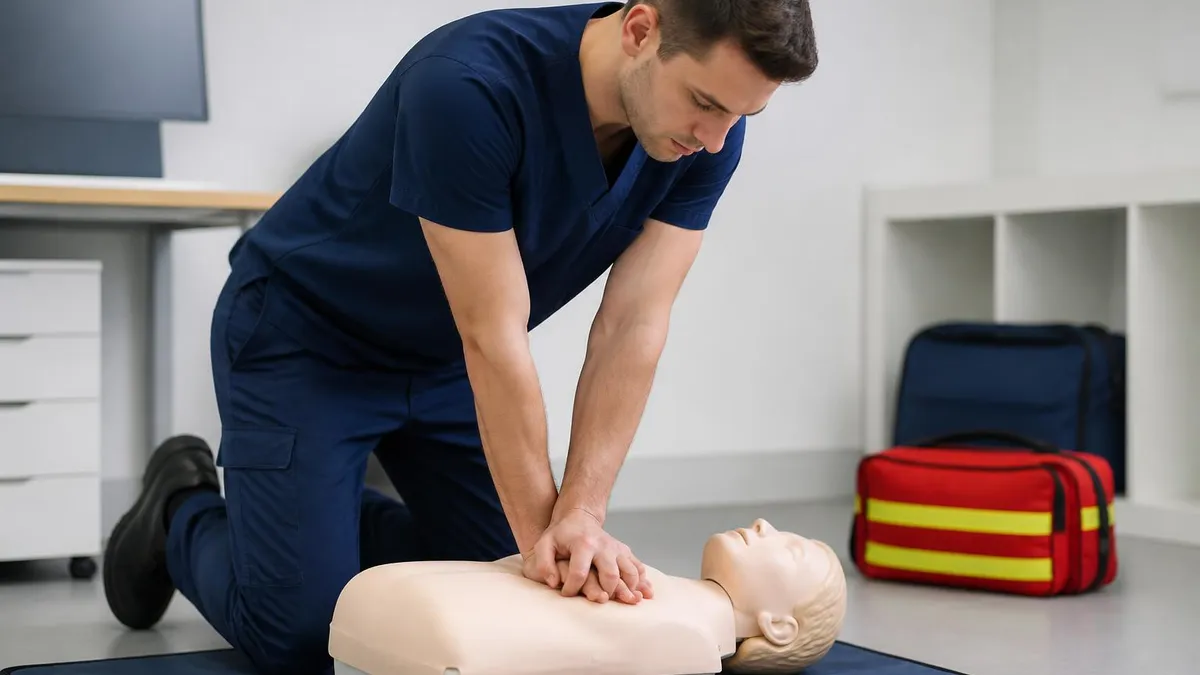
Adult CPR: Complete Step-by-Step Guide to Hands-Only and Standard CPR in 2026
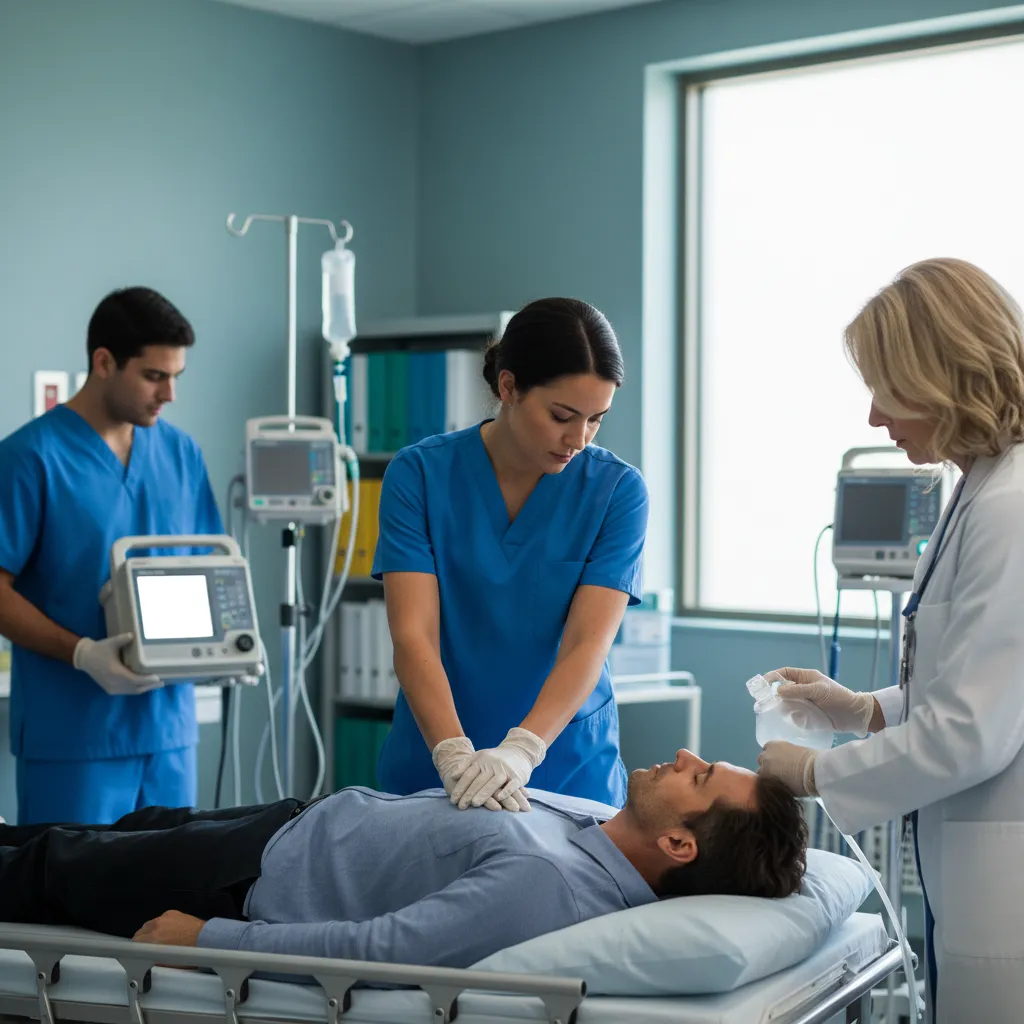
CPR - Cardiopulmonary Resuscitation: Complete Study Guide 2026
About the Author

Registered Nurse & Healthcare Educator
Johns Hopkins University School of NursingDr. Sarah Mitchell is a board-certified registered nurse with over 15 years of clinical and academic experience. She completed her PhD in Nursing Science at Johns Hopkins University and has taught NCLEX preparation and clinical skills courses for nursing students across the United States. Her research focuses on evidence-based exam preparation strategies for healthcare certification candidates.
Join the Discussion
Connect with other students preparing for this exam. Share tips, ask questions, and get advice from people who have been there.
View discussion (5 replies)