
LUCAS CPR Device: Complete Guide to Mechanical Chest Compression Systems in 2026 October
LUCAS CPR device guide: ⏳ how mechanical chest compressions work, ACLS algorithm integration, training, costs, and clinical outcomes for 2026 October.
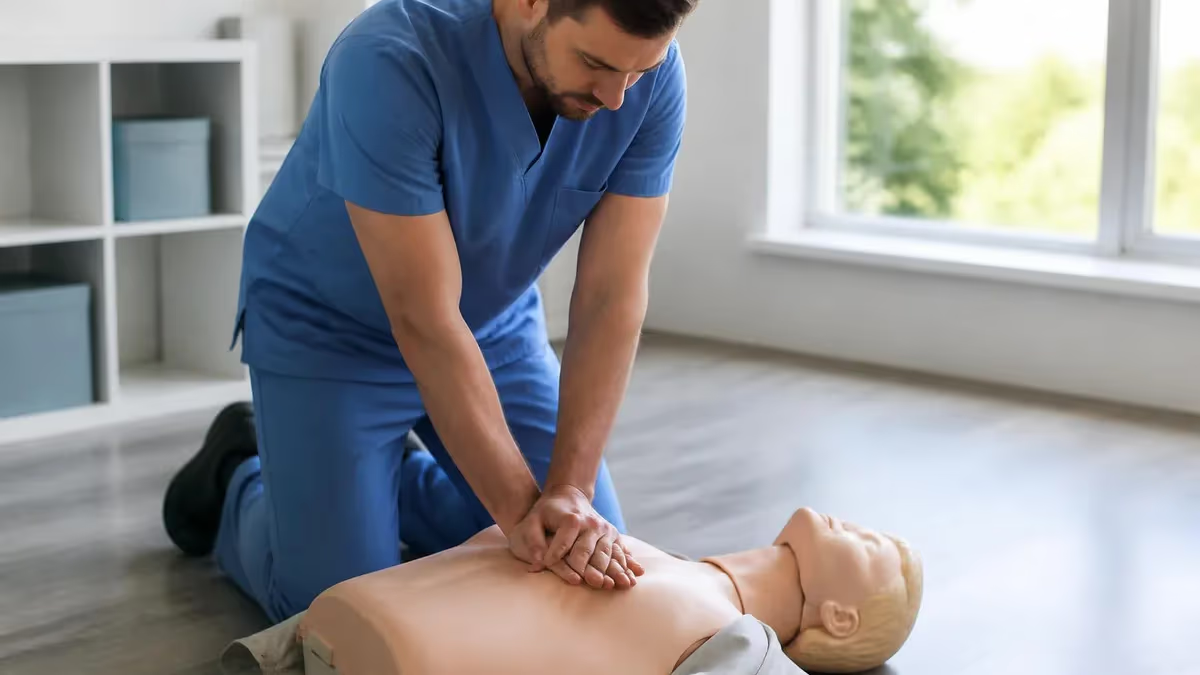
The LUCAS CPR device has transformed how emergency medical teams, hospitals, and resuscitation programs deliver high-quality chest compressions during cardiac arrest. Whenever the acls algorithm calls for uninterrupted, deep, fast compressions at a consistent depth and rate, the LUCAS (Lund University Cardiopulmonary Assist System) replaces tired human hands with a mechanical piston. For paramedics moving a patient down a narrow staircase, for cath lab teams during percutaneous coronary intervention, and for emergency physicians running long codes, the LUCAS device delivers compressions that meet the latest 2025 guidelines without fatigue, position drift, or breaks for rescuer rotation.
This guide covers everything you need to know about the LUCAS CPR device in 2026 — including how it works, when it is indicated, training requirements, integration into resuscitation algorithms, evidence from major clinical trials, total cost of ownership, and the differences between the LUCAS 2 and LUCAS 3 models. We also examine how mechanical CPR fits alongside manual compressions, automated external defibrillators, and advanced airway management within a coordinated team response.
If you work in EMS, critical care, cardiology, or a hospital code team, mastering the LUCAS workflow is now considered a core resuscitation competency. Mechanical CPR devices are not a replacement for foundational skills — providers still need to know what is aed use, ventilation timing, and rhythm interpretation — but they are an increasingly common adjunct that frees clinicians to focus on reversible causes, medication delivery, and family communication.
Throughout this article we reference the most recent American Heart Association consensus statements, ILCOR scientific reviews, and manufacturer documentation from Stryker, which acquired the LUCAS product line from Physio-Control in 2016. We also compare LUCAS with competing mechanical CPR systems such as the Zoll AutoPulse and the Michigan Instruments Life-Stat, so you can understand the broader category rather than just one brand.
The LUCAS device sits inside a much larger ecosystem of resuscitation education. Providers who use it are typically required to maintain BLS, ACLS, and often PALS credentials, and many institutions also require annual mechanical CPR competency check-offs. We will walk through how to build that competency, how to document use, and how to troubleshoot common field problems such as patient size mismatch, suction cup detachment, and battery failure mid-code.
Whether you are an EMS director writing a new mechanical CPR protocol, a nurse educator running a sim lab, or a student studying for certification exams, by the end of this article you will have a comprehensive working knowledge of the LUCAS CPR device and the role it plays in modern cardiac arrest care. We will also flag the most common pitfalls, the moments when manual CPR is still preferred, and the documentation habits that protect your team from quality assurance findings.
Cardiac arrest survival rates are stubbornly low — roughly 10% for out-of-hospital arrests and 25% for in-hospital arrests in the United States. Anything that improves compression quality, reduces no-flow time, and supports the broader chain of survival deserves careful attention. The LUCAS device is one of those tools, and used correctly within a well-trained system, it can meaningfully shift those numbers.
LUCAS CPR Device by the Numbers

How the LUCAS Device Works
A rigid back plate is slid under the patient between the shoulder blades. It provides the firm counter-surface needed for effective compressions and locks magnetically to the upper frame in seconds, even on a moving stretcher.
The upper assembly clicks onto the back plate. A battery-driven piston with a disposable suction cup is positioned over the lower half of the sternum, two finger-widths above the xiphoid, matching standard manual CPR landmarks.
Unlike pure piston devices, the LUCAS suction cup actively lifts the chest during the recoil phase. This creates negative intrathoracic pressure, improving venous return and coronary perfusion pressure between compressions.
Providers choose 30:2 mode (pauses for ventilations) or continuous mode (uninterrupted compressions with an advanced airway). LED indicators and audible cues guide the team through start, pause, and stop transitions.
LUCAS 3 adds Bluetooth connectivity, LIFENET data export, and a charging dock that keeps the spare battery topped off. Runtime, depth confirmation, and compression count are logged for post-event quality review.
Clinical indications for the LUCAS CPR device generally fall into three categories: prolonged resuscitation, transport CPR, and procedural CPR. Prolonged resuscitations include refractory ventricular fibrillation, hypothermic arrest, suspected pulmonary embolism awaiting thrombolytics, and toxicologic arrests where extended efforts are clinically justified. In each of these scenarios, manual CPR quality degrades within two to three minutes of compressor effort, while the LUCAS maintains identical depth and rate for the full battery cycle.
Transport CPR is the indication most EMS systems prioritize. Moving a patient down stairs, through narrow hallways, or in the back of a moving ambulance makes high-quality manual compressions nearly impossible. Multiple studies have documented compression fractions below 40% during transport — a number that improves dramatically with mechanical CPR. The LUCAS allows the crew to secure the airway, establish vascular access, and communicate with the receiving facility without compromising perfusion.
Procedural CPR is the fastest-growing indication. Cath labs use the LUCAS during refractory arrest while operators perform PCI on a culprit lesion. ECMO cannulation teams use it during eCPR initiation. CT scanners and interventional radiology suites use it to maintain perfusion during diagnostic workup. In each setting, the device frees clinicians to perform definitive interventions while perfusion continues uninterrupted.
Integration into the ACLS algorithm is straightforward but requires deliberate team training. Manual CPR should begin immediately upon arrest recognition; the LUCAS is applied during a planned pause, ideally synchronized with a rhythm check or defibrillation attempt, with a hands-off interval no longer than ten seconds. The maintained cpr compression rate of 102 per minute satisfies AHA guidelines, but ventilation timing, vasopressor cycles, and rhythm checks still depend on a clear team leader.
Special populations deserve careful screening. The LUCAS is designed for adult patients with a chest height between 6.7 and 11.9 inches and a chest width up to 17.7 inches. Patients outside this range — many adolescents, very small adults, and morbidly obese patients with deep chest depths — should receive manual CPR or alternative mechanical systems. The device is not indicated for infants or children, and traumatic arrest with significant chest wall injury is a relative contraindication.
Pregnant patients in the third trimester present a unique challenge. The LUCAS can be used with left lateral uterine displacement maintained by a team member, but perimortem cesarean delivery decisions should not be delayed. Recent case series suggest mechanical CPR may actually help resuscitative hysterotomy by maintaining maternal perfusion during the procedure, though manual CPR remains the default in many protocols.
Documentation matters as much as deployment. Every LUCAS use should be logged with application time, mode, total runtime, interruptions, and patient outcome. LUCAS 3 exports this data automatically via Bluetooth, while LUCAS 2 requires manual charting. Quality assurance reviews use this data to identify training gaps, equipment failures, and opportunities to shorten the application window.

CPR Practice Test Questions
Prepare for the CPR Cardiopulmonary Resuscitation Practice exam with our free practice test modules. Each quiz covers key topics to help you pass on your first try.
CPR Basic CPR
CPR Exam Questions covering Basic CPR. Master CPR Test concepts for certification prep.
CPR and First Aid
Free CPR Practice Test featuring and First Aid. Improve your CPR Exam score with mock test prep.
CPR (Cardiopulmonary Resuscitation) Adult ...
CPR Mock Exam on (Cardiopulmonary Resuscitation) Adult CPR and AED Usage. CPR Study Guide questions to pass on your first try.
CPR (Cardiopulmonary Resuscitation) Airway...
CPR Test Prep for (Cardiopulmonary Resuscitation) Airway Obstruction and Choking. Practice CPR Quiz questions and boost your score.
CPR (Cardiopulmonary Resuscitation) Cardio...
CPR Questions and Answers on (Cardiopulmonary Resuscitation) Cardiopulmonary Emergency Recognition. Free CPR practice for exam readiness.
CPR (Cardiopulmonary Resuscitation) Child ...
CPR Mock Test covering (Cardiopulmonary Resuscitation) Child and Infant CPR. Online CPR Test practice with instant feedback.
CPR (Cardiopulmonary Resuscitation) High-P...
Free CPR Quiz on (Cardiopulmonary Resuscitation) High-Performance Team Dynamics. CPR Exam prep questions with detailed explanations.
CPR (Cardiopulmonary Resuscitation) Legal ...
CPR Practice Questions for (Cardiopulmonary Resuscitation) Legal and Ethical Considerations. Build confidence for your CPR certification exam.
CPR for Specific Populations
CPR Test Online for for Specific Populations. Free practice with instant results and feedback.
CPR Airway & Breathing Management
CPR Exam Questions covering Airway & Breathing Management. Master CPR Test concepts for certification prep.
CPR Assessment & Recognition of Cardiac Ar...
Free CPR Practice Test featuring Assessment & Recognition of Cardiac Arrest. Improve your CPR Exam score with mock test prep.
CPR Chest Compressions & Defibrillation
CPR Mock Exam on Chest Compressions & Defibrillation. CPR Study Guide questions to pass on your first try.
CPR Post-Resuscitation Care & Recovery
CPR Test Prep for Post-Resuscitation Care & Recovery. Practice CPR Quiz questions and boost your score.
LUCAS 2 vs LUCAS 3 vs Competitors: Life Support Comparison
The LUCAS 2 launched in 2009 and remains in service at thousands of EMS agencies and hospitals worldwide. It uses a single LiFePO4 battery providing roughly 45 minutes of compression time and offers 30:2 or continuous compression modes. The device weighs 17.7 pounds in its carrying case and assembles in under 20 seconds with practiced teams.
Limitations include the absence of wireless data export, a smaller informational display, and a battery design that requires manual exchange during prolonged codes. Replacement parts remain available, but Stryker has shifted active development to the LUCAS 3 platform. Many agencies continue to operate LUCAS 2 units as backup devices or in tiered fleets where newer technology is reserved for primary response trucks.
Pros and Cons of Mechanical CPR with LUCAS
- +Consistent compression depth and rate that does not degrade with rescuer fatigue
- +Maintains high-quality CPR during patient transport, stairs, and ambulance motion
- +Frees two providers for airway, IV access, medication delivery, and family support
- +Enables CPR during cath lab PCI, CT imaging, and ECMO cannulation
- +Reduces rescuer back injuries and exposure during long resuscitations
- +Generates automatic data logs for quality assurance and debriefing
- +Allows safer defibrillation with hands-off compressions paused briefly
- −Application pause can add five to ten seconds of no-flow time if poorly trained
- −Device cost of $15,000 plus disposables strains smaller agency budgets
- −Size limitations exclude very small or very large patients
- −Not indicated for pediatric or infant cardiac arrest
- −Requires ongoing training, battery management, and preventive maintenance
- −Risk of rib fractures and chest wall injury similar to manual CPR
- −Mechanical failure or battery depletion mid-code requires immediate manual takeover
Pros and Cons at a Glance
| Pros | Cons |
|---|---|
| Consistent compression depth and rate that does not degrade with rescuer fatigue | Application pause can add five to ten seconds of no-flow time if poorly trained |
| Maintains high-quality CPR during patient transport, stairs, and ambulance motion | Size limitations exclude very small or very large patients |
| Frees two providers for airway, IV access, medication delivery, and family support | Not indicated for pediatric or infant cardiac arrest |
| Enables CPR during cath lab PCI, CT imaging, and ECMO cannulation | Requires ongoing training, battery management, and preventive maintenance |
| Reduces rescuer back injuries and exposure during long resuscitations | Risk of rib fractures and chest wall injury similar to manual CPR |
| Generates automatic data logs for quality assurance and debriefing | Mechanical failure or battery depletion mid-code requires immediate manual takeover |

LUCAS Deployment Checklist for Every Shift
- ✓Verify battery charge level on primary and spare batteries before each shift
- ✓Inspect suction cup for cracks, debris, or loss of elasticity
- ✓Confirm back plate, hood, and stabilization strap are present and clean
- ✓Check carry case zipper, handles, and exterior for damage
- ✓Review patient size limits posted inside the device case
- ✓Practice 20-second application drill with your partner at least monthly
- ✓Charge spare batteries on the truck dock between calls
- ✓Wipe device with manufacturer-approved disinfectant after each use
- ✓Document any device alarms, error codes, or unusual behavior immediately
- ✓Confirm Bluetooth pairing with monitor before high-risk transports
- ✓Inspect the back plate strap for fraying and replace per service interval
- ✓Log preventive maintenance dates and firmware versions in the equipment record
Keep the LUCAS application pause under 10 seconds
The single biggest determinant of LUCAS clinical impact is not the device itself — it is the length of the application pause. Studies show that teams with practiced 8 to 10 second application windows see measurable improvements in ROSC and neurologically intact survival. Teams that take 20 to 30 seconds to apply the device may actually worsen outcomes compared with continuous manual CPR. Drill the workflow until your team hits 10 seconds reliably.
The evidence base for mechanical CPR has matured considerably since the first commercial devices appeared. Three large randomized controlled trials — LINC (2014), PARAMEDIC (2015), and CIRC (2014) — collectively enrolled more than 12,000 patients across Europe and North America. None of the three demonstrated superiority of mechanical CPR over high-quality manual CPR in survival to hospital discharge or favorable neurologic outcome. This finding initially surprised many clinicians who expected mechanical consistency to translate directly into better outcomes.
Subgroup analyses tell a more nuanced story. Patients requiring prolonged transport, those receiving CPR during cath lab procedures, and those undergoing eCPR cannulation appear to benefit meaningfully from mechanical CPR. Patients with witnessed arrests and immediate bystander CPR followed by rapid defibrillation may do equally well with manual compressions. The clinical question is therefore not whether mechanical CPR works, but when and for whom it adds value.
The 2020 and 2025 AHA guidelines reflect this nuance. They state that mechanical CPR devices may be a reasonable alternative to manual CPR in specific settings where high-quality manual compressions are difficult to provide — moving vehicles, prolonged resuscitation, cath labs, hyperbaric chambers, and during preparation for eCPR. Routine use in standard cardiac arrest scenarios is not recommended, and manual CPR remains the default. The maintained chest compression fraction with a LUCAS often exceeds 90%, but only when application is efficient.
Controversies remain. Some EMS systems have adopted LUCAS devices universally and report improvements in ROSC rates and neurologic outcomes. Others have piloted devices and found no meaningful benefit, attributing the lack of improvement to existing high-quality manual CPR programs that already achieved excellent compression fractions. Selection bias, training intensity, and system maturity all contribute to these divergent results.
Injury profiles deserve mention. Rib fractures occur in 30 to 80% of CPR survivors regardless of method, and sternal fractures occur in roughly 15 to 30%. Mechanical CPR does not appear to substantially increase or decrease this rate compared with high-quality manual CPR. Visceral injuries — liver lacerations, splenic injuries, gastric rupture — are rare and most often associated with improper device positioning or extreme prolonged resuscitation.
Cost-effectiveness analyses are mixed. A LUCAS device runs roughly $15,000, with annual disposables (suction cups, batteries) adding $1,500 to $3,000 per unit. For a busy urban EMS system running 200 cardiac arrests per year, the per-arrest cost is modest. For a rural service running 12 arrests annually, the math is harder. Many agencies justify the purchase through transport safety arguments — reduced rescuer injury and improved vehicle compliance — rather than purely on survival data.
Future research directions include head-to-head comparisons of piston versus load-distributing band devices, optimal integration with eCPR programs, and the role of mechanical CPR in pediatric resuscitation. The first pediatric-sized LUCAS prototype is in regulatory review as of 2026, potentially expanding mechanical CPR to a population currently excluded from the technology.
The LUCAS device is a perfusion tool, not a resuscitation strategy. Teams must still master rhythm interpretation, defibrillation timing, airway management, vasopressor cycles, and reversible cause identification (the H's and T's). Over-reliance on mechanical CPR without strong manual CPR competency creates dangerous gaps when devices fail, batteries die, or patients fall outside size criteria. Maintain manual CPR proficiency as the bedrock of your program.
Training and certification for LUCAS use varies by employer and jurisdiction, but a common framework has emerged. New users complete a manufacturer-provided didactic module (typically 30 to 60 minutes online), followed by hands-on instruction with a training mannequin, supervised application drills, and a competency check-off. Most programs require annual recertification, often paired with ACLS or PALS renewal cycles. The national cpr foundation and similar organizations offer supplemental modules, though the gold standard remains agency-specific competency.
Mannequin selection matters. Standard CPR torsos may not accept the LUCAS suction cup well, so many programs invest in mechanical-CPR-compatible mannequins from Laerdal, Simulaids, or Stryker itself. Feedback features that record compression depth, recoil, and rate help trainees understand how the LUCAS performs versus manual compressions. Sim-lab scenarios should include device failure, battery depletion mid-code, and size-mismatch decisions that force a return to manual CPR.
Team-based training is essential. The LUCAS workflow involves a designated applicator, a compressor maintaining manual CPR until application, an airway provider, and a team leader managing the pause window. Without rehearsal, application windows balloon to 30 seconds or longer, eroding any benefit. Quarterly low-fidelity drills lasting 15 minutes are often more effective than annual half-day courses, because skill decay in mechanical CPR is rapid and procedural.
For broader resuscitation competence, providers should also maintain their understanding of pediatric algorithms, neonatal resuscitation principles, and key reference values such as the normal average respiratory rate in adults, age-appropriate compression depths, and target end-tidal CO2 levels during CPR. These foundational metrics inform decisions about when to apply mechanical CPR, when to switch modes, and when to terminate resuscitation efforts. Understanding what is a bls certification provides and how it differs from ACLS shapes how teams divide labor during a code.
Maintenance requirements are straightforward but cannot be neglected. Daily checks include battery charge, suction cup integrity, and back plate inspection. Monthly checks include full device assembly drill and firmware version verification. Annual checks include manufacturer-recommended preventive maintenance, often performed by an authorized biomedical technician. Skipped maintenance is one of the most common findings in EMS agency quality reviews and a frequent cause of mid-code failures.
Documentation and quality assurance close the loop. Every LUCAS use should generate a structured debrief examining application time, hands-off intervals, mode selection, total runtime, ventilation coordination, and patient outcome. Aggregate this data quarterly to identify training needs. Teams that review their own cases improve faster than teams that rely solely on external audits. Many agencies have adopted automated dashboards pulling data from LUCAS 3 exports and monitor strips to simplify this process.
Finally, consider how LUCAS use affects family presence during resuscitation. Many families find mechanical CPR visually intense, with the device pressing rhythmically on a loved one's chest. Designating a family liaison who can explain what the device is doing, why it is being used, and what to expect goes a long way toward humanizing a highly technological resuscitation. This is a soft skill, but one that increasingly distinguishes mature resuscitation programs.
Practical implementation tips can make the difference between a LUCAS program that improves outcomes and one that wastes capital expenditure. Start with a focused pilot — one or two trucks, one hospital unit, or one cath lab team — before fleet-wide deployment. A focused rollout lets you debug workflows, refine training, and identify champions who will spread best practices to peers. Skipping the pilot phase consistently produces uneven adoption and frustrated providers.
Position the device for rapid access. In ambulances, the LUCAS case should live in a known location reachable without unbuckling. In hospitals, code carts should carry the device on top or in a clearly labeled compartment. Adding LUCAS familiarity to crash cart checks — the same way teams verify defibrillator pads and intubation equipment — embeds the device into existing workflows rather than treating it as a special tool.
Standardize the application choreography. The most efficient teams use a verbal cadence: "Stop CPR — back plate — frame on — start." Each phrase corresponds to a specific action, and the team leader times the entire sequence aloud. When practiced repeatedly, this cadence consistently produces application windows under 10 seconds, even with new team members on the code. Choreography is the cheapest performance upgrade available.
Plan for failure. Every LUCAS team should know exactly when to abandon the device and return to manual CPR. Triggers include a low battery alarm without a spare, an unexpected size mismatch discovered after exposure, mechanical failure mid-code, or a patient whose body habitus prevents proper positioning. A two-second decision — keep going manually — is always better than a 60-second device troubleshooting attempt during cardiac arrest.
Integrate with eCPR programs if your system supports them. Patients who fail to achieve ROSC despite high-quality CPR may be candidates for extracorporeal cardiopulmonary resuscitation, and mechanical CPR is the bridge that maintains perfusion during cannulation. Pre-defined inclusion criteria, transport protocols, and receiving facility communication standards turn theoretical eCPR programs into functioning ones. The LUCAS is essential infrastructure for this care pathway.
Track outcomes longitudinally. Beyond ROSC and survival to discharge, consider neurologic outcome at 30 days, 90 days, and one year. Cerebral Performance Category scores, modified Rankin scores, and patient-reported outcomes provide a richer picture than survival alone. Quality data turns LUCAS programs from purchasing decisions into ongoing improvement initiatives. Share outcomes with frontline crews — they invested in learning the device and deserve to see the results.
Finally, remember that the LUCAS is one piece of a system. Bystander CPR, early defibrillation, high-quality EMS response, rapid hospital handoff, targeted temperature management, and coordinated post-arrest care all matter. A LUCAS device cannot rescue a broken chain of survival, but in a well-functioning system it can lift compression quality from acceptable to excellent during the moments when human effort cannot. That is its place in modern cardiac arrest care — a force multiplier, not a silver bullet.
CPR Questions and Answers
CPR vs BLS: Complete Comparison Guide for 2026 — Which Certification Do You Need?
CPR Card Lookup: How to Verify, Replace, and Access Your CPR Certification in 2026
AHA CPR: What It Is, Which Course You Need, and How to Get Certified
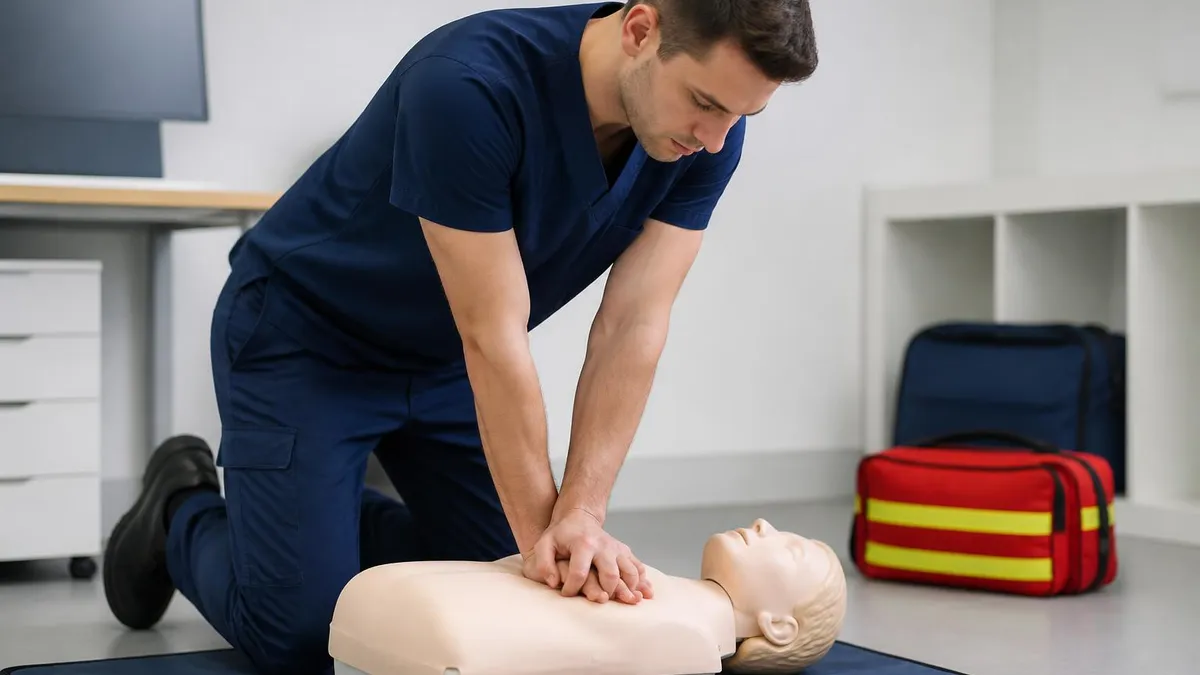
Adult CPR: Complete Step-by-Step Guide to Hands-Only and Standard CPR in 2026

CPR - Cardiopulmonary Resuscitation: Complete Study Guide 2026
About the Author

Registered Nurse & Healthcare Educator
Johns Hopkins University School of NursingDr. Sarah Mitchell is a board-certified registered nurse with over 15 years of clinical and academic experience. She completed her PhD in Nursing Science at Johns Hopkins University and has taught NCLEX preparation and clinical skills courses for nursing students across the United States. Her research focuses on evidence-based exam preparation strategies for healthcare certification candidates.
Join the Discussion
Connect with other students preparing for this exam. Share tips, ask questions, and get advice from people who have been there.
View discussion (5 replies)