
CPR Training Providers 2026 October: How to Choose a Course That Counts
❓ Compare top CPR training providers, code one CPR training options, ACLS algorithm prep, and BLS certification paths. Find a course employers accept
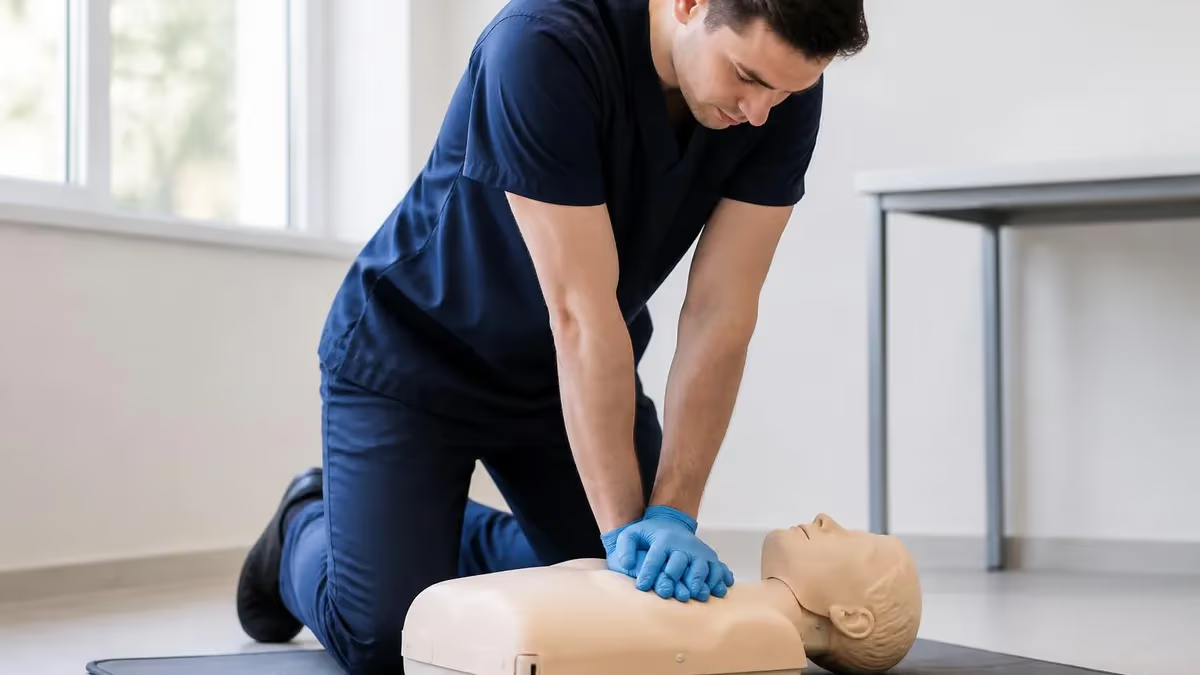
Choosing among CPR training providers in 2026 feels overwhelming because nearly every health agency, fire department, online school, and community nonprofit now offers some flavor of certification. Code one CPR training, AHA BLS, Red Cross adult and pediatric programs, and dozens of niche providers all promise the same end result: a card that proves you can save a life. But not every card opens the same doors, and not every curriculum teaches the same acls algorithm sequence the way modern hospitals expect.
The first thing to understand is that CPR training providers fall into three buckets: nationally recognized accreditors, regional or specialty schools, and pure online certificate mills. The accreditors set the medical standards, the regional schools deliver hands-on practice, and the online options offer convenience but vary wildly in employer acceptance. Knowing which bucket your prospective course lives in protects your time, your money, and your job application from being quietly rejected at the HR stage.
Most learners start with basic life support because it is the cheapest, fastest, and most widely required credential. From there they branch into advanced cardiac life support, pediatric advanced life support, neonatal resuscitation, or instructor pathways. A nurse working in a cardiac ICU might stack three cards within a single year, while a daycare worker might only need one renewal every two years. Mapping the credential ladder before you pay helps you avoid duplicate fees and expired logins.
Cost matters too. A live blended course at a hospital training center can run between ninety and two hundred dollars, while a self-paced online course from a name like national cpr foundation can dip below twenty dollars for a digital card. The trade-off is usually hands-on skills testing, which some employers require by policy even when the certificate technically allows skip-the-skills delivery. Always confirm acceptance with your hiring manager before clicking pay.
Curriculum quality is the second silent variable. Older providers still teach a fifteen-compression-to-two-breath ratio for one-rescuer infant CPR, but the current consensus document updated several timing nuances and reinforced the importance of high-quality recoil. Providers who quietly recycle 2015 slides may leave you under-prepared for a 2026 skills check. Reading the most recent course outline is the fastest way to flush out laggards.
Geography plays a role you might not expect. Some state nursing boards only honor specific provider stamps, certain EMS regions require the Heart Association card by statute, and a few hospital systems publish internal lists of approved vendors. If you train through a provider that does not appear on that list, your card will not register and you may be sent back for re-training on your first orientation day, on your own time.
This guide breaks down everything you need before you commit to a CPR training provider in 2026 — including respiratory rate basics, recovery position skills, infant CPR coverage, ACLS algorithm preparation, and how to spot legitimate providers from the look-alikes that vanish after taking your payment.
CPR Training Providers by the Numbers

Main Tiers of CPR Training Providers
American Heart Association, American Red Cross, and ASHI dominate this tier. Their cards are accepted by virtually every hospital, EMS agency, and state licensing board across the country.
Fire-academy programs, hospital-system training centers, and code-team-focused vendors deliver deeper clinical drills. Acceptance is broad but always worth verifying with your specific employer first.
Web-based schools issue digital cards immediately after a multiple-choice exam. Convenient and cheap, but some employers still demand in-person skills verification before granting clinical access.
Local heart councils, churches, and YMCA branches teach hands-only CPR for the general public. Usually free, designed for bystander response rather than professional credentialing.
Once you understand the tier structure, the next decision is the type of course itself. Basic life support is the foundational credential and the only one most non-clinical job postings actually require. It teaches adult, child, and infant cpr, bag-mask ventilation, AED operation, and team dynamics for two-rescuer scenarios. If you are unsure where to start, ask the hiring department whether they want BLS or simply Heartsaver CPR/AED — the two are similar but not interchangeable on a resume.
Advanced cardiac life support, or ACLS, is the next rung and is built around the acls algorithm flowcharts you may have already seen taped inside crash carts. It assumes you already passed BLS and adds rhythm interpretation, drug administration timing, airway escalation, and team-leader communication. Most providers gate the ACLS course behind a pre-test that knocks out anyone who has not memorized the megacode flow ahead of time, so do not show up cold.
Pediatric Advanced Life Support, abbreviated as pals certification, covers the same algorithmic spine but for infants and children. It introduces weight-based dosing, pediatric defibrillation joules, and the systematic assessment that uses respiratory rate as a leading indicator of decompensation. Anyone in pediatrics, the ER, or labor and delivery will eventually need this card, and the skills are tested under more time pressure than ACLS.
Neonatal Resuscitation Program (NRP) is a fourth course often confused with PALS. NRP focuses on the first minutes of life and is required for delivery-room staff. It is shorter, has its own provider organizations, and is not interchangeable with PALS, even though the underlying physiology overlaps significantly. Confirm with your unit manager which is required before paying.
For lay rescuers, the Heartsaver and Adult CPR/AED courses are typically enough. These are the courses school employees, gym staff, lifeguards, and corporate first-aid responders take. They cover hands-only CPR, AED pad placement, and recovery position so an unresponsive but breathing victim does not aspirate. The exams are short, and most providers will let you retest the same day if you miss a question or two.
Instructor-level courses are the final tier. After holding a provider card in good standing, you can apply to become a certified instructor and teach others. This is where many side-business CPR companies are born — solo instructors travel to corporate offices and bill per student. Becoming an instructor requires a monitored teach, equipment purchases, and ongoing alignment fees with the parent provider organization.
Picking the right course depends entirely on your role, your state, and the agency that will eventually verify the card. When in doubt, take BLS first; almost every other path builds on it, and almost no employer will reject a valid BLS card from an accredited provider.

CPR Practice Test Questions
Prepare for the CPR Cardiopulmonary Resuscitation Practice exam with our free practice test modules. Each quiz covers key topics to help you pass on your first try.
CPR Basic CPR
CPR Exam Questions covering Basic CPR. Master CPR Test concepts for certification prep.
CPR and First Aid
Free CPR Practice Test featuring and First Aid. Improve your CPR Exam score with mock test prep.
CPR (Cardiopulmonary Resuscitation) Adult ...
CPR Mock Exam on (Cardiopulmonary Resuscitation) Adult CPR and AED Usage. CPR Study Guide questions to pass on your first try.
CPR (Cardiopulmonary Resuscitation) Airway...
CPR Test Prep for (Cardiopulmonary Resuscitation) Airway Obstruction and Choking. Practice CPR Quiz questions and boost your score.
CPR (Cardiopulmonary Resuscitation) Cardio...
CPR Questions and Answers on (Cardiopulmonary Resuscitation) Cardiopulmonary Emergency Recognition. Free CPR practice for exam readiness.
CPR (Cardiopulmonary Resuscitation) Child ...
CPR Mock Test covering (Cardiopulmonary Resuscitation) Child and Infant CPR. Online CPR Test practice with instant feedback.
CPR (Cardiopulmonary Resuscitation) High-P...
Free CPR Quiz on (Cardiopulmonary Resuscitation) High-Performance Team Dynamics. CPR Exam prep questions with detailed explanations.
CPR (Cardiopulmonary Resuscitation) Legal ...
CPR Practice Questions for (Cardiopulmonary Resuscitation) Legal and Ethical Considerations. Build confidence for your CPR certification exam.
CPR for Specific Populations
CPR Test Online for for Specific Populations. Free practice with instant results and feedback.
CPR Airway & Breathing Management
CPR Exam Questions covering Airway & Breathing Management. Master CPR Test concepts for certification prep.
CPR Assessment & Recognition of Cardiac Ar...
Free CPR Practice Test featuring Assessment & Recognition of Cardiac Arrest. Improve your CPR Exam score with mock test prep.
CPR Chest Compressions & Defibrillation
CPR Mock Exam on Chest Compressions & Defibrillation. CPR Study Guide questions to pass on your first try.
CPR Post-Resuscitation Care & Recovery
CPR Test Prep for Post-Resuscitation Care & Recovery. Practice CPR Quiz questions and boost your score.
ACLS, PALS, and BLS Compared
Basic Life Support is the universal entry credential and the answer to the common search what is a bls certification. It teaches single- and two-rescuer adult, child, and infant CPR, bag-mask ventilation, AED use for all ages, and team-based resuscitation communication. The current course typically runs four to five hours in a blended format, with an online cognitive portion followed by an in-person skills check using a manikin and an AED trainer.
BLS is required for nurses, medical assistants, dental hygienists, EMTs, paramedic students, respiratory therapists, and most clinical-adjacent roles. Cards are valid for two years from the date of testing, not the date of online completion, so plan renewals at least a month before expiration. Employers verify the card through provider lookup portals, which is why fraudulent prints rarely survive a real onboarding check.
Online vs Classroom CPR Training Providers
- +Online cognitive portion saves three to four hours of classroom time
- +Self-paced modules let shift workers complete training around schedules
- +Digital cards download instantly after passing the final exam
- +Lower price point, often under thirty dollars for non-clinical roles
- +Easy re-access to course materials for two-year renewal review
- +Mobile-friendly platforms allow studying during commutes or breaks
- +Provider portals make verifying a card straightforward for HR teams
- −Some hospitals refuse purely online cards without skills testing
- −Skill decay is faster without supervised manikin practice
- −Refund policies on unaccredited sites are often impossible to enforce
- −Look-alike provider names confuse buyers and HR verification staff
- −Internet-only providers may disappear, leaving card-lookup links dead
- −Limited feedback on chest-compression depth and recoil quality
- −Group discounts and corporate billing are harder to set up online
Pros and Cons at a Glance
| Pros | Cons |
|---|---|
| Online cognitive portion saves three to four hours of classroom time | Some hospitals refuse purely online cards without skills testing |
| Self-paced modules let shift workers complete training around schedules | Skill decay is faster without supervised manikin practice |
| Digital cards download instantly after passing the final exam | Refund policies on unaccredited sites are often impossible to enforce |
| Lower price point, often under thirty dollars for non-clinical roles | Look-alike provider names confuse buyers and HR verification staff |
| Easy re-access to course materials for two-year renewal review | Internet-only providers may disappear, leaving card-lookup links dead |
| Mobile-friendly platforms allow studying during commutes or breaks | Limited feedback on chest-compression depth and recoil quality |

Pre-Enrollment Checklist for Any CPR Provider
- ✓Confirm your employer or licensing board accepts the provider by name
- ✓Verify the course aligns with current resuscitation guidelines published recently
- ✓Check whether hands-on skills testing is included or scheduled separately
- ✓Read the refund and reschedule policy before paying any fees
- ✓Look up the provider on state EMS or nursing board approval lists
- ✓Confirm the digital card includes a unique verification number employers can validate
- ✓Ensure the course length matches your role — BLS, Heartsaver, ACLS, or PALS
- ✓Ask whether the course covers infant cpr if your role works with children
- ✓Save the receipt and certificate PDF in two separate cloud locations
- ✓Schedule renewal in your calendar twenty-three months after issue date
Card expiration sneaks up faster than you think
Most CPR cards expire on the last day of the issue month two years out — not the anniversary date. A card issued on March 14, 2024 expires March 31, 2026. Mark your calendar at month twenty-three to avoid lapsing into expired status, which in many hospitals triggers an immediate pull from the clinical schedule until you re-test.
The online-versus-in-person debate dominates almost every CPR training provider review. Both formats can issue identical-looking cards, but they teach different things in different ways. A purely online course is built around video lectures, animated demonstrations, and multiple-choice quizzes. A blended course adds a skills session where an instructor watches you compress a manikin, ventilate with a bag-mask, and operate an AED trainer under time pressure.
The honest answer is that online-only works best for refreshers and lay-rescuer audiences, while blended or fully in-person is better for first-time clinical learners. Skill acquisition in CPR depends heavily on muscle memory: depth of compressions, full recoil between compressions, hand placement, and ventilation timing. A camera and a checkbox cannot reliably correct a learner pushing two inches deep when the guideline asks for two to two-point-four.
That said, blended formats are now the dominant compromise. You complete the cognitive portion online — usually one to two hours of videos and scenario quizzes — then book a thirty- to sixty-minute skills session at a local training center.
Cost varies more by format than by provider. A blended BLS course at a hospital education department might run around one hundred dollars, the same course at an independent training center about eighty, and a fully online card from a budget provider as low as fifteen. Watch the fine print: a fifteen-dollar online card may not include the skills check that your employer requires, turning the cheap option into a two-step purchase.
Time investment is another variable. A first-time, in-person BLS class typically runs four to five hours including breaks. A blended course usually clocks ninety minutes online plus a thirty-minute skills check. Online-only refreshers can take as little as forty-five minutes for an experienced clinician who already knows the material. Build the time honestly into your calendar — rushing the cognitive portion is the most common reason candidates fail the final.
One advantage of in-person training that often goes unmentioned is networking. Clinicians who train together swap job leads, hospital insights, and exam strategies during the breaks. For students entering the field, sharing a manikin with an experienced RN can produce mentorship opportunities that no online module can replicate. If you are early in your career, lean toward in-person for this reason alone.
Whichever format you choose, document everything. Screenshot your completion page, download the PDF certificate, and email a copy to yourself the day you pass. Provider portals occasionally lose records, and reconstructing proof of training after the fact is far harder than archiving it the moment you finish.
Search results for popular CPR keywords are full of look-alike domains and AI-generated landing pages that take payment but never deliver a verifiable card. Always confirm the provider appears on your employer's accepted list, your state EMS board, or a nationally recognized accreditor before entering your credit card. A refund chargeback is far harder than a five-minute verification.
Avoiding scam providers is the single most important skill in this entire market. Because CPR cards are required by so many jobs, an industry of look-alike websites has grown up around the search results, often using domain names that include the words national, American, or heart in ways that imply official affiliation without actually having one. Some accept payment, generate a PDF card, and disappear before you discover that no employer recognizes the issuing body.
The first red flag is a provider that promises certification with no skills component and no clear accreditation lineage. Legitimate organizations publish their alignment with current resuscitation science, list their medical advisory board, and provide a working verification portal where any employer can plug in a card number and see the holder's name, course, and expiration date. If a site lacks all three, treat it as suspect regardless of how polished the homepage looks.
A second red flag is exaggerated guarantees. No real provider promises that one hundred percent of employers nationwide will accept their card, because acceptance is a per-employer policy decision. Be especially wary of marketing copy that compares the provider to what is a bls certification requirements without ever clarifying which specific certification their course actually delivers.
Third, watch the domain and contact information. Many scam sites hide behind privacy-protected registrations, list no physical address, and route customer service through a single email that never replies. Real providers publish corporate addresses, phone lines, and named training-center directors. They also maintain instructor rosters that you can cross-reference against state EMS or nursing board records.
Fourth, be cautious about extremely cheap pricing on advanced cards. A fully accredited ACLS course costs money to deliver because it requires manikins, AED trainers, defibrillator simulators, drug-dose cards, and a credentialed instructor. A twenty-dollar ACLS card with no skills station is essentially a printable PDF, and the medical board reviewing your file knows the difference.
Fifth, evaluate the course content itself. Open the syllabus and search for current terminology: high-quality CPR, team dynamics, recovery position handling, weight-based pediatric dosing, and updated stroke and acute coronary syndrome timelines. A provider still using fifteen-year-old terminology is either lazy with their content team or deliberately avoiding the cost of refreshing materials — either way, not a safe bet for your credentialing file.
Finally, talk to people who already work where you want to work. The fastest way to find a trusted CPR training provider is to ask the educator at your target hospital or agency which vendor they use internally and which outside vendors they accept. Five minutes of conversation saves hundreds of dollars and dozens of frustration hours later.
Practical preparation for any CPR course starts before the first module loads. Read the current provider manual or downloadable algorithm card and skim the rhythm strips if you are taking an advanced course. Memorize the basic compression-to-ventilation ratios for adults, children, and infants. Know the difference between one-rescuer and two-rescuer infant CPR ratios. These are non-negotiable facts that every exam will test in some form.
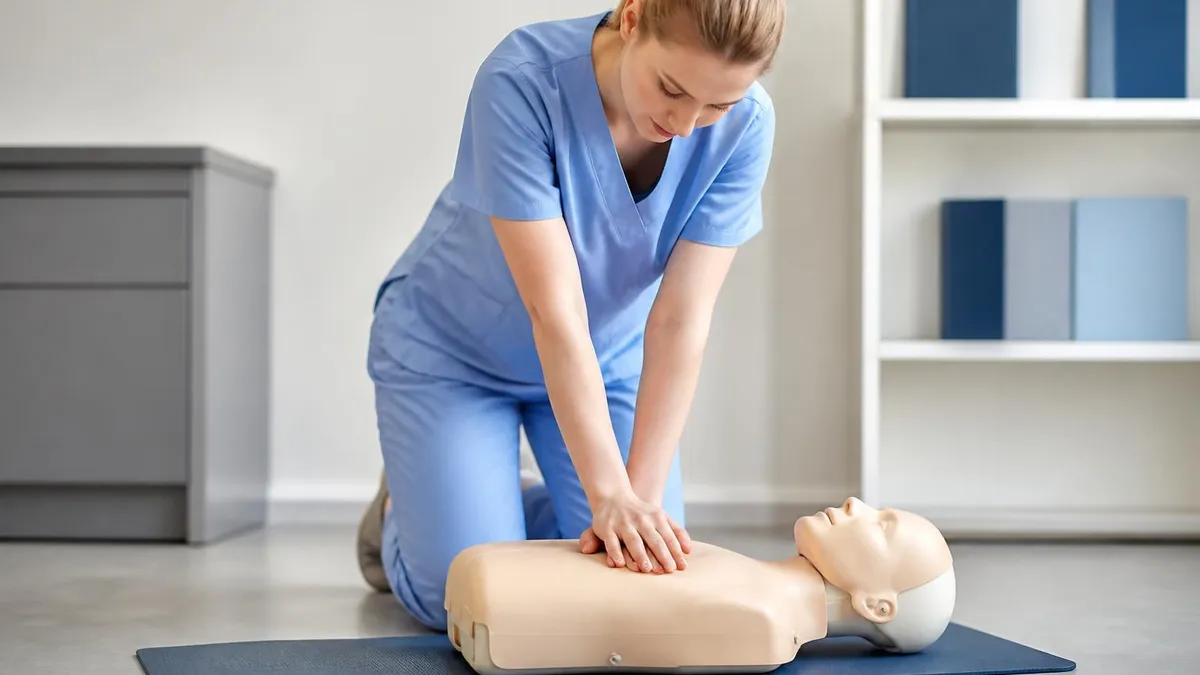
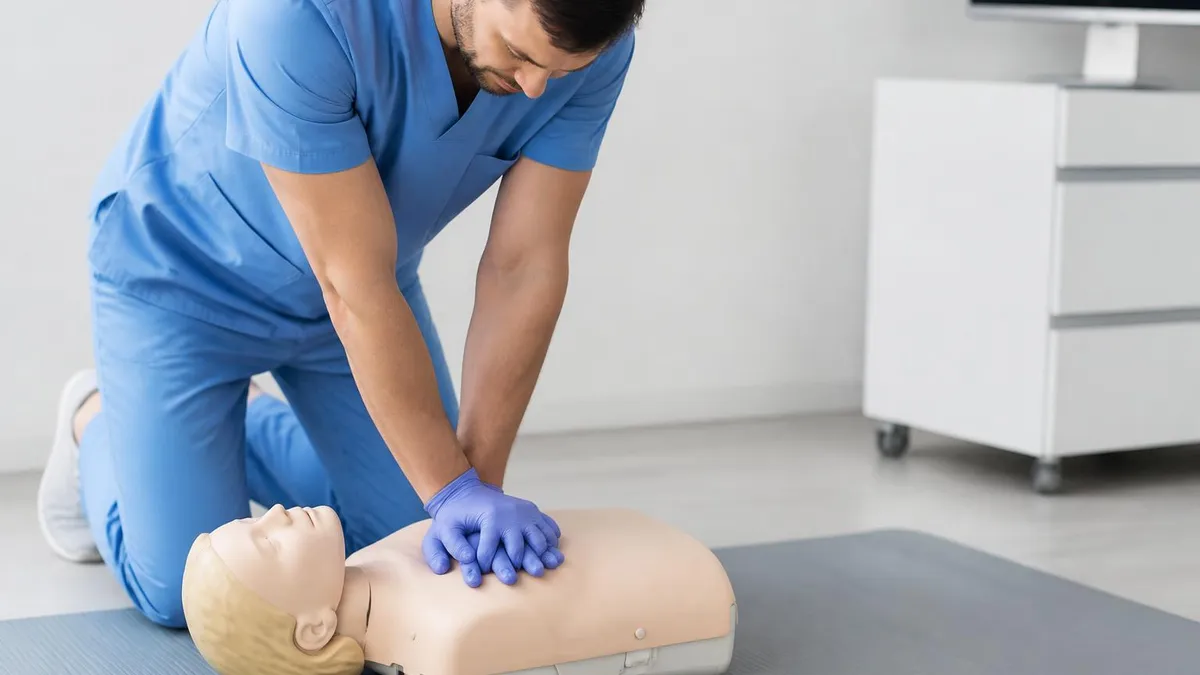
Practice on a real surface. Set a timer for two minutes and perform compressions on a firm cushion at a rate of one hundred to one hundred twenty per minute. Note how quickly your arms tire and use that knowledge to plan rescuer switches during the megacode. Candidates who practice compressions for the first time on test day routinely fail the depth and recoil metrics, especially after the first minute of fatigue sets in.
Memorize the recovery position sequence. For any unresponsive but breathing adult, you roll them onto their side with the lower arm extended and the upper hand supporting the head. This single skill appears on most lay-rescuer exams and on professional skills checks, yet candidates frequently bungle it because the practice time during class is minimal. Practice with a family member or a large pillow the night before.
For respiratory assessment, internalize the normal respiratory rate ranges. Adults are roughly twelve to twenty breaths per minute, children fifteen to thirty, infants thirty to sixty. These numbers matter because they appear in pediatric assessment questions and they anchor the difference between adequate and inadequate breathing — a distinction that determines whether you start ventilations, position the airway, or initiate full CPR.
Bring snacks and water to in-person sessions. A four-hour BLS course feels short until you are halfway through the second hour of manikin work and your blood sugar drops. Instructors are not allowed to give academic accommodation for low energy, and rescheduling skills checks usually costs a fee. Eat a real meal beforehand and bring a refillable water bottle.
If you are taking ACLS or PALS, do the pre-test online before you arrive. Most providers post a sample exam, and your score there is a remarkably accurate predictor of your final exam result. Anything below seventy percent on the pre-test means another study session before class. Bring a printed algorithm card to the class itself; flipping through a phone during megacode is awkward and slows your team.
Finally, plan your renewal. Add a calendar event twenty-two months after your card issues and another at month twenty-three. The first reminder is to schedule the renewal, and the second is to confirm payment and time. Procrastinating a renewal until the week the card expires is the most common reason CPR-required employees end up paying rush fees for emergency same-week courses.
CPR Questions and Answers
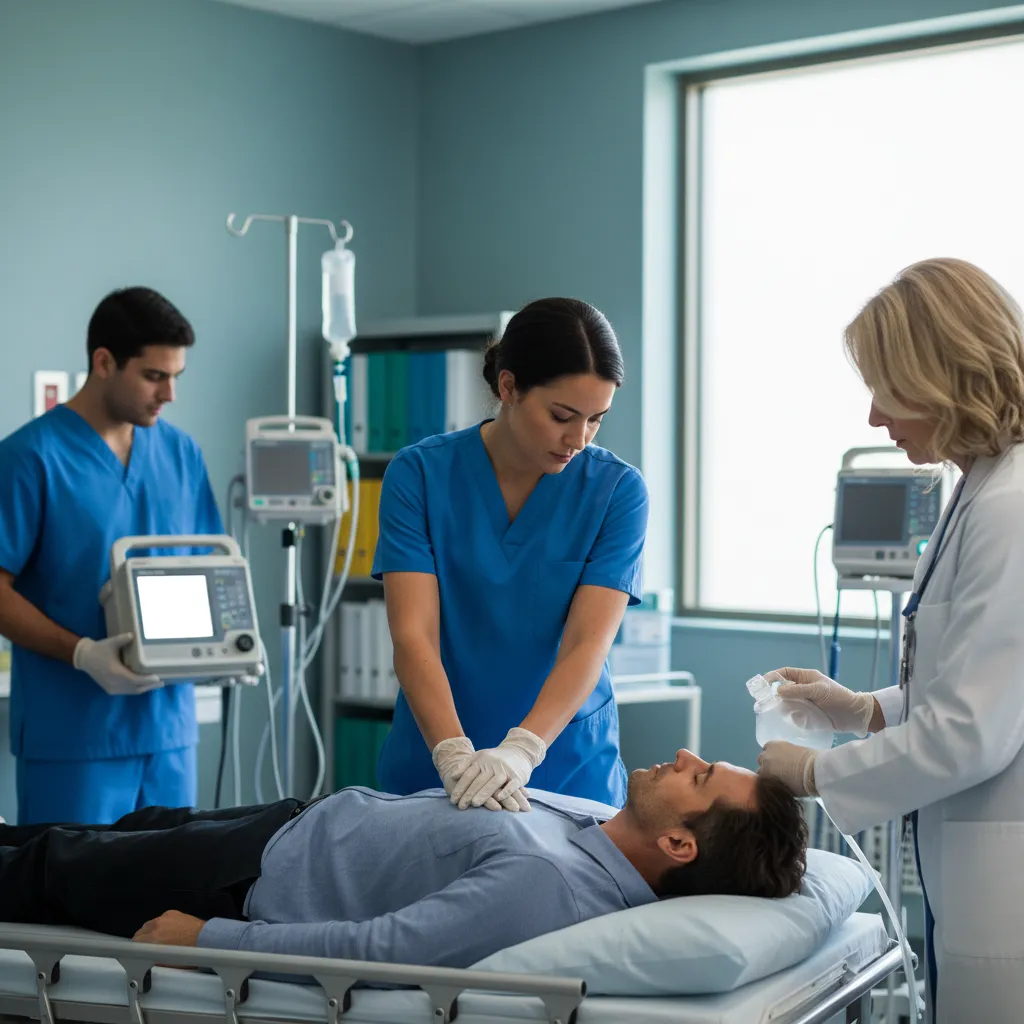
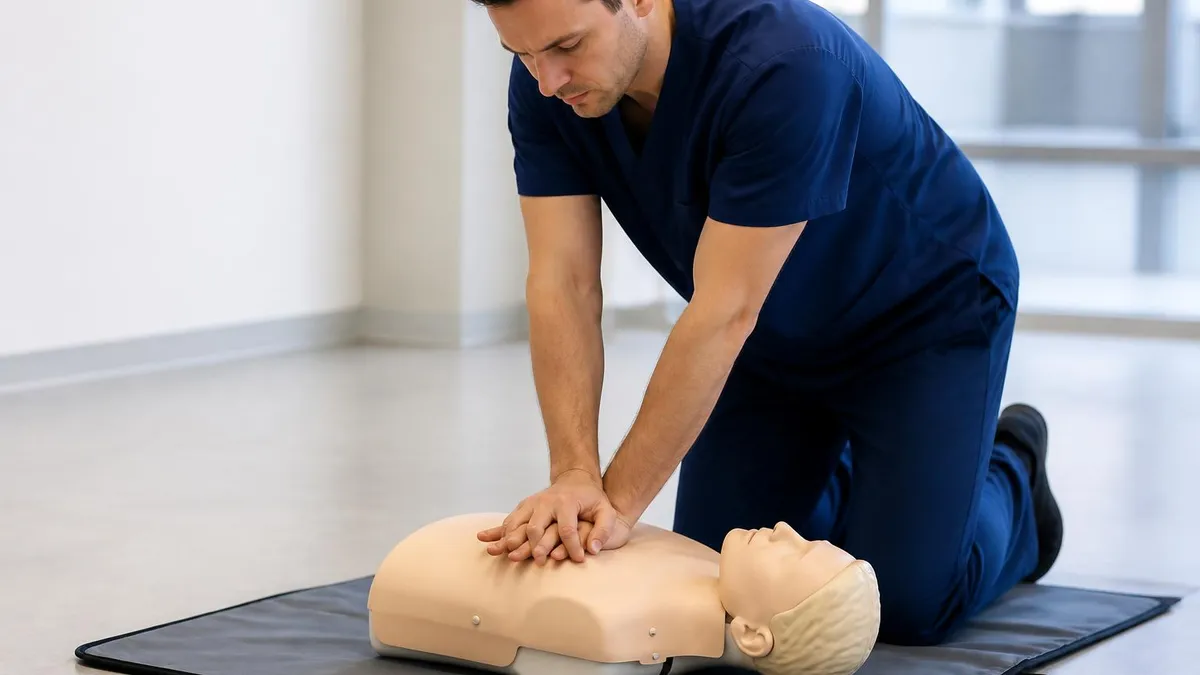
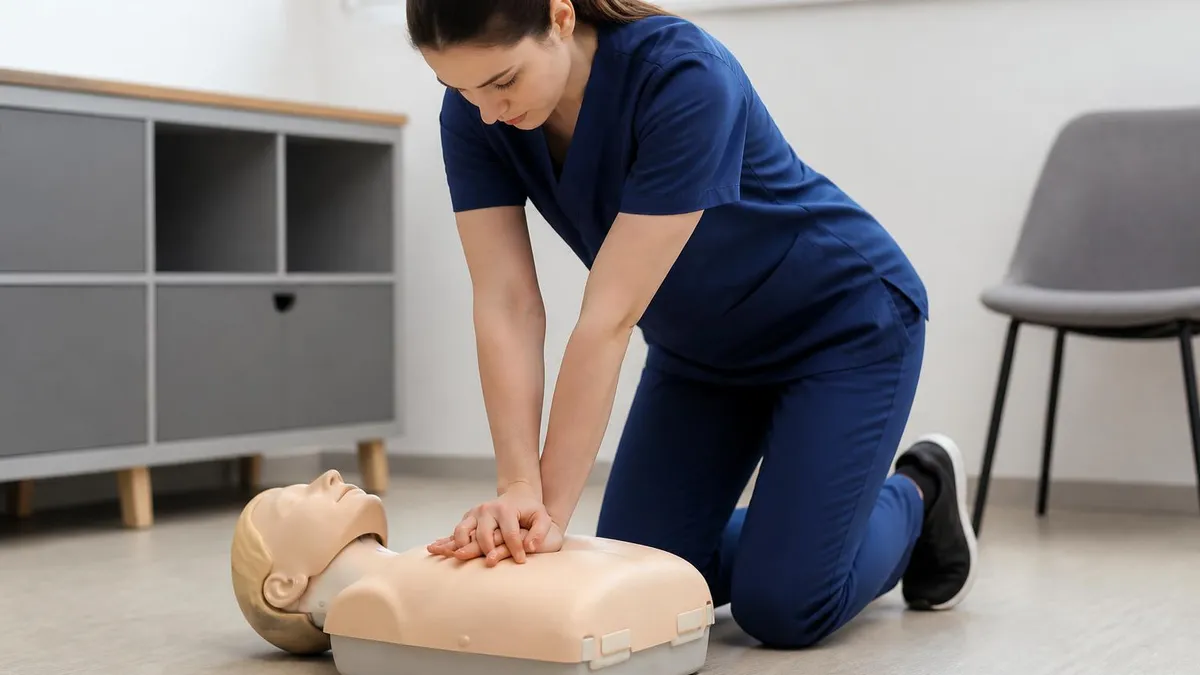
About the Author

Registered Nurse & Healthcare Educator
Johns Hopkins University School of NursingDr. Sarah Mitchell is a board-certified registered nurse with over 15 years of clinical and academic experience. She completed her PhD in Nursing Science at Johns Hopkins University and has taught NCLEX preparation and clinical skills courses for nursing students across the United States. Her research focuses on evidence-based exam preparation strategies for healthcare certification candidates.
Join the Discussion
Connect with other students preparing for this exam. Share tips, ask questions, and get advice from people who have been there.
View discussion (5 replies)