
CPR Instructor Certification 2026 October: Complete Path to Teaching CPR
CPR instructor certification guide: 📗 requirements, costs, ACLS algorithm review, National CPR Foundation paths, and exam prep for new 2026 October instructors.
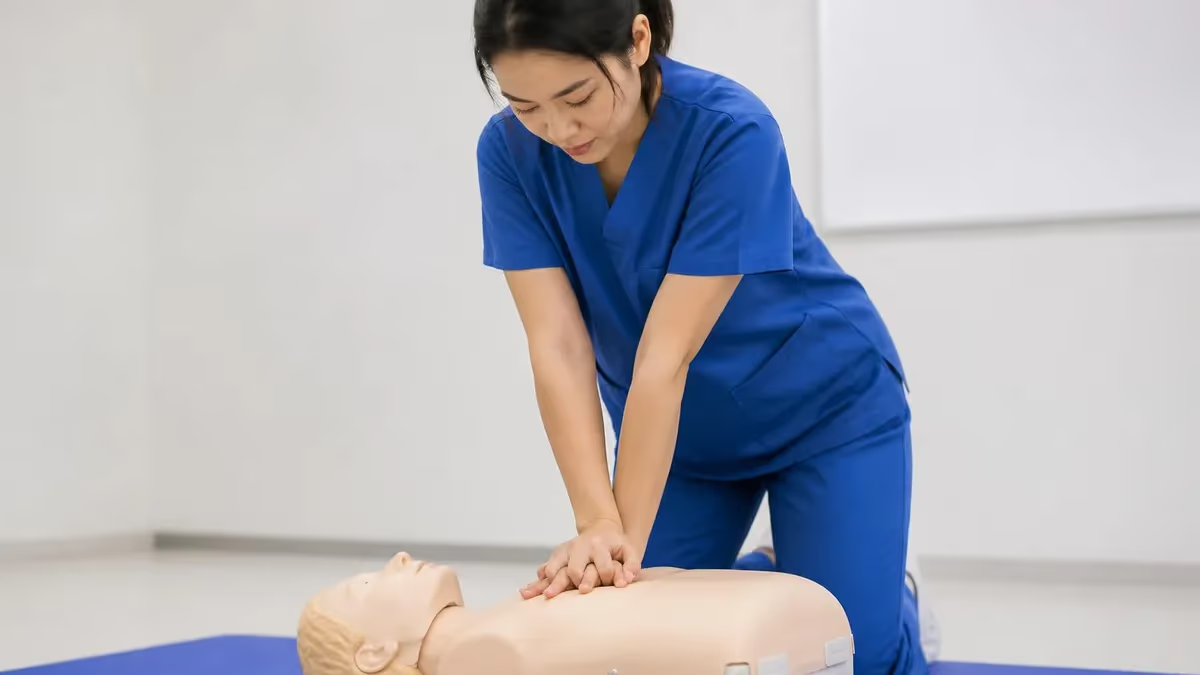
Earning your CPR instructor certification in 2026 means more than memorizing compression depth and rescue breath ratios — it means demonstrating that you can teach those skills to nervous students, healthcare professionals, and first responders under realistic pressure. The pathway combines provider-level mastery, instructor-candidate coursework, monitored teaching sessions, and an authorized training center sponsorship. Whether you pursue credentials through the American Heart Association, American Red Cross, or the pals certification route, you must prove both technical accuracy and adult-learning competency.
The instructor role has grown more demanding because curricula now expect students to apply the acls algorithm in scenario-based testing, not just recite it. Modern instructor candidates teach high-quality CPR with quantitative feedback devices, run mock codes, and debrief team dynamics. This expanded scope means certification authorities require longer essentials sessions, evidence-based teaching strategies, and disposition reviews. If you previously taught BLS years ago, the 2026 framework may feel unfamiliar — expect more video, more simulation, and more written documentation.
Cost is another consideration. Between provider course fees, instructor-course tuition, manikin rental, and the annual training-center alignment fee, total first-year investment ranges from $400 to $1,400 depending on disciplines and region. Many candidates recover that within three to six months of part-time teaching, especially in markets where healthcare hiring drives steady BLS renewal demand. Corporate, daycare, and lifeguard certification contracts can boost income further if you stack BLS, Heartsaver, and pediatric endorsements together.
This guide walks through every requirement: prerequisite cards, eligibility, monitored teaching, equipment lists, recordkeeping, and renewal. We compare the major certifying bodies, explain how the national cpr foundation card fits into employer acceptance discussions, and clarify what an authorized instructor can — and cannot — sign off. You will also find scenario tips, common disqualifiers, and a realistic 12-week study plan you can adapt to your work schedule and existing clinical background.
Before diving in, set the right expectation: instructor certification is a teaching credential layered on top of a current provider credential. Your provider card must remain unexpired throughout your instructor tenure. Lapse it, and your instructor status is automatically suspended until you re-test. That single rule trips up dozens of new instructors every year, especially those who let renewal slide while focused on launching classes.
Finally, remember that respiratory rate counting, infant cpr technique, AED pad placement, and recovery position transitions are the everyday teaching points students will quiz you on. Mastery of these basics — not exotic edge cases — separates confident instructors from hesitant ones. The remainder of this article is structured to take you from eligibility through your first independently taught class with quiet confidence.
CPR Instructor Certification by the Numbers

The Path to Becoming a Certified CPR Instructor
Hold Current Provider Card
Find a Training Center Sponsor
Complete Instructor Essentials
Pass Skills & Written Test
Teach Monitored Courses
Receive Instructor Card
Choosing a certifying body is the single most consequential decision you'll make as a new instructor because each agency has different reciprocity, pricing, and brand recognition. The American Heart Association (AHA) remains the dominant credential for hospitals, nursing schools, and EMS agencies. American Red Cross (ARC) carries strong recognition for workplaces, schools, and lifeguard programs. The Health & Safety Institute (HSI) and ASHI brands are popular with industrial safety teams, while the national cpr foundation serves cost-sensitive employers and individuals seeking quick documentation.
If your goal is teaching healthcare workers, choose AHA BLS Instructor as your foundation. Hospitals almost universally require AHA cards for clinical staff, which means your students will demand AHA-aligned classes. If you plan to teach daycare workers, fitness staff, and corporate offices, ARC or HSI may serve you better because their materials are designed around lay-rescuer needs. Many instructors eventually carry credentials from two organizations to cover both markets.
Reciprocity is rarely automatic. AHA does not honor ARC instructor cards, and vice versa. Each program requires its own instructor course, paperwork, and alignment. Some agencies offer a crossover discount if you can demonstrate equivalent teaching experience, but you should expect to repeat the full essentials sequence. Budget time accordingly — stacking AHA BLS and ARC BLS in the same quarter is common, but doing all four major agencies in one year is exhausting.
Online-only paths exist for related professional development but cannot replace in-person instructor monitoring. Beware of websites offering instant instructor cards for under $100 with no monitoring — those credentials are rejected by virtually every hospital credentialing office and may expose you to liability if challenged.
Think also about your local market. Call three or four hospital education departments and three or four corporate safety coordinators. Ask which agencies they accept. Their answers should drive your choice more than online forums, because they are your future students and contract decision-makers. A quick survey often reveals that one agency dominates locally even when nationwide statistics suggest otherwise, especially in smaller metro areas.
Finally, evaluate ongoing costs. AHA charges training centers a per-card fee that gets passed to instructors. ARC includes a digital card with classes but charges higher initial textbook costs. HSI uses an annual flat membership for unlimited cards in some tiers. Run the math on a hypothetical year teaching 100 students — small per-card differences add up quickly and can swing your break-even date by months.
One last note on reputation: the brand on a student's card matters when they walk into an interview. Cards that hiring managers recognize instantly remove friction. Cards that require a verification phone call add hesitation. Choose the brand your students will be proud to show, because referrals are how new instructors fill their second and third classes after launch.

CPR Practice Test Questions
Prepare for the CPR Cardiopulmonary Resuscitation Practice exam with our free practice test modules. Each quiz covers key topics to help you pass on your first try.
CPR Basic CPR
CPR Exam Questions covering Basic CPR. Master CPR Test concepts for certification prep.
CPR and First Aid
Free CPR Practice Test featuring and First Aid. Improve your CPR Exam score with mock test prep.
CPR (Cardiopulmonary Resuscitation) Adult ...
CPR Mock Exam on (Cardiopulmonary Resuscitation) Adult CPR and AED Usage. CPR Study Guide questions to pass on your first try.
CPR (Cardiopulmonary Resuscitation) Airway...
CPR Test Prep for (Cardiopulmonary Resuscitation) Airway Obstruction and Choking. Practice CPR Quiz questions and boost your score.
CPR (Cardiopulmonary Resuscitation) Cardio...
CPR Questions and Answers on (Cardiopulmonary Resuscitation) Cardiopulmonary Emergency Recognition. Free CPR practice for exam readiness.
CPR (Cardiopulmonary Resuscitation) Child ...
CPR Mock Test covering (Cardiopulmonary Resuscitation) Child and Infant CPR. Online CPR Test practice with instant feedback.
CPR (Cardiopulmonary Resuscitation) High-P...
Free CPR Quiz on (Cardiopulmonary Resuscitation) High-Performance Team Dynamics. CPR Exam prep questions with detailed explanations.
CPR (Cardiopulmonary Resuscitation) Legal ...
CPR Practice Questions for (Cardiopulmonary Resuscitation) Legal and Ethical Considerations. Build confidence for your CPR certification exam.
CPR for Specific Populations
CPR Test Online for for Specific Populations. Free practice with instant results and feedback.
CPR Airway & Breathing Management
CPR Exam Questions covering Airway & Breathing Management. Master CPR Test concepts for certification prep.
CPR Assessment & Recognition of Cardiac Ar...
Free CPR Practice Test featuring Assessment & Recognition of Cardiac Arrest. Improve your CPR Exam score with mock test prep.
CPR Chest Compressions & Defibrillation
CPR Mock Exam on Chest Compressions & Defibrillation. CPR Study Guide questions to pass on your first try.
CPR Post-Resuscitation Care & Recovery
CPR Test Prep for Post-Resuscitation Care & Recovery. Practice CPR Quiz questions and boost your score.
ACLS Algorithm Teaching & Provider-Level Mastery
The acls algorithm anchors advanced cardiac care: high-quality CPR, rhythm identification, defibrillation when shockable, epinephrine timing, airway management, and reversible-cause review using the H's and T's. Instructor candidates must teach these as integrated decisions, not isolated steps. Expect to demonstrate two-minute cycles with role rotation, capnography interpretation, and clear closed-loop communication during megacode simulations the faculty observer will score.
When teaching, sequence the algorithm from initial pulse check through return of spontaneous circulation. Emphasize compression fraction above 80%, minimize peri-shock pauses, and verbalize epinephrine every three to five minutes. Trainees frequently struggle with rhythm interpretation under stress, so build in brief rhythm-strip drills before megacode practice. Strong instructors slow the pace when learners lag and add pressure when they breeze through.
Is CPR Instructor Certification Worth It in 2026?
- +Flexible scheduling lets you teach evenings, weekends, or full-time depending on demand
- +Steady recurring revenue from two-year renewal cycles in healthcare markets
- +Low overhead — manikins and AED trainers pay for themselves within months
- +Recognition from hospitals, schools, and corporate safety programs nationwide
- +Stackable disciplines (BLS, ACLS, PALS, Heartsaver) multiply earning potential
- +Meaningful work that genuinely saves lives across your community
- −Upfront cost of $400–$1,400 for instructor courses and starter equipment
- −Training center alignment fees and per-card charges reduce margin
- −Monitored teaching requirement delays your first solo class by weeks
- −Must maintain unexpired provider card or lose instructor status entirely
- −Equipment storage, transport, and sanitation add hidden time costs
- −Liability insurance recommended even when training center provides coverage

Instructor Candidate Readiness Checklist
- ✓Verify your provider card is unexpired and from the agency you plan to teach with
- ✓Locate and contact at least two authorized training centers in your region
- ✓Complete the online portion of the instructor essentials course before the in-person session
- ✓Review the most recent guidelines update and any algorithm changes from the past two years
- ✓Practice the full provider skills test at instructor pace until you can demonstrate flawlessly
- ✓Purchase or arrange access to required textbooks, lesson plans, and instructor manuals
- ✓Schedule your in-person essentials and skills check well before your provider card expiration
- ✓Identify two to four upcoming classes where you can complete monitored teaching
- ✓Prepare government-issued ID and any required background-check documentation
- ✓Budget for alignment fees, per-card costs, and starter equipment such as a manikin and AED trainer
Teach the way you wish you had been taught
The instructors students remember are not the ones who recited the textbook fastest — they are the ones who slowed down, demonstrated calmly, and offered specific feedback. Bring patience, real-world stories, and a willingness to repeat a station three times if that is what a struggling learner needs to succeed.
Let's talk numbers, because the financial side of CPR instructor certification surprises many candidates. Initial outlay typically includes the instructor essentials course ($150–$350), instructor manual and supplemental materials ($75–$200), training center alignment fee ($50–$200 per year per discipline), and starter equipment if you plan to teach independently. A basic kit of one adult manikin, one child manikin, one infant manikin, an AED trainer, and disposable lung bags runs $600–$1,200 from reputable manufacturers, before sanitation supplies.
Income depends heavily on whether you teach as an employee, independent contractor, or class organizer. Employee instructors at hospitals or community colleges typically earn $25–$45 per hour but rarely cover equipment. Contract instructors at corporate sites earn $45–$85 per hour and sometimes get travel reimbursement. Class organizers who fill their own seats can net $50–$120 per student after materials, with a typical 6-student class generating $300–$700 in net revenue over four teaching hours, depending on the discipline and local rates.
Stacking disciplines multiplies opportunity. A BLS-only instructor is limited to renewal cycles for healthcare staff and select corporate clients. Add ACLS instructor, and you tap into ICU, ED, and rapid-response markets. Add PALS instructor, and pediatric units and urgent-care clinics open up. Add Heartsaver instructor, and daycare, fitness, and workplace contracts become accessible. Most successful instructors carry at least two complementary disciplines within their first 18 months of teaching.
Equipment care is an often-ignored cost. Manikin faces and lungs require replacement every 200–400 students for hygiene and structural integrity. AED trainer batteries die. Bags rip. Carry cases wear out. Plan to set aside 8–12% of your gross teaching income for equipment depreciation and consumables — failing to do so leaves you scrambling when a critical piece fails right before a contracted class with strict deadlines and no backup option available.
Marketing matters more than new instructors expect. Word-of-mouth fills classes faster than ads, but you need a starting point: a simple booking page, a verified Google Business Profile, a clear pricing list, and one or two LinkedIn posts per month showing legitimate class photos. Reference student testimonials carefully — never share faces or identifying details without written consent, and follow HIPAA-aligned best practices even when teaching non-clinical audiences just to stay disciplined.
Finally, build a referral pipeline early. Email three local fire stations, three urgent care clinics, two nursing schools, and ten daycare directors during your first month. Offer to host a short open house or send a one-page rate sheet. Most contracts originate from outreach, not inbound search, in your first year. Once renewal cycles loop, returning students become your most reliable revenue source. Track every student in a simple spreadsheet so renewal reminders go out 60 days before card expiration.
The break-even point for most new instructors arrives between months four and eight, depending on how aggressively they fill classes. Patience matters — instructors who quit at month three often miss the inflection point where renewal cycles and referrals begin to compound. Treat the first six months as investment, document every class carefully, and watch your second year unfold with significantly less marketing effort and significantly more steady, predictable repeat business.
Your instructor authorization is automatically suspended the day your provider card expires. Teaching a class with a lapsed provider card invalidates every student card you issue and may expose you to legal claims if a learner later needs to use the skills. Set calendar reminders 90, 60, and 30 days before expiration and complete renewal early to avoid scheduling gaps that cancel paying classes.
Renewal as an instructor involves two parallel tracks: maintaining your provider card and meeting instructor activity requirements. Most certifying bodies require instructors to teach a minimum number of courses per renewal cycle — typically four BLS classes or two ACLS classes every two years — to demonstrate ongoing competency. Falling below the threshold triggers re-monitoring or a full re-test, depending on the agency. Track every class you teach in your training center's roster system so you have documentation when renewal arrives.
Continuing education varies by agency. Some require an online update course every two years; others rely on guideline-change webinars when the science updates. Either way, expect 4–8 hours of structured CE per cycle. Smart instructors complete CE early, log it immediately, and forward proof to their training center coordinator the same week. Procrastination is the most common reason instructors miss renewal windows and find themselves teaching unauthorized classes with no current credential to cover them.
Career growth opportunities exist beyond direct instruction. Experienced instructors progress to Training Center Faculty, where they monitor new candidates and conduct skills tests. Faculty earn higher hourly rates and gain influence over local curriculum standards. Beyond faculty, some pursue Regional Faculty or National Faculty roles, often through their healthcare employer or a regional training-center network. Each step requires additional monitoring, paperwork, and a track record of high-quality teaching documented over several years.
Specialty endorsements broaden your reach. Bloodborne pathogens, opioid overdose response, stop the bleed, pediatric advanced life support, neonatal resuscitation, and tactical combat casualty care all have instructor pathways that pair well with BLS and ACLS. Each endorsement adds a revenue stream and helps differentiate you when bidding on contracts. Before adding a discipline, verify local demand — niche endorsements without local employers can sit unused, tying up renewal effort without producing income.
Brushing up on fundamentals never stops. Browse the cpr index regularly, watch new release videos when guideline updates drop, and quiz yourself on edge cases such as pregnant patients, hypothermia, and drowning resuscitation. Students will ask. When you answer with current evidence rather than hedging, your authority grows and your referral rate climbs alongside your reputation among local healthcare educators who hire returning instructors year after year.
Document everything. Maintain a personal teaching log with date, class type, student count, training center, and any incident notes. If a credentialing dispute ever arises — and they happen more often than new instructors expect — your contemporaneous records become your best defense. Cloud-store the log and back it up monthly. Five years of clean records also become powerful evidence when you apply for faculty roles, instructor-trainer positions, or specialty endorsements that require demonstrated teaching volume.
Plan your renewal cycle around predictable rhythms. Block one weekend each quarter for self-practice, CE completion, and equipment inspection. Treat instructor maintenance the way pilots treat recurrent training — non-negotiable, scheduled, and protected from cancellation. Instructors who institutionalize this discipline rarely face surprise lapses, and they tend to be the same instructors whose students consistently pass on the first attempt with clean, confident skills.
Practical preparation for your instructor skills check comes down to deliberate practice, scenario rehearsal, and clean paperwork habits. Begin by running through the provider-level skills test at instructor speed at least five times before the exam day. Time yourself, video yourself, and watch the footage critically. Most candidates discover that their compression rate drifts above 120 per minute when nervous, or that their AED narration skips a critical step like ensuring nobody is touching the patient before shock delivery.
Build a personal scenario bank. Write twenty short prompts on index cards — pulseless adult in a coffee shop, unresponsive infant at daycare, choking elderly patient at a restaurant, witnessed cardiac arrest in a fitness center. Shuffle them and run through three at random each morning for the two weeks before your monitored teaches. Scenario fluency separates instructors who freeze under faculty observation from those who flow smoothly through unexpected complications and teachable moments students will remember.
Master your manikin equipment intimately. Know how to seat the lung bag, replace a face shield, troubleshoot a quiet feedback device, swap an infant manikin's pulse battery, and reset an AED trainer mid-scenario. Equipment failures during monitored teaching are common, and faculty observers watch how you recover. A graceful pivot — "let's pretend this manikin's feedback is still working while I swap it out" — earns you more credit than a flawless setup without resilience.
Practice your debrief language. Strong instructors close every station with three short questions: what went well, what would you change, and what is one thing you want to focus on next time. Avoid generic praise like "good job" and instead name the specific behavior — "your compression depth stayed consistent through the full two-minute cycle, and your switch was under five seconds." Specificity teaches; vagueness pleases but does not improve performance during real cardiac arrest events.
Anticipate paperwork pitfalls. Most failed monitored teaches involve roster errors, incorrect card requests, or missing signatures rather than skills problems. Familiarize yourself with your training center's roster template before your first class. Bring printed copies as backup. Double-check student names against ID, log course dates accurately, and submit rosters within the agency's required window — typically 72 hours for AHA and similar for ARC. Late rosters delay student cards and damage instructor reputation.
Build a pre-class checklist you run every single time. Manikins cleaned and reset, AED trainers powered and tested, lung bags in inventory, gloves and barriers stocked, sign-in sheet printed, agenda visible, water available, restrooms identified. The list takes ten minutes and prevents dozens of small problems.
Finally, treat your first ten independent classes as continued learning. Survey students anonymously, review what worked, and refine your timing. The difference between a competent instructor at month one and a confident one at month six is not talent — it is reflection. Keep a teaching journal. Note what surprised you in each class. Patterns emerge quickly, and you'll spot opportunities to simplify content or extend stations where students consistently need extra coaching to reach full competency.
CPR Questions and Answers

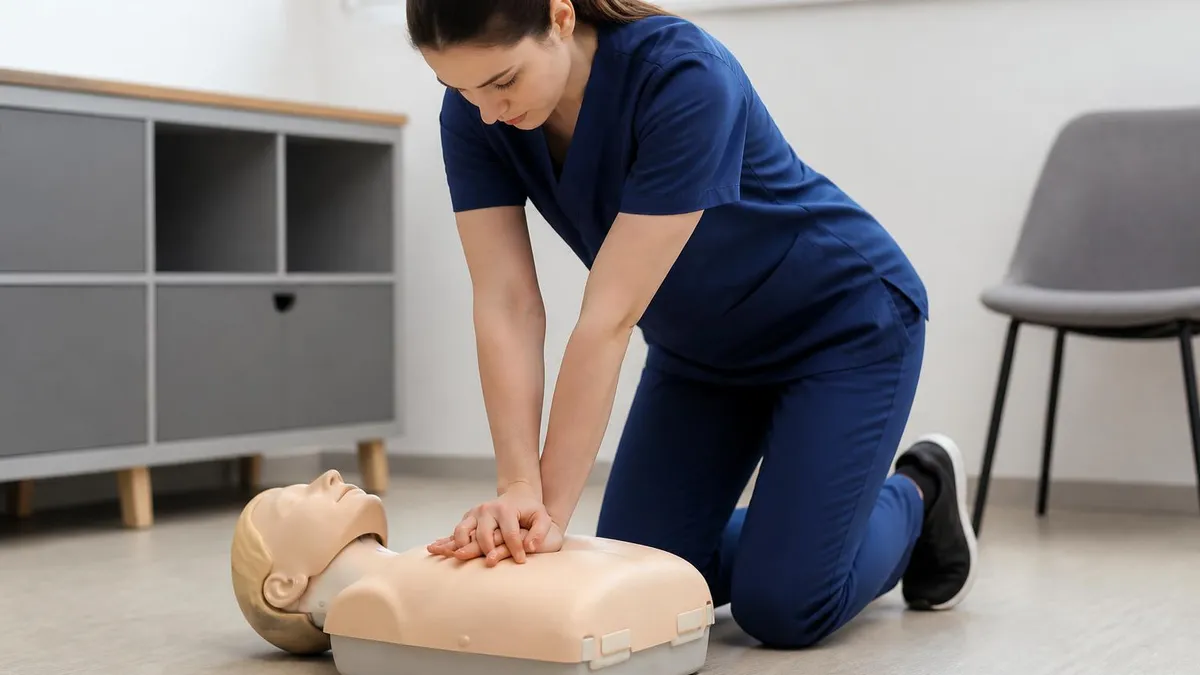
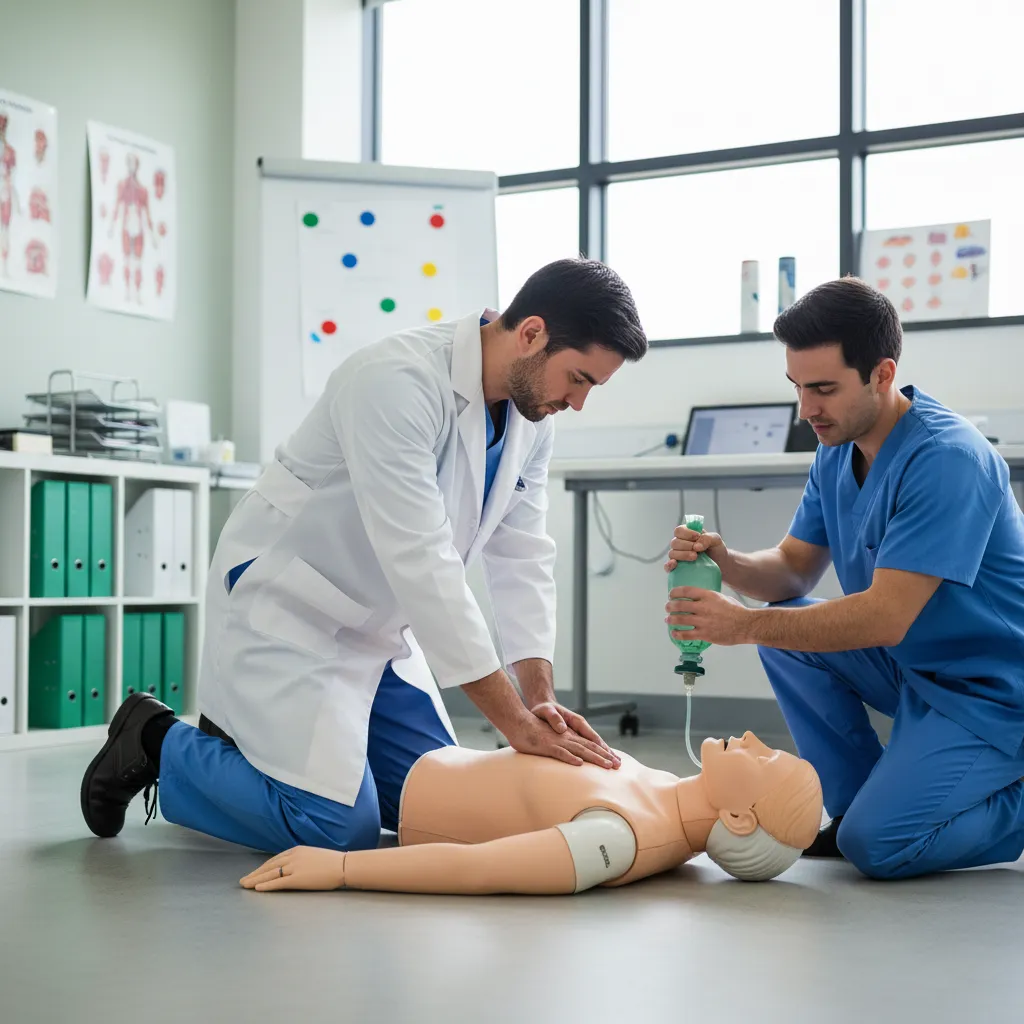
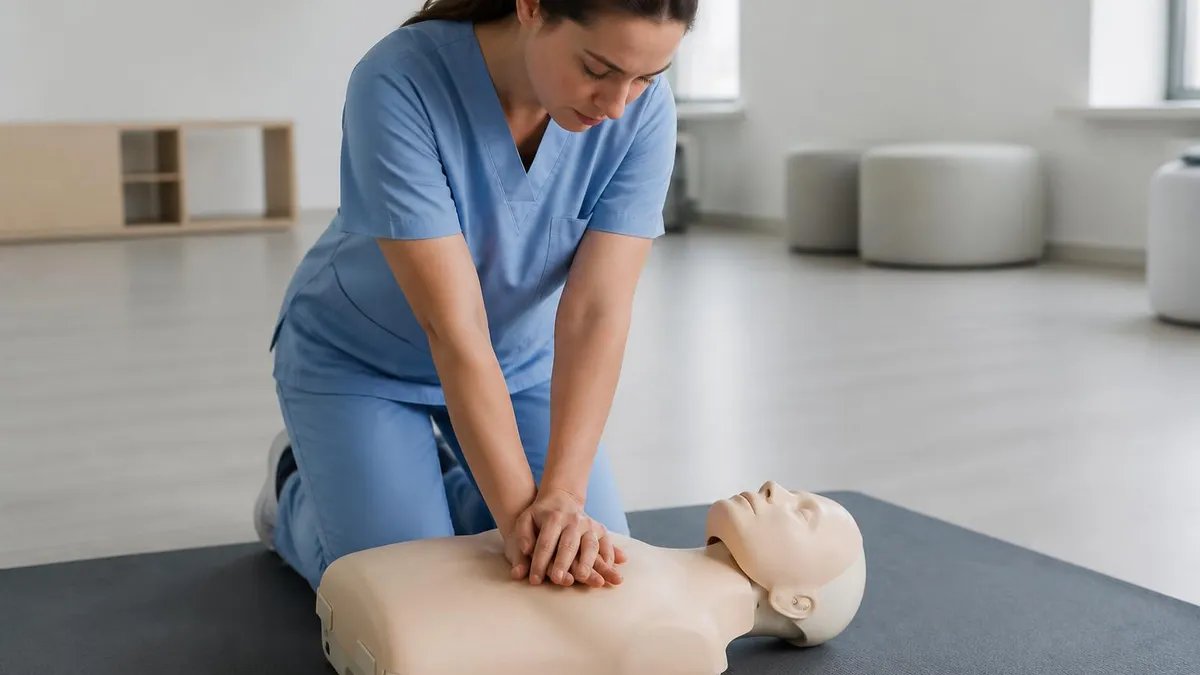
About the Author

Registered Nurse & Healthcare Educator
Johns Hopkins University School of NursingDr. Sarah Mitchell is a board-certified registered nurse with over 15 years of clinical and academic experience. She completed her PhD in Nursing Science at Johns Hopkins University and has taught NCLEX preparation and clinical skills courses for nursing students across the United States. Her research focuses on evidence-based exam preparation strategies for healthcare certification candidates.
Join the Discussion
Connect with other students preparing for this exam. Share tips, ask questions, and get advice from people who have been there.
View discussion (5 replies)