
CPR and First Aid Certification Online: Combo Courses 2026 October
CPR and first aid certification online: 🏆 blended vs 100% online combo courses, costs, employer acceptance, and renewal guide for 2026 October.
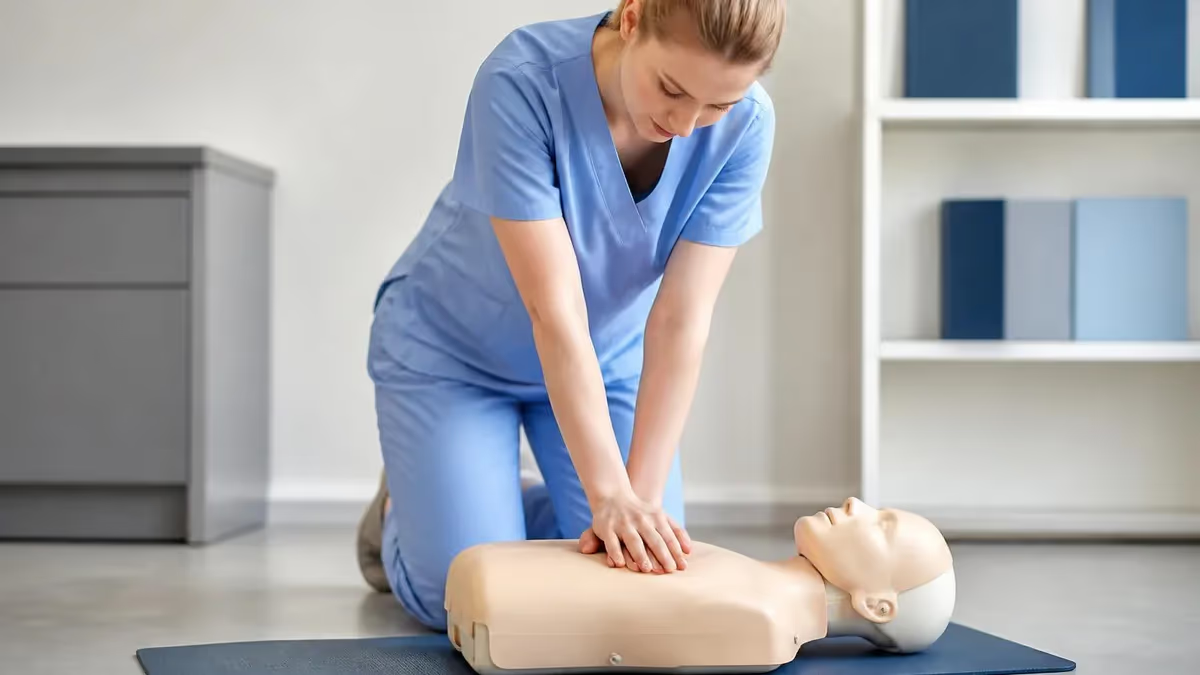
You need CPR and first aid certification online, and you need it fast — maybe a new job starts Monday, maybe your daycare just sent that dreaded compliance email. Whatever brought you here, the good news is that combo certification (CPR + first aid in one course) is the most common bundle out there, and you can knock it out from your couch in under three hours. The catch? Not every "online certification" is worth the PDF it's printed on. Some employers reject 100% online cards on sight, while others happily accept them. Knowing the difference saves you a refund headache and a re-take.
Here's the deal with combo courses. The American Heart Association (AHA) and American Red Cross both offer blended-learning programs where you do the cognitive coursework online and then meet an instructor briefly for a hands-on skills check. That's the gold standard — fully accepted by employers, schools, OSHA, and licensing boards. Then there's the 100% online crowd: providers like ProTrainings, ProCPR, National CPR Foundation, and ProFirstAid. These finish entirely on your laptop, no in-person component, and they cost less. They're legitimate for personal awareness, parents, babysitters, and many low-risk workplaces — but if your boss specifically demands AHA or Red Cross, a 100% online card won't cut it.
This guide walks you through what combo CPR and first aid certification online actually covers, which providers are worth your $30-$75, how the skills check works, what employers really accept, and how to renew before your card expires. By the end you'll know exactly which course to click "Buy" on — and you'll know how to avoid the three sketchy providers that have flooded Google results with fake "instant certification" scams.
What CPR and First Aid Certification Online Actually Covers
A combo online certification typically bundles three skill sets into one course: adult/child/infant CPR, automated external defibrillator (AED) use, and basic first aid. You'll watch video modules — usually 90 minutes to 3 hours total — then pass a 25-50 question multiple-choice exam with a score of 80% or higher. Most providers let you retake the test as many times as you need at no extra cost, which is genuinely helpful if you blank on the compression ratio for an infant (it's 30:2 single rescuer, by the way).
The CPR portion covers chest compression depth (2 inches for adults, about 1.5 inches for kids, 1.5 inches for infants using two fingers), compression rate (100-120 per minute — the "Stayin' Alive" tempo isn't a myth), and rescue breaths. You'll also learn the AED workflow: power on, attach pads, let the device analyze, deliver shock if advised, resume compressions. First aid modules tend to cover bleeding control, burns, choking response (Heimlich for conscious adults, back blows and chest thrusts for infants under one), allergic reactions and epinephrine auto-injectors, seizures, shock, suspected stroke (FAST acronym), and basic wound care.
Blended vs 100% Online — The Crucial Difference
Blended learning is what AHA calls its "HeartCode" courses and what Red Cross calls "blended learning." You complete the online cognitive portion at home, then book a short in-person skills session (usually 30-45 minutes) at a local training center to demonstrate compressions, AED use, and bag-mask ventilation on a manikin. Total cost: usually $80-$130. Total time: about 4 hours online plus the skills check. The card you get is the same one issued for fully in-person classes — full BLS or Heartsaver certification, accepted everywhere.
100% online certification skips the skills session entirely. You watch videos, pass the test, download your card. Providers like ProCPR, National CPR Foundation, and Save A Life by NHCPS sit in this bucket. Cost ranges $20-$75. These courses are great for general public awareness, parents, scout leaders, and workplaces that just need OSHA-compliant documentation. They aren't acceptable for healthcare providers, lifeguards, EMTs, firefighters, or anyone whose state licensing board specifies AHA BLS or equivalent. Check your job posting or licensing board page before you spend a dime.

Best Online Providers for Combo CPR + First Aid
Pricing as of 2026. Always verify on the provider's site since rates shift.
American Red Cross (Blended) — $90 combo CPR/AED/First Aid. Online portion runs about 2.5 hours, then you book a skills session at a Red Cross training center. Two-year certification. This is the safest choice if you're not sure what your employer accepts — Red Cross is universally recognized. You can find red cross cpr classes near me through their official scheduler once you finish the cognitive portion.
American Heart Association HeartCode (Blended) — $30-$45 online portion + $40-$80 skills session. Required for nurses, EMTs, dental hygienists, and most healthcare students. Two-year BLS card. The split pricing tricks people — budget $90-$130 total. AHA cards include a QR code so employers can verify with a quick cpr certification lookup on the AHA portal.
ProCPR / ProTrainings — $59.95 combo CPR/AED + First Aid bundle. 100% online, OSHA-compliant for general workplaces. Two-year card, free retakes, decent video production. Good middle-ground option for office workers, teachers in non-licensed roles, and parents.
National CPR Foundation — $19.95 combo. Cheapest legitimate option, 100% online, OSHA-compliant. Lots of complaints about email confirmation delays but the card itself is genuine. Not accepted by healthcare employers.
ProFirstAid — $29.95 first aid only, bundle with ProCPR for $54. Solid video instruction, good for school staff and youth coaches.
Avoid: "CPR Today," "ezCPR," and anything promising "instant certification in 30 minutes" — these are typically white-label resellers with no quality oversight, and several have been called out by state nursing boards for issuing invalid cards.

The Skills Check — What to Expect
If you go blended, the skills session is less scary than people make it. You'll demonstrate roughly six things on a manikin: adult chest compressions for two minutes (steady rate, full recoil, proper depth), bag-mask ventilation, AED setup, child compressions, infant compressions with the two-finger technique, and one choking scenario. Most candidates pass on the first try. Failures usually come from compression depth being too shallow or letting the chest not fully recoil between pushes. Instructors will coach you in real time — they want you to pass, not fail.
Bring a printout or PDF of your online completion certificate (or have it on your phone), your ID, and wear clothes you can kneel and move in. The session is typically 30-45 minutes for combo CPR/first aid; sometimes shorter if it's just CPR renewal.
Renewal — Two-Year Cycle
Almost every CPR and first aid card expires 24 months from the issue date. You can renew online through the same provider, often at a discount. AHA renewal HeartCode runs about $25-$35 for the cognitive portion plus $40-$60 for the skills check. Red Cross renewal is around $70. Many 100% online providers offer cpr renewal online at the same flat rate as initial certification. Don't let your card lapse — once it expires, some providers make you take the full course again instead of the abbreviated renewal track.
What Employers Really Accept
Healthcare and licensed roles: AHA BLS or Red Cross BLS only. No exceptions in most states. Childcare and daycare: state-specific — some accept any OSHA-compliant card, others require AHA Heartsaver Pediatric. Construction and OSHA-regulated workplaces: typically any nationally recognized card works, including ProCPR and National CPR Foundation. Teachers and school staff: Red Cross or AHA almost always. Personal trainers and gym staff: varies by gym chain, but most accept ASHI, AHA, or Red Cross.
When in doubt, email your HR department a screenshot of the provider's certification info before you pay. Two minutes of email saves you from buying the wrong card.
Specialty Tracks to Consider
If you're looking past the standard combo, a few specialty options are worth knowing about. infant cpr classes dive deeper into pediatric resuscitation — useful for new parents, NICU volunteers, and daycare workers. cpr and first aid classes online in pediatric-only versions skip adult content and shave time off the course. BLS for Healthcare Providers (AHA) goes beyond the combo card by adding two-rescuer CPR techniques, advanced airway awareness, and team dynamics — required for clinical roles.
Want to teach? Check out the cpr instructor course path, which lets you become an authorized instructor for AHA, Red Cross, or ASHI. Initial instructor certification runs $300-$600 and includes a teaching practicum.
Free and Discounted Options
Yes, free certification exists — but tread carefully. Genuine free cpr training is offered through some employer-sponsored programs (hospitals, large school districts, fire departments running community classes), and Red Cross occasionally runs no-cost community CPR awareness sessions (not full certification, but useful). Some sites claim "free certification" then charge $20-$40 at the end to download your card. That's not free — that's standard pricing with a misleading headline.
For low-cost legitimate options: National CPR Foundation at $19.95, ProCPR at $59.95 for combo, or check whether your employer reimburses certification costs — many do, especially in healthcare, construction, and education sectors.
Common Mistakes to Avoid
Three things trip up most people. First, buying a 100% online card when the job specifically asks for AHA — refund hassles follow. Second, letting the card expire and paying full initial price instead of renewal price. Third, falling for the "instant certification, no test required" sites — these are scams and the cards will be rejected.
Pro tip on how long does cpr certification last: every legitimate combo card is good for exactly two years. If a provider claims a three or five-year card, they're either selling a non-standard product or lying. Set a calendar reminder 60 days before expiration so you have time to schedule a skills session if needed.
About the Author

Registered Nurse & Healthcare Educator
Johns Hopkins University School of NursingDr. Sarah Mitchell is a board-certified registered nurse with over 15 years of clinical and academic experience. She completed her PhD in Nursing Science at Johns Hopkins University and has taught NCLEX preparation and clinical skills courses for nursing students across the United States. Her research focuses on evidence-based exam preparation strategies for healthcare certification candidates.
Join the Discussion
Connect with other students preparing for this exam. Share tips, ask questions, and get advice from people who have been there.
View discussion (5 replies)