
American Red Cross CPR Classes: Cost, Types & How to Sign Up 2026 September
🏆 Find American Red Cross CPR classes near you. Learn about class types, cost, formats, how long certification lasts, and how Red Cross compares to AHA.
When someone collapses from cardiac arrest, the people nearby are the first responders — not paramedics. CPR performed in those first minutes can double or even triple survival odds. That's why millions of Americans take CPR training every year, and the American Red Cross is one of the two organizations you'll see mentioned most. Knowing which class to take and how to sign up removes the last barrier between you and that skill.
The Red Cross has been teaching lifesaving skills for over a century. Its CPR program is structured, science-backed, and accepted by employers across virtually every industry. Whether you're a parent wanting to protect your family, a teacher required to hold certification, or a nurse renewing credentials, there's a Red Cross CPR class designed for your situation.
This guide covers everything you need to know before you sign up — class types, formats, costs, what the certification looks like, and how the Red Cross stacks up against the American Heart Association. By the end, you'll know exactly which class to register for and what to expect.

Red Cross CPR Class Types
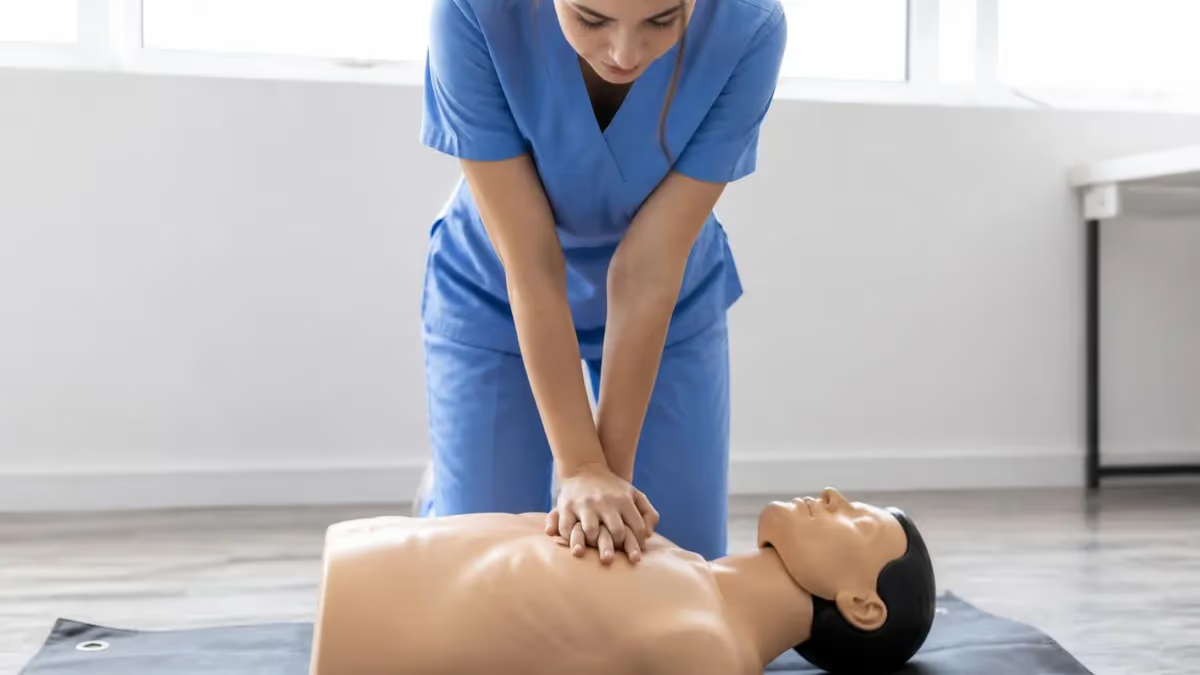
The standard Red Cross CPR course covers adult, infant, and child CPR along with AED use and choking relief. This is the most commonly taken class — it satisfies most workplace and school requirements. It's designed for the general public, with no medical background needed. You'll practice compression depth, rescue breathing, and how to operate an automated external defibrillator. Most sessions run 2–3 hours.
What the American Red Cross Offers for CPR Training
The Red Cross is one of the two nationally recognized CPR training authorities in the United States — the other being the American Heart Association. Both organizations base their curricula on the same underlying science: guidelines published every five years by the International Liaison Committee on Resuscitation (ILCOR). In practice, their courses teach the same core skills.
What sets the Red Cross apart is its network. It operates through thousands of local chapters and partners with employers, hospitals, schools, and fire departments across every state. The organization also offers a blended learning model that lets you complete part of your training online before a shorter in-person skills session — a format that works particularly well for people who can't commit to a multi-hour block on a specific day.
The Red Cross also runs one of the most widely used first aid programs in the country. If you need to bundle CPR with first aid training — which many employers require — you can do it in a single combined class rather than scheduling two separate sessions. That kind of efficiency matters when you're managing a job, family, or both.
Another advantage: Red Cross certifications come with digital verification. Employers can look up your credential directly through the Red Cross Training Portal without waiting for a physical card to arrive. The entire post-class experience is built for working adults.
Red Cross CPR by the Numbers
Red Cross CPR Class Formats
The Red Cross gives you three ways to complete your training, and the right choice depends on your schedule, your learning style, and what your employer or certifying body will accept.
In-person classes run 2–4 hours at a Red Cross chapter location, community center, hospital, fire station, or employer site. You practice compressions on a manikin under the supervision of a certified instructor who can correct your technique in real time. In-person is the most thorough option and is accepted everywhere without question.
Blended learning — sometimes called the online + skills session format — splits the coursework. You complete the cognitive portion online at your own pace, then attend a shorter in-person skills session (typically 30–60 minutes) where an instructor confirms you can physically perform CPR correctly. The total time is similar to a full in-person class, but the flexibility is significant: you can do the online module at whatever hour suits you, then book the brief skills check at a convenient time.
Fully online courses are available for awareness and reference purposes only. They don't include a hands-on skills evaluation, so they don't result in a standard certification card. These work for refreshing general knowledge, internal corporate training without formal credentialing requirements, or community awareness programs. If your employer, licensing board, or nursing school requires proof of CPR certification — the fully online format won't satisfy that requirement. Don't make that mistake before a renewal deadline.

How Long Do Red Cross CPR Classes Take?
Time commitment is one of the top questions people have before signing up. Here's a realistic breakdown by course type.
In-person CPR/AED (Adult, Child, Infant): 2–3 hours, including instruction, video segments, and hands-on practice rounds. You'll rotate through manikins, so expect some waiting during busy sessions.
First Aid CPR AED combined: 3–4 hours in-person. The added first aid modules — bleeding control, burns, stroke, allergic reactions — add meaningful time but deliver a lot of value if your job or home situation calls for broad emergency readiness.
BLS for Healthcare Providers: Typically 3–4 hours in-person. The content is more complex — two-rescuer scenarios, bag-valve-mask technique, and team coordination require more practice repetitions and instructor demonstration time.
Blended learning: Online coursework usually takes 60–90 minutes and can be done in segments across multiple sessions. Add a 30–60-minute in-person skills check, and your total investment is comparable to a full in-person class — but spread across two separate appointments that you schedule independently.
One practical note: Red Cross in-person sessions often run slightly longer than the advertised time, especially in full classes where the instructor provides individual feedback on technique. It's smart to block an extra 30 minutes in your calendar on class day. Arriving early also helps — late arrivals can disrupt the manikin rotation and delay your hands-on practice time.
CPR Class Format Quick Guide
- ✓In-person: Full hands-on training, accepted everywhere, no online component required
- ✓Blended learning: Online module (60–90 min) + in-person skills check (30–60 min), produces valid certification
- ✓Fully online: Awareness training only — does NOT produce a standard certification card
- ✓BLS blended: Available for healthcare providers, same two-step structure
- ✓Employer on-site: Many large organizations bring Red Cross instructors directly to the workplace
How Much Do Red Cross CPR Classes Cost?
Red Cross CPR class pricing isn't fixed nationally — it varies by location, class type, and whether your employer is subsidizing the training. Here's the general range you can expect:
- CPR/AED (Adult, Child, Infant): $35–$55 for the standard community class
- First Aid CPR AED combined: $55–$80
- BLS for Healthcare Providers: $70–$100 or more at hospital-affiliated training centers
- Employer-sponsored group training: Often free to employees, billed to the company at a negotiated group rate
Your employer may cover the full cost — especially in healthcare, education, childcare, and food service industries where CPR certification is a job condition. Check with HR before paying out of pocket. Many employers will reimburse the fee even if they don't proactively schedule or announce training.
Some Red Cross chapters offer reduced-cost or subsidized classes for community members, students, and volunteers. Prices on redcross.org reflect the standard rate, but local chapters sometimes run community sessions that aren't listed on the national site at lower prices. A direct call to your local chapter is worth it if cost is a concern — you might find a free or low-cost option that doesn't appear in the online search.
Recertification classes — for people who already hold a valid credential — are sometimes condensed and marginally cheaper than the initial certification course. Not all locations offer a dedicated recertification track, so confirm what's available before assuming you can take a shorter version of the class.
Red Cross CPR Certification — What You Get
- Format: Downloadable PDF + online verification link
- Issued by: American Red Cross Training Services
- Valid for: 2 years from course completion date
- Lookup: Employers verify via Red Cross Training Portal
- Accepted by: Most hospitals, schools, gyms, childcare centers, and employers
- Equivalent to: AHA certification for most professional requirements
- Recertification class: Available at most Red Cross locations
- Blended renewal: Online + short skills session for most courses
- Tip: Renew before expiration — lapsed credentials create employment risk

How to Find a Red Cross CPR Class Near You
The easiest path is redcross.org's built-in course finder. Enter your zip code, select your course type, and you'll see available dates and locations in your area — filterable by in-person, blended, or online format. You can register and pay directly on the site.
Beyond the website, a few other options are worth knowing:
- Local Red Cross chapter offices: Some chapters run sessions not listed on the national site. Call your local chapter and ask about upcoming community classes — especially if pricing is a concern.
- Employer-sponsored training: If you work in healthcare, education, or a safety-sensitive industry, your employer may arrange on-site Red Cross training. Ask your HR or safety coordinator before searching independently.
- Hospitals and health systems: Many hospitals are authorized Red Cross training sites and offer classes to both staff and community members. These spots fill quickly — register early.
- Community centers and fire departments: Some Red Cross-affiliated organizations host occasional public CPR sessions at reduced cost. Check local community boards and your city's fire department website.
If you're looking for red cross cpr classes near me, the redcross.org finder is the most reliable starting point — new sessions are added frequently, and availability changes week to week.
Before You Register — What to Confirm
- ✓Verify your employer or licensing board accepts Red Cross certification (vs AHA-specific requirements)
- ✓Choose the right class type — BLS for healthcare workers, standard CPR/AED for most others
- ✓Decide between in-person or blended format based on what your credential requires
- ✓Ask HR if your employer will cover or reimburse the class cost
- ✓Register early — evenings and weekend slots fill fast at popular locations
- ✓Wear comfortable clothes — you'll kneel on the floor doing compressions on a manikin
- ✓Bring a photo ID and any employer forms that need an instructor signature
Red Cross vs. AHA CPR Certification — Which Is Accepted Where?
This is the most common question from people comparing CPR training options. The short answer: both are widely accepted, and for most workplaces and licensing requirements, either will work.
Both organizations follow the same ILCOR science guidelines. Both issue 2-year certifications. Both are recognized by OSHA, The Joint Commission (for hospitals), state nursing boards, and the large majority of employers who require CPR credentials. If you're unsure which to take, check your employer's written policy or your licensing board's language before registering — that's the only authoritative answer for your specific situation.
There are narrow exceptions that matter in healthcare. Some hospital systems specify AHA BLS Provider by name in their credentialing documents. Some state EMS licensing requirements call out one organization specifically. If you're a nurse, EMT, or allied health professional, a quick call to HR or your credentialing office before you enroll takes two minutes and saves potential frustration.
For the general public — parents, teachers, coaches, office safety officers — the choice comes down to schedule, location, and cost. Both organizations will give you equivalent skills training. If the Red Cross has a convenient evening class at your local fire station, take it. If the AHA has a class running at your hospital next week, that works too.
Understanding the full options landscape helps you make the right call. heart association cpr classes cover the same core material as Red Cross training — the practical differences lie in delivery format, scheduling, and how specific employer policies are worded. And if you want to go deeper on the AHA side, our guide covering heart association cpr classes breaks down their course structure and format in detail for direct comparison.
Red Cross CPR Classes — Pros and Cons
- +Nationally recognized — accepted by nearly all employers and licensing bodies
- +Blended learning format lets you complete the cognitive coursework on your own schedule
- +Wide geographic coverage through thousands of local chapters and partner training sites
- +Bundles CPR with first aid in a single certification for workers who need both
- +Digital certificates with online employer verification — no waiting for a card in the mail
- +Multiple class types cover everyone from community bystanders to hospital clinical staff
- −Some hospital systems specifically require AHA BLS — always verify before enrolling
- −Fully online classes don't produce a standard certification card — easy to confuse with real certification
- −Pricing varies by location and isn't always fully transparent before you complete registration
- −Popular class times fill quickly, especially in dense urban areas
- −Blended learning requires two separate scheduled appointments, which can be harder to coordinate
- −Dedicated recertification-only tracks aren't available at every location
Red Cross CPR Certification — Validity and Renewal
Red Cross CPR certification is valid for 2 years from the date you complete your skills evaluation. There's no built-in grace period — when your card expires, you need a new class to hold a current credential.
In reality, many employers give staff a short window to renew before taking action. Don't count on it, though. Hospitals and healthcare facilities run regular credential audits, and an expired CPR card can result in immediate suspension from patient care until you're recertified. It's not worth the risk — schedule your renewal well before the expiration date.
If you're wondering how long does cpr certification last across different providers, the 2-year standard is consistent across Red Cross, AHA, and most other accredited training organizations in the US.
For renewal, you can return to any authorized Red Cross training site for a recertification class, or complete a blended renewal if your schedule makes a full in-person class difficult. Some locations offer a condensed renewal format that's shorter than the initial class — ask when you register. The renewal process produces a new 2-year certification dated from your renewal completion, not an extension of your existing card's expiration date.
If you're asking how long is cpr certification good for, the answer is consistently 2 years. Renewing before expiration keeps your employment credentials seamless. Letting a certification lapse and then renewing doesn't cover the gap period — some employers will flag that break even after you've recertified.
Tips for Getting the Most Out of Your Red Cross CPR Class
Signing up is step one. Getting real value from the training takes a bit more intention — and the difference between a forgettable class and one that actually sticks usually comes down to how engaged you are during the session.
Ask your instructor to watch your compression depth specifically. The most common technique error in CPR is not pushing hard enough — proper adult compressions require 2–2.4 inches of depth, which is more forceful than most people expect on the first try. Your instructor won't correct you unless they can see you, so actively request real-time feedback during practice rotations. It's what the class is for.
Don't treat the AED portion as a formality. Automated external defibrillators are now installed in airports, shopping malls, gyms, office buildings, and schools — you're statistically more likely to encounter one than you might think. The device talks you through each step, but practicing the physical workflow in class means you won't lose time fumbling with it in an actual emergency.
If you're taking a First Aid CPR AED combined class, focus on the bleeding control and choking sections. These are the scenarios you're most likely to encounter in everyday life — far more common than a full cardiac arrest event. Knowing how to manage severe bleeding or a choking infant effectively can save a life in situations that don't require CPR at all.
After class, use the Red Cross digital reference materials. Your certification includes access to online guides and refresher content that you can review anytime. A 10-minute refresher every few months is far more effective than cramming everything again right before your renewal deadline. CPR skills decay quickly without reinforcement — build the habit of reviewing them regularly. Practice questions and knowledge checks can also help you retain the cognitive side of your training between classes.
CPR Questions and Answers
About the Author

Registered Nurse & Healthcare Educator
Johns Hopkins University School of NursingDr. Sarah Mitchell is a board-certified registered nurse with over 15 years of clinical and academic experience. She completed her PhD in Nursing Science at Johns Hopkins University and has taught NCLEX preparation and clinical skills courses for nursing students across the United States. Her research focuses on evidence-based exam preparation strategies for healthcare certification candidates.
Join the Discussion
Connect with other students preparing for this exam. Share tips, ask questions, and get advice from people who have been there.
View discussion (5 replies)