
CPR Certification Class — Complete Guide (2026)
CPR certification class guide: what to expect, AHA Heartsaver/BLS/ACLS levels, cost ($39-300), 2-16 hours, in-person vs blended formats, 2-year validity. 💯
CPR Certification Class — Complete Guide (2026)
You're signed up for a cpr class. Now what? Most people show up without a clue — what to wear, how long it lasts, what they'll actually do for those few hours, whether there's a written test.
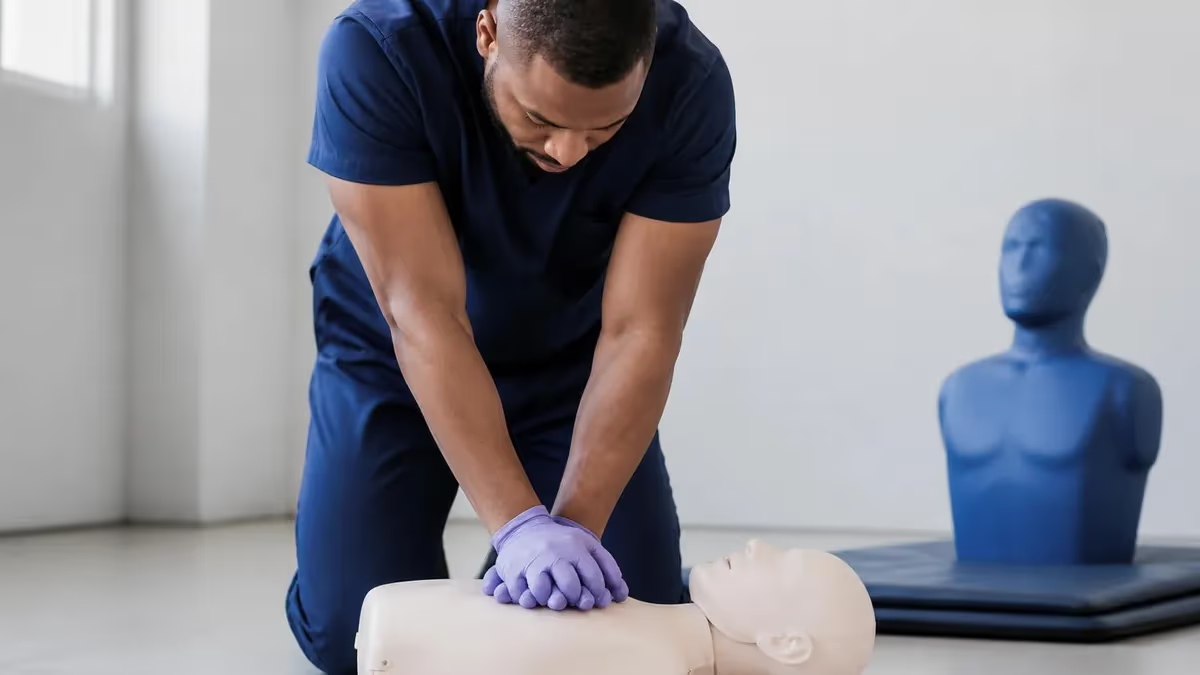
Fair warning: the class moves fast. Two to four hours, sometimes longer, and you're on your knees for most of it pressing a plastic torso. Expect to leave with a card mailed to you (or printed on the spot if your provider is fast) that's good for two years.
Here's what nobody tells you upfront. The American Heart Association certifies most of America's CPR-trained workforce. The Red Cross runs a close second.
National Safety Council, ASHI, and ProTrainings round out the legitimate providers. Online-only courses that promise a card after a $20 quiz? Skip those. Employers and state licensing boards reject them. They don't include hands-on skills practice, which is the whole point of certification.
This guide walks through every level (Heartsaver, BLS, ACLS, PALS), every format (in-person, blended/Heartcode, online-only), what you'll learn, what to bring, what to wear, and what happens after. Whether you're a daycare worker grabbing a $55 Heartsaver card or a nurse re-upping your BLS for hospital credentialing, the structure looks similar — just the depth and length change.
Skip ahead if you already know your level. If you don't, the providers below cover every common situation. Most people need Heartsaver CPR/AED (laypeople, teachers, coaches, parents) or BLS Provider (nurses, EMTs, dental staff, anyone in healthcare). The rest are specialized.
One more thing before we start. cpr renewal online is a real option for people who already hold a current card — blended courses let you do the cognitive portion at your computer, then book a 60-90 minute skills check in person. First-timers, though, almost always need a full in-person class. There's no shortcut for learning compression depth on a manikin.
- Length: 2-5 hours for Heartsaver and BLS. 12-16 hours for ACLS or PALS.
- Cost: $39-$90 for Heartsaver, $90-$140 for BLS, $190-$300 for ACLS/PALS.
- Validity: 2 years from the date on your card. No exceptions for any AHA-credentialed provider.
- Age requirement: Most providers accept students aged 12 and up. Some require 16+.
- Class size: 6-15 students typical. AHA caps at 6 students per instructor for skills practice.
- Test format: Skills demonstration (mandatory) plus a written or oral exam at higher levels.
Class Levels and Who Needs Them
The entry-level class. Designed for non-medical people who might need to act in an emergency.
- Best for: Teachers, coaches, parents, daycare staff, lifeguards, fitness instructors
- Length: About 2 hours
- Cost: $55-$90
- Covers: Adult CPR, AED operation, basic choking response
Required for childcare providers in most states. Adds infant and child CPR plus first-aid scenarios.
- Best for: Daycare workers, nannies, camp counselors, school staff
- Length: About 5 hours
- Cost: $75-$110
- Covers: Infant/child/adult CPR, first aid for kids, choking, AED
The healthcare-grade card. Required for nurses, EMTs, dental staff, medical assistants, and any HCP role.
- Best for: Nurses, EMTs, dental assistants, medical students, paramedics
- Length: About 4 hours (full course); 1-2 hours skills only after Heartcode online
- Cost: $90-$140
- Covers: Adult/child/infant CPR, two-rescuer scenarios, bag-mask ventilation, AED, advanced choking
Advanced Cardiovascular or Pediatric Life Support. For licensed medical professionals managing real cardiac arrests.
- Best for: RNs in ICU/ER/cath lab, paramedics, physicians, anesthesia providers
- Length: 12-16 hours over 1-2 days
- Cost: $190-$300
- Prerequisite: Current BLS card before sitting
The Red Cross equivalent of Heartsaver. Accepted by most employers except some hospitals that specify AHA.
- Best for: Same audience as Heartsaver
- Length: 2-3 hours
- Cost: $39-$80
- Covers: Adult CPR, AED, choking
Formats: In-Person, Blended, and Online-Only
Three formats. Only two are worth your time.
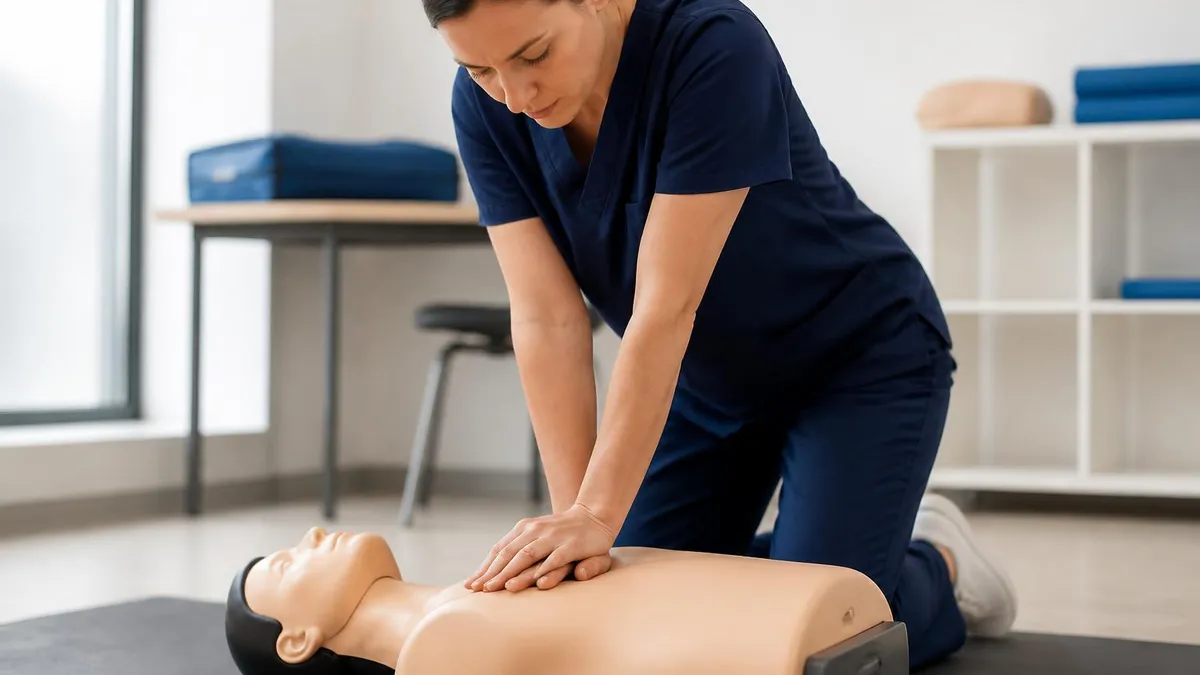
In-person. The classic. You show up, sit through instructor-led lecture and video, then spend 60-70% of class time on a manikin practicing compressions, breaths, and AED pad placement. Skills get evaluated and signed off in real time. Heartsaver runs about 2 hours; BLS runs 4. This is the standard format for first-time learners — you cannot fake compression depth, and the instructor catches mistakes you'd never see in a video.
Blended (AHA Heartcode or Red Cross blended). Cognitive portion online, skills check in person. You watch videos, answer quiz questions, work through scenarios at your computer for 1-3 hours.
Then book a 30-90 minute skills session at an AHA training center where an instructor watches you do the actual compressions and signs you off. cpr renewal classes often use this format because renewal candidates already know the theory — they just need a skills check. Good for renewals, working for first-timers too if you're disciplined. Important: the in-person skills portion is mandatory. Don't book a Heartcode course thinking you can skip the lab.
Online-only. No skills check, no manikin practice, just a quiz and a printed card. The AHA does not issue these — period.
A small handful of state-specific roles accept them for low-risk certification (some online tutoring jobs, certain fitness gym memberships), but hospitals, schools, daycares, EMS, and most employers reject them.
If you're paying for CPR certification and the provider doesn't include hands-on skills, you're buying a wall decoration. Skip it. The only legitimate use case for an online-only card is personal knowledge — and even then, the lack of skills practice means you've memorized theory without ever feeling correct compression depth on a manikin. That gap shows up immediately in an actual emergency, when seconds matter the most.
Worth knowing: cpr certification renewal for current AHA cardholders is the most common blended use-case. If your card expired more than 30 days ago, most providers require the full course again, not just the renewal skills check.
Compare Formats Side-by-Side
Best for: First-time students at any level.
Length: 2 hours (Heartsaver) to 16 hours (ACLS).
Pros: Instructor catches every mistake. Real-time feedback on compression depth, rate, hand placement, AED pad use. You finish certified the same day.
Cons: Fixed schedule. You have to show up. Travel time, parking, the whole deal.
Best providers: AHA Training Centers, Red Cross chapters, hospital education departments, community colleges, fire departments offering public classes.
What You'll Learn in Class
The skills break down into five categories. You'll touch every one of these, regardless of which level you take — depth and complexity scale up at BLS and above.
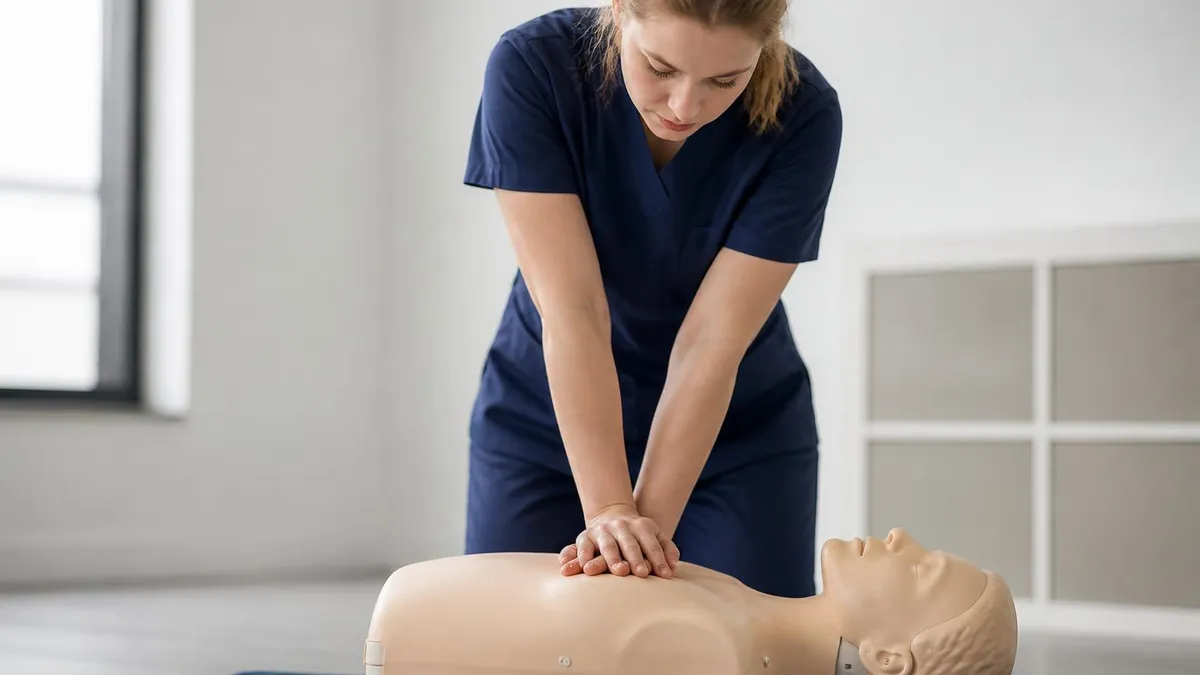
High-quality chest compressions. The core skill. Rate is 100-120 compressions per minute. Depth is at least 2 inches for adults (about 1/3 of chest depth for kids). Full chest recoil between compressions — that means letting the chest come all the way back up, not leaning. Minimize interruptions. You'll practice with a manikin that clicks or beeps when you hit the right depth and rate.
Rescue breathing. 30 compressions, then 2 breaths. Tilt the head, lift the chin, pinch the nose, give breaths over 1 second each. Look for chest rise. If chest doesn't rise, reposition and try again. BLS-level students learn bag-mask ventilation too — sealing the mask to the face, squeezing the bag to deliver volume.
AED use. Turn it on. Follow the voice prompts. Wipe and dry the chest, place pads (upper right and lower left, away from any implanted device bumps), let it analyze, shock if advised. Resume compressions immediately after shock or 'no shock advised.' Continue 2-minute cycles. You'll handle a training AED that talks through real scenarios.
Choking response. Abdominal thrusts for adults and children over 1 year. Five back blows alternating with five chest thrusts for infants. If the person becomes unresponsive, lower them to the ground and start CPR. Every breath delivery, look in the mouth — if you see the object, remove it. Never do a blind finger sweep.
Infant and child variations. Two fingers (or two thumbs with both hands encircling) for infant compressions. One or two hands for child compressions depending on size. Compression-to-breath ratio drops to 15:2 for two-rescuer scenarios with kids, stays 30:2 single rescuer. Smaller breaths — just enough to see chest rise.
Skills You'll Be Tested On
- ✓Recognize cardiac arrest within 10 seconds (no breathing, no pulse)
- ✓Call 911 and request an AED before starting compressions
- ✓Deliver compressions at 100-120/min, 2+ inches deep, with full recoil
- ✓Give effective rescue breaths over 1 second with visible chest rise
- ✓Maintain 30:2 ratio for single-rescuer adult CPR
- ✓Operate an AED from power-on to first shock without instructor prompts
- ✓Switch compressors every 2 minutes (or every 5 cycles) to prevent fatigue
- ✓Respond to choking with abdominal thrusts; transition to CPR if person becomes unresponsive
- ✓Modify technique for infants and children (compression depth, hand position, ratio)
- ✓Demonstrate two-rescuer coordination (BLS level — compressions, ventilations, AED operator roles)
What to Expect Hour by Hour
Class structure is pretty consistent across providers. Here's how a typical Heartsaver or BLS session plays out.
Minutes 0-15: Check-in and intro. Show your ID, sign in. Instructor introduces themselves, runs through the agenda. You'll watch a short video about the 'chain of survival' — call 911, early CPR, early defibrillation, advanced care, recovery. Tone is set: this is hands-on, not lecture-heavy.
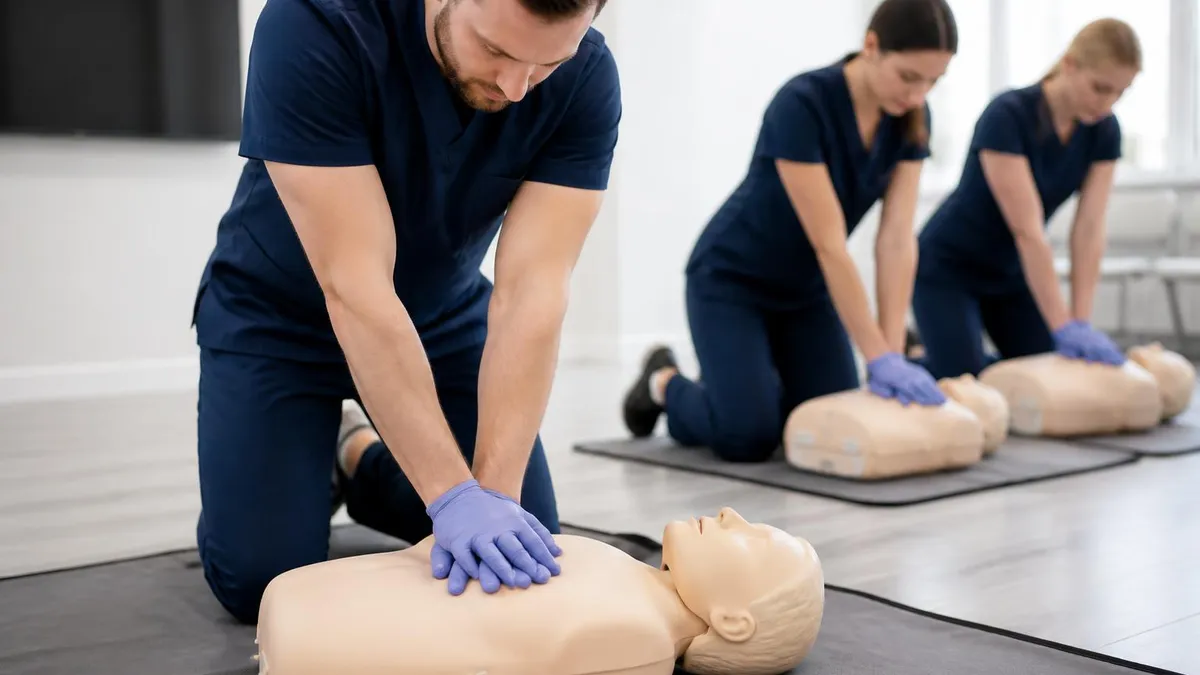
Minutes 15-45: Compression demo and practice. Instructor demonstrates on a manikin, walking through depth, rate, and recoil. Then you're up. Most classes have 1 manikin per 2-3 students. You'll do compressions until you can hit the target metrics consistently. Tired? That's the point — instructors want you to feel the fatigue so you understand why rescuer swaps every 2 minutes matter.
Minutes 45-75: Rescue breaths and 30:2 cycles. Add breaths to the rhythm. Most adult students struggle with the head-tilt-chin-lift positioning at first — too aggressive and the breath escapes, too gentle and it doesn't go in. Practice until the chest rises consistently.
Minutes 75-110: AED training. Each student operates a training AED at least once. Power-on, pad placement, shock or no-shock decision, resume CPR. Some classes use scenarios where the AED talks you through the steps; others mute it so you have to read pad placement diagrams.
Minutes 110-140: Choking and pediatric. Practice abdominal thrusts on a partner (gentle pressure — nobody actually gets thrust). Move to infant manikins for two-finger compressions and back-blow/chest-thrust choking response.
Minutes 140-180: Skills check and written exam. Instructor watches each student perform a full scenario — recognize arrest, call 911, compressions, breaths, AED. Pass or fail moment, but instructors are coaches, not judges. They'll let you redo any skill until you get it. Most providers also give a short written or oral exam (15-25 questions at Heartsaver, longer at BLS and above).
Wrap-up. Card information collected. AHA cards arrive in 4-8 weeks by mail or eCard download. Red Cross issues digital cards within 24 hours. Some independent providers print your card on the spot.
Class Day Flow
Arrive 10 minutes early
Watch the chain-of-survival video
Hands-on compression practice
Rescue breathing and bag-mask
AED operation
Choking and pediatric
Skills demonstration
Written or oral exam
What to Bring and What to Wear
Comfortable clothes. You'll be kneeling for most of the class — manikins go on the floor, on tables, on chairs depending on the scenario. Jeans are fine. Skirts and dresses are not.
Closed-toe shoes are smart (some training centers require them for safety). Don't wear anything restrictive across the chest — you need to move your arms freely for compressions. Layered tops work well because rooms get warm during practice and chilly during lecture.
Bring with you:
- Government-issued photo ID (required at AHA training centers)
- Registration confirmation email or printout
- Pre-class study materials if your provider sent any
- Water bottle — compressions are surprisingly tiring and most rooms get warm
- A jacket or layer — training rooms swing cold (HVAC for instructor comfort)
- Glasses if you wear them — you'll be reading AED instructions and screen prompts
- A small notepad if you like to jot notes — most providers give a handout, but jotting personal reminders helps later recall
Skip:
- Phone-tethered learning. Most providers ask you to silence and put away phones — class is hands-on.
- Heavy jewelry that swings during compressions. Hoop earrings can catch on manikin cords.
- Anything you can't kneel in.
- Strong perfume or cologne — close-quarters practice gets uncomfortable for classmates with sensitivities.
One detail that surprises people: hair. If yours is long, tie it back. You'll be leaning over a manikin's face for rescue breaths and you don't want it in your way. Same with neckties — instructors usually recommend removing them or tucking them into your shirt before compressions start.
Class size matters too. AHA caps skills practice at 6 students per instructor — if you're in a 15-person class, expect two or three instructors splitting the group.
Red Cross runs slightly larger groups but still caps practice at 8 per skills instructor. Smaller is better for first-timers; you get more hands-on time and more feedback. Ask the training center their typical student-to-instructor ratio before booking.
One more practical note. Most classes don't include lunch breaks because they're short, but BLS and longer formats do. Bring a snack and a refillable bottle. Skills practice on an empty stomach is rough — you'll be doing physical work, and low blood sugar combined with focus fatigue makes the AED quiz harder than it needs to be.
If you have a back issue, knee problem, or shoulder injury, mention it to the instructor at check-in. They can demonstrate alternate body positions, suggest using a chair-mounted manikin instead of floor work, and give you accommodations during the skills check. Nobody gets disqualified for needing a different posture. Instructors deal with this constantly — pregnancy, recent surgery, chronic pain — and they have workarounds.
Cost Breakdown by Provider
After the Class: Your Card and Choosing the Right Level
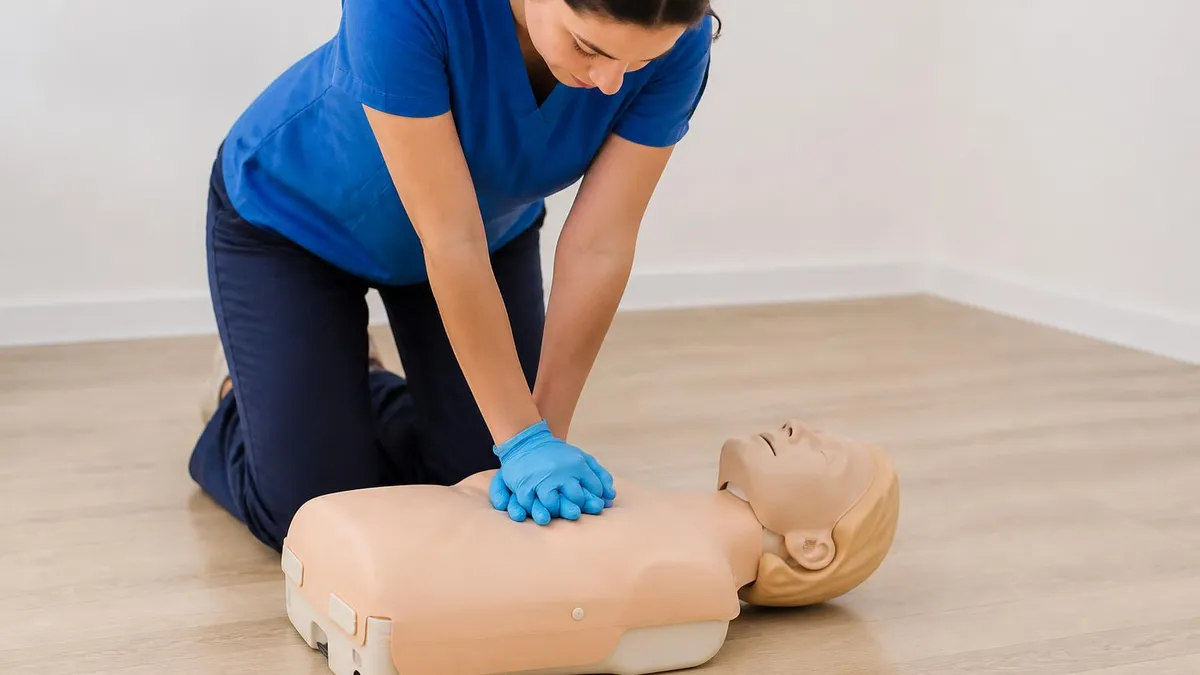
You leave class certified. The card arrives shortly after — timing depends on provider.
AHA cards. Used to take 4-8 weeks by mail. Most AHA Training Centers now issue eCards through a portal called AHA Atlas. Your instructor enters your roster into the system within 24-48 hours of class; you get an email with a download link. Print it, photograph it, screenshot the QR code — employers can scan and verify online. Physical plastic cards are still available on request from some centers, usually for a small fee.
Red Cross cards. Digital cards within 24 hours via the Red Cross Learning Center portal. Always digital — Red Cross stopped issuing plastic cards in 2017. Same QR-code verification, same employer acceptance everywhere AHA cards are taken.
Independent providers (NSC, ASHI, ProTrainings, EMS Safety). Varies. Some print the card on the spot. Others email a PDF within hours. Verify your card is on a recognized national registry before assuming an employer will accept it.
Your card is valid for 2 years. Period. No grace period. The expiration date prints on the card itself. Set a calendar reminder 90 days before expiration so you can schedule renewal without scrambling — particularly important for healthcare workers who can lose hospital privileges with an expired card.
What if you need to verify a card someone else holds? AHA, Red Cross, ASHI, and NSC all have public lookup tools. Enter the card ID and last name; the system confirms validity and expiration. Hospitals do this routinely during credentialing. So do daycare licensing inspectors, school districts, and large employers running background checks on safety-sensitive roles.
Failed a skill during the in-class evaluation? You don't fail the course. Most instructors loop back, retrain, retest until you pass. Failure is extraordinarily rare in CPR class — the format is designed to coach you to competence, not gatekeep. If you cannot perform a skill due to a physical limitation, the instructor will discuss accommodations or document a partial certification. Talk to them privately if you have concerns going in.
One question worth answering before the class: should you retake or renew? If your card is still current, cpr certification renewal through a blended Heartcode course is faster and cheaper than starting over. If you let your card lapse more than 30 days, most providers require the full class again. Some centers offer a 60-day grace period, but it's provider-specific — call before assuming.
Worth knowing about the card itself. AHA eCards include a QR code that links to a public verification page. Employers scan the code to confirm your name, course completion date, and expiration. The card is yours forever — even after expiration, the verification page still confirms you completed the course on that date. That matters for resume claims, professional licensing applications, and re-credentialing audits years later.
One more practical detail: most centers will not refund a class fee after you've started. Cancellations a week out usually get a partial refund. Same-day cancellations forfeit the fee. Reschedule policies vary. If your work schedule is unpredictable, look for centers offering a flexible booking window — many AHA centers let you reschedule up to 24 hours before class without penalty.
Related reading: cpr certification class covers the next step in more detail.
Readers who want more detail usually continue with cpr certification class.
If you want the full picture, the cpr certification class guide walks through it step by step.
After-Class Checklist
- ✓Save your eCard PDF and the QR-code link in two places (phone + cloud)
- ✓Verify expiration date on the card itself — that's your renewal deadline
- ✓Set a calendar reminder 90 days before expiration to book renewal
- ✓Add your card to your employer's compliance file if required
- ✓Take a photo of the card front and back as backup
Picking the Right Class Level
AHA BLS Provider. Universal hospital standard. The full cpr classes landscape includes BLS, ACLS, PALS, and Heartsaver — only BLS satisfies hospital credentialing.
- Card: AHA BLS Provider
- Length: 4 hours
- Cost: $90-$140
Heartsaver CPR/AED is enough. Add Heartsaver First Aid if you want the broader skill set for $30-$50 more.
- Card: Heartsaver CPR/AED
- Length: 2 hours
- Cost: $55-$90
Heartsaver Pediatric First Aid CPR AED. Adult/child/infant CPR plus kid-specific first aid. Required for daycare licensing in nearly every state.
- Card: Pediatric First Aid CPR AED
- Length: 5 hours
- Cost: $75-$110
ACLS and PALS on top of BLS. Most employers cover the cost; some require scheduling within the first 90 days of employment.
- Cards: ACLS + PALS (with current BLS)
- Length: 12-16 hours each
- Cost: $190-$300 each
Provider quality varies. Look at Google ratings for the specific training center, not the provider's national brand. A 4.8-star AHA Training Center in your city is different from a 3.2-star one across town — both certify identically, but the experience differs. Smaller class sizes, longer skills practice time, and instructors who actually demo each technique come from individual centers, not the AHA brand itself.
Group rates exist almost everywhere. If your employer needs 5+ people certified, most centers will come to your workplace for a per-head discount. Often $20-$40 cheaper per person than scheduling individually, sometimes more.
Should You Take Heartsaver or BLS?
- +Heartsaver is cheaper ($55-$90 vs $90-$140) and shorter (2 hours vs 4)
- +Heartsaver covers everything a layperson needs — adult CPR, AED, choking
- +Heartsaver accepted for most teaching, coaching, daycare, fitness, and lifeguard roles
- +Easy to upgrade later if you change careers
- −Not accepted for healthcare jobs — hospitals require BLS
- −Doesn't cover two-rescuer scenarios or bag-mask ventilation
- −Some states require Heartsaver Pediatric First Aid + CPR specifically for childcare — check before booking
- −If your career path leads to nursing or EMS, you'll need BLS eventually anyway
CPR Class Numbers Worth Knowing
Key Facts at a Glance
| Item | Value | Details |
|---|---|---|
| Heartsaver length | 2 hrs | |
| BLS length | 4 hrs | |
| BLS cost range | $90-$140 | |
| Card validity | 2 years | |
| Compressions per minute | 100-120 |
CPR Questions and Answers
Related CPR Guides
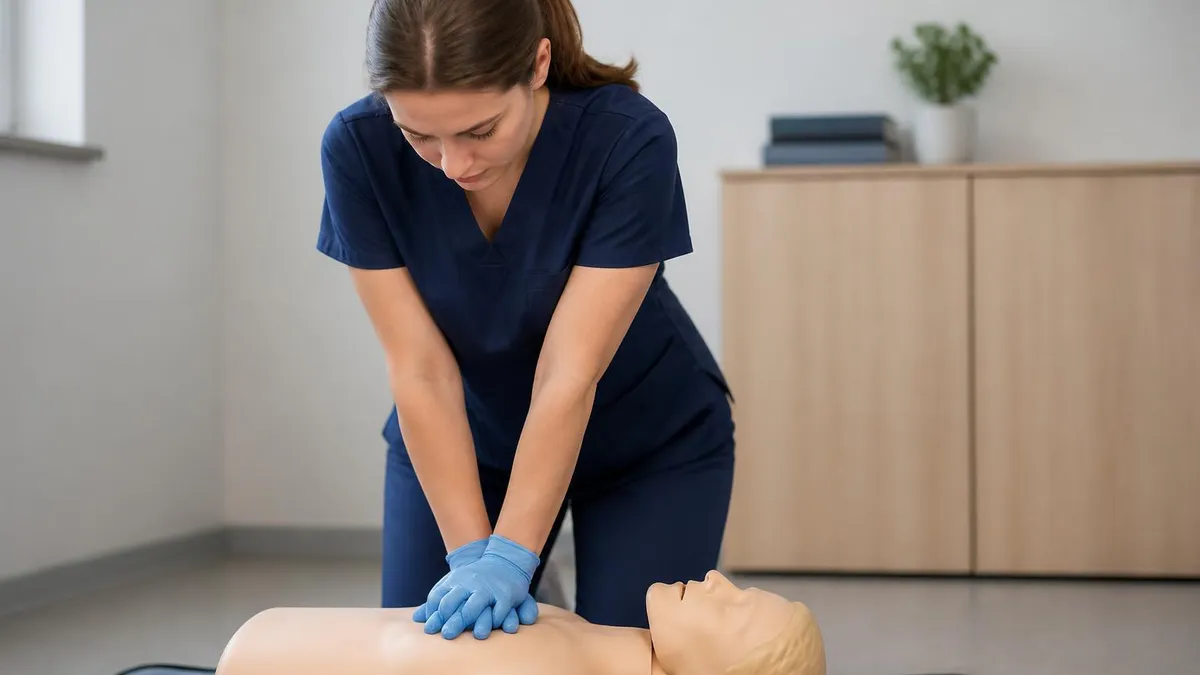
CPR Classes: Types, Cost, and Where to Find Them
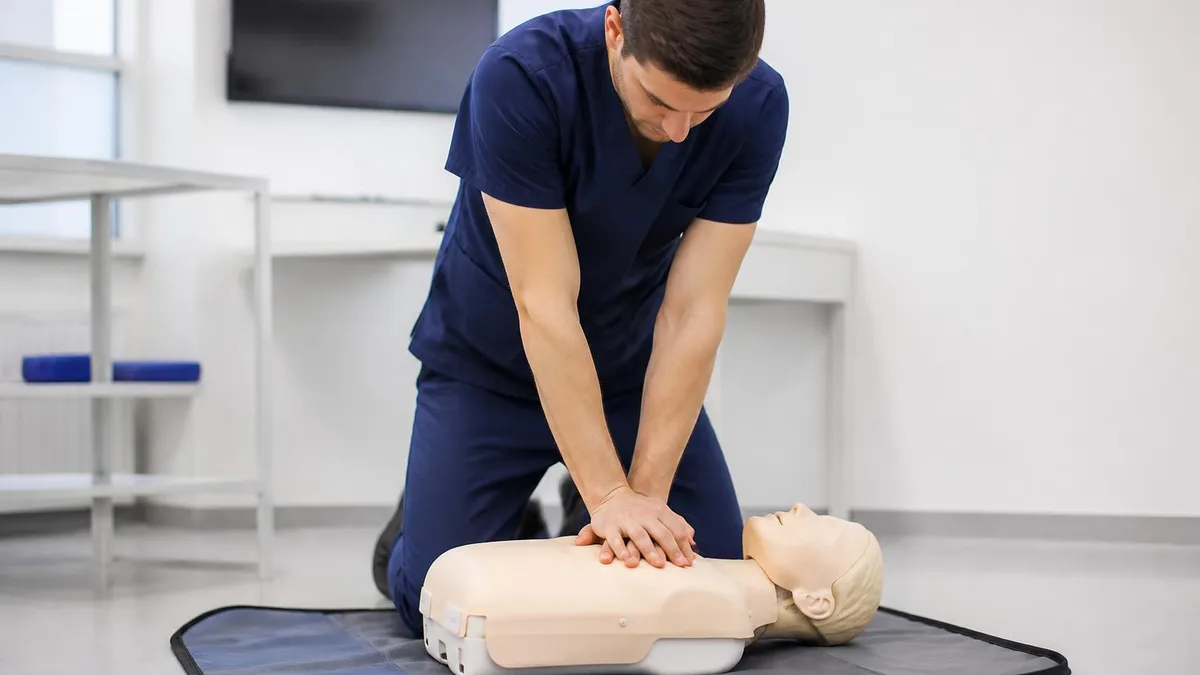
CPR Certification Cost: Complete Pricing Guide for Every Provider in 2026
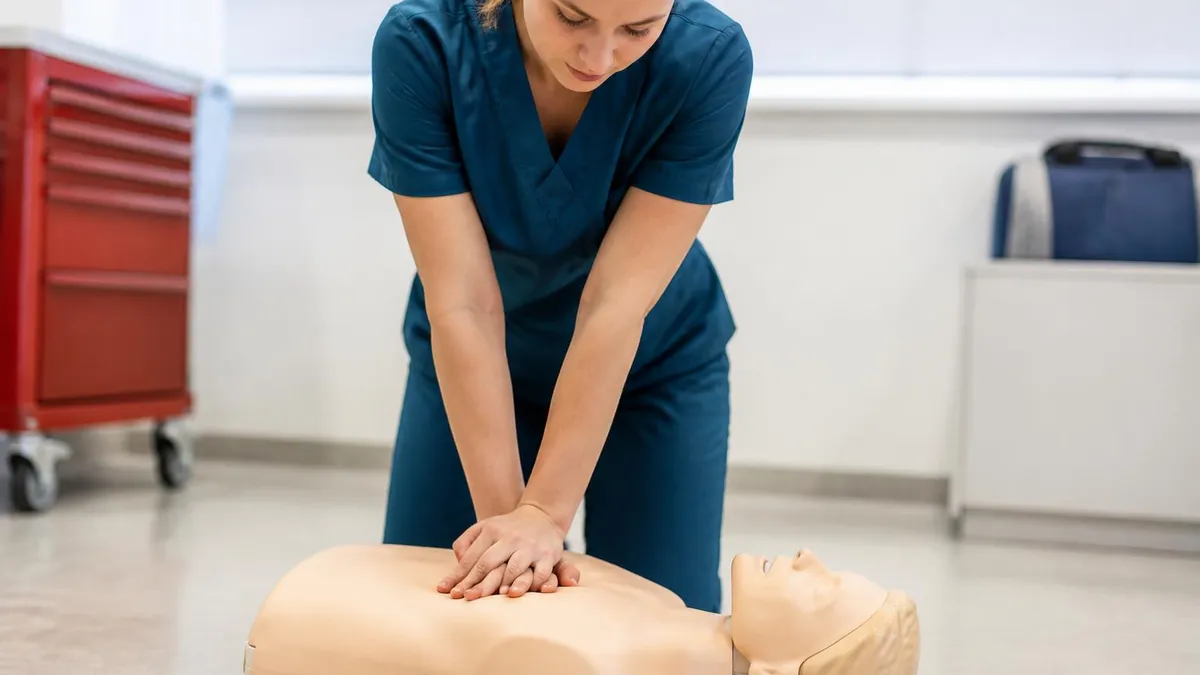
What to Wear to CPR Class: Complete Clothing and Preparation Guide for Every Certification Level
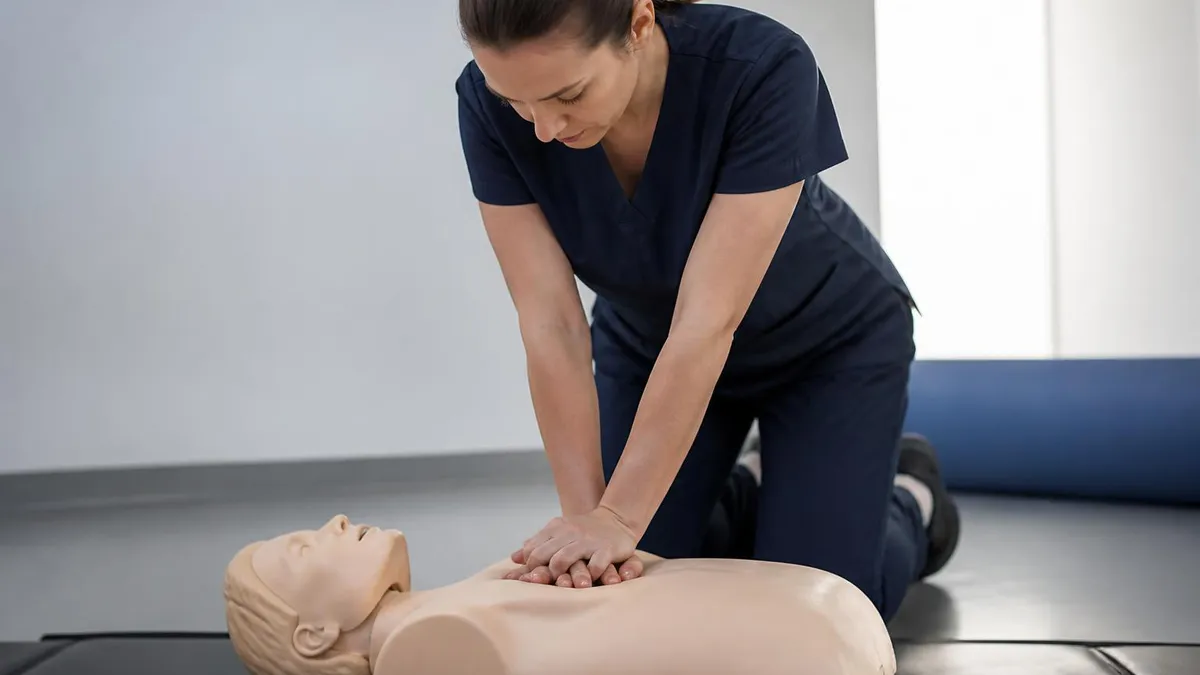
CPR Class Length: How Long Each Certification Course Really Takes in 2026
Where to Get CPR Certified in 2026: Complete Guide to Classes, Costs & Online Options
About the Author

Registered Nurse & Healthcare Educator
Johns Hopkins University School of NursingDr. Sarah Mitchell is a board-certified registered nurse with over 15 years of clinical and academic experience. She completed her PhD in Nursing Science at Johns Hopkins University and has taught NCLEX preparation and clinical skills courses for nursing students across the United States. Her research focuses on evidence-based exam preparation strategies for healthcare certification candidates.
Join the Discussion
Connect with other students preparing for this exam. Share tips, ask questions, and get advice from people who have been there.
View discussion (5 replies)