
CPR Certification Cost: Complete Pricing Guide for Every Provider in 2026
📝 CPR certification cost ranges from $0 to $300 depending on provider, level, and format. Compare AHA, Red Cross, and free options in 2026.
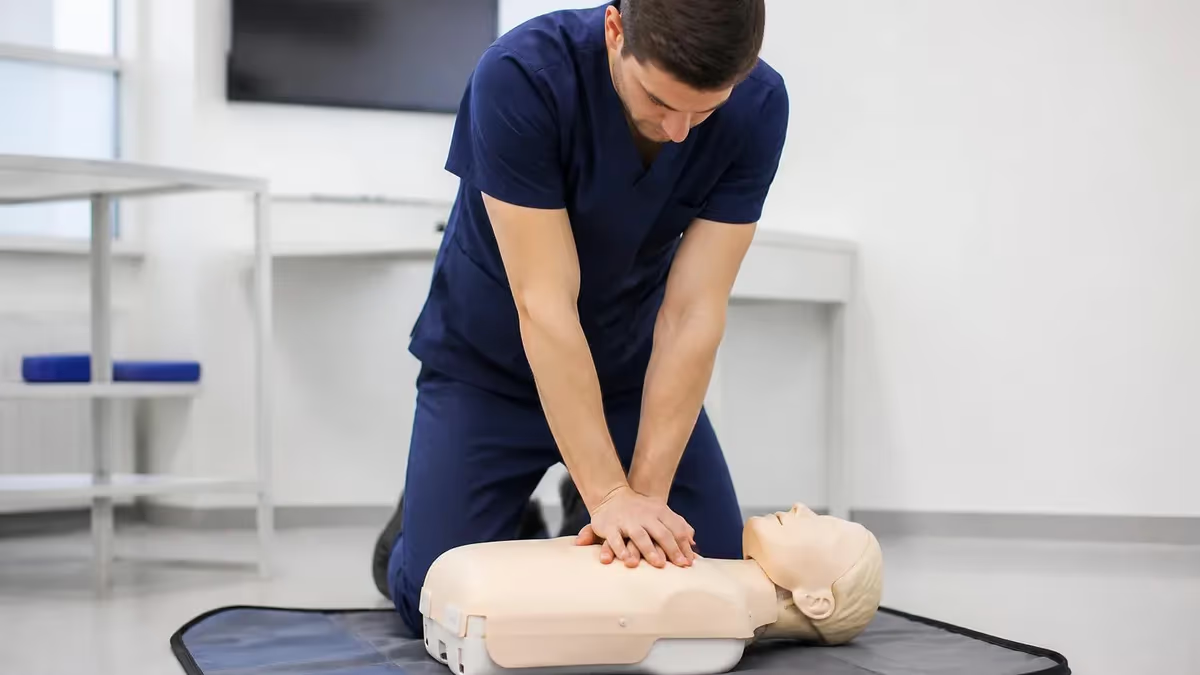
Here's the honest answer most websites won't give you: CPR certification cost in 2026 ranges from absolutely free to around three hundred dollars, and the price you actually pay has almost nothing to do with how good the training is. A community fire department class taught by paramedics can cost zero. A flashy online course with stock-photo instructors can cost ninety. Same card at the end — but only one of those will actually be accepted by your employer. That's the catch nobody mentions until you've already paid. Practice with the free CPR (Cardiopulmonary Resuscitation) practice test on PracticeTestGeeks (650+ questions with answer explanations).
The price depends on four things. Who issues the card. What level you need. Whether you sit in a classroom or click through a browser. And whether anyone is paying for you. Most people don't realize that hospitals, schools, daycares, and gyms usually cover the cost for staff — which means if you're already employed somewhere that requires CPR, you should probably ask HR before swiping your own card.
This guide walks through every major provider, every certification level, and every realistic way to save money. We'll cover AHA Heartsaver for laypeople, BLS Provider for healthcare workers, the more advanced cpr certification pathways like ACLS and PALS, Red Cross alternatives, and the genuinely free cpr certification options that are real (and the ones that aren't). Recertification gets its own section because it almost always costs less than the original. So does the avoiding-scams section — because there's a whole industry of $5 sites that hand out PDFs nobody will accept.
Worth knowing up front: every legitimate CPR card lasts exactly two years. There's no premium tier that lasts longer, no platinum upgrade. If anyone tries to sell you a five-year card, walk away. That's not how this works. The biennial renewal is a guideline requirement from both the AHA and Red Cross, and employers will check the date.
One more thing. The cost varies by state more than you'd think. California, New York, and Massachusetts run the highest — sometimes thirty to forty percent above the national average. Midwest classes (Iowa, Indiana, Ohio) tend to be the cheapest in-person rates. Online prices are mostly flat because the provider is selling nationally, but skills sessions at local training centers reflect local labor costs. We'll break that down too.
If your job requires CPR — nursing, teaching, lifeguarding, childcare, dental, fitness — there's a real chance your employer already covers the training. Hospitals almost always do. School districts usually do during onboarding. Gyms and daycares often have a quarterly group class built into staff training time.
Always ask before you pay out of pocket. A two-minute conversation with HR can save you eighty dollars and a Saturday morning. And if you're not yet employed but you're job-hunting in a field that requires CPR, sometimes the smart move is to get hired first and let the new employer pay for the cert.
One quick note on terminology. People use CPR certification, CPR class cost, and CPR training cost interchangeably online, but they mean slightly different things. A class is the instructional time. Training is the broader skill development. Certification is the credential you walk away with — the card that proves you completed a recognized course. When you're shopping, focus on whether the card you'll receive is the one your employer or licensing board will accept. Everything else is secondary.
Free CPR (Cardiopulmonary Resuscitation) Study Tools
Interactive CPR (Cardiopulmonary Resuscitation) resources on PracticeTestGeeks, free to start:
- CPR (Cardiopulmonary Resuscitation) practice test — 650+ questions with instant scoring and answer explanations
- CPR (Cardiopulmonary Resuscitation) flashcards — review key terms and concepts card by card
- CPR (Cardiopulmonary Resuscitation) study guide — topic-by-topic overview of what the exam covers
- CPR (Cardiopulmonary Resuscitation) cheat sheet — one-page printable summary for last-minute review
CPR Certification Cost at a Glance
Quick reference for the five most common 2026 price points.

American Heart Association Course Pricing
The AHA Heartsaver course is what most non-healthcare adults actually need. It's the one teachers take, the one daycares require, the one most fitness instructors carry. The price difference between fifty-five and ninety dollars comes down to who's teaching it and where. A community center class taught by a moonlighting paramedic might run fifty-five. A hospital-based training center in San Francisco might charge ninety for the exact same curriculum. Both end with an AHA-issued card that's valid everywhere AHA is recognized.
BLS Provider is the dividing line. If you work in healthcare — even adjacent roles like dental hygienist or pharmacy tech — you almost certainly need BLS rather than Heartsaver. BLS covers two-rescuer CPR, team dynamics, and bag-mask ventilation. Heartsaver doesn't. Employers know the difference, so don't try to save twenty dollars by getting Heartsaver when your job posting says BLS. They will reject the card at orientation.
ACLS and PALS sit at the top of the pricing pyramid because they require more time, more equipment, and more instructor expertise. A twelve-hour ACLS course running you two-fifty isn't overpriced — it's the actual labor cost of two experienced instructors plus the manikins, the rhythm simulators, and the megacode testing setup. You can find providers offering ACLS for under one-fifty, but those are usually free cpr certification online mills selling fake skill checkoffs and you should avoid them.
HeartCode Blended is worth a separate mention because it's becoming the default in 2026. You complete the cognitive portion online at your own pace (usually 2-3 hours of videos and case scenarios), then schedule a short in-person skills session at an AHA training center. Total cost is roughly the same as in-person, but you save a Saturday morning. Most healthcare employers actually prefer this format now because it lets staff schedule the skills session around shifts.
If you're comparing prices online, watch for the words 'AHA-aligned' or 'AHA-style.' Those are not the same as AHA-issued. Aligned just means the curriculum follows AHA guidelines. You need a card actually issued by the American Heart Association — which only authorized AHA training centers can produce. Check the AHA's training center locator before paying.
Group rates are the lesser-known cost-saver. If you can round up ten or more people from your workplace, gym, church, or scout troop, almost every AHA training center will drop the per-person rate by fifteen to thirty percent. Some will even come to your location — corporate on-site training is a real service most centers offer. Per-head costs of forty-five dollars are realistic at scale, and the instructor often brings the manikins. Worth a call before you book individually.
Red Cross, ASHI, and HSI Alternatives
Adult First Aid CPR AED Online — $39 fully online (no skills session, blended-only card). Acceptance varies by employer.
Adult First Aid CPR AED Blended — $65-95 online + in-person skills. Widely accepted for non-healthcare jobs.
Professional Rescuer (BLS equivalent) — $100-160. Required-track for lifeguards, EMS, and some healthcare settings. The Red Cross BLS card is accepted in most US hospitals but check the specific job posting.
Red Cross courses tend to run twenty to thirty percent cheaper than AHA at the entry level, which is why community centers and YMCAs default to them.

Online vs In-Person vs Blended — What You Actually Pay
Cheapest option (often $20-50) but acceptance is the narrowest. Works for personal knowledge and some non-clinical employers. Will NOT satisfy most healthcare, daycare, or school requirements because there's no hands-on skills verification.
- Range: $20-65
- Time: 1-3 hours
- Card: Limited acceptance
Traditional 3-4 hour class with manikins and instructor. Most widely accepted. Best for first-time certs because you get hands-on coaching on compression depth, rate, and AED placement.
- Range: $55-130
- Time: 3-4 hours
- Card: Universal
Online cognitive portion plus a 30-60 minute skills session at an AHA or Red Cross training center. Identical acceptance to full in-person. Becoming the default in healthcare.
- Range: $65-140
- Time: 2hr online + 1hr skills
- Card: Universal
The 'online-only' card debate is where most people get burned. A twenty-dollar PDF certificate from a search-engine ad is technically a certification — somebody printed it, somebody signed it — but no hospital, no school district, and no daycare will accept it. The reason is that CPR is a physical skill. Your employer needs documented evidence that you can actually do compressions at the right depth, that you can attach AED pads correctly, that you can recognize agonal breathing. Watching a video doesn't prove any of that.
That said, fully-online does have legitimate uses. If you're a parent who wants to know how to do cpr on your child, an online course is genuinely useful as a learning tool. If you're a remote worker whose company has a vague 'CPR encouraged' policy, online might satisfy them. If you're prepping for a future in-person session and want to learn the material first, online is great. Just don't expect the resulting card to substitute for a real one.
Blended (HeartCode) is the sweet spot for most working adults in 2026. You watch the videos and complete the case scenarios at midnight after the kids go to bed, then book a thirty-minute skills check on a Saturday morning. Total time-cost is lower than a full in-person class, but the card is identical. AHA and Red Cross both offer this format, and the price difference between blended and full in-person is usually under twenty dollars.
In-person classroom still makes sense if you've never done CPR before, if you're a tactile learner, or if you want the camaraderie of a group setting. Community centers, YMCAs, fire departments, and Red Cross chapters all run these. Group rates kick in around ten people — companies booking workplace training often get fifteen to thirty percent off the per-person rate. If your office wants to do a group certification, the per-head cost can drop to forty-five dollars or less.
One sneaky cost to watch for: the 'skills session fee.' Some online providers advertise a low headline price (say, twenty-nine dollars) but then charge an additional sixty or seventy for the required in-person skills check. The combined cost ends up identical to a regular blended course. Read the fine print before clicking purchase.
Avoid any provider that promises instant certification in under thirty minutes with no skills component, five-year or lifetime cards (no legitimate issuer offers these), cards under fifteen dollars from unfamiliar issuers, AHA-equivalent or AHA-aligned language without an actual AHA training center affiliation, sites with no physical address or phone number, or auto-pass exams with no actual knowledge check. If any of these red flags appear on the checkout page, your card will likely be rejected by employers — and you'll be paying for a real class afterward anyway. Cheap is fine. Fake is expensive.
Geographic pricing is real. A 2026 survey of training centers across the country showed in-person Heartsaver classes averaging seventy-eight dollars in California, seventy-two in New York City, sixty-one in Texas, fifty-four in Ohio, and as low as forty-eight in rural Indiana. Online prices are mostly identical nationwide because they're sold by national providers, but any class that includes an in-person component will reflect local labor costs. If you live near a state border, sometimes the smart move is to drive thirty minutes to a neighboring metro area for the savings. Same card, half the price.
If you want the full picture, the cpr certification cost guide walks through it step by step.
For a deeper look at this topic, see our guide to cpr certification cost.
Readers who want more detail usually continue with cpr certification cost.
Genuine Free and Low-Cost CPR Options
- ✓Hands-Only CPR community classes — Free 30-minute sessions taught by AHA volunteers. No certification card, but you learn the lifesaving technique. Find them at heart.org/handsonly.
- ✓Fire department open houses — Many city and county fire departments offer free CPR demonstrations during community events, fire prevention week, or 'lights and sirens' nights.
- ✓Employer-paid certification — Hospitals, school districts, daycares, gyms, and most healthcare-adjacent jobs pay for staff CPR. Ask HR before paying yourself.
- ✓American Heart Association CPR Anytime kit — $35 one-time purchase, certifies your whole household with a reusable manikin. Not a card, but legitimate self-training.
- ✓Library or community center workshops — Many public libraries partner with Red Cross or local EMS for free or sliding-scale classes. Check the events calendar.
- ✓Boy Scouts, Girl Scouts, and youth program leaders — Often eligible for free certification through the sponsoring organization.
- ✓Volunteer firefighter or CERT (Community Emergency Response Team) training — Completely free, includes CPR plus broader emergency skills.
- ✓Red Cross volunteer track — Volunteer at Red Cross blood drives or disaster response and your CPR training is covered.

Read the Fine Print Before Clicking Free
When a site advertises 'free CPR certification online,' read the page carefully. There are three common patterns: (1) Free training video but a $20-30 fee to download the actual certificate, (2) Free certificate but no skills verification — won't be accepted by employers, (3) Genuinely free training with no card issued. Pattern 3 is fine for learning. Patterns 1 and 2 are misleading. A legitimate free card from a recognized issuer (AHA, Red Cross, ASHI) basically doesn't exist outside of employer-paid programs.
Recertification (Renewal) Cost vs New Certification
Recerts are cheaper and shorter than initial certifications. Here's what to weigh.
- +Your card has lapsed by less than 30 days — most providers still let you renew
- +You're comfortable with current guidelines and just need the skills checkoff
- +You're paying out of pocket and want to save 30-50% versus a new class
- +You completed AHA HeartCode previously and want to repeat the blended path
- +Your employer accepts renewal certificates (almost all do)
- +You're staying with the same issuer — renewals are issuer-specific
- +Recert is typically $35-70 (AHA Heartsaver renewal) vs $55-90 new
- −Your card lapsed more than 60 days — most providers require a full new class
- −Guidelines changed significantly since your last cert (2025 guidelines updated several details)
- −You're switching from Red Cross to AHA (or vice versa) — new issuer = new class
- −You're upgrading from Heartsaver to BLS — different curriculum, full class needed
- −You've never actually performed CPR and feel rusty — pay the extra and refresh fully
- −You can't find the original certificate number, which most renewal portals require
Pros and Cons at a Glance
| Pros | Cons |
|---|---|
| You're comfortable with current guidelines and just need the skills checkoff | You're switching from Red Cross to AHA (or vice versa) — new issuer = new class |
| You completed AHA HeartCode previously and want to repeat the blended path | You're upgrading from Heartsaver to BLS — different curriculum, full class needed |
| Your employer accepts renewal certificates (almost all do) | You've never actually performed CPR and feel rusty — pay the extra and refresh fully |
| You're staying with the same issuer — renewals are issuer-specific | You can't find the original certificate number, which most renewal portals require |
Recertification pricing follows a simple rule: roughly fifty to seventy percent of the original certification cost. An AHA Heartsaver renewal runs thirty-five to seventy dollars. A BLS renewal is forty-five to ninety. ACLS recerts hit one-twenty to one-eighty. The reason it's cheaper is that recert courses are shorter (usually half the time of the original) and focus on skills verification rather than initial instruction. The exam questions are also the same difficulty — so don't assume 'renewal' means easier.
The window matters. If your card is still current, you can renew anytime in the last three months before expiration without any penalty. If it's lapsed by less than thirty days, most providers will still process a renewal. Past thirty days, policies vary — AHA generally allows renewal up to sixty days post-expiration, Red Cross is stricter at thirty. Beyond that window, you're taking a full new class regardless of how recently you were certified.
Online cpr renewal online is the most popular recert format in 2026, especially for BLS. The cognitive portion takes about ninety minutes, the skills session runs thirty to forty-five minutes, and most healthcare workers can fit the whole thing into a single Saturday morning. Costs run forty-five to ninety for AHA-issued blended renewal — call your local training center for the exact rate.
One frequently-asked question: does the new card cover you from the renewal date, or from the original expiration date? Answer: from the renewal date, for two years. So if you renew three months early, you essentially extend your coverage by three months. Some healthcare workers strategically renew six months early to align with their hospital's annual compliance review — that's allowed, you just lose a small fraction of your previous coverage period.
Beware 'lifetime certification' offers. They don't exist. Every legitimate provider — AHA, Red Cross, ASHI, HSI, NSC — issues two-year cards. Anyone selling a five-year or lifetime card is selling something employers will reject. The biennial renewal isn't arbitrary; guidelines update every few years and skills atrophy without practice.
Recertification Cost by Level
One last cost consideration that healthcare workers often overlook: tax deductions. If you work in a profession where CPR is a job requirement — nurses, dental hygienists, physical therapists, paramedics, lifeguards — your certification cost is generally deductible as a continuing-education or unreimbursed-employee expense. Self-employed healthcare professionals can typically deduct the full cost as a business expense. The deduction is small but real, especially if you're paying for ACLS or PALS at the higher end of the range.
Keep the receipt. Keep the email confirmation. Some training centers will issue an itemized invoice on request if you need it for HSA or FSA reimbursement. A few employers also reimburse certification costs through education-benefit programs even when the cert isn't strictly required — worth checking your benefits portal.
If you're comparing two providers and they're priced identically, look at what's included. Some bundle a pocket-card backup, some include a textbook (often $20-30 if bought separately), and some throw in a one-year subscription to the AHA's eCard verification system. These extras don't change your job acceptance, but they do change your actual out-of-pocket math.
Finally, beware the 'expedited card' upsell. Many providers charge an extra ten to twenty dollars for same-day digital card issuance versus the standard three-to-five business day turnaround. If your employer needs proof immediately, pay it. If you have a week, don't. The card is identical either way — the only difference is when the email lands. And the digital card is just as valid as the plastic one for verification purposes, so don't pay extra for a physical card either if your employer accepts digital.
Bottom line: the right CPR certification cost is whatever buys you a card your employer will accept on the first day of work. Anything cheaper is a gamble. Anything more expensive is probably brand premium, not training quality. Match the issuer to your job requirement, pick a format that fits your schedule, and don't overthink the rest. The skill is what matters in an emergency.
CPR Questions and Answers
Related CPR Cost & Certification Guides
CPR Training Cost: Complete 2026 Price Guide for Every Certification Level
CPR Course Cost: Complete 2026 Pricing Guide for Every Certification Level
CPR Renewal Online: AHA, Red Cross and Blended Options
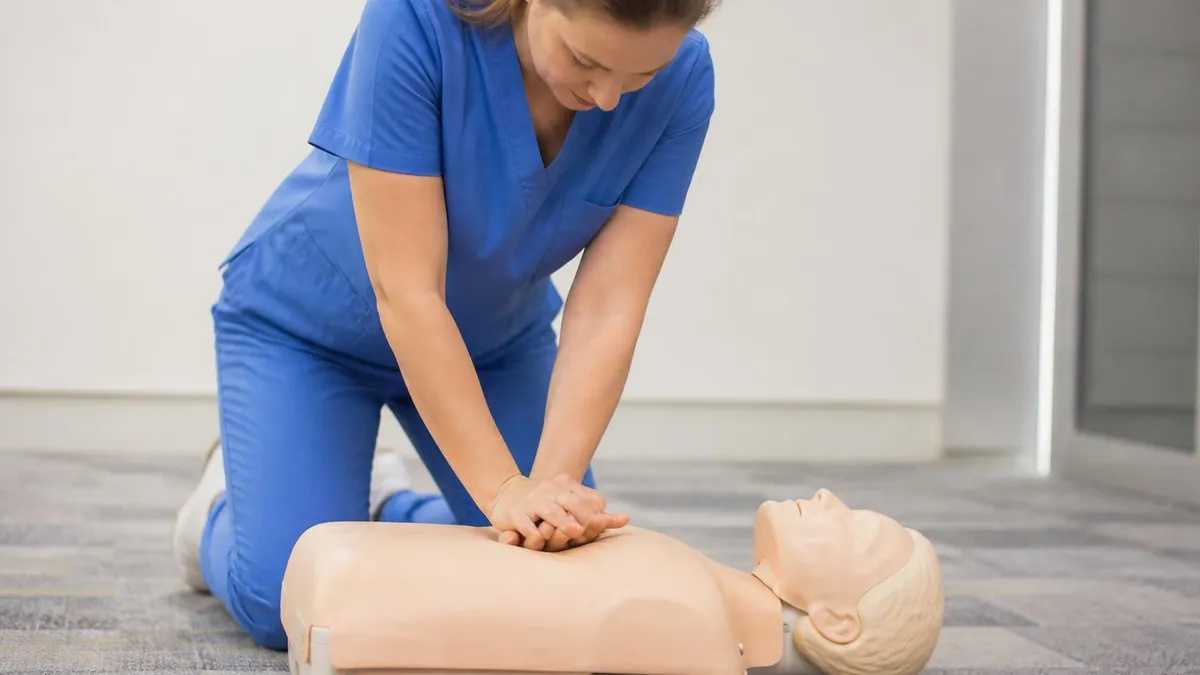
American Heart Association CPR Certification: Courses, Costs, and What to Expect
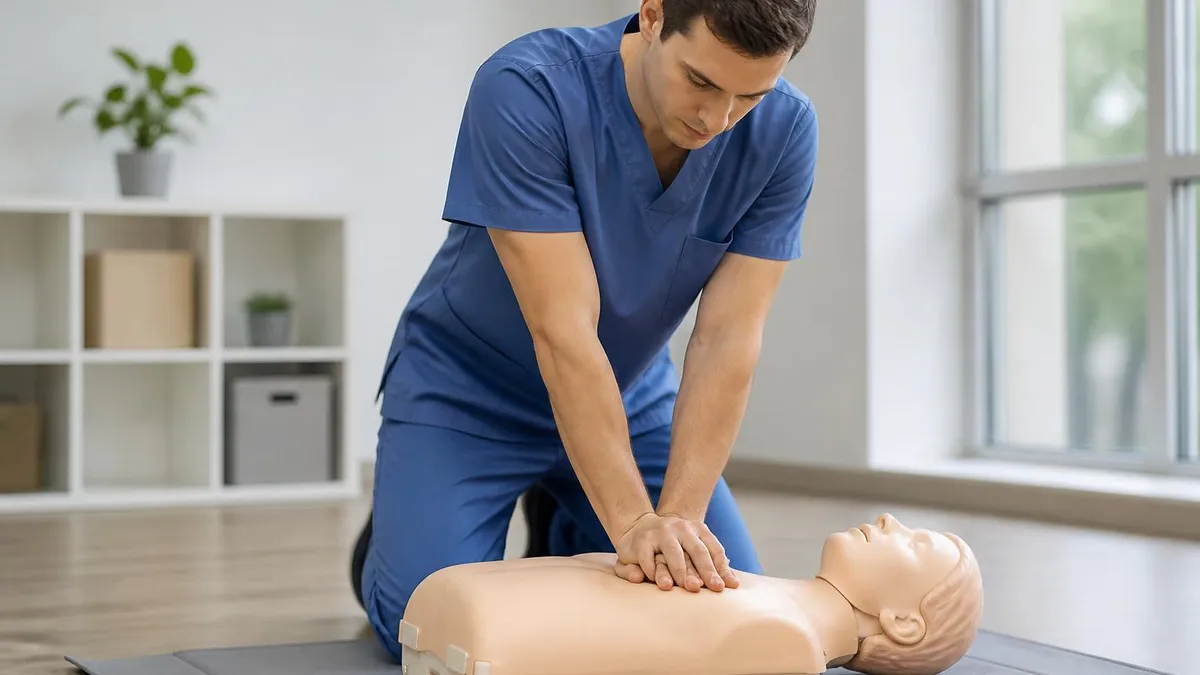
Red Cross CPR Certification: Cost, Classes & How to Get Certified
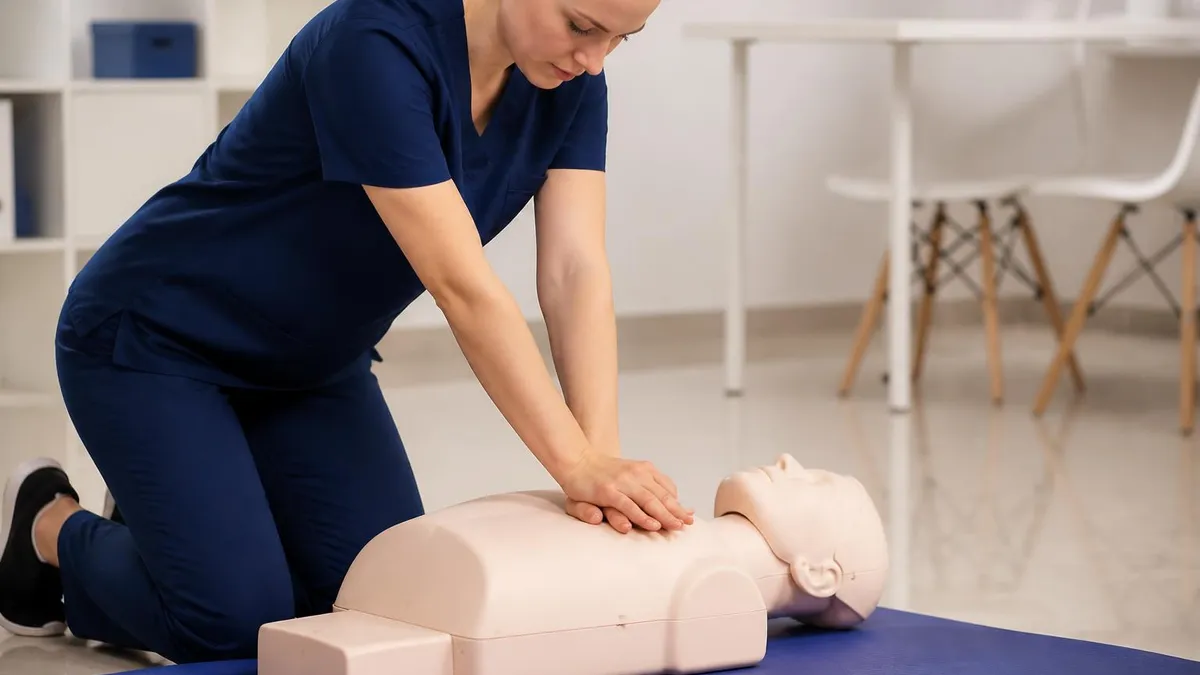
Free CPR Certification: Real Options vs Misleading Promises
About the Author

Registered Nurse & Healthcare Educator
Johns Hopkins University School of NursingDr. Sarah Mitchell is a board-certified registered nurse with over 15 years of clinical and academic experience. She completed her PhD in Nursing Science at Johns Hopkins University and has taught NCLEX preparation and clinical skills courses for nursing students across the United States. Her research focuses on evidence-based exam preparation strategies for healthcare certification candidates.
Join the Discussion
Connect with other students preparing for this exam. Share tips, ask questions, and get advice from people who have been there.
View discussion (5 replies)