
CPR Renewal Online: AHA, Red Cross and Blended Options 2026 October
Online CPR renewal explained: 🧠 AHA HeartCode BLS blended, Red Cross, ASHI, and pure-online options. Costs, skills sessions, what hospitals accept.
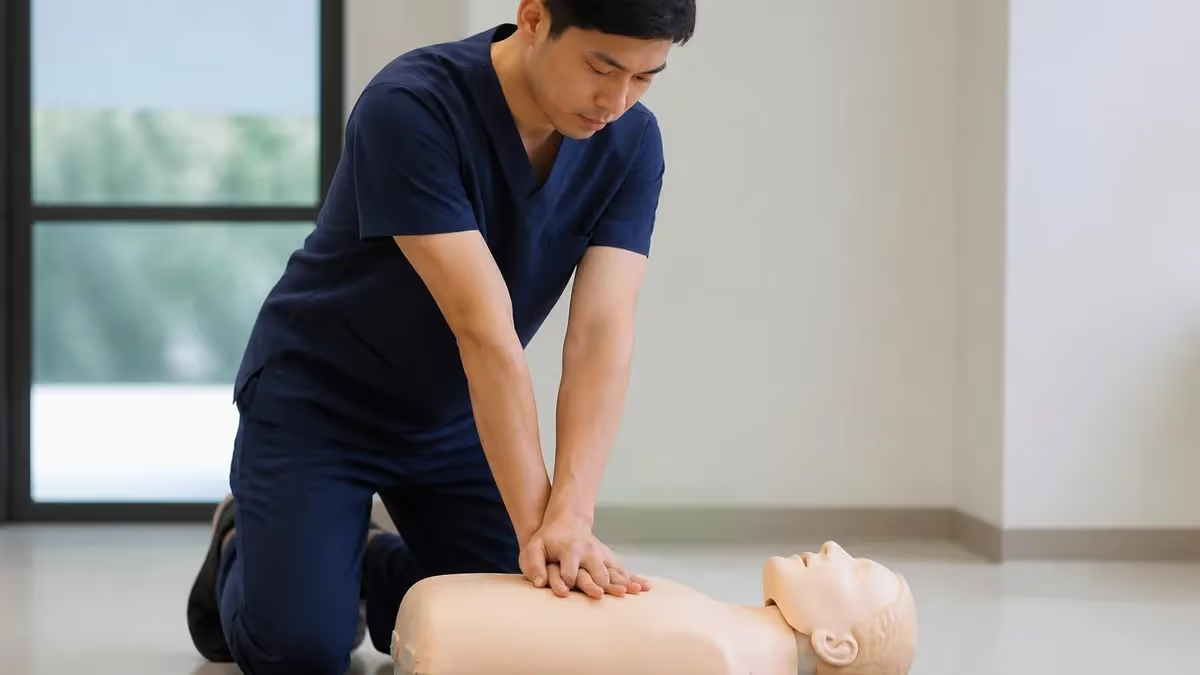
Quick Take
Most CPR cards expire after exactly two years. Renewing online is faster and cheaper than retaking the whole class, but only certain online formats are accepted by hospitals, nursing programs, and OSHA-covered workplaces. The short rule: if your job requires BLS for Healthcare Providers, you need a blended renewal (online lessons + in-person skills check). If you only need general CPR awareness, a pure-online course is fine.
What Online CPR Renewal Actually Is
Online CPR renewal is the short, modern version of repeating your CPR class. Instead of sitting through a full 4-hour course again, you log into a vendor portal, complete the updated knowledge modules, and — depending on your provider — meet an instructor for a brief in-person skills check. That last part is where most people get confused.
Here's the truth nobody on a sales page wants to spell out. The word online covers two completely different products. One is a blended renewal, where the online portion is just the classroom theory and you still demonstrate compressions on a manikin in front of a real instructor. The other is a pure-online course, where you watch a few videos, click through a quiz, and a PDF certificate lands in your inbox. Both call themselves online CPR. Only one of them counts when your employer audits cards.
So before you pay anyone anything, you have to answer one question. Who is going to look at your card?
A hospital HR department? A nursing school registrar? A state daycare licensing inspector? An OSHA-covered construction site safety officer? Each of those has different rules. The wrong answer wastes $40 and a Saturday afternoon.
This guide walks through every legitimate option for renewing your card in 2026 — what they cost, who accepts them, and how the skills session works. We use the same aha cpr renewal standards your hospital credentialing office uses, plus the Red Cross and ASHI/HSI equivalents.

Online CPR Renewal At A Glance
Key Facts at a Glance
| Item | Value | Details |
|---|---|---|
| Standard certification validity for AHA, Red Cross, ASHI, HSI, NSC | 2 yrs | |
| Typical pure-online course price (general public only) | $15-$80 | |
| Blended renewal cost — accepted by hospitals | $90-$200 | |
| In-person skills session length | 1-2 hr | |
| Plastic card delivery window after passing | 4-8 wks |
Why Certifications Expire Every Two Years
CPR cards expire on a fixed 24-month clock from your course completion date, not the date you receive the card. Five organizations set that calendar in the U.S., and they all use the same two-year cycle.
- American Heart Association (AHA) — Healthcare Provider BLS, Heartsaver CPR/AED, Heartsaver First Aid CPR AED
- American Red Cross (ARC) — Adult & Pediatric First Aid/CPR/AED, BLS for Healthcare Providers
- American Safety and Health Institute (ASHI) — owned by HSI Group; CPR, AED, and First Aid certifications
- Health & Safety Institute (HSI) — runs MEDIC FIRST AID under the same umbrella
- National Safety Council (NSC) — workplace CPR and First Aid for OSHA-covered roles
Why two years? Skills decay. The original research came out of the AHA in the late 1990s and showed that even nurses who passed CPR with perfect scores lost roughly half of their compression-rate accuracy within 12-18 months.
Guidelines also change. The compression-to-ventilation ratio you learned in 2018 was tweaked again in the 2020 AHA update, and another minor revision dropped in 2025. A two-year cycle keeps everyone synced to the current science.
Most employers send you a calendar warning 60 to 90 days before your card expires. If yours doesn't, set your own reminder — you can't legally work in many clinical roles with an expired card, and some hospitals pull you off the floor the day after.
One thing that catches people: a few states allow a brief grace period (usually 30 days), but the AHA itself doesn't. If your card said expires 03/15/2026, you needed to finish renewal by 03/15. From 03/16 onward, you're technically taking a brand new course, not a renewal — even if the content is identical. See our breakdown of cpr certification validity for the exact employer-by-employer rules.
Four Real Renewal Options
AHA HeartCode BLS Blended Renewal
The gold standard for clinical jobs. You buy a HeartCode BLS key (around $35) from the AHA, finish the eLearning, then book a Skills Session at an AHA Training Center near you for $50-$100. Pass the manikin check and the AHA issues a digital BLS Provider card the same day.
Best for: Hospital staff, nurses, paramedics, dental hygienists, students entering clinical rotations.
Accepted by: Essentially every U.S. hospital, all U.S. nursing programs, dental boards, EMS agencies.
AHA HeartCode BLS Blended Renewal — Step By Step
If you work in healthcare, this is almost certainly the path you need. Here's exactly how it goes.
You start at the AHA's eLearning portal. You pay around $35 for the HeartCode BLS key. The eLearning takes most people 60 to 90 minutes — case scenarios, knowledge checks, and a final exam you can retake until you pass. You then print or save the completion certificate. That certificate alone is worthless. You need the second half.
Next, you find an AHA Training Center. The AHA maps these on its own website by zip code. Skills Sessions run between 30 minutes and 2 hours depending on whether you're alone or in a small cohort. You pay the Training Center directly — typically $50 to $100, sometimes bundled with the eLearning key for a slight discount.
At the session, an AHA-aligned instructor watches you perform high-quality compressions on an adult manikin, demonstrate bag-valve-mask ventilation, deploy an AED, perform infant and child CPR, and run a two-rescuer scenario. Most candidates pass first try. Fail anything, and you remediate on the spot.
Once you pass, the instructor enters your completion into the AHA Atlas system. Your eCard appears in the AHA's card-lookup portal within 24 hours. You can verify it yourself at the aha cpr card lookup page using your name and email address. Hospital credentialing offices use the same lookup tool — they don't trust PDFs that land in their inbox unless they can confirm the entry exists in Atlas.
One detail people miss: the AHA stopped mailing plastic cards as the default years ago. Your eCard is the card. If you want a physical version, you pay an extra $5-$10 and wait 4 to 6 weeks for it to ship.

Verify Before You Purchase
- ✓Confirm with your employer or licensing board which providers they accept by name (AHA, Red Cross, ASHI, etc.)
- ✓Check whether you need 'BLS for Healthcare Providers' or 'Heartsaver CPR/AED' — they are not interchangeable
- ✓Ask if a pure-online card is enough, or if you must show an in-person skills check
- ✓Look up the Training Center on the provider's official site, not on the Training Center's own marketing page
- ✓Confirm the price includes both the eLearning key and the skills session — some sites quote only one half
- ✓Verify how the card is delivered (digital, plastic, or both) and how long the plastic version takes
- ✓Make sure the instructor signature on the completion record can be looked up in the provider's official registry
- ✓Save a PDF copy of your card the day you receive it — providers occasionally lose digital records during portal migrations
American Red Cross Blended Renewal
The Red Cross runs a parallel program that mirrors the AHA structure but uses different terminology. Instead of HeartCode BLS you'll see Adult and Pediatric First Aid/CPR/AED Blended Learning for general responders, and BLS for Healthcare Providers Blended Learning for clinical staff.
Pricing is usually a touch lower. The online portion runs around $35 in most regions. Skills sessions average $50 to $80. The main reason hospitals sometimes prefer the AHA is institutional inertia — every cardiac arrest protocol they teach internally references the AHA algorithm wording. But for the renewal itself, the Red Cross course meets identical standards, and the digital card looks just as official. We cover the differences in detail in our aha cpr and Red Cross comparison.
One useful Red Cross feature: their digital wallet card sits in your phone's Google Wallet or Apple Wallet. Scan the QR code on the card and an employer instantly sees verification straight from the Red Cross database. The AHA has a similar feature but it's tucked deeper inside the Atlas portal.
If you're a school nurse, swim instructor, or daycare lead, the Red Cross is almost always the better pick. State licensing inspectors recognize the brand on sight.
Other Major Renewal Providers
ILCOR-aligned. Strong in workplace safety and dental offices. Online portion plus in-person skills check. Recognized by OSHA-covered employers across all 50 states.
- ▸Online cost: $25-$45
- ▸Skills session: $40-$80
- ▸Total time: 90 min online + 1 hr in-person
- ▸Card delivery: digital instant, plastic in 2 weeks
Same parent company as ASHI. MEDIC FIRST AID is the brand most commonly seen in construction safety programs and corporate first responder teams.
- ▸Online cost: $30-$50
- ▸Skills session: $50-$90
- ▸Total time: similar to ASHI
- ▸Accepted by NASM, ACE, ACSM personal training boards
Workplace-focused. Pure-online and blended versions exist. The blended version covers OSHA workplace responder requirements in most industries.
- ▸Online cost: $25-$40
- ▸Skills session: $40-$75
- ▸Best fit: warehouse, manufacturing, transportation
- ▸Card delivery: digital, plastic optional
Hundreds of small training centers use AHA-aligned curricula but sell the renewal as a bundle. They are legitimate if they appear on the AHA's own Training Center locator.
- ▸Bundled price: $90-$160
- ▸Includes eLearning key + skills session
- ▸Issues the same AHA eCard
- ▸Best for in-person renewal in one visit
Pure-Online Providers — Where They Actually Help, And Where They Don't
The pure-online market is enormous. Search any CPR-related phrase and you'll see ProCPR, CPR Certified, ProTrainings, and NHCPS at the top of the page. The user experience is slick. The video lessons are well produced. The exam isn't trivial. And — this is the part people miss — the courses are entirely legal to sell.
They are not legal substitutes for an in-person skills check when your employer requires one. There's no test in the world that proves you can deliver 100-to-120 compressions per minute at 2 to 2.4 inches of depth on a real chest. Only a manikin and an instructor can verify that. So when ProCPR sells you a $19.99 BLS card, what you've bought is a certificate of completion for the knowledge portion, not a clinical-grade BLS credential.
Where pure-online genuinely shines:
- A babysitter wanting to know how to respond to an infant choking
- A volunteer coach at youth football practice
- A real estate agent collecting a wellness credential for a Realtor program
- A homeowner who wants to refresh knowledge after taking the kids' lifeguard class
- An office worker whose company encourages but does not require CPR training
Where pure-online fails you:
- Hospital floor work — guaranteed rejection by credentialing
- Any ACLS or PALS course — both require an unexpired BLS card from AHA or Red Cross as a prerequisite
- Most nursing school applications and clinical rotations
- State daycare licensing in California, New York, Texas, Florida, and several other states
- EMS, paramedic, and firefighter hiring
If you're unsure, our cpr certification providers guide lists which vendors are accepted in which contexts. Always cross-check with the actual office that will review your card.

Online CPR Renewal: Honest Pros and Cons
- +Fits around your work schedule — log in during lunch or after kids are in bed
- +Cheaper than the original course in almost every case
- +Updated modules reflect the latest 2025 AHA guideline tweaks
- +Digital cards are instant — useful when your old card already expired and your employer wants proof today
- +Skills sessions (when required) are typically only 1-2 hours, not a full Saturday
- +Most providers let you retake the final exam unlimited times at no extra cost
- −Pure-online cards aren't accepted for healthcare or clinical work — easy mistake to make
- −Some Training Centers charge extra fees not listed on the eLearning page
- −Skills session slots fill up — book 1-2 weeks ahead, especially in January and May
- −Phone-only completion can be glitchy; finish the eLearning on a laptop if possible
- −Plastic card delivery can take 4-8 weeks in busy seasons
- −If your card expires mid-renewal, some employers count the gap as a lapse
How Skills Sessions Actually Work
Walk into the Training Center 10 minutes early. Bring your eLearning completion certificate (printed or on your phone), a photo ID, and the booking confirmation. Most centers want closed-toe shoes — you'll be kneeling on the floor next to a manikin. Loose hair tied back. No jewelry on hands.
The session starts with a quick equipment check. The instructor will show you the manikin, the AED trainer, and the pocket mask. Then you run through a handful of stations.
- Adult one-rescuer CPR. Two minutes of compressions, AED placement, full cycle.
- Adult two-rescuer CPR. Bag-valve-mask ventilation, switching compressors every 2 minutes.
- Infant CPR. Two-thumb encircling-hands technique on an infant manikin.
- Child CPR. One-handed compressions if you can't get full depth two-handed.
- Choking scenarios. Adult, child, and infant variations.
The instructor is checking specific measurable things. Compression rate between 100 and 120 per minute. Depth of at least 2 inches but no more than 2.4 inches. Full chest recoil between compressions. Minimal pauses. Correct hand placement on the lower half of the sternum. If any of that drifts, the instructor will coach you and you'll repeat the cycle.
If you want to practice before you arrive, our free cpr practice test covers the knowledge portion, and the breakdown of steps of cpr walks through the exact sequence the instructor will evaluate. Spending 30 minutes on those before your session almost always shortens the appointment.
What You Pay (And Why It Varies)
Total cost depends heavily on whether you go with the bundled approach or the unbundled approach. Bundled deals run $90 to $200 and include both halves. Unbundling — buying the eLearning from one source and the skills check from another — usually saves $20 to $40 but takes more coordination.
Regional pricing also matters. The same AHA HeartCode BLS skills session that costs $50 in rural Ohio might run $110 in San Francisco or New York City. Training Centers set their own prices for the in-person portion. The eLearning key from the AHA is flat-rate everywhere.
Pure-online providers undercut everyone because they have no instructor labor cost. ProCPR sells a CPR/AED renewal for around $19.99. CPR Certified often runs flash sales at $15. NHCPS bundles CPR with First Aid for $40. Cheap, fast, and — as covered above — fine for the right use case.
How Your Card Is Delivered
Digital cards land in your inbox the same day, usually within minutes of the instructor entering your completion. AHA cards go to your AHA Atlas account. Red Cross cards go to your Red Cross account. ASHI and HSI cards email a PDF directly.
Plastic cards are extra. The AHA charges around $5-$10. The Red Cross usually includes the plastic in the package. ASHI varies by Training Center. Either way, expect a wait of 4 to 8 weeks. If your hospital needs the plastic in hand for credentialing, ask the Training Center to overnight it — many will, for a small extra fee.
Renewal Cost By Provider
Red Flags Before You Pay Anyone
Most scam CPR sites share the same fingerprints. Spot any two of these, close the tab and try a different provider.
- No AHA, Red Cross, ASHI, HSI, or NSC branding anywhere on the homepage. Legitimate providers either issue their own card or are AHA-aligned Training Centers and say so.
- Pricing under $10 for a full course. The infrastructure to host video lessons and a real exam costs more than that to operate. Bargain-bin pricing usually signals a card mill.
- Claims of no test required or guaranteed pass. Every accredited provider gives a real exam. The legitimate ones let you retake it, not skip it.
- Cards issued in under 60 seconds. AHA and Red Cross take at least 30 minutes for the eLearning. Anyone offering a sub-minute card is selling a meaningless PDF.
- No physical address or instructor name listed. Real providers publish at least one contact location.
- Inflated lists of accreditations. Watch for fake-sounding bodies like the American Council for Medical Education Standards. If you can't find the accreditor on Wikipedia, it doesn't exist.
- Affiliate-link reviews everywhere. If every blog post about the company links to the same checkout URL with a tracking code, you're reading paid content, not honest comparison.
The safest move? Ask your employer's HR or credentialing office for their pre-approved list. Hospitals almost always maintain one. So do nursing schools, daycare networks, and major fitness chains. The list usually has 3 to 6 vendor names on it. Buy from that list and you're done worrying.
Best Provider For Each Use Case
If you've read this far, you probably want a straight recommendation. Here's the short version, no hedging.
- Hospital nurse, dental hygienist, paramedic, ACLS/PALS prerequisite — AHA HeartCode BLS Blended, no exceptions.
- Nursing student or pre-nursing applicant — AHA HeartCode BLS. Every school accepts it; some reject the Red Cross equivalent.
- K-12 school nurse, lifeguard, swim instructor — Red Cross Blended is usually preferred and cheaper.
- Daycare worker, K-12 teacher, after-school program staff — Red Cross or AHA Heartsaver CPR/AED.
- Personal trainer, group fitness, NASM/ACE candidate — ASHI or AHA Heartsaver. Both accepted.
- Construction safety officer, warehouse supervisor, OSHA-required responder — ASHI or NSC.
- Real estate agent wellness card, volunteer coach, babysitter, general public — Pure-online (NHCPS or ProCPR) is fine and saves you time.
When in doubt, pay slightly more and go blended. The $50 you'd save going pure-online is small compared to the cost of redoing the whole renewal because HR rejected the card.
One more thing worth saying out loud. A card is just paper. The actual skill — fast, hard chest compressions with minimal interruptions — is what saves lives. Pick the renewal path your employer accepts, yes. But also pick the format that gets you genuine hands-on practice. A two-hour blended session with a sharp instructor will leave you measurably more capable than three hours of video. If you ever face a real emergency, that difference is everything.
CPR Questions and Answers
Related CPR Guides
AHA CPR Renewal: Complete 2026 Guide to Recertifying Your American Heart Association Card
AHA CPR Card Lookup: How to Verify and Replace Your Certification
How Long Is CPR Certification Valid? Full Renewal Guide
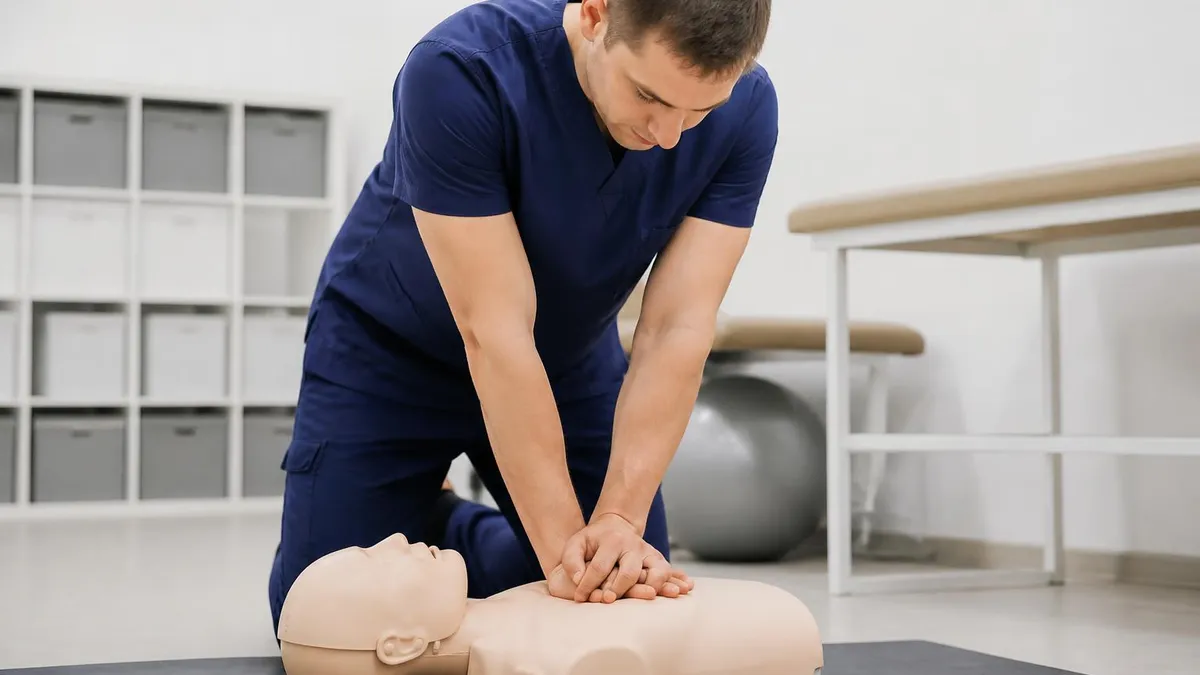
What Are the 7 Steps of CPR? Complete Guide to Performing Cardiopulmonary Resuscitation in 2026
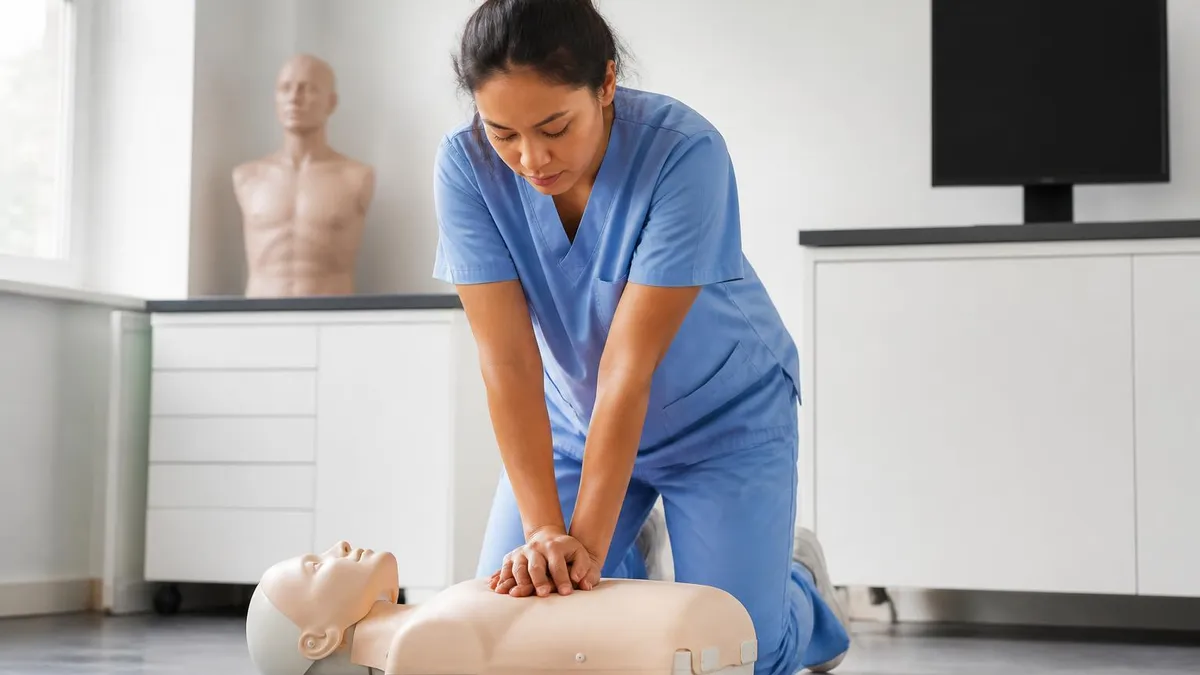
CPR Practice Test 2026: Free Questions, Answers & Full Exam Prep Guide
About the Author

Registered Nurse & Healthcare Educator
Johns Hopkins University School of NursingDr. Sarah Mitchell is a board-certified registered nurse with over 15 years of clinical and academic experience. She completed her PhD in Nursing Science at Johns Hopkins University and has taught NCLEX preparation and clinical skills courses for nursing students across the United States. Her research focuses on evidence-based exam preparation strategies for healthcare certification candidates.
Join the Discussion
Connect with other students preparing for this exam. Share tips, ask questions, and get advice from people who have been there.
View discussion (5 replies)