
CPR Course: How to Choose the Right Training Program 2026 September
CPR course guide: BLS, Heartsaver, ACLS, PALS course types, costs, formats (classroom, blended), and how to choose the right course for your needs. 🏆
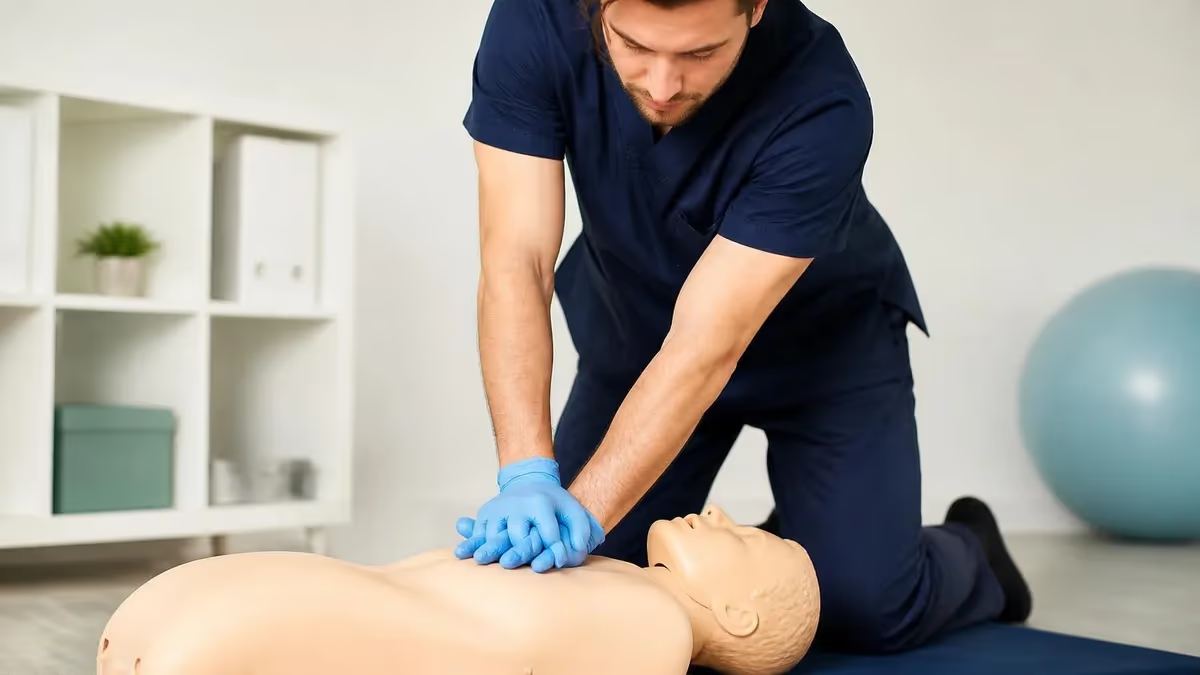
A CPR course teaches the fundamental skills for responding to cardiac arrest and other emergencies through structured instruction combining cognitive learning with hands-on skills practice. CPR courses range from brief community awareness programs through comprehensive professional certifications for healthcare workers.
Choosing the right CPR course depends on your specific needs — whether you need certification for employment, want to be prepared for emergencies in your family or community, or are advancing your professional credentials. Understanding the various course types and what each provides helps match training to actual needs without paying for more than you require or settling for less than you need.
The CPR training landscape includes courses at multiple levels designed for different audiences. Lay rescuer courses (Heartsaver from American Heart Association, similar offerings from Red Cross) teach basic CPR for non-healthcare audiences. Healthcare provider courses (BLS Provider) cover the same fundamentals plus healthcare-specific protocols, equipment use, and team-based response. Advanced healthcare courses (ACLS, PALS, NRP) build on BLS to handle specific scenarios. Workplace-specific courses sometimes combine CPR with first aid or other safety topics. Each course type serves specific purposes, and matching course selection to your actual needs makes training investment most worthwhile.

CPR Course Quick Facts
Major course types: Heartsaver/CPR (lay rescuer), BLS Provider (healthcare), ACLS (advanced healthcare), PALS (pediatric advanced). Cost: $40-$200 typical for basic courses; $200-$400 for ACLS/PALS. Duration: 2-5 hours basic; 8-12 hours advanced. Format: Classroom or hybrid (online + in-person skills). Validity: 2 years standard. Major providers: American Heart Association, American Red Cross, ASHI, HSI.
Lay rescuer courses target non-healthcare audiences who want CPR competence for personal preparedness or general workplace requirements. Heartsaver from American Heart Association is most common, covering adult CPR/AED, child CPR/AED, infant CPR, choking response, and basic emergency response. Red Cross CPR/AED for lay rescuers covers similar content. Total course time runs 4-5 hours for full coverage including all age groups, less for adult-only versions. These courses produce certifications accepted by most employers requiring CPR for non-clinical roles — daycare workers, lifeguards, fitness instructors, school staff (in many states), and various other safety-sensitive but non-medical positions.
CPR Course Types
Basic CPR for non-healthcare audiences. Covers adult, child, infant CPR plus AED and choking response. Foundation course.
Healthcare provider CPR. Includes team-based response, bag-valve-mask ventilation, hospital protocols. Required for clinical staff.
Advanced Cardiovascular Life Support. Builds on BLS for advanced healthcare providers managing cardiac emergencies.
Pediatric Advanced Life Support. Specialized in pediatric resuscitation. Required for many pediatric healthcare roles.
Neonatal Resuscitation Program. Specifically for newborn resuscitation. Required for many obstetric and pediatric roles.
Shorter courses for current certification holders renewing before expiration. Less time and cost than initial certification.
Healthcare provider BLS courses serve doctors, nurses, paramedics, dental professionals, and various other clinical roles. Course content covers same fundamental CPR/AED skills as lay rescuer courses but adds healthcare-specific elements: team-based resuscitation with role assignment, bag-valve-mask ventilation technique, integration with code response in healthcare settings, transition from BLS to ACLS care, and specialized scenarios common in clinical environments. Total course time runs 4-5 hours for initial certification or 3-4 hours for renewal. The certification is essentially mandatory for clinical healthcare employment and renewed every 2 years throughout careers.
ACLS (Advanced Cardiovascular Life Support) extends BLS to advanced healthcare provider scenarios including arrhythmia recognition and treatment, defibrillation including manual defibrillator use, advanced airway management, IV/IO access and emergency medications, and complex resuscitation team dynamics. ACLS is required for healthcare providers in critical care, emergency medicine, cardiology, anesthesia, and various other specialties handling cardiac emergencies. Course duration is 12-16 hours for initial certification, often spread across 2 days. Cost runs $200-$400 typically. Renewal courses are somewhat shorter at 6-8 hours.
PALS (Pediatric Advanced Life Support) addresses pediatric resuscitation specifically. Children require modified resuscitation approaches due to anatomical and physiological differences from adults. Course content covers pediatric arrhythmia recognition, pediatric airway management, IV/IO access in pediatric patients, fluid resuscitation, pediatric medication dosing, and team-based pediatric resuscitation. Required for pediatric emergency medicine, pediatric ICU, neonatology, pediatric anesthesia, and various other pediatric-focused healthcare roles. Course length and cost similar to ACLS at 12-16 hours and $200-$400 for initial certification.
Heartsaver / lay rescuer course: Target audience: non-healthcare workers, parents, teachers, daycare workers, lifeguards, fitness instructors, general public. Content: adult/child/infant CPR, AED operation, choking response, basic emergency response. Duration: 4-5 hours full version, 2-3 hours adult-only. Cost: $40-$130 typical. Format: classroom or hybrid (online + in-person skills). Suitable for: personal preparedness, employment requirements not requiring healthcare-specific protocols. Renewal every 2 years.

Course format options include traditional classroom, hybrid (HeartCode), and various blended approaches. Traditional classroom courses cover all content in single in-person session including lecture, video, hands-on practice, and skills assessment. Hybrid HeartCode programs split cognitive content (online videos and modules completed at student's own pace) from in-person skills sessions (shorter than full classroom course). The hybrid format suits busy professionals who can complete online content during convenient times then attend brief in-person session for skills assessment. Both formats produce identical certifications when properly completed.
Provider selection involves several considerations beyond just price. Verify provider is approved by certifying organization (AHA Training Center, Red Cross authorized provider, etc.) — non-approved providers don't produce legitimate certification. Check provider reputation through online reviews and recent graduate feedback. Verify scheduling fits your availability — some providers have limited class options or long waits for popular times. Confirm location accessible from your home or work. Compare costs across multiple providers but recognize that lowest price doesn't always mean best value if quality varies. Quality contractors welcome questions about their approach and credentials.
For preparation before taking CPR course, several activities support successful completion. Review basic anatomy if it's been a while since previous biology coursework. Complete any pre-course materials provider sends (online modules for HeartCode, reading materials for some courses). Get adequate sleep before course days since cognitive performance during demanding training depends on rest. Eat lightly before training sessions — physical activity during practice can be uncomfortable on full stomach. Wear comfortable clothing for floor work and physical activity. Mental preparation including thinking through CPR sequence ahead of time builds initial familiarity.
Don't choose course level beyond your needs — taking ACLS when you need BLS wastes money. Don't choose course level below your needs — taking lay rescuer when employer requires BLS Provider creates problems. Don't enroll in non-approved providers — verify certifying organization recognition. Don't skip skills practice — pure online courses don't produce legitimate certification. Verify employer requirements first — different employers may accept different certifying organizations.
Workplace requirements for CPR certification vary by industry and role. Healthcare employers typically require BLS Provider for all clinical staff, sometimes specifying particular certifying organization (often AHA). Some specialties require ACLS or PALS in addition. Daycare and educational settings often accept Heartsaver-level certification. Lifeguard employers typically require lifeguard-specific CPR/AED courses combining CPR with water rescue skills. Fitness facilities often require Heartsaver. Restaurant/hospitality may require Heartsaver in some jurisdictions. Verify your specific employer's requirements before pursuing any certification — different employers have different acceptable courses and certifying organizations.
Beyond mandatory certification for employment, several reasons motivate voluntary CPR training. Personal preparedness for family emergencies — many cardiac arrests happen at home where bystander CPR can be lifesaving. Community contribution through being trained responder available in emergencies in public places. Professional development showing employer commitment to safety competence beyond minimum requirements. Personal confidence and reduced anxiety about emergencies. Insurance benefits at some homeowner or auto insurers offering modest discounts for certified safety training. Each motivation supports voluntary investment in training even when not strictly required.
For renewal courses, several considerations apply. Schedule renewal at least 30-60 days before expiration to allow for any rescheduling needs. Some employers require renewal up to 90 days before expiration as buffer. Renewal courses are typically shorter than initial certification (2-4 hours less), focused on updates and skills assessment rather than full content review. Letting certification expire requires retaking full initial course rather than shorter renewal — substantially more time and cost than maintaining certification through timely renewal. Set calendar reminders well before expiration.
Choosing the Right CPR Course
- ✓Identify your specific need (employment requirement vs personal preparedness)
- ✓Verify employer's specific certification requirements
- ✓Choose course level matching your need (Heartsaver, BLS, ACLS, PALS)
- ✓Verify training provider is approved by certifying organization
- ✓Compare costs across multiple providers in your area
- ✓Choose format (classroom vs hybrid) based on schedule preferences
- ✓Plan for in-person skills component (online-only isn't legitimate)
- ✓Schedule with adequate buffer before any deadlines
For specific demographics, targeted CPR options may suit specific needs better than general courses. New parents benefit from infant/child CPR programs (sometimes free through hospital childbirth education). Coaches and athletic trainers benefit from sports-specific safety training including CPR and AED use. Older adults may prefer Heartsaver-level training without intensive technical aspects of healthcare provider courses. Schools may have specific state-mandated CPR curriculum for graduating students. Each population has training options matching their specific contexts and needs better than purely generic courses.
Hands-only CPR is simplified bystander CPR variant emphasizing chest compressions without rescue breathing. American Heart Association promotes hands-only CPR for untrained or undertrained bystanders responding to adult cardiac arrest in public settings. The simpler approach removes barrier of mouth-to-mouth concerns that prevented some bystanders from acting. Brief instructional videos teach hands-only CPR in just minutes. While hands-only doesn't replace full CPR training for trained responders, it provides minimum useful intervention for situations where any response is better than none. Educational resources teaching hands-only CPR are widely available free.
Looking forward, CPR training continues evolving with science updates and technology advances. Major guideline updates from American Heart Association occur every 5 years (2010, 2015, 2020, 2025) reflecting current evidence-based practice. Technology integration including feedback devices on manikins, video-based assessment, and AR/VR training scenarios continues advancing. Online cognitive components have expanded substantially since pandemic-era development of remote learning capability. The combination of evolving science and advancing technology supports continually improving training quality. CPR certification taken today reflects current best practices, with renewal training keeping skills current as evidence and recommendations evolve over time.

Cost considerations for CPR courses vary substantially. Lay rescuer Heartsaver courses run $40-$130 typical. BLS Provider courses run $50-$130 typical. ACLS and PALS courses run $200-$400 typical. Costs vary by region, provider, and format. Hybrid HeartCode programs sometimes cost less than full classroom due to reduced classroom time. Some providers offer group discount rates for organizations sending multiple employees. Renewal courses generally cost less than initial certification. Many employers cover certification costs as employment benefit — verify before paying personally for certification you need for the job.
For people in financial constraints, several strategies reduce CPR training costs. Employer-funded training is most reliable cost reduction (free if applicable). Community college continuing education sometimes offers reduced-cost CPR courses. Some hospitals offer free or reduced-cost community classes. Red Cross sometimes provides reduced fees for students, seniors, or low-income participants. Group training arrangements through workplace, religious organization, or community group often reduce per-person cost. Reduced-cost options aren't always available but research across multiple potential sources sometimes reveals options that aren't immediately obvious.
For organizations needing to certify multiple employees, group training arrangements provide both cost and convenience benefits. Many providers offer group rates for 10+ students. On-site training where instructor comes to workplace eliminates individual travel costs and time. Coordinated scheduling supports certifying entire teams at same time supporting consistent renewal cycles. Documentation through single batch of certifications simplifies HR record-keeping. Many businesses arrange annual group training for staff requiring CPR certification, treating it as efficient ongoing operational practice rather than individual employee responsibility.
CPR Course Quick Stats
Matching Course to Need
Heartsaver-level course covers family emergency response. Includes child and infant CPR for parents.
Heartsaver typically meets requirements for daycare, schools, fitness, retail, hospitality.
BLS Provider required for clinical employment. AHA most widely accepted in hospital settings.
ACLS plus BLS for emergency medicine, ICU, cardiology, anesthesia.
PALS plus BLS for pediatric ICU, emergency, anesthesia. NRP for neonatal/labor and delivery.
Shorter renewal courses for current certification holders. Plan ahead to avoid expiration requiring full re-certification.
The professional development value of CPR training extends beyond direct certification benefits. Healthcare workers maintaining current certification demonstrate ongoing professional engagement supporting career advancement. Non-healthcare workers with CPR training show employer commitment to safety competence beyond minimum requirements. Volunteer roles in emergency response (Red Cross, CERT, community safety programs) value CPR training for member contribution. Many people find personal satisfaction in being trained to potentially save lives in emergencies — a meaningful capability worth investing time and modest money to develop and maintain.
For specific industries, regulatory requirements affect CPR training needs. OSHA workplace safety standards require trained first responders in certain workplace types. State-specific regulations affect schools, daycares, and other licensed facilities. Healthcare licensure boards require specific certifications. Athletic associations require coaching certifications including CPR. Lifeguard standards require CPR alongside water rescue skills. Each industry's specific requirements determine which courses meet workplace needs. Research applicable requirements before pursuing any specific course to ensure it meets your situation's actual needs.
The actual classroom experience varies somewhat across providers and course types. Most courses combine instructional video, live demonstration by instructor, individual and partner skills practice on manikins, scenario-based practice for realistic application, and final skills assessment. Class sizes typically range from 4-12 students per instructor. Smaller classes provide more individual attention and practice time; larger classes are more economical but may feel rushed. Quality instructors balance content delivery with engagement, encouraging questions and providing clear feedback during practice. Bring water, wear comfortable clothing, and prepare for genuine physical activity during practice sessions.
Pass rates for CPR courses are generally high (90%+) because courses are designed to teach to mastery rather than gatekeep through difficulty. Instructors work with struggling students until competence is demonstrated, allowing additional practice and providing additional coaching as needed. Failure typically occurs only when students are unwilling or physically unable to participate in required practice and assessment. If you're worried about passing, attending the course prepared, engaging actively with practice, and asking questions when uncertain virtually guarantees success. Most students find the course experience more enjoyable than expected once they engage with the content and practice.
Personal benefit beyond certification includes the genuine confidence that comes from knowing you could potentially help someone in cardiac arrest. Most adults will encounter cardiac emergencies at some point in their lives — at home, in public, at work, or in their communities. Having actual training and certification rather than just having seen CPR on TV makes meaningful difference in what you'd actually do during such an emergency.
The personal capability matters even when not formally required for employment, supporting both family preparedness and broader community contribution to public safety. Many CPR-trained people use their training to help in actual emergencies during their lives, sometimes saving lives in the process.
For students taking CPR courses for school requirements, several factors affect the experience. State requirements increasingly mandate CPR training as condition of high school graduation in many states. School-administered training often happens during physical education or health class. Course material follows standard certifying organization curriculum. Pass rates are very high since program design supports student success. Students completing high school CPR training often start adulthood with current certification, providing foundation for ongoing professional and personal preparedness throughout life. Some states allow course completion at student's choice of provider rather than only school-administered training.
Looking forward at CPR course evolution, several trends will shape future training. Hands-only CPR continues expanding as simplified approach for untrained bystanders. Technology integration including manikin feedback devices has become standard for quality training. AR/VR-supported training scenarios may eventually supplement traditional manikin practice. AI-assisted personal training programs may provide ongoing skills maintenance between formal courses. Each trend supports improved training effectiveness while maintaining core requirement of hands-on practice with qualified instruction. Investment in CPR training today provides foundation that continues being valuable as training methods evolve over coming years.
Investing in CPR Course: Pros and Cons
- +Genuinely useful skill for emergency response
- +Required by many healthcare and safety-sensitive employers
- +Personal preparedness for family emergencies
- +Foundation for advanced healthcare provider credentials
- +Renewal supports career-long professional engagement
- +Modest cost relative to potential benefits
- −Time commitment for course completion
- −Some specialty courses substantially expensive
- −Renewal every 2 years requires ongoing attention
- −Quality varies across providers within same certification levels
- −Skill decay between certifications affects practical readiness
- −Course format constraints may not suit all schedules
CPR Questions and Answers
About the Author

Registered Nurse & Healthcare Educator
Johns Hopkins University School of NursingDr. Sarah Mitchell is a board-certified registered nurse with over 15 years of clinical and academic experience. She completed her PhD in Nursing Science at Johns Hopkins University and has taught NCLEX preparation and clinical skills courses for nursing students across the United States. Her research focuses on evidence-based exam preparation strategies for healthcare certification candidates.
Join the Discussion
Connect with other students preparing for this exam. Share tips, ask questions, and get advice from people who have been there.
View discussion (5 replies)