
CPR Cards: Your Complete Guide to CPR Certification Cards in 2026 October
✏️ CPR cards explained: how to get, verify, and renew your CPR certification card. Costs, providers, ACLS algorithm tips, and employer-accepted options.
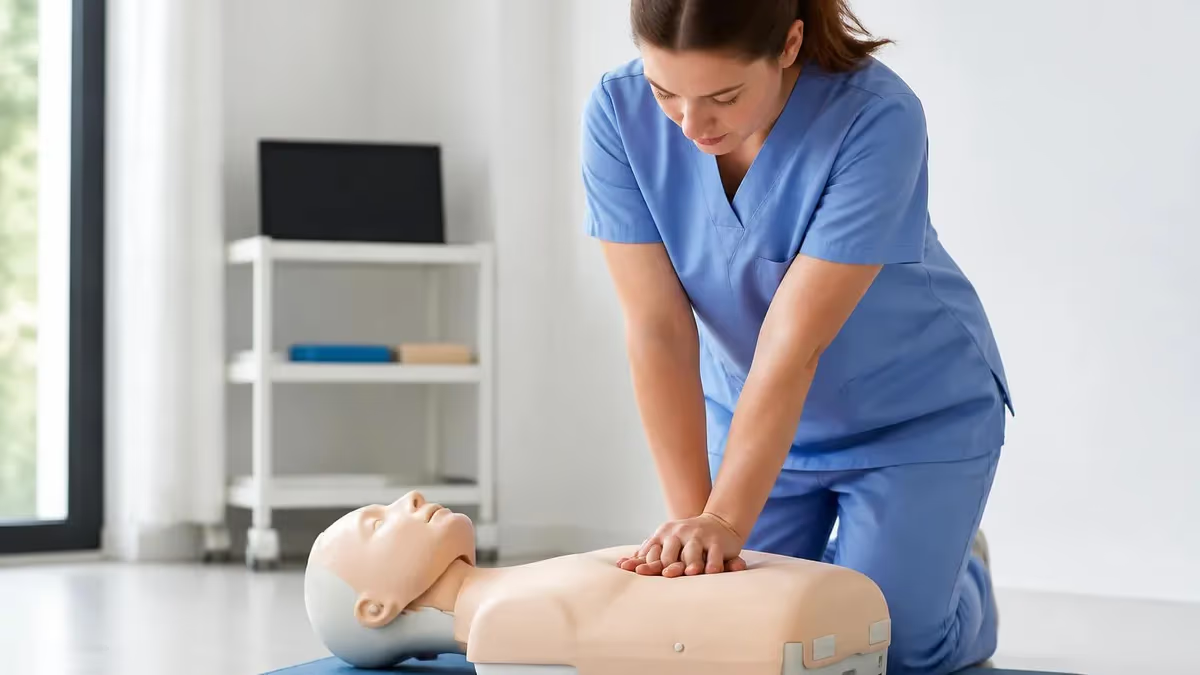
CPR cards are the official proof that you've completed a cardiopulmonary resuscitation training course and demonstrated competency in life-saving skills. Whether you're a healthcare professional renewing for hospital credentialing, a teacher meeting state requirements, or a new parent who just finished an infant CPR class, your certification card is the document that turns hours of practice into employable, verifiable proof. Most employers, licensing boards, and childcare agencies will not accept verbal claims of training, which is exactly why a valid card matters.
The market for CPR certification cards has grown dramatically since 2020, with online and hybrid options multiplying alongside traditional in-person courses. The American Heart Association (AHA), American Red Cross, Health & Safety Institute (HSI), and the cpr index of approved providers continue to set the gold standard, but lower-cost online certifiers have also entered the space. Knowing which card your employer accepts is the first and most important question to answer before paying any provider.
A typical CPR card includes your full legal name, the issuing organization, the type of certification (BLS, Heartsaver, Healthcare Provider, etc.), the date issued, and an expiration date — almost always two years from completion. Many modern cards also include a QR code or unique ID number that allows employers to verify authenticity in seconds. Paper cards still exist, but digital eCards have become the dominant format because they're faster, harder to forge, and immediately accessible.
The acls algorithm and PALS certification cards work the same way, but they sit on top of a basic CPR credential. You generally cannot hold an Advanced Cardiovascular Life Support (ACLS) or Pediatric Advanced Life Support (PALS) card without first holding a current Basic Life Support (BLS) card. This stacking system is why healthcare workers often carry two or three cards in their wallet or healthcare credentialing app at any given time.
It's also worth noting that the search term "cpr cards" sometimes confuses people because of unrelated businesses like CPR Cell Phone Repair, which uses the same acronym. For the purposes of this article, we're focused exclusively on cardiopulmonary resuscitation certification cards — the credentials issued after training in chest compressions, rescue breathing, AED use, and choking response. If you landed here looking for phone screen replacement, you'll want a different site entirely.
The cost of getting and maintaining a CPR card ranges from completely free (some employers and fire departments offer it as a benefit) to around $120 for a full blended Healthcare Provider BLS course at a national chain. Renewal is usually cheaper than initial certification, often $30 to $70, especially when completed online with a short skills check-off. Across this guide we'll walk through every type of card, what employers actually accept, how to renew, how to verify, and what to do if you lose yours.
Finally, a quick note on legitimacy: not every card is created equal. State nursing boards, hospitals, daycares, and OSHA-regulated workplaces all have specific lists of accepted issuers. A $20 card from an unknown website may technically prove you took a quiz, but it can be rejected on your first day of orientation. Always confirm with your employer or licensing board before purchasing, and prefer providers that follow the most recent American Heart Association ECC Guidelines.
CPR Cards by the Numbers

Types of CPR Certification Cards
Designed for teachers, parents, coaches, and the general public. Covers adult, child, and infant CPR plus AED use. Often required for childcare, build parenting, and school staff. Accepted nearly everywhere outside clinical hospital settings.
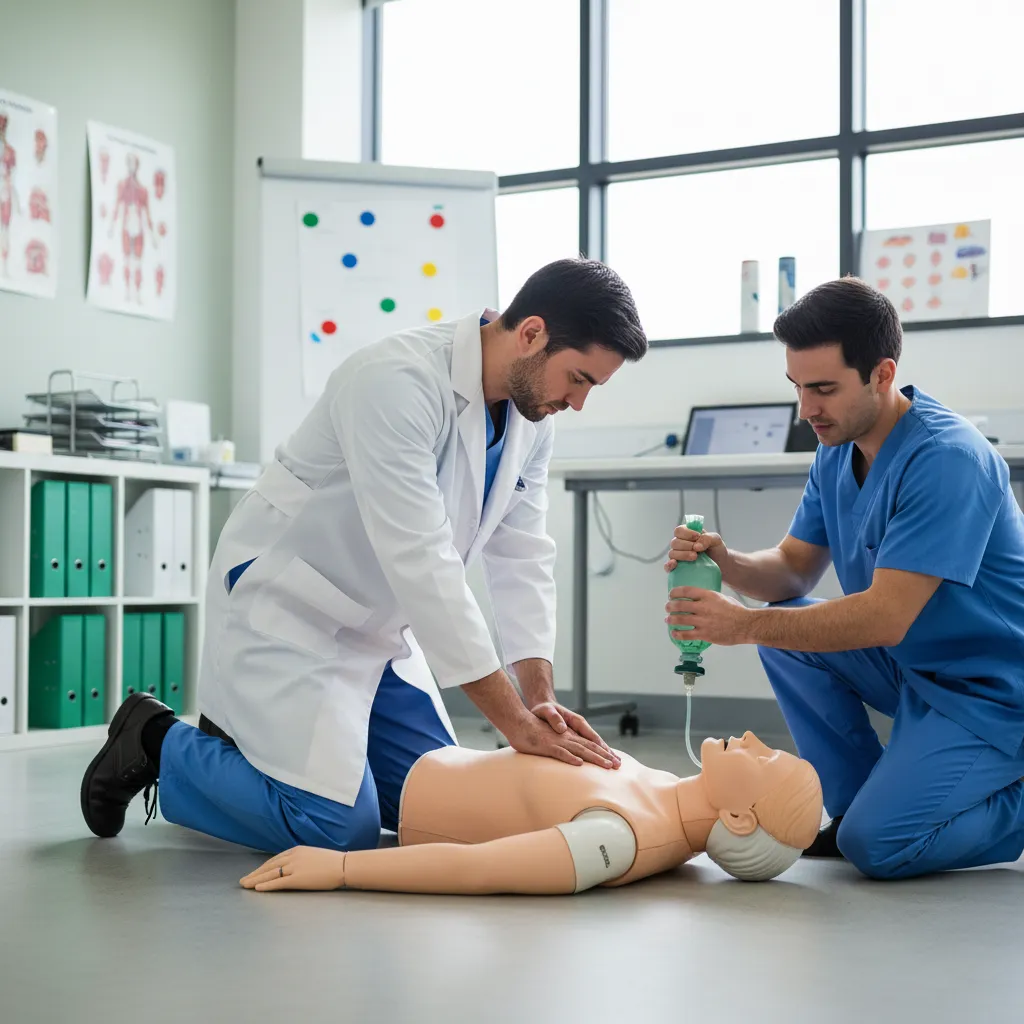
The standard card for nurses, doctors, EMTs, dental staff, and medical students. Includes two-rescuer scenarios, bag-mask ventilation, and team dynamics. Required by virtually every hospital, clinic, and nursing program in the United States.
Advanced Cardiovascular Life Support, built around the acls algorithm for cardiac arrest, stroke, and arrhythmias. Required for ICU, ER, anesthesia, and many telemetry roles. Builds on BLS — you must hold a current BLS card first.
Pediatric Advanced Life Support card for pediatric ICU, ER, neonatal, and pediatric anesthesia staff. Covers respiratory rate assessment, pediatric arrest algorithms, and infant cpr techniques. Like ACLS, it sits on top of an active BLS credential.
A common combo card for workplaces under OSHA regulation, summer camps, and construction sites. Adds bleeding control, burns, fractures, and position recovery technique to the standard CPR skill set. Typically valid two years.
Getting your CPR card starts with picking the right course for your role. A high school babysitter learning baby cpr for the first time has very different needs than a critical care nurse renewing both BLS and ACLS. Before you register, ask your employer or program coordinator three questions: which issuing organization do they accept, which level of certification is required (Heartsaver vs BLS vs ACLS), and whether a fully online card is acceptable or whether you must complete an in-person skills check.
Once you've confirmed the requirement, you'll register for one of three formats. The first is a fully in-person classroom course, typically four to six hours, where an instructor leads you through lectures, manikin practice, and a final skills test. The second is a blended course, where you complete two to three hours of online modules at your own pace, then attend a one-hour in-person skills session. The third is fully online, which is convenient and inexpensive but only accepted by certain employers and almost never by hospitals.
During the course you'll demonstrate compressions at a rate of 100 to 120 per minute, a depth of at least two inches for adults, proper hand placement, and correct AED pad placement. You'll also be tested on rescue breathing, choking response, and recovery position. For healthcare provider classes, you'll add bag-valve-mask ventilation, two-rescuer coordination, and switching roles every two minutes to prevent rescuer fatigue. Pediatric and infant scenarios are required for Heartsaver Pediatric, BLS, PALS, and any childcare-focused card.
Most providers issue your card immediately upon successful completion. AHA instructors typically submit your roster the same day, and your eCard arrives by email within 24 hours from atlas.heart.org or eCards.heart.org. Red Cross cards arrive almost instantly through redcross.org/take-a-class/digital-certificate. Online-only providers vary wildly — some issue cards instantly upon quiz completion, while others mail paper cards in seven to ten business days. Always download a PDF backup of any digital card the day you receive it.
Cost is the variable most students focus on, but it shouldn't be the only one. A $19.99 online certification might save money up front, but if your hospital orientation rejects it, you've wasted both the fee and your start date. National CPR Foundation, ProTrainings, ProCPR, and similar online issuers occupy a legitimate middle ground for non-clinical roles, but always cross-reference your employer's approved list. For clinical roles, stick with AHA, ARC, or HSI to avoid problems.
If you're paying out of pocket, check whether your employer reimburses certification costs after you start. Many hospitals, nursing homes, schools, and fire departments either pay for renewal courses directly or reimburse the full cost within 30 days of submitting a receipt. Some health insurance wellness programs and HSAs also cover CPR training as a preventive expense, especially for parents of infants or seniors at cardiac risk. Always ask before assuming you have to absorb the fee yourself.
After you receive your card, store it in three places: a physical wallet card (or printed PDF), a digital copy in your phone's wallet app or cloud drive, and a backup with your HR file or licensing portal. Healthcare workers should also upload it to credentialing platforms like Symplr or HealthStream within 48 hours of issuance. Setting a calendar reminder 90 days before expiration gives you a comfortable runway to renew without lapsing — and lapsed cards almost always require a full course instead of a shorter renewal.

CPR Practice Test Questions
Prepare for the CPR Cardiopulmonary Resuscitation Practice exam with our free practice test modules. Each quiz covers key topics to help you pass on your first try.
CPR Basic CPR
CPR Exam Questions covering Basic CPR. Master CPR Test concepts for certification prep.
CPR and First Aid
Free CPR Practice Test featuring and First Aid. Improve your CPR Exam score with mock test prep.
CPR (Cardiopulmonary Resuscitation) Adult ...
CPR Mock Exam on (Cardiopulmonary Resuscitation) Adult CPR and AED Usage. CPR Study Guide questions to pass on your first try.
CPR (Cardiopulmonary Resuscitation) Airway...
CPR Test Prep for (Cardiopulmonary Resuscitation) Airway Obstruction and Choking. Practice CPR Quiz questions and boost your score.
CPR (Cardiopulmonary Resuscitation) Cardio...
CPR Questions and Answers on (Cardiopulmonary Resuscitation) Cardiopulmonary Emergency Recognition. Free CPR practice for exam readiness.
CPR (Cardiopulmonary Resuscitation) Child ...
CPR Mock Test covering (Cardiopulmonary Resuscitation) Child and Infant CPR. Online CPR Test practice with instant feedback.
CPR (Cardiopulmonary Resuscitation) High-P...
Free CPR Quiz on (Cardiopulmonary Resuscitation) High-Performance Team Dynamics. CPR Exam prep questions with detailed explanations.
CPR (Cardiopulmonary Resuscitation) Legal ...
CPR Practice Questions for (Cardiopulmonary Resuscitation) Legal and Ethical Considerations. Build confidence for your CPR certification exam.
CPR for Specific Populations
CPR Test Online for for Specific Populations. Free practice with instant results and feedback.
CPR Airway & Breathing Management
CPR Exam Questions covering Airway & Breathing Management. Master CPR Test concepts for certification prep.
CPR Assessment & Recognition of Cardiac Ar...
Free CPR Practice Test featuring Assessment & Recognition of Cardiac Arrest. Improve your CPR Exam score with mock test prep.
CPR Chest Compressions & Defibrillation
CPR Mock Exam on Chest Compressions & Defibrillation. CPR Study Guide questions to pass on your first try.
CPR Post-Resuscitation Care & Recovery
CPR Test Prep for Post-Resuscitation Care & Recovery. Practice CPR Quiz questions and boost your score.
AHA, Red Cross, and National CPR Foundation Cards Compared
The American Heart Association is the gold standard for clinical CPR cards. Every hospital, virtually every nursing school, and most paramedic programs in the United States require AHA BLS, ACLS, or PALS specifically. AHA eCards include a unique code that employers verify directly at atlas.heart.org, making them extremely difficult to forge. Courses are taught only by AHA-aligned Training Centers and certified instructors.
Expect to pay $60 to $90 for Heartsaver, $80 to $110 for BLS, and $200 to $280 for ACLS or PALS. Cards are valid two years and require a full skills evaluation for renewal. The acls algorithm content is reviewed and updated every five years, with the most recent guideline release in 2025. AHA cards are widely considered the safest choice when you're unsure what your future employer will accept.
Online CPR Cards vs In-Person CPR Cards
- +Lower cost, often 50-70% cheaper than in-person classes
- +Complete the course at your own pace, including evenings and weekends
- +Instant digital card delivery in most cases
- +No travel time or scheduling conflicts with work shifts
- +Easier to repeat sections you don't fully understand
- +Excellent for renewals when skills are already strong
- +Ideal for non-clinical roles where employers accept them
- −Not accepted by most hospitals, nursing schools, or state boards
- −No hands-on manikin practice to confirm correct compression depth
- −Higher risk of unrecognized issuers being rejected at HR
- −Cannot satisfy OSHA requirements that mandate skills demonstration
- −Some online providers issue cards that look legitimate but aren't
- −Verification systems vary in reliability between online issuers
- −Less effective for first-time learners who need physical feedback
Pros and Cons at a Glance
| Pros | Cons |
|---|---|
| Complete the course at your own pace, including evenings and weekends | Not accepted by most hospitals, nursing schools, or state boards |
| Instant digital card delivery in most cases | No hands-on manikin practice to confirm correct compression depth |
| No travel time or scheduling conflicts with work shifts | Higher risk of unrecognized issuers being rejected at HR |
| Easier to repeat sections you don't fully understand | Cannot satisfy OSHA requirements that mandate skills demonstration |
| Excellent for renewals when skills are already strong | Some online providers issue cards that look legitimate but aren't |
| Ideal for non-clinical roles where employers accept them | Verification systems vary in reliability between online issuers |

CPR Card Renewal Checklist
- ✓Check your card's exact expiration date and set a reminder 90 days before
- ✓Confirm which issuing organization your employer requires for renewal
- ✓Verify whether your role needs BLS, ACLS, PALS, Heartsaver, or a combo card
- ✓Review the latest AHA ECC Guidelines for any algorithm updates
- ✓Practice compression rate (100-120/min) and depth (2-2.4 inches) on a manikin
- ✓Choose between in-person, blended, or online renewal based on acceptance
- ✓Register at least 60 days before expiration to allow rescheduling room
- ✓Bring a photo ID and your current card on skills check-off day
- ✓Download and save your new eCard as a PDF the day it's issued
- ✓Upload the new card to HR, credentialing platforms, and your phone wallet
Lapsed cards mean full courses, not renewals
Most providers consider a card lapsed the day after its printed expiration date. Once lapsed, you can no longer take a shorter renewal course — you'll need to complete the full initial certification, which costs more and takes longer. Hospitals may also pull you from the schedule until the new card is in your file, so the financial hit can be far larger than the renewal fee itself.
Verifying a CPR card is fast and important. Every major issuer offers an online verification portal. For AHA cards, employers visit atlas.heart.org/mycards, enter the eCard code, and instantly see the cardholder's name, course type, instructor, training center, and expiration date. Red Cross cards verify at redcross.org/take-a-class/digital-certificate using the certificate ID. HSI cards verify at emergencycare.hsi.com. Online-only providers typically embed a QR code that links to their internal verification database.
If you're an employer reviewing a stack of new-hire CPR cards, build a simple verification habit: open the issuer's portal, enter the ID, and confirm name, expiration, and course level match the candidate's role. This thirty-second check has caught countless forged or expired cards over the years. If a provider doesn't offer real-time verification at all, treat that as a major red flag, regardless of how official the card looks in PDF form.
Losing your CPR card used to be a stressful problem, but the shift to digital eCards has nearly eliminated it. AHA cardholders can re-download their card any time by logging into atlas.heart.org with the email they registered. Red Cross learners can re-download from their online account dashboard. Even HSI and most online issuers maintain permanent records. If you took your course through an employer, ask HR — they often retain a roster copy you can request.
For paper cards (still issued by some older programs), the replacement process varies. Most training centers will reissue a paper card or upgrade you to a digital version for free or a small fee, provided you can prove you completed the course. You'll typically need to email the training center with your full name, course date, and instructor name if you remember it. Replacements usually arrive within seven to ten business days.
Damaged cards — laminate cracking, faded printing, water damage — should be replaced promptly. While a worn card doesn't invalidate your certification, HR departments occasionally reject anything that isn't crisp and clearly readable. Healthcare workers in particular should keep a fresh digital copy plus a printed backup, since hospital badge offices sometimes require physical handoff during credentialing audits even when digital records exist.
One important nuance: if your card was issued under a previous legal name (after marriage, divorce, or legal change), most issuers will reissue it under your new name with proper documentation. AHA training centers can update names through their internal system, while the Red Cross handles this through their customer service team. Make sure your CPR card name matches your employer's HR records exactly — even small mismatches (middle initial vs full middle name) can trigger credentialing delays.
Finally, beware of "replacement card" scams. There are fraudulent sites that pose as AHA or Red Cross and charge $30 to $40 to "replace" a card you never lost — sometimes selling fake certificates that look real until your employer tries to verify them. Always start from the issuer's official URL, type it manually, and never click sponsored search results when looking for a replacement. If something feels off, call the training center where you took the original course.
Each year, employers report thousands of counterfeit or doctored CPR cards. Some come from fully fake "certification mills" charging $15 for an instant card with no actual training. Others are real cards from real students whose names have been edited in Photoshop. Both can cost you your job, your nursing license, and in some states result in criminal fraud charges. Always purchase from a verified issuer.
Choosing the right CPR card depends entirely on your role, your state, and your employer's specific list. For RNs, LPNs, respiratory therapists, paramedics, dental hygienists, and pharmacy staff in clinical environments, the answer is almost always AHA BLS Healthcare Provider. For physicians, advanced practice nurses, and ICU/ER staff, add ACLS. For pediatric specialists, add PALS, which requires solid command of respiratory rate norms, infant cpr depth, and the pediatric arrest algorithms layered on top of the acls algorithm foundation.
For schoolteachers, coaches, daycare workers, build parents, and Scout leaders, Heartsaver or Adult/Pediatric First Aid/CPR/AED from AHA, Red Cross, or HSI is usually exactly right. Many states have specific certification requirements for childcare licensing — California, for example, requires courses with in-person skills demonstration through a state-approved trainer. Always check your state's childcare licensing portal before paying, because reimbursement is rarely possible after the fact if the wrong card is purchased.
Workplaces governed by OSHA standards — construction, manufacturing, oil and gas, large warehouses — typically require a combination First Aid + CPR + AED card. OSHA itself doesn't mandate a specific issuer, but it requires hands-on skills evaluation, which functionally eliminates fully online certifications. Companies often arrange on-site group training, which is more cost-effective and ensures every employee's card has matching dates for easy renewal scheduling.
For new parents and grandparents, the AHA Family & Friends course is an excellent non-credentialed option that focuses on infant cpr, child cpr, and choking. It doesn't issue a workplace-accepted card, but it costs less than full certifications and zeroes in on home scenarios. If you also want a real card, the Heartsaver Pediatric First Aid/CPR/AED course from AHA or the equivalent Red Cross course gives you both family-relevant skills and a verifiable credential.
If you're looking for affordable classes near me, start with your local Red Cross chapter, your nearest hospital education department, community colleges, fire departments, and EMS agencies. Many fire departments offer free or extremely low-cost public CPR courses, especially after high-profile cardiac arrest events in the news. Community colleges sometimes bundle CPR certification into wellness or pre-nursing courses at a fraction of standalone class prices.
Industry-specific roles have additional considerations. Personal trainers usually need a card from a NCCA-accredited provider — most major issuers qualify. Massage therapists need state-specific approval. Real estate agents and notaries don't typically need CPR cards, but some brokerages encourage it as part of safety training. Always ask your specific licensing board rather than guessing, because anything less than written confirmation can lead to credential rejection at renewal time.
Finally, consider the difference between a heart attack vs cardiac arrest — your training should prepare you to recognize both. A solid CPR card course doesn't just teach you to push hard and fast; it teaches you when to start, when to stop, when to use the AED, and how to coordinate with bystanders and 911. Choose a card type and provider whose course content reflects this depth, even if it costs slightly more. The card itself is just paper or pixels — the skills behind it are what actually save lives.
Practical preparation makes the difference between a stressful skills check and a confident one. Start practicing two to three weeks before your scheduled class or renewal. Even five minutes a day on a couch cushion, a sturdy throw pillow, or an inexpensive home manikin builds the muscle memory needed to hit the 100-120 compression-per-minute target. Many students underestimate how physically demanding two minutes of continuous compressions are until they try it the first time.
Use a metronome app set to 110 BPM, or simply hum "Stayin' Alive" by the Bee Gees — its tempo aligns almost perfectly with the recommended compression rate. For adults, aim for a depth of at least two inches but no more than 2.4 inches. For children, push to about one-third the depth of the chest, roughly two inches. For infants, use two fingers (or two-thumb encircling for two rescuers) and push about 1.5 inches. Recoil — letting the chest rise completely between compressions — is just as important as depth.
Memorize the simplified adult chain of survival: recognize and call 911, start compressions, defibrillate with an AED as soon as possible, deliver advanced care, and provide post-cardiac-arrest care. For BLS, healthcare provider candidates should also master the role-switch every two minutes, the 30:2 compression-to-breath ratio for single-rescuer adult CPR, and the 15:2 ratio for two-rescuer infant or child CPR. ACLS and PALS candidates should map out their algorithm flashcards by rhythm: shockable (Vfib/pVT) versus non-shockable (asystole/PEA).
For the written portion of any certification or renewal, focus on high-yield topics: signs of cardiac arrest, when to start compressions, AED pad placement and special situations (hairy chest, wet skin, implanted devices, medication patches), choking response by age group, recovery position indications, and basic respiratory rate norms. National CPR Foundation, AHA, and Red Cross all publish free study materials online, and most students benefit from taking at least one full-length practice quiz before sitting the real test.
On the day of your skills check, eat a real meal, hydrate, wear loose comfortable clothes, and bring a photo ID. Arrive ten minutes early so you have time to relax, find the room, and chat briefly with the instructor about any modifications you might need (back issues, pregnancy, recent surgery). Instructors are professionals who want you to pass — they will give you a chance to retry skills you miss, and most testing scenarios allow at least one remediation attempt per skill.
If you fail any portion of a skills test, don't panic. The American Heart Association allows remediation either on the same day or within a defined retest window, depending on the training center's policy. Red Cross instructors typically offer immediate retesting after a brief coaching break. The most common reasons for failure are compression depth that's too shallow, compression rate that's too slow or too fast, and incomplete chest recoil. All three are easily fixed with focused practice.
After you pass and receive your card, your work isn't entirely done. CPR skills decay rapidly — research shows measurable skill loss starting at three to six months, even among healthcare workers. Plan refresher practice every quarter using a home manikin, your gym's training room, or a brief refresher video. Some hospitals now require quarterly low-dose, high-frequency skill checks alongside the standard two-year card renewal. Treat your CPR card not as a one-time achievement but as an ongoing commitment to readiness.
CPR Questions and Answers

About the Author

Registered Nurse & Healthcare Educator
Johns Hopkins University School of NursingDr. Sarah Mitchell is a board-certified registered nurse with over 15 years of clinical and academic experience. She completed her PhD in Nursing Science at Johns Hopkins University and has taught NCLEX preparation and clinical skills courses for nursing students across the United States. Her research focuses on evidence-based exam preparation strategies for healthcare certification candidates.
Join the Discussion
Connect with other students preparing for this exam. Share tips, ask questions, and get advice from people who have been there.
View discussion (5 replies)