
CPR Instructor Course: How to Become a Certified CPR Instructor 2026 September
CPR instructor course pathways: 🎓 AHA, Red Cross, ASHI options, costs, prerequisites, and what to expect from training to teach CPR.
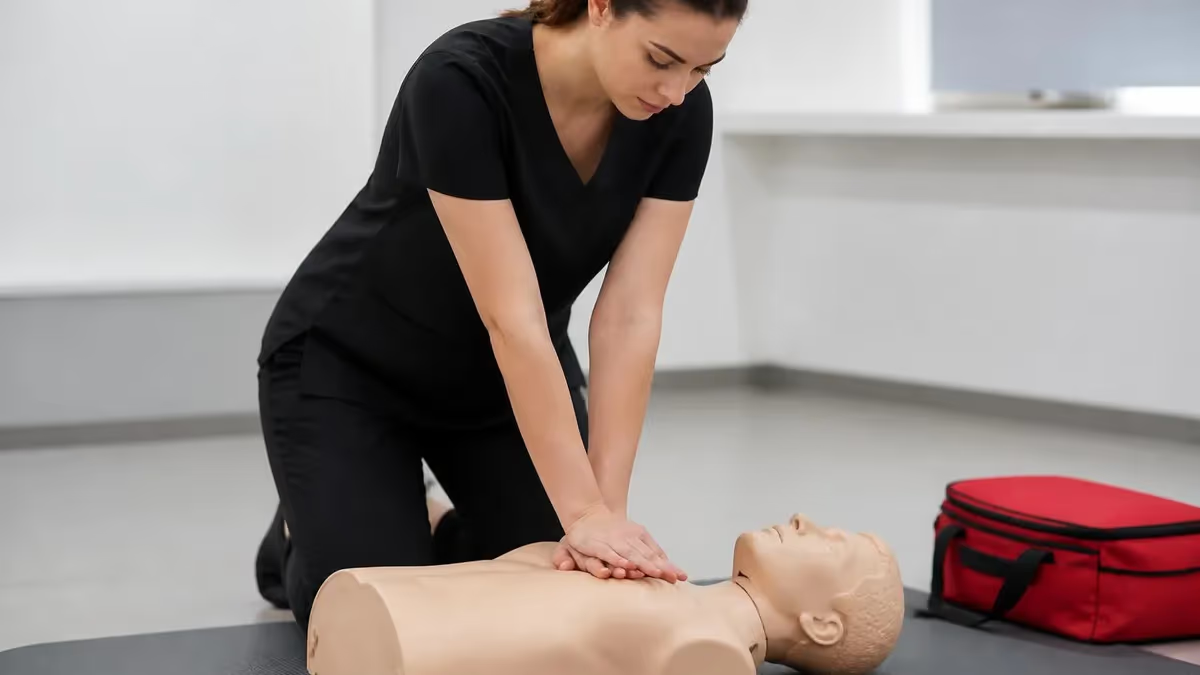
Becoming a CPR instructor opens a meaningful side career or supplemental income stream for healthcare professionals, first responders, educators, and dedicated lay rescuers who want to teach lifesaving skills to others. CPR instructor courses are offered by several major training organizations — the American Heart Association (AHA), American Red Cross (ARC), American Safety and Health Institute (ASHI), and Health and Safety Institute (HSI) — each with its own pathway, requirements, and instructor certifications. The path you choose typically depends on your existing professional background, the audience you want to teach, and which organization's certifications your local market values most.
The core idea is straightforward: organizations like AHA and ARC don't directly employ instructors. Instead, they certify individuals who meet specific requirements, then those individuals teach courses through Training Centers (independent businesses or institutions affiliated with the certifying organization). Successful CPR instructors typically combine teaching skill, current CPR competency, and the discipline to maintain detailed course records required by certifying bodies. The income potential ranges widely — from a few hundred dollars supplemental income teaching occasional weekend courses to full-time independent businesses generating $50,000-$100,000+ for established instructors with strong client relationships.

CPR Instructor Quick Facts
Prerequisites: Current CPR certification (BLS or healthcare provider level for AHA Instructor) plus alignment with a Training Center. Training: 8-16 hours instructor-specific course depending on organization and instructor level. Cost: $200-$600 typically. Renewal: Every 2 years for most certifications. Earning potential: $30-$75/hour teaching, varying by location and class size.
The American Heart Association is the most widely recognized CPR training organization in the United States, particularly for healthcare providers. AHA certifications include Heartsaver (lay rescuer), Basic Life Support (BLS, healthcare provider level), Advanced Cardiovascular Life Support (ACLS), Pediatric Advanced Life Support (PALS), and instructor courses for each.
To become an AHA BLS Instructor — the most common starting point — you need a current BLS Provider certification, completion of the BLS Instructor Course, alignment with an AHA Training Center, and successful monitoring of your first teaching by a Training Center Faculty member. This monitoring requirement ensures new instructors meet AHA quality standards before independently teaching.
Major CPR Instructor Certifications
Teaches Basic Life Support to healthcare providers. Most widely accepted by hospitals and healthcare employers.
Teaches CPR/AED/First Aid to lay rescuers. Common for workplace and community courses.
Teaches Advanced Cardiovascular Life Support to advanced healthcare providers. Requires current ACLS certification.
Teaches American Red Cross CPR/AED/First Aid courses. Different curriculum from AHA but widely accepted.
American Safety and Health Institute. Often used for workplace OSHA-compliance training.
Workplace and community CPR training. Streamlined documentation and digital course management.
The American Red Cross instructor pathway differs from AHA in several practical ways. Red Cross requires instructor candidates to complete the Instructor Trainer course taught by Red Cross-authorized providers, with content covering both teaching skills and Red Cross-specific course administration. The Red Cross emphasizes lay-rescuer audiences more than healthcare providers, though their CPR for the Professional Rescuer course addresses healthcare provider needs. Some workplaces and community organizations specifically prefer Red Cross courses, while many hospitals prefer AHA. Understanding which certification your target market values affects which pathway is most worthwhile.
Pre-requisites for any CPR instructor course typically include current CPR certification at the level you want to teach, basic adult learning theory understanding, and demonstrable teaching skill. The latter is often where prospective instructors struggle — knowing CPR well doesn't automatically make someone an effective teacher. Instructor courses focus heavily on teaching methodology, not just CPR content.
They cover demonstrating skills clearly, breaking down complex techniques into teachable steps, providing constructive feedback to learners, managing class time, handling adult learners with different backgrounds, and assessing competency objectively. Many instructor candidates with strong clinical CPR skills find the teaching elements more challenging than expected.
The instructor course itself typically runs 8-16 hours over one to three days, with substantial pre-course online learning. AHA's BLS Instructor Course, for example, includes about 6 hours of online content plus an 8-hour in-person session focused on practical teaching skills. Red Cross instructor courses follow similar pattern with significant pre-work plus practical session. Course costs range from $200-$600 depending on organization, instructor level, and location, plus the cost of any required materials (instructor manual, demonstration tools).
American Heart Association BLS Instructor pathway: Hold current AHA BLS Provider card. Find AHA Training Center willing to align with you (some require employment, others independent contractor relationship, some open). Complete online portion of BLS Instructor Course (approximately 6 hours, available through AHA online platform). Attend in-person practical session (approximately 8 hours). Pass instructor essentials assessment. Be monitored teaching first BLS class by Training Center Faculty. Receive AHA BLS Instructor card. Total time investment: 30-50 hours including practice teaching. Total cost typically $300-$500.

Training Center alignment is one of the most important practical considerations for AHA instructors. AHA doesn't directly authorize instructors — instead, instructors operate under the umbrella of AHA Training Centers (TCs), which are independent businesses, hospitals, fire departments, or other organizations that hold AHA Training Center authorization.
Some TCs employ instructors directly; others contract with independent instructors who pay course fees and receive authorization to teach AHA-branded courses. Finding a Training Center willing to align with you is sometimes the hardest part of becoming an AHA instructor — many TCs are selective about adding instructors due to administrative overhead, while others actively recruit instructors to expand their teaching capacity.
Independent CPR instructor businesses are increasingly common, particularly for instructors aligned with multiple organizations. Many entrepreneurs operate their own training centers, becoming TCs themselves rather than aligning with existing TCs. The Training Center authorization process requires more administrative setup — quality assurance procedures, course records management, regulatory compliance — but offers more income potential and flexibility. Some instructors start aligned with established TCs to gain experience, then transition to independent TC operation as their business grows.
Course fee structures vary by market and audience. Healthcare provider BLS courses typically charge $50-$80 per student in most markets, with class sizes of 8-12 students common. ACLS courses charge $200-$300 per student. Workplace Heartsaver courses for non-healthcare audiences charge $30-$60 per student. Instructors who own their own TCs keep the entire student fee minus equipment, materials, and AHA fees (typically $7-$15 per student depending on course). Instructors aligned with TCs typically receive a portion (often 40-70%) of student fees with the TC keeping the remainder for administrative overhead.
Don't pursue instructor certification without market research — verify there's actual demand for the certification level you're pursuing in your area. Don't underestimate Training Center alignment difficulty — line up TC alignment before completing instructor course when possible. Don't skimp on equipment — manikins, AED trainers, and supplies are substantial upfront investment but essential. Don't ignore renewal requirements — instructor certifications lapse and require timely renewal.
Equipment investment is one of the often-overlooked costs of becoming an active CPR instructor. Quality CPR manikins cost $200-$500 each for adult, child, and infant variants, and an instructor needs multiple manikins for hands-on practice with class sizes of 8-12 students. AED training units cost $300-$500 each. Pocket masks, training valves, BLS feedback devices, and other equipment add several hundred dollars more. A complete instructor equipment package supporting full BLS courses typically requires $3,000-$5,000 in initial investment. Some instructors share equipment with their Training Center, while independent instructors typically buy their own equipment to maintain flexibility.
Course documentation and quality assurance requirements vary significantly across organizations. AHA has specific course roster requirements, student registration processes through their online platform (Atlas), and quality assurance audits performed by Training Center Faculty. Red Cross uses their own digital systems for course documentation. ASHI/HSI offers streamlined digital documentation through their MyCPRcards platform. For instructors teaching multiple organizations' courses, managing different documentation systems becomes a meaningful administrative burden. Some instructors specifically choose to align with one organization to simplify workflow.
Continuing education and skill maintenance are required for instructors throughout their certification cycle. AHA requires instructors to teach a minimum number of courses during the two-year cycle (specifics vary by instructor type) and complete any updated content training when AHA releases curriculum updates. Red Cross has similar minimum teaching requirements. Failing to meet teaching minimums or missing curriculum updates results in instructor certification lapsing, requiring full re-certification rather than simple renewal. Active instructors generally exceed minimum teaching requirements without difficulty, but instructors who teach occasionally must track their teaching activity carefully.
Before Pursuing CPR Instructor Certification
- ✓Hold current CPR provider certification at level you want to teach
- ✓Research local market demand for instructor-level certifications
- ✓Identify potential Training Center alignment partners (for AHA path)
- ✓Budget for instructor course ($200-$600) and equipment ($3000-$5000)
- ✓Plan time for 30-50 hours of training plus first-monitoring teaching
- ✓Decide whether to align with TC or pursue independent TC eventually
- ✓Verify your existing teaching skill or prepare to develop it intensively
- ✓Consider specialty paths (ACLS, PALS) for higher per-class earnings
Market positioning matters significantly for instructor business success. CPR training is a competitive market in most metropolitan areas, with established instructors and Training Centers serving healthcare providers, workplaces, and community organizations. New instructors typically focus on niches: specific industry workplaces (manufacturing, construction, restaurants), specific audiences (childcare workers, fitness instructors, senior care staff), or specific geographic areas underserved by existing providers. Competing on price alone rarely works because instruction quality varies and clients often value reliability and convenience over rock-bottom prices. Specialization and reputation drive sustainable instructor businesses.
Healthcare facility contracts represent the highest-volume opportunity for CPR instructors. Hospitals, nursing homes, dialysis centers, and similar facilities typically have ongoing needs for staff CPR/BLS certification renewal every two years. Securing a recurring contract to provide BLS courses for a facility's nursing staff creates predictable income for the instructor or TC. These contracts are often won by instructors who develop relationships with facility education coordinators or nursing supervisors over time. Some facilities prefer specific organizations (often AHA for hospital settings) so aligning your certification path with target market preferences matters.
Online-first or blended learning models are increasingly common in CPR education. AHA offers HeartCode courses that combine online cognitive learning with in-person hands-on skills sessions, allowing instructors to focus class time on practical skill assessment rather than lecture content. This model works particularly well for healthcare providers who can complete the cognitive portion at home, then attend a 30-90 minute skills session for assessment and certification. Instructors teaching primarily HeartCode courses can serve substantially more students per day than full classroom courses, increasing income potential. Equipment requirements remain similar but session length is much shorter.

The professional satisfaction of teaching CPR comes from concrete impact — instructors literally teach skills that save lives. Survival rates from out-of-hospital cardiac arrest improve dramatically when bystanders perform CPR, and instructors expand the pool of trained bystanders in their communities. Each course an instructor teaches potentially produces students who one day save a family member, neighbor, or stranger experiencing cardiac arrest. This impact orientation distinguishes CPR instruction from many other supplementary income paths and motivates instructors to maintain quality and engagement even when classes feel routine.
For healthcare professionals, becoming a CPR instructor often serves career development beyond direct income. Teaching CPR builds skills useful for clinical education roles within healthcare organizations. Many nurse educators, paramedic instructors, and clinical training specialists started as CPR instructors and used that experience as a stepping stone to broader education roles. Some employers even sponsor employees through instructor certification because having internal instructors saves the cost of bringing in external trainers for required staff certifications.
For first responders and military personnel, CPR instructor certification expands transferable skills useful in transition careers and side income. Firefighters, paramedics, police officers, and military medics all routinely use CPR skills professionally, making them well-prepared for instructor certification. Many use instructor certifications for retirement transition careers, leveraging their professional expertise into teaching credentials that translate well into community education businesses or contract work for various clients. The combination of credible operational experience plus teaching credentials creates strong market positioning.
CPR Instructor Earning Stats
Comparing Major Instructor Pathways
Most accepted in hospital and healthcare provider settings. Higher administrative overhead. Requires Training Center alignment.
Strong recognition in community and workplace settings. Less hospital penetration. Streamlined renewal process.
Excellent for OSHA-compliance workplace training. Flexible documentation. Less recognized for healthcare provider courses.
Some instructors align with multiple organizations to serve diverse markets. Higher administrative complexity but maximum flexibility.
Looking long-term at a CPR instructor career trajectory, several patterns emerge among successful instructors. Initial certification and basic teaching skills can be acquired quickly, but building a reliable instructor business takes 2-5 years of consistent effort to develop client relationships, equipment investment, and operational systems. Instructors who treat the work as professional business — tracking metrics, marketing systematically, investing in equipment quality, maintaining detailed records — typically build sustainable income streams. Instructors who treat it casually often struggle to develop predictable income.
The next steps beyond basic CPR instruction include specialty instructor certifications, Training Center authorization, and instructor trainer status. Specialty certifications (ACLS, PALS, Heartsaver Pediatric) allow charging higher fees for specialized audiences. Training Center authorization eliminates the alignment relationship and lets you manage your own quality assurance. Instructor trainer status (after several years and substantial teaching experience) lets you teach future instructors, opening another income stream and adding professional credentials. Each step represents additional time and complexity but expands earning potential and professional standing.
Marketing approaches for CPR instructors range from traditional networking through professional associations to digital marketing through targeted online presence. Local search visibility matters substantially — when a workplace safety officer searches "BLS instructor near me" or a hospital education coordinator looks for ACLS course providers, instructors with strong local SEO and reliable reviews capture those leads. Many successful instructors invest meaningful effort in their Google Business Profile, professional website, and selected social platforms relevant to their target audience. LinkedIn often works well for healthcare and corporate audiences; Facebook reaches community education clients; specialized industry forums help reach specific niches.
Insurance and liability considerations matter for active CPR instructors. Most professional liability insurance policies cover instructor activities up to certain limits; some don't cover instructor work specifically and require additional riders. Independent contractor instructors typically need general liability coverage plus professional liability. Training Centers often carry coverage that extends to aligned instructors during scheduled courses, but coverage outside TC-scheduled activities depends on the specific policy. Consulting with an insurance broker familiar with CPR instructor work helps identify appropriate coverage levels and policies. Some instructors organize their business as an LLC for additional liability protection beyond insurance.
Adapting to curriculum changes is an ongoing requirement. AHA, Red Cross, and other organizations periodically update their guidelines based on new science and practice changes from the International Liaison Committee on Resuscitation (ILCOR). Major updates occurred in 2010, 2015, 2020, and 2025 cycles, with smaller interim updates occasionally.
When updates release, instructors must complete update training before teaching the new content, and student materials change accordingly. Active instructors stay current with curriculum changes through their certifying organization's update systems and incorporate changes into their teaching naturally. Lapsed instructors who haven't taught during a curriculum change typically need substantial recertification work to catch up.
Technology integration in CPR education continues to evolve. CPR feedback devices providing real-time depth, rate, and recoil feedback during practice are increasingly mandatory rather than optional, particularly in AHA courses. Manikins with built-in feedback capability cost more than basic manikins but improve student learning and meet current AHA standards. Virtual reality CPR training is emerging as an option for some training scenarios, though hands-on physical practice remains essential. Mobile apps for course registration, certification card distribution, and ongoing student communication streamline instructor business operations. Instructors who embrace technology effectively often have competitive advantage over those still using paper-based systems.
Building secondary income streams alongside core CPR instruction expands earning potential. Many instructors add first aid instruction, AED program management consulting, workplace safety training, bloodborne pathogens training, and other related certifications. Some develop e-commerce businesses selling CPR equipment, manikins, and AED products. Others develop training videos, books, or online resources serving other CPR instructors. The skills and credibility built through instructor work transfer well into adjacent businesses, and successful instructor entrepreneurs often build diversified businesses around their core expertise rather than relying solely on classroom teaching income.
Becoming a CPR Instructor: Pros and Cons
- +Modest entry investment compared to most professional certifications
- +Flexible schedule — teach when you want, side income or full-time
- +Genuine community impact — teaching life-saving skills
- +Income potential scales with effort and specialization
- +Transferable to broader healthcare education careers
- +Many target audiences (healthcare, workplace, community)
- −Equipment investment substantial ($3,000-$5,000 initial)
- −Training Center alignment can be difficult to obtain
- −Documentation and quality assurance requirements meaningful
- −Renewal every 2 years requires active teaching minimum
- −Local market may be competitive with established providers
- −Income variable, especially for instructors not in TC employment
CPR Questions and Answers
About the Author

Registered Nurse & Healthcare Educator
Johns Hopkins University School of NursingDr. Sarah Mitchell is a board-certified registered nurse with over 15 years of clinical and academic experience. She completed her PhD in Nursing Science at Johns Hopkins University and has taught NCLEX preparation and clinical skills courses for nursing students across the United States. Her research focuses on evidence-based exam preparation strategies for healthcare certification candidates.
Join the Discussion
Connect with other students preparing for this exam. Share tips, ask questions, and get advice from people who have been there.
View discussion (5 replies)