
Extracorporeal CPR (ECPR): Complete Guide to Mechanical Circulatory Support During Cardiac Arrest in 2026 October
Extracorporeal CPR (ECPR) explained: 💯 ACLS algorithm integration, eligibility, outcomes, and how mechanical circulation rescues refractory cardiac arrest...
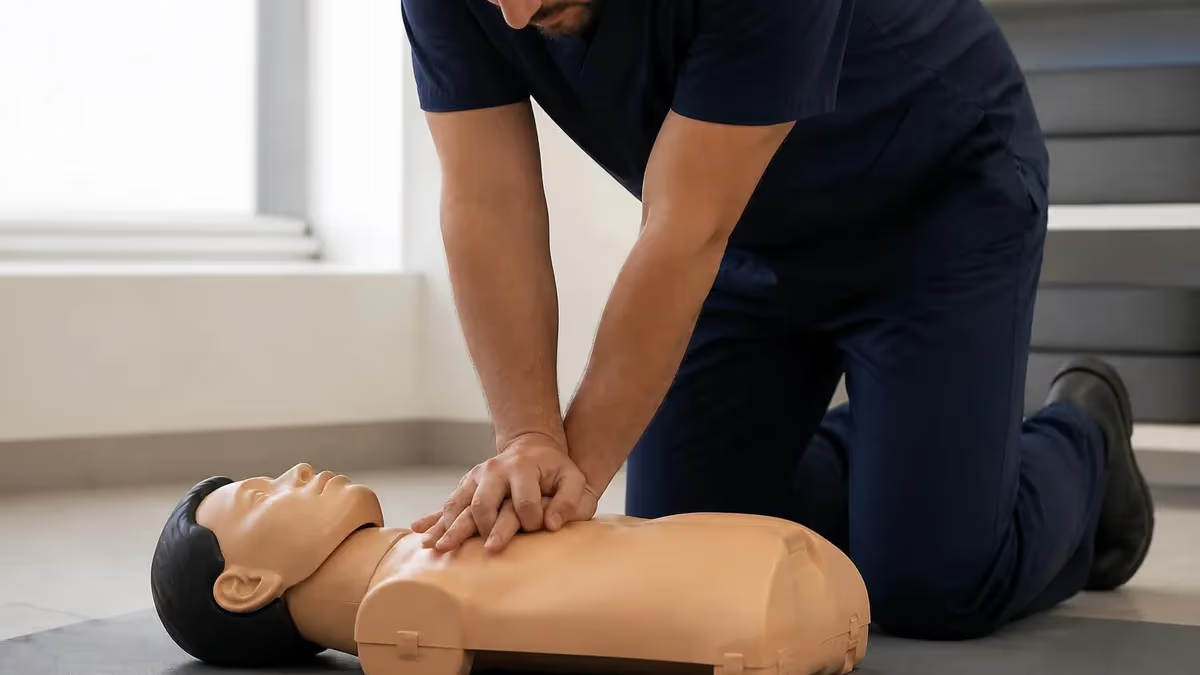
Extracorporeal CPR, commonly abbreviated ECPR, represents the most advanced form of resuscitation available in modern emergency medicine. When conventional chest compressions and defibrillation fail to restore a spontaneous heartbeat within 10 to 15 minutes, ECPR uses a portable veno-arterial extracorporeal membrane oxygenation (VA-ECMO) circuit to mechanically pump and oxygenate blood, buying time for clinicians to find and treat the underlying cause of refractory cardiac arrest. It is the bridge between conventional life support and definitive cardiac care.
The procedure differs sharply from bystander CPR because it requires a hospital-based team, large-bore cannulas inserted into the femoral vessels, and continuous perfusion managed by a perfusionist. While the standard acls algorithm guides drug therapy and rhythm checks for the first several cycles, ECPR activates when standard treatment is clearly failing. In well-selected patients, neurologically intact survival rates climb from roughly 6 percent with conventional resuscitation to over 30 percent with ECPR.
Public awareness of ECPR has grown alongside coverage of high-profile athlete collapses and trauma resuscitations, but most laypeople still believe CPR ends at chest compressions and an AED. Understanding the role of mechanical circulatory support helps families, first responders, and clinicians appreciate why every minute of high-quality bystander CPR matters — the better the perfusion before cannulation, the better the outcome after.
This guide examines what ECPR is, who qualifies, how it integrates with the chain of survival, and what the latest randomized trials say about its real-world impact. We will compare ECPR to conventional CPR, explain the equipment and personnel involved, and walk through the criteria that hospitals like the University of Minnesota, Vienna General, and Mayo Clinic use to decide who receives this resource-intensive therapy.
We will also touch on the public-health implications. ECPR programs require a regional network of trained paramedics, dispatch protocols, rapid transport vehicles, and a cardiac catheterization laboratory ready 24 hours a day. Cities that have invested in this infrastructure — Minneapolis, Paris, Melbourne, Vienna — report markedly better survival from out-of-hospital cardiac arrest than peer cities relying solely on conventional resuscitation.
Whether you are a healthcare professional preparing for advanced certification, a student studying for the complete CPR study guide, or a layperson curious about the cutting edge of resuscitation science, this article provides a thorough, evidence-based overview of extracorporeal CPR. We will keep terminology accessible while staying faithful to the clinical realities of the procedure.
By the end, you will understand when ECPR is offered, why it is not appropriate for every patient, and how it fits into the broader continuum of cardiac arrest care that begins with a 911 call and ends, ideally, with a patient returning home neurologically intact.
Extracorporeal CPR by the Numbers

The ECPR Activation Timeline: From Collapse to Cannulation
Witnessed Collapse and Bystander CPR
ALS Arrival and ACLS Protocol
Refractory Arrest Recognition
Rapid Transport with Ongoing CPR
Cannulation and ECMO Initiation
Definitive Care and Recovery
To understand extracorporeal CPR, picture a small portable heart-lung machine. A drainage cannula is placed into the right atrium through the femoral vein, pulling deoxygenated blood out of the body and into a centrifugal pump. That pump pushes the blood through a membrane oxygenator, where carbon dioxide is removed and oxygen is added. The freshly oxygenated blood then returns through a second cannula in the femoral artery, restoring full-body perfusion at flows of 4 to 6 liters per minute — essentially replacing the failing heart and lungs.
Unlike conventional CPR, where each chest compression generates only about 25 to 30 percent of normal cardiac output, ECMO delivers near-physiologic flow continuously. The brain receives oxygenated blood at near-normal pressures, the kidneys produce urine again, and lactate begins to clear. This is why ECPR is sometimes described as the most aggressive form of life support currently available outside a transplant operating room.
The acls algorithm continues to guide pharmacologic therapy even after the circuit is running. Epinephrine doses are typically held, but antiarrhythmics like amiodarone or lidocaine may still be given. Defibrillation can be attempted to convert persistent ventricular fibrillation, and electrolytes are aggressively corrected. Meanwhile, the cause of the arrest is investigated — a coronary angiogram is performed in the same suite if a STEMI is suspected, and percutaneous coronary intervention can be done while the patient remains on ECMO.
One critical concept is the difference between low-flow time and no-flow time. No-flow time is the period between collapse and the first chest compression — every minute of no-flow adds roughly 10 percent to mortality. Low-flow time is the period of CPR before ECMO is initiated. The goal is to keep total low-flow time under 60 minutes, ideally under 45, because even excellent mechanical CPR cannot perfectly substitute for native circulation.
The hardware itself has improved dramatically. Modern ECMO consoles weigh about 25 pounds, run on battery for two hours, and use heparin-bonded circuits to reduce clotting. Some emergency medical services in Europe and Asia now carry ECMO equipment in mobile units, allowing pre-hospital cannulation by a flying squad of physicians — an approach pioneered by SAMU in Paris and the CHEER trial in Melbourne.
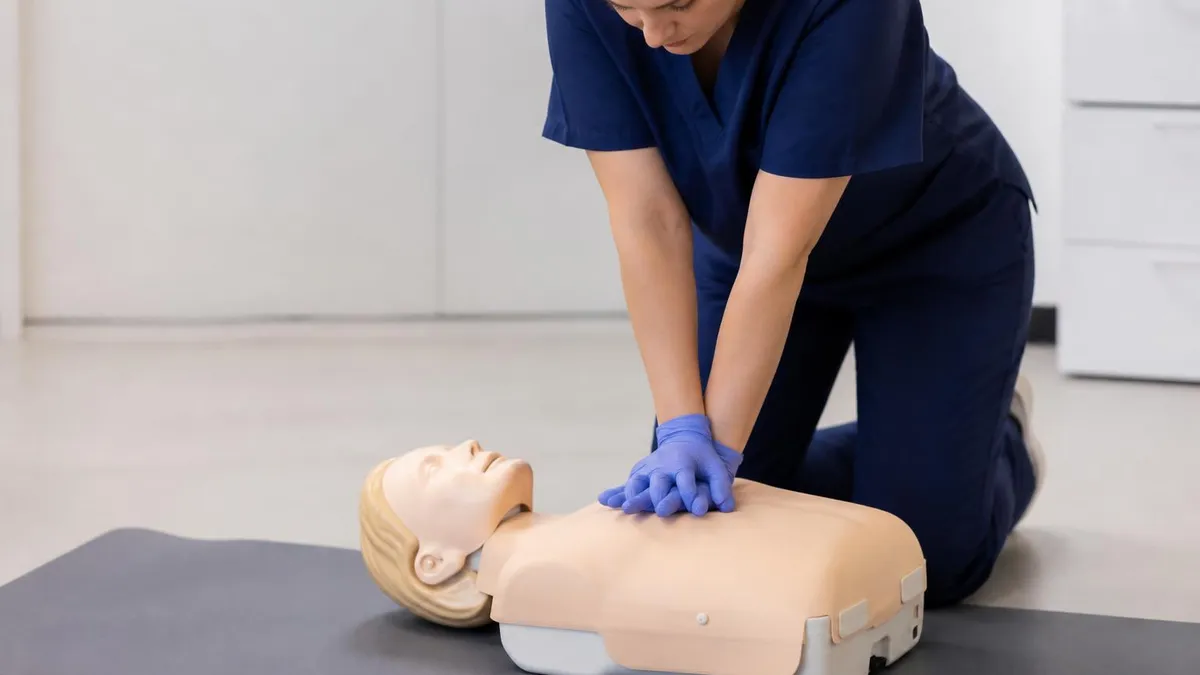
For those new to advanced resuscitation, it is worth reviewing how ECPR relates to adult CPR fundamentals. ECPR is not a replacement for high-quality compressions — it is what makes those compressions worthwhile when the heart will not restart on its own. Without good bystander CPR in the first 8 minutes, the brain is already too injured for ECMO to make a meaningful difference.
The procedure carries real risk. Cannulation can injure the femoral vessels, requiring vascular repair. Distal limb ischemia is common and is mitigated with a small reperfusion catheter inserted below the arterial cannula. Bleeding, hemolysis, stroke, and infection are all known complications. ECPR is therefore reserved for patients who are most likely to benefit and least likely to suffer disproportionate harm.

CPR Practice Test Questions
Prepare for the CPR Cardiopulmonary Resuscitation Practice exam with our free practice test modules. Each quiz covers key topics to help you pass on your first try.
CPR Basic CPR
CPR Exam Questions covering Basic CPR. Master CPR Test concepts for certification prep.
CPR and First Aid
Free CPR Practice Test featuring and First Aid. Improve your CPR Exam score with mock test prep.
CPR (Cardiopulmonary Resuscitation) Adult ...
CPR Mock Exam on (Cardiopulmonary Resuscitation) Adult CPR and AED Usage. CPR Study Guide questions to pass on your first try.
CPR (Cardiopulmonary Resuscitation) Airway...
CPR Test Prep for (Cardiopulmonary Resuscitation) Airway Obstruction and Choking. Practice CPR Quiz questions and boost your score.
CPR (Cardiopulmonary Resuscitation) Cardio...
CPR Questions and Answers on (Cardiopulmonary Resuscitation) Cardiopulmonary Emergency Recognition. Free CPR practice for exam readiness.
CPR (Cardiopulmonary Resuscitation) Child ...
CPR Mock Test covering (Cardiopulmonary Resuscitation) Child and Infant CPR. Online CPR Test practice with instant feedback.
CPR (Cardiopulmonary Resuscitation) High-P...
Free CPR Quiz on (Cardiopulmonary Resuscitation) High-Performance Team Dynamics. CPR Exam prep questions with detailed explanations.
CPR (Cardiopulmonary Resuscitation) Legal ...
CPR Practice Questions for (Cardiopulmonary Resuscitation) Legal and Ethical Considerations. Build confidence for your CPR certification exam.
CPR for Specific Populations
CPR Test Online for for Specific Populations. Free practice with instant results and feedback.
CPR Airway & Breathing Management
CPR Exam Questions covering Airway & Breathing Management. Master CPR Test concepts for certification prep.
CPR Assessment & Recognition of Cardiac Ar...
Free CPR Practice Test featuring Assessment & Recognition of Cardiac Arrest. Improve your CPR Exam score with mock test prep.
CPR Chest Compressions & Defibrillation
CPR Mock Exam on Chest Compressions & Defibrillation. CPR Study Guide questions to pass on your first try.
CPR Post-Resuscitation Care & Recovery
CPR Test Prep for Post-Resuscitation Care & Recovery. Practice CPR Quiz questions and boost your score.
Evidence Behind ECPR: What the Clinical Trials Tell Us
The ARREST trial, conducted in Minneapolis and published in The Lancet, randomized adults with refractory ventricular fibrillation out-of-hospital cardiac arrest to standard ACLS or early ECPR. The trial was stopped early for efficacy when survival to hospital discharge reached 43 percent in the ECPR arm versus 7 percent in the standard care arm. This was one of the most striking signals ever reported in resuscitation research and shifted guideline-writing committees toward cautious endorsement.
The trial used a simplified protocol: paramedics identified eligible patients within 15 minutes of arrest, transported them under mechanical CPR, and a dedicated team performed cannulation in the catheterization lab. The success depended on dispatcher recognition, fast transport, and a tightly choreographed receiving team. National cpr foundation curricula now reference the ARREST methodology when discussing the future of resuscitation systems.
ECPR Versus Conventional CPR: Weighing the Trade-Offs
- +Restores near-physiologic perfusion when chest compressions cannot
- +Buys time to diagnose and treat reversible causes such as STEMI or pulmonary embolism
- +Significantly improves neurologically intact survival in selected patients
- +Allows definitive interventions like PCI to be performed while circulation is supported
- +Provides a bridge to recovery, decision, or transplantation
- +Enables targeted temperature management with stable hemodynamics
- +Has driven major investments in regional cardiac arrest systems of care
- −Requires a highly trained team available 24 hours a day
- −Resource-intensive, with first-week costs often exceeding $95,000
- −Carries risk of bleeding, limb ischemia, stroke, and infection
- −Not appropriate for unwitnessed arrest or prolonged low-flow time
- −Limited to academic and large community hospitals
- −Raises difficult ethical questions about withdrawal of support
- −Can give false hope when neurologic injury is already irreversible
Pros and Cons at a Glance
| Pros | Cons |
|---|---|
| Restores near-physiologic perfusion when chest compressions cannot | Carries risk of bleeding, limb ischemia, stroke, and infection |
| Buys time to diagnose and treat reversible causes such as STEMI or pulmonary embolism | Not appropriate for unwitnessed arrest or prolonged low-flow time |
| Significantly improves neurologically intact survival in selected patients | Limited to academic and large community hospitals |
| Allows definitive interventions like PCI to be performed while circulation is supported | Raises difficult ethical questions about withdrawal of support |
| Provides a bridge to recovery, decision, or transplantation | Can give false hope when neurologic injury is already irreversible |

Standard ECPR Eligibility Checklist
- ✓Witnessed cardiac arrest with bystander CPR initiated within 5 minutes
- ✓Initial rhythm is shockable — ventricular fibrillation or pulseless VT
- ✓Age between 18 and 75 (some programs extend to 80)
- ✓Refractory to standard ACLS after 10 to 15 minutes of high-quality treatment
- ✓Estimated low-flow time from collapse to ECMO flow under 60 minutes
- ✓End-tidal CO2 greater than 10 mmHg during CPR
- ✓No known terminal illness, advanced cancer, or documented DNR
- ✓Absence of severe pre-existing neurological impairment
- ✓No uncontrolled major hemorrhage or known aortic dissection
- ✓Receiving hospital has active ECPR program and available cardiac catheterization lab
Every minute of quality compressions doubles the chance ECMO will work.
Studies consistently show that ECPR outcomes are tightly linked to the quality and continuity of bystander CPR. A patient whose compressions begin within 90 seconds and continue without prolonged pauses arrives at the hospital with better cerebral oxygenation, lower lactate, and a brain still capable of recovery. ECPR cannot rescue a brain that has been starved of oxygen for 15 minutes of no-flow time — it can only sustain one that has been kept marginally perfused.
Running a credible ECPR program is significantly more involved than acquiring an ECMO machine and a few cannulas. Hospitals that have launched successful programs share several characteristics: dedicated leadership across emergency medicine, cardiology, cardiac surgery, and critical care; a perfusion team available within 30 minutes; a cardiac catheterization lab that can be activated 24 hours a day; and a strong quality assurance process that reviews every case. Programs that lack any one of these often struggle to translate the published trial results into local outcomes.
Staffing is the most expensive part. A typical activation pulls eight to twelve people away from other duties for several hours — two emergency physicians, an interventional cardiologist, a cardiac surgeon for vascular complications, a perfusionist, two ICU nurses, a respiratory therapist, an imaging tech, and pharmacy support. Hospitals often run simulations monthly, just as they do for trauma activations, to maintain skill and timing.
The regional system around the hospital matters just as much as the hospital itself. Cities with strong ECPR outcomes have invested in dispatcher CPR coaching, citizen responder networks, AED placement, and paramedic training in mechanical CPR and end-tidal CO2 monitoring. They have also worked out clear destination protocols so that paramedics know which patients to bring to which hospitals. Without that pipeline, even the best receiving hospital sees few eligible candidates.
Cost is a real barrier. A 2024 cost-effectiveness analysis pegged the price per quality-adjusted life year at roughly $52,000 in well-run programs — comparable to other widely accepted interventions like coronary stenting or hemodialysis. Insurers in the United States generally cover ECMO for cardiac arrest, but reimbursement varies, and hospitals often absorb significant losses on each case, particularly when the patient does not survive to discharge.
Pediatric programs face their own challenges. Cannulas and circuits must be sized for small patients, the team must include pediatric specialists, and the indications differ. Pediatric ECPR is most often used for in-hospital arrest after cardiac surgery rather than out-of-hospital sudden arrest. Survival rates in well-resourced pediatric centers approach 40 percent for selected patients, comparable to or better than adult outcomes.
Education and certification underpin the entire system. Team members typically hold pals certification, ACLS provider status, and additional ECMO-specific credentialing through organizations like ELSO (Extracorporeal Life Support Organization). Annual case volumes matter — ELSO recommends a minimum of 20 ECMO runs per year to maintain proficiency, with at least 6 of those involving cardiac indications.
Quality reporting closes the loop. The ELSO Registry collects data on every reported run worldwide, and participating centers can benchmark their outcomes against peers. This transparency has driven steady improvements in survival and reductions in complications. It has also helped centers identify which patient subgroups benefit most, refining eligibility criteria with each iteration.
Fewer than 5 percent of US hospitals run a formal ECPR program for out-of-hospital cardiac arrest. Coverage is concentrated in academic medical centers in major metropolitan areas. Patients in rural regions and smaller cities may not have realistic access, which is one reason regional cardiac arrest centers and inter-facility transport protocols are being prioritized in public health planning. Knowing your local capability is part of preparedness.
What happens after ECPR is initiated tells only half the story. The first 72 hours focus on stabilization — maintaining flows, monitoring for limb ischemia, managing anticoagulation, and supporting other organ systems. Targeted temperature management at 33 to 36 degrees Celsius is standard, with rewarming over 24 hours. Neurological prognostication is deliberately delayed for at least 72 to 96 hours because early markers can be misleading while the patient is still on full support.
Weaning from ECMO is a careful process. The cardiac team performs daily echocardiograms to assess native heart function. When the ejection fraction recovers, pulsatility returns, and inotrope requirements decline, flows are reduced incrementally. A successful trial off bypass with stable hemodynamics for several hours signals readiness for decannulation, which is typically performed surgically in the operating room.
Not every patient recovers cardiac function. Some require placement of a durable ventricular assist device or evaluation for cardiac transplantation. Others may be transitioned to comfort care if neurologic recovery is poor or the underlying disease is not survivable. These decisions are made jointly by the medical team, the family, and when possible, the patient through advance directives.
Long-term outcomes for ECPR survivors are increasingly encouraging. Most patients who survive to discharge return to baseline function within 6 to 12 months, with many resuming work, driving, and exercise. Cognitive testing often shows mild deficits that improve over the first year. Cardiac rehabilitation, mental health support for both patients and families, and a structured follow-up clinic are essential components of the recovery pathway.
The post-arrest patient often needs guidance on lifestyle changes, medication adherence, and recognition of warning signs. They also benefit from understanding bystander resuscitation — many become passionate advocates for community CPR training, AED placement, and dispatcher recognition programs. Resources from the CPR card lookup tool and certification bodies help survivors and their families pay it forward by becoming certified responders themselves.
Family experience during ECPR is intense. Watching a loved one connected to a circuit with visible tubing carrying blood out of and back into their body is emotionally overwhelming. Most ECPR programs now have dedicated family liaisons, social workers, and chaplains embedded in the ICU. Clear, frequent communication, written updates, and family meetings at predictable intervals help families navigate uncertainty.
Bereavement support is equally important when outcomes are poor. Even with optimal therapy, roughly half of ECPR patients do not survive to discharge. The teams that perform this work have learned that compassionate withdrawal of support, clear communication about prognosis, and tailored bereavement follow-up are part of the standard of care. The procedure is heroic, but heroism includes recognizing when continued treatment no longer serves the patient.
For clinicians thinking about how ECPR knowledge translates into daily practice, the most actionable lesson is to prioritize the basics. The single biggest determinant of ECPR success is high-quality bystander CPR and early defibrillation. If your hospital is not an ECPR center, you can still make a measurable difference by championing dispatcher CPR programs, AED placement in public spaces, and recurrent infant cpr and adult resuscitation training for staff and community.
Maintain situational awareness about transport options. Know which hospitals in your region accept ECPR transfers, what their inclusion criteria are, and how to activate them. Many systems require the originating physician to call a single number and provide a brief structured handoff — patient age, downtime, rhythm, ETCO2, and current medications. Practicing this handoff during simulation prevents fumbling during a real activation.
For paramedics and emergency physicians, mastering the acls algorithm remains foundational. Most arrests are not candidates for ECPR, and excellent conventional resuscitation will save the majority of patients who survive at all. Focus on minimizing pauses, ensuring compression depth and rate, choosing the right airway strategy, and identifying reversible causes — the H's and T's — within the first two rounds of CPR.
For students preparing for advanced certifications, ECPR is increasingly appearing on exam blueprints. Expect questions on eligibility criteria, the role of end-tidal CO2 in triage, the difference between veno-arterial and veno-venous ECMO, and complications such as Harlequin syndrome — a perfusion mismatch that can occur with peripheral VA-ECMO. Pals certification candidates should also know that pediatric ECPR is well established for in-hospital arrest.
For laypeople, the practical takeaways are simpler but no less important. Learn hands-only CPR. Know where the nearest AED is in places you spend time — your workplace, gym, church, school. Encourage your employer, school district, and city council to invest in public-access defibrillation. Sign up as a citizen responder through apps like PulsePoint where available. These small steps build the system that makes ECPR meaningful.
If you survive a cardiac arrest yourself or have a family member who does, ask questions. Was an underlying cause identified? Is medication adherence critical? Does the family need genetic screening for inherited arrhythmia syndromes? These conversations often happen during the post-arrest hospitalization but can be revisited in cardiology follow-up. Understanding the cause helps prevent recurrence and protects relatives who may share the same risk.
Finally, remember that resuscitation science continues to evolve rapidly. What is experimental in 2026 may be standard in 2031. Stay curious, stay current with national cpr foundation and AHA guidelines, and recognize that even basic skills like high-quality compressions can be the difference that brings a person home neurologically intact. The most advanced ECMO circuit in the world is helpless without that early, simple, lifesaving act.
CPR Questions and Answers
CPR Card Lookup: How to Verify, Replace, and Access Your CPR Certification in 2026
Adult CPR: Complete Step-by-Step Guide to Hands-Only and Standard CPR in 2026

CPR - Cardiopulmonary Resuscitation: Complete Study Guide 2026
Inappropriate CPR Songs: What Not to Play, Why It Matters, and Better Beat-Per-Minute Alternatives
AHA CPR Recertification: How to Recertify CPR Online with the American Heart Association in 2026
About the Author

Registered Nurse & Healthcare Educator
Johns Hopkins University School of NursingDr. Sarah Mitchell is a board-certified registered nurse with over 15 years of clinical and academic experience. She completed her PhD in Nursing Science at Johns Hopkins University and has taught NCLEX preparation and clinical skills courses for nursing students across the United States. Her research focuses on evidence-based exam preparation strategies for healthcare certification candidates.
Join the Discussion
Connect with other students preparing for this exam. Share tips, ask questions, and get advice from people who have been there.
View discussion (5 replies)