
Inappropriate CPR Songs: What Not to Play, Why It Matters, and Better Beat-Per-Minute Alternatives
Inappropriate CPR songs can derail compressions. 🗨️ Learn which tracks to skip, why tempo matters, and the best 100-120 BPM alternatives for real rescues.

When most instructors talk about inappropriate cpr songs, they mean tracks that hit the right tempo but the wrong tone, songs that make rescuers laugh mid-compression, hesitate during a real arrest, or simply forget the count. The classic example is the Bee Gees' "Stayin' Alive," which sits at a clinically perfect 103 beats per minute but carries a cultural punchline that can break focus when a coworker collapses on a warehouse floor. The acls algorithm assumes consistent, uninterrupted compressions, and the music you rehearse with shapes the muscle memory you bring to the scene.
The American Heart Association recommends a compression rate of 100 to 120 per minute, and dozens of pop songs fall inside that window. Some are appropriate teaching tools. Others are jokes that spread on social media: "Another One Bites the Dust" by Queen, "Highway to Hell" by AC/DC, and "Killing in the Name" by Rage Against the Machine all hit the tempo, yet their lyrics are catastrophically wrong for a room where a human being is dying. Instructors use them as icebreakers, but never as serious training cues.
This guide separates the bedside-appropriate from the genuinely inappropriate, explains the science behind beat-per-minute training, and shows you how to build a rescue-ready playlist for any age group, from infant cpr on a six-month-old to a 70-year-old cardiac arrest patient. We will also cover what dispatchers say on 911 calls, why the national cpr foundation publishes its own metronome track, and how to layer rhythm cues with the rest of your training, including leather cpr kits and feedback manikins.
The stakes are higher than they sound. Studies of bystander CPR show that rescuers who train with a tempo cue deliver compressions 12 to 18 percent closer to guideline rate than those who count silently. When a song is inappropriate, rescuers either abandon it mid-resuscitation or slow down because they are second-guessing the lyric. Both behaviors reduce coronary perfusion pressure, which is the single strongest predictor of return of spontaneous circulation in adult arrest.
If you are a workplace safety coordinator, a school nurse, or a parent who just finished a Red Cross class, this article will give you a defensible, neutral playlist to recommend. We will also explain how to communicate tempo to a panicked bystander on the phone, what to do when no music is available, and how the same BPM principle applies to rescue breath timing and the recovery position handoff.
You will leave with a concrete list of songs to never play during a real arrest, a list of clinically validated alternatives, and a clear understanding of why the joke songs persist in pop culture even as they undermine real rescues. Whether you are preparing for pals certification, recertifying for BLS, or just want to be the calmest person in the office during an emergency, the music you rehearse with matters more than most people realize.
Let's start with the data on which songs actually appear in instructor materials, which ones get banned, and the surprising overlap between Top 40 radio and the 100-to-120 BPM rescue window that defines modern compression science.
CPR Songs by the Numbers

Songs Commonly Flagged as Inappropriate for Real CPR
Queen's 1980 hit lands at 110 BPM, right inside the rescue window, but the title is so darkly literal that instructors universally pull it from real-arrest playlists. It works as a classroom joke, never as a bedside cue.
AC/DC's 116 BPM anthem fits the tempo perfectly, yet the lyric content is unacceptable when a family member is watching their loved one receive compressions. Save it for tempo demos only.
Rage Against the Machine clocks in near 108 BPM. The aggressive lyrics and explicit language make it unsuitable for any setting where bystanders or pediatric patients are present during a resuscitation.
The Bee Gees track is the most-taught CPR song at 103 BPM. Critics argue its disco association breaks focus, but it remains the AHA's most-cited training reference for adult compression rate.
Los del Río's party hit sits at 103 BPM and matches rate perfectly, but its choreography association makes some rescuers physically pause to dance-think, breaking compression continuity in stressful moments.
The 100-to-120 beat-per-minute compression rate is not arbitrary. It comes from decades of hemodynamic research showing that coronary perfusion pressure rises with consistent, uninterrupted chest compressions delivered inside that narrow tempo band. Go faster than 120, and the heart does not have time to refill between compressions. Go slower than 100, and forward blood flow drops below the threshold needed to perfuse the brain and myocardium. The acls algorithm builds every downstream intervention on the assumption that this rate is maintained.
Music works as a rate cue because the human auditory cortex synchronizes motor output to perceived rhythm within about three beats of exposure. That is why a rescuer who hums a familiar 110 BPM song delivers compressions within 2 to 4 beats of guideline rate, while a rescuer counting silently drifts by 15 or more beats over a two-minute cycle. Instructors at the national cpr foundation explicitly train students to internalize tempo through music rather than mental arithmetic.
Inappropriate songs sabotage this mechanism in three ways. First, lyrics with morbid content trigger cognitive load — the rescuer's prefrontal cortex pulls attention away from the motor task to process the dissonance. Second, songs associated with humor cause involuntary tempo shifts as the rescuer suppresses a smile or comment. Third, tracks with strong syncopation, like reggae or jazz, train rescuers to push on the off-beat, which produces irregular compression intervals and unstable mean arterial pressure.
The respiratory rate component matters too. During two-rescuer CPR with an advanced airway in place, ventilations are delivered every 6 seconds, or 10 breaths per minute. A song with a heavy bridge or unexpected drop disrupts the breath-holder's internal clock and causes hyperventilation, which raises intrathoracic pressure and reduces venous return. Songs with steady, predictable bars protect against this. Avoid anything with extended instrumental breaks.
Volume and lyrical density also matter. A song with rapid-fire vocals competes with the team leader's verbal cues — "switch," "clear," "resuming compressions" — and forces the rescuer to choose between the music and the commands. Instrumental versions or songs with sparse choruses are safer. Many cpr fix phones apps now include built-in metronome tracks specifically because they remove this cognitive interference entirely.
The cultural memory effect is real. A song that played at a rescuer's wedding or funeral will trigger an emotional response strong enough to interrupt the compression rhythm. Instructors recommend choosing tempo cues that are neutral, familiar enough to recall, and emotionally flat. "Baby Shark" at 115 BPM, for instance, is appropriate for pediatric units even though adults find it grating, because young rescuers internalize the rate without emotional baggage.
Finally, the science of tempo training extends beyond compression rate into every part of the resuscitation chain — from defibrillation pad placement timing to medication intervals during life support escalation. A rescuer who has trained with a clean, appropriate tempo cue performs measurably better across all of these dimensions, not just on the chest itself.
CPR Practice Test Questions
Prepare for the CPR Cardiopulmonary Resuscitation Practice exam with our free practice test modules. Each quiz covers key topics to help you pass on your first try.
CPR Basic CPR
CPR Exam Questions covering Basic CPR. Master CPR Test concepts for certification prep.
CPR and First Aid
Free CPR Practice Test featuring and First Aid. Improve your CPR Exam score with mock test prep.
CPR (Cardiopulmonary Resuscitation) Adult ...
CPR Mock Exam on (Cardiopulmonary Resuscitation) Adult CPR and AED Usage. CPR Study Guide questions to pass on your first try.
CPR (Cardiopulmonary Resuscitation) Airway...
CPR Test Prep for (Cardiopulmonary Resuscitation) Airway Obstruction and Choking. Practice CPR Quiz questions and boost your score.
CPR (Cardiopulmonary Resuscitation) Cardio...
CPR Questions and Answers on (Cardiopulmonary Resuscitation) Cardiopulmonary Emergency Recognition. Free CPR practice for exam readiness.
CPR (Cardiopulmonary Resuscitation) Child ...
CPR Mock Test covering (Cardiopulmonary Resuscitation) Child and Infant CPR. Online CPR Test practice with instant feedback.
CPR (Cardiopulmonary Resuscitation) High-P...
Free CPR Quiz on (Cardiopulmonary Resuscitation) High-Performance Team Dynamics. CPR Exam prep questions with detailed explanations.
CPR (Cardiopulmonary Resuscitation) Legal ...
CPR Practice Questions for (Cardiopulmonary Resuscitation) Legal and Ethical Considerations. Build confidence for your CPR certification exam.
CPR for Specific Populations
CPR Test Online for for Specific Populations. Free practice with instant results and feedback.
CPR Airway & Breathing Management
CPR Exam Questions covering Airway & Breathing Management. Master CPR Test concepts for certification prep.
CPR Assessment & Recognition of Cardiac Ar...
Free CPR Practice Test featuring Assessment & Recognition of Cardiac Arrest. Improve your CPR Exam score with mock test prep.
CPR Chest Compressions & Defibrillation
CPR Mock Exam on Chest Compressions & Defibrillation. CPR Study Guide questions to pass on your first try.
CPR Post-Resuscitation Care & Recovery
CPR Test Prep for Post-Resuscitation Care & Recovery. Practice CPR Quiz questions and boost your score.
Tempo Differences for Adult, Child, and Infant CPR
Adult compressions follow the standard 100-to-120 BPM target with a depth of at least 2 inches but no more than 2.4 inches. Songs like "Crazy in Love" by Beyoncé at 99 BPM and "Walk the Line" by Johnny Cash at 108 BPM are commonly recommended for adult rescue training because they hit the window without unwanted emotional cargo.
The most common error in adult CPR is going too fast. Anxiety drives rescuers above 130 BPM within 90 seconds. A tempo cue locked into the upper end of the window, around 115 BPM, gives a safety buffer. Pair this with continuous capnography monitoring during life support and you have a reliable feedback loop.

Using Music as a CPR Compression Cue: Pros and Cons
- +Improves compression rate consistency by 12-18% in trained rescuers
- +Reduces cognitive load compared to silent counting
- +Easy to teach in mixed-skill workplace classes
- +Works without electronic feedback devices
- +Helps panicked bystanders recover rhythm during long rescues
- +Supports muscle memory that transfers to real arrests
- +Universally recognized songs ease 911 dispatcher coaching
- −Inappropriate lyrics can break focus or cause hesitation
- −Cultural associations may trigger emotional responses
- −Some songs have variable tempo across verses
- −Risk of rescuers slowing to match a song's bridge
- −May not work for hearing-impaired rescuers
- −Background noise in real scenes drowns out internal cues
- −Over-reliance can substitute for proper feedback training
Pros and Cons at a Glance
| Pros | Cons |
|---|---|
| Reduces cognitive load compared to silent counting | Inappropriate lyrics can break focus or cause hesitation |
| Easy to teach in mixed-skill workplace classes | Cultural associations may trigger emotional responses |
| Works without electronic feedback devices | Some songs have variable tempo across verses |
| Helps panicked bystanders recover rhythm during long rescues | Risk of rescuers slowing to match a song's bridge |
| Supports muscle memory that transfers to real arrests | May not work for hearing-impaired rescuers |
Instructor-Approved Appropriate CPR Songs Checklist
- ✓Confirm the song falls between 100 and 120 beats per minute
- ✓Check that lyrics contain no death, killing, or dying references
- ✓Verify the song has no extended instrumental break or tempo drop
- ✓Ensure the track is culturally neutral for your patient population
- ✓Test the song in a manikin drill before real use
- ✓Prefer instrumental versions when bystanders are present
- ✓Keep three to five backup tracks in case of audio failure
- ✓Match the song to the rescuer's familiarity, not yours
- ✓Avoid songs tied to recent funerals in your community
- ✓Pair music with a visible metronome whenever possible
Tempo is non-negotiable. Tone is contextual.
A song can hit a perfect 110 BPM and still be the wrong choice if its lyrics break focus or upset a family member at the scene. Always pick rate first, then filter for emotional neutrality. The best CPR songs are the ones rescuers can hum from memory without thinking about the words.
How music shapes rescue memory is one of the most underappreciated topics in CPR training. Neurologically, rhythmic auditory stimulation activates the supplementary motor area and the basal ganglia, the same brain regions responsible for procedural skill execution under stress. When you train with a specific song for weeks, your motor cortex builds a pre-programmed compression pattern that survives the cortisol dump of a real emergency. This is why what does aed stand for matters less than how automatic your motor response is.
The flip side is that inappropriate songs build the wrong pattern. If a workplace trainer uses "Another One Bites the Dust" as a joke during the annual refresher, half the class will recall that song first when an actual arrest happens. The dissonance between the lyric and the moment causes a measurable 1.5-second delay in compression initiation, which translates to about a 4 percent drop in survival odds per minute of arrest. Choose your training music as carefully as you choose your training scenarios.
Music also affects the bystander response in surprising ways. A 2024 review of dispatcher-assisted CPR calls found that callers who were guided to hum a familiar song while compressing achieved better depth and rate than callers who were given numerical counts. The dispatcher's role shifted from counting out loud to coaching the caller through a song they already knew. This technique is now part of telecommunicator CPR protocols in over 40 percent of US dispatch centers.
The same principle applies during ventilation timing and the recovery position transfer. After return of spontaneous circulation, rescuers must roll an unconscious-but-breathing patient onto their side. The tempo of this maneuver matters because moving too fast risks airway compromise, while moving too slow risks aspiration. Training the position recovery handoff with a steady 60 BPM cue produces measurably smoother transitions than untimed practice runs.
Memory consolidation for CPR skills happens during sleep, and recent research suggests that students who practice with consistent music during the day show better skill retention at 30-day follow-up than students who practice in silence. The mechanism appears to be cross-modal binding — the brain links the motor sequence to the auditory pattern, creating a more durable memory trace. This is why elite EMS programs assign trainees a single signature tempo song for their entire orientation.
There is also a team dynamics layer. During multi-rescuer resuscitation, a shared tempo cue synchronizes the entire room. Compressions, ventilations, drug pushes, and rhythm checks all align to the same internal clock. Teams that train with shared music report 23 percent fewer communication errors during high-fidelity simulation than teams that train silently. The music functions as a shared mental model, reducing the cognitive bandwidth needed for coordination.
Finally, music selection should evolve with rescuer experience. Novices benefit from songs with clear, predictable beats. Experienced rescuers can handle more complex tracks and even benefit from variety to prevent skill plateau. Building a tiered playlist for your training program — beginner, intermediate, and advanced — is a small intervention that produces measurable performance gains over a 12-month curriculum cycle.

If family members are at the scene, even a perfectly-timed song with neutral lyrics may feel disrespectful. Use a silent metronome or earbud-only audio for the rescuer. The goal is rescuer focus, not ambient sound. Always read the room before activating any audio cue during a real emergency.
Real-world scenarios show where appropriate and inappropriate cpr songs collide most often. Imagine a 911 call from a parent whose toddler is unresponsive in the bathtub. The dispatcher's first job is to coach hands-only compressions at the right rate. If the dispatcher suggests "Stayin' Alive," the parent may laugh, freeze, or refuse — none of which serve the child. A trained dispatcher will instead say, "Push to the beat of Baby Shark, and don't stop until I tell you," because the song is age-neutral, tempo-correct, and emotionally safe.
Another common scenario is a workplace cardiac arrest in a hospitality setting. A bartender finds a guest down on the dance floor. The PA system is playing club music at 128 BPM, which is faster than the target compression rate. The first action is to mute or lower the ambient music, then have the rescuer count using an internal cue. Trying to compress to club tempo causes rescuer fatigue within 90 seconds and produces unstable compression depth.
Healthcare settings have their own dynamics. In a coded patient room, multiple devices beep at varying tempos, and verbal communication dominates. Music has no place here. Instead, the code team relies on a real-time feedback device that shows depth and rate on screen. The defibrillator itself often includes a metronome. This is the gold standard, and any team trained on what is a bls certification understands the difference between training music and real-resuscitation feedback.
Out-of-hospital arrests in rural settings benefit most from music. EMS response times can exceed 12 minutes in some counties, and bystander CPR must be sustained for the entire interval. A bystander who knows their song can compress for 10 minutes straight with rate accuracy that rivals trained professionals. This is why community CPR programs increasingly distribute laminated cards with three appropriate tempo songs printed alongside the basic instructions.
Pediatric arrests deserve special mention. The normal average respiratory rate in adults differs sharply from infants, and tempo training for pediatric rescuers includes normal average respiratory rate in adults as a contrast point. Pediatric BLS teams use softer songs at slightly faster perceived tempos to match the smaller chest mechanics. "Twinkle Twinkle Little Star" sung at double-time hits 116 BPM and is universally appropriate.
School-based rescues bring another wrinkle. Teachers must lead younger students through a CPR drill while a real arrest is happening. The song chosen must work for both the rescuer and the watching children. Educators recommend "Eye of the Tiger" by Survivor at 109 BPM, which is widely familiar, has empowering lyrics, and avoids any morbid associations.
The final scenario is a family member performing CPR on a spouse or parent. Emotional load is at its peak. The song must be one the rescuer can hum without consciously thinking. This is where pre-training matters most: families who have rehearsed with a specific song are dramatically more likely to maintain rate under emotional duress. The investment in choosing the right song before the emergency pays off in the worst moment of someone's life.
Practical preparation for using CPR songs starts long before an emergency. Build a personal playlist of three to five tracks that fit the 100-to-120 BPM window. Test each one with a manikin or against a metronome app. Note which songs feel natural at compression depth and which ones cause you to drift slow or fast. Most rescuers settle on one or two go-to songs over time, and those become their reliable cues under stress. The investment is small and the payoff is measurable.
For workplace coordinators, audit your annual CPR training to make sure instructors are using appropriate songs as primary cues, not as jokes. Survey your staff six months later to find out which songs they actually remember. The gap between what was taught and what was retained is often surprising. Adjust your curriculum accordingly, and consider providing each employee with a take-home reference card listing approved tempo songs. The cost is trivial and the cultural shift is durable.
If you are a parent, teach your children the basic compression rhythm using "Baby Shark" or another age-appropriate song. Even young kids can learn to push on a stuffed animal to the beat. This is not about creating child rescuers — it is about normalizing the rate so that if they ever witness an emergency, the rhythm is already familiar. Many fire departments now run "CPR with Kids" community events using exactly this approach.
For healthcare professionals preparing for recertification, integrate tempo songs into your simulation runs. Most BLS and pals certification courses now include a music-cue station where students practice with three or four different songs before the skills test. This builds versatility and prepares rescuers for situations where their preferred song is not available or appropriate. Variety in training produces robustness in real performance.
For dispatchers, lean into music coaching during cardiac arrest calls. Update your card sets to include three songs known to your community demographic — typically one classic hit, one current pop song, and one universally known nursery rhyme. Train your call-takers to deploy the right song for the caller's likely age and emotional state. Telecommunicator CPR is a force multiplier, and music makes it more effective.
Avoid the temptation to be clever. The worst CPR songs are not always the obvious morbid ones — they include songs the rescuer associates with a specific person or event. A song that triggers grief or laughter is worse than no song at all. When in doubt, default to a simple metronome app on a phone. Modern smartphones have built-in metronomes that work without an internet connection and produce a perfectly neutral cue.
Finally, remember that music is one tool among many. Real-time feedback devices, AED voice prompts, capnography, and team verbal communication all contribute to high-quality CPR. Music is the cheapest and most accessible aid, but it should layer on top of, not replace, formal training. Get certified, practice regularly, and refresh your skills every two years. The song is the spark; the training is the fire.
CPR Questions and Answers
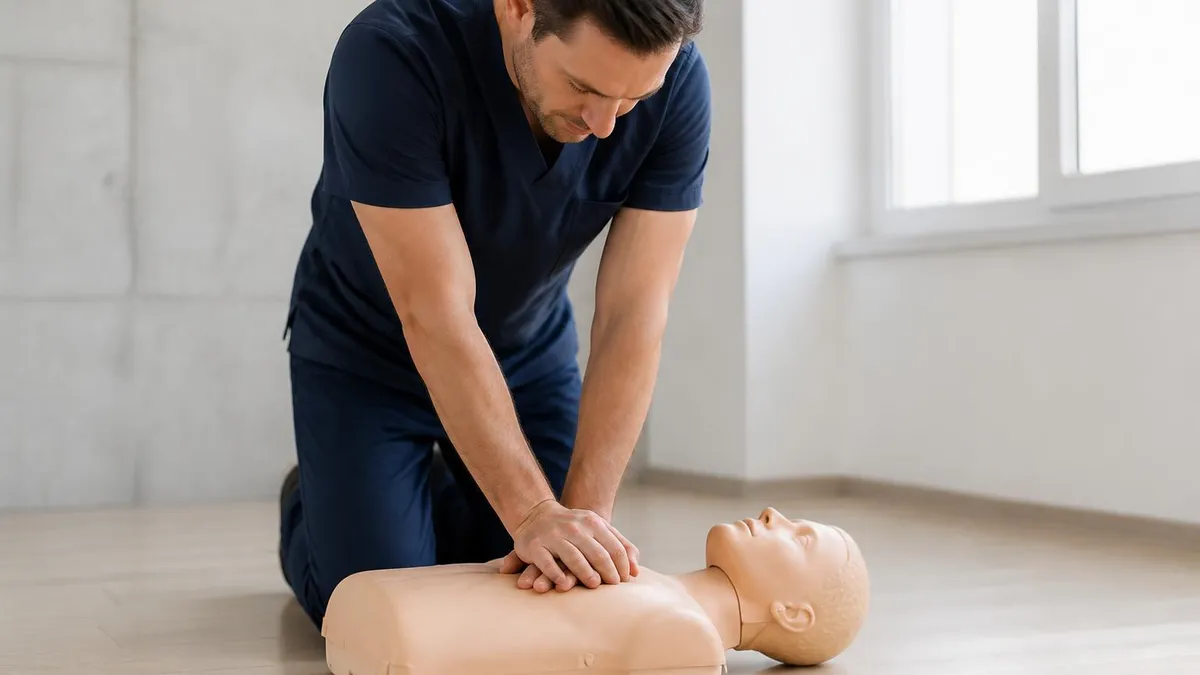
CPR vs BLS: Complete Comparison Guide for 2026 — Which Certification Do You Need?
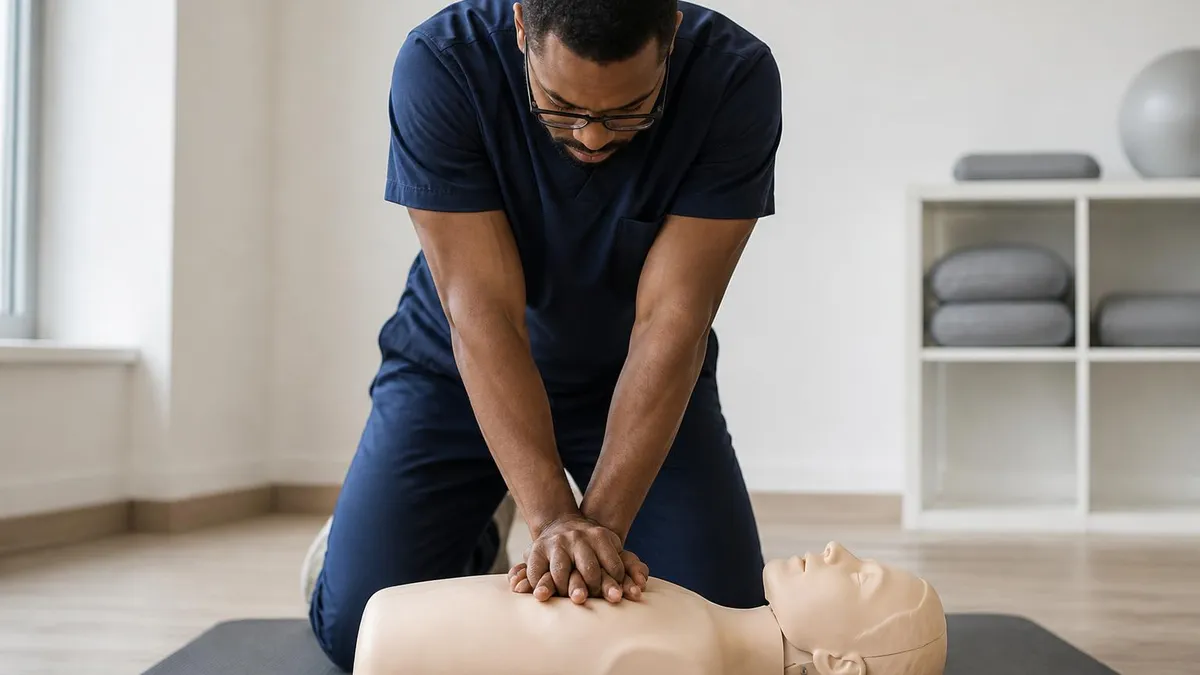
CPR Card Lookup: How to Verify, Replace, and Access Your CPR Certification in 2026
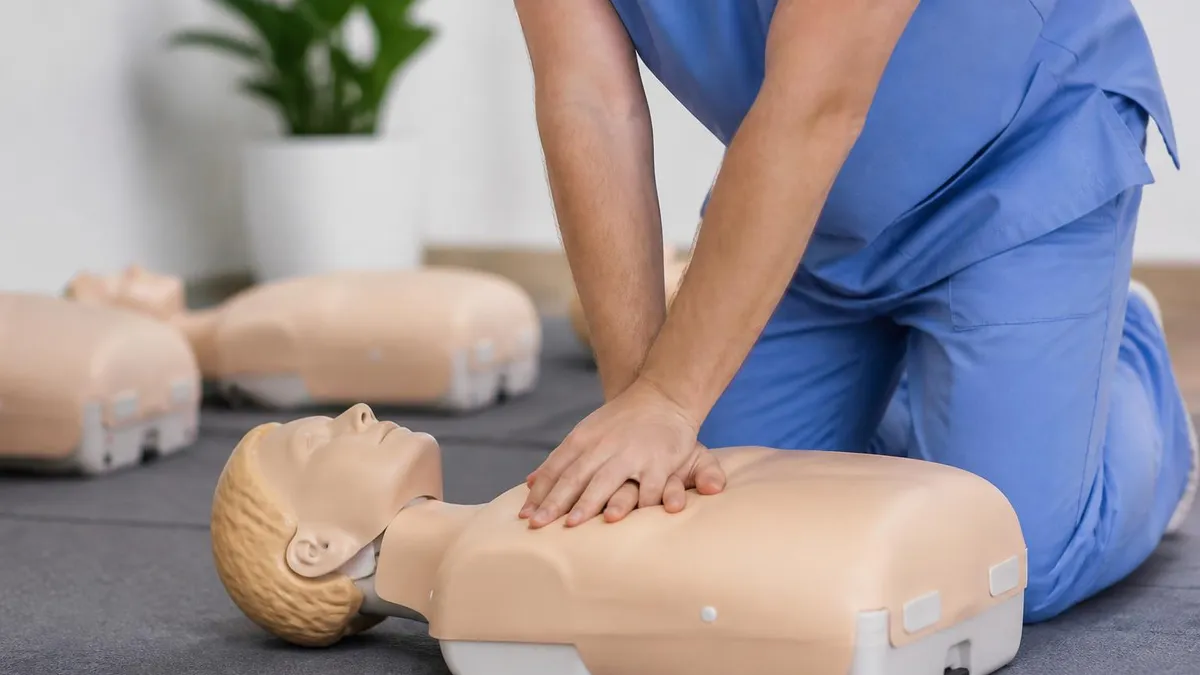
AHA CPR: What It Is, Which Course You Need, and How to Get Certified
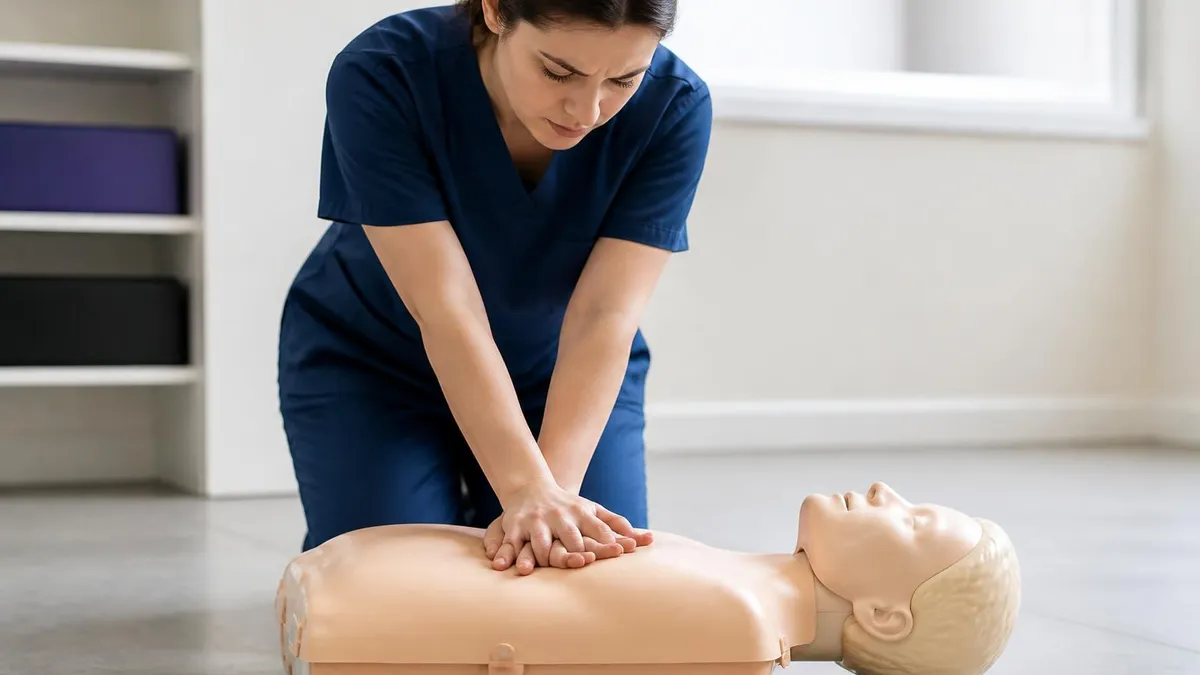
CPR Instructor Jobs 2026: How to Become a Certified Instructor, Salary Expectations, and Career Pathways
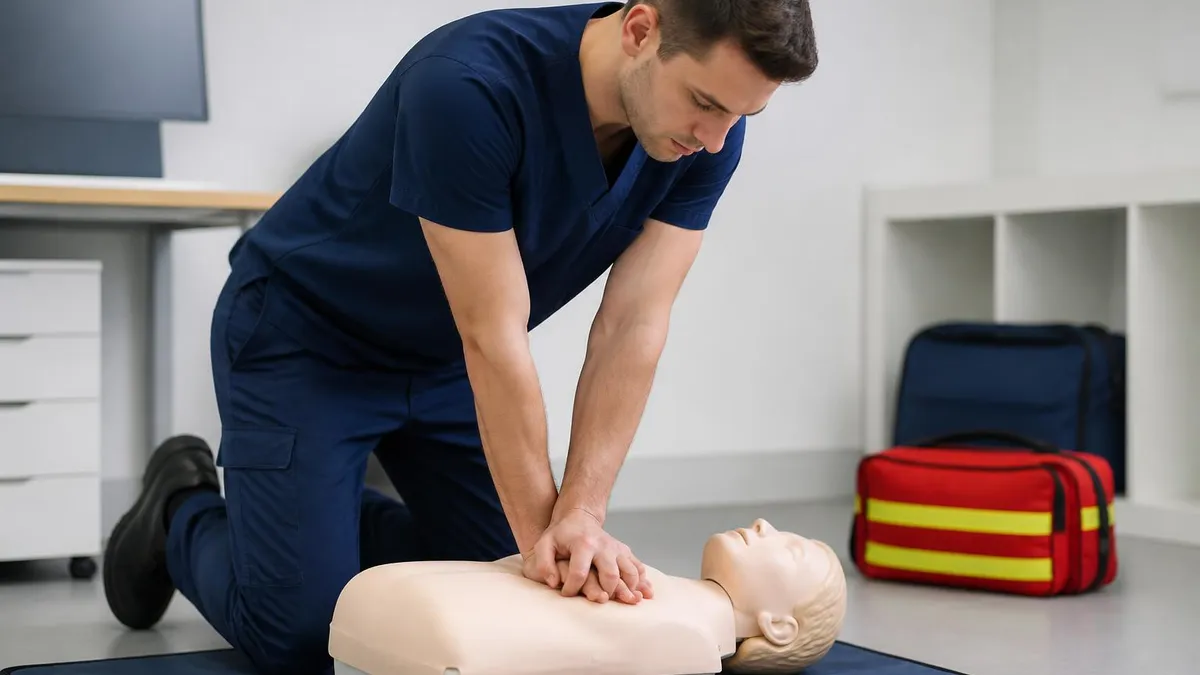
Adult CPR: Complete Step-by-Step Guide to Hands-Only and Standard CPR in 2026
About the Author

Registered Nurse & Healthcare Educator
Johns Hopkins University School of NursingDr. Sarah Mitchell is a board-certified registered nurse with over 15 years of clinical and academic experience. She completed her PhD in Nursing Science at Johns Hopkins University and has taught NCLEX preparation and clinical skills courses for nursing students across the United States. Her research focuses on evidence-based exam preparation strategies for healthcare certification candidates.
Join the Discussion
Connect with other students preparing for this exam. Share tips, ask questions, and get advice from people who have been there.
View discussion (5 replies)