
CPR Instructor Jobs 2026 October: How to Become a Certified Instructor, Salary Expectations, and Career Pathways
Explore CPR instructor jobs in 2026 October: 🆕 salary ranges, certification pathways, ACLS algorithm training, and how to launch a rewarding teaching career.
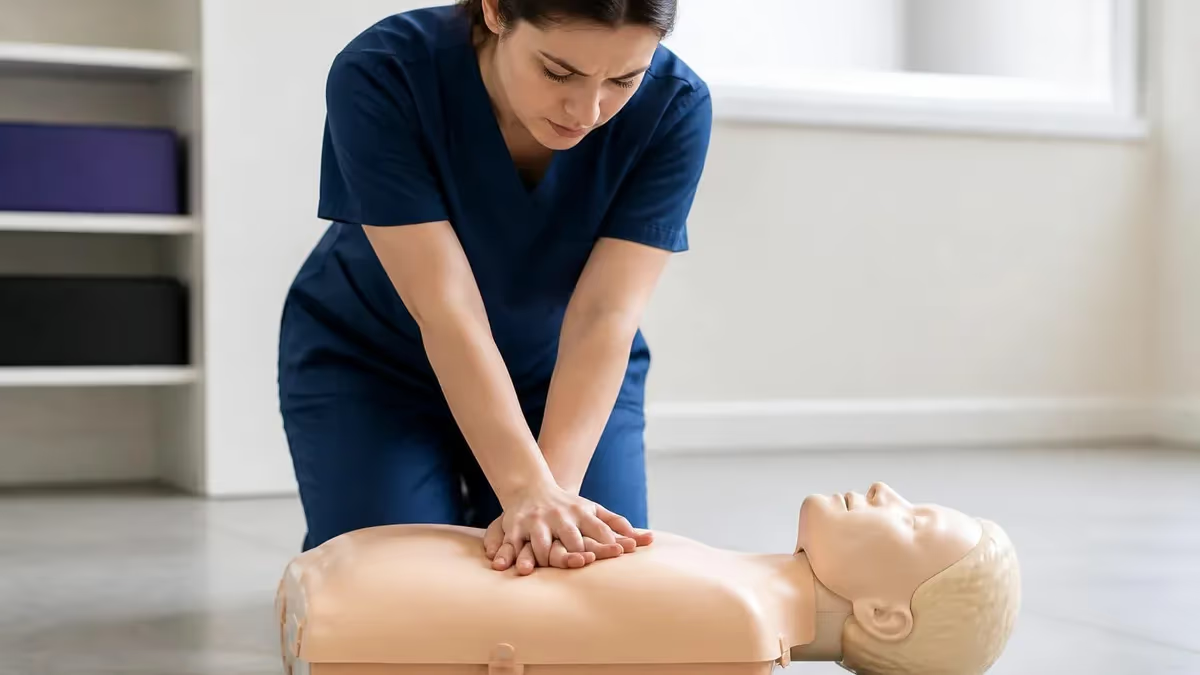
CPR instructor jobs have quietly become one of the most rewarding side careers in healthcare education, and 2026 is shaping up to be a banner year for anyone considering this pathway. Whether you are a nurse looking to supplement income, a firefighter wanting to give back, or a complete career changer drawn to teaching, becoming a certified CPR instructor opens doors to flexible hours, meaningful work, and surprisingly strong pay. The demand is steady because every healthcare worker, daycare employee, lifeguard, coach, and corporate safety officer needs renewed certification roughly every two years.
The role goes well beyond demonstrating chest compressions on a mannequin. Modern instructors teach the full baby cpr sequence, walk students through the acls algorithm for advanced providers, explain how to recognize abnormal respiratory rate patterns, and demonstrate proper recovery position techniques. You become the calm voice that prepares ordinary people to act during the worst moments of someone else's life, and that responsibility is exactly what makes the work so fulfilling for thousands of part-time and full-time educators across the country.
Pay varies widely depending on your credentialing body, location, and whether you teach independently or through a training center. A new instructor in a midwestern town might earn $35 per hour teaching evening classes at a community college, while an experienced ACLS and PALS instructor in a major metropolitan hospital system can clear $80 per hour or more. Independent instructors who build their own client base, including corporate safety contracts and daycare networks, often report six-figure annual revenues once they have systems in place.
The credentialing landscape in 2026 includes the American Heart Association, the American Red Cross, the Health and Safety Institute, and the national cpr foundation, each with slightly different requirements, fees, and target audiences. The AHA still dominates hospital settings, the Red Cross is strong in lifeguard and youth programs, and HSI is popular with workplace safety departments. Choosing the right credentialing body up front saves money, time, and the headache of teaching classes your local employers will not accept.
This guide walks through everything you need to evaluate the career honestly: the pre-requisites you must hold before applying, the instructor course itself, the equipment investment, ongoing renewal requirements, marketing your services, and the realistic income trajectory across your first three years. We pull from instructor surveys, training center pay scales, and the most recent guidelines updates so you can decide whether this path fits your goals.
You will also find practice quizzes scattered throughout because teaching CPR well requires fluency you cannot fake. Students notice when an instructor hesitates or paraphrases incorrectly, and credentialing bodies require you to pass a written exam plus a hands-on skills demonstration before your card is issued. The quizzes embedded below mirror the question style you will encounter on the written portion of your provider and instructor exams.
By the end of this guide you should know exactly which credential to pursue, what it will cost, how to find your first paid teaching opportunities, and how to scale beyond a few classes per month. Bookmark this page because you will likely return to it as you progress from provider, to instructor candidate, to confident lead educator with a steady roster of clients and students who recommend you by name.
CPR Instructor Jobs by the Numbers

Instructor Pathways and Credentialing Bodies
The dominant credential in hospitals and clinical settings. AHA instructors teach Heartsaver, BLS, ACLS, and PALS. Requires alignment with an AHA Training Center and adherence to instructor essentials, including a minimum number of classes taught annually.
Popular in schools, lifeguarding programs, and community organizations. Red Cross instructors enjoy strong brand recognition and good online support tools. The pathway is well-suited to instructors who want to teach first aid plus CPR to lay audiences.
Widely accepted in workplace safety and OSHA-driven environments. HSI offers flexible curricula through brands like ASHI and MEDIC FIRST AID. A favorite for instructors building corporate accounts because of competitive pricing.
Online-first option that appeals to lay rescuers and gig workers needing fast certification. Some employers accept it; others do not. Instructors should verify acceptance in their region before building a business around this credential.
Once you are a BLS instructor, layering advanced credentials such as ACLS, PALS, and NRP dramatically raises your hourly rate. Hospitals pay premium rates for instructors who can teach the full clinical stack to nurses and physicians.
Salary expectations for CPR instructor jobs vary by setting more than any other single factor, so the first question you must answer is where you want to teach. Hospital-based educators on staff typically earn $58,000 to $82,000 annually as full-time employees with benefits, while contract instructors who travel between facilities often bill $65 to $95 per hour with no benefits attached. The right setup depends on whether you value stability or maximum hourly throughput, and many veteran instructors actually combine both approaches to smooth out their income.
Community college and continuing education programs are a reliable on-ramp for new instructors. These programs typically pay $30 to $50 per hour, run classes on evenings and weekends, and provide the mannequins and AEDs you would otherwise need to purchase. The trade-off is that you teach the curriculum the college selected, you may not control class size, and pay raises tend to be modest. Still, dozens of classes through a college quickly build the teaching reps you need to feel fluent and confident on stage.
Independent instructors who run their own training business have the highest income ceiling. A typical Heartsaver class for 8 students billed at $70 per seat generates $560 in two hours, minus a card fee of roughly $20 per student. After expenses an independent instructor can clear $350 to $400 from a single evening, which is why so many nurses, paramedics, and respiratory therapists pursue this pathway. The catch is sales, scheduling, and the constant marketing required to keep your calendar full.
Corporate contracts are the most lucrative niche by far. A single Fortune 500 client requiring annual CPR refreshers for 400 employees can generate $35,000 to $60,000 per year for one instructor with a small team of subcontractors. The sales cycle is long, the procurement paperwork can be tedious, and you may need a small business entity and general liability insurance, but the revenue per hour of actual teaching is substantially higher than any other channel available to a freelance educator.
Specialty credentials multiply your earning potential. An instructor authorized to teach BLS plus ACLS plus PALS commands rates of $75 to $110 per hour because the audience is licensed clinicians who must maintain those cards to keep their jobs. Many hospitals struggle to find enough advanced instructors and will pay premium rates plus mileage to anyone who shows up reliably. Pairing these specialty cards with a strong reputation for clear teaching is a near-guaranteed way to keep your evenings and weekends booked.
Geography matters but not in the obvious way. Rural areas often pay less per hour but offer less competition, meaning a dedicated instructor can dominate a county-wide market. Urban areas pay more per hour but have dozens of competing training centers, so margins compress and marketing matters more. Many of the highest-earning instructors live in mid-sized metros where there is enough demand for steady classes but not so much saturation that pricing collapses. Reviewing local AHA Training Centers and checking what they charge per seat reveals your market's pricing power before you invest a dollar in equipment.
If you are still weighing whether this career deserves your time, compare it to other side gigs by calculating effective hourly rate, not just the listed rate. A CPR class that pays $80 per hour but requires 45 minutes of setup, two hours of teaching, and 30 minutes of paperwork is really paying around $50 per hour.
Independent instructors who simplify registration, accept card payments online, and pre-load equipment in a rolling case can keep their effective rate close to the listed rate, which is exactly how this work outearns many full-time jobs on a per-hour basis. Reviewing your leather cpr wallet card details after each renewal helps confirm your credentials and renewal dates are properly logged.
CPR Practice Test Questions
Prepare for the CPR Cardiopulmonary Resuscitation Practice exam with our free practice test modules. Each quiz covers key topics to help you pass on your first try.
CPR Basic CPR
CPR Exam Questions covering Basic CPR. Master CPR Test concepts for certification prep.
CPR and First Aid
Free CPR Practice Test featuring and First Aid. Improve your CPR Exam score with mock test prep.
CPR (Cardiopulmonary Resuscitation) Adult ...
CPR Mock Exam on (Cardiopulmonary Resuscitation) Adult CPR and AED Usage. CPR Study Guide questions to pass on your first try.
CPR (Cardiopulmonary Resuscitation) Airway...
CPR Test Prep for (Cardiopulmonary Resuscitation) Airway Obstruction and Choking. Practice CPR Quiz questions and boost your score.
CPR (Cardiopulmonary Resuscitation) Cardio...
CPR Questions and Answers on (Cardiopulmonary Resuscitation) Cardiopulmonary Emergency Recognition. Free CPR practice for exam readiness.
CPR (Cardiopulmonary Resuscitation) Child ...
CPR Mock Test covering (Cardiopulmonary Resuscitation) Child and Infant CPR. Online CPR Test practice with instant feedback.
CPR (Cardiopulmonary Resuscitation) High-P...
Free CPR Quiz on (Cardiopulmonary Resuscitation) High-Performance Team Dynamics. CPR Exam prep questions with detailed explanations.
CPR (Cardiopulmonary Resuscitation) Legal ...
CPR Practice Questions for (Cardiopulmonary Resuscitation) Legal and Ethical Considerations. Build confidence for your CPR certification exam.
CPR for Specific Populations
CPR Test Online for for Specific Populations. Free practice with instant results and feedback.
CPR Airway & Breathing Management
CPR Exam Questions covering Airway & Breathing Management. Master CPR Test concepts for certification prep.
CPR Assessment & Recognition of Cardiac Ar...
Free CPR Practice Test featuring Assessment & Recognition of Cardiac Arrest. Improve your CPR Exam score with mock test prep.
CPR Chest Compressions & Defibrillation
CPR Mock Exam on Chest Compressions & Defibrillation. CPR Study Guide questions to pass on your first try.
CPR Post-Resuscitation Care & Recovery
CPR Test Prep for Post-Resuscitation Care & Recovery. Practice CPR Quiz questions and boost your score.
Provider vs Instructor vs Training Center Faculty
A CPR provider is anyone who has successfully completed a course and holds a current card. Providers learn to recognize cardiac arrest, perform high-quality compressions, deliver rescue breaths, use an AED, and respond to choking emergencies. Knowing what does aed stand for, why early defibrillation matters, and how to coordinate with EMS are core provider-level skills.
Provider courses typically run two to four hours for lay rescuers and four to six hours for healthcare providers. Successful completion requires passing a written exam, usually around 25 multiple-choice questions, plus a hands-on skills test. The card is valid for two years. To pursue instructor status you must hold a current provider card in the discipline you intend to teach, which is the universal starting point in every credentialing system.

Is a CPR Instructor Job Right for You?
- +Flexible scheduling that fits around a primary job or family obligations
- +Strong hourly rate compared to most part-time work or gig economy options
- +Genuinely meaningful work that directly prepares people to save lives
- +Low barrier to entry compared to most healthcare credentials
- +Pathway to a scalable independent business with corporate clients
- +Constant variety of students, settings, and learning challenges
- +Recession-resistant demand because certification is legally required in many roles
- −Initial equipment investment of $1,500 to $3,500 for mannequins and AED trainers
- −Must teach a minimum number of classes annually to maintain your credential
- −Independent instructors must handle their own sales, scheduling, and marketing
- −Evening and weekend hours dominate, which can strain family time
- −Card fees and Training Center alignment fees reduce per-class margins
- −Liability and insurance requirements add ongoing fixed costs
- −Guideline updates every five years require relearning and recertification
Pros and Cons at a Glance
| Pros | Cons |
|---|---|
| Flexible scheduling that fits around a primary job or family obligations | Must teach a minimum number of classes annually to maintain your credential |
| Strong hourly rate compared to most part-time work or gig economy options | Independent instructors must handle their own sales, scheduling, and marketing |
| Genuinely meaningful work that directly prepares people to save lives | Evening and weekend hours dominate, which can strain family time |
| Low barrier to entry compared to most healthcare credentials | Card fees and Training Center alignment fees reduce per-class margins |
| Pathway to a scalable independent business with corporate clients | Liability and insurance requirements add ongoing fixed costs |
| Constant variety of students, settings, and learning challenges | Guideline updates every five years require relearning and recertification |
Equipment Checklist for a New CPR Instructor
- ✓Adult full-body or torso mannequins with feedback devices, minimum of three units
- ✓Child mannequin with proper compression depth feedback for pediatric teaching
- ✓Infant cpr mannequin to demonstrate two-finger and two-thumb encircling techniques
- ✓AED trainer with at least three programmable scenarios and replacement pads
- ✓Pocket masks with one-way valves, one per student plus replacements
- ✓Bag-valve-mask devices for healthcare provider level courses
- ✓Sanitizing wipes, disposable lung bags, and disposable face shields
- ✓Tablet or laptop for video segments and online testing access
- ✓Rolling equipment case rated for travel between teaching sites
- ✓Liability insurance policy with at least one million dollars in coverage
- ✓Backup AED trainer batteries and spare compression feedback batteries
- ✓Printed roster forms, skills sheets, and card-ordering supplies
Setup and teardown time eats your hourly rate
New instructors quote prices based on the two hours of class time without accounting for 45 minutes of equipment setup, 30 minutes of teardown, and the drive to and from the site. Plan around total job time, not just the teaching window, or your hourly rate will quietly collapse below what you imagined when you first chose this career.
Where CPR instructors find work in 2026 has expanded well beyond hospitals and fire departments. Daycares are a fast-growing client base because state licensing now requires every staff member to hold a current infant cpr card. A single daycare chain with twelve locations can generate steady quarterly classes for one instructor, and these contracts often renew automatically year after year because the regulatory requirement does not disappear. New instructors who specialize in pediatric audiences quickly build a reputation that spreads through tightly connected childcare networks.
Schools and youth sports leagues are another reliable channel. Coaches in most states must hold current CPR cards, and schools increasingly require teachers and administrators to maintain certification too. Working with a school district means dealing with purchase orders and W-9 paperwork, but once you are an approved vendor the recurring revenue is predictable. Many instructors find that one strong school district relationship anchors their entire calendar from August through October each year as the new academic year begins.
Hospitals and outpatient clinics remain the highest-volume employer of CPR instructors. Some bring instructors on as W-2 staff educators while others contract out to local Training Centers. If you hold ACLS and PALS instructor credentials you become extremely valuable because every nurse, respiratory therapist, and physician needs renewal. Some hospital education departments pay an annual stipend on top of per-class fees just to keep qualified instructors on call, which is one of the most lucrative arrangements available in the field.
Corporate clients span almost every industry. Manufacturing plants need OSHA-compliant first aid and CPR training, office buildings require AED-ready response teams, restaurants want choking response drills, and tech companies often offer voluntary CPR classes as a perk. Selling to corporate buyers takes patience because procurement cycles are long, but a single contract for 200 employees at $75 per seat generates $15,000 from one client. Building three or four corporate accounts can replace a full-time salary for an independent instructor.
Lifeguard and aquatics programs lean heavily on Red Cross instructors. Pools, water parks, and summer camps all need certified instructors for their staff each spring. The seasonal nature of this work makes it a natural complement to school-year hospital work, so some instructors structure their entire year around overlapping seasonal demand. Pairing aquatics work with daycare contracts creates a portfolio that is busy nearly every month of the year.
Government agencies and nonprofits round out the typical instructor's client list. Police departments need basic life support training, social service agencies often want trauma-informed CPR classes, and faith communities increasingly hire instructors for congregation-wide training days. These clients usually pay slower than corporate buyers but tend to be loyal once you deliver a successful class. The instructor who delivers cpr fix phones level reliability becomes the default vendor for their region.
Online and hybrid teaching has matured into a real opportunity rather than a curiosity. Blended classes let students complete cognitive learning at home and meet in person only for the hands-on skills check. Instructors can run skills-only sessions for groups of eight students in roughly 90 minutes, which dramatically improves the income per hour. Some instructors run six skills sessions in a single Saturday and clear more than $2,000 from one day of teaching, a model that simply did not exist at scale before 2022.

Not every employer accepts every credential. Some hospitals exclusively accept American Heart Association cards, while some workplaces accept any OSHA-compliant credential. Before investing $300 to $600 in your instructor course, call at least three potential employers in your region and ask which credentials they accept. Choosing the wrong credentialing body is the single most expensive mistake new instructors make.
Building an independent CPR teaching business is the path that separates instructors who supplement income from those who replace a full-time salary. The foundation is a simple website with online registration, a Stripe or Square checkout, a clear list of class types and prices, and a calendar showing upcoming public classes. Many successful instructors launch with a $200 Squarespace or Wix site and a free Google Business Profile, then iterate from there as bookings grow. Polish your site over time rather than waiting for perfection before launching.
Reviews and referrals are the lifeblood of an independent business. After every class, send a short follow-up email with the student's electronic card, a thank-you message, and a one-click link to leave a Google review. Even modest review counts of 25 to 50 strong ratings dramatically improve your visibility in local search results. Many instructors also offer a referral discount, such as $10 off the next class for both the referrer and the new student, which turns satisfied past students into a continuous marketing channel.
Pricing strategy deserves more thought than most new instructors give it. Charging too little signals low quality to corporate buyers and traps you in a high-volume, low-margin treadmill. Charging too high in a price-sensitive lay rescuer market kills enrollment. The sweet spot in most markets is $65 to $85 per seat for Heartsaver, $90 to $120 for BLS, and $250 to $325 for ACLS or PALS. Survey three competing Training Centers in your region, position yourself near the median, and let service quality differentiate you rather than discount pricing.
Operational systems matter even more than marketing once you are busy. Use a scheduling tool like Calendly or Acuity to allow private clients to self-book group classes, accept payment up front to reduce no-shows, and prepare a standardized email sequence that confirms the date, sends pre-class reading, and provides parking instructions. Saving 15 minutes per class on administrative work means an extra free hour every six classes, and that compounds dramatically over a year of teaching. The right systems turn a chaotic side gig into a calm, profitable enterprise.
Hiring subcontractors is the turning point from solo instructor to business owner. Once you have more demand than you can personally handle, paying another instructor $45 per hour while billing $85 per seat generates margin even when you are not in the room. Vetting subcontractors carefully, providing standardized equipment, and reviewing student feedback after each class keeps quality consistent. Many successful independents grow to a small team of three to five instructors before bumping into the next set of decisions about insurance, payroll, and entity structure.
Specializing in a niche is often more profitable than being a generalist. Some instructors focus exclusively on dental offices and learn the specific airway emergencies dentists fear most. Others target fitness gyms because trainers value AED readiness. Still others serve only film and television production crews who need set-side medics during shoots. A clear niche makes marketing easier, raises perceived expertise, and supports higher pricing because the buyer feels you understand their world rather than treating their staff like generic students. Even teaching popular cpr songs in a memorable way can become part of your brand.
Finally, treat continuing education as a business investment rather than a chore. Stay current with guideline updates, learn one new specialty credential each year, and attend at least one instructor conference annually. The best-paid instructors in any region are the ones who can teach the full life support stack, including BLS, ACLS, PALS, NRP, and stroke-focused content. Every new credential you add opens a new audience, and audiences pay more when you are the rare instructor in your area authorized to teach what they need.
Practical preparation before your first paid class makes the difference between a smooth debut and an awkward learning experience for everyone. Rehearse the full class out loud at home with your mannequins and equipment laid out exactly as you plan to use them in the field. Time yourself through each module, note where you fumble transitions, and rewrite your talking points until each segment flows naturally. Recording yourself on your phone and watching the playback is uncomfortable but accelerates your improvement faster than any other single technique available to new instructors.
Arrive at least 45 minutes early on class day, even if the venue insists you only need 15. Setting up calmly without an audience reduces stress and gives you time to handle the inevitable hiccups: a broken AED trainer battery, a mannequin lung bag that tore in transit, or a roster that mistakenly listed eight students when ten arrive. Veteran instructors carry a labeled backup kit for exactly these moments. Bringing extra pocket masks, extra batteries, and extra rosters has saved countless careers from terrible early reviews after preventable equipment failures.
Manage the room from the moment students walk in. Greet each person by name as they sign in, confirm their preferred email for card delivery, and explain the basic flow of the class within the first five minutes. Adult learners want to know what to expect, how long each segment will run, and when breaks will occur. Posting a simple agenda on a flip chart or slide reduces anxiety and signals that you are organized, which builds trust before you ever touch a mannequin. Trust is the precondition for honest skills practice.
During skills practice, position yourself to see every student's hands at all times. Walk the room continuously rather than parking next to one student who needs help. Coach with brief, specific cues like push harder, allow full recoil, slow the rate, rather than vague encouragement. The best instructors give roughly equal attention to every student over the course of practice time, which prevents any single learner from feeling singled out or ignored. Equity in attention is one of the strongest predictors of high evaluation scores.
Handle skills failures with calm professionalism. Some students will struggle to meet compression depth or rate standards, and your job is to coach them through additional practice rather than embarrass them. Provide remediation in a calm voice, give them a second and third attempt if needed, and only consider a fail if their performance remains genuinely unsafe after coaching. Most students who initially struggle pass after a brief private practice round, and they often become your most loyal repeat customers because you treated them with respect during a vulnerable moment.
Close every class with a clear, brief summary of what to do next: when their card will arrive, how to renew before it expires, who to contact with questions, and how to leave a review if they enjoyed the experience. Hand each student a one-page reference card with key numbers, including respiratory rate ranges, compression depth standards, and the chain of survival steps. Tangible takeaways extend the perceived value of the class long after students leave, and they often become the artifact that students show coworkers when describing why they would recommend your training.
Reflect honestly after every class for at least the first year. Spend ten minutes in the parking lot writing what worked, what flopped, and one specific change to make for next time. New instructors who build this reflection habit accelerate past peers who simply repeat their first attempt over and over. By class number twenty you will be a noticeably better instructor than you were on day one, and your students will feel it without you having to say a word about your growth.
CPR Questions and Answers
CPR vs BLS: Complete Comparison Guide for 2026 — Which Certification Do You Need?
CPR Card Lookup: How to Verify, Replace, and Access Your CPR Certification in 2026
AHA CPR: What It Is, Which Course You Need, and How to Get Certified
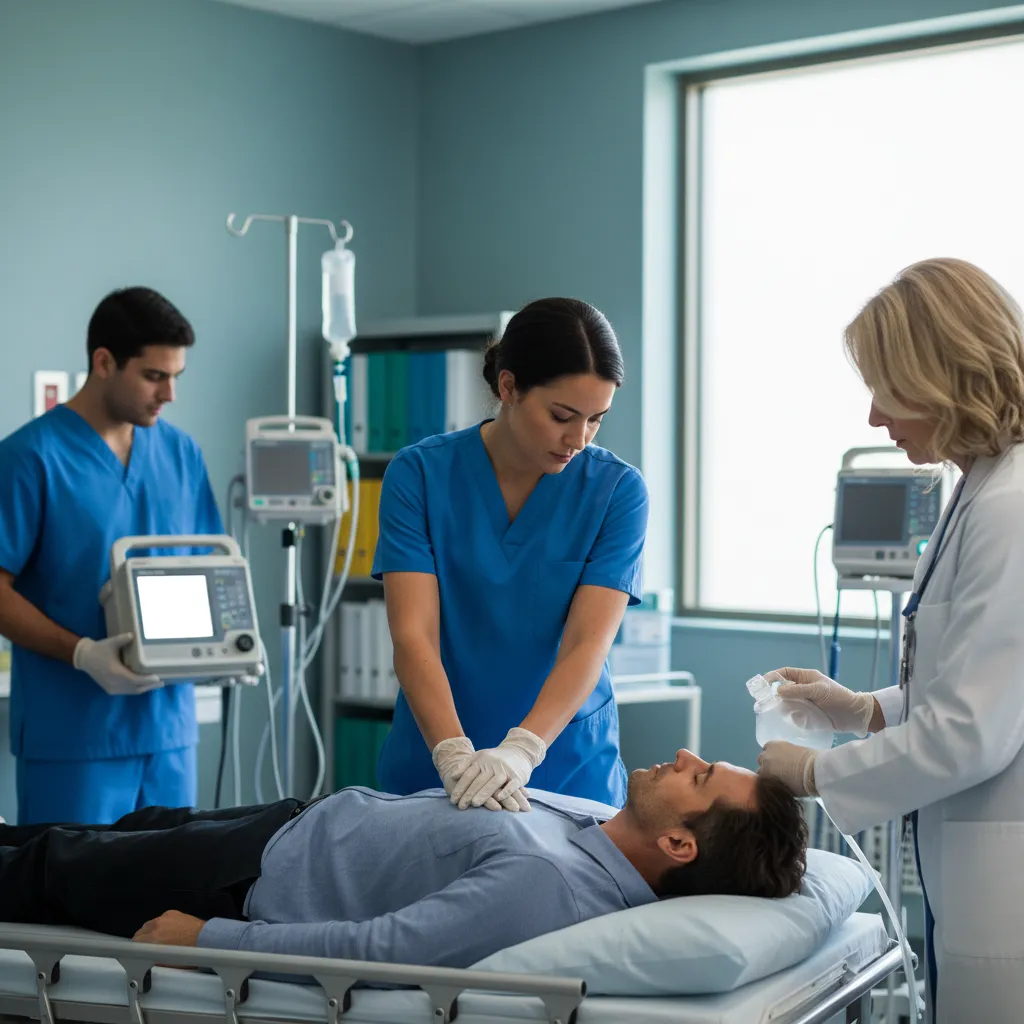
CPR - Cardiopulmonary Resuscitation: Complete Study Guide 2026
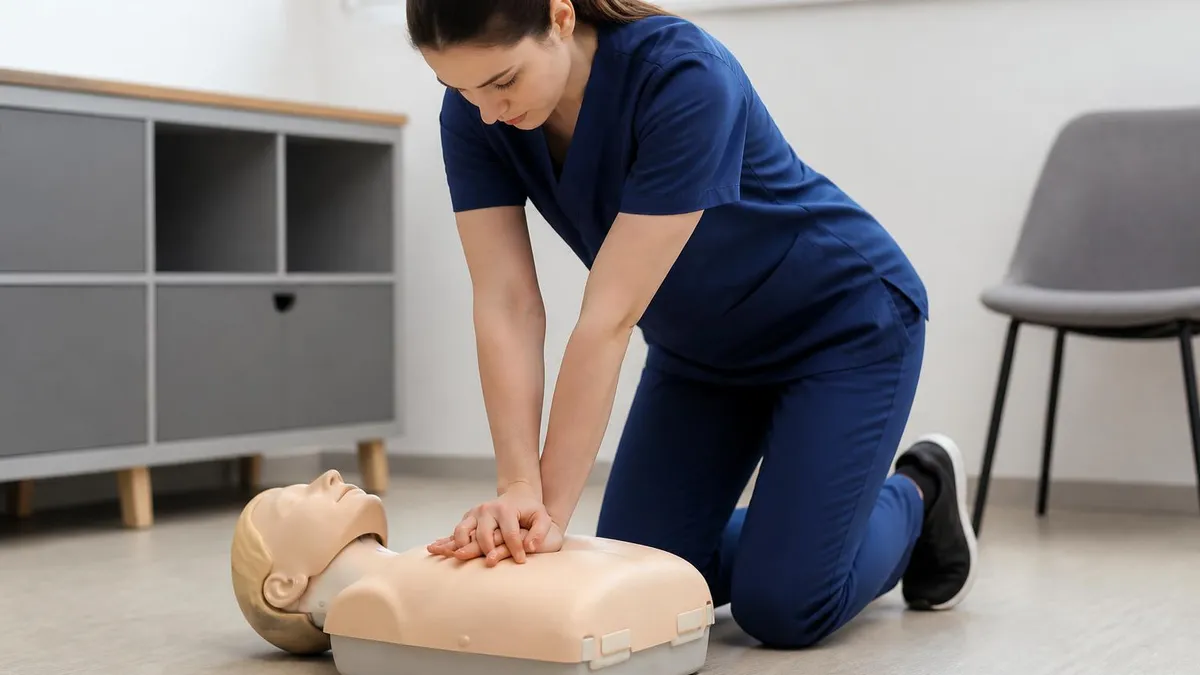
CPR Online 2026: Hybrid Certification That Actually Counts
About the Author

Registered Nurse & Healthcare Educator
Johns Hopkins University School of NursingDr. Sarah Mitchell is a board-certified registered nurse with over 15 years of clinical and academic experience. She completed her PhD in Nursing Science at Johns Hopkins University and has taught NCLEX preparation and clinical skills courses for nursing students across the United States. Her research focuses on evidence-based exam preparation strategies for healthcare certification candidates.
Join the Discussion
Connect with other students preparing for this exam. Share tips, ask questions, and get advice from people who have been there.
View discussion (5 replies)