
CPR Mask Filter: Complete Guide to Barrier Devices, Equipment, and Rescue Breathing Safety in 2026 October
CPR mask filter guide: how barrier devices work, when to use them, equipment specs, and integration with the ACLS algorithm for safer rescue breathing. 💯
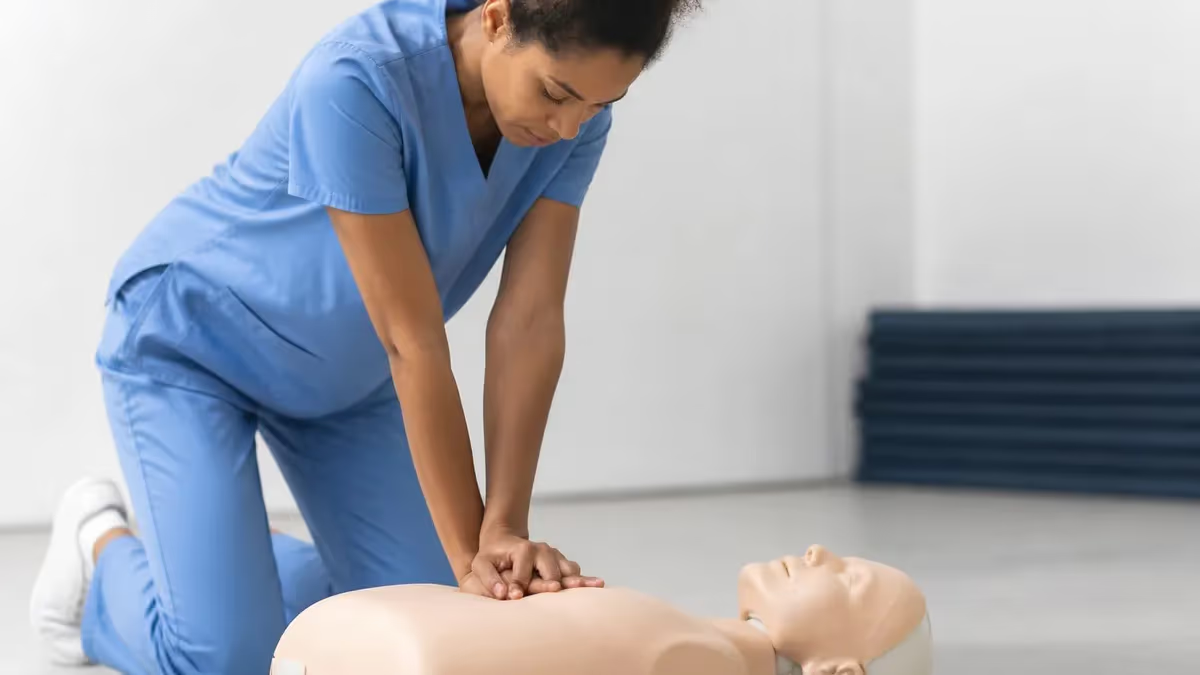
A reliable cpr mask filter is the single most underrated piece of resuscitation equipment a lay rescuer or healthcare professional can carry, sitting quietly inside pocket masks, face shields, and bag-valve-mask circuits until the moment a cardiac arrest demands it. Whether you have just completed an acls algorithm refresher, finished an infant cpr block, or are reviewing the basics, understanding the filter is what separates a confident rescuer from a hesitant one. This guide walks through every layer of the equipment, from one-way valves to HEPA-grade media.
Modern CPR barrier devices exist because rescue breathing without protection carries real risks, including exposure to vomit, blood, and respiratory pathogens like influenza, RSV, tuberculosis, and SARS-CoV-2. A well-designed filter blocks droplets and aerosols larger than 0.3 microns while still allowing the rescuer to deliver a tidal volume of roughly 500 to 600 milliliters per breath. That balance between protection and performance is what every manufacturer optimizes around, and it is also what every rescuer should be able to verify before purchase.
The national cpr foundation and other certifying bodies now teach that the pocket mask with a one-way valve and replaceable filter is the minimum acceptable barrier for two-rescuer CPR. Face shields are acceptable for lay responders performing hands-only CPR who must give breaths to a child or infant, but they offer less protection and lower seal quality. Understanding the hierarchy of devices, from keychain shields to advanced bag-valve-masks with viral filters, helps you build a kit that matches your environment, training level, and likely patient population.
Filters themselves come in several grades. The most common is the hydrophobic pleated-paper element rated to filter 99.99 percent of particles at 0.3 microns, the same standard used in anesthesia circuits. Some devices use electrostatic media that traps charged particles, while others combine both technologies for redundancy. The filter sits between the patient port and the one-way valve, ensuring that exhaled air from the patient never reaches the rescuer even if the valve fails or is installed incorrectly.
Equipment selection also depends on intended use. A workplace AED cabinet typically pairs the defibrillator with a pocket mask in a hard case, gloves, scissors, a razor, and a towel. EMS response bags carry bag-valve-masks in adult, pediatric, and infant sizes, each with its own filter. Home kits often include a low-cost face shield clipped to a keychain. Knowing what is in your kit, how to deploy it under stress, and how to maintain it between uses is just as important as knowing the compression-to-ventilation ratio.
This article will demystify every component, compare brands and price points, explain how filters integrate with capnography and the broader life support chain, and finish with practical maintenance, storage, and replacement guidance. By the end, you will be able to open any CPR kit, identify each part, confirm it is in date, and use it with confidence the moment someone collapses in front of you.
We will also touch on adjacent topics that confuse new rescuers, including the difference between a filter and a one-way valve, why recovery position matters even after a successful resuscitation, and how respiratory rate targets change once advanced airway placement occurs. Each of these threads ties back to the same goal: minimizing harm to the rescuer while maximizing the chance of return of spontaneous circulation for the patient.
CPR Mask Filter Equipment by the Numbers

Core CPR Mask Equipment Categories
Hard or soft-shell mask with inflatable cuff, one-way valve, and replaceable HEPA filter. Standard for healthcare providers and the minimum recommended barrier for two-rescuer CPR in workplaces and clinics.
Thin plastic sheet with a central filter or valve, often folded into a keychain pouch. Lower cost and lower protection, but acceptable for lay rescuers giving breaths to family members or coworkers in low-risk settings.
Self-inflating bag connected to a mask via a filter and one-way valve, used by EMS and hospital teams. Delivers higher oxygen concentrations when attached to supplemental oxygen flow and supports two-rescuer ventilation.
Smaller masks sized for children and infants with proportional filters and reduced bag volume to prevent lung over-inflation. Essential in schools, daycares, and any pediatric emergency response kit.
Disposable lung-bag inserts and face-piece filters used during practice on manikins to prevent cross-contamination between students. Different from clinical filters but equally important in training programs.
The cpr mask filter exists primarily to interrupt the bidirectional transmission of pathogens during rescue breathing. When you blow air into a patient's airway, you generate positive pressure that can also push patient secretions back toward your mouth if the one-way valve sticks open or fails. The filter is your redundant safety net. A high-quality electrostatic-pleated filter captures particles down to 0.3 microns at 99.99 percent efficiency, which covers nearly all known respiratory viruses, bacteria, and most mycobacteria including TB.
Pathogen protection is only half the story. Filters also block vomit, blood, and mucus, which is critical because roughly one in three cardiac arrest patients regurgitates gastric contents during resuscitation. Without a barrier, these fluids can splash directly into the rescuer's mouth and eyes. A properly seated pocket mask with intact filter media keeps the rescuer dry and focused on chest rise instead of recoiling from contact, which improves the quality of every ventilation delivered.
The mechanical design matters as much as the filter media. A good one-way valve uses a silicone duckbill or umbrella diaphragm that opens at low pressures during inspiration and snaps closed immediately on exhalation. Cheap valves often stick in cold weather or after long storage, which is why annual replacement of disposable masks and routine inspection of reusable ones is non-negotiable. Always test the valve by blowing through it before storing the mask back in the kit.
Seal quality drives everything. Even the best filter is useless if air leaks around the mask cuff because the rescuer cannot deliver enough tidal volume to make the chest rise. The classic EC-clamp technique, where the thumb and index finger form a C around the mask and the remaining three fingers form an E along the mandible, creates the seal. With two rescuers, one can dedicate both hands to mask seal while the other ventilates the bag, dramatically improving effective ventilation.
Respiratory rate targets also depend on the equipment in use. For an adult in cardiac arrest without an advanced airway, you give 30 compressions followed by 2 breaths, each breath delivered over one second with just enough volume to see the chest rise. Once an advanced airway is placed, ventilations switch to a continuous rate of one breath every six seconds, or ten per minute, while compressions continue uninterrupted at 100 to 120 per minute. The filter must keep up with this cadence without obstructing flow.
Equipment failure is rare but worth planning for. If a filter becomes saturated with vomit or blood and resistance spikes, swap to a new mask if available, switch to hands-only CPR until a replacement arrives, or use a face shield as a temporary bridge. Every kit should carry at least one spare filter or a second complete mask. Practicing equipment swaps during training drills builds the muscle memory you need when seconds matter and your hands are slick with sweat.
Finally, the filter is part of a system that includes gloves, eye protection, and ideally a gown when the situation allows. None of these are substitutes for one another. A rescuer wearing a mask but no gloves still risks bloodborne pathogen exposure through hand contact. Build kits that pair every barrier device with the personal protective equipment that completes the protection chain, and inspect the entire kit on a scheduled cycle.

CPR Practice Test Questions
Prepare for the CPR Cardiopulmonary Resuscitation Practice exam with our free practice test modules. Each quiz covers key topics to help you pass on your first try.
CPR Basic CPR
CPR Exam Questions covering Basic CPR. Master CPR Test concepts for certification prep.
CPR and First Aid
Free CPR Practice Test featuring and First Aid. Improve your CPR Exam score with mock test prep.
CPR (Cardiopulmonary Resuscitation) Adult ...
CPR Mock Exam on (Cardiopulmonary Resuscitation) Adult CPR and AED Usage. CPR Study Guide questions to pass on your first try.
CPR (Cardiopulmonary Resuscitation) Airway...
CPR Test Prep for (Cardiopulmonary Resuscitation) Airway Obstruction and Choking. Practice CPR Quiz questions and boost your score.
CPR (Cardiopulmonary Resuscitation) Cardio...
CPR Questions and Answers on (Cardiopulmonary Resuscitation) Cardiopulmonary Emergency Recognition. Free CPR practice for exam readiness.
CPR (Cardiopulmonary Resuscitation) Child ...
CPR Mock Test covering (Cardiopulmonary Resuscitation) Child and Infant CPR. Online CPR Test practice with instant feedback.
CPR (Cardiopulmonary Resuscitation) High-P...
Free CPR Quiz on (Cardiopulmonary Resuscitation) High-Performance Team Dynamics. CPR Exam prep questions with detailed explanations.
CPR (Cardiopulmonary Resuscitation) Legal ...
CPR Practice Questions for (Cardiopulmonary Resuscitation) Legal and Ethical Considerations. Build confidence for your CPR certification exam.
CPR for Specific Populations
CPR Test Online for for Specific Populations. Free practice with instant results and feedback.
CPR Airway & Breathing Management
CPR Exam Questions covering Airway & Breathing Management. Master CPR Test concepts for certification prep.
CPR Assessment & Recognition of Cardiac Ar...
Free CPR Practice Test featuring Assessment & Recognition of Cardiac Arrest. Improve your CPR Exam score with mock test prep.
CPR Chest Compressions & Defibrillation
CPR Mock Exam on Chest Compressions & Defibrillation. CPR Study Guide questions to pass on your first try.
CPR Post-Resuscitation Care & Recovery
CPR Test Prep for Post-Resuscitation Care & Recovery. Practice CPR Quiz questions and boost your score.
CPR Mask Filter Types and Industry Standards
HEPA-grade pleated filters use folded glass-fiber or synthetic media that traps particles by interception, impaction, and diffusion. They are rated to capture 99.97 to 99.99 percent of particles at 0.3 microns, which is the most penetrating particle size for mechanical filtration. These filters perform consistently across humidity ranges and are the standard in anesthesia and ICU ventilator circuits, making them a trusted choice for high-acuity CPR scenarios.
The downside of HEPA pleated filters is bulk and cost. They add slightly more resistance to ventilation than electrostatic alternatives, which can fatigue a rescuer over long resuscitations. They also tend to be more expensive, often two to four dollars per unit at wholesale. For environments where viral protection is critical, such as emergency departments and ambulances, the added cost is fully justified by the filtration consistency.
Pocket Mask with Filter vs. Bare Face Shield: Which Should You Carry?
- +Superior mask seal reduces air leak and improves tidal volume delivery
- +Replaceable filter element keeps long-term costs low across multiple uses
- +Hard-shell case protects the mask during storage in glove boxes and bags
- +Inflatable cuff conforms to most face shapes including bearded patients
- +One-way valve is strong and tested to medical-grade standards
- +Compatible with supplemental oxygen tubing for higher FiO2 delivery
- +Trained healthcare providers expect to see it in any professional kit
- −Bulkier than a face shield and harder to carry in a pocket every day
- −Higher upfront cost ranges from twelve to forty-five dollars per unit
- −Requires periodic filter replacement and valve inspection between uses
- −Hard case can crack if stepped on or dropped from significant height
- −Less intuitive for lay rescuers who have not trained with one recently
- −Inflatable cuff may slowly deflate during long-term storage in heat
Pros and Cons at a Glance
| Pros | Cons |
|---|---|
| Superior mask seal reduces air leak and improves tidal volume delivery | Bulkier than a face shield and harder to carry in a pocket every day |
| Replaceable filter element keeps long-term costs low across multiple uses | Higher upfront cost ranges from twelve to forty-five dollars per unit |
| Hard-shell case protects the mask during storage in glove boxes and bags | Requires periodic filter replacement and valve inspection between uses |
| Inflatable cuff conforms to most face shapes including bearded patients | Hard case can crack if stepped on or dropped from significant height |
| One-way valve is strong and tested to medical-grade standards | Less intuitive for lay rescuers who have not trained with one recently |
| Trained healthcare providers expect to see it in any professional kit | Inflatable cuff may slowly deflate during long-term storage in heat |

CPR Mask Equipment Inspection Checklist
- ✓Confirm the mask packaging is sealed and free of punctures or tears
- ✓Verify the filter expiration date is at least six months in the future
- ✓Inflate the cuff and check for slow leaks over a two-minute interval
- ✓Test the one-way valve by blowing through it and confirming clean snap-back
- ✓Inspect the hard case for cracks, missing hinges, or broken latches
- ✓Confirm the kit contains at least one spare filter or backup mask
- ✓Verify pediatric and infant masks are present if your environment serves children
- ✓Check that gloves, eye protection, and a CPR shield are stored alongside the mask
- ✓Replace any mask that has been deployed in a real or training scenario
- ✓Document the inspection date and initials on the kit log sheet
- ✓Restock supplemental oxygen tubing and connectors if applicable
- ✓Confirm the AED, scissors, razor, and towel are in the same accessible location
Replace every deployed filter, every time, no exceptions
Even if a CPR mask filter looks clean after use, it should be replaced before the next deployment. Microscopic contamination, electrostatic charge degradation, and unseen fluid penetration can all compromise performance. Treat used filters as single-use medical waste and document the replacement in your equipment log. The two-dollar filter is the cheapest insurance policy in your entire emergency kit.
The acls algorithm assumes that high-quality ventilation is happening in parallel with high-quality compressions, and the cpr mask filter is the link that makes that assumption true. From the moment a code is called, the team leader expects someone to grab the bag-valve-mask with filter attached, confirm a good seal, and begin ventilating at the prescribed rate. Knowing exactly where the filter sits in the circuit, between mask and bag or between mask and one-way valve, helps you troubleshoot resistance, leaks, or moisture buildup in real time.
During the initial BLS phase, you cycle 30 compressions to 2 breaths with the pocket mask in place. The filter sees brief, high-volume puffs of air and exhaled gas from the patient. Resistance is minimal because tidal volumes are still moderate and the duty cycle is short. As soon as an advanced airway like an endotracheal tube or supraglottic device is placed, ventilation switches to continuous rate of 10 per minute and compressions become uninterrupted, which changes how the filter behaves and how often it should be inspected for moisture.
Capnography integration is a major reason to use high-quality filters. End-tidal CO2 monitoring is the gold standard for confirming tube placement, assessing compression quality, and detecting return of spontaneous circulation. The capnography sensor sits between the airway adapter and the filter. A wet or saturated filter can produce false readings or block the sensor entirely, so filter quality directly affects the team's ability to interpret one of the most important data streams in modern resuscitation.
Pediatric resuscitation under pals certification protocols adds another layer of complexity. Pediatric filters have smaller dead space and lower resistance to accommodate smaller tidal volumes, often 6 to 8 milliliters per kilogram of body weight. Using an adult filter on an infant adds dead space that can cause CO2 rebreathing, while using a pediatric filter on an adult creates too much resistance. Stocking the right size for each likely patient population is part of basic equipment readiness.
Once return of spontaneous circulation is achieved, the focus shifts to post-arrest care, including airway protection and ventilation targets that maintain normocapnia. If the patient remains intubated, the same filter continues in line. If they are extubated and protecting their own airway, they may be moved into the recovery position with supplemental oxygen by face mask. Understanding when to keep the filter, when to switch devices, and when to remove barriers entirely is part of the broader life support skill set.
Equipment readiness also intersects with team training. Regular skill stations should include filter installation under time pressure, troubleshooting a saturated filter mid-code, and switching between pocket mask and bag-valve-mask during a single resuscitation. Teams that drill these transitions perform measurably better in real events, with shorter pre-shock pauses and higher first-shock success rates. Filters are small components, but the rituals around them shape team performance.
Documentation closes the loop. Every code should generate a record of equipment used, including filter type, lot number, and any malfunctions observed. This data feeds quality improvement reviews and informs future purchasing decisions. Hospitals and EMS agencies that track filter performance often catch supplier quality issues early, before a bad batch causes a clinical problem.
A filter used during a real resuscitation, even briefly, is contaminated and must be discarded in biohazard waste. Reusing it risks pathogen transmission to the next patient and degrades filtration performance. Replacement filters cost two to ten dollars; the consequences of reuse can cost lives. Always restock immediately after any deployment, and document the replacement in your kit log.
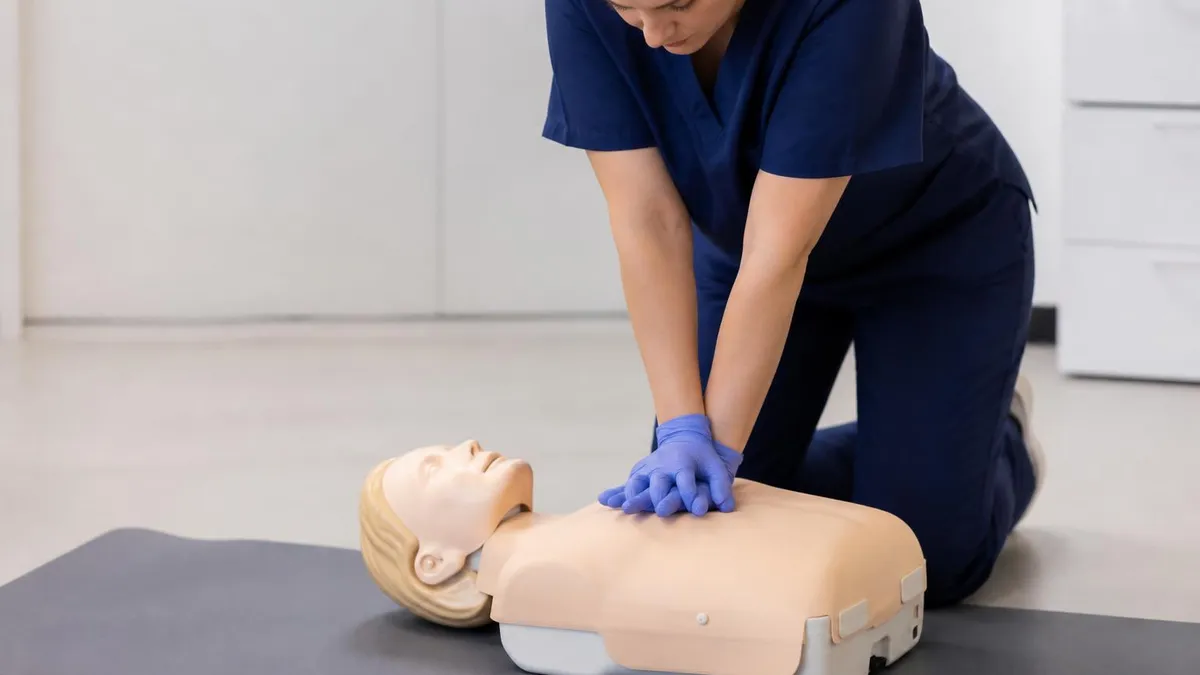
The most common mistake with cpr mask equipment is poor seal technique, not filter selection. Even rescuers who carry the best pocket mask available will fail to deliver effective breaths if they cannot maintain the EC-clamp seal while squeezing the bag or blowing through the valve. Practicing the seal on a manikin until it becomes reflexive is the highest-yield training investment any rescuer can make. The filter cannot help if the air bypasses the mask entirely through a gap at the chin or nose bridge.
Storage conditions silently destroy equipment readiness. Filters left in hot vehicle glove boxes can lose electrostatic charge in as little as six months, even if the expiration date is years away. Filters stored in damp basements absorb humidity and become less effective at trapping aerosols. The ideal storage environment is a cool, dry, dark cabinet between 60 and 80 degrees Fahrenheit with relative humidity below 60 percent. Audit your storage locations the same way you audit the kits themselves.
Cross-training between disciplines reduces equipment confusion. A nurse trained on hospital bag-valve-masks may not recognize the differences in a fire department BVM, and a lifeguard with a face shield may freeze when handed a pocket mask. Multi-agency drills that rotate equipment between participants build the flexibility needed when the device in your hand is not the one you trained on. Filters in particular vary enough between manufacturers that brief familiarization sessions pay large dividends.
Maintenance schedules should be written, posted, and audited. A typical schedule includes monthly visual inspection of kits, quarterly hands-on testing of valves and cuffs, annual replacement of all single-use components regardless of expiration date, and immediate replacement after any deployment. Tie the schedule to a recurring calendar event and assign a named individual responsibility. Anonymous maintenance is failed maintenance.
Cost management does not require sacrificing quality. Buying in bulk through professional suppliers typically reduces per-unit costs by 30 to 50 percent compared to consumer retail. Group purchasing organizations, fire-EMS cooperatives, and corporate safety programs can negotiate even deeper discounts. Apply those savings to upgrading from face shields to pocket masks across the entire organization, which raises the protection floor for everyone.
Disposal and waste handling matter too. Used filters and masks are regulated medical waste in most US states and cannot be discarded in regular trash. Establish a clear pathway from deployment to biohazard container to licensed waste hauler, and train every potential rescuer on where the biohazard container lives in their workplace. Improper disposal creates legal liability and undermines the credibility of your safety program.
Finally, integrate mask equipment training with broader emergency response skills like AED operation, hemorrhage control, and the basics of patient assessment. A rescuer who understands what does aed stand for, how to use a tourniquet, and how to recognize cardiogenic shock will use the mask more effectively because they understand its role in the larger picture. Equipment competence and clinical judgment grow together, not in isolation.
Building a personal CPR equipment kit starts with an honest assessment of your environment. A teacher in an elementary school needs different gear than a hiker in the backcountry or a flight attendant on a long-haul aircraft. Identify the most likely patient profile, the response time of professional help, and the storage constraints of your location. From that profile, select a mask with an appropriate filter, the right pediatric or adult sizing, and a case that survives daily handling. The right kit is the one you will actually carry and inspect.
For most US workplaces, the optimal kit centers on a hard-case pocket mask with HEPA or hybrid filter, two pairs of nitrile gloves in different sizes, a pair of trauma shears, a disposable razor for AED pad placement, a small absorbent towel, and a printed quick-reference card showing the BLS algorithm. This kit fits in a sealed bag the size of a paperback book and costs between 35 and 75 dollars when assembled from professional suppliers. Pair it with an AED and you have covered roughly 80 percent of out-of-hospital cardiac arrest scenarios.
Home kits can be simpler. A face shield with a central filter or one-way valve, a pair of gloves, and a card with the local emergency number is enough for most family situations. Keep it in a kitchen drawer or bedroom nightstand where it can be reached in seconds. If you have children, add a pediatric face shield or small pocket mask. If a family member has known cardiac risk, consider investing in a home AED and a full pocket mask kit alongside it.
Travel kits require compactness. A folded face shield in a keychain pouch weighs less than 10 grams and fits on any keyring. It will not provide hospital-grade filtration, but it is dramatically better than no barrier at all, and it ensures you are always within arm's reach of some form of protection. Many lay rescuers add a face shield to their everyday carry alongside a flashlight and pocket knife, recognizing that cardiac arrest happens at random and most often outside of hospitals.
Training keeps the equipment useful. The best mask in the world is worthless in the hands of a rescuer who has never opened the package. Take a hands-on CPR class at least every two years, attend a refresher every year if possible, and run through your kit at home or work quarterly. Time yourself opening the kit, deploying the mask, and beginning ventilation. If it takes more than 20 seconds from the moment you reach for the bag, simplify the kit or move it to a more accessible location.
Finally, talk about your equipment with the people around you. Show your coworkers where the kit lives. Walk family members through the contents of the home kit. The first person to reach a collapsed patient might not be you, and the kit only helps if the responder can find it and use it. Knowledge shared across a group multiplies the value of every dollar spent on equipment, and it dramatically improves the odds that the next sudden cardiac arrest in your circle ends with a survivor walking out of the hospital.
Beyond the kit itself, think about adjacent skills that round out your readiness. Learning how to control bleeding with direct pressure, how to recognize a stroke using the FAST acronym, and how to support someone in mental health crisis all complement your CPR mask training. The same composure that lets you ventilate effectively also lets you triage, communicate with 911 dispatchers, and lead bystanders through tasks like flagging down EMS or clearing the scene of obstacles.
CPR Questions and Answers
CPR Card Lookup: How to Verify, Replace, and Access Your CPR Certification in 2026
Adult CPR: Complete Step-by-Step Guide to Hands-Only and Standard CPR in 2026

CPR - Cardiopulmonary Resuscitation: Complete Study Guide 2026
Inappropriate CPR Songs: What Not to Play, Why It Matters, and Better Beat-Per-Minute Alternatives
AHA CPR Recertification: How to Recertify CPR Online with the American Heart Association in 2026
About the Author

Registered Nurse & Healthcare Educator
Johns Hopkins University School of NursingDr. Sarah Mitchell is a board-certified registered nurse with over 15 years of clinical and academic experience. She completed her PhD in Nursing Science at Johns Hopkins University and has taught NCLEX preparation and clinical skills courses for nursing students across the United States. Her research focuses on evidence-based exam preparation strategies for healthcare certification candidates.
Join the Discussion
Connect with other students preparing for this exam. Share tips, ask questions, and get advice from people who have been there.
View discussion (5 replies)