
Firefighter CPAT Test: Complete Guide to Passing the Candidate Physical Ability Test
Master the firefighter CPAT test with our complete guide. Training tips, event breakdowns, pass rates & practice tests. 🏆 Start prepping today!
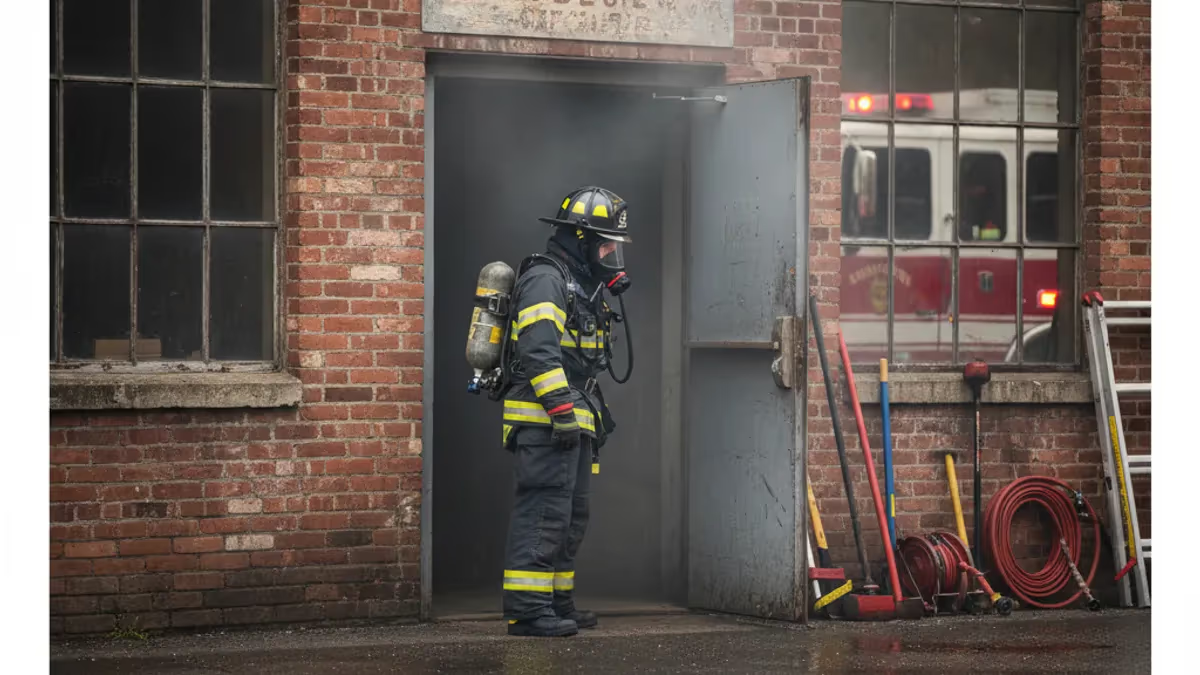
The firefighter CPAT test — Candidate Physical Ability Test — is one of the most demanding physical screening tools used by fire departments across the United States, and passing it is a non-negotiable step on the path toward a career protecting your community. Developed by the International Association of Fire Chiefs and the International Association of Fire Fighters, the CPAT was designed to simulate the actual physical demands firefighters face on the job.
Whether you are applying to a major urban department or a smaller rural agency, understanding exactly what this test requires can make the difference between an offer and a rejection. If you have been researching firefighter salary figures and career prospects, you already know this profession rewards preparation at every stage.
The CPAT consists of eight sequential events completed within a total time limit of ten minutes and forty seconds. Candidates must wear a 50-pound vest throughout the entire test to simulate the weight of personal protective equipment and self-contained breathing apparatus used in actual firefighting. Unlike a simple run or obstacle course, the CPAT mimics genuine job tasks such as pulling charged hose lines, climbing ladders, rescuing victims, and forcing entry. Each event flows directly into the next, so there is no rest between stations and your cumulative fatigue plays a major role in your performance on later events.
Understanding how to become a firefighter means recognizing that physical fitness is only one piece of the puzzle. The written examination, the interview process, the background investigation, and the medical evaluation all carry significant weight in the hiring process. However, the CPAT is typically one of the earliest hurdles candidates face, and failure at this stage means you never get the chance to demonstrate your knowledge or character to the hiring board. For this reason, physical preparation for the CPAT deserves weeks — ideally months — of dedicated training before your test date.
One of the most misunderstood aspects of the CPAT is that raw strength alone will not carry you through. The test rewards functional fitness: a combination of aerobic endurance, muscular strength, grip strength, coordination, and the ability to sustain moderate-to-high effort over an extended period. Candidates who train only by lifting weights in a gym often find the stair climb event, which comes first and lasts three minutes, leaves them too fatigued to perform well on subsequent events. A well-rounded training program that incorporates cardiovascular conditioning alongside strength work is absolutely essential.
Historically, pass rates for the CPAT vary significantly by department, training program, and candidate demographic. Some studies have indicated that first-time pass rates hover around 50 to 70 percent, depending on how much preparation candidates completed beforehand. Many fire departments offer orientation sessions or practice runs before the official test, and candidates who attend these preparatory sessions consistently outperform those who show up cold. If your local department offers a CPAT prep program, you should treat attendance as mandatory rather than optional.
The physical demands of firefighting have also been in the news recently due to high-profile incidents across the country. Events like the tragic idaho firefighter shooting — where responders came under fire while performing their duties — serve as sobering reminders that firefighters face not only physical exertion but also life-threatening danger. These events underscore the importance of rigorous hiring standards that genuinely identify candidates who are mentally and physically prepared for the realities of the job.
This comprehensive guide will walk you through every event of the firefighter CPAT test, provide science-backed training strategies, explain common mistakes candidates make, and give you the tools you need to arrive on test day fully prepared. From understanding the stair climb to mastering the victim rescue drag, we cover it all in detail so that you can approach your CPAT with confidence, strategy, and the physical foundation to succeed.
Firefighter CPAT Test by the Numbers
CPAT Event-by-Event Breakdown
| Section | Questions | Time | Weight | Notes |
|---|---|---|---|---|
| Stair Climb | 1 | 3 min | Critical | 60 steps/min with 25 lb hose pack |
| Hose Drag | 1 | ~90 sec | High | Drag 200 ft of charged hose |
| Equipment Carry | 1 | ~60 sec | Moderate | Carry two 22.5 lb saws |
| Ladder Raise & Extension | 1 | ~90 sec | High | Raise 24 ft ladder, extend to roof |
| Forcible Entry | 1 | ~60 sec | High | Strike target with 10 lb sledgehammer |
| Search | 1 | ~90 sec | Moderate | Navigate dark confined tunnel |
| Rescue | 1 | ~60 sec | Critical | Drag 165 lb mannequin 35 ft |
| Ceiling Breach & Pull | 1 | ~60 sec | Moderate | Alternate push/pull with pike pole |
| Total | 8 | 10 min 20 sec | 100% |
Building a structured training program is the single most important investment you can make in your CPAT preparation. Most fitness and fire service experts recommend starting serious CPAT-specific training at least twelve weeks before your scheduled test date, though candidates who have a lower baseline of fitness or who have not exercised regularly in the past year should begin sixteen to twenty weeks out.
The first phase of your training — roughly weeks one through four — should focus on establishing a cardiovascular base and correcting any movement deficiencies that could lead to injury during the test itself. Running, cycling, rowing, and stair climbing are all excellent tools during this phase.
The stair climb event deserves special attention because it is the very first station and it sets the tone for everything that follows. Candidates must walk on a stair mill at a rate of 60 steps per minute for three full minutes while wearing the 50-pound test vest plus an additional 25-pound hose pack on their shoulder — a combined added weight of 75 pounds.
That is a brutal way to open a ten-minute test, and candidates who are not specifically conditioned for this event often hit an aerobic wall early that they never fully recover from. Training on a stair mill or StepMill three to five times per week, gradually building duration from two minutes up to ten or fifteen minutes, is essential for this event.
The hose drag event requires candidates to pull a 1.75-inch charged hose line a distance of approximately 200 feet, including a 90-degree turn. A key technique error here is pulling from a fully upright posture, which limits your leverage and increases cardiovascular strain. Instead, lean into the drag with a slight forward body angle, keeping your center of gravity low.
Training for this event using sled drags with heavy resistance — or even dragging a weighted bag across a parking lot — builds the specific hip and hamstring strength required. Grip strength is also a limiting factor for many candidates, so incorporating rope pulls and towel pull-ups into your routine is highly beneficial.
The ladder raise and extension event trips up many candidates who have strong cardio but lack shoulder stability and coordination. In this event, you must pivot a 24-foot ground ladder from horizontal to vertical against a wall and then extend its fly section using a hand-over-hand rope pull.
The mechanics feel unnatural the first time, and practicing the actual ladder movements — even with a lighter training ladder — is far superior to trying to simulate it in a gym. If your local fire department offers practice sessions on the actual CPAT equipment, take every opportunity to participate. Muscle memory for these movements is built through repetition, not theory.
The forcible entry event tests your ability to use a 10-pound sledgehammer to strike a target and move it across a measured distance. This event rewards rotational power and hip drive rather than pure upper-body strength. Athletes who have played baseball, hockey, or golf often adapt to this movement quickly because their sport-specific training has already developed rotational mechanics. For others, practicing medicine ball rotational slams and kettlebell swings builds the power patterns needed. Aim for controlled, powerful strikes rather than wild swings, as accuracy and force transfer matter more than frantic speed.
The search event sends candidates through a dark, confined tunnel maze on hands and knees. This event is primarily a test of mental composure under claustrophobic conditions rather than pure physical ability. Many candidates who are physically capable still fail this event because of panic responses triggered by the darkness and confined space.
If you have any concerns about claustrophobia, practicing in progressively smaller and darker spaces during training will help desensitize your nervous response. The physical demand is moderate — you need sufficient shoulder and knee durability to crawl for 60 to 90 seconds — but psychological readiness is equally important.
The rescue event — dragging a 165-pound mannequin approximately 35 feet — is frequently cited as the most physically demanding station for candidates who lack posterior chain strength. The drag requires you to grasp the mannequin by its harness straps and walk backward while pulling its full deadweight across the floor.
Your hips, glutes, and lower back do the majority of the work, and practicing heavy backward sled drags during training is the most sport-specific preparation available. Building up to dragging 150 to 180 pounds for distances of 40 to 50 feet during training gives you the strength buffer you need to complete this event even when fatigued from the preceding seven stations.
Volunteer Firefighter vs. Career Firefighter CPAT Requirements
Career firefighters employed by municipal, county, or state fire departments almost universally face the full standardized CPAT as part of their competitive hiring process. The test is administered under strict conditions with certified proctors, and results are typically valid for twelve months. Departments that use ranked eligibility lists will often require candidates to complete the CPAT before their name is placed on the list, meaning your performance directly determines when — or whether — you receive a conditional job offer.
Some larger metropolitan departments, including those in Los Angeles, Chicago, and New York, have their own physical ability testing protocols that differ slightly from the standard CPAT format, though they test the same fundamental capacities. Candidates applying to multiple departments in different jurisdictions should research each agency's specific requirements individually. Passing the standard CPAT in one city does not automatically satisfy a non-standard physical test in another city, so always confirm current requirements directly with the hiring department before your test date.
Is the CPAT an Effective Way to Screen Firefighter Candidates?
- +Directly simulates real firefighting tasks rather than abstract athletic tests
- +Standardized format allows fair comparison across all candidates regardless of background
- +The 50-pound vest accurately mirrors actual PPE weight carried on the fireground
- +Sequential events without rest replicate genuine on-scene fatigue accumulation
- +Widely accepted across hundreds of departments, giving passing candidates broad eligibility
- +Motivates candidates to build job-specific functional fitness before entering the academy
- −High first-time failure rate discourages qualified candidates who lacked preparation resources
- −Does not assess cognitive abilities, stress management, or team communication skills
- −Test fees and travel costs can be a financial barrier for lower-income applicants
- −Some events favor larger body types, raising ongoing questions about demographic equity
- −Eight-event format does not reflect every type of firefighting role, including wildland or technical rescue
- −Passing the CPAT once does not guarantee ongoing fitness during the full academy or career
Pros and Cons at a Glance
| Pros | Cons |
|---|---|
| Directly simulates real firefighting tasks rather than abstract athletic tests | High first-time failure rate discourages qualified candidates who lacked preparation resources |
| Standardized format allows fair comparison across all candidates regardless of background | Does not assess cognitive abilities, stress management, or team communication skills |
| Sequential events without rest replicate genuine on-scene fatigue accumulation | Test fees and travel costs can be a financial barrier for lower-income applicants |
| Widely accepted across hundreds of departments, giving passing candidates broad eligibility | Some events favor larger body types, raising ongoing questions about demographic equity |
| Motivates candidates to build job-specific functional fitness before entering the academy | Eight-event format does not reflect every type of firefighting role, including wildland or technical rescue |
CPAT Test-Day Prep Checklist
- ✓Arrive at the test site at least 30 minutes before your scheduled start time.
- ✓Bring two valid forms of government-issued photo identification to check in.
- ✓Wear form-fitting athletic clothing that does not restrict movement or catch on equipment.
- ✓Choose flat-soled work boots or sturdy leather boots — no hiking boots with elevated heels.
- ✓Eat a balanced meal two to three hours before the test, not immediately before.
- ✓Hydrate well in the 24 hours leading up to the test and drink 16 oz of water on arrival.
- ✓Avoid any heavy training in the 48 hours before your test date to prevent muscle fatigue.
- ✓Complete a dynamic warm-up including leg swings, arm circles, and light jogging before the test.
- ✓Visualize each of the eight events in sequence and mentally rehearse your pacing strategy.
- ✓Keep hand movements tight and controlled during the stair climb — do not grip the handrails.
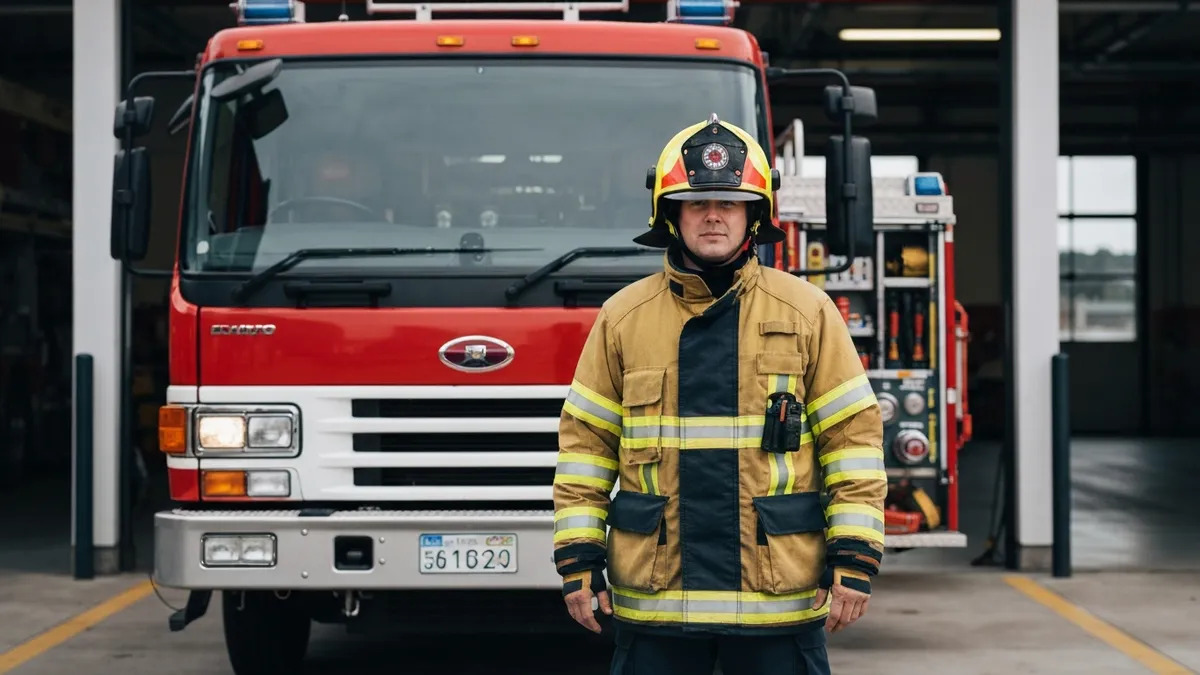
Nail the First Event or Risk the Entire Test
The stair climb is three minutes long, comes first, and is performed at a forced pace of 60 steps per minute — you cannot slow down. Candidates who are not specifically trained for this event often elevate their heart rate to near-maximum in the first 90 seconds, leaving them severely fatigued for every event that follows. Train on a StepMill under load at least three times per week for twelve or more weeks. If you pass the stair climb feeling controlled and composed, you will almost certainly pass the rest of the test.
Understanding firefighter salary and career trajectory is an important motivator for CPAT candidates who are weighing the financial investment of preparation courses, gear, and test fees. According to the U.S. Bureau of Labor Statistics, the median annual wage for firefighters was approximately $64,000 as of the most recently published data, though this figure varies enormously by location, department size, rank, and whether the position is career or part-time.
Metropolitan departments in states like California, New Jersey, and Washington regularly offer total compensation packages — including benefits, overtime, and pension — that push effective annual earnings well above $100,000 for experienced firefighters.
Entry-level firefighter salaries typically start between $40,000 and $55,000 in most U.S. markets, with regular step increases tied to years of service and promotional advancement. Many departments also offer incentive pay for specialized certifications such as paramedic licensure, hazardous materials technician, swift water rescue, or technical rope rescue. Firefighters who invest in these additional qualifications frequently see their base salary increase by $5,000 to $15,000 per year, depending on the department's pay matrix. The combination of competitive pay, strong pension systems, and comprehensive health benefits makes firefighting one of the most financially rewarding careers accessible without a four-year college degree.
The question of how much do firefighters make becomes more complex when you factor in overtime. Many fire departments operate on 24-hour shift schedules with 48 or 72 hours off, and filling vacant slots — due to retirements, injuries, or vacations — generates substantial overtime opportunities. Some career firefighters, particularly those who are also certified paramedics or serve in leadership roles, regularly earn 20 to 40 percent above their base salary through overtime and specialty pay. In high-cost cities, this can translate to total compensation exceeding $150,000 annually for a mid-career firefighter with strong performance reviews.
Beyond base salary, the benefits package associated with career firefighting is difficult to replicate in most private-sector jobs. Defined-benefit pension plans — increasingly rare in the private sector — remain standard in most municipal fire departments, typically offering retirement at 50 percent to 75 percent of final salary after 20 to 25 years of service. Health insurance is commonly provided at low or no cost to the employee, and many departments extend coverage to the firefighter's entire family. Life insurance, disability coverage, and paid education programs are also standard components of most comprehensive firefighter compensation packages.
For wildland firefighters employed by federal agencies such as the U.S. Forest Service or Bureau of Land Management, salary structures differ from municipal career firefighters. Federal wildland firefighters are classified under General Schedule pay grades, with starting salaries for seasonal positions often ranging from $35,000 to $50,000, with additional hazard pay and location differentials for work in remote or high-demand regions. Permanent full-time positions with federal agencies offer greater salary stability but are more competitive and typically require several seasons of seasonal experience before candidates are competitive for selection.
The swat firefight and tactical medicine crossover roles that have emerged in recent years represent a growing niche within fire service compensation. Departments that maintain tactical emergency medical support teams — working alongside law enforcement SWAT units during active threat incidents — often provide additional hazard pay and training compensation for firefighters assigned to these specialized units. The tragic incidents of idaho firefighters shot while responding to emergency calls have accelerated interest in tactical training and protective protocols for first responders, and departments are increasingly compensating firefighters who acquire these advanced defensive skills.
Ultimately, the financial case for investing time and effort into passing the firefighter CPAT test is strong. The cost of CPAT preparation — whether through a structured prep class, personal training sessions, or self-guided gym work — is typically measured in hundreds of dollars. The career value of a firefighting position, when you calculate salary, overtime, pension, benefits, and job stability over a 25-year career, can easily exceed two million dollars in total compensation. Few investments of time and effort in the job market deliver returns as substantial as passing your CPAT and launching a career in the fire service.
Candidates are immediately disqualified and removed from the CPAT if they remove the weighted vest at any point during testing, receive physical assistance from a proctor or bystander, or fail to complete any event within its designated area. Exceeding the total 10-minute 20-second time limit also results in automatic failure regardless of how many events were completed. Confirm your department's retesting policy before your first attempt — many agencies impose a mandatory waiting period of 30 to 90 days before a failed candidate may retest.
Preparing for the wildland firefighter and green firefighter pathways requires a somewhat different physical training approach than the standard structural CPAT, even though many of the underlying fitness attributes overlap. The Pack Test — the primary physical fitness standard for federal wildland fire positions — is a timed three-mile walk carrying a 45-pound pack that must be completed in 45 minutes or less for arduous-level positions.
Unlike the CPAT, which rewards short bursts of strength and power across eight stations, the Pack Test is a sustained aerobic challenge that demands excellent cardiovascular endurance and the ability to maintain a brisk pace under load for 45 continuous minutes.
Training for the Pack Test should begin with unloaded hiking and build progressively toward carrying full pack weight over hilly terrain. Most candidates find that achieving the Pack Test standard requires 8 to 12 weeks of consistent training if they start from a moderate fitness baseline.
Footwear selection is critically important: the test should be completed in sturdy leather hiking boots rather than running shoes, and your boots should be fully broken in before test day to avoid the blistering and discomfort that come with stiff new leather. Training in your test boots from the very beginning of your program prevents footwear from becoming an unexpected performance variable.
The firefighter costume and PPE familiarity component of physical preparation is often underestimated. Firefighters who enter the academy without prior experience wearing heavy turnout gear, an SCBA facepiece, or a weighted vest frequently experience elevated exertion levels during early training evolutions simply because the unfamiliar equipment increases their perceived effort. Spending time training in your test vest — or a weighted training vest with comparable load — during at least some of your preparation workouts helps your body adapt to the additional resistance before it matters on test day.
Nutrition strategy in the days and weeks leading up to your CPAT deserves thoughtful planning. The test demands both aerobic endurance and anaerobic power, which means your body needs well-stocked glycogen reserves and well-hydrated muscle tissue to perform optimally.
In the three days before the test, slightly increasing your carbohydrate intake — prioritizing complex carbohydrates like oats, rice, sweet potatoes, and whole grain bread — helps ensure your glycogen stores are full. On the morning of the test, a balanced meal of protein and moderate carbohydrates two to three hours before your start time gives your digestive system time to clear while keeping blood sugar stable throughout the assessment.
Sleep is the most underrated performance variable in CPAT preparation. Research consistently shows that sleep deprivation reduces muscular strength, slows reaction time, impairs coordination, and increases perceived effort during exercise — every one of which negatively impacts CPAT performance. In the final two weeks before your test, prioritize getting seven to nine hours of quality sleep per night. Avoid the common mistake of cramming in extra-long training sessions in the final week before your test date: the fitness adaptations from your training are already locked in, and additional heavy work at this stage creates fatigue without adding meaningful fitness.
Mental preparation strategies are increasingly recognized as legitimate components of physical performance readiness. Visualization — the practice of mentally rehearsing each CPAT event in detailed first-person imagery — activates many of the same neural pathways as actual physical practice and has been shown in sports science research to improve performance on physical tasks.
Spend five to ten minutes each evening in the final week before your test closing your eyes and mentally walking through each of the eight events in sequence. Visualize yourself completing each station successfully, controlling your breathing, maintaining your technique, and crossing the finish line within the time limit.
Finally, understanding the role of recovery and active rest in your training program prevents the overtraining mistakes that sideline many well-intentioned CPAT candidates. Overtraining syndrome — characterized by declining performance despite continued training load, persistent fatigue, irritability, and disrupted sleep — can develop when candidates push too hard without adequate recovery.
Incorporating at least one complete rest day per week, rotating muscle groups worked on successive days, and including active recovery sessions such as easy walking, yoga, or swimming ensures that your body has time to repair and strengthen between training sessions. Consistency over twelve weeks beats intensity crammed into four weeks every time.
On the day of your CPAT, your mindset as you approach the test site is just as important as the physical preparation you have completed over the preceding weeks. Arrive early, complete your registration paperwork calmly, and use the waiting time to perform a thorough dynamic warm-up that elevates your heart rate and loosens your major muscle groups before the vest is strapped on.
Candidates who skip the warm-up and head directly into the stair climb often spend the first 60 to 90 seconds of that event in an uncomfortable aerobic deficit, struggling to find their rhythm while their cardiovascular system catches up to the sudden demand.
During the stair climb itself, establish a breathing rhythm early and stick to it. Many candidates find that breathing in for two steps and out for two steps creates a manageable cadence that prevents hyperventilation and keeps their heart rate from spiking uncontrollably. Keep your eyes focused slightly downward and ahead rather than looking up at the timer — fixating on the countdown clock tends to create anxiety that accelerates your heart rate beyond what the workload alone would generate. Trust your training, trust your preparation, and commit fully to the pace that the machine sets for you.
Transitioning between events efficiently is a skill that is sometimes overlooked in preparation but matters meaningfully in the final time calculation. There are no time outs between events, but there is typically a short walking transition from one station to the next. Use these transition periods to regulate your breathing deliberately, shake out your hands and arms, and mentally cue yourself for the specific demands of the next station. A few focused seconds of intentional recovery during each transition can meaningfully lower your heart rate before you begin the next task.
The ceiling breach and pull event — the final station of the CPAT — requires candidates to alternately push a hinged panel open and pull a pike pole hand-over-hand to simulate breaching a ceiling during overhaul operations. Many candidates are so fatigued by the time they reach this station that their technique deteriorates badly, leading to inefficient movement and wasted energy.
The key is to let gravity assist the push phase rather than muscling the panel upward with brute force. Drive the panel open smoothly using your hip extension and core, then immediately reset your grip on the pike pole for the pull phase. Maintaining technique when fatigued is the mark of a well-prepared candidate.
After the test is complete, whether you passed or did not, gather as much specific feedback as possible about your performance. Most certified CPAT administrators can tell you your total time, which events felt most labored, and whether any form breaks were observed. This information is invaluable for planning your next preparation cycle if you need to retest, or for identifying which areas of physical fitness you should continue developing as you enter the fire academy.
Many candidates who barely pass the CPAT discover during academy training that their fitness in certain areas — particularly cardiovascular endurance — still needs significant development to keep pace with the physical demands of firefighter recruit school.
Connecting with other candidates who are preparing for the CPAT or who have recently passed can provide motivational support and practical advice that generic fitness resources cannot replicate. Local fire department explorer programs, community college fire technology programs, and online forums dedicated to firefighter hiring are excellent places to find training partners and mentors.
A training partner who is also preparing for the CPAT creates accountability, simulates the mild social pressure of performing under observation, and makes long training sessions more sustainable. The fire service is fundamentally a team profession, and learning to train alongside others is excellent preparation for the culture you will enter upon hiring.
Your CPAT result is a beginning, not an ending. Passing it opens the door to the written examination, the oral interview, the background investigation, the medical evaluation, and ultimately the fire academy. Each of these stages demands its own preparation and its own form of excellence. The physical foundation you built for the CPAT will serve you throughout the academy and throughout your career.
The habits of consistent training, thoughtful recovery, adequate sleep, and disciplined nutrition that you develop while preparing for the CPAT are the same habits that will keep you healthy, effective, and employable for the twenty-five or thirty years of your firefighting career that follows.
Firefighter Questions and Answers


About the Author

Emergency Manager & FEMA Certification Specialist
Naval Postgraduate SchoolCommander Lisa Foster holds a Master of Science in Emergency Management from the Naval Postgraduate School and is a FEMA-certified emergency manager and Certified Emergency Manager (CEM). With 18 years of emergency response coordination experience across federal and state agencies, she coaches emergency management professionals through ICS, NIMS, and FEMA Independent Study certification programs.
Join the Discussion
Connect with other students preparing for this exam. Share tips, ask questions, and get advice from people who have been there.
View discussion (6 replies)