
Firefighter Interview Questions: Complete Prep Guide 2026 September
Ace your firefighter interview questions with proven answers, salary data, and step-by-step prep tips. 🎓 Everything you need to get hired in 2026 September.
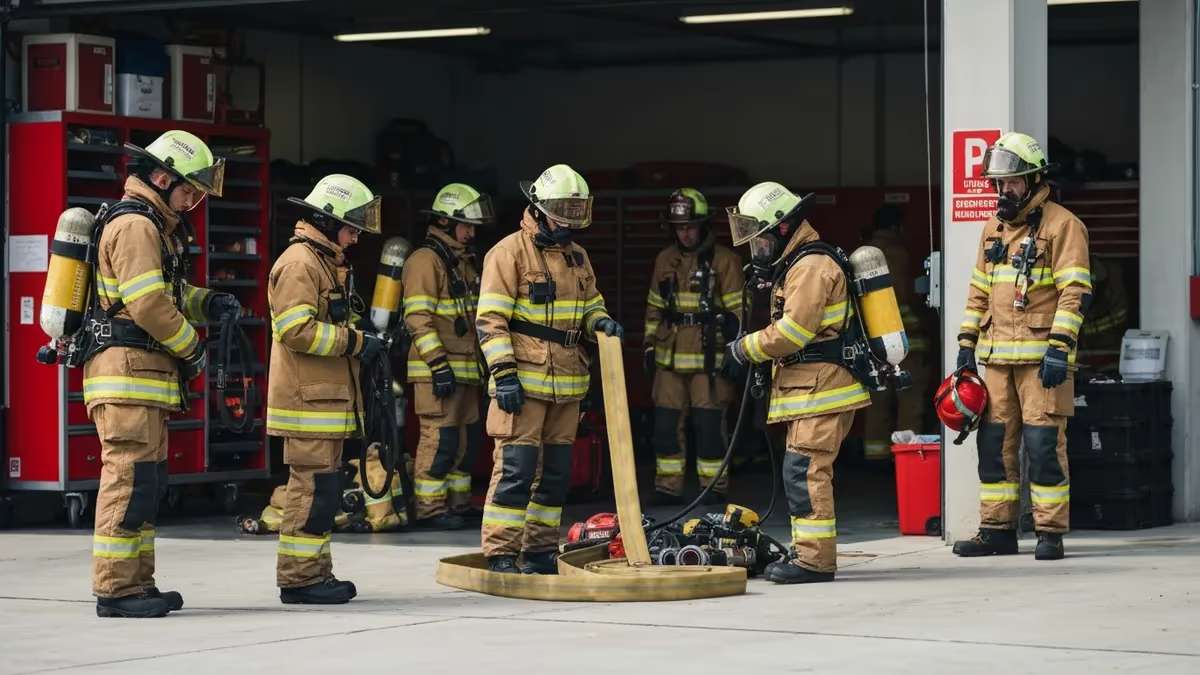
If you are preparing for firefighter interview questions, you are stepping into one of the most competitive hiring processes in public service. Fire departments across the United States receive hundreds of applications for each open position, and the oral interview is frequently the deciding factor between candidates who pass the written exam at similar scores. Understanding exactly what panelists are looking for — and how to structure your answers — is the most valuable preparation you can do before walking into that room. This guide covers everything from common question types to salary expectations and career paths.
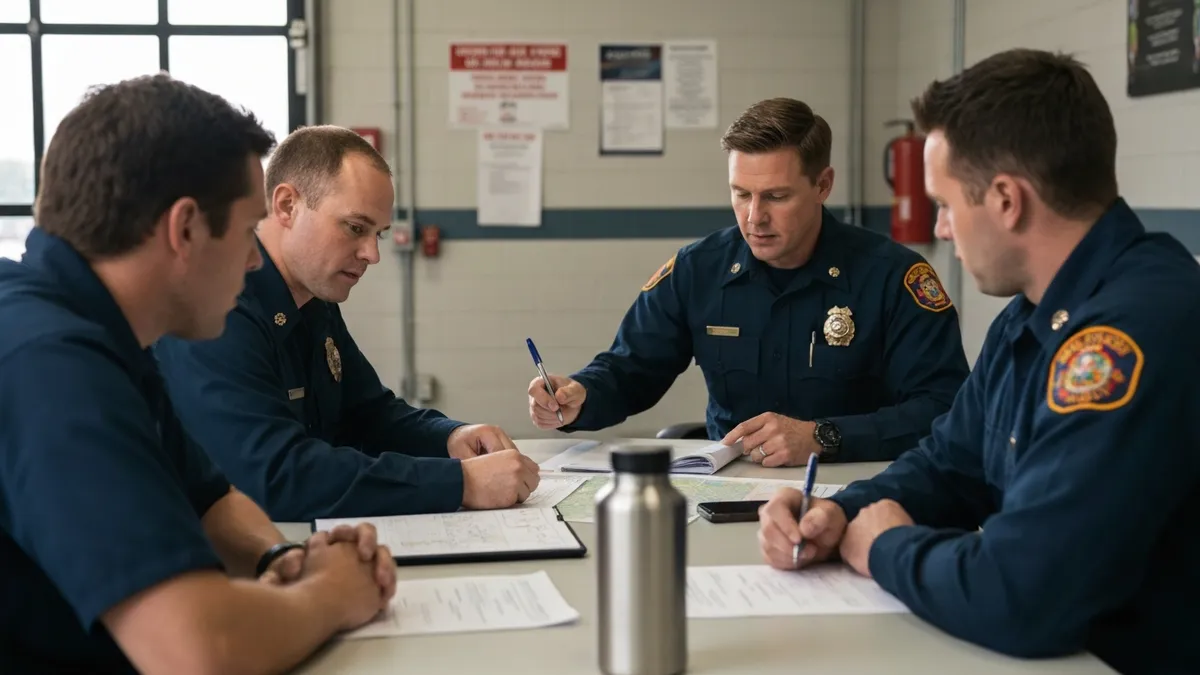
The firefighter hiring process typically unfolds in several stages: a written cognitive exam, a physical ability test, a background investigation, a medical evaluation, and finally the oral interview panel. The oral board is usually conducted by two to four evaluators, which may include a fire captain, a battalion chief, a human resources representative, and sometimes a community member. Candidates are scored on communication skills, situational judgment, knowledge of fire service values, and how well they demonstrate the core competencies the department prizes. Knowing these criteria before you walk in is a genuine advantage.
Many candidates wonder about firefighter salary expectations when deciding whether to pursue the career. Entry-level firefighters in the United States earn a median base salary of approximately $53,000 per year, while experienced firefighters in high cost-of-living cities can earn well above $90,000 annually when overtime and hazard pay are factored in. Salary varies dramatically by municipality, union agreements, and rank. Understanding the compensation picture helps you answer interview questions about your motivation with honesty and confidence rather than sounding purely idealistic or purely financial in your framing.
The oral board typically lasts between 20 and 45 minutes, and candidates are usually given a structured set of questions — often five to ten — with a minute or two to organize their thoughts before answering each one. The most common format asks behavioral questions using the STAR method: Situation, Task, Action, and Result.
You will be asked to describe a real experience from your past that demonstrates a specific competency such as teamwork, conflict resolution, physical courage, or decision-making under stress. Preparing two or three strong stories for each major competency category is the single most effective way to excel.
Beyond behavioral questions, most fire department oral boards also include scenario-based questions. These present a hypothetical situation — often involving a conflict with a fellow firefighter, a supervisor giving a questionable order, or a moral dilemma on the job — and ask how you would respond. Evaluators are not necessarily looking for a textbook perfect answer; they want to see how you think through competing values such as loyalty to your crew, respect for the chain of command, personal integrity, and public safety. Demonstrating a thoughtful, measured approach consistently scores higher than a reactionary or overly confident response.
Candidates who have volunteered as a volunteer firefighter, worked as an EMT, or served in the military often have a structural advantage in answering these questions because they can draw on real emergency service experience. However, even candidates without a fire or EMS background can prepare compelling answers by drawing on experiences from demanding jobs, competitive athletics, or community leadership. The key is connecting your experience explicitly to firefighter values: discipline, teamwork, service orientation, physical preparedness, and the willingness to continue learning throughout your career.
High-profile incidents such as the idaho firefighter shooting and the broader discussion around firefighter safety in violent scenes have also entered oral board conversations in recent years. Interviewers may ask how you would handle situations where firefighters face threats, how you think about mental health support after traumatic calls, or what you know about PTSD resources available to first responders. Showing that you understand the full scope of what modern firefighting involves — including the psychological demands — demonstrates the kind of self-awareness that panel members consistently reward with higher scores.
Firefighter Careers by the Numbers
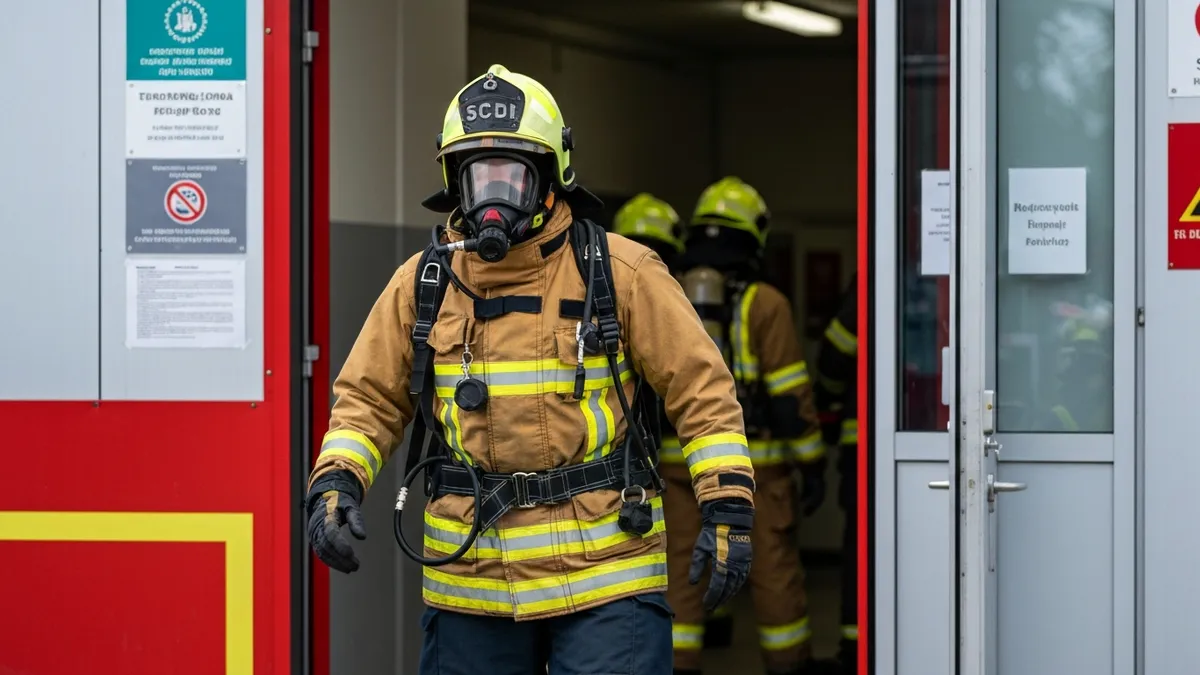
Firefighter Hiring Process: Step by Step
Written Cognitive Exam
Physical Ability Test (CPAT)
Background Investigation
Oral Interview Panel
Medical & Psychological Evaluation
Academy & Probationary Period
Mastering the most common firefighter interview questions begins with understanding why each question is asked. When a panel asks "Why do you want to be a firefighter?" they are not looking for a rehearsed speech about childhood dreams — they are probing your self-awareness, your understanding of what the job actually demands, and whether your motivations align with sustained commitment rather than momentary enthusiasm. The best answers connect a specific personal experience or value to a concrete understanding of what firefighters do every shift, including the routine maintenance, training, and community service that fills the hours between emergency calls.
Behavioral questions follow a predictable set of competency themes across nearly every fire department in the country. The most frequently tested competencies are teamwork and cooperation, leadership and followership, integrity and ethics, stress tolerance and composure under pressure, and customer service orientation toward the public. For each competency, you should prepare a specific story from your own experience that follows the STAR structure — describe the Situation briefly, clarify your Task or role, walk through the Actions you took in detail, and explain the Result with a quantifiable or clearly observable outcome whenever possible.
One of the most important things to understand about oral board scoring is that specificity is rewarded far more than generality.
A candidate who says "I always work well with others" scores significantly lower than a candidate who says "During a construction project, I noticed our team's communication was breaking down on shift handoffs, so I created a shared logbook that reduced errors by about 30% over the following month." The second answer demonstrates the same claim with evidence, and evidence is what panelists write down in their scoring notes. Every answer you give should contain at least one specific detail that makes your story unique and verifiable.
For those still exploring how to become a firefighter, it is worth noting that the oral board is not the only high-stakes moment in the process — but it is the one where preparation most reliably converts into better outcomes. Check out our how to become a firefighter video series for model answers and coaching on body language, vocal confidence, and panel dynamics. Watching experienced candidates demonstrate strong answers is one of the fastest ways to internalize the tone and structure that evaluators reward.
Scenario-based questions deserve their own preparation strategy. A common scenario involves discovering that your fellow firefighter has been drinking before a shift, or finding that a supervisor has given you an order that seems unsafe. These questions test whether you understand the chain of command, departmental policy, and your own ethical obligations.
The consistent framework that scores well is: acknowledge the difficulty of the situation, state what your primary obligation is (public and crew safety), describe the internal chain of command steps you would follow, and note that you would document the situation appropriately. Never say you would ignore a safety concern, but also never say you would go immediately to the media or outside authorities before exhausting internal options.
Questions about diversity, equity, and inclusion have become increasingly standard in fire department oral boards over the past decade. Candidates should be prepared to discuss how they would work effectively with colleagues and community members from different backgrounds, how they would respond to witnessing discriminatory behavior in the station, and what they understand about the historical underrepresentation of women and minorities in the fire service. Strong answers demonstrate genuine respect and curiosity rather than performative statements, and they connect equity values to practical operational outcomes: diverse teams make better decisions and build stronger community trust.
Ending your answers with a forward-looking statement is a technique many successful candidates use to leave a strong final impression with panelists. After describing your past experience and the result you achieved, briefly connect that experience to how it has prepared you for this specific role and this specific department.
Mentioning something specific about the department — a community program they run, a specialty team they operate, a recent initiative you read about — signals genuine research and genuine interest. Panelists notice when a candidate has done their homework, and that attention to detail reflects exactly the kind of thoroughness that makes a good firefighter.
Firefighter Salary, Career Paths & Specializations
Firefighter salary ranges vary considerably based on location, department size, union affiliation, and rank. Entry-level firefighters in smaller municipalities may start at $38,000 to $45,000 annually, while large urban departments in California, New York, and Washington routinely offer starting salaries above $65,000. After five to ten years of service, firefighters who have promoted to engineer or lieutenant can earn between $80,000 and $110,000 in high cost-of-living jurisdictions. Overtime pay, which is common in understaffed departments, can add 20% to 40% to base compensation in a given year.
Beyond base pay, firefighters typically receive generous benefit packages that include defined-benefit pension plans, comprehensive health and dental insurance, and paid leave. Most career departments offer a 20-year retirement option, allowing firefighters who begin their careers in their early twenties to retire with full pension benefits in their mid-forties. When total compensation including pension value, health benefits, and overtime is calculated, the effective annual compensation for a mid-career firefighter in a major city frequently exceeds $120,000 — making the profession one of the most financially competitive in public service despite its demanding physical and psychological requirements.
Is a Firefighter Career Right for You?
- +Strong job security with pension and benefits in most career departments
- +High sense of purpose and direct community impact on every shift
- +Built-in physical fitness through on-duty training requirements
- +Strong camaraderie and team culture in fire station environment
- +Clear promotional pathway from firefighter to engineer, lieutenant, captain, and chief
- +Overtime availability and specialty pay can significantly increase annual income
- −Highly competitive hiring process with acceptance rates often below 5%
- −Rotating 24-hour shifts create challenges for family schedules and social life
- −Cumulative exposure to traumatic incidents creates significant PTSD risk
- −Physical demands increase injury risk and can limit career longevity
- −Entry-level salaries in smaller departments may require supplemental income
- −Long probationary periods with little job security and close scrutiny
Pros and Cons at a Glance
| Pros | Cons |
|---|---|
| Strong job security with pension and benefits in most career departments | Cumulative exposure to traumatic incidents creates significant PTSD risk |
| High sense of purpose and direct community impact on every shift | Physical demands increase injury risk and can limit career longevity |
| Built-in physical fitness through on-duty training requirements | Entry-level salaries in smaller departments may require supplemental income |
| Strong camaraderie and team culture in fire station environment | Long probationary periods with little job security and close scrutiny |
Firefighter Interview Preparation Checklist
- ✓Research the specific department: size, call volume, specialty teams, recent news, and community programs.
- ✓Prepare three to five STAR-format stories covering teamwork, leadership, conflict resolution, and stress management.
- ✓Practice answering out loud — record yourself and review tone, pace, and filler word frequency.
- ✓Prepare a strong, specific answer to "Why this department?" that references real details about the agency.
- ✓Review the department's mission statement and core values and connect them to your own experience.
- ✓Prepare professional-quality business attire — suit or blazer is standard for oral boards even in casual cities.
- ✓Arrive 15 minutes early, bring extra copies of your application and certifications, and silence your phone completely.
- ✓Know your resume cold — be ready to elaborate on any experience listed without referring to the document.
- ✓Prepare a thoughtful question to ask the panel at the end — it demonstrates genuine interest and engagement.
- ✓Review common scenario question themes: insubordination, substance abuse, public complaints, and ethical dilemmas.
Specificity Wins Oral Boards
Oral board panelists score based on written notes taken during your answers. Vague statements like "I am a team player" leave nothing to write down. Specific examples with real details, numbers, and outcomes give evaluators concrete evidence to score in your favor. Every answer should contain at least one unique, specific detail that could only come from your personal experience.
Scenario-based interview questions are designed to reveal how a candidate thinks through competing obligations in real time, and preparing for them requires a different approach than memorizing STAR stories.
The most common scenario categories in firefighter oral boards include: (1) interpersonal conflict with a fellow firefighter, (2) a supervisor giving an unsafe or unethical order, (3) discovering a colleague engaging in misconduct, (4) a situation where a community member is hostile or abusive toward your crew, and (5) an emergency situation where resources are limited and you must prioritize. Each category tests a specific value cluster that fire departments have identified as predictive of long-term performance and professional conduct.
For interpersonal conflict scenarios, the highest-scoring responses acknowledge the difficulty of the situation, describe taking a private and respectful direct approach with the other person first, and only escalate to supervisors if the direct approach fails. Panelists are looking for candidates who can maintain professional relationships under friction without either avoiding necessary conversations or immediately escalating to authority figures. The ability to have honest, respectful conversations with peers is considered a core firefighter competency because crew effectiveness depends on trust built through exactly these kinds of interactions.
When a scenario involves a supervisor giving an unsafe order, candidates often freeze because they feel the answer requires either blind obedience or open defiance. The correct framing is neither. Strong candidates explain that they would complete safe duties while respectfully raising their safety concern through the appropriate channel — typically asking the supervisor directly if there is additional context they are not aware of, and if not, stating their concern calmly and professionally.
If the safety risk is immediate and life-threatening, they would prioritize crew safety while simultaneously notifying the next level of command. This answer demonstrates both respect for hierarchy and an uncompromising commitment to safety.
The idaho firefighters shot incident and similar tragedies involving firefighters placed in dangerous situations by active threats have prompted many departments to add questions about situational awareness and scene safety to their oral boards. Candidates should be familiar with the concept of fire department response protocols for scenes with potential law enforcement threats — including staging at a safe perimeter, communicating with dispatch, and waiting for law enforcement clearance before entering. Demonstrating that you understand the difference between a firefighter's role and a SWAT firefight scenario shows mature judgment that evaluators genuinely value.
Questions about personal weaknesses are another common oral board element that trips up many candidates. The classic mistake is giving a fake weakness disguised as a strength — "I work too hard" or "I care too much about getting things right" — which evaluators recognize immediately and score poorly because it demonstrates a lack of genuine self-awareness.
A strong weakness answer names a real, specific developmental area, describes the concrete steps you have taken to address it, and shows evidence of progress. For example: "Early in my career, I tended to jump into action before fully communicating my plan to teammates. I have worked on this by practicing the practice of verbally confirming roles before starting tasks, and my last supervisor specifically noted improved team coordination in my performance review."
Questions about what you know about the fire service can reveal how seriously you have researched the profession. Candidates who can speak knowledgeably about NFPA standards, the incident command system structure, the National Fire Protection Association's staffing recommendations, or recent changes in wildland-urban interface firefighting demonstrate the kind of intellectual investment that predicts success in training and on the job. You do not need to be an expert — the panel knows you are not yet a firefighter — but showing that you have engaged seriously with the profession beyond what is required for the application process signals genuine motivation.
Mental health awareness has become an increasingly important topic in fire department culture, and oral boards now regularly include questions about how candidates would respond to a colleague showing signs of burnout, depression, or PTSD. The firefighter profession carries a higher suicide rate than line-of-duty deaths in recent years, a statistic that department leadership takes very seriously.
Strong candidates demonstrate awareness of this reality, knowledge that peer support programs and employee assistance programs exist, and a commitment to checking in on colleagues rather than expecting everyone to manage silently. Showing that you understand the culture shift happening in fire service around mental health — moving from stigma to support — positions you as a candidate who will contribute positively to station culture.
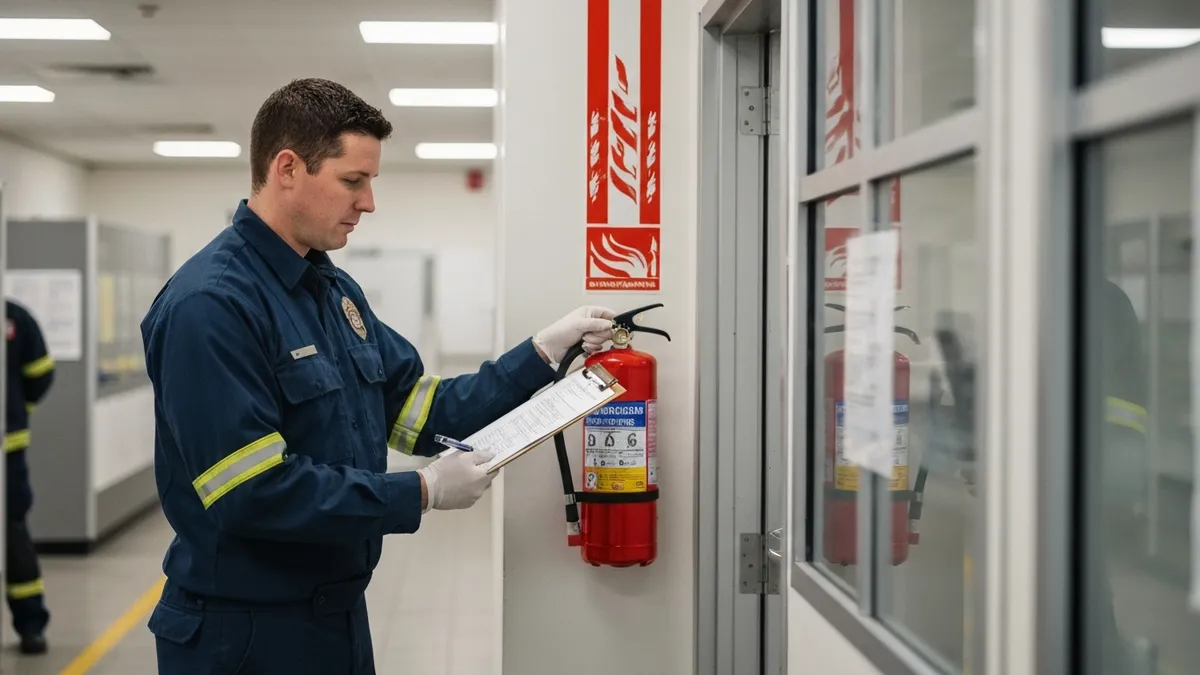
Fire departments conduct some of the most thorough background investigations of any public sector employer. Omitting prior drug use, arrests, employment terminations, or financial problems on your application — even incidents you believe are minor — is grounds for immediate disqualification if discovered, regardless of how well you performed in every other stage. Departments hire candidates who demonstrate integrity, and an honest disclosure of a past mistake handled with accountability is consistently scored higher than a concealment that investigators later uncover.
Preparing for firefighter interview questions is not a one-week sprint — it is a sustained process of skill development, self-reflection, and practical preparation that ideally begins months before your oral board date. The candidates who consistently perform best are those who have practiced their answers with another person, received feedback, and refined their delivery until their stories flow naturally rather than sounding rehearsed. Mock oral boards with a mentor, a career firefighter, or even a small study group are among the most valuable preparation activities available to any applicant.
The firefighter costume and professional appearance at your oral board send immediate, nonverbal signals to the panel before you speak a single word. Business professional attire — a well-fitted suit in a conservative color, polished shoes, minimal jewelry, and a clean, pressed appearance — communicates respect for the process and an understanding of the professional environment you are trying to enter.
Many candidates show up in business casual clothing that would be acceptable for a corporate interview but reads as insufficiently formal for a fire department panel. When in doubt, overdress. Reviewers of the firefighter costume and appearance guidance in our complete study guide report that panelists consistently mention candidate presentation as a factor in their evaluation notes.
Body language during the oral board is as important as the content of your answers. Maintain consistent eye contact with each panel member rather than focusing exclusively on the person who asked the question. Sit upright with an open posture — arms uncrossed, feet flat on the floor — which projects confidence and engagement.
Speak at a deliberate, measured pace; anxiety tends to accelerate speech, and slowing down consciously both calms your own nerves and makes your answer easier for panelists to follow and score. Pausing briefly before answering a question is not a weakness — it demonstrates thoughtfulness, and panelists generally respond positively to candidates who take a moment to organize their response rather than rushing into a rambling answer.
After the oral board, send a brief thank-you email to the department's human resources contact within 24 hours. This is standard professional courtesy in most industries but remains relatively uncommon among firefighter applicants, which means it distinguishes you positively. Keep the note brief — two or three sentences expressing genuine appreciation for the opportunity, briefly reiterating your interest in the position, and offering to provide any additional information if needed. Do not attempt to add new information or correct anything you said during the board; that can come across as anxious rather than professional.
If you are not selected after an oral board, request feedback from the department if they offer it. Many departments will provide a general debrief explaining which competency areas scored lower, and this feedback is extraordinarily valuable for your next application. Treat each application cycle as a learning experience. Many career firefighters applied to three, four, or even more departments before receiving their first offer, and the candidates who ultimately succeed are those who systematically improve their preparation with each attempt rather than repeating the same approach and hoping for different results.
The idaho firefighter shooting and similar incidents have also reinforced the importance of understanding the psychological screening component of the hiring process. Psychological evaluations are typically administered after a conditional job offer and assess emotional stability, stress resilience, decision-making style, and interpersonal functioning.
There is no way to study for a psychological evaluation in the traditional sense — attempting to game your responses typically produces inconsistent profiles that evaluators flag. The most effective preparation is to be genuinely honest about your strengths and growth areas throughout the hiring process, since consistency between your psychological profile and your oral board presentation is itself a positive indicator that evaluators note.
Finally, remember that the oral board is a two-way evaluation. You are assessing whether this department and this crew culture are the right fit for your values and your career goals, just as they are assessing whether you are the right fit for them. Candidates who approach the interview with genuine curiosity about the department — asking thoughtful questions about station culture, training opportunities, promotional timelines, and community programs — consistently leave stronger impressions than candidates who focus entirely on performing for the panel. Authentic engagement is both the most honest and the most strategically effective approach you can take.
The final weeks before your oral board should be focused on refinement rather than new learning. By the time your interview date arrives, your core stories should be so well-practiced that you can adapt them to different question framings without losing the specific details that make them compelling.
Spend this period doing full mock interviews under timed conditions — set a timer for 30 to 40 minutes, have a practice partner ask you five to eight questions, and review your performance honestly. Focus especially on the clarity of your opening sentence in each answer, your ability to stay on topic without rambling, and whether your answers consistently come back to fire service values.
Physical preparation in the weeks before an oral board is often overlooked, but it matters more than candidates expect. A well-rested, physically fit candidate projects energy and confidence that a sleep-deprived, sedentary candidate cannot replicate. Maintain your workout routine, prioritize sleep in the week before your interview, and avoid any new stressors or major schedule disruptions. On the day of the interview, eat a balanced meal two to three hours before your scheduled time — not immediately before — and avoid excessive caffeine, which can amplify anxiety symptoms and affect your vocal steadiness.
Reviewing the department's recent activity before your interview provides natural material for the specific, department-focused details that make answers stand out. Check the department's website, social media accounts, and local news coverage for the past six months. Look for community programs they are proud of, recent award recipients, notable emergency responses, and any organizational changes or expansions. Weaving one or two specific references to this research into your answers — particularly in response to "Why do you want to work for our department specifically?" — demonstrates a level of preparation that most candidates simply do not show up with.
Understanding the promotional structure of the department you are applying to also positions you as a forward-thinking candidate. Fire departments typically promote through the ranks of firefighter, firefighter engineer or driver/operator, lieutenant, captain, battalion chief, and ultimately chief officer.
Each promotional level typically requires a combination of years of service, completion of specified training programs, and performance on a promotional examination and oral board. Expressing awareness of and interest in this progression — while making clear that your immediate focus is on mastering the firefighter role — shows ambition paired with appropriate humility, a combination that resonates strongly with experienced evaluators.
Connecting your personal values explicitly to the fire service code of ethics is a technique that consistently elevates oral board performance. The IAFF and NFPA both publish explicit ethical frameworks for fire service professionals, and candidates who reference core ethical concepts — duty, respect, integrity, professionalism — not as abstract ideals but as specific behavioral commitments demonstrated in their own experience make a memorable impression. The panel has heard hundreds of candidates say they are team players and good communicators; far fewer have demonstrated what those values look like in practice through specific, credible stories.
If your application involves a specialty position such as hazmat technician, technical rescue, or wildland strike team, research the additional competencies those roles require and prepare specific stories that speak to those skills. Specialty oral boards typically include technical questions about the specific hazard environment, incident command roles within that specialty, and equipment familiarity. Demonstrating prior training or experience in the relevant specialty — even at a volunteer or trainee level — provides a concrete advantage that generalizes well across the rest of your answers.
Ultimately, the firefighter oral board rewards candidates who have done the work: the physical preparation, the mental preparation, the research, the practice, and the honest self-reflection required to present themselves authentically and effectively. Departments are making long-term workforce decisions when they hire — they want to know that the person they invest in will grow, contribute, and stay.
Every element of your preparation that demonstrates commitment, self-awareness, and genuine enthusiasm for the mission of fire service sends exactly that signal. Walk into that room knowing you have prepared thoroughly, and let that preparation give you the confidence to be fully present and genuine throughout the interview.
Firefighter Questions and Answers

About the Author
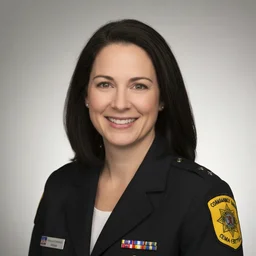
Emergency Manager & FEMA Certification Specialist
Naval Postgraduate SchoolCommander Lisa Foster holds a Master of Science in Emergency Management from the Naval Postgraduate School and is a FEMA-certified emergency manager and Certified Emergency Manager (CEM). With 18 years of emergency response coordination experience across federal and state agencies, she coaches emergency management professionals through ICS, NIMS, and FEMA Independent Study certification programs.
Join the Discussion
Connect with other students preparing for this exam. Share tips, ask questions, and get advice from people who have been there.
View discussion (6 replies)