
Great Questions to Ask in a Firefighter Interview: Complete Prep Guide 2026 October
Master great questions to ask in a firefighter interview. Learn firefighter salary, how to become a firefighter & ace your oral board. 🏆
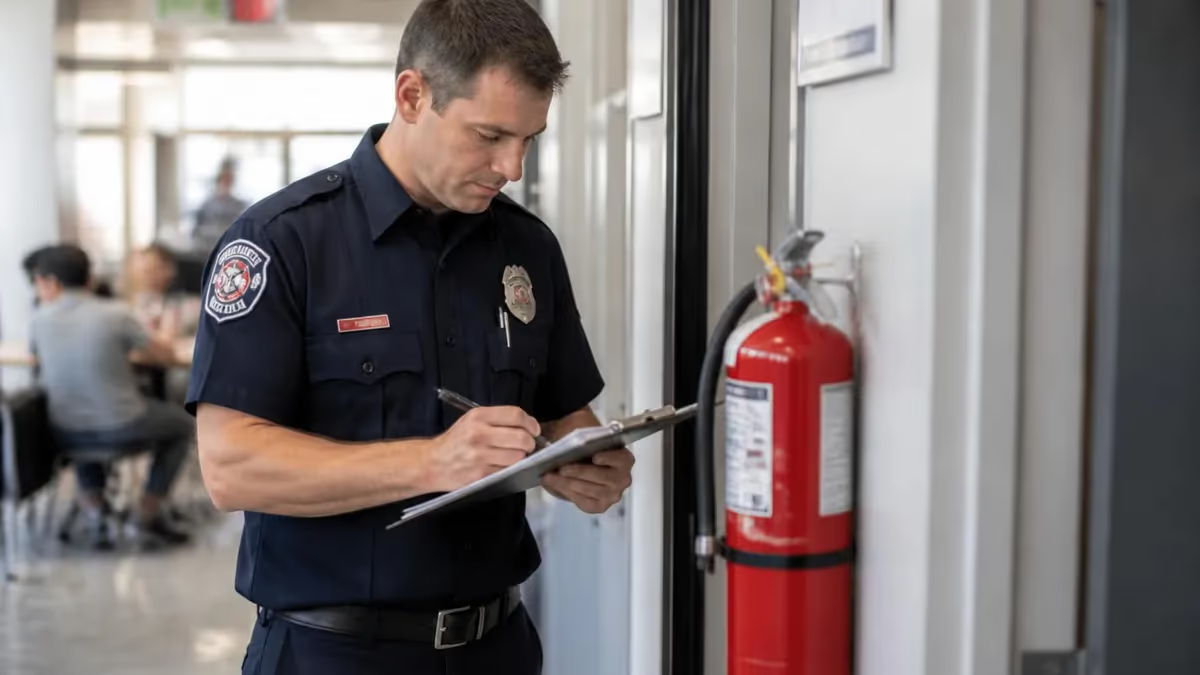
Knowing the great questions to ask in a firefighter interview is just as important as preparing your own answers. Most candidates spend weeks rehearsing responses to classic oral board prompts — situational ethics, chain-of-command scenarios, personal conflict questions — yet arrive completely unprepared to engage the panel with thoughtful, forward-looking questions of their own. That silence at the end of an interview signals a lack of genuine interest, and in a field as competitive as fire service, it can cost you the badge.
The oral board panel is typically made up of a fire chief, a battalion chief, a union representative, and sometimes a human resources officer. Each of these individuals is evaluating whether you understand the department's culture, its challenges, and your own role within a crew. When you ask an intelligent question, you demonstrate that you have done your research, that you think critically, and that you are already mentally invested in the department's mission before you have even been hired.
Understanding firefighter salary expectations and total compensation is one practical area where asking informed questions signals financial maturity rather than entitlement. Instead of asking "how much will I make?" cold, frame it as a question about progression — something like, "Can you walk me through the step-pay schedule and what milestones a probationary firefighter typically hits in the first three years?" That phrasing shows you are thinking about longevity with the department, not just an immediate paycheck.
Beyond compensation, you should ask about training culture, mentorship programs, promotional timelines, equipment modernization, and community outreach initiatives. Departments that invest heavily in their people — through live-fire simulation props, advanced EMS training, and ongoing technical rescue certification — tend to produce the most capable and satisfied firefighters. Asking about these investments shows panels that you value professional growth over simply punching a clock.
Recent events in the news, such as the tragic incidents involving idaho firefighter shooting situations and ambush-style attacks on first responders, have prompted many departments to update their active-threat protocols and interagency communication plans. Asking how the department coordinates with law enforcement during high-risk calls — SWAT firefight scenarios, for example — shows tactical awareness and commitment to crew safety, qualities that resonate strongly with experienced officers on a panel.
This guide breaks down exactly which questions land best, which questions to avoid entirely, and how to sequence your inquiries so the conversation flows naturally rather than feeling like a rehearsed checklist. You will also find context on firefighter careers broadly — including how much do firefighters make on average, what the volunteer firefighter pathway looks like, and how being a green firefighter entering the profession today differs from what it meant twenty years ago. Use this resource alongside consistent practice testing to build the complete interview package you need.
Whether you are targeting a paid municipal department, a combination department, or exploring the volunteer firefighter pathway as an entry point, the ability to engage a panel with well-researched, department-specific questions is a skill that separates candidates who get callbacks from candidates who do not. The sections below will help you build that skill from the ground up, with real examples, strategic framing, and an honest look at what interviewers say privately about candidates who ask great questions versus those who ask nothing at all.
Firefighter Careers by the Numbers
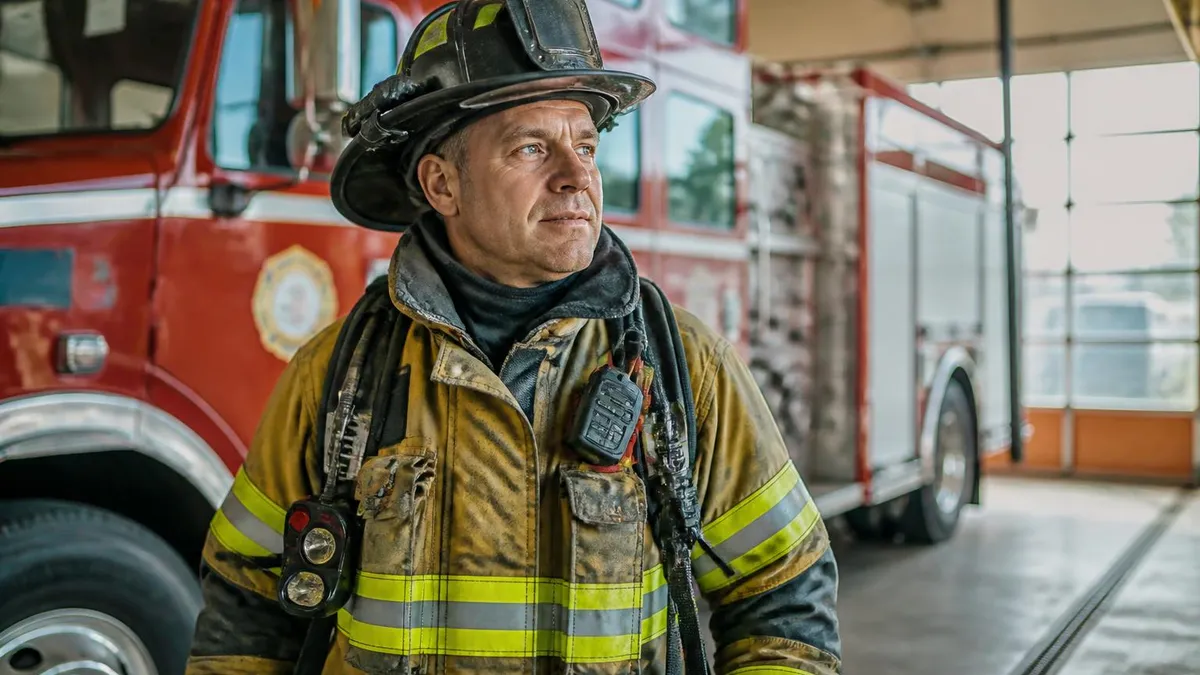
Categories of Questions to Ask Your Panel
Ask about academy structure, ongoing certification requirements, specialty team access (hazmat, technical rescue, swift water), and whether the department funds continuing education. These questions signal you are career-minded and serious about becoming highly skilled.
Inquire about how crews are assigned, what the mentorship structure looks like for probationary firefighters, and how the department handles interpersonal conflict. Culture questions demonstrate emotional intelligence and self-awareness.
Frame salary questions around the step-pay schedule, overtime policies, retirement system (pension vs. 401(k) match), and health coverage tiers. Showing you understand total compensation is more impressive than asking just for a base number.
Questions about community outreach programs, fire prevention initiatives, diversity recruitment goals, and interagency partnerships show you see the firefighter role as broader than emergency response alone.
Asking what the department's biggest operational challenge is right now — staffing, aging equipment, call volume growth — positions you as a problem-solver who wants to contribute solutions, not just fill a vacancy.
Training culture is the single most telling indicator of a department's long-term health, and asking targeted questions about it during your oral board can open a genuinely productive conversation with the panel. Start by asking how often the department conducts live-fire training evolutions and whether those drills are mandatory for all shifts or elective. Departments that prioritize regular live-fire practice tend to be safer, more cohesive, and more prepared for complex incidents — exactly the kind of environment where new firefighters develop quickly.
Follow that with a question about specialty teams. Ask whether the department has an active technical rescue team, a hazmat unit, or a swift-water rescue capability, and if so, how long a firefighter typically serves before becoming eligible to apply for a specialty assignment. This question does two things: it tells the panel you are thinking about the full arc of a fire service career, and it gives you intelligence about the department's operational complexity that you can reference in later answers during the same interview.
If you are exploring how to become a firefighter for the first time, ask about the department's relationship with its fire academy and whether they sponsor candidates through EMT or paramedic certification programs. Some departments cover tuition entirely; others require you to come in already credentialed. Knowing the answer helps you plan your trajectory, and asking it shows the panel that you are already thinking about meeting requirements, not waiting to be told what to do.
Mentorship is another rich area for questions. Ask whether the department uses a formal field training officer (FTO) program or relies on informal on-the-job mentorship. FTO-structured programs have set evaluation checkpoints and documented expectations, which is generally better for new firefighters who want clear feedback. Informal mentorship can be excellent, but it depends heavily on the personalities in your assigned station — a risk worth understanding before you accept an offer.
Questions about promotional pathways reveal ambition without arrogance when framed correctly. Instead of saying "how fast can I make engineer?," ask: "What does the typical developmental path look like from probationary firefighter to engineer, and what are the most important things a firefighter can do in those early years to be competitive for promotion?" That phrasing invites the panel to mentor you verbally, which is a dynamic they generally enjoy and that creates a positive impression even if your qualifications are borderline on paper.
The rise of what industry insiders call the "green firefighter" — a new hire who enters the profession with little to no prior emergency services experience — has pushed many departments to invest more heavily in structured onboarding. Ask how the department onboards firefighters who come from non-fire backgrounds, and whether there are peer support resources during the first year on the job. Showing awareness of the psychological and physical adjustment that comes with a career in fire service demonstrates maturity and self-awareness that panels notice and remember.
Finally, ask about how the department handles performance feedback outside of formal probationary evaluations. Monthly check-ins? Quarterly reviews? An open-door policy with battalion chiefs? Understanding the feedback culture tells you whether you will have the coaching infrastructure to grow — and it tells the panel that you are the kind of person who actively seeks feedback rather than waiting until a performance problem surfaces. That quality alone distinguishes high-potential candidates from average ones in nearly every oral board setting.
Firefighter Salary, Volunteer Pathways & Career Entry
The median firefighter salary in the United States sits around $64,000 per year according to the Bureau of Labor Statistics, but that figure varies enormously by location, department size, and rank. Firefighters in major metro departments — Los Angeles, New York, Chicago, Houston — frequently earn base salaries exceeding $80,000, with overtime pushing total compensation well above $100,000 annually. Rural and smaller municipal departments typically pay between $40,000 and $55,000, though pension and benefit packages sometimes compensate for the lower base wage.
When evaluating how much do firefighters make in a specific market, always factor in the full compensation picture: shift differential pay, hazard pay, longevity bonuses, EMT or paramedic certification stipends, and retirement contributions. A department offering $58,000 base with a defined-benefit pension, full family health coverage, and overtime eligibility can represent better long-term value than a $70,000 base with minimal benefits. During your interview, asking smart questions about the step-pay schedule signals financial literacy and long-term commitment rather than short-term thinking.
Pros and Cons of Asking Questions in a Firefighter Oral Board
- +Demonstrates genuine interest in the department beyond just getting hired
- +Creates a two-way conversation that reduces panel fatigue and increases your memorability
- +Reveals department culture and helps you evaluate if this is a good fit for you
- +Shows you have researched the department, which signals preparation and professionalism
- +Gives you practical information about training, promotion, and benefits you actually need
- +Positions you as a forward-thinking candidate who is already mentally invested in the role
- −Poorly chosen questions about salary first can come across as money-motivated rather than mission-driven
- −Asking about vacation or overtime before being hired signals the wrong priorities to most panels
- −Questions already answered in the job posting reveal that you did not read basic materials
- −Overly long or multi-part questions can confuse panelists and waste limited interview time
- −Asking about department controversies or negative news can feel confrontational if not framed carefully
- −Bringing a written list and reading directly from it looks scripted and reduces natural rapport
Pros and Cons at a Glance
| Pros | Cons |
|---|---|
| Demonstrates genuine interest in the department beyond just getting hired | Poorly chosen questions about salary first can come across as money-motivated rather than mission-driven |
| Creates a two-way conversation that reduces panel fatigue and increases your memorability | Asking about vacation or overtime before being hired signals the wrong priorities to most panels |
| Reveals department culture and helps you evaluate if this is a good fit for you | Questions already answered in the job posting reveal that you did not read basic materials |
| Shows you have researched the department, which signals preparation and professionalism | Overly long or multi-part questions can confuse panelists and waste limited interview time |
| Gives you practical information about training, promotion, and benefits you actually need | Asking about department controversies or negative news can feel confrontational if not framed carefully |
| Positions you as a forward-thinking candidate who is already mentally invested in the role | Bringing a written list and reading directly from it looks scripted and reduces natural rapport |
Pre-Interview Checklist: Questions to Prepare Before Your Oral Board
- ✓Research the department's annual report and prepare at least one question referencing a specific initiative or statistic from it.
- ✓Identify the department's specialty teams (hazmat, technical rescue, swift water) and ask about eligibility timelines for joining them.
- ✓Prepare a step-pay schedule question framed around career progression, not just immediate starting salary.
- ✓Ask one question about the department's relationship with the union and how labor-management communication typically works.
- ✓Prepare a question about the mentorship or FTO structure for probationary firefighters in their first year.
- ✓Research recent department news — including any responses to high-profile incidents — and frame a respectful, informed question about lessons learned.
- ✓Prepare a question about community outreach programs or fire prevention education initiatives the department runs.
- ✓Ask about the department's promotional exam schedule and what supplemental qualifications (paramedic, engineer cert) carry the most weight.
- ✓Prepare a question about how the department supports firefighter mental health and peer support resources.
- ✓Write out three to five questions and rank them so you can select the most relevant two or three based on how the interview flows naturally.
The Best Question You Can Ask Any Panel
Fire service veterans consistently rank this as the single most impressive closing question a candidate can ask: "Based on what you have seen from top performers in this role, what is the one thing a new firefighter can do in the first six months to make the biggest positive impact on the crew?" It shows humility, eagerness to contribute, and respect for institutional knowledge — all values central to fire service culture.
What oral board panels actually want to hear when you ask questions is not a demonstration of knowledge for its own sake — it is evidence of character. Fire service is a profession built on trust, and a panel of experienced officers is constantly evaluating whether you are the kind of person they would want to ride a rig with, share a station with, and depend on when the situation gets dangerous. Your questions are one of the clearest windows into your character during the entire hiring process, so they deserve as much strategic thought as your prepared answers.
Panels respond most positively to questions that reflect humility. Asking "What do the best probationary firefighters in this department do that separates them from average recruits?" signals that you understand you are entering a learning environment, not arriving as a finished product. That posture of genuine openness is precisely what experienced officers want to see, because they know that overconfidence in a new hire creates friction in a station and becomes a safety liability in the field. Humility is not weakness in fire culture; it is wisdom.
Questions about safety culture also land well. Ask how the department approaches near-miss reporting — whether firefighters feel safe flagging errors without fear of punishment. A panel that lights up when you ask this question is telling you something important: the department takes psychological safety seriously, which correlates strongly with lower injury rates and better operational outcomes. A panel that gets uncomfortable or evasive when you ask about it is giving you equally important information about the culture you would be entering.
The recent high-profile incidents involving firefighters shot in Idaho and similar ambush situations across the country have elevated awareness of active-threat response within fire service. Asking how the department coordinates with law enforcement during incidents flagged as potentially hostile — SWAT firefight scenarios, domestic violence responses, civil unrest calls — is now a completely appropriate and even impressive question for any oral board. It demonstrates tactical situational awareness and genuine concern for crew safety, qualities that resonate strongly with chiefs who have had to manage those realities.
Panels also appreciate questions that look further out than the immediate hiring cycle. Ask about the department's five-year strategic plan — whether it involves new station construction, expanded paramedic services, fleet modernization, or changes to shift scheduling. Showing that you are thinking about where the department is going, not just where it is today, positions you as someone with leadership potential even at the entry level. Departments that are actively planning for the future want to hire people who are thinking about the future too.
One often-overlooked strategy is asking the panel a reflective question near the end of the interview: "Is there anything in my background or my answers today that gives you pause, or anything you would like me to clarify?" This question is uncomfortable for many candidates because it invites potential criticism, but it is extraordinarily powerful. It shows self-confidence, a willingness to address concerns directly, and a commitment to honesty — all of which are core firefighter values. It also gives you a rare opportunity to correct a misimpression before you walk out the door.
Finally, it is worth acknowledging that the firefighter costume and pageantry of the profession — the gear, the trucks, the public visibility — attracts some candidates for reasons that do not sustain a thirty-year career. Panels know this and actively screen for it.
Questions that focus on the work itself, on crew development, on the department's mission in the community, and on the long arc of professional growth signal that you understand what the job actually demands, day in and day out, not just in the moments that make it onto social media. That understanding, communicated through thoughtful questions, may be the most important thing you bring into the oral board room.
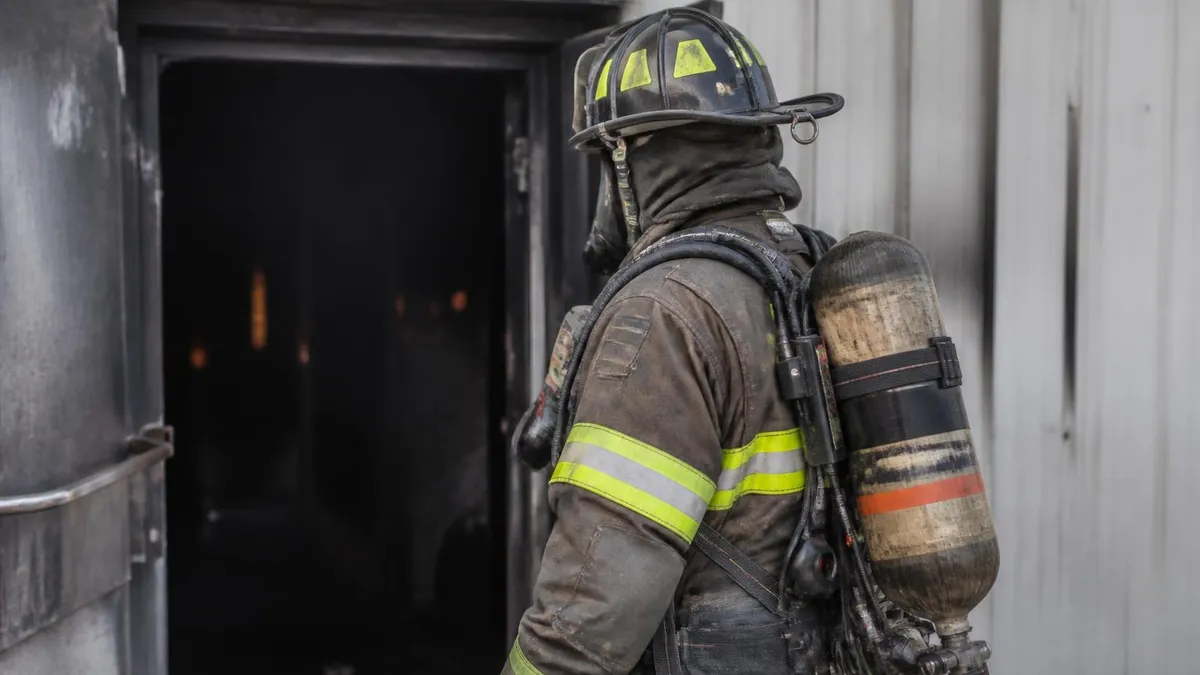
Never open with questions about salary, overtime, vacation accrual, or retirement age — even if compensation is a legitimate concern. These topics signal that your primary motivation is the paycheck rather than the mission. Similarly, avoid asking about cell phone policies, specific schedule accommodations you need before being hired, or anything that reveals you have not read the publicly available job description. Save logistical questions for the offer stage, after you have demonstrated genuine enthusiasm for the role itself.
Common mistakes in firefighter oral boards are well-documented, and the question-asking phase is where many candidates make their most costly errors. The most frequent mistake is simply not preparing any questions at all — arriving at the end of the interview and saying "No, I think you covered everything" when the panel opens the floor. This response is interpreted almost universally as a lack of curiosity and engagement, and in a competitive hiring pool where many candidates are similarly qualified on paper, it is the kind of detail that pushes someone to the bottom of the rank list.
The second most common mistake is asking questions that are clearly motivated by self-interest rather than genuine curiosity about the department. Candidates who immediately pivot to "How much overtime can I expect?" or "When would I be eligible for vacation carryover?" are sending a clear signal about their priorities. Experienced panels have heard these questions hundreds of times and react to them with the same internal response: this candidate is thinking about what the job gives them, not what they can contribute. Save those topics entirely until after you receive a conditional offer of employment.
A subtler but equally damaging mistake is asking questions that reveal you have not done basic research on the department. If the department's website clearly states that it runs a combined paramedic-suppression model and you ask whether it has any EMS function, you have just told the panel that you did not take thirty minutes to learn about the organization before interviewing for a career position with it. Due diligence is a basic professional expectation, and skipping it communicates carelessness — a quality that is actively dangerous in fire service.
Exploring the volunteer firefighter pathway before pursuing a career position is one of the best ways to avoid these mistakes, because time spent in a working department teaches you instinctively what matters to experienced officers and what questions actually get meaningful answers. Volunteers who transition to career hiring processes have typically already internalized department culture enough to ask the right questions without scripting them in advance, which makes those conversations feel natural and genuine rather than rehearsed.
Reading questions directly from a notepad or phone is another mistake to avoid. Glancing at a prepared list occasionally is acceptable, but candidates who read question after question verbatim from a page send the message that they are executing a script rather than engaging authentically. Write your questions in advance, internalize the themes, and allow yourself to ask them conversationally. If the interview covers one of your prepared topics organically, adapt rather than forcing your pre-written version into an already-answered area.
Asking double-barreled or multi-part questions also creates unnecessary confusion. "What is the promotional process like, and how does it compare to neighboring departments, and do you think the current union contract affects it?" is three different questions that the panel will partially answer and then move on from. Single, focused questions get more complete and usable answers, and they leave room for genuine follow-up conversation that creates the collegial dynamic you are aiming for.
Finally, treat the question-asking phase as a conversation, not an interrogation or a monologue. When a panel member answers your question, respond genuinely — "That is really helpful context, thank you" or "That matches what I experienced during my ride-along" — before moving to the next question. That natural back-and-forth transforms the closing minutes of an oral board from a formality into a memorable exchange that reinforces everything positive you built during the interview itself. Panels remember candidates who made the conversation feel real, and that memory is exactly what you want influencing rank placement when the scores are tallied.
Practical preparation for the question-asking phase of a firefighter oral board follows the same logic as preparation for any other part of the process: deliberate practice, honest self-assessment, and repetition under conditions that approximate the real experience. Start by researching the specific department you are interviewing with thoroughly — annual reports, local news coverage, city budget documents, department social media, and any community meeting minutes that mention fire department priorities. The more department-specific your questions are, the more impressive they land.
Once you have done the research, draft a list of eight to ten potential questions and then rank them by how relevant and impressive you think they are. Aim to bring your top five into the interview room, knowing you will likely only use two or three. Having extras gives you flexibility — if the panel covers one of your topics organically during the interview, you have backups ready without the awkward pause of scrambling for something else to say.
Practice asking your questions out loud, either alone or with a friend or family member playing the role of a panel member. The goal is to make the questions sound conversational and natural rather than read-from-a-script. Tone matters enormously in oral boards; a good question delivered in a robotic, rehearsed tone is less effective than a slightly simpler question asked with genuine curiosity and warmth. Voice training is not something most candidates think about, but it is worth a few practice sessions to find the register that sounds confident without being aggressive.
Timing is another practical consideration. Most oral boards allocate the final three to five minutes for candidate questions, and panels sometimes signal that time is tight with subtle cues — checking a watch, shifting in their seats, glancing at remaining forms. Read these signals and respect them by asking your most important question first rather than building to it. If you only get one question in, make it count, and close gracefully: "I appreciate the time you have given me today — I am genuinely excited about this opportunity and I look forward to hearing from you."
The day before your oral board, review your question list one final time and then put it away. Over-reviewing creates the kind of brittle, over-rehearsed quality that panels can immediately detect. You want to feel prepared, not scripted. Trust the work you have put in during the weeks leading up to the interview, and allow yourself to be present in the room rather than running a mental teleprompter. Authentic engagement with real human beings on the other side of the table is ultimately what every oral board is evaluating, and no amount of scripting substitutes for it.
After your interview, regardless of outcome, debrief honestly. Write down which questions you asked, how the panel responded, what follow-up arose naturally, and what you wish you had asked instead. This reflection is invaluable if you are interviewing with multiple departments, as it allows you to refine your approach iteratively rather than repeating the same mistakes. Many successful firefighters applied to three, five, or even more departments before landing their first position — each interview made them sharper, and the question-asking phase was consistently one of the areas where improvement came fastest with focused attention.
Combine your oral board preparation with strong written exam practice, consistent physical training for the CPAT, and genuine engagement with the fire service community through volunteering, ride-alongs, or fire explorer programs. The interview is one gate in a multi-stage process, and candidates who take all of the gates equally seriously are the ones who convert interest into a conditional offer and ultimately into a career. Use every resource available to you — including the practice tests and study guides on this site — to build the most complete preparation package possible before your first oral board date.
Sample Firefighter Practice Questions
Try these questions from our free Firefighter practice tests. The correct answer and an explanation follow each question.
NFPA 1971 does not require hearing protection, but ______ does.
- A. NFPA 1500
- B. NFPA 1600
- C. NFPA 1680
- D. NFPA 1540
Answer: A. NFPA 1500
While NFPA 1971 sets standards for protective ensembles, it does not specifically mandate hearing protection. However, NFPA 1500, the Standard on Fire Department Occupational Safety and Health Program, requires fire departments to provide and ensure the use of hearing protection when firefighters are exposed to noise levels exceeding specified limits. This ensures comprehensive safety beyond just personal protective equipment.
The sum of 3\/4 and 2\/3 is
- A. 5\/7
- B. 5\/12
- C. 17\/12
- D. 12\/17
Answer: C. 17\/12
To add fractions, they must first have a common denominator. The least common multiple of 4 and 3 is 12. Convert 3/4 to 9/12 (by multiplying numerator and denominator by 3) and 2/3 to 8/12 (by multiplying numerator and denominator by 4). Adding the new numerators (9 + 8) gives 17, while keeping the common denominator of 12, resulting in 17/12.
Prevent punctures, crushing wounds, hot water or other polluted liquids, and burns from embers and debris to the foot, ankle, and lower leg.
- A. Helmet
- B. Gloves
- C. Shield
- D. Boots
Answer: D. Boots
Firefighter boots are engineered to provide robust protection for the feet, ankles, and lower legs against severe hazards. They are designed to resist punctures, crushing injuries, and the penetration of hot water or contaminated liquids. Additionally, these boots shield against burns from embers and debris, ensuring comprehensive lower extremity safety in hazardous environments.
Which type of building construction is historically known as 'mill construction' due to its widespread use in 19th-century textile factories?
- A. Type I (Fire-resistive)
- B. Type II (Non-combustible)
- C. Type III (Ordinary)
- D. Type IV (Heavy Timber)
Answer: D. Type IV (Heavy Timber)
Type IV (Heavy Timber), or 'mill construction,' uses large wood members that char slowly and resist sudden collapse, and was favored for factories where machinery vibration required robust framing.
Firefighter Questions and Answers

Firefighter CPAT Test: Complete Guide to Passing the Candidate Physical Ability Test
What is the Firefighter Exam?

Training Props for Firefighters: Complete Guide to Simulation Equipment & Career Prep

Online Firefighter Training: Complete Guide to Courses, Certification & Career Prep

Firefighter Interview Questions: Complete Prep Guide 2026
About the Author
Emergency Manager & FEMA Certification Specialist
Naval Postgraduate SchoolCommander Lisa Foster holds a Master of Science in Emergency Management from the Naval Postgraduate School and is a FEMA-certified emergency manager and Certified Emergency Manager (CEM). With 18 years of emergency response coordination experience across federal and state agencies, she coaches emergency management professionals through ICS, NIMS, and FEMA Independent Study certification programs.
Join the Discussion
Connect with other students preparing for this exam. Share tips, ask questions, and get advice from people who have been there.
View discussion (6 replies)